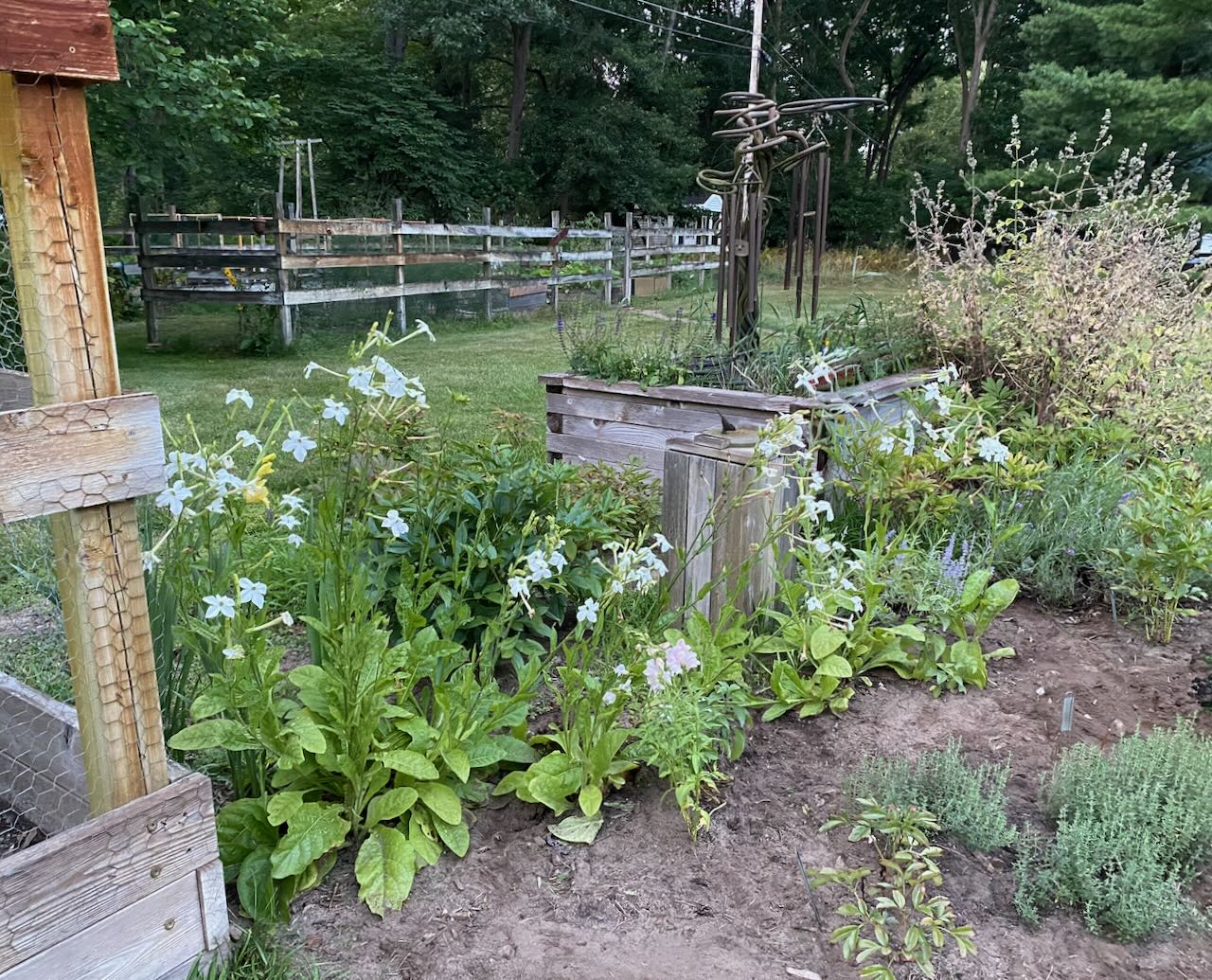
I’ve put the jasmine tobacco that blooms from early evening through early morning, next to the sundial that bears its witness in daylight only. It only struck me that this was possibly amusing when the first flowers began to open as the sundial, so to speak, shut down. Conservation of – well, something. The sundial, sitting there on the plinth Doug made for it, bears a legend in raised letters: “time began in a garden.” But the original Garden was a place of eternal timelessness. Time as we know it began when people left the Garden.
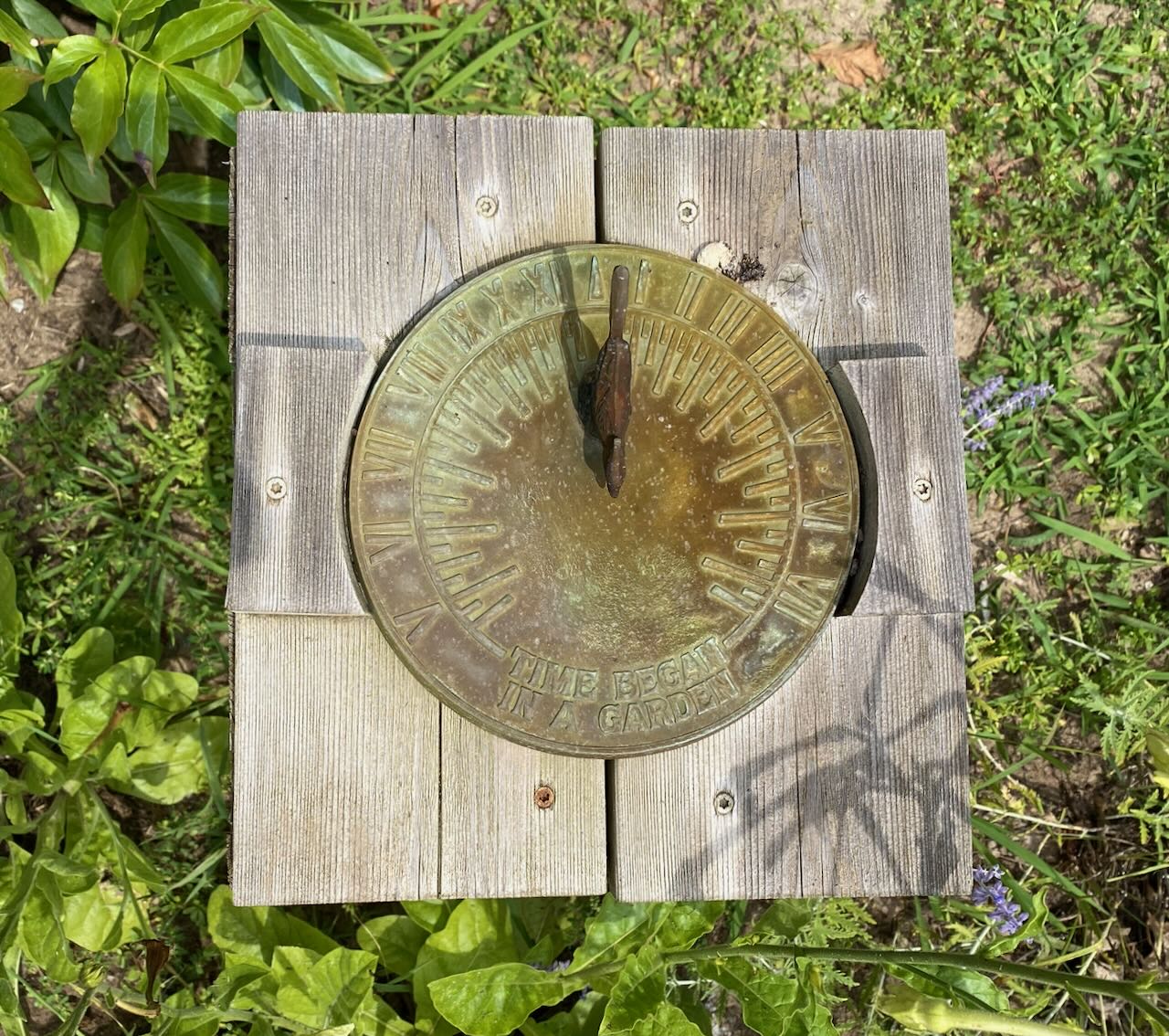
The sundial tells sun time, which is not the same as the time on a clock. With daylight savings time we set our clocks forward one hour, deliberately to get the clock into a new relationship with the sun. So in summer, the sundial starts out an hour behind clock time. Then there are time zones. Ann Arbor is about 700 miles from Boston, but they share the same time zone and so the same clock time. That’s about three fourths of a time zone, so the sundial and the clock are about another three fourths of an hour out of sync. When my sundial here says eleven fifteen, the clock on the kitchen wall says it’s one o’clock. The Old Farmer’s Almanac carries time zone corrections for various cities if you want to be precise. Based from Boston, of course.

But the natural world’s sense of time isn’t a clock. It’s built in; it’s a flow – bloom, set fruit, ripen, fall. Deer have their fawns when summer’s far enough under way to feed them. Mama here has led her two babies to the easy pickings of fallen fruit under the crabapple tree, more nutritious than the forage available in winter, and giving the little ones time to store up some body fat.
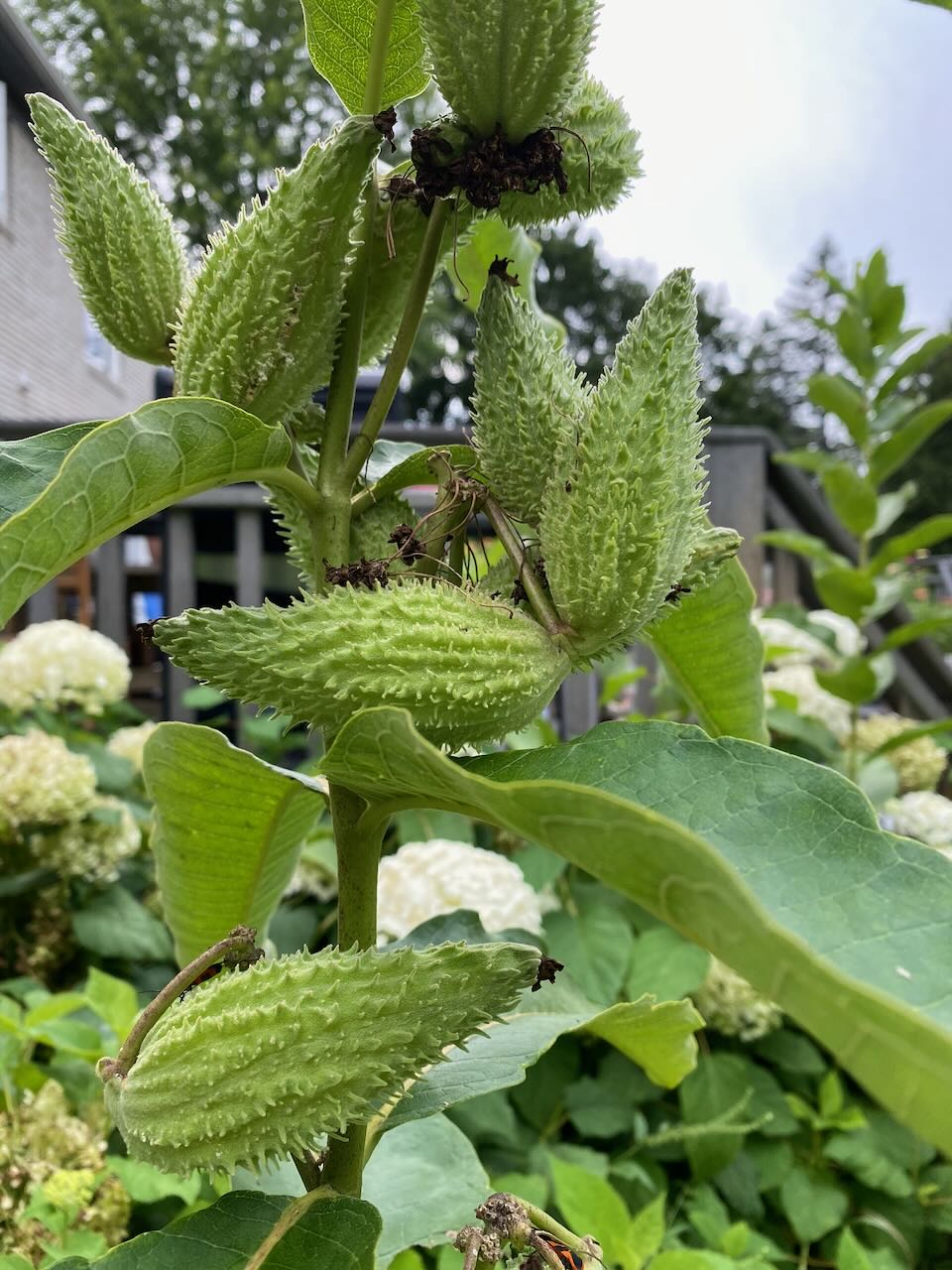
The milkweed’s covered in pods that will wait to burst until fall, when their winged seeds can sail out onto newly bare spots on the ground, and settle in for the cold they need in order to sprout. It’s complex, but they found a niche and filled it. The monarch butterflies haven’t quite colonized these yet, but I expect they will.
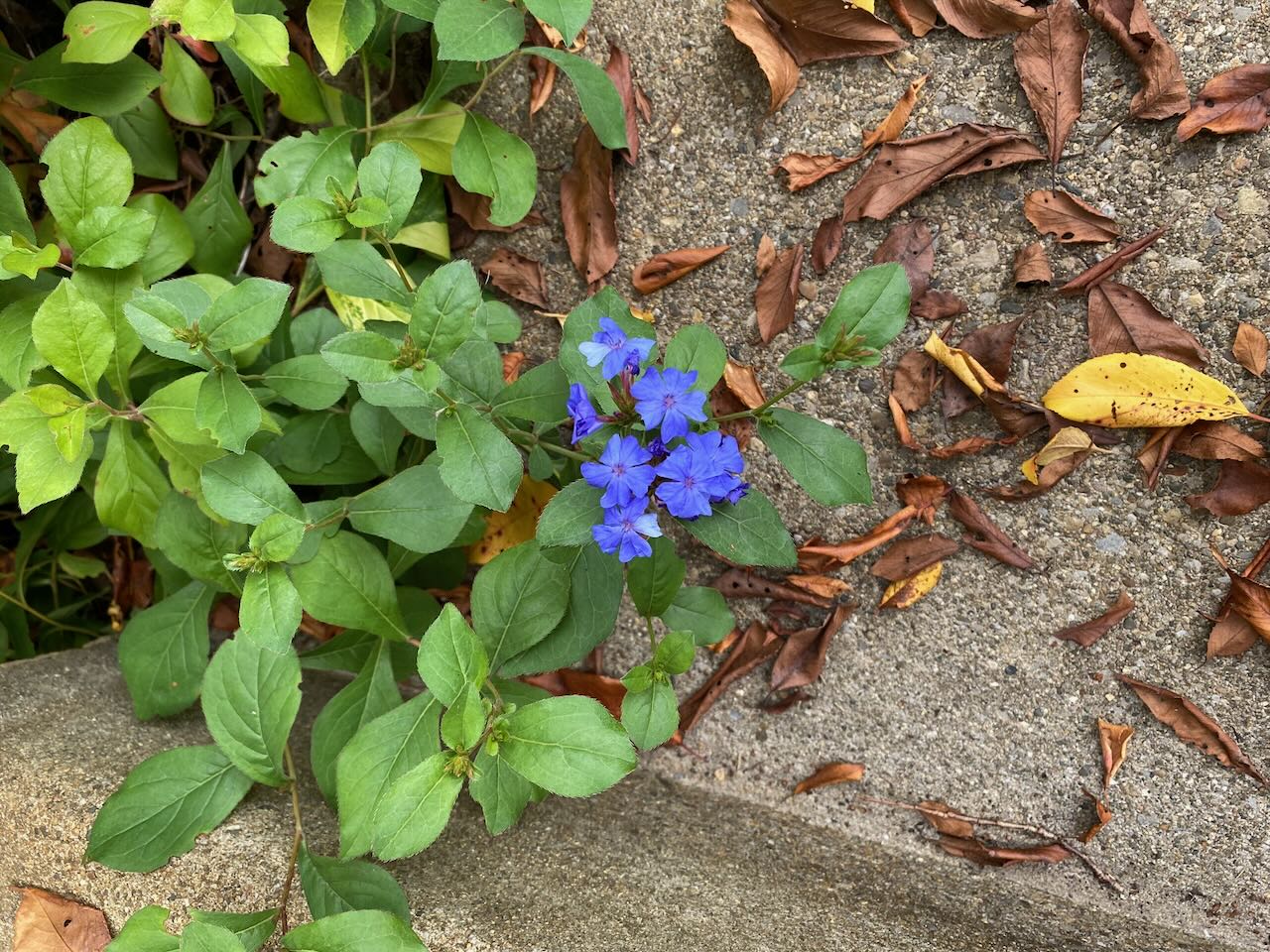
The weeping cherry tree is first to bloom in spring, early to leaf out, and early to begin losing its leaves, as it’s doing now. It makes a touch of autumn on the front path, fallen leaves next to the plumbago starting its late summer bloom. This is my favorite groundcover, because it holds back in spring while the daffodils burst into glory, then wakes up and spreads over the dying daffodil leaves, tidying the garden. I greatly admire its natural, nuanced sense of time. Also I love the color.
 Robin Richstone