Looking and Seeing

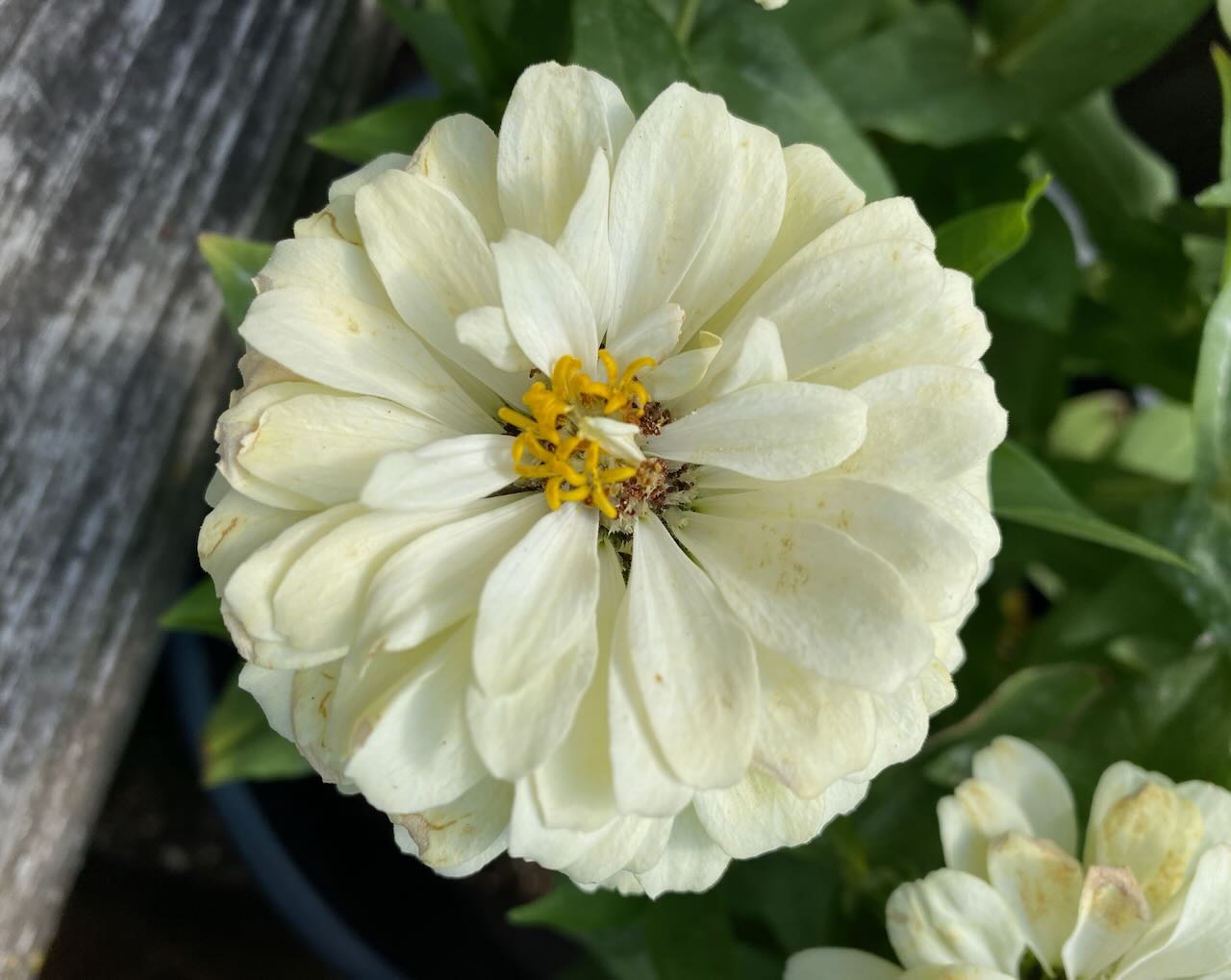
I once had a job as a substitute art teacher. The class was an elective for seventh graders but, truth be told, many were there because their first choice elective was full. They really wanted to be swimming. They said they couldn’t draw. I told them the problem was, they weren’t seeing what they were looking at. I gave each of them paper, pencil, and a zinnia fresh cut from my garden. Pretend, I said, that you are an ant, crawling around the edge of each petal, all the way to the center of the flower. Draw the ant trail you will make. They did, and they were amazed at what beautiful drawings of zinnias they made.
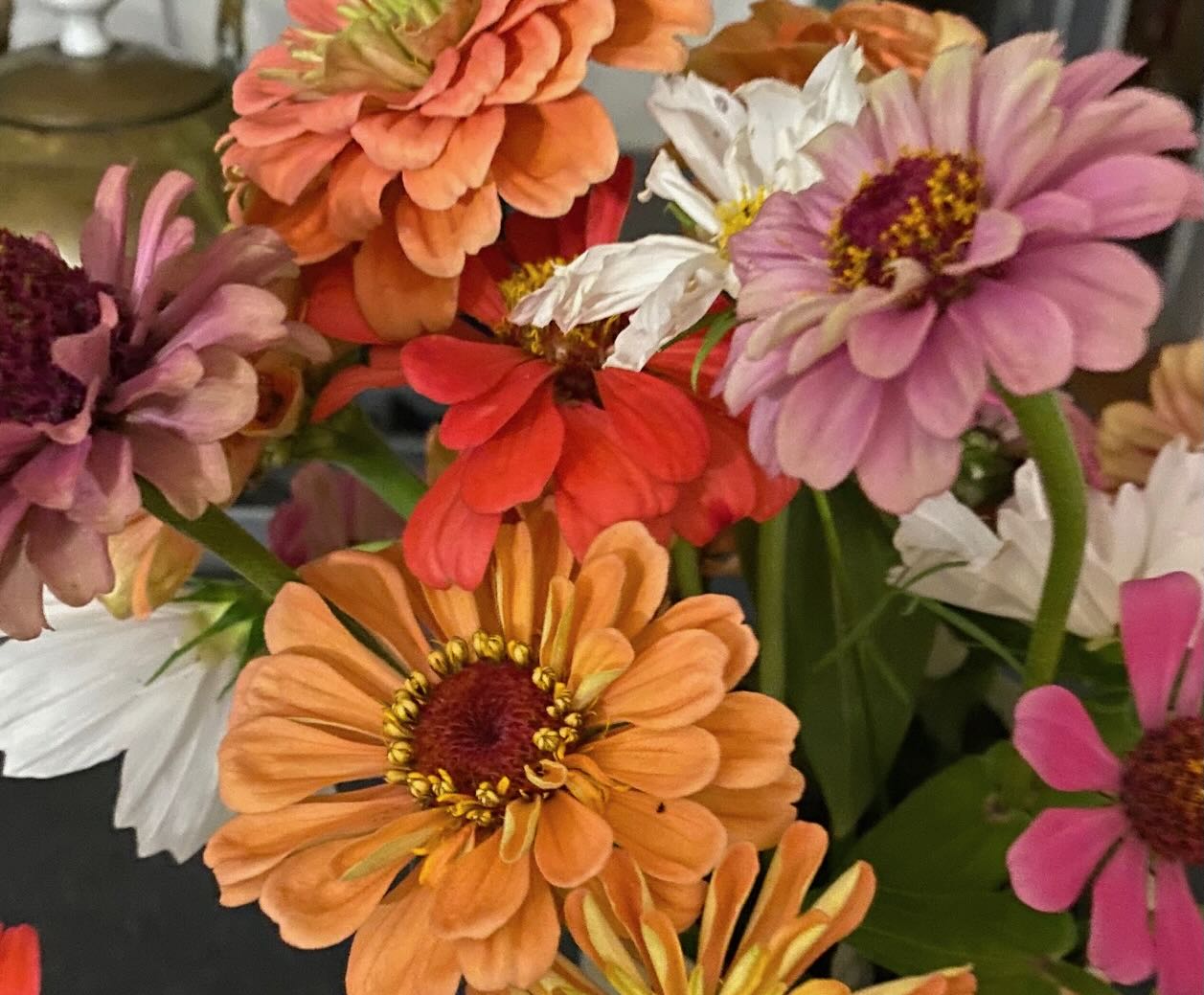
It inspired me to write a poem about an ant on a zinnias – Magellan of ants, traveling around and around, discovering a universe mysteriously changed from what it was when he started out, in the garden. As Georgia O’Keeffe once said, “…nobody sees a flower, really – it is so small—we haven’t time—and to see takes time…” I grow my zinnias from seed and fall in love with them, and when – as often happens – I feel I don’t have time to paint them, I take these photos.
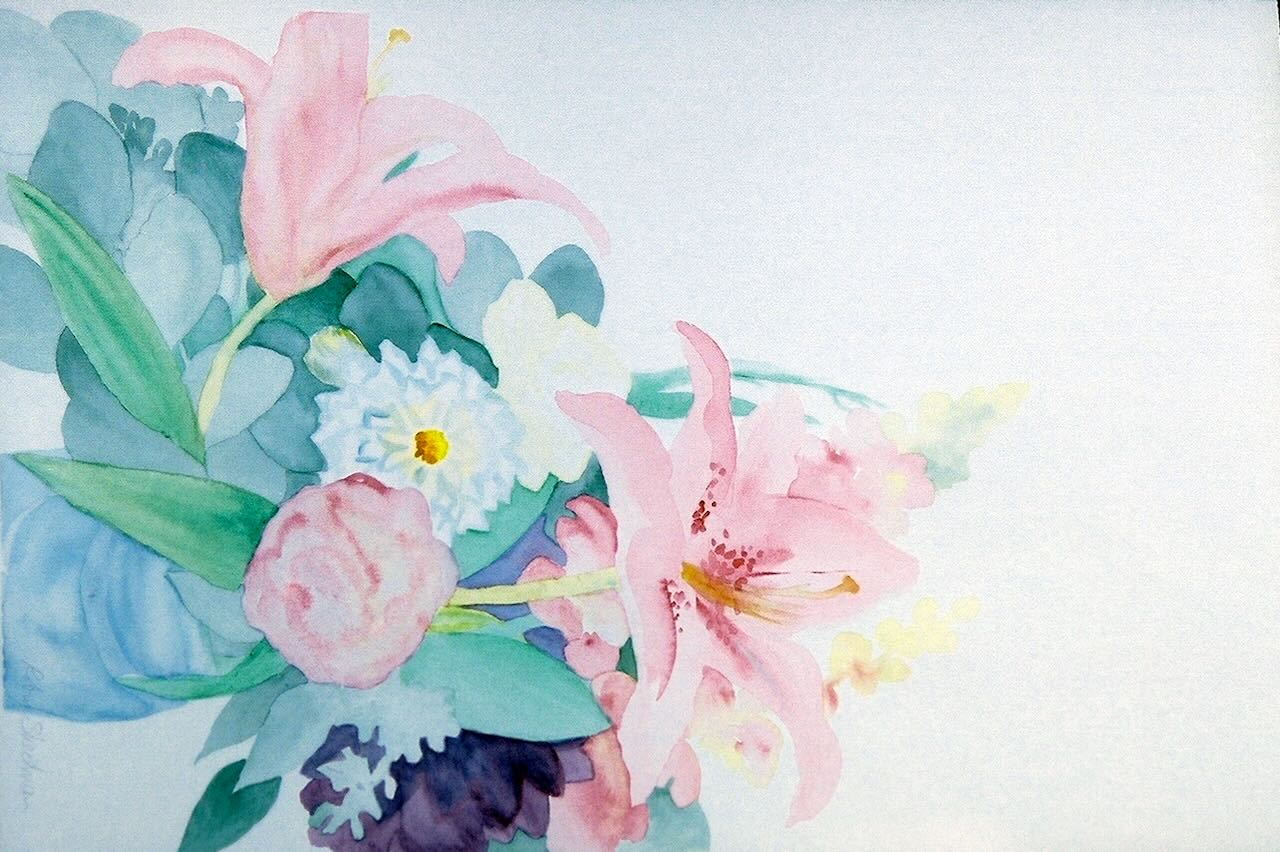
But I see them better when I paint them. The store-bought lilies and rose dominate this painting, but that’s one of my zinnias nestled in the middle. The lilies had a fabulous scent; I can smell it every time I look at this picture. 
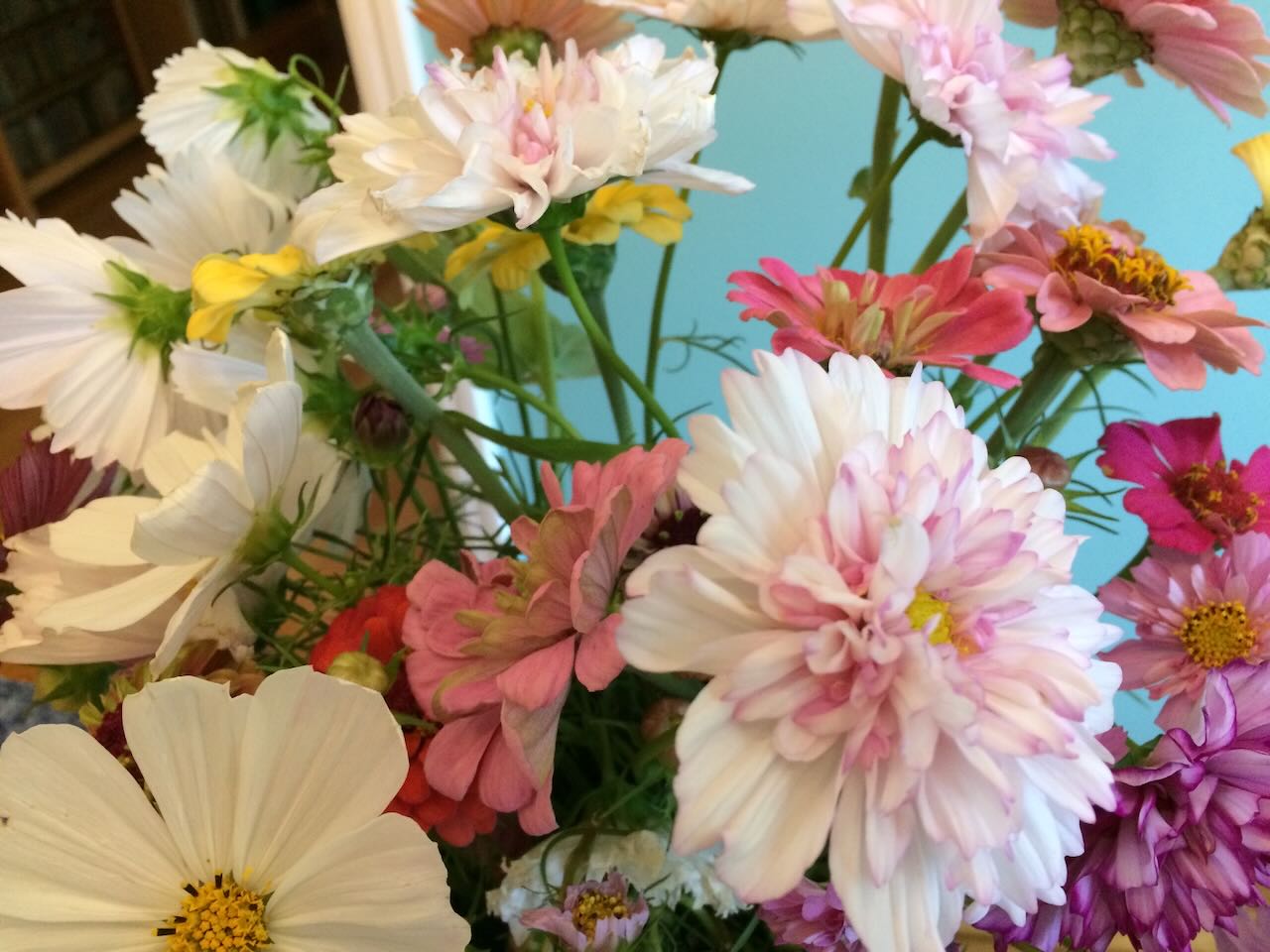
But my main garden flowers are zinnias and cosmos. I wrote a poem about cosmos too; it ends: “Vain petals like a pinwheel/drop in a sudden shower/who would name the universe/after such a flower?” The cosmos flower is said to symbolize order and harmony, most of them having a simple structure like the one on the bottom left of the photo. But because we can’t leave well enough alone, the outrageously ruffled beauty in more or less the center is cosmos, too. A more complex universe; it mixes well with zinnias.
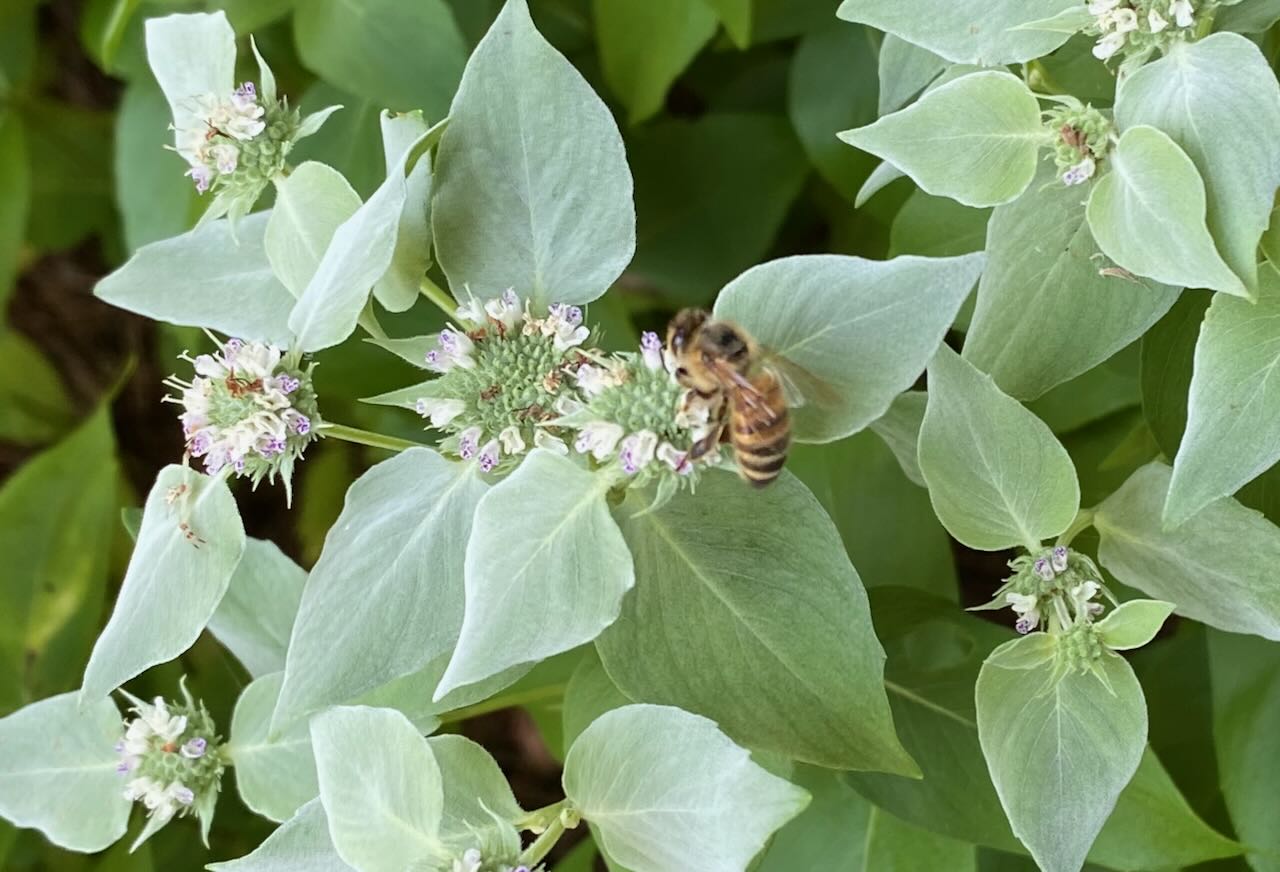
I was walking through the yard, hoping to get a photo of actual ants on actual zinnias – it happens – when a gently buzzing sound made me realize what I was more likely to find on flowers. Bees. The mountain mint, in bloom now, was covered with them. Bees don’t mess around circumambulating – they head right into the center of things. Purposeful, confident, no time to stroll around. They know what they’re looking for, and they find it. 
A Sense of Time

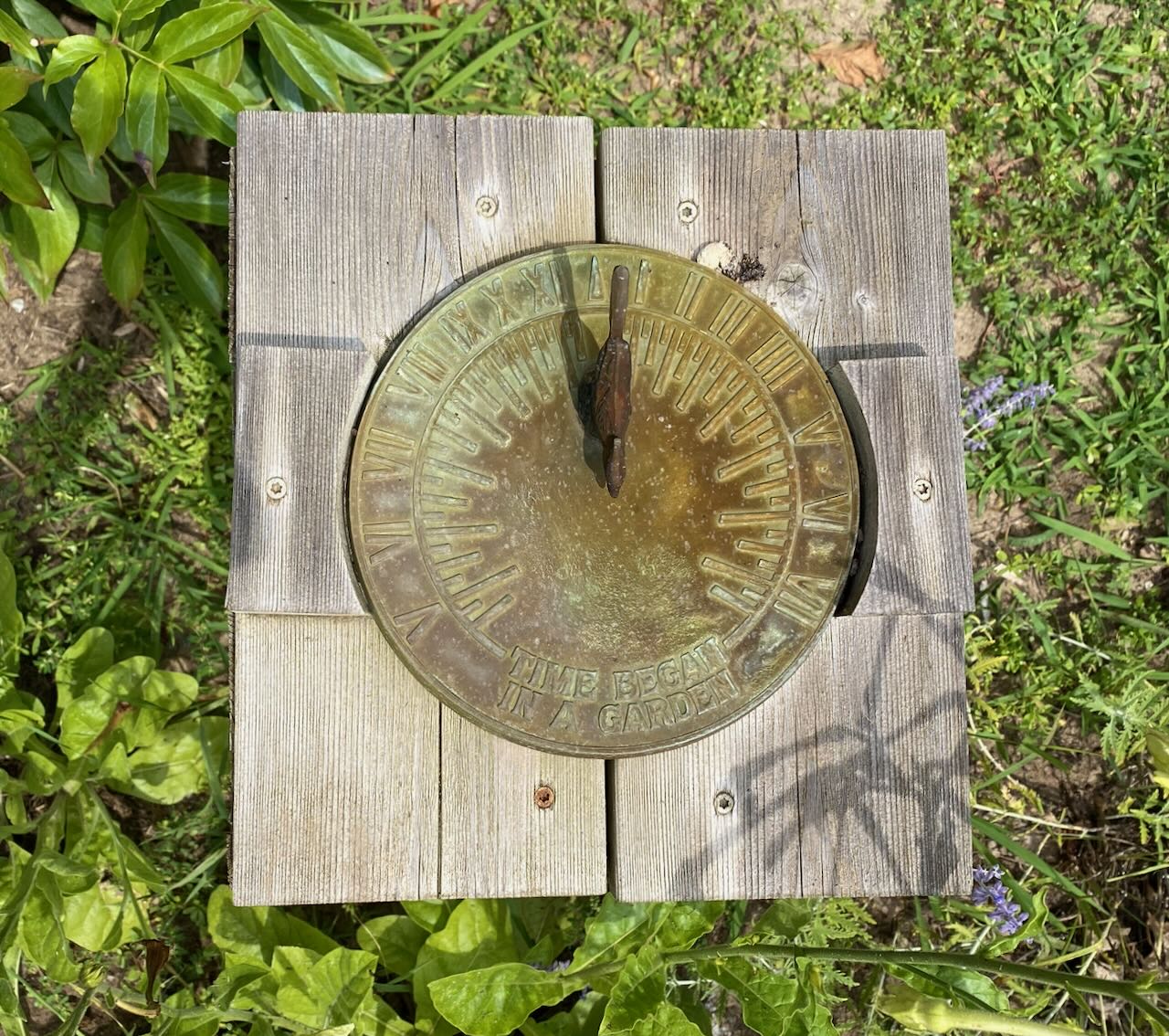
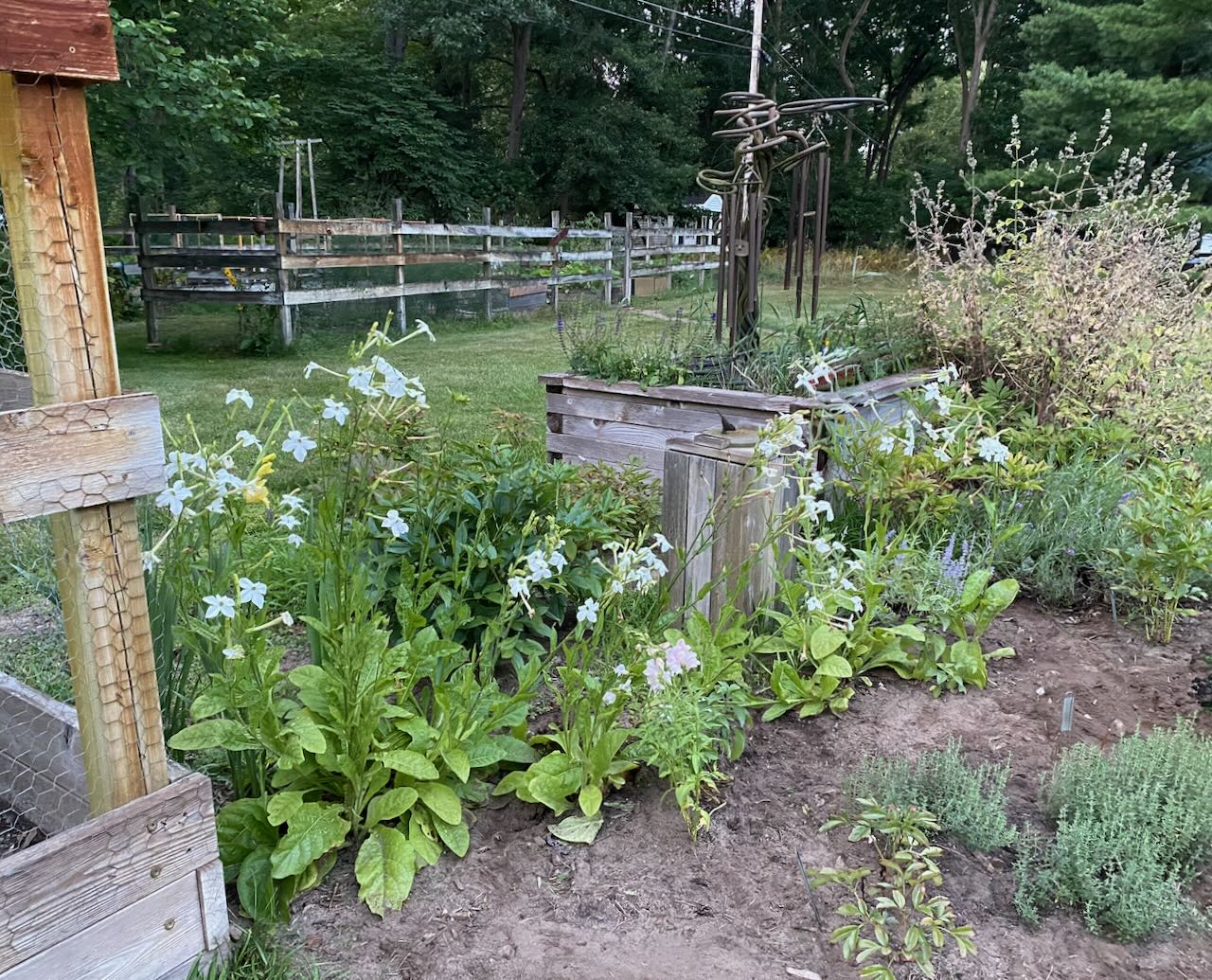
I’ve put the jasmine tobacco that blooms from early evening through early morning, next to the sundial that bears its witness in daylight only. It only struck me that this was possibly amusing when the first flowers began to open as the sundial, so to speak, shut down. Conservation of – well, something. The sundial, sitting there on the plinth Doug made for it, bears a legend in raised letters: “time began in a garden.” But the original Garden was a place of eternal timelessness. Time as we know it began when people left the Garden.

The sundial tells sun time, which is not the same as the time on a clock. With daylight savings time we set our clocks forward one hour, deliberately to get the clock into a new relationship with the sun. So in summer, the sundial starts out an hour behind clock time. Then there are time zones. Ann Arbor is about 700 miles from Boston, but they share the same time zone and so the same clock time. That’s about three fourths of a time zone, so the sundial and the clock are about another three fourths of an hour out of sync. When my sundial here says eleven fifteen, the clock on the kitchen wall says it’s one o’clock. The Old Farmer’s Almanac carries time zone corrections for various cities if you want to be precise. Based from Boston, of course.

But the natural world’s sense of time isn’t a clock. It’s built in; it’s a flow – bloom, set fruit, ripen, fall. Deer have their fawns when summer’s far enough under way to feed them. Mama here has led her two babies to the easy pickings of fallen fruit under the crabapple tree, more nutritious than the forage available in winter, and giving the little ones time to store up some body fat.

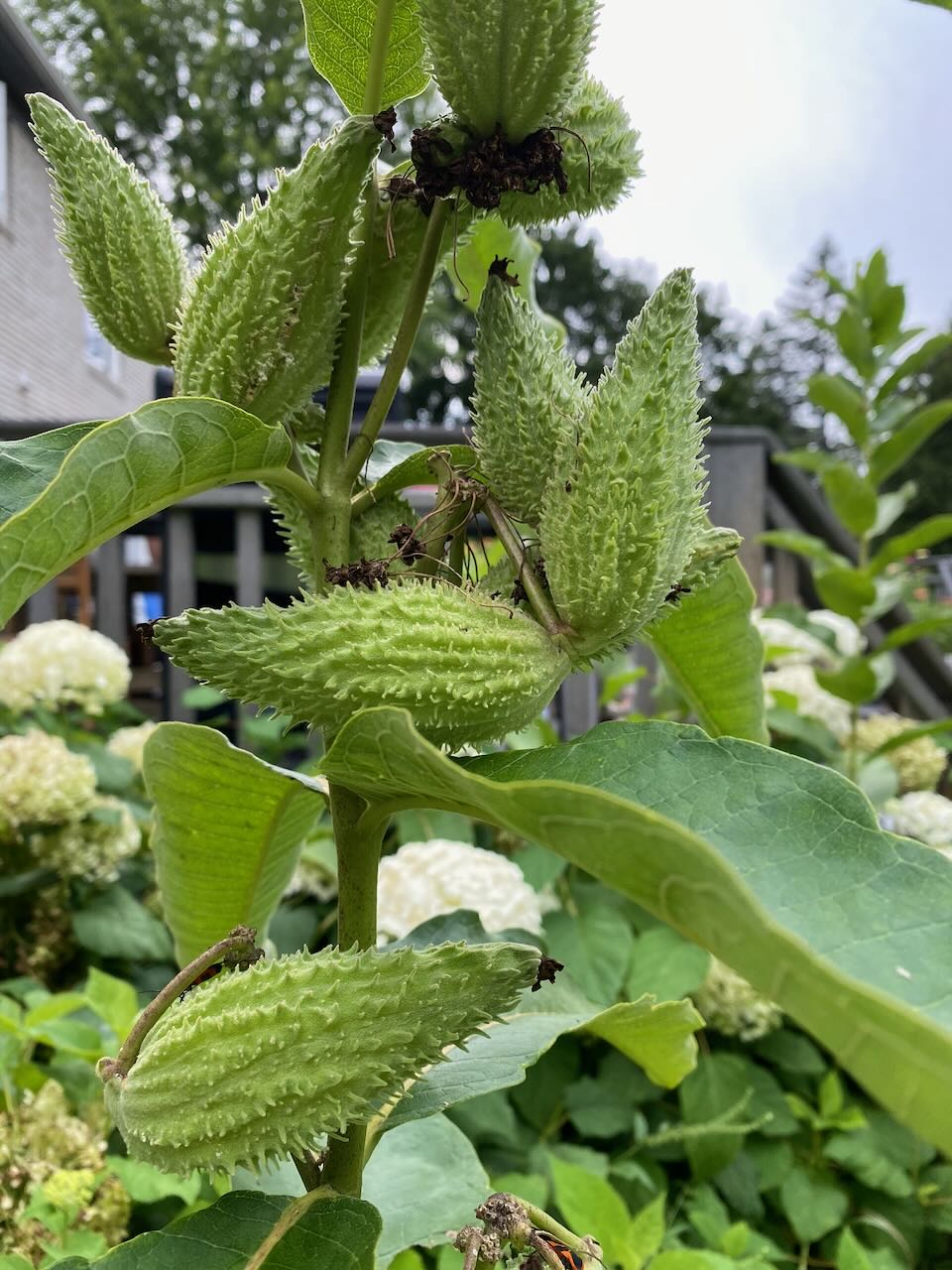
The milkweed’s covered in pods that will wait to burst until fall, when their winged seeds can sail out onto newly bare spots on the ground, and settle in for the cold they need in order to sprout. It’s complex, but they found a niche and filled it. The monarch butterflies haven’t quite colonized these yet, but I expect they will.

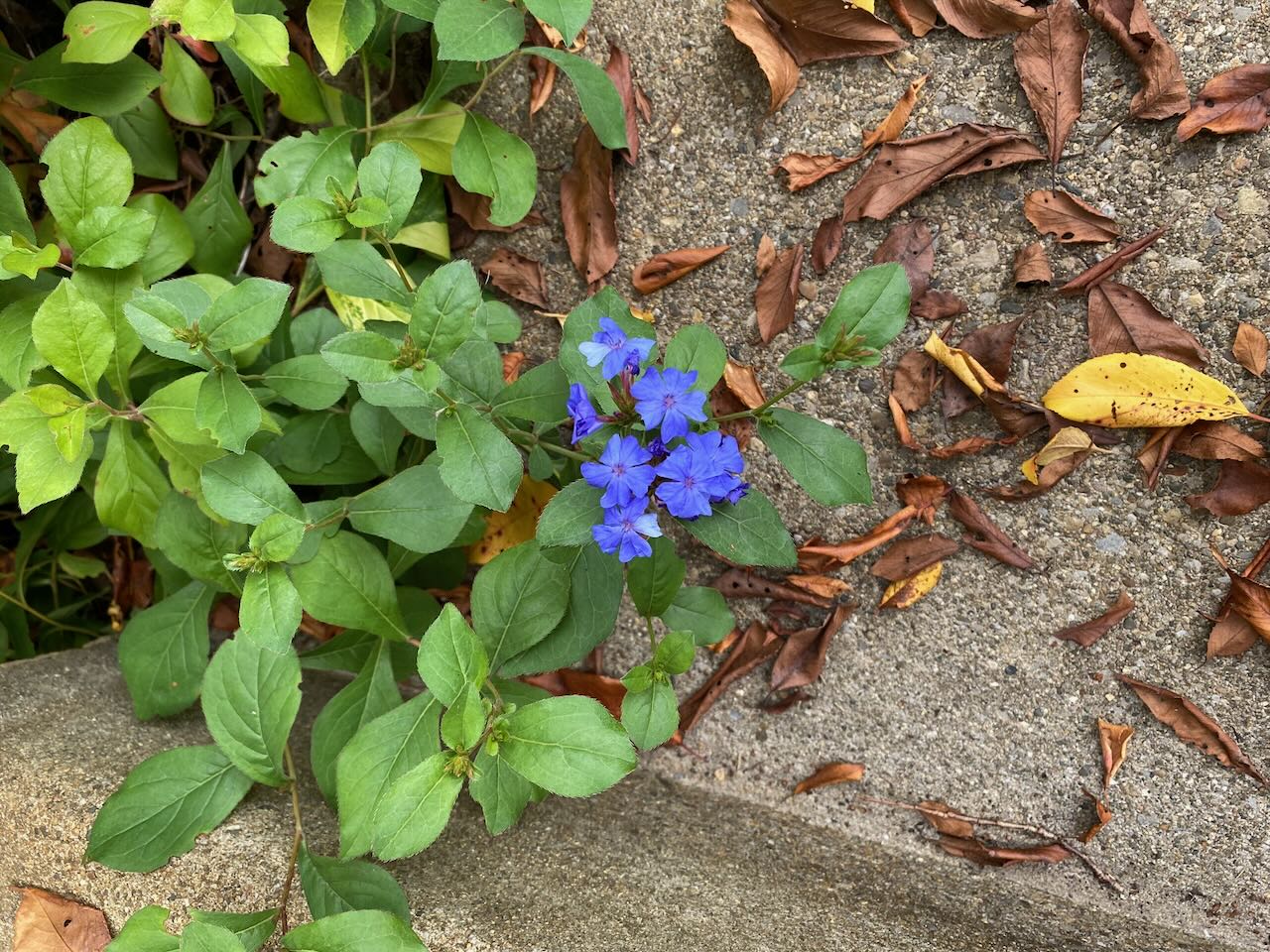
The weeping cherry tree is first to bloom in spring, early to leaf out, and early to begin losing its leaves, as it’s doing now. It makes a touch of autumn on the front path, fallen leaves next to the plumbago starting its late summer bloom. This is my favorite groundcover, because it holds back in spring while the daffodils burst into glory, then wakes up and spreads over the dying daffodil leaves, tidying the garden. I greatly admire its natural, nuanced sense of time. Also I love the color.