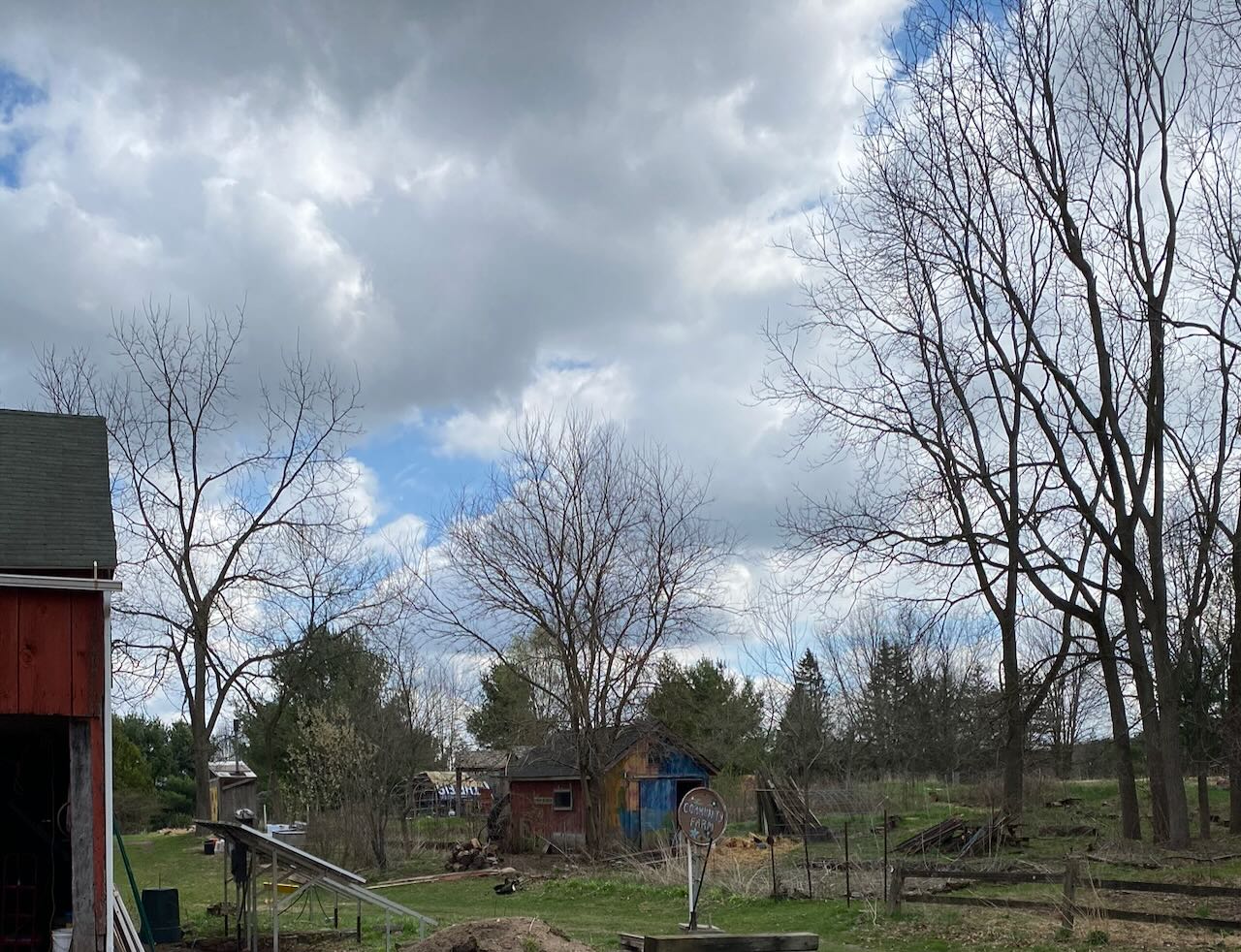
On a beautiful spring day I went with some friends to visit the Community Farm of Ann Arbor, located, according to the Michigan Historical Commission, on “Centennial Farm, owned by the same family for over one hundred years.” Community Farm was Michigan’s first CSA – Community Supported Agriculture – an arrangement where, typically, members of the community pay a share of the costs of farming, and then receive a share of what the farm produces. In some cities this may mean a box of produce shows up on your doorstep every week. But when the farm is accessible members can really become a community, showing up, volunteering, connecting what they eat with where it came from: dirt, water, sunlight, and in the case of Community Farm and its lead farmer, Kacee, joy in the process of engagement with nature.
So we toured the farm, and learned about Biodynamic Agriculture. Kacee told us biodynamic theory originated in the early 1900’s, considers the farm as a complete organism, and combines organic practices with astrological factors such as phases of the moon. They’ve been practicing it on the Community Farm since 1988. But wait, I said – that sound like the Old Farmer’s Almanac. People have been planting crops according to the phase of the moon for at least 230 years. “Well,” said Kacee, “I wouldn’t say the Old Farmer’s Almanac had biodynamic farming, but I’d say biodynamic farming ripped off the Old Farmer’s Almanac.”
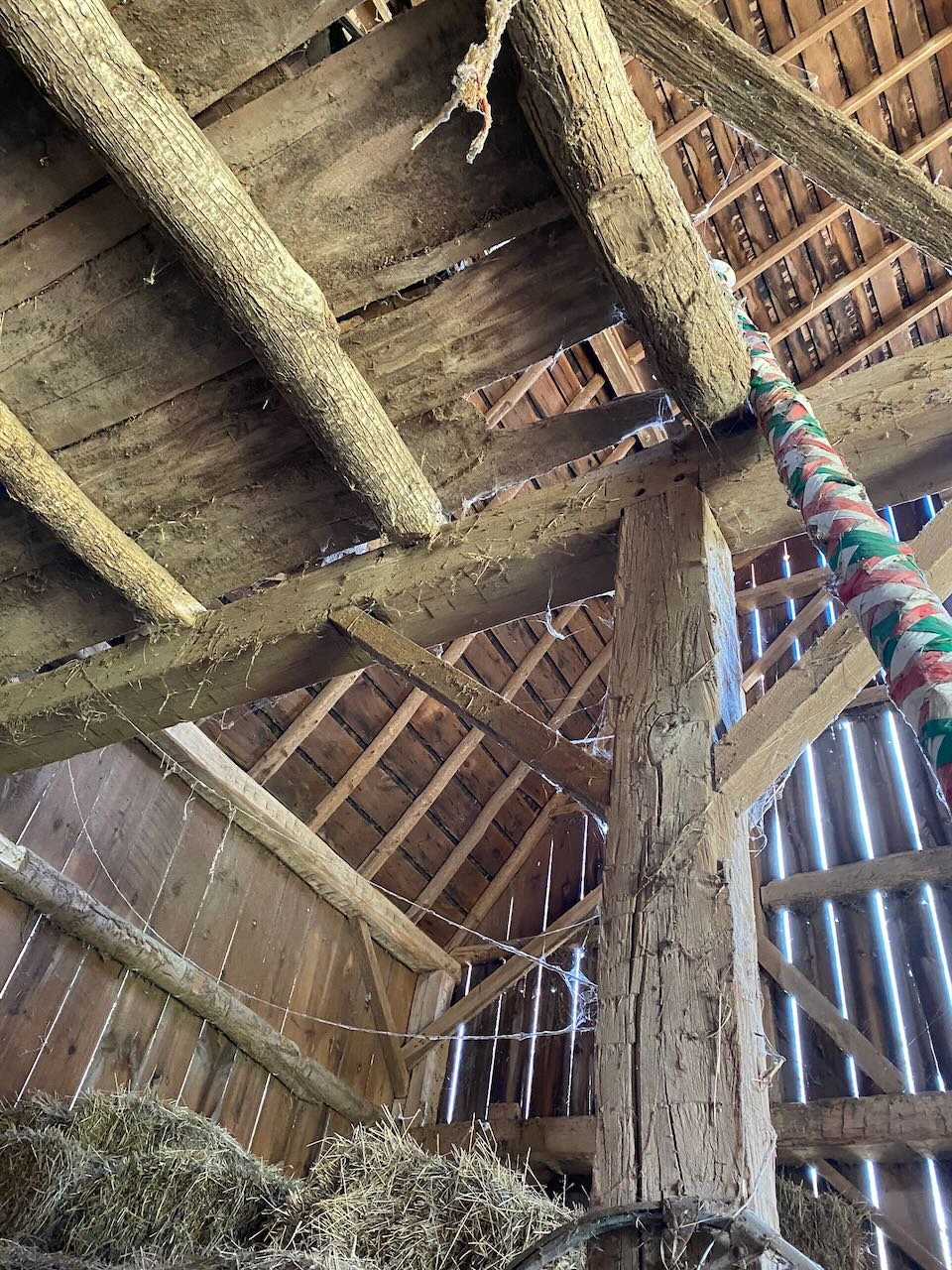
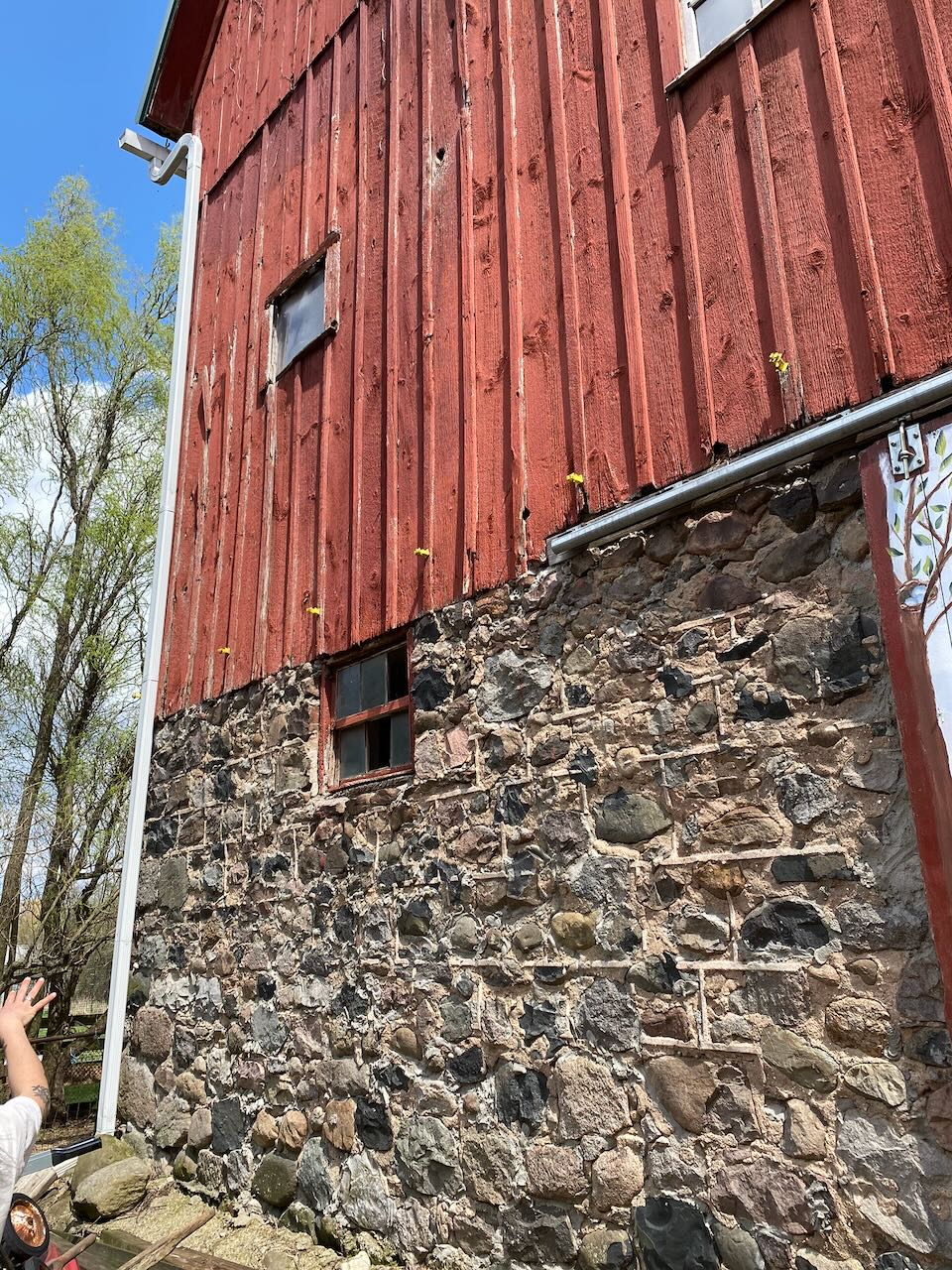
The farm has two barns, built over a hundred years ago on foundations of stones cleared from the land. The timber came from local maple trees, and was put together with mortise and tenon instead of nails. All of it, of course, done with hand tools. Right next to the old barns is a shiny new solar array which powers, among other things, a solar tractor, once an ordinary tractor, which they modified themselves.
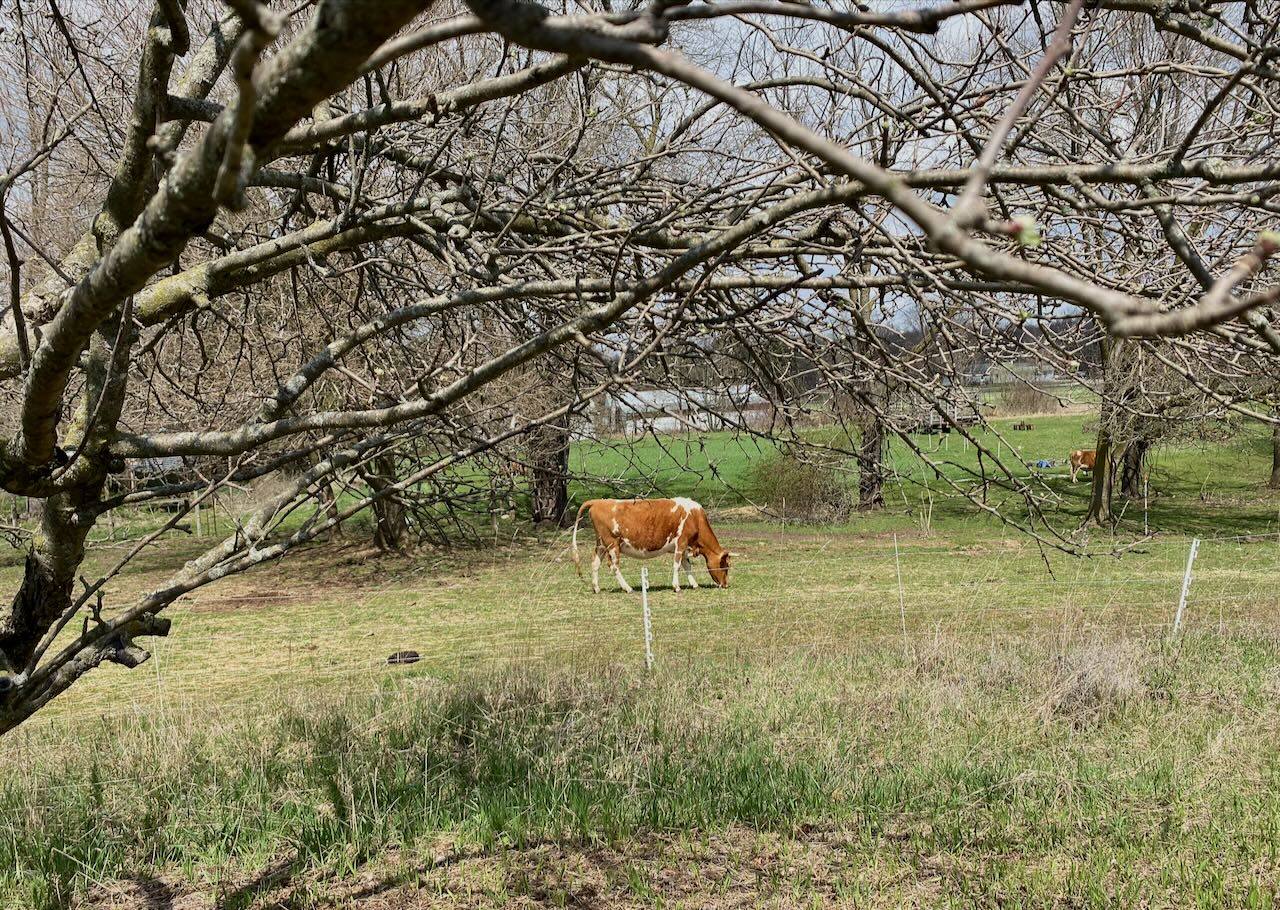
There were three cows out in a meadow, and when we learned they were not milked one of my friends said, Oh, they’re freeloaders. No, said Kacee, everyone on the farm works. They’re out there in the fallow field, browsing and fertilizing it for us. There were also three non-freeloading sheep and three non-freeloading goats. Advice on the farm’s website says, “it is best never to grab a goat’s horns, as it triggers a butting reflex.” Good to know my instinct was correct.
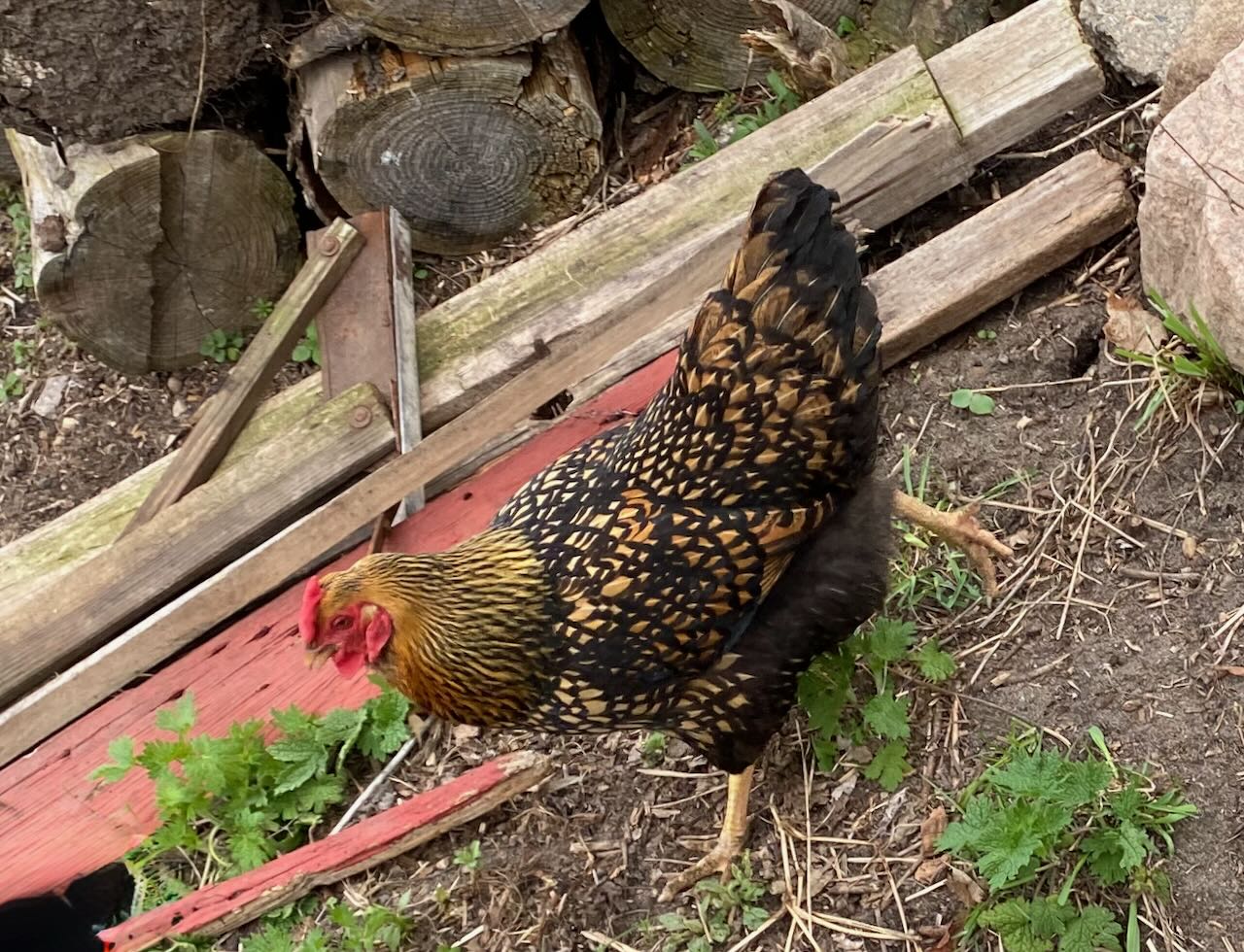
They had a small flock of chickens, including this very handsome one. She’s a Golden Laced Wyandotte, and doesn’t she look the part? They do collect the eggs, which go into the farm shares. There are two cats, but they and the chickens coexist peacefully. The farm offers lessons in stewardship, solar electric systems, soil workshops, and canning workshops, but unfortunately not one on coexistence. If the cats and chickens offered it, I can think of lots of world leaders I’d like to sign up.
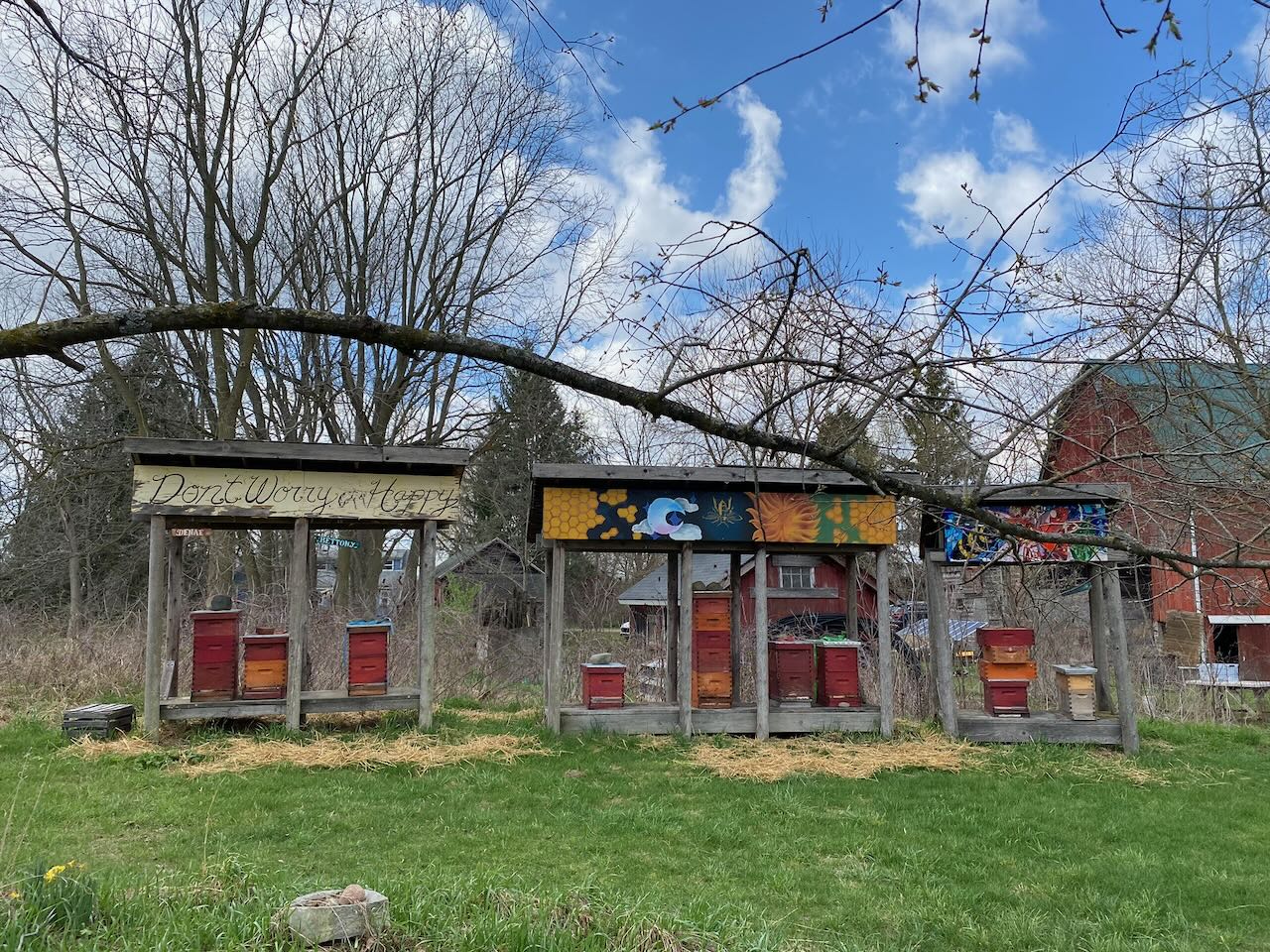
Last on the list of animals at the farm, came bees. Why do I never think of bees as animals? There’s no denying how animate they are, and how estimable: organized, cooperative, productive, communicative. They won’t attack unless the hive is threatened. Bees, too, could teach us a lot if we’d listen. The farm offers Hiveside Chats for those inclined to pay attention.