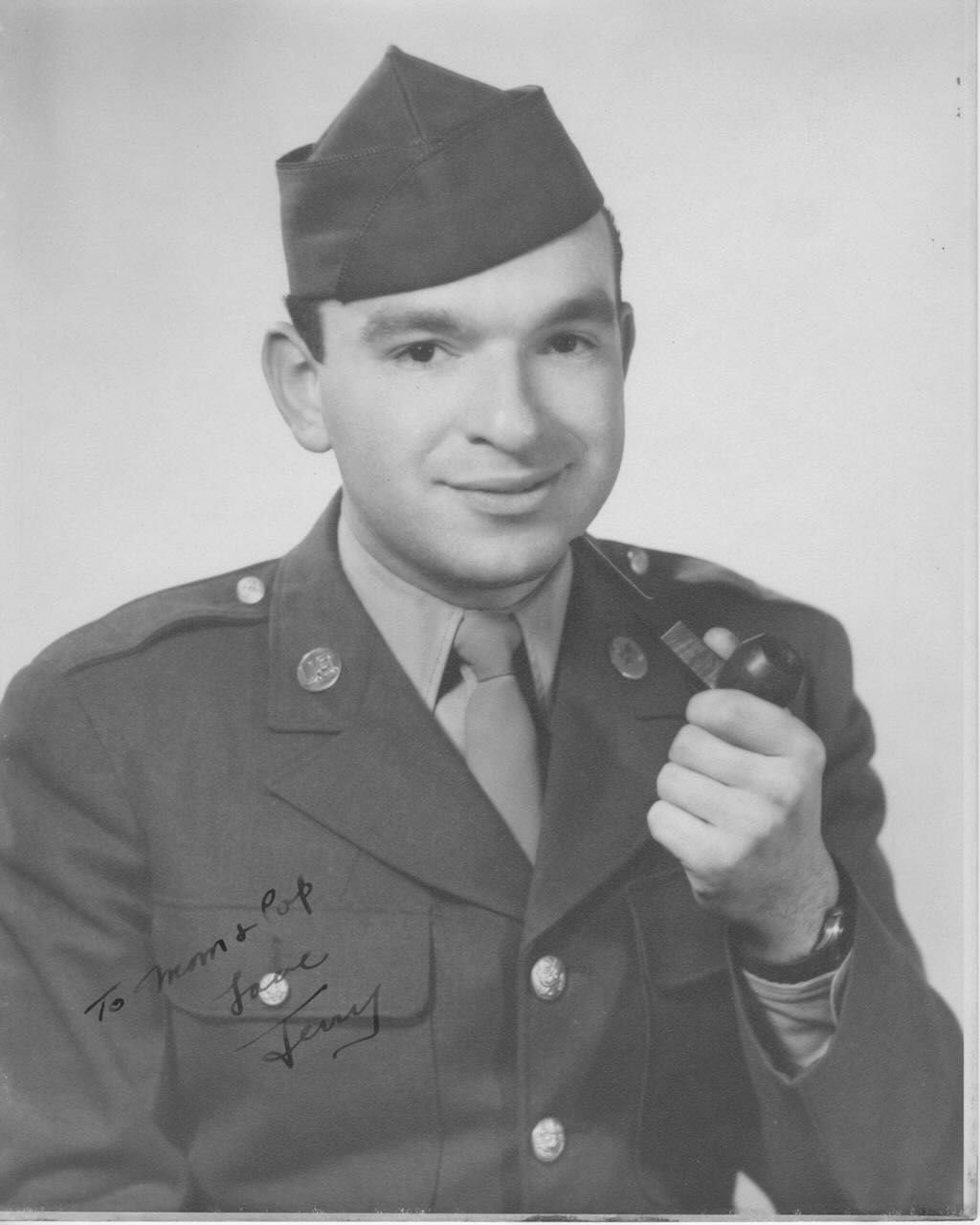
Father’s Day is next week, and my favorite bookstore is full of cards for the occasion. Some are funny, some are tender, and they all make me a bit sad, remembering my Dad, and a bit happy, remembering my Dad. Like many men of his generation he served in World War II, and I probably wouldn’t be here writing this if that hadn’t been the case. He was born and raised in Brooklyn, my Mom was born and raised in a tiny town in Texas, and they only met because the Army Air Force stationed him in Amarillo Texas. This fact has often led me to muse that the purpose of war is not world domination, but rather the stirring up of the gene pool. It would explain why, despite all these millennia of killing each other, there are more of us all the time.
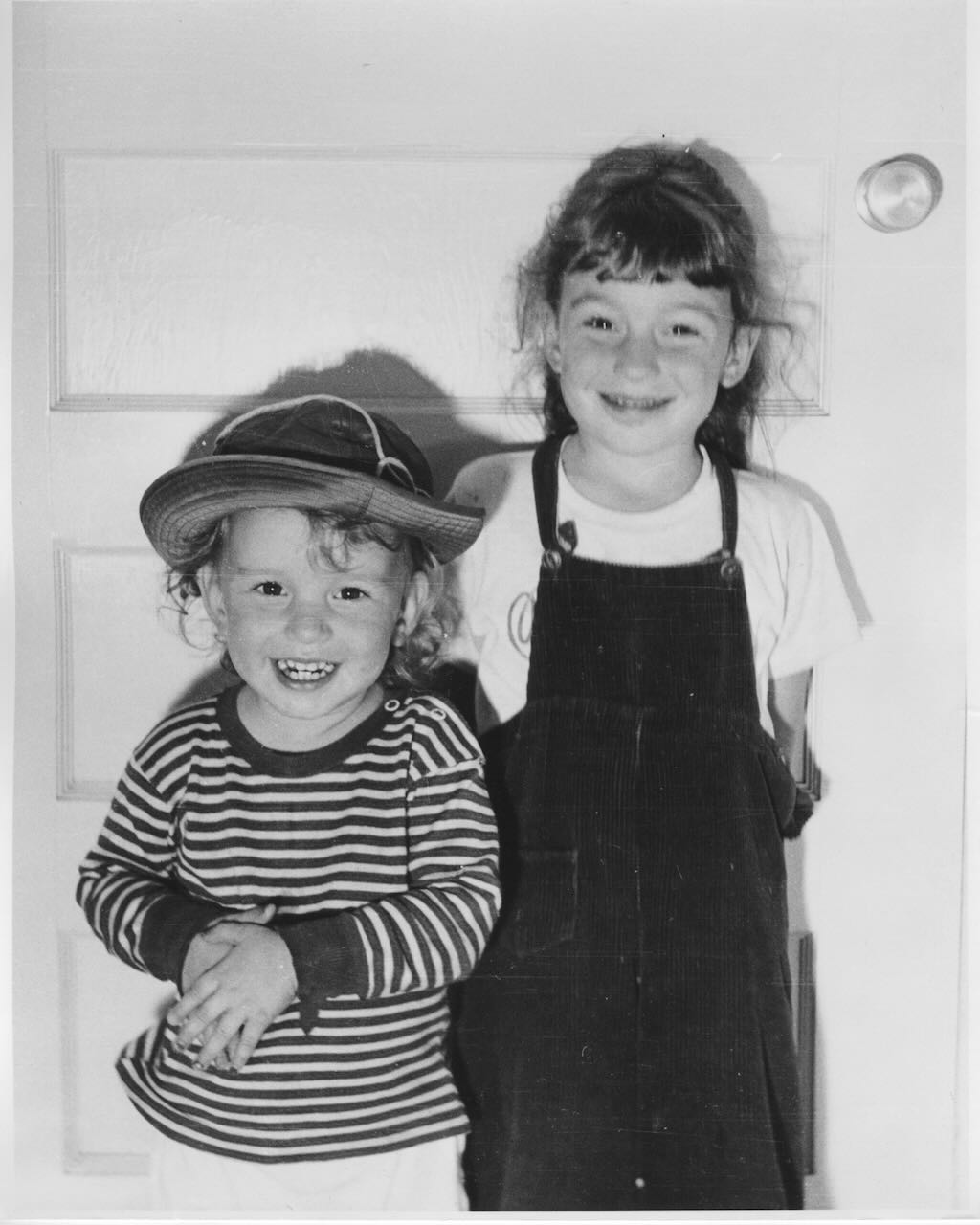
After the war they worked their way back to New York, to a house in the suburbs and, eventually, four children. This was Dad’s favorite picture of the first two of us – me and my older sister. Dad called us his “hobos.” I remember that hat, which I wore for years until either I outgrew it or it fell apart. There has never since been a hat so fine to wear.
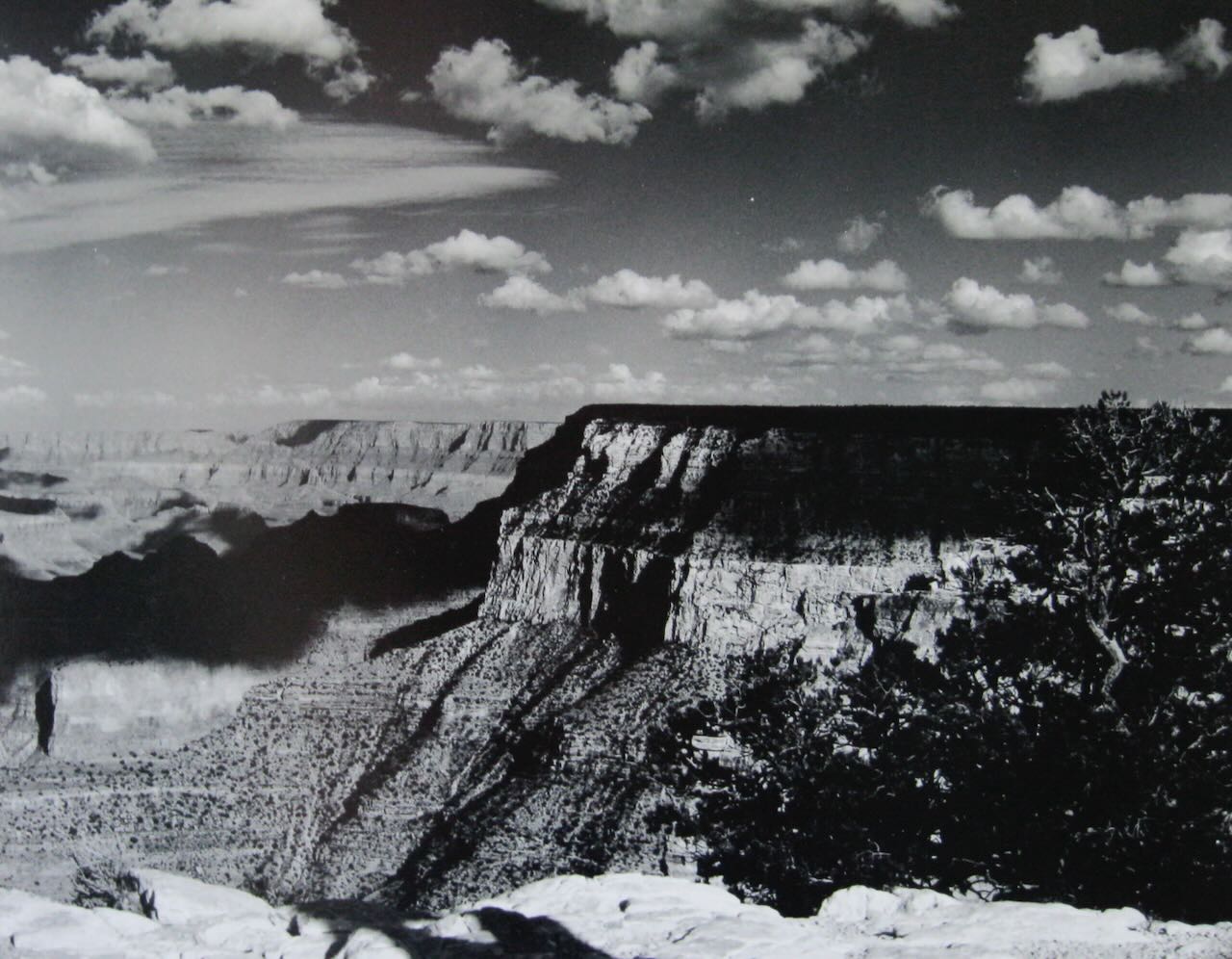
Dad was a wonderful photographer, shooting black and white film and making gorgeous prints. I used to watch him in the darkroom, waving his hands between the enlarger and the photographic paper, a magician altering exposures for emotional depth. I always thought his prints were museum worthy but, trained as an engineer, he denied being an artist. He always encouraged and supported me in my own work as an artist and poet, and claimed he had no idea where I got it from. He said he “didn’t get” poetry. Then my Mom slid into dementia, and I showed him a poem I wrote about it. And he said, “Now I get poetry. It’s like why I take black and white pictures instead of color.”
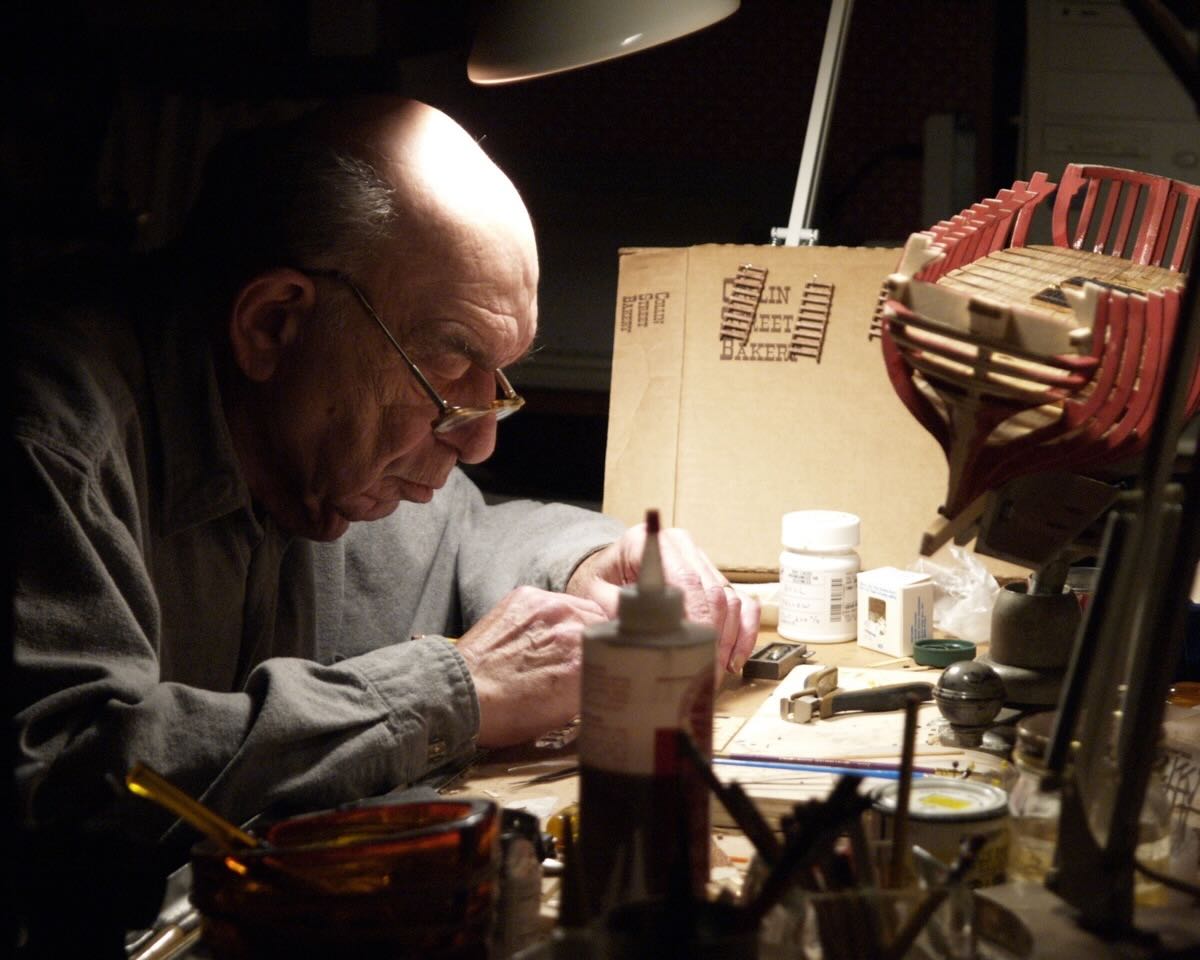
He had other hobbies, too – a wood shop, a metal shop, restoring antique cars, shooting at a rifle range. He taught me to shoot what we called my mother’s .22, though I never saw her shoot it. When age made it too hard for him to use his shop equipment, he built model ships. I have his model of The Victory here, in a town unexpectedly suitable for the name. I have many of his custom-made tools, too, repurposed for my crafts. Writing this, I can see where I got my propensity for running many creative outlets at once.
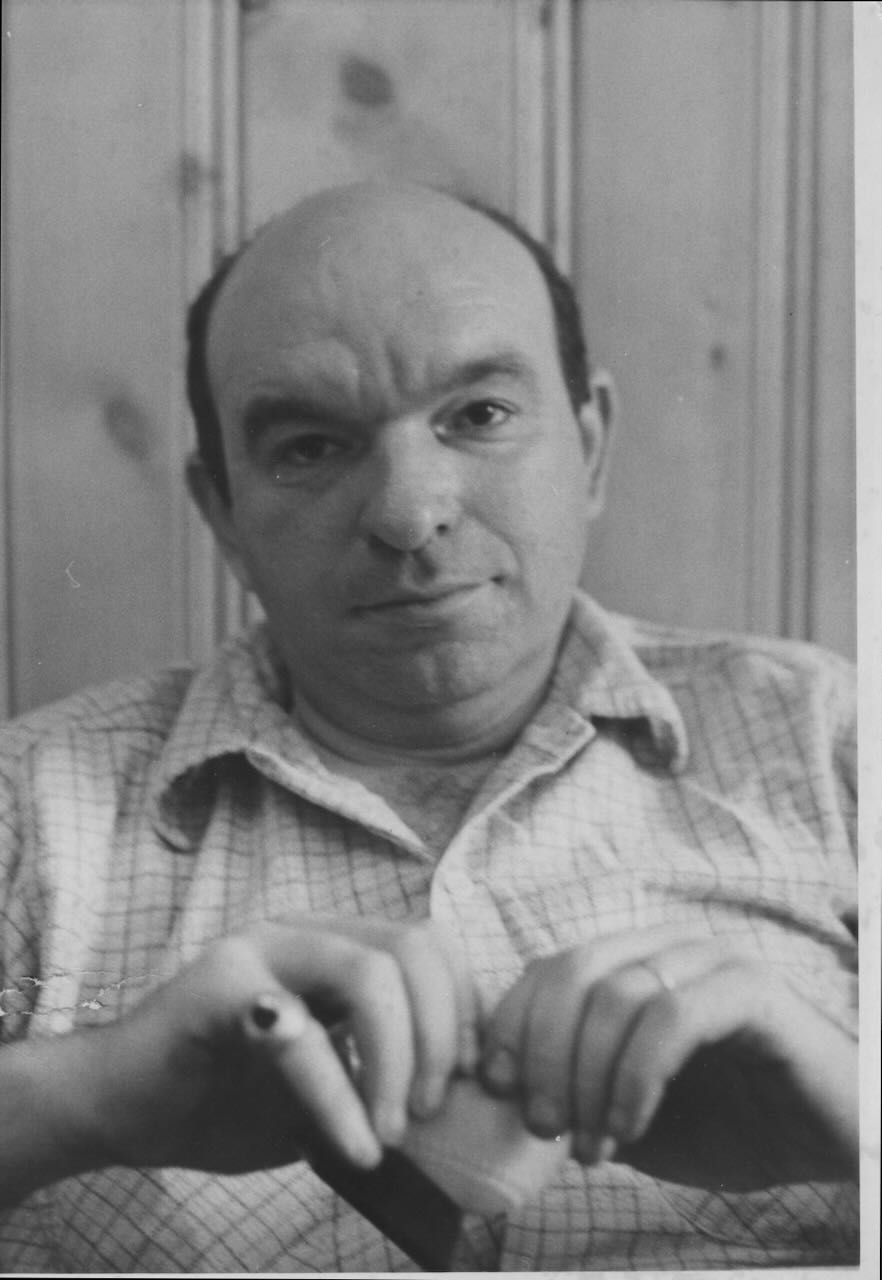
He also gave me my love of classical music, which was always playing when he was home. He gave me my first serious camera when I was a teenager, and this is a photo I took of him with it. He looks – well, a little amused, a little proud, a little indulgent. This is how I remember my father’s face; a face it always made me happy to see. Happy Father’s Day, Dad.
What Heaven Would Be Like
In my father’s heaven, there would be
perpetual restoration of antique cars.
The needed part would turn up
at the perfect moment,
just late enough
for deep satisfaction.
Authentic colors of paint
would line his garage,
real wood for the dash,
real leather for the seats,
and none of the necessary clanging
of this ecstatic work
would drown out Moussorgsky,
Tchaikovsky, or Zarathustra.
In my mother’s heaven,
there would be no workshops.
My father, coming in
from the harp-strung air,
would listen only to her,
and however wild and incredible
the stories she told,
he would believe them,
and they would be true.
published in The Kansas Quarterly