A Sense of Time

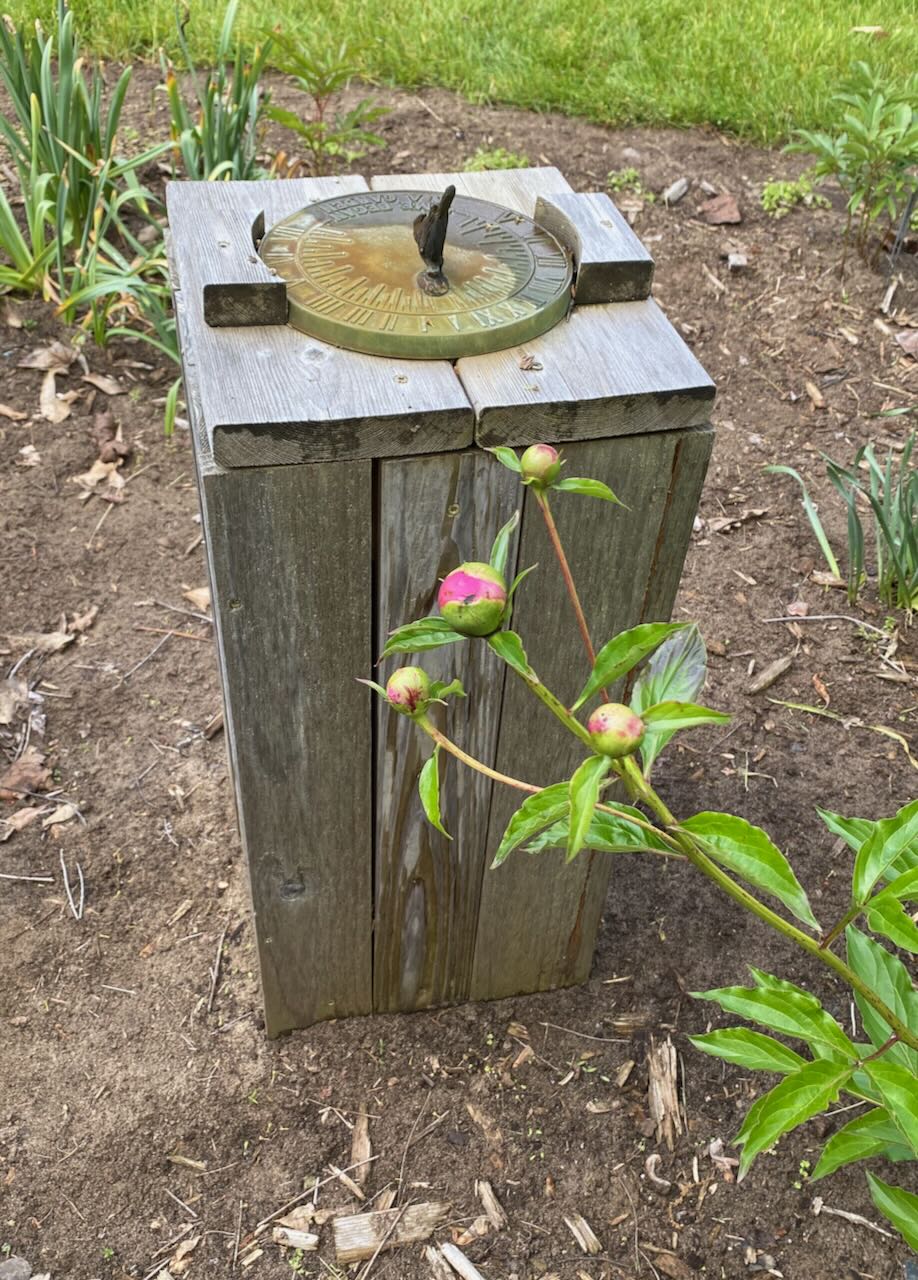
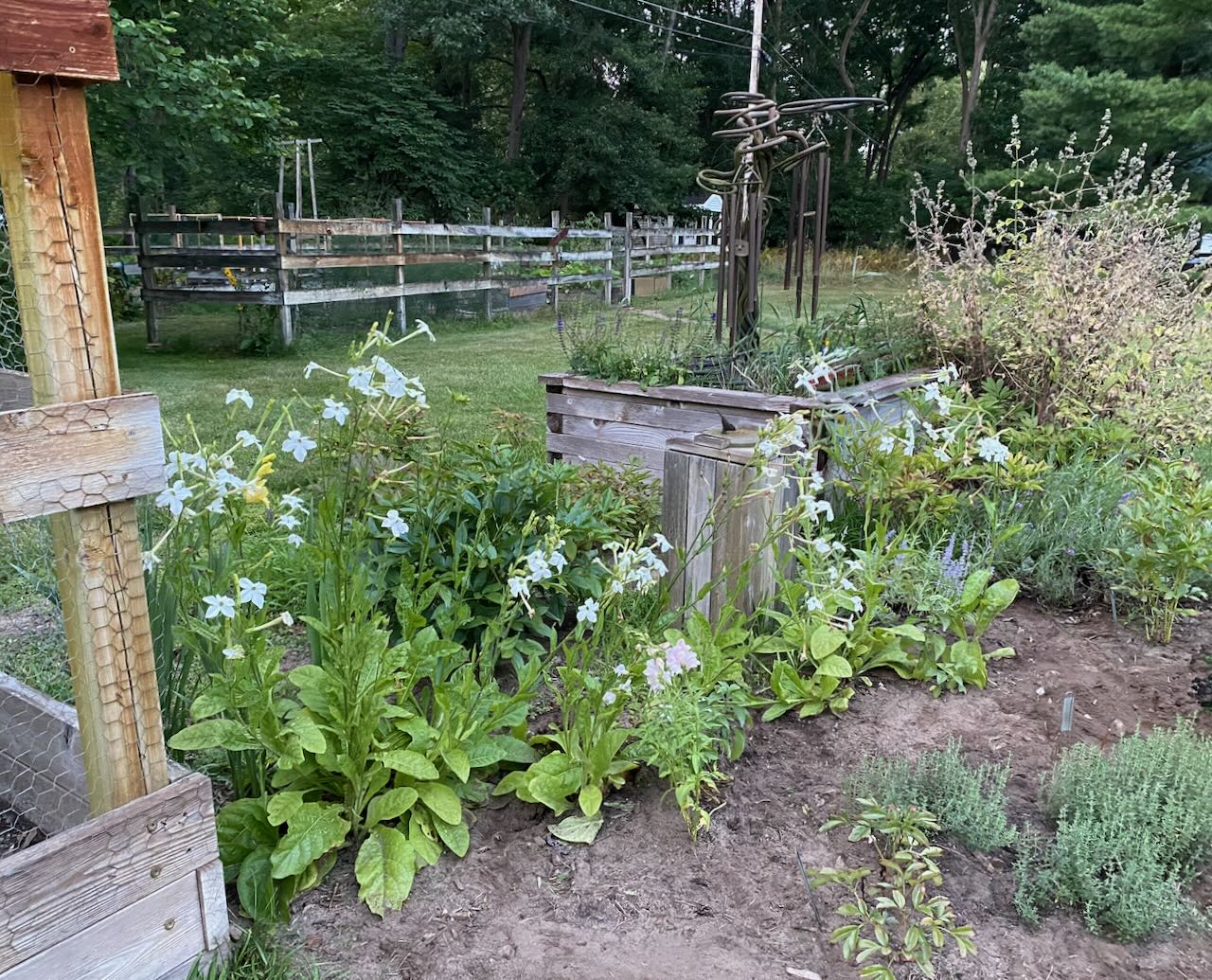
I’ve put the jasmine tobacco that blooms from early evening through early morning, next to the sundial that bears its witness in daylight only. It only struck me that this was possibly amusing when the first flowers began to open as the sundial, so to speak, shut down. Conservation of – well, something. The sundial, sitting there on the plinth Doug made for it, bears a legend in raised letters: “time began in a garden.” But the original Garden was a place of eternal timelessness. Time as we know it began when people left the Garden.
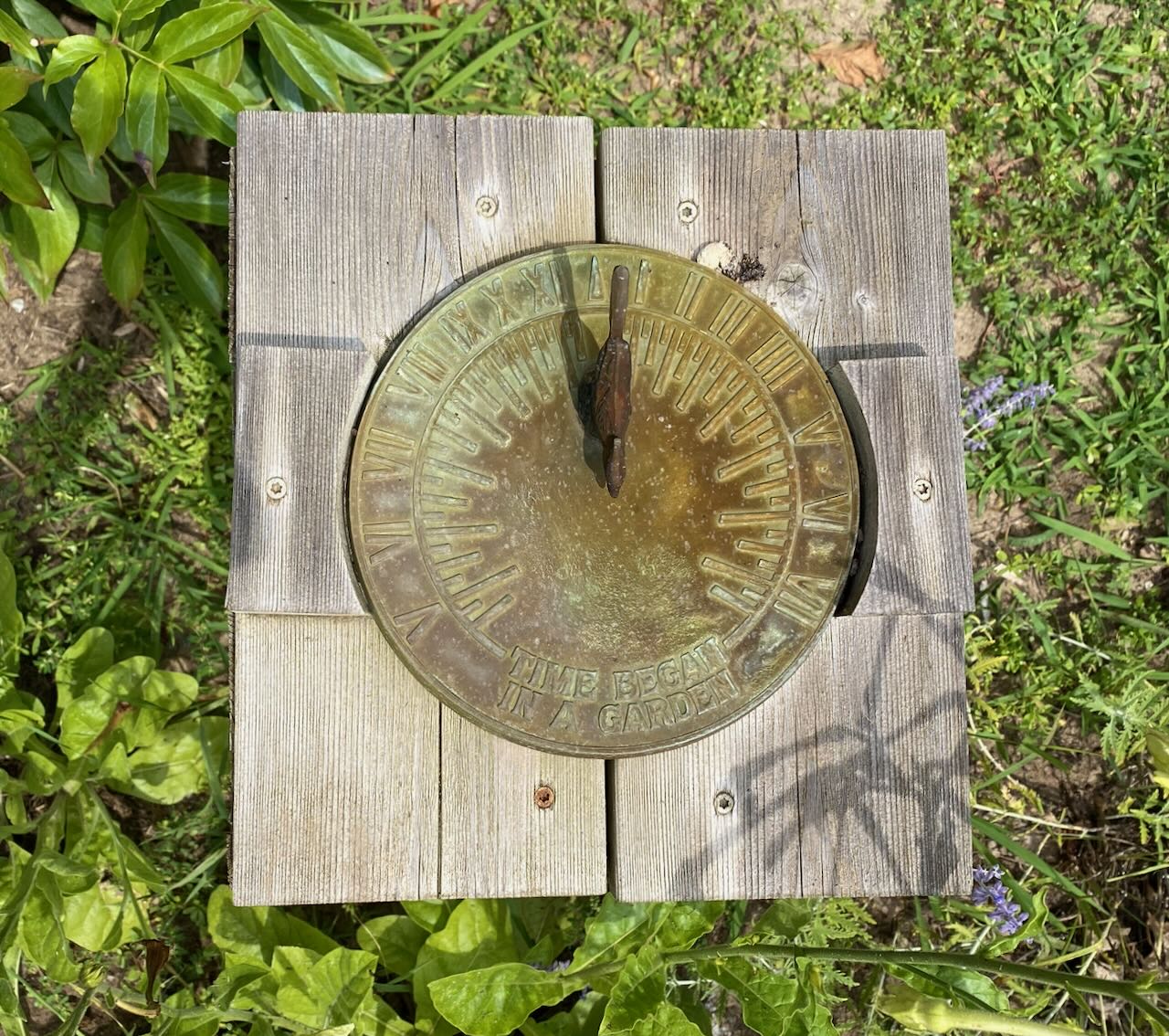
The sundial tells sun time, which is not the same as the time on a clock. With daylight savings time we set our clocks forward one hour, deliberately to get the clock into a new relationship with the sun. So in summer, the sundial starts out an hour behind clock time. Then there are time zones. Ann Arbor is about 700 miles from Boston, but they share the same time zone and so the same clock time. That’s about three fourths of a time zone, so the sundial and the clock are about another three fourths of an hour out of sync. When my sundial here says eleven fifteen, the clock on the kitchen wall says it’s one o’clock. The Old Farmer’s Almanac carries time zone corrections for various cities if you want to be precise. Based from Boston, of course.

But the natural world’s sense of time isn’t a clock. It’s built in; it’s a flow – bloom, set fruit, ripen, fall. Deer have their fawns when summer’s far enough under way to feed them. Mama here has led her two babies to the easy pickings of fallen fruit under the crabapple tree, more nutritious than the forage available in winter, and giving the little ones time to store up some body fat.
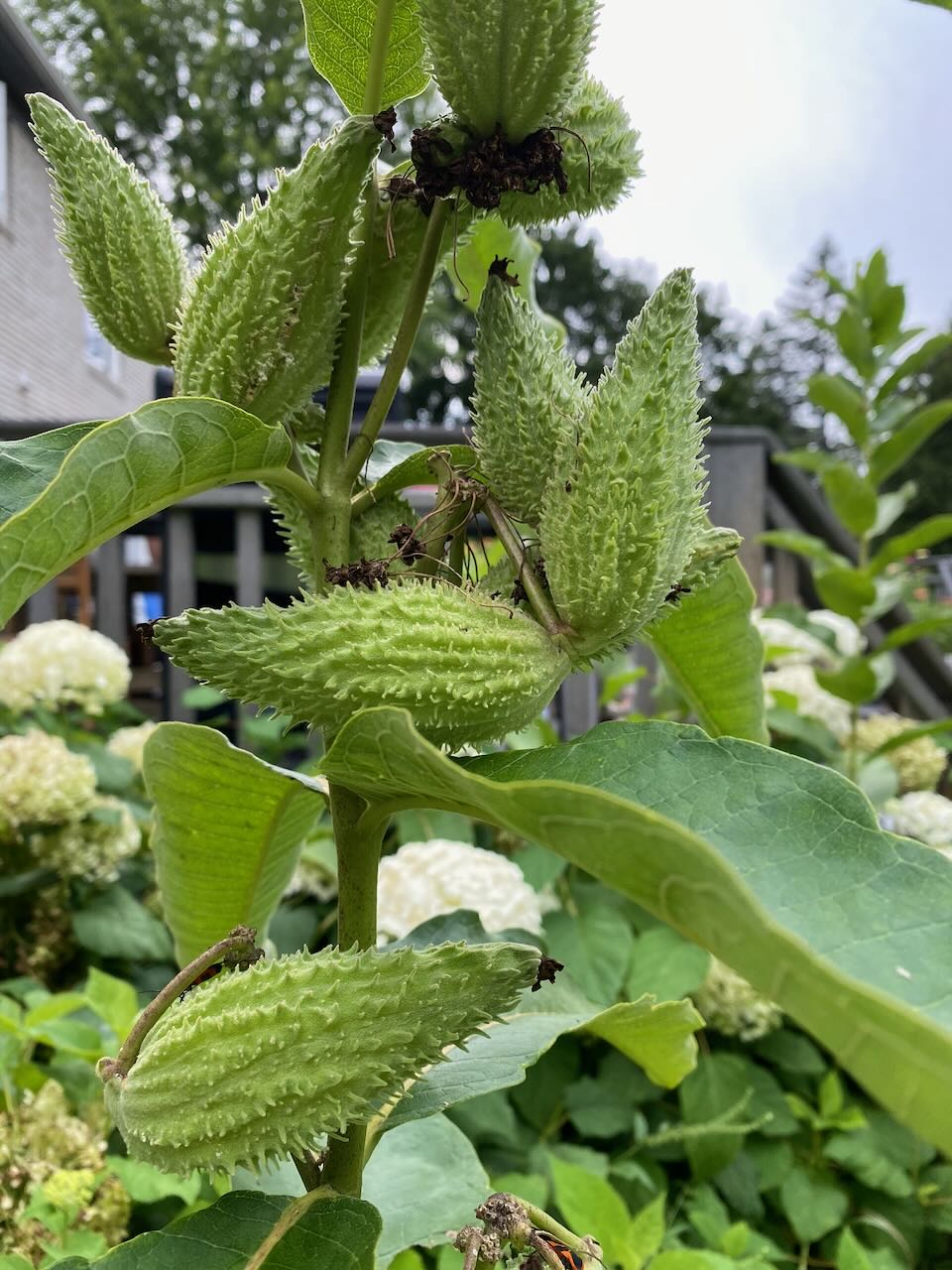
The milkweed’s covered in pods that will wait to burst until fall, when their winged seeds can sail out onto newly bare spots on the ground, and settle in for the cold they need in order to sprout. It’s complex, but they found a niche and filled it. The monarch butterflies haven’t quite colonized these yet, but I expect they will.
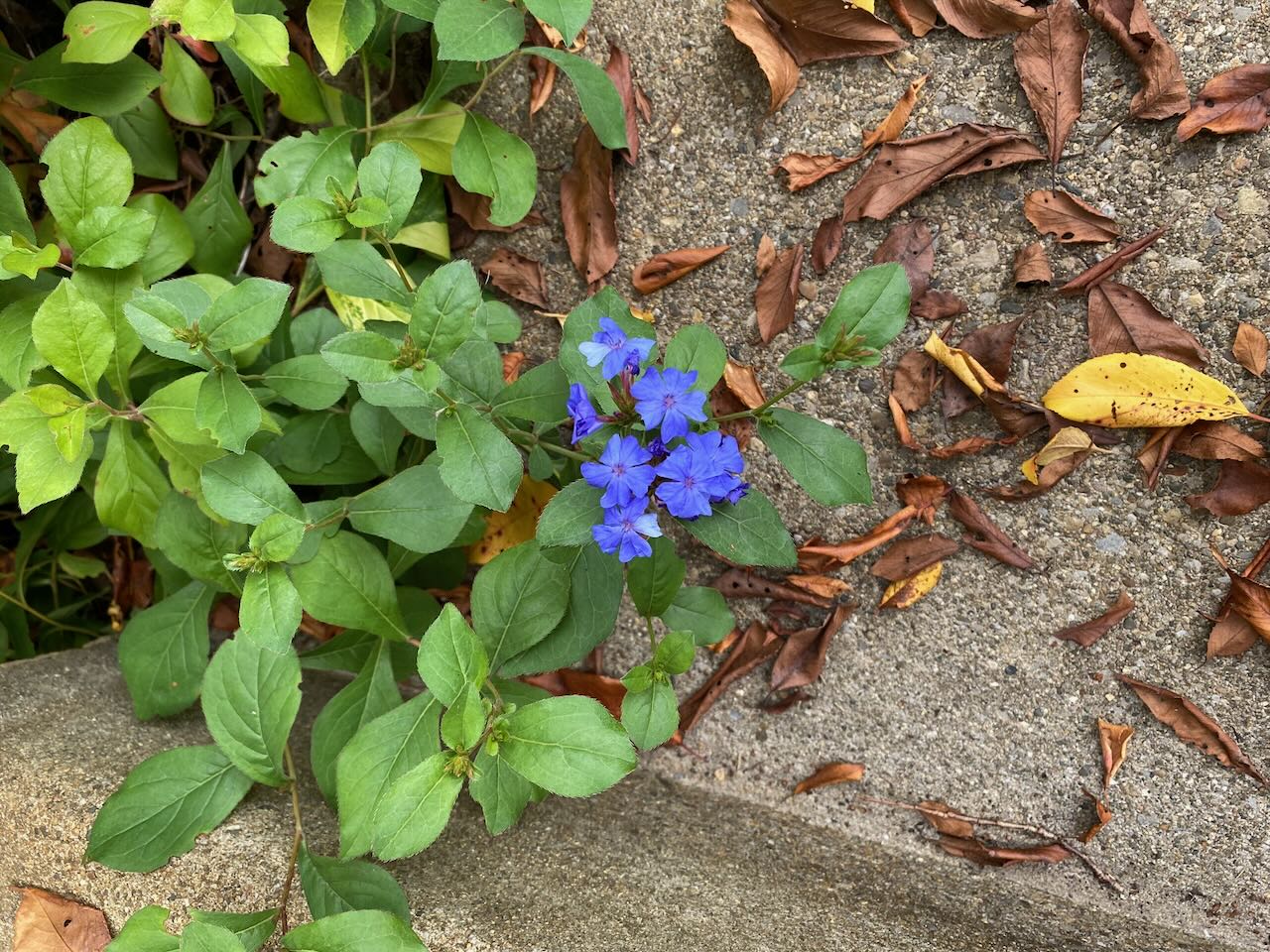
The weeping cherry tree is first to bloom in spring, early to leaf out, and early to begin losing its leaves, as it’s doing now. It makes a touch of autumn on the front path, fallen leaves next to the plumbago starting its late summer bloom. This is my favorite groundcover, because it holds back in spring while the daffodils burst into glory, then wakes up and spreads over the dying daffodil leaves, tidying the garden. I greatly admire its natural, nuanced sense of time. Also I love the color. 
Winter, Light, and Windows

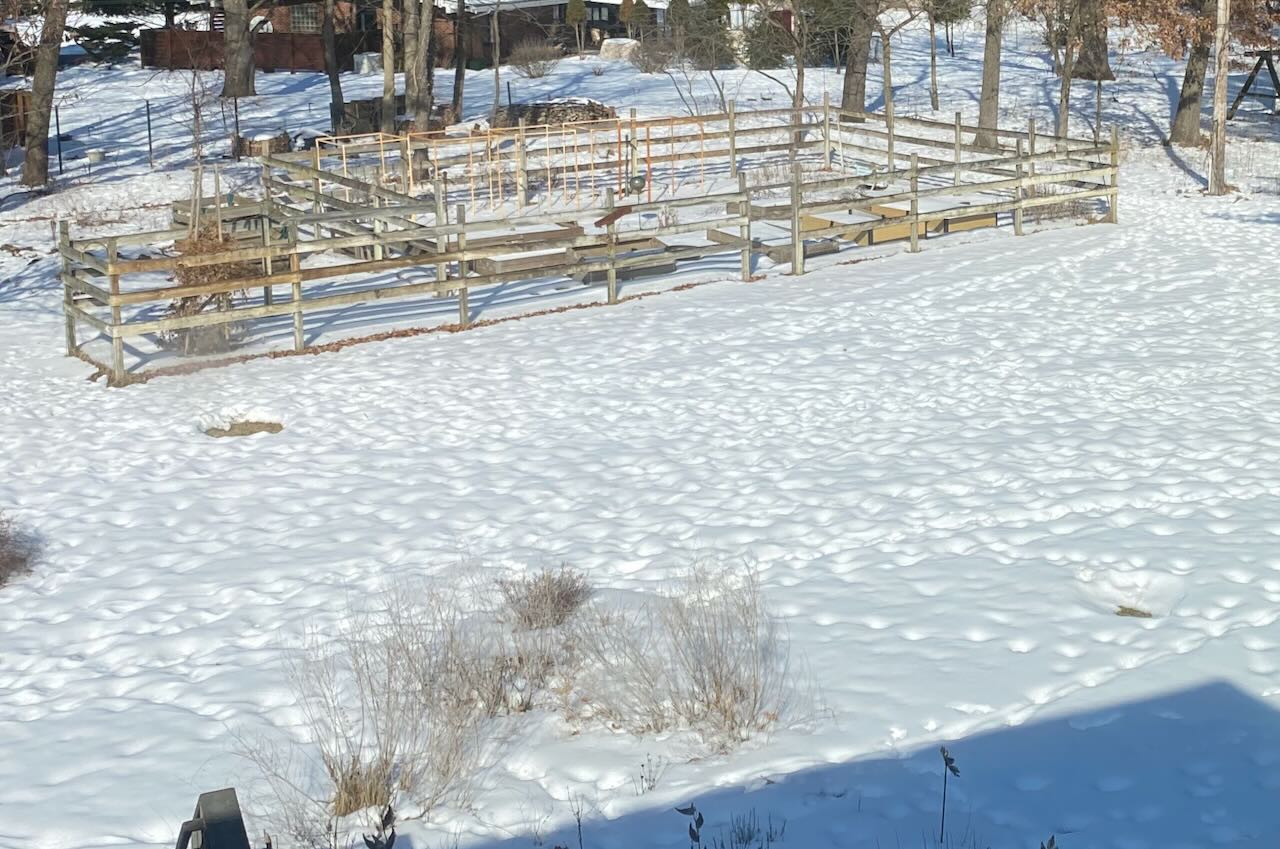
The weather’s been having a lot of fun with us. Over the last week we’ve been up and down the thermometer from ten degrees to fifty and back, with the coming week predicted to do the same. In the warm spells the snow goes, and when the snow goes we lose a lot of information. In this photo from a few days ago, you see a clear demonstration of why I only grow my tomatoes behind a fence. A few other animals wander through, but that’s mostly the heart-shaped hoofprints of deer.

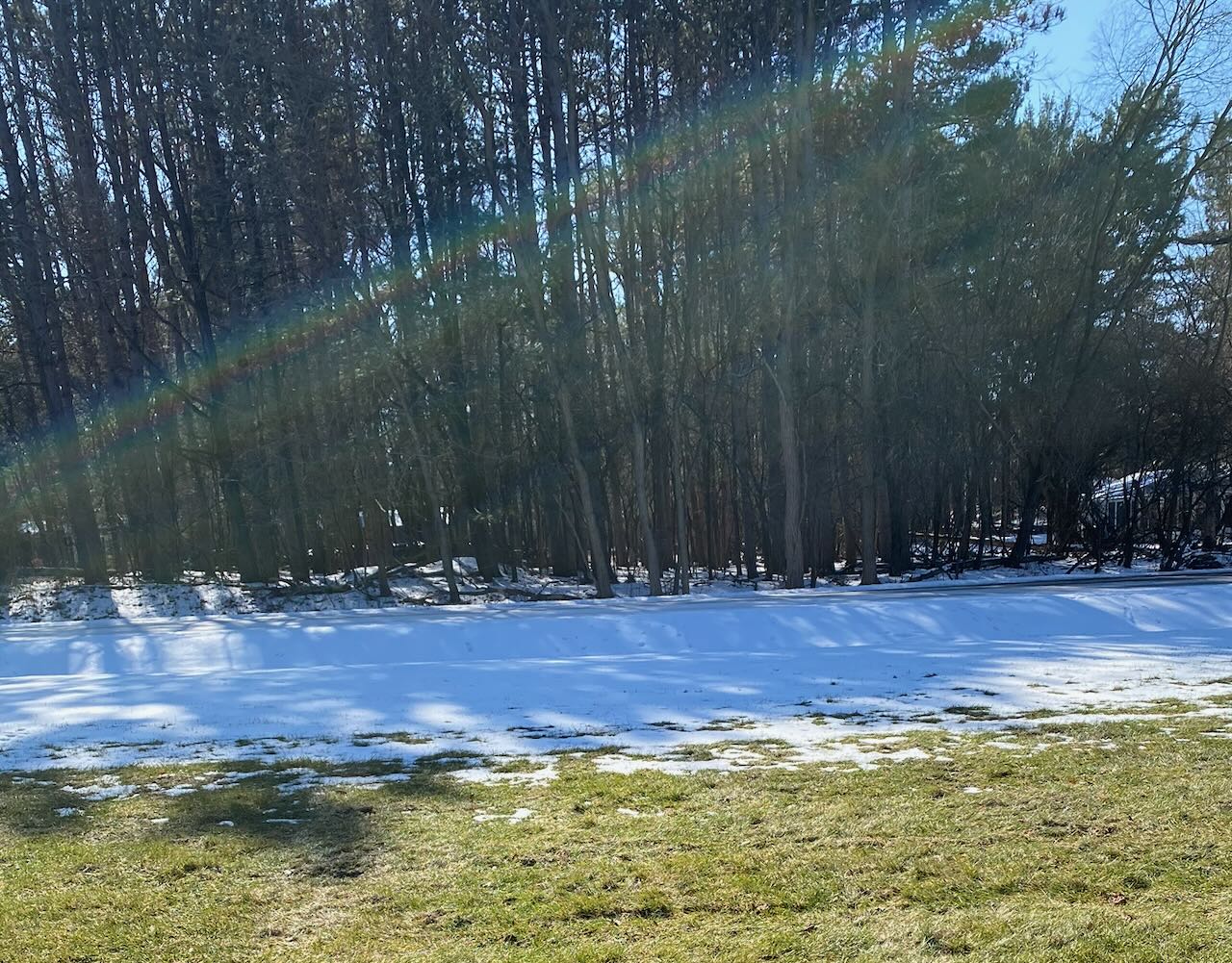
That evidence is gone now, but the strengthening light has its own games to play. To me this photo shows the lovely effect of the sun’s rays reaching out like fingers of a warm, gentle hand. My grandmother saw it as “the sun drawing water.” I thought that was awfully prosaic, but it’s another possible point of view: where I see something coming down, she saw something going up. It’s so common for different people to look at the same thing and see it differently, it must be an advantage to a community – whatever’s happening in the world, you have options in deciding what to do. 

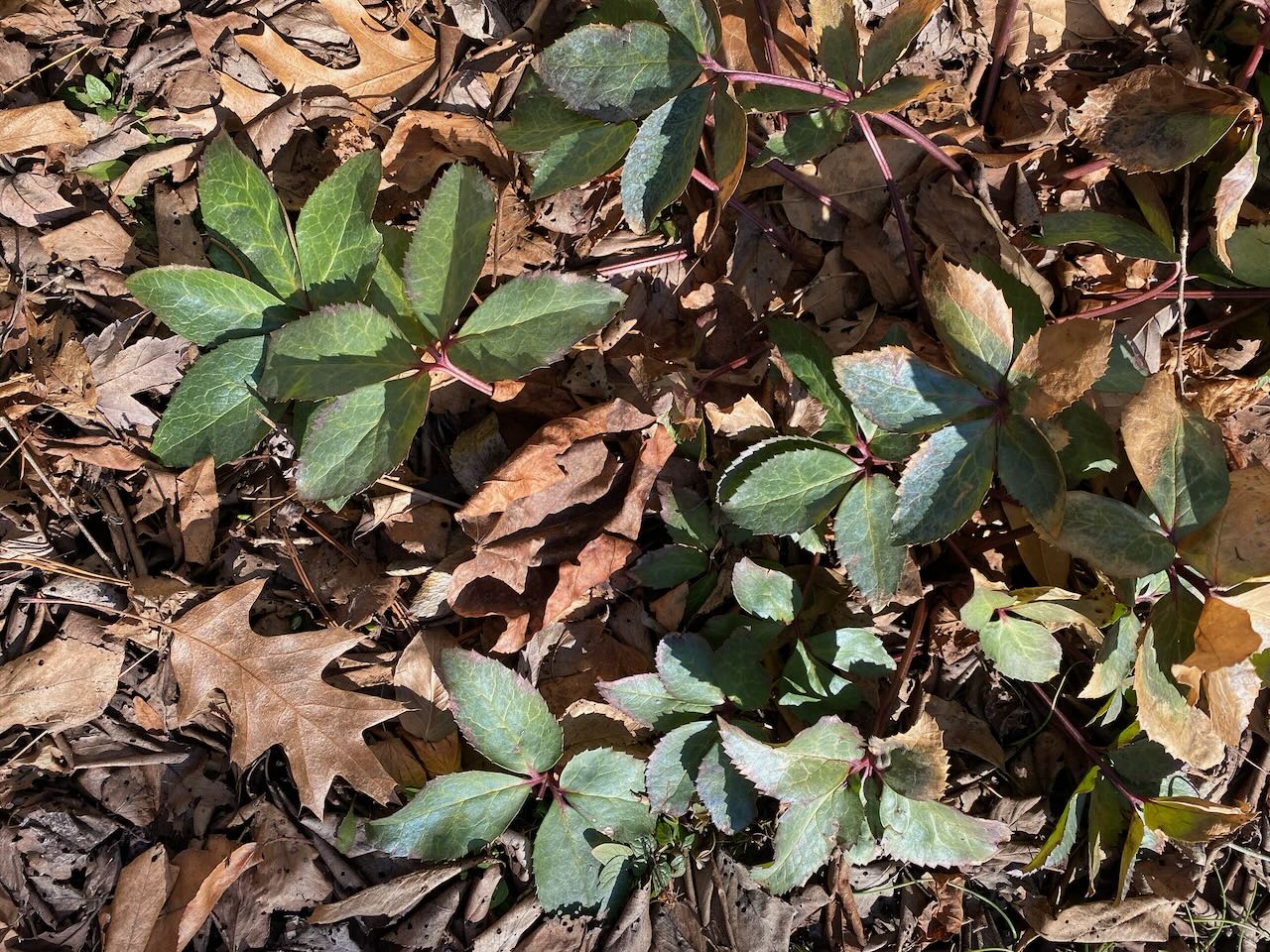
Whether the sun is pulling them up or their roots are pushing them out, my hellebores are positioning themselves to be ready for the race to spring. They don’t exactly die back in winter but they lie low. Their newly perked-up posture chimes with their nickname, Lenten Roses, and bodes well for flowers well before Easter. 

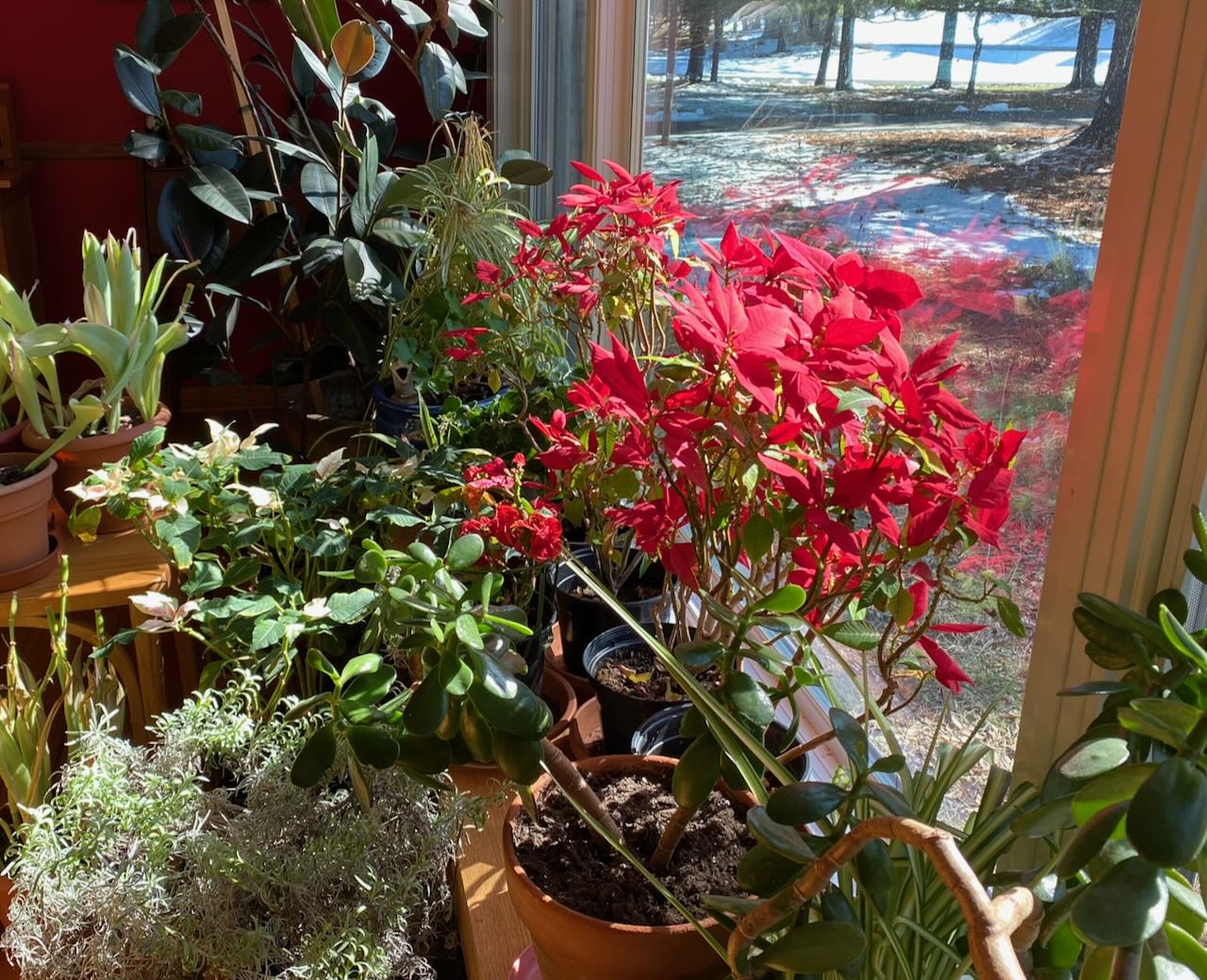
The increasing light also plays games with my indoor plants. From the dining room window it looks like there’s something red blooming outside on the snow, or at least some persistent fallen leaves. But no. It’s the reflected glory of the poinsettias, the window partly a mirror and partly transparent in this particular afternoon sunshine. 

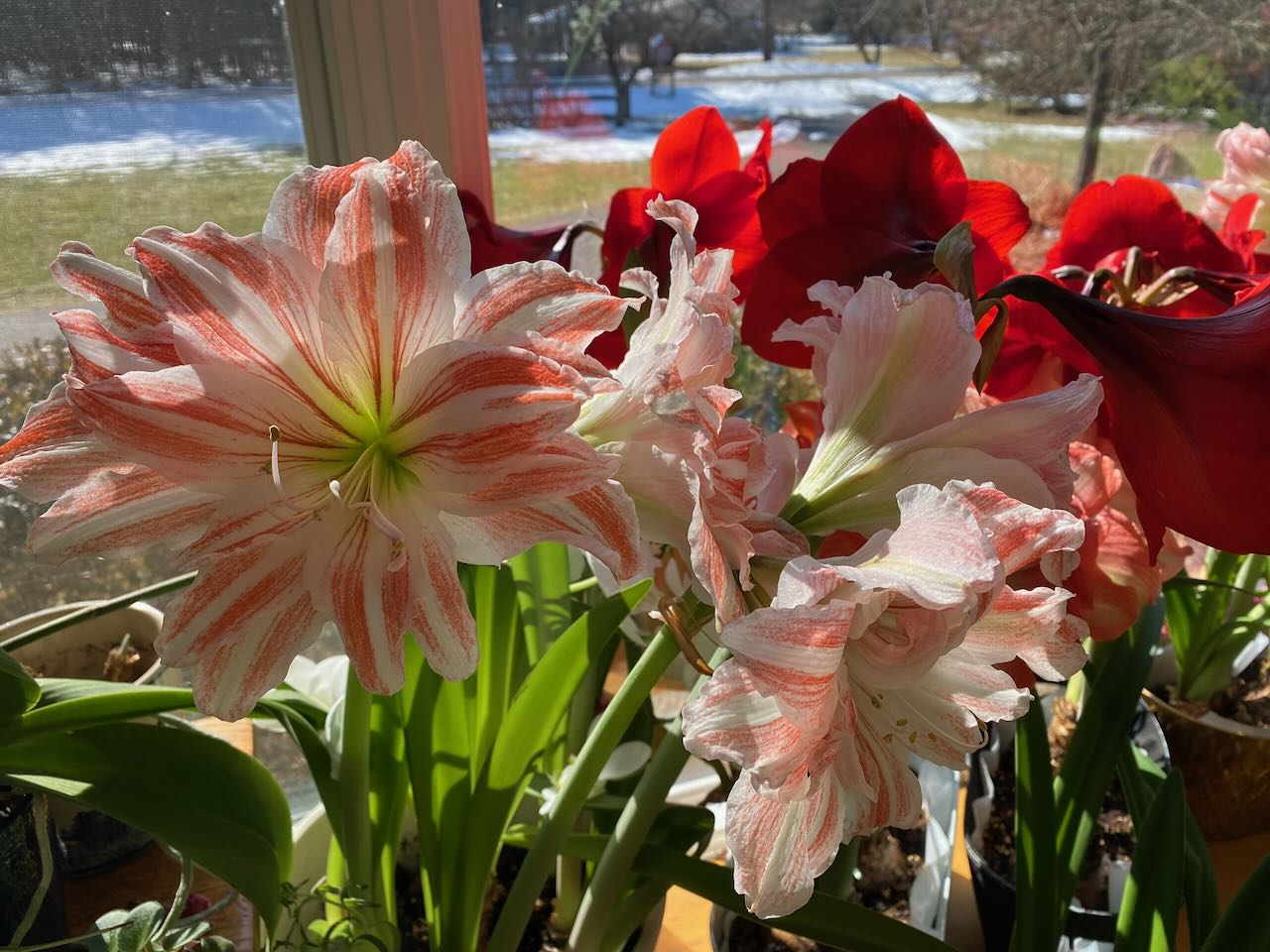
There’s a little of the same thing going on at my studio window, though you have to look beyond the riot of frills and frolic that is my amaryllis collection to see it. The red phantom of an amaryllis has materialized way out by the road, where a last strip of snow hangs on in the shadows. Is it a ghost of the past winter? A mirage of the coming spring? Now new snow is falling, thin and unconvincing, much of the ground too warm to sustain it. The red ghosts are gone but their fleshly originals are still at my windows, stretching out to lean against the glass, in case the sun calls on them again for a bit of magic.

Shoulder Season

When I moved to Michigan I learned a new term — shoulder season. This being Ann Arbor and Brady Hoke’s football team being where it was then, I thought it meant crying on someone’s shoulder between sports seasons. I was fond of Brady Hoke and hoped he’d do better, because he said he’d walk to get to Michigan and that was how I felt about it. But now here I was, and as winter slid into a spring too warm for sweaters and too cold for shorts, the meaning of the term came clear to me: not on the main path; sloping off from one place to another; like the shoulder of a road. Transition. 

Here are my red poinsettias, out enjoying the sunlight that will slowly turn them green, a color they will keep until I bring them inside come fall, and daylight lessens, and they turn red again.

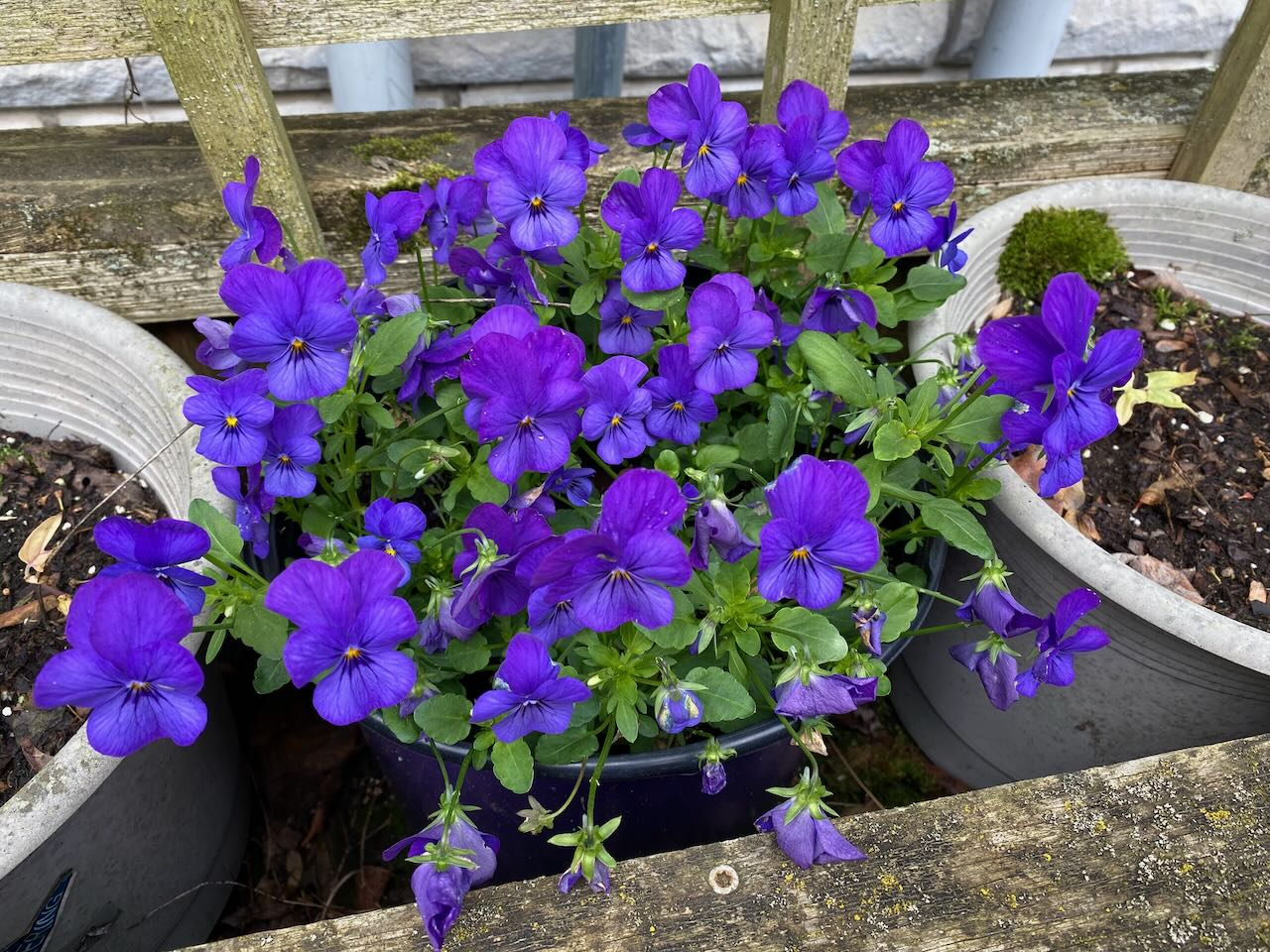
Here are violets in strong profusion, while morning glories in pots to either side are barely sprouting. The violets will wither in the coming heat, but the morning glories will move in and take over.

Here are yellow alliums and purple chives in bloom, while behind them milkweed has a long way to go before it flowers and feeds the monarch butterflies.

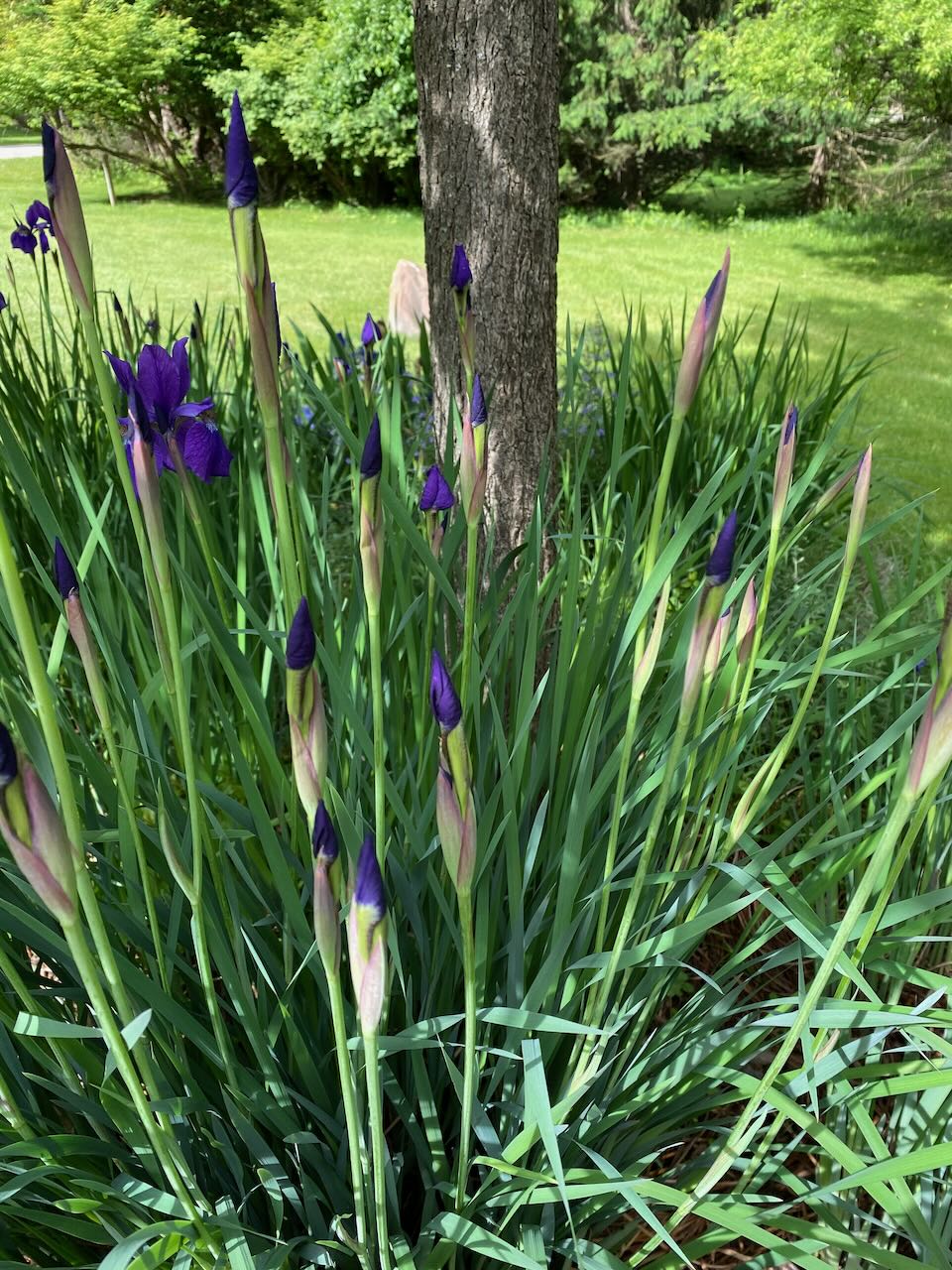
And here are Siberian iris spearing their way into a showy blue drift under the ornamental pear tree, whose flowers are already turning into fruit the deer will eat in August. Deer can be total pests but it’s strangely comforting that, despite my efforts at deterrence, they come back, resilient in the face of adversity. Fight the good fight, deer. I appreciate that more today than I ever have.