Persistence in the Garden

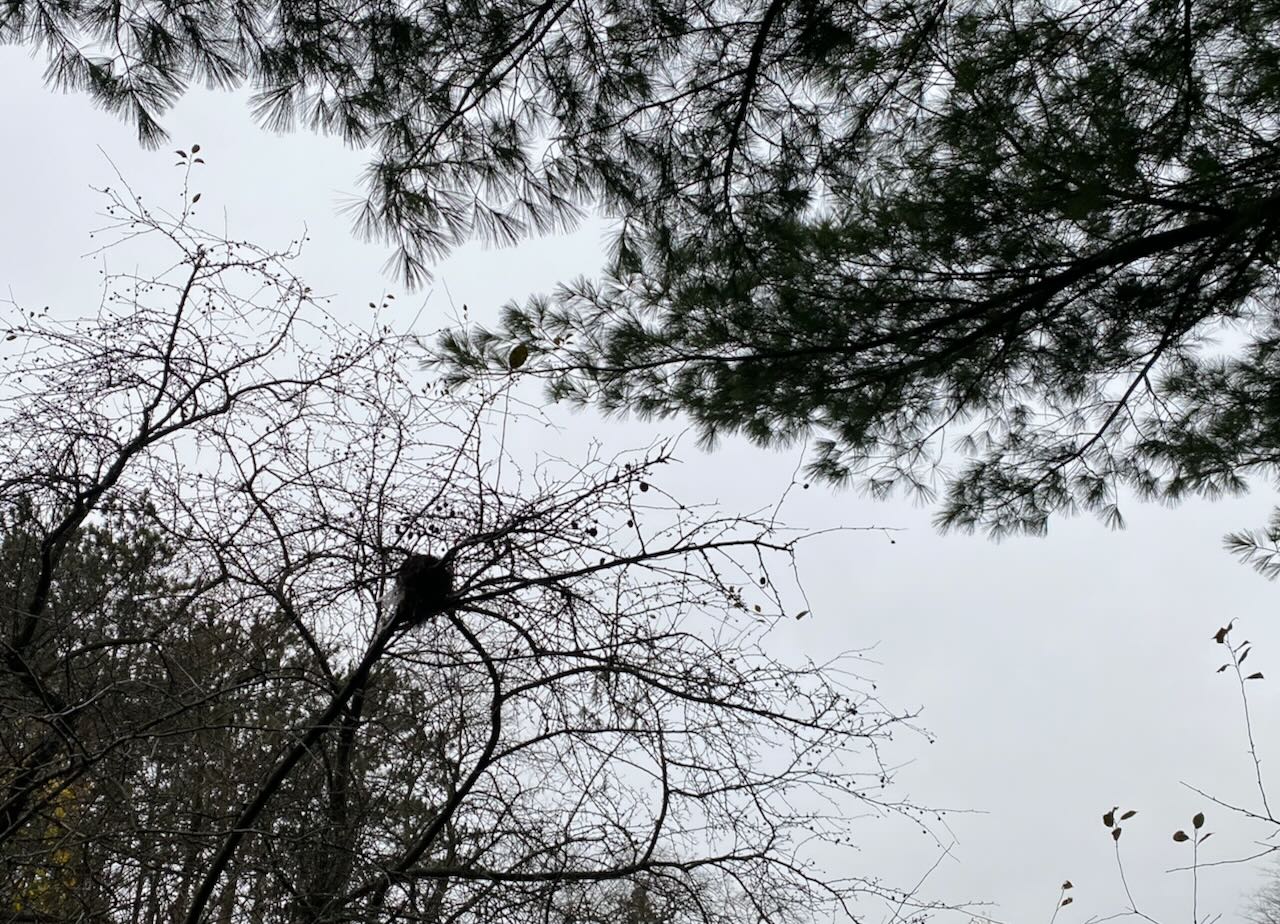
After a long, warm fall the cold has finally come. The flowers have mostly folded up their bright colors and subsided into seedheads, most of the leaves are down, and we are sliding into what Elinor Wylie admiringly called “a landscape drawn in pearly monotones.” With the leaves off, the crabapple tree reveals why robins were fighting the squirrels there – defending a nest.
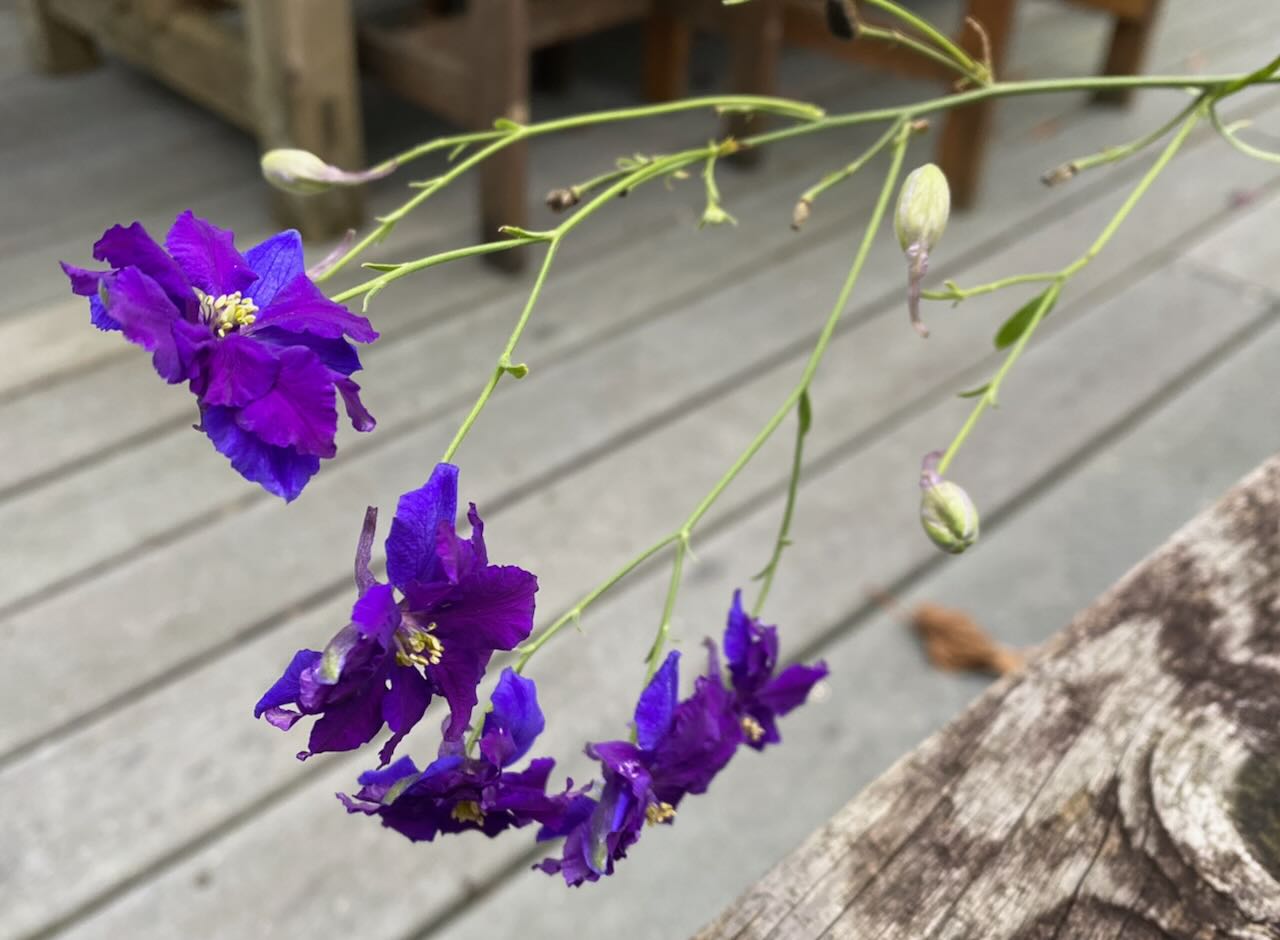
Out in the yard a few flowers persist. In fact, the larkspur are doing better in the cool weather, not just surviving light frosts but flourishing in them. They get more shade now, on the north side of the house, which seems to make them happy. It took me several seasons of living in Michigan to get used to the summer sun shining down on the north sides of things – the plants tried to explain it to me, and eventually I caught on.
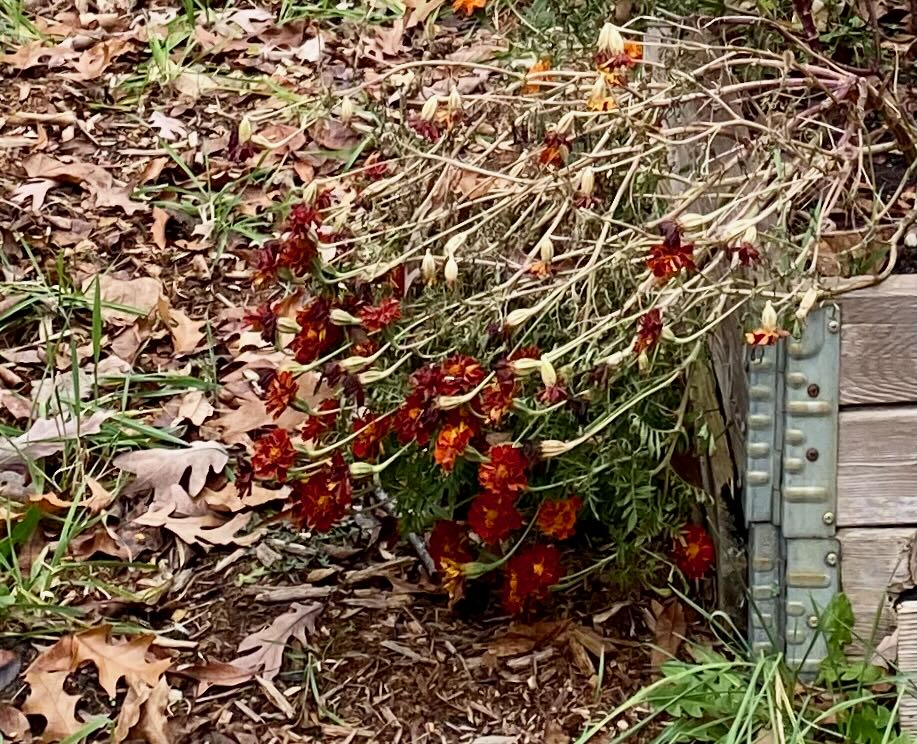
Light frosts have some interesting effects. You can see one of them in these marigolds – the top layer took a hit, but sheltered the lower layer and kept it in bloom. These are Queen Sophias, a large, hardy, open pollinated variety, meaning you can gather the seeds and plant them again next spring. Occasionally they self seed, if sheltered enough through the Michigan winter. But the seed’s easy to collect and bring inside until spring.
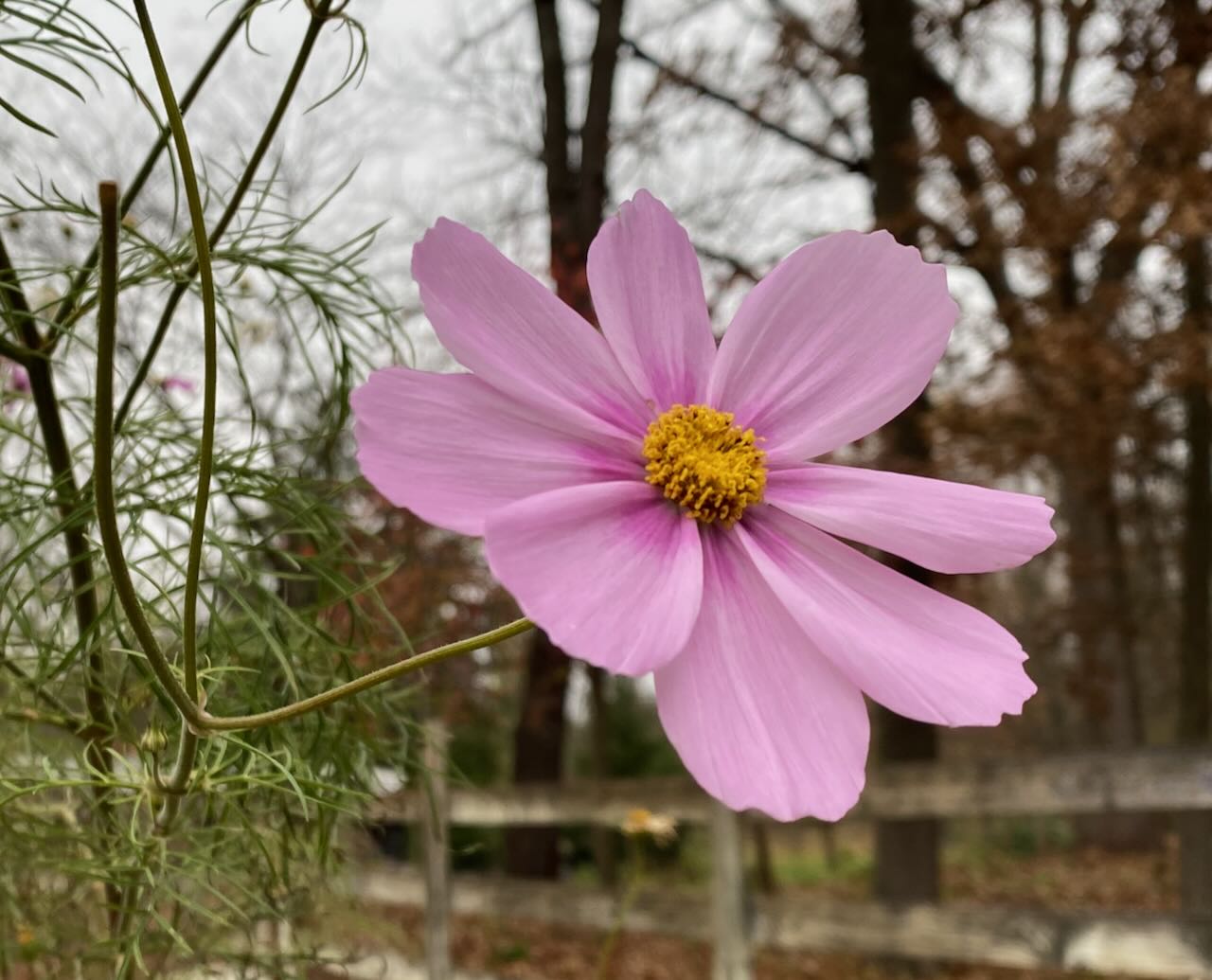
My fenced garden was laid out long ago and trees have encroached over the years, throwing some of it into partial shade. Areas no longer suited for tomatoes will support cosmos all summer, and if the branches lean just so, the cosmos will be sheltered enough to bloom through light frosts.
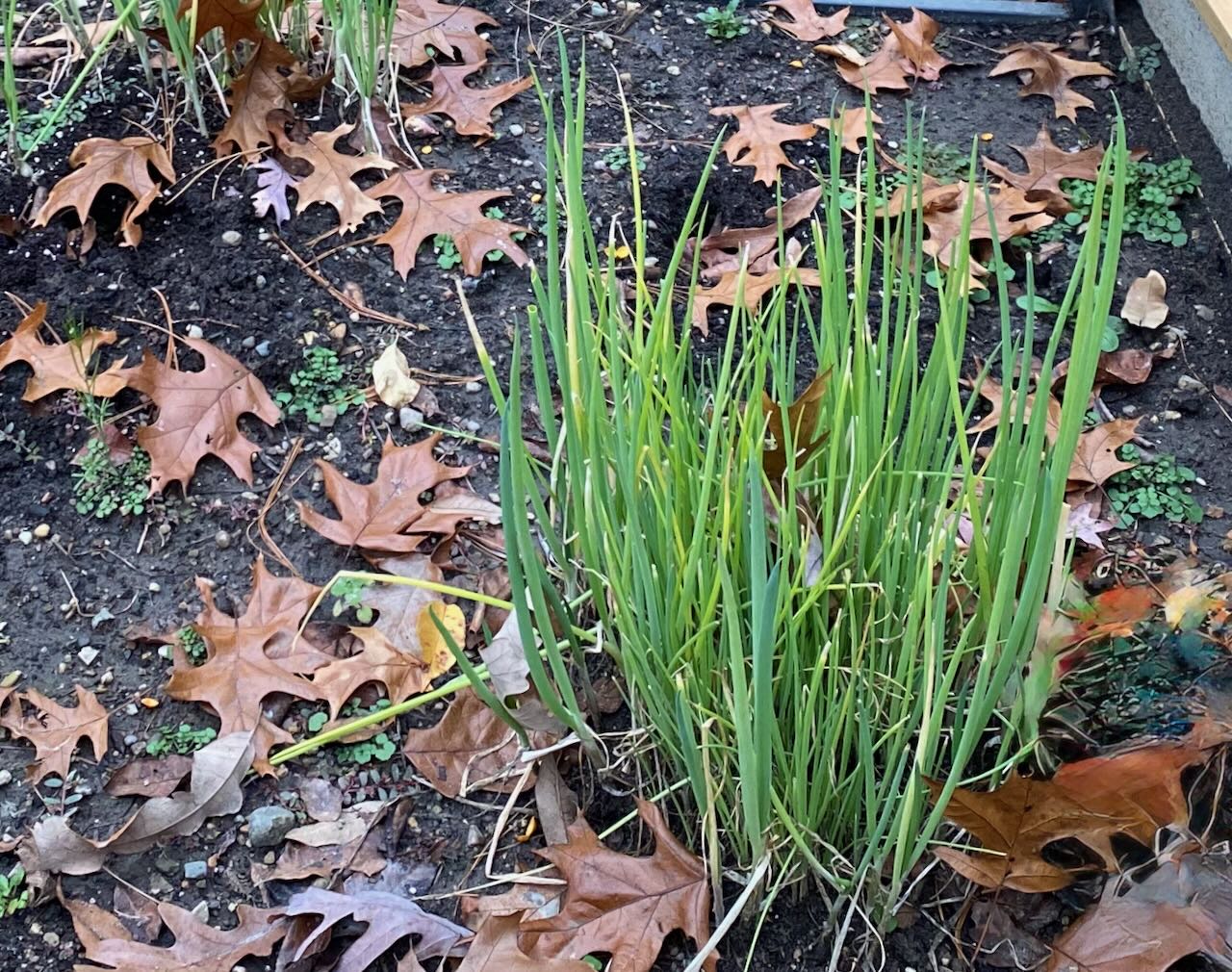
This year I planted scallions along with the tomatoes, to see if they made good companion plants. I don’t think the scallions and tomatoes did anything for each other, but they also did nothing against each other. The tomato plants were tender and are long gone but scallions hang on, the work of summer continuing to be rewarded through fall. Trees pitch in with free decorator-quality mulch, delivered by air. There will be scallions for the salad at Thanksgiving dinner.
Weather and Heat

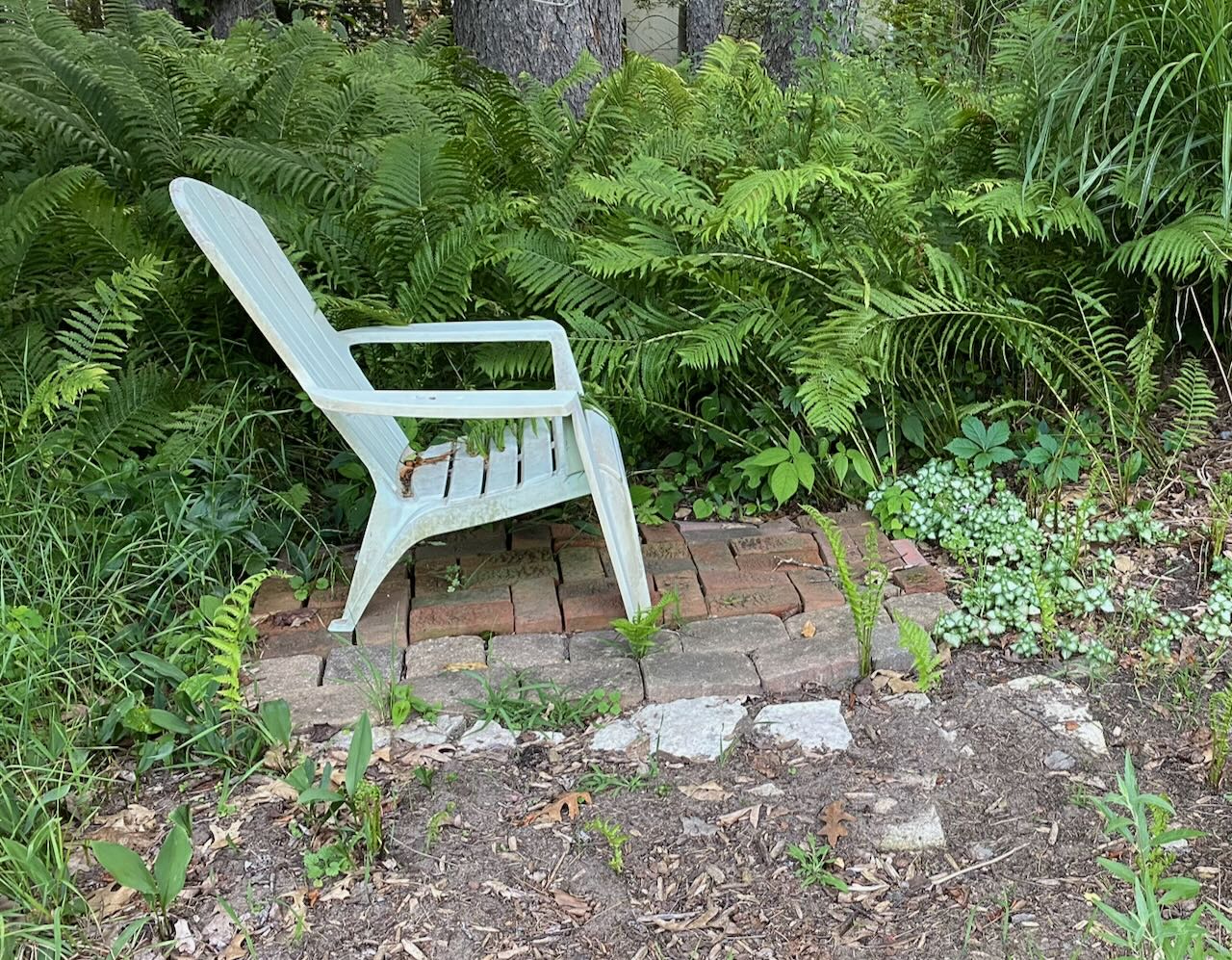
July weather has arrived, and Doug and I are having our usual disagreement about it. Eighty degrees is hot, he says, a typical Michigander view. Eighty degrees isn’t even warm enough for a sleeveless dress I say, a Southern Californian. Dry California heat is different from humid Michigan heat, he tells me. Yes, I say, but I’m sitting right next to you here in humid Michigan and I say it’s not hot. Then I go sit in a shady spot under a tree among the ferns, and he misses out, though he doesn’t consider that he’s missing anything. And I do worry that if I sit there too long the ferns will engulf me – look at them trying, inching up between the bricks, swamping even the lilies of the valley. 

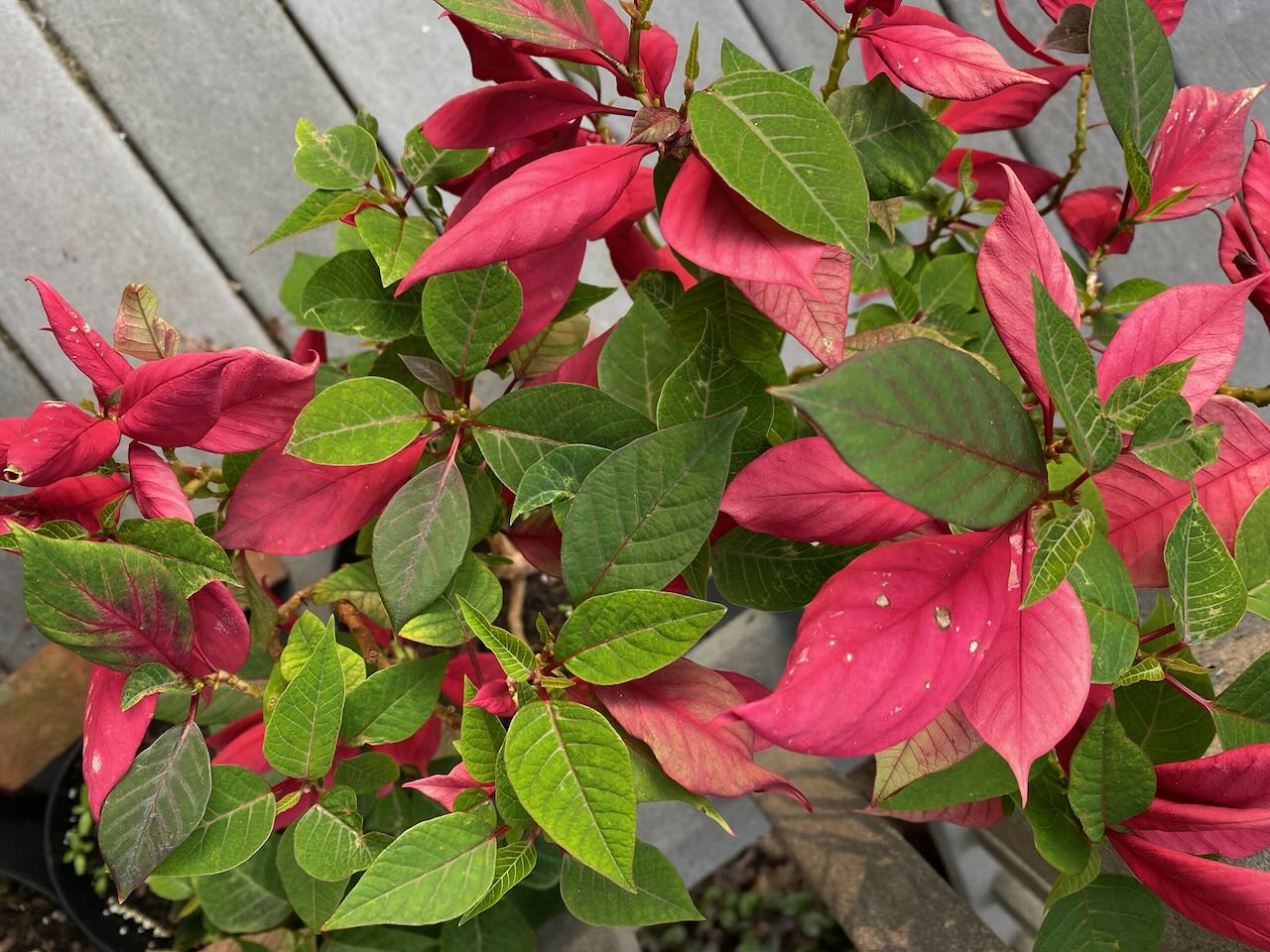
The poinsettias, like me, enjoy coming outdoors for the summer. They had grown so thin and weepy indoors, this vacation was just what they needed, pulling a new green summer wardrobe over their heads; summer camp for Christmas plants. But I know I can rely on them. Indoor winter light will turn them red again when the time comes.

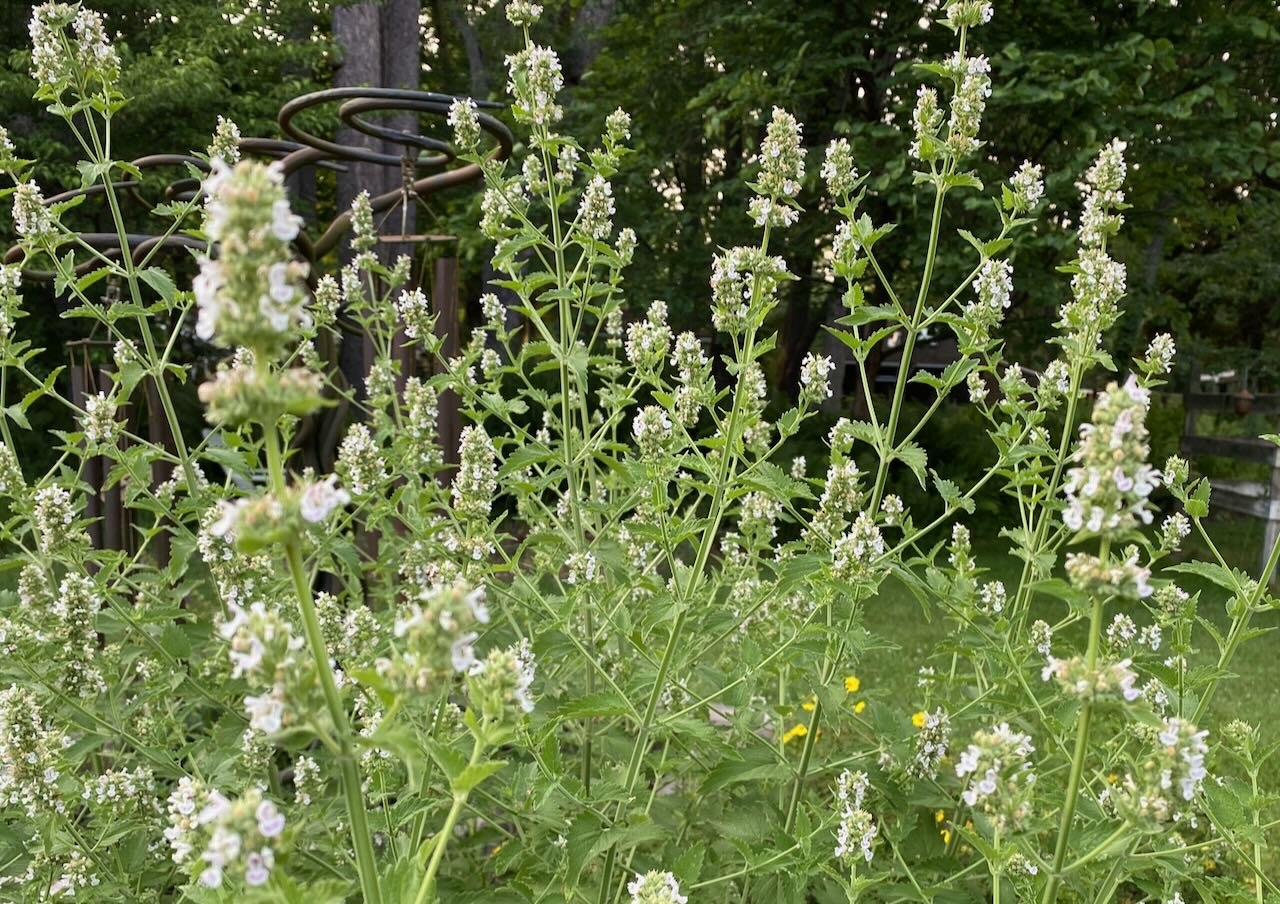
In a Michigan summer it doesn’t get dark till after nine at night. There’s plenty of light to grow things like this gigantic swath of burgeoning shrubbery, four feet high and about as wide. One search engine thinks it’s catnip and one thinks it’s lemon balm, but I didn’t plant either of them so, whatever else, it’s definitely a volunteer. I brought some in and Frassy rejected it as catnip, but she’s picky about her treats.

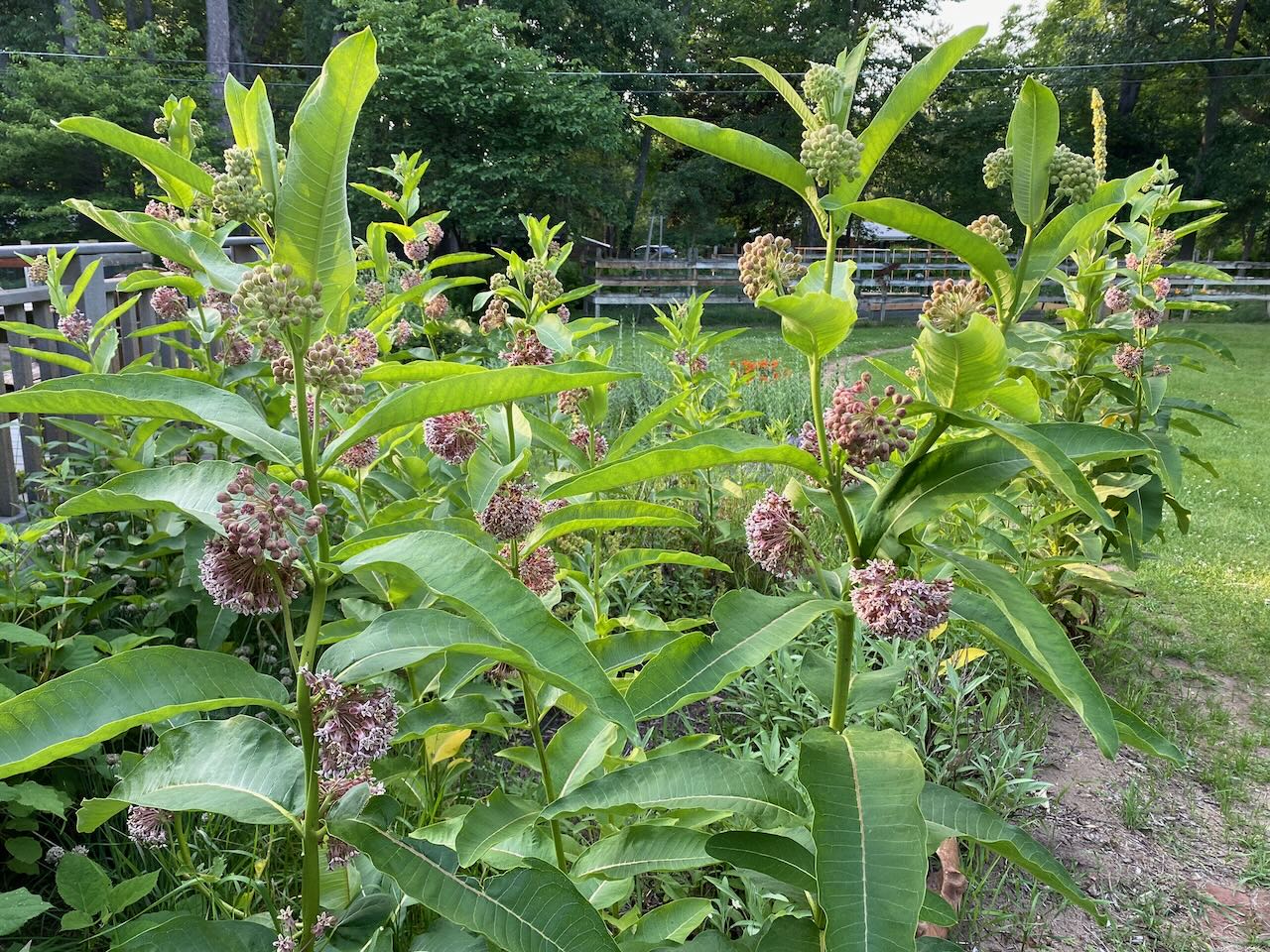
Last year’s milkweed was from deliberate seeds, but this year they have added to their number on their own account. They look ready for entire flocks of monarchs, but as yet I’ve seen only two dancing attendance on them. Is it too hot for butterflies? Milkweed is toxic to most animals, so I was surprised to find some of the mid-height leaves munched off, as if by deer. We have three new fawns, inexperienced enough to eat something like that. I’d be happier if it was the woodchuck but she’s too wily.

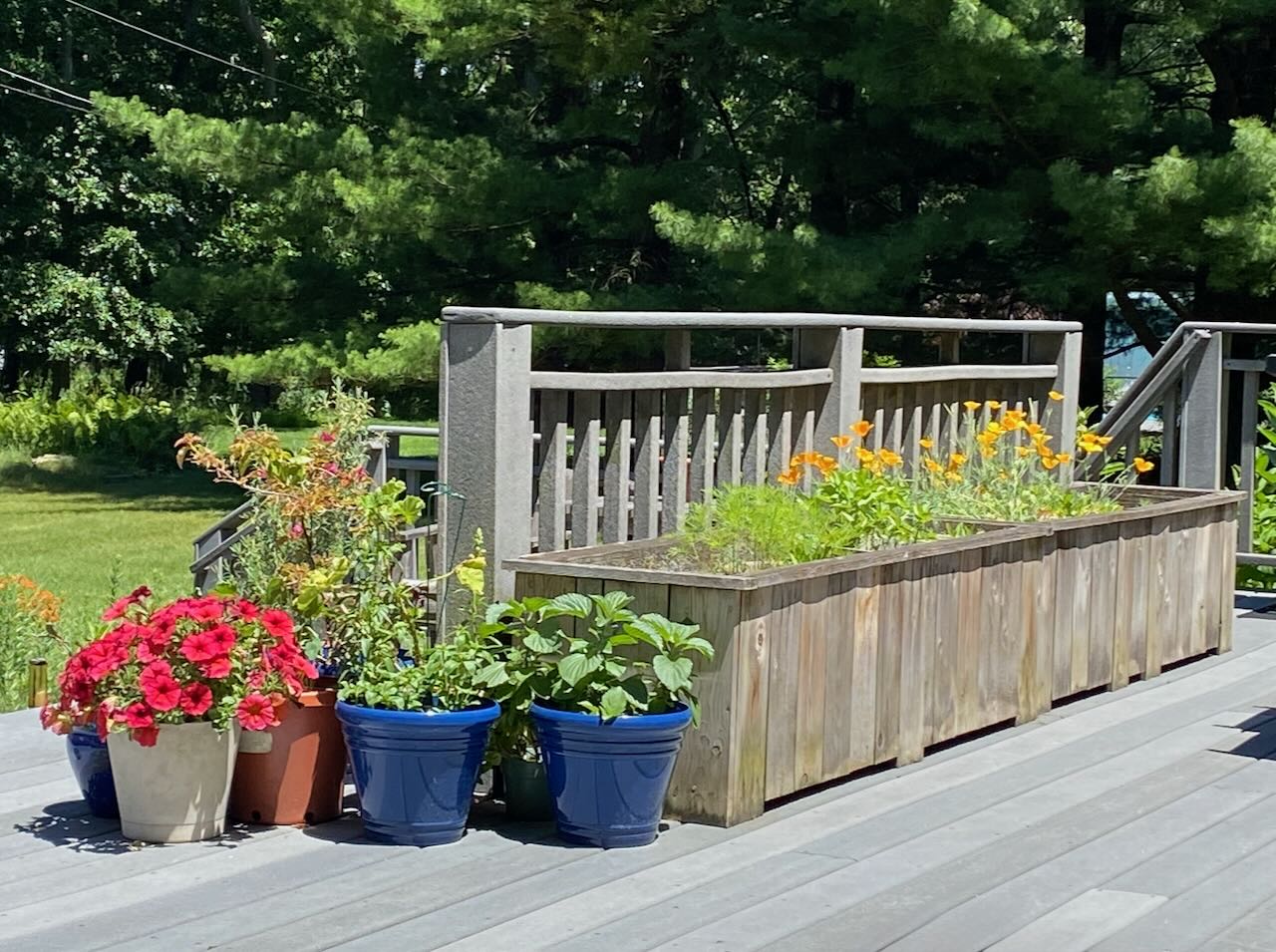
There’s also a mix of the deliberate and the accidental on the deck. The purchased petunias, taking the opposite route from the poinsettias, are going for a hot, summery red. Behind them the bougainvillea, after sulking tragically indoors the last few months, is stretching every finger in the sun and heat, just beginning to get the polish on its nails. The other pots are mostly full of greenery from zinnia and cosmos seeds I started a few weeks ago, but there in the middle of them is a glorious flash of California poppies, volunteer repeats from last summer. The seed must have survived the Michigan winter and frosty spring, waiting it out until the soil warmed up and local conditions matched its native needs. The poppies rose to the occasion. They’re split decision between me and Doug – eighty degrees is not too hot for daytime, but way too hot at night. As nights warm up they fade, waving goodbye in a fall of petals and fine seed. They’ll be back.