Doug thinks of birthdays in astronomical terms. Congratulations on completing another orbit, he’ll say, and I picture myself zooming out into space, floating planet-like against a background of dark sky and bright stars, hair wafting, skirt billowing. Whereas in fact, on the evening completing this particular orbit, we were having dinner at a luxurious restaurant, consuming the products of sunlight on farm fields and pastures filtered through ten thousand years of agriculture and the hands of chefs and waiters, as anchored to earth as we could be as it rolled us through the universe.
When we look at the sky we don’t usually consider that we’re in it, even when clouds come all the way down to the ground. Sometimes we see in those clouds a metaphor for gloom, sadness, and unhappy fates; at other times an end to drought, a gift to farmers, a respite from heat. Was the storm coming or going in this photo? There was certainly a real answer, a weather map answer, at the moment the photo was taken. Lifted from its moment as a photo is, we can give it any story that suits us where we are now.
Here’s another beautiful Michigan scene, enhanced, I would say, by clouds. It’s a local farm’s You Pick flower patch in its days of former glory, gone to standing seedheads, offering nourishment to such small creatures as hang on here while we orbit through the winter. The clouds, again, connect us to the sky.
Or here are some extremely, maybe even comically, muscular clouds, seen through my workroom window in their brief existence. I expected drama from such clouds – maybe a tornado? Hailstones? Nothing happened; they dissolved into airy nothing, the natural element of clouds.
It’s an old saying, that you need clouds sometime, to appreciate the clear blue skies when they come. I say appreciate the clouds. They do wonderful things with the sun, which you can’t look at without their intercession. They decorate the sky, giving us a reason to keep our focus upward. I mean the real clouds here, but feel free to apply it as a metaphor wherever you need one. Happy orbiting.


Happy New Year, the day that looks both forward and back. This is my antique clock, that rang in the New Year last night as it did through my childhood, when it sat on our living room mantelpiece and it was my job to wind it. I was the one among my siblings who’d wind it slowly enough not to break the mainspring. The little angels visit the clock when I decorate for Christmas, and they will fly back up to heaven, or somewhere, after January 6th when the decorations come down.
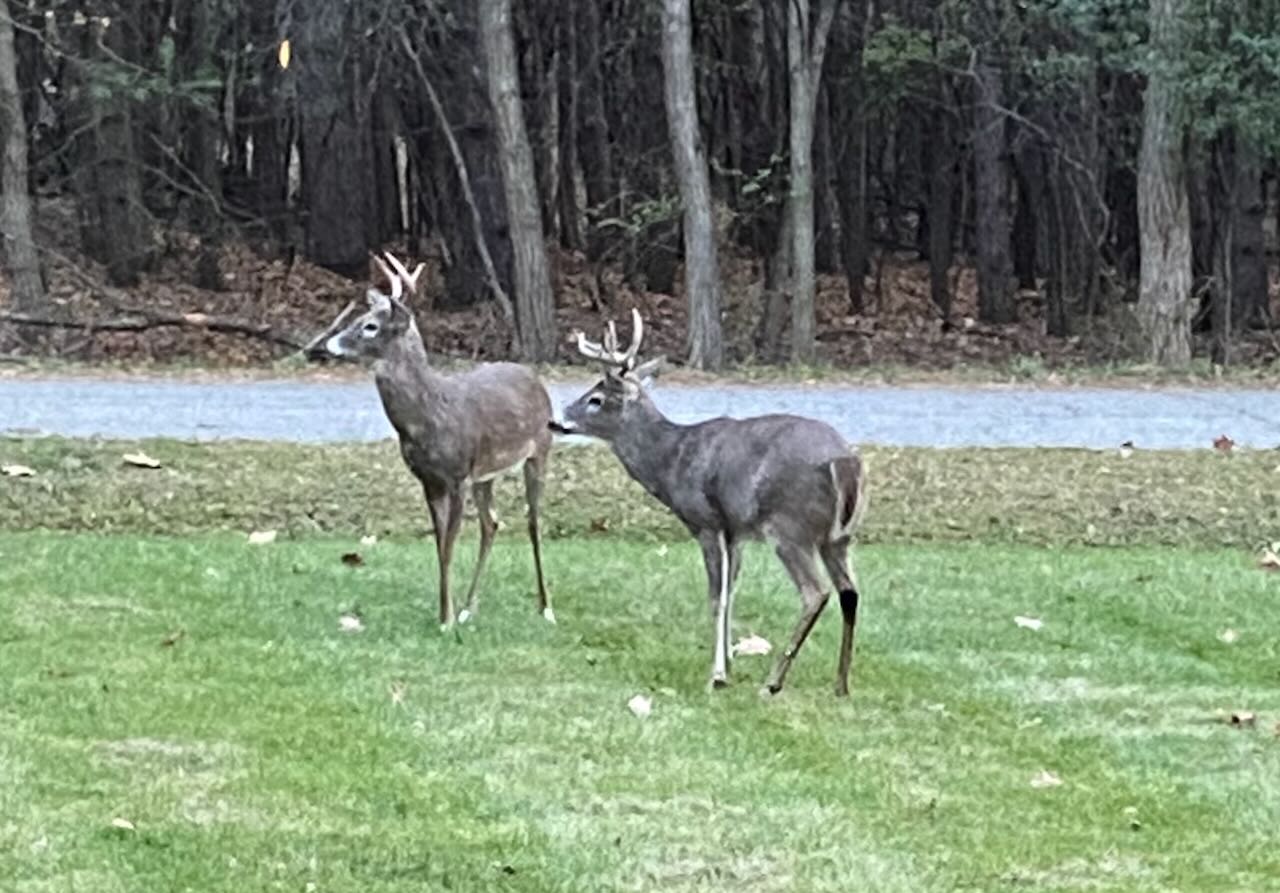
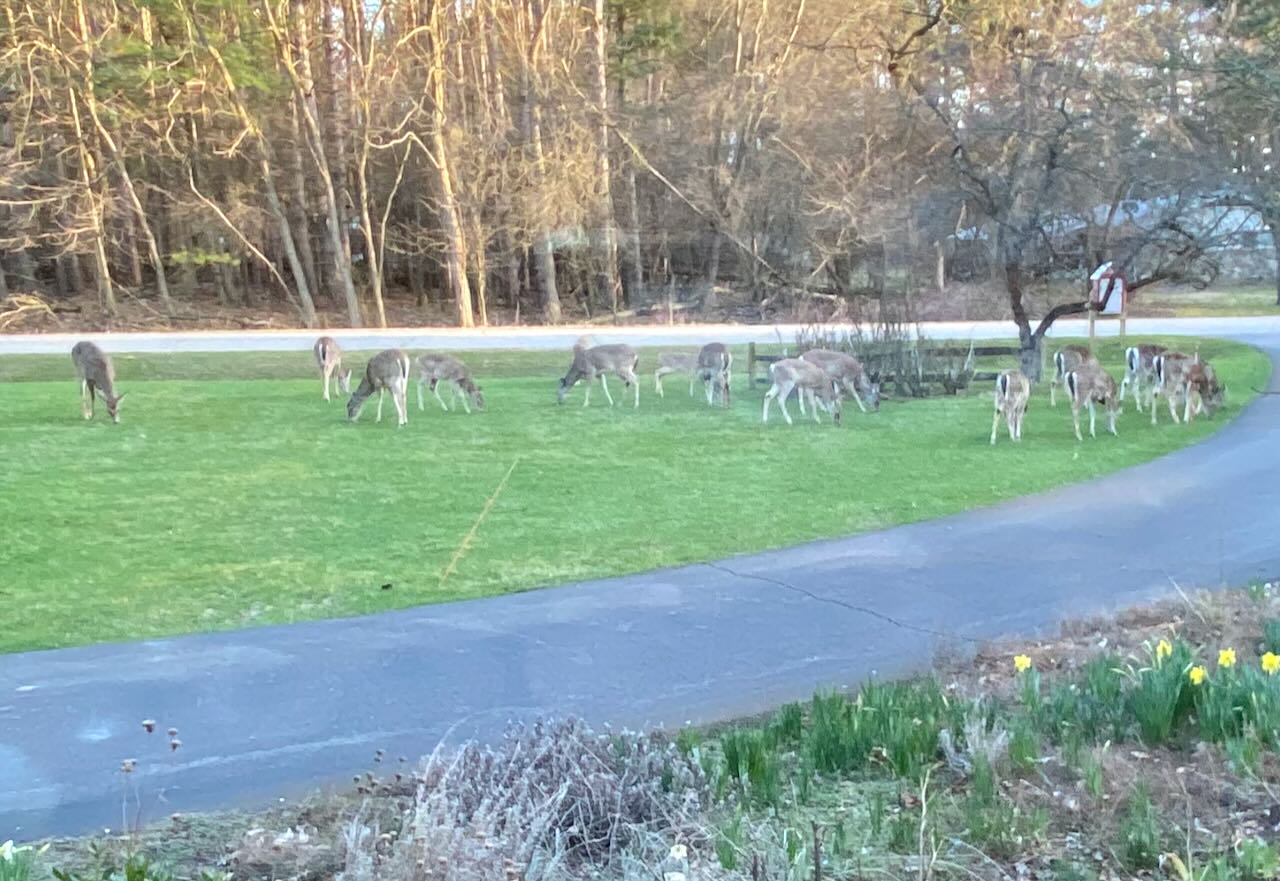
After weeks of summer and fall bumping into each other in a jumble, fall seems to be emerging triumphant at last. The stags are about done destroying small trees by using them to rub the velvet off their antlers. I’m still waiting for one of them to graciously leave his shed antlers in exchange – seems like the least he could do. Maybe this will be the year.
Between the light frosts and the subsiding hours of sunlight most of my flowers and tomatoes are gone, but out in front, facing south, one rudbeckia plant persists. It’s not the only rudbeckia out there, but it’s the only one still blooming. A mystery of nature.
Over in the shady section, a single foxglove has re-bloomed. It was pink the first time, but has paled in the shortened hours of daylight. The foxgloves are spaced widely, so in their case it’s understandable that individuals may have different amounts of light, or shelter, or competition from other plants. Less mysterious.
Out in the fenced garden, once the tomatoes were gone, I planted lettuces in the cold frame. They’re flourishing. This is very satisfying to me as a gardener, but the flaw in the plan is that I really don’t eat much salad in cold weather.
That was the trouble with radishes too, until I learned that they can be cooked. How did I get to be as old as I am, and never knew this? They’re so cute out in the garden, with their little round, red shoulders peeking out of the dirt, and they demand so little in the way of warmth and sunlight, I can’t resist planting them when random space becomes available. I’m still working out the best recipes for them.
Meanwhile, the main path into my woods needed help. I spread several layers of the Sunday New York Times over the old path, poured a bucket of water over that so it wouldn’t blow around as I worked, and topped it with mulch. That will be one less thing to do come spring, when things to do are plentiful. As much as I love gardening, there comes a time when I really need a break. If spring is the reward for winter and harvest is the reward for spring, winter is the reward for three seasons of hard work. Just curl up with a good book and eat all those quarts of tomato sauce.
The late warm season continues. Most of the flowers are gone, but there’s still a lot of autumn color. The spirea planted in front is mostly down to bare branches, but this one in a pot on the deck is still in glory. This is odd, first because the front yard gets more sunshine, facing south, and the deck faces north; but also because roots in the ground get more protection from weather than roots in pots do. Nature surprises us whenever she wishes. The potted spirea is a volunteer – a pot of nigella was colonized by free-range spirea seed, and quickly became too lovely to remove. Here it is garnished by a couple of immigrant maple leaves, likely carried by whatever forces brought the spirea seed.
Here’s the donor tree for those maple leaves, with just a little left in its branches to continue decorating the yard.
My herb collection has a mixed response to autumn. I had to bring the basil indoors, but thyme and sage will persevere outside all the way to Thanksgiving. The pot of mint may not last quite so long, but meanwhile has collected its own leaf embellishment.
Meanwhile, after much inspection via the internet, I ordered a memorial stone for my wonderful cat, Zerlina. Many of those offered had elaborate decorations and extensive text, but none came up to Zerlina’s level of elegance. I chose one in her colors, with a soft shape. Not that a stone will be puffy, but hard angled edges seemed wrong. Doug came out to the garden with me while I buried her ashes in the center of the garden next to the thyme, and placed the stone on top. I needed the hugs. Then I sat for a while on my glider bench, thinking about her. The thyme will spread, and maybe I’ll encourage it to surround the whole stone. I haven’t decided yet, but thyme sounds like it belongs with memorials.

Then I went back into the house, where I picked up all the pumpkins and put them back in different places. I had to remember that things can change. And I found a sort of puffy one for the hearth.