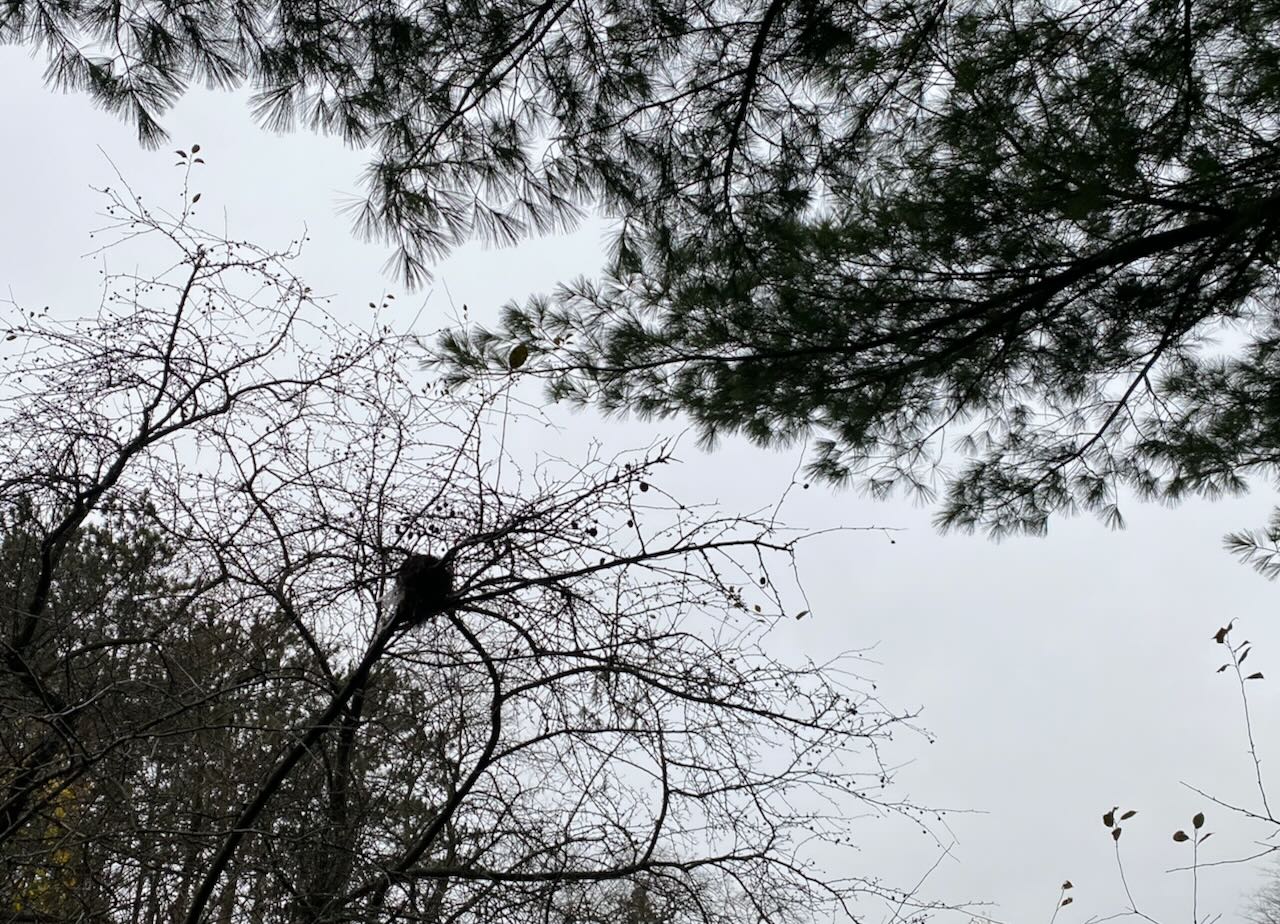
After a long, warm fall the cold has finally come. The flowers have mostly folded up their bright colors and subsided into seedheads, most of the leaves are down, and we are sliding into what Elinor Wylie admiringly called “a landscape drawn in pearly monotones.” With the leaves off, the crabapple tree reveals why robins were fighting the squirrels there – defending a nest.
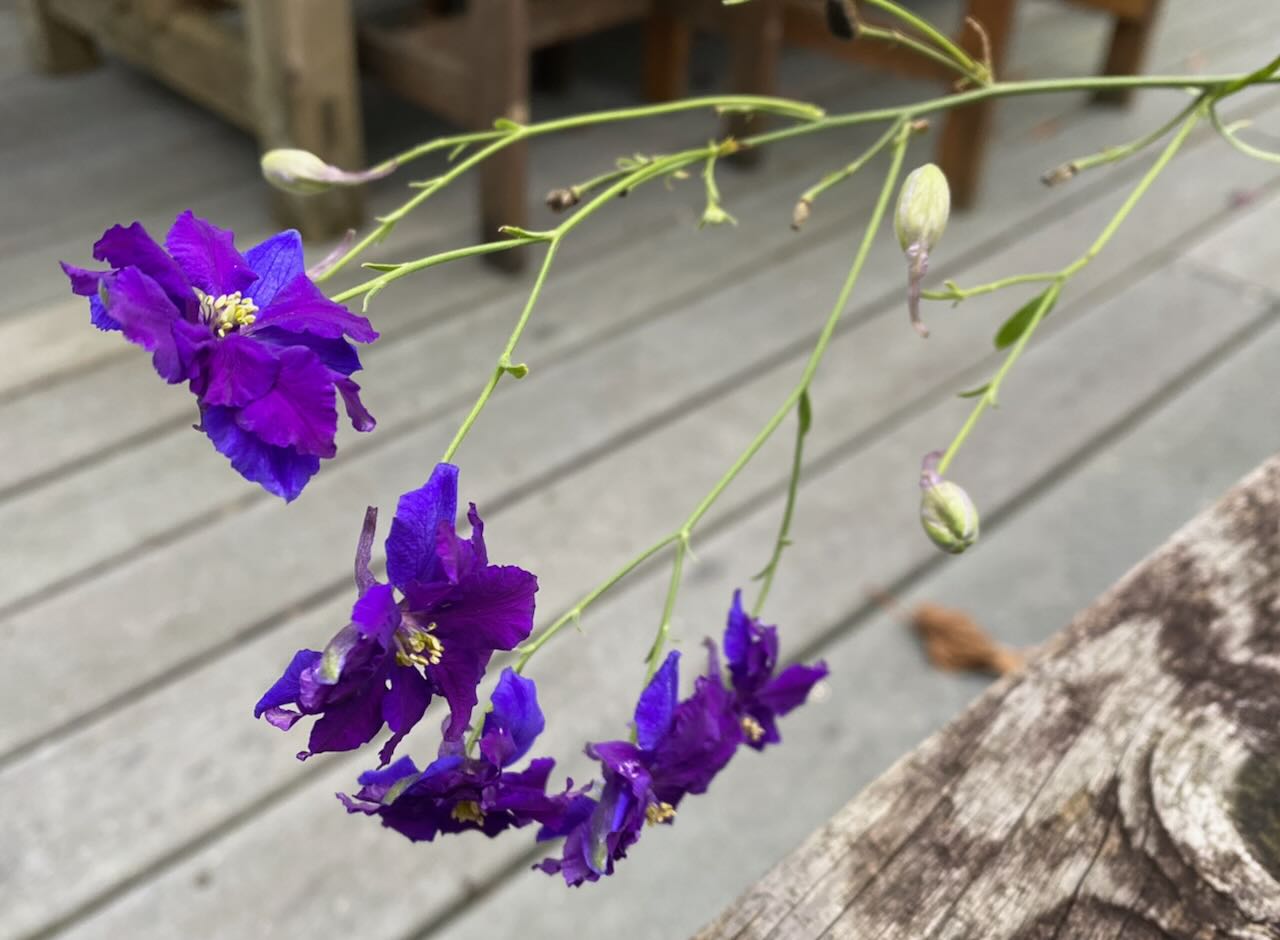
Out in the yard a few flowers persist. In fact, the larkspur are doing better in the cool weather, not just surviving light frosts but flourishing in them. They get more shade now, on the north side of the house, which seems to make them happy. It took me several seasons of living in Michigan to get used to the summer sun shining down on the north sides of things – the plants tried to explain it to me, and eventually I caught on.
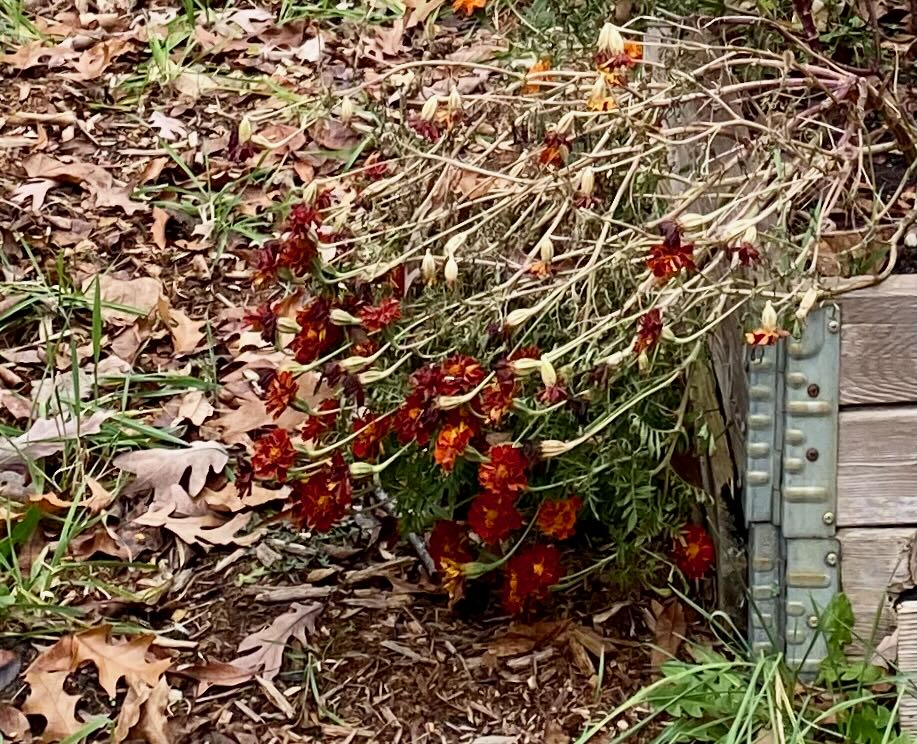
Light frosts have some interesting effects. You can see one of them in these marigolds – the top layer took a hit, but sheltered the lower layer and kept it in bloom. These are Queen Sophias, a large, hardy, open pollinated variety, meaning you can gather the seeds and plant them again next spring. Occasionally they self seed, if sheltered enough through the Michigan winter. But the seed’s easy to collect and bring inside until spring.
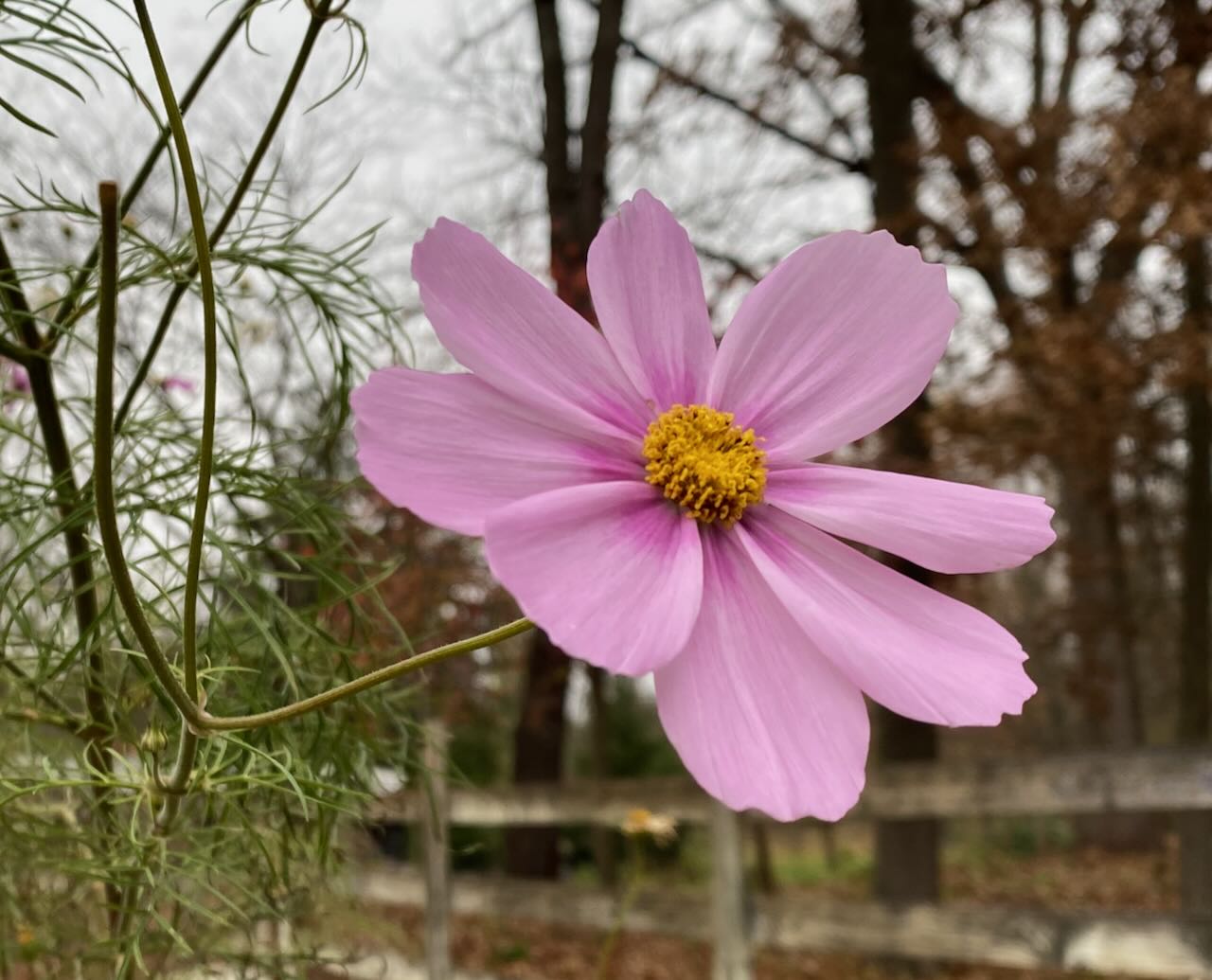
My fenced garden was laid out long ago and trees have encroached over the years, throwing some of it into partial shade. Areas no longer suited for tomatoes will support cosmos all summer, and if the branches lean just so, the cosmos will be sheltered enough to bloom through light frosts.
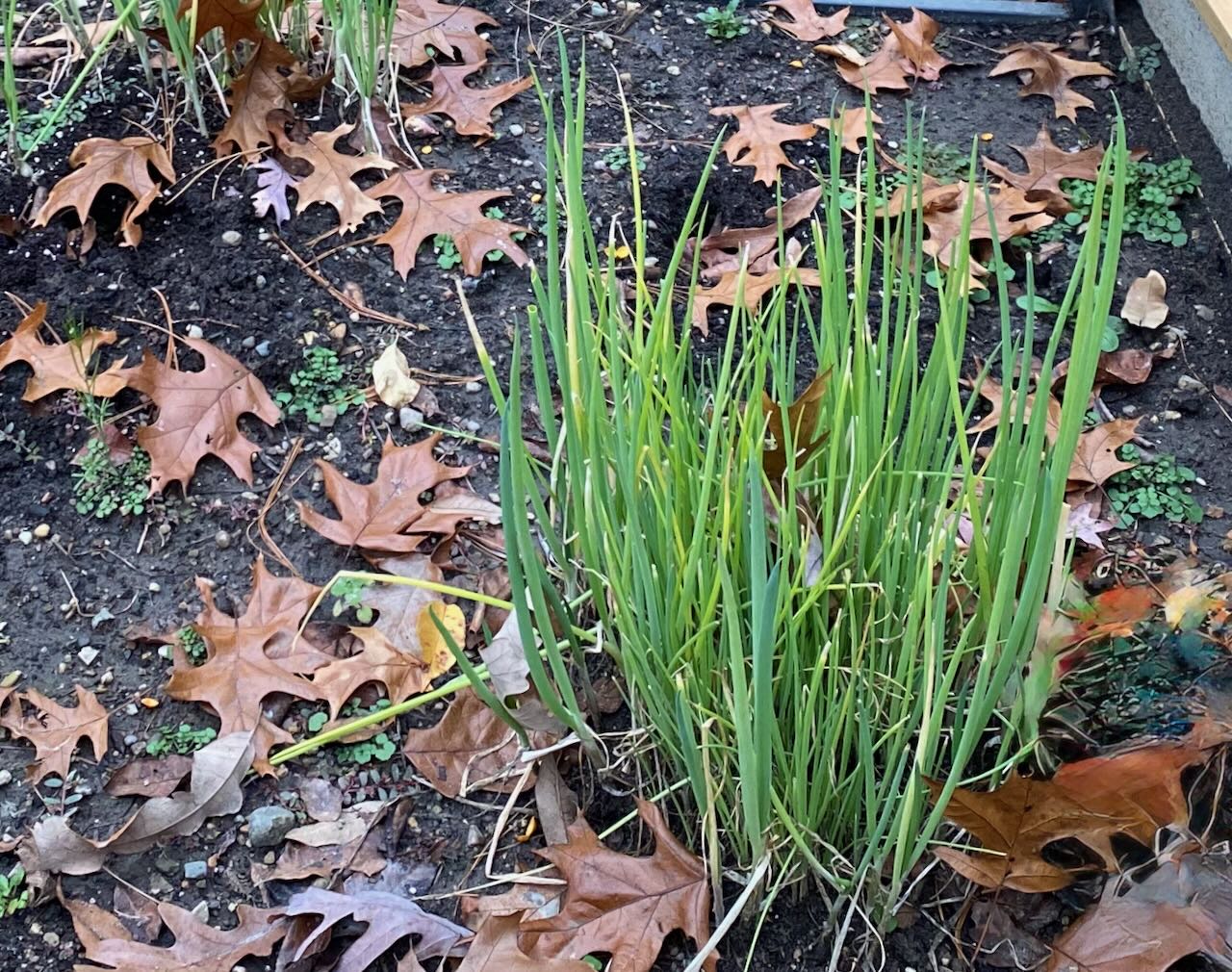
This year I planted scallions along with the tomatoes, to see if they made good companion plants. I don’t think the scallions and tomatoes did anything for each other, but they also did nothing against each other. The tomato plants were tender and are long gone but scallions hang on, the work of summer continuing to be rewarded through fall. Trees pitch in with free decorator-quality mulch, delivered by air. There will be scallions for the salad at Thanksgiving dinner.

