 One of the joys of the spring garden is surprise. Where did these ultra-fluffy, double pink columbine come from? Not only don’t I remember buying them, I don’t remember even knowing they existed. Could they have arrived as seeds embedded in bird droppings? Such an ignoble origin. Could there be a Johnny Columbineseed at large in Ann Arbor, spiriting unusual flowers into unsuspecting gardens under cover of night?
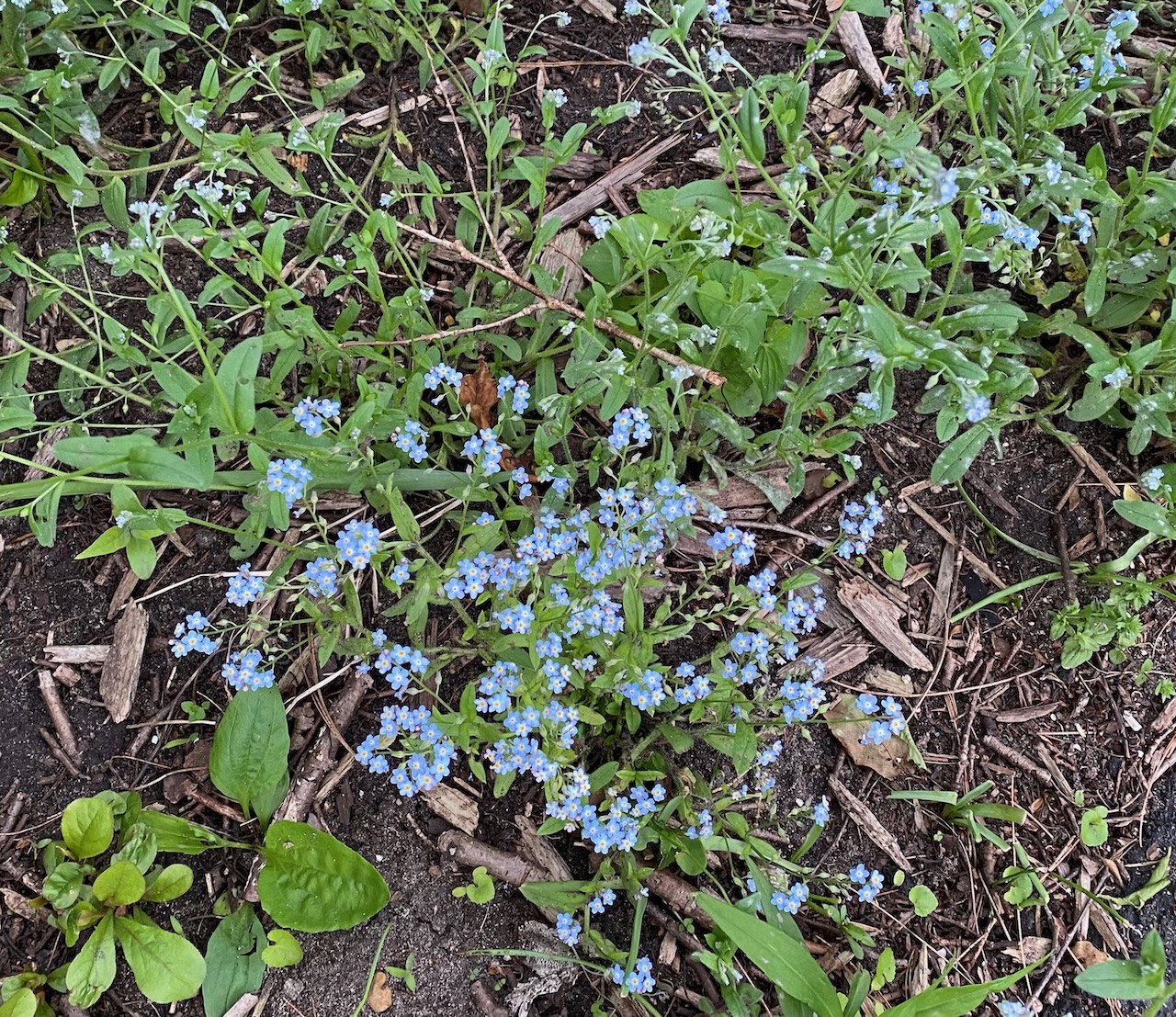 Then over here, how did one tiny patch of forget-me-nots take over the entire flowerbed, even crowding out weeds? A blue haze under the fading spikes of daffodil leaves, it manages to be really in your face despite such tiny petals. It should be called I-dare-you-to-forget-mes.
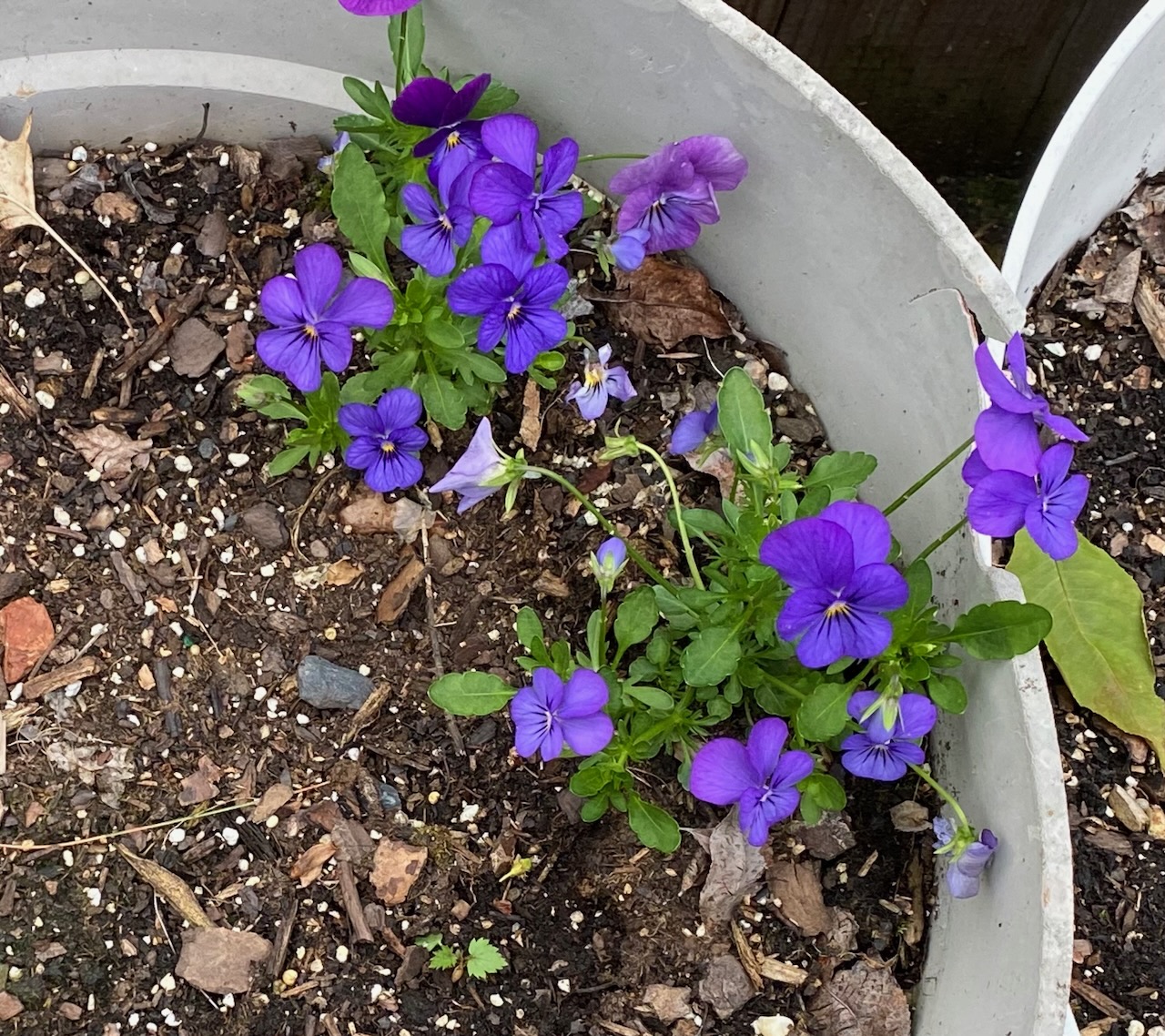 Moving around to the back yard, a flower pot that once held cosmos has come up with a crop of these little purple flowers, small enough to be violets but somehow I wasn’t convinced. Pansies were in the pot next to it last year. My garden books say four petals up and one down makes it a pansy, two petals up and three down is a violet. Two up, one down, and two sticking out to the side? Panselets?
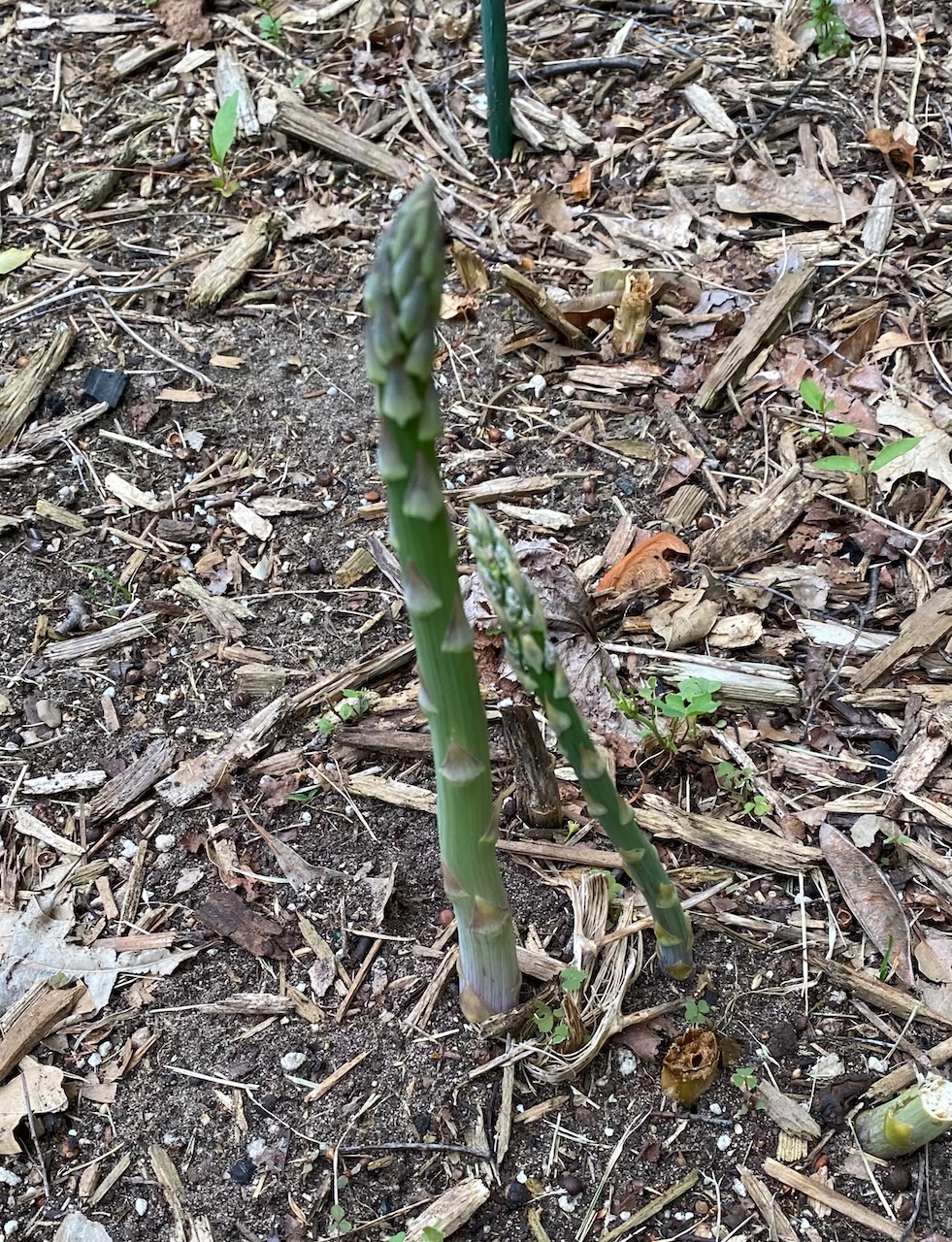 And then there’s the asparagus patch. I’ve seen it every year since we moved into this house, but it still makes me laugh to see the way it comes up out of the ground, looking for all the world like someone has snuck out to the garden and stood a bunch of asparagus spears upright in the dirt as a practical joke. But no, they’re growing right out of the ground. The second joy of the spring garden: that dirt, water, and sunlight turn into food and beauty, whether the way we expected or not.



 Still February, the trees still hung with snow, but the bulbs on my windowsill are talking spring. They’re cozy enough on the plant stand Doug made for them, at a sunny, south-facing window with a heat register on the floor below. You can see Zerlina down there on her cushion, showing her appreciation with a nap.
 I mostly keep the amaryllis going from year to year, setting them outdoors when the weather warms up, lifting and storing the bulbs indoors in the fall, and potting them up again after Christmas. But every year I lose one or two, so every year I buy one or two new ones.
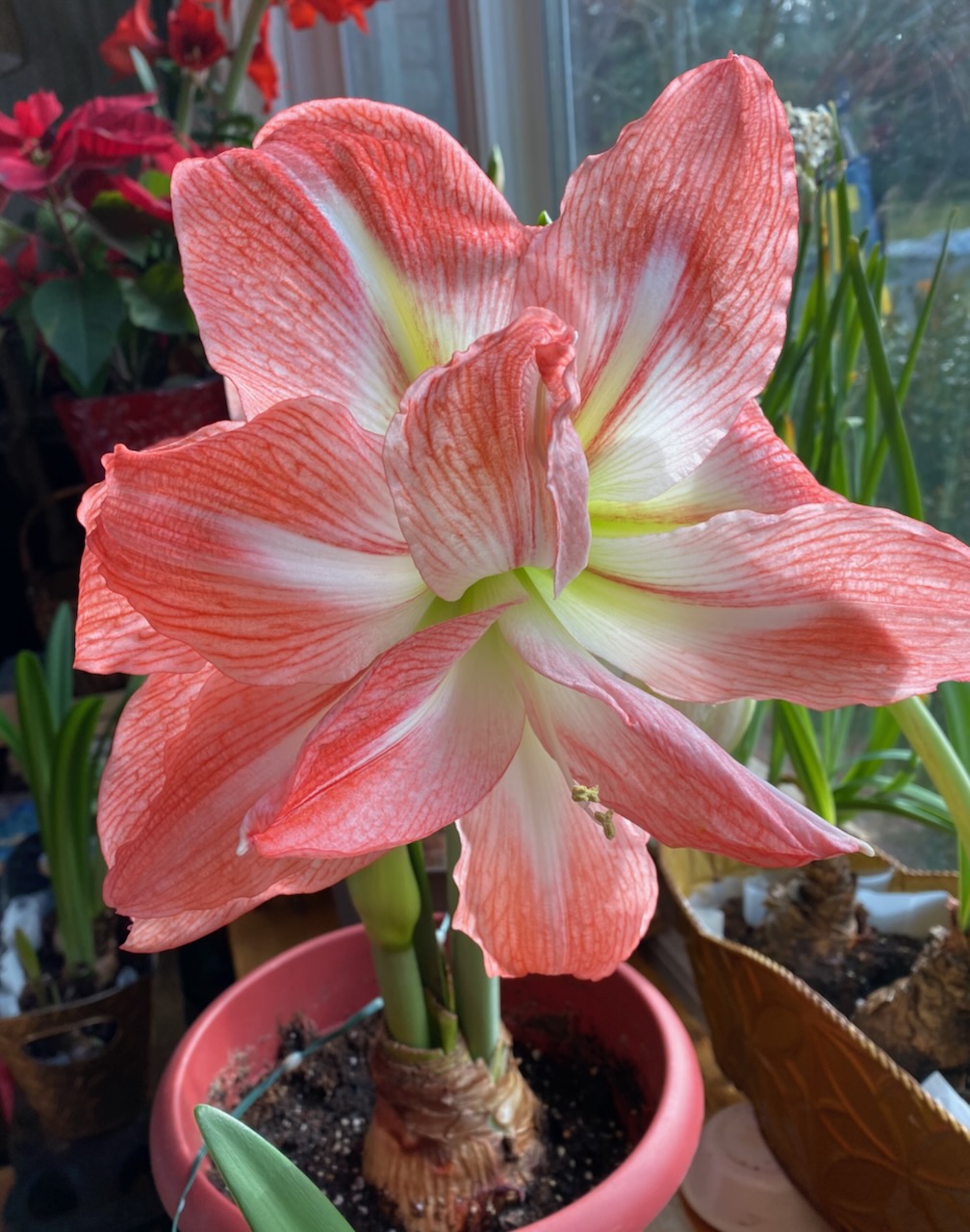 This is a close-up of my new bulb this year, an Amadeus. Is it named for Mozart, or is it Beloved of God? Amaryllis is named for a shepherdess Virgil wrote about, in Latin, but the name apparently comes from Greek amarysso, to sparkle. And it’s native to South Africa. I would love to know its indigenous name, but the internet has not been forthcoming. There’s an International Association for Plant Taxonomy that oversees official plant names, but any seed catalog will reveal that common names are a mix of history and marketing. The names of tomato varieties are always fun, and frequently informative. Early Girl and Longkeeper are useful to know, while Mortgage Lifter and Supersteak evoke the plump and sizeable. Tomato is pretty close to its indigenous Nahuatl name, Tomatl. Far preferable to solanum lycopersicum.
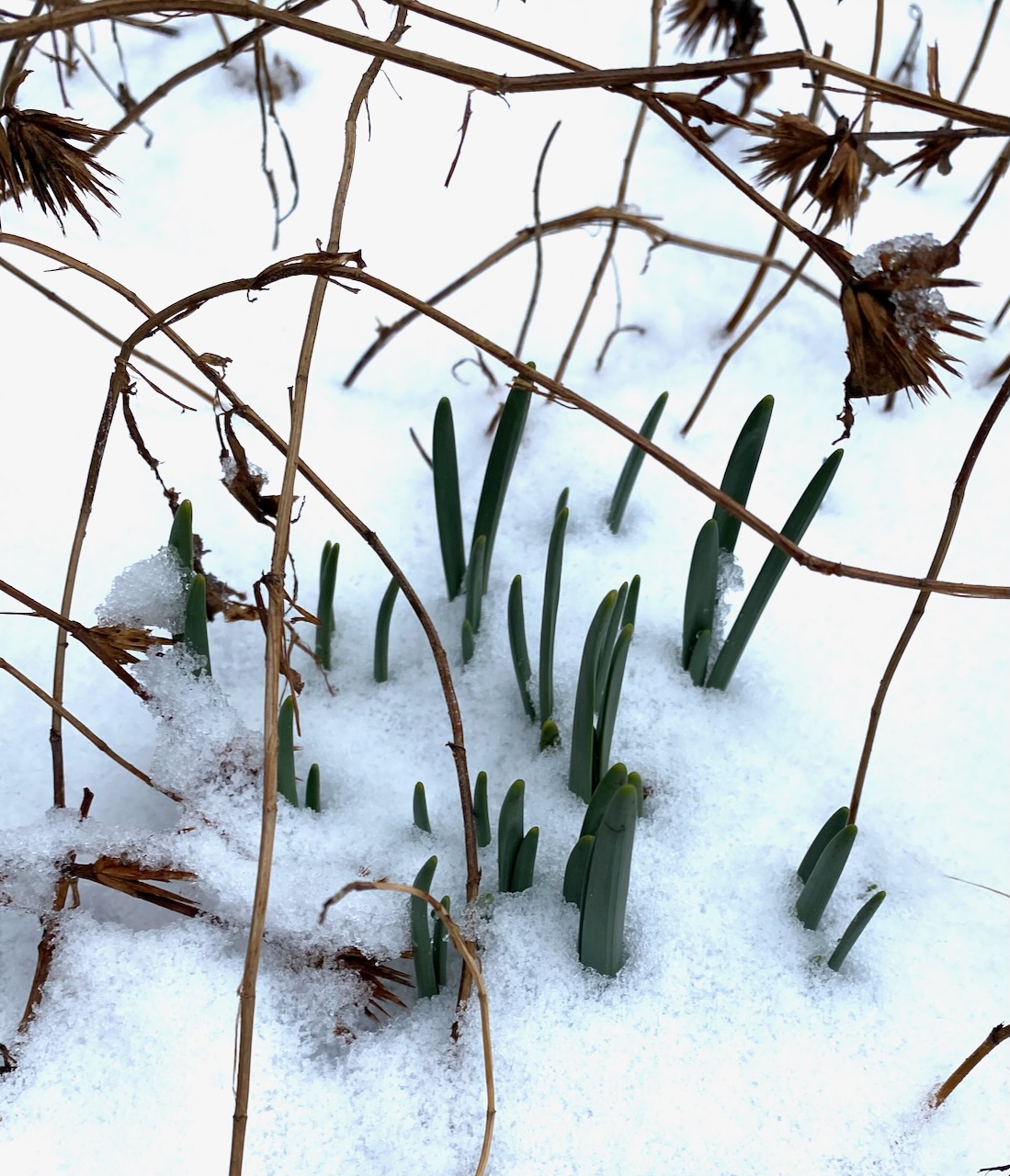 Meanwhile, the narcissus is starting to nose up through the snow. Narcissus should have a name joyfully recognizing how the flower announces spring, instead of being named for the fellow who fell in love with his own reflection. Is some kind of warning implied here, like not getting carried away by spring? Maybe Greeks, with their Mediterranean climate, didn’t understand the impact of spring on the rest of us. Our common name, daffodil, is a corruption of Asphodel, also Greek but a totally unrelated flower. It was good to corrupt it, since asphodel is associated with the underworld, but daffodil sounds like happy fun.
 Hellebore is also a Greek name, possibly having to do with it being toxic, but it’s starting to bloom here in my yard, pushing the snow out of its way, right on time for its common name, Lenten Rose. It’s not a rose at all, but when you finally see a flower, even one that isn’t sweet, where no flower has dared go for months, let us call it a rose.
