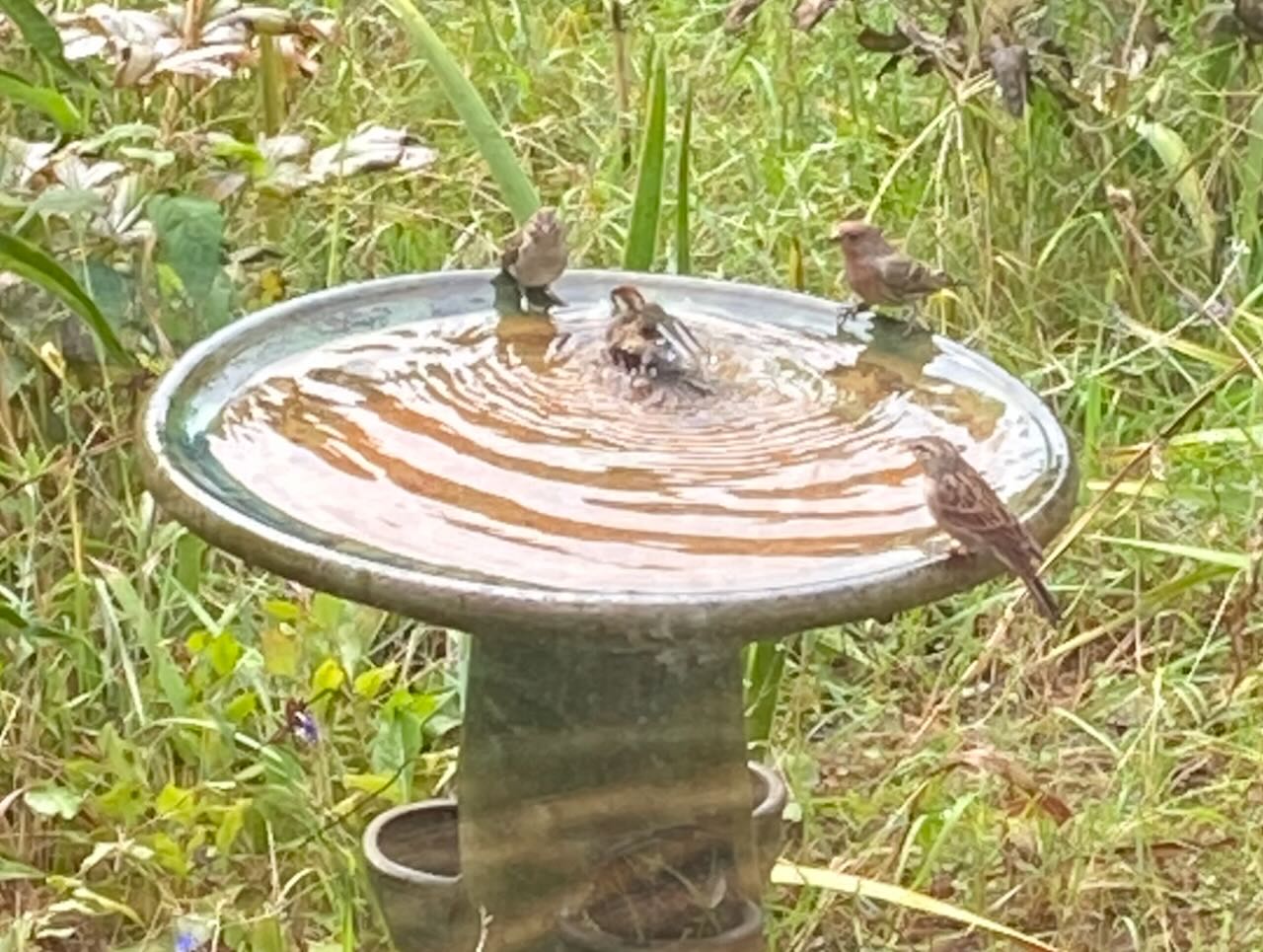
Michigan sits under both the Atlantic and the Mississippi Flyways, and in spring and fall many migrants pass through. So when, sitting by the window to write, I noticed movement at the birdbath, I thought exotic species might be involved. But no – it was the local community, sparrows and finches, diving, bathing, drinking, and generally disporting themselves at the spa. Whatever the birds were feeling, it looked joyful to me. Chickadees showed up and were admitted; blue jays showed up, and all the other birds left. Were the jays aggressive, or did they just take up too much space?
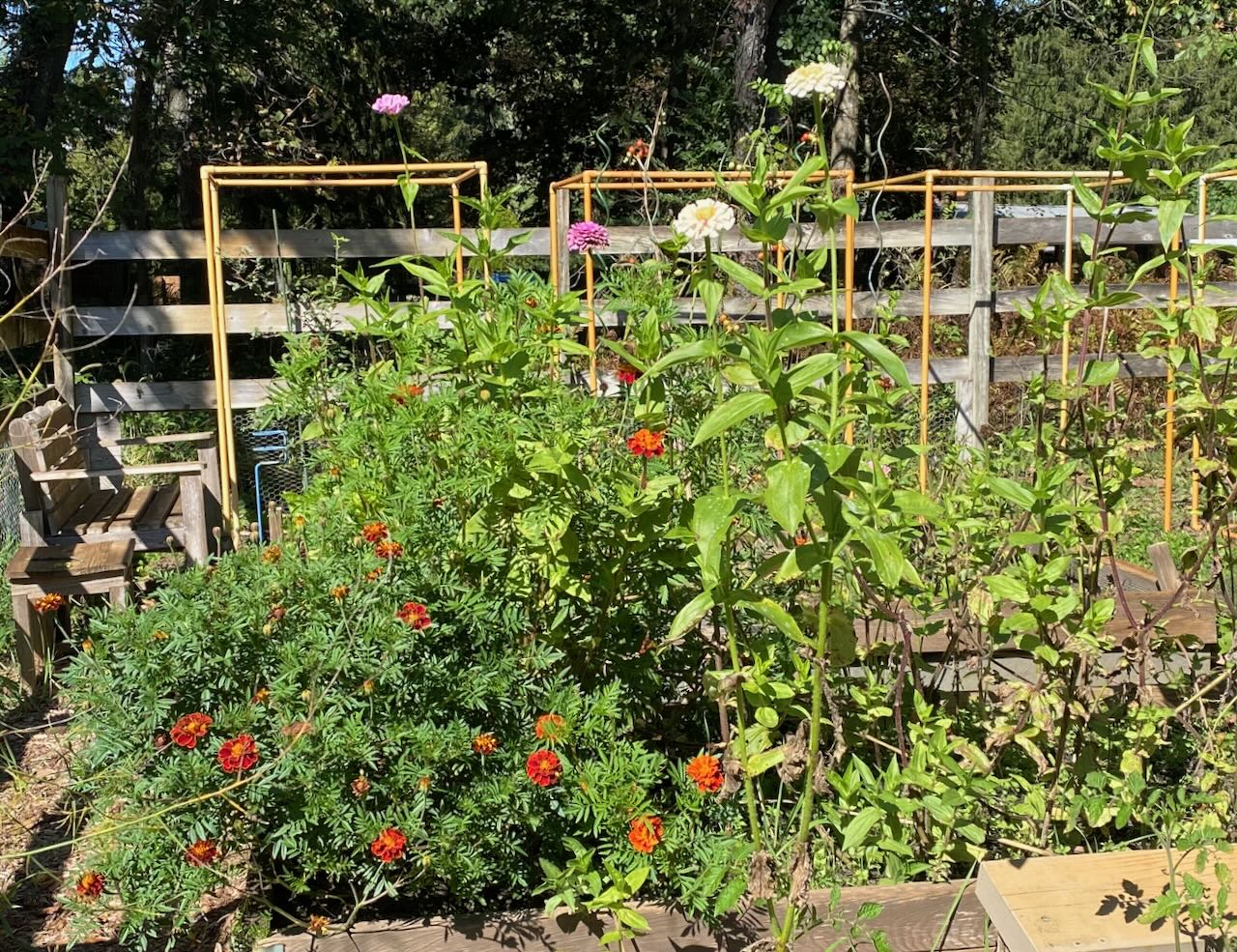
This year I tried a lot of companion plantings, with mixed results. The basil among the tomato plants did really well while the tomatoes did not, but local gardeners without basil also had poor tomato crops. The radishes among the squash might have helped, except a rabbit got into the garden and ate all the squash leaves. Having some extra Queen Sophia Marigold seeds, I tossed them into the edge of the zinnia and cosmos bed. Tall varieties of zinnias and cosmos tend to flop, then grow in zany angles as their leading edges stand back up. But well, look at this – the marigolds held the zinnias and cosmos up straight. Where there were no marigolds they keeled over.
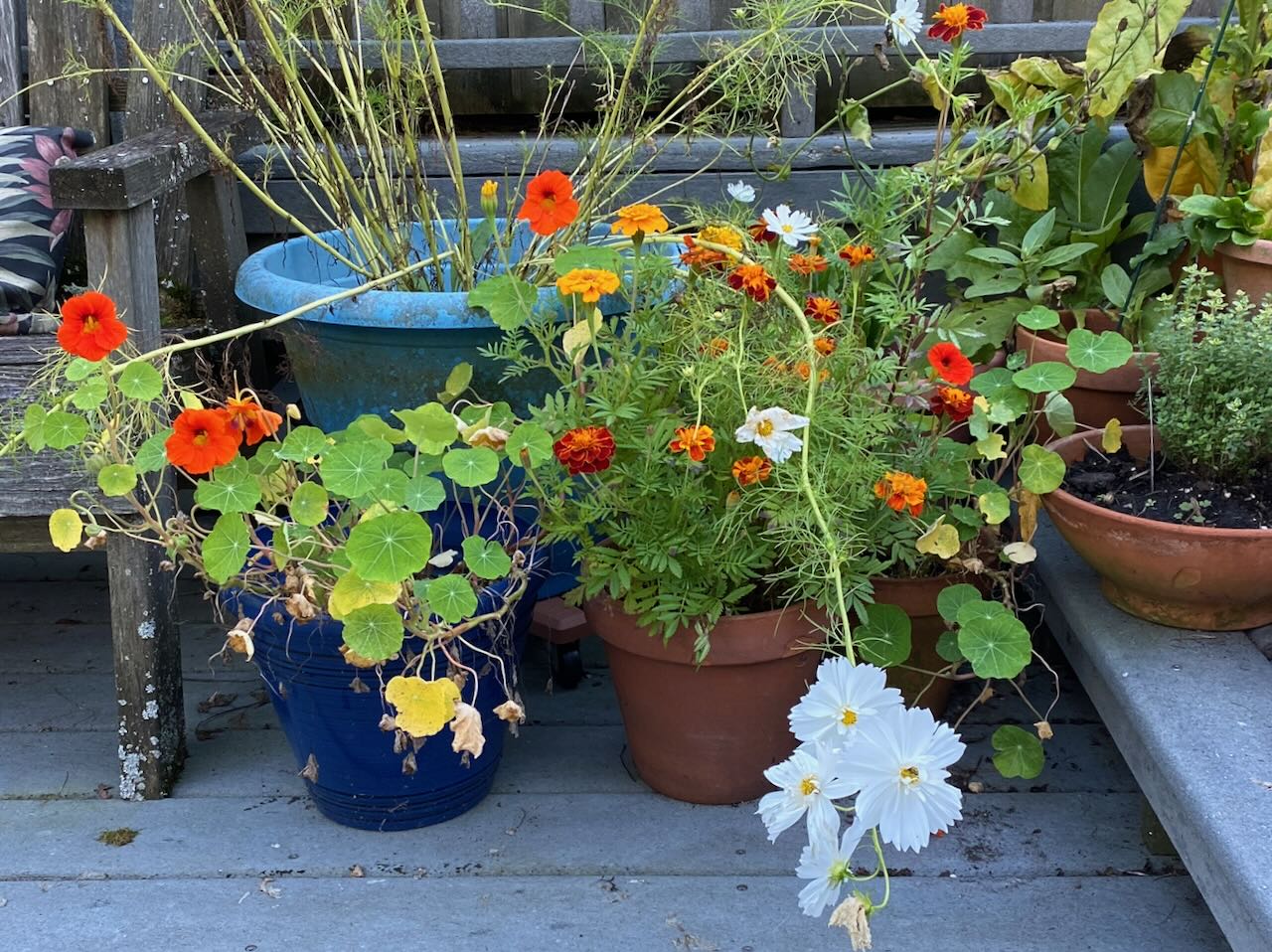
My usual approach to companion planting is to shove a lot of flowerpots together and hope they riot well in each other’s company. Many of my flowers have resigned from blooming, as shade from the house advances over them, but this part of the deck still gets some sun. The nasturtiums and marigolds soldier on while the cosmos droops gracefully over them. Maybe next year I’ll boost some marigolds up into the cosmos pot, for support.
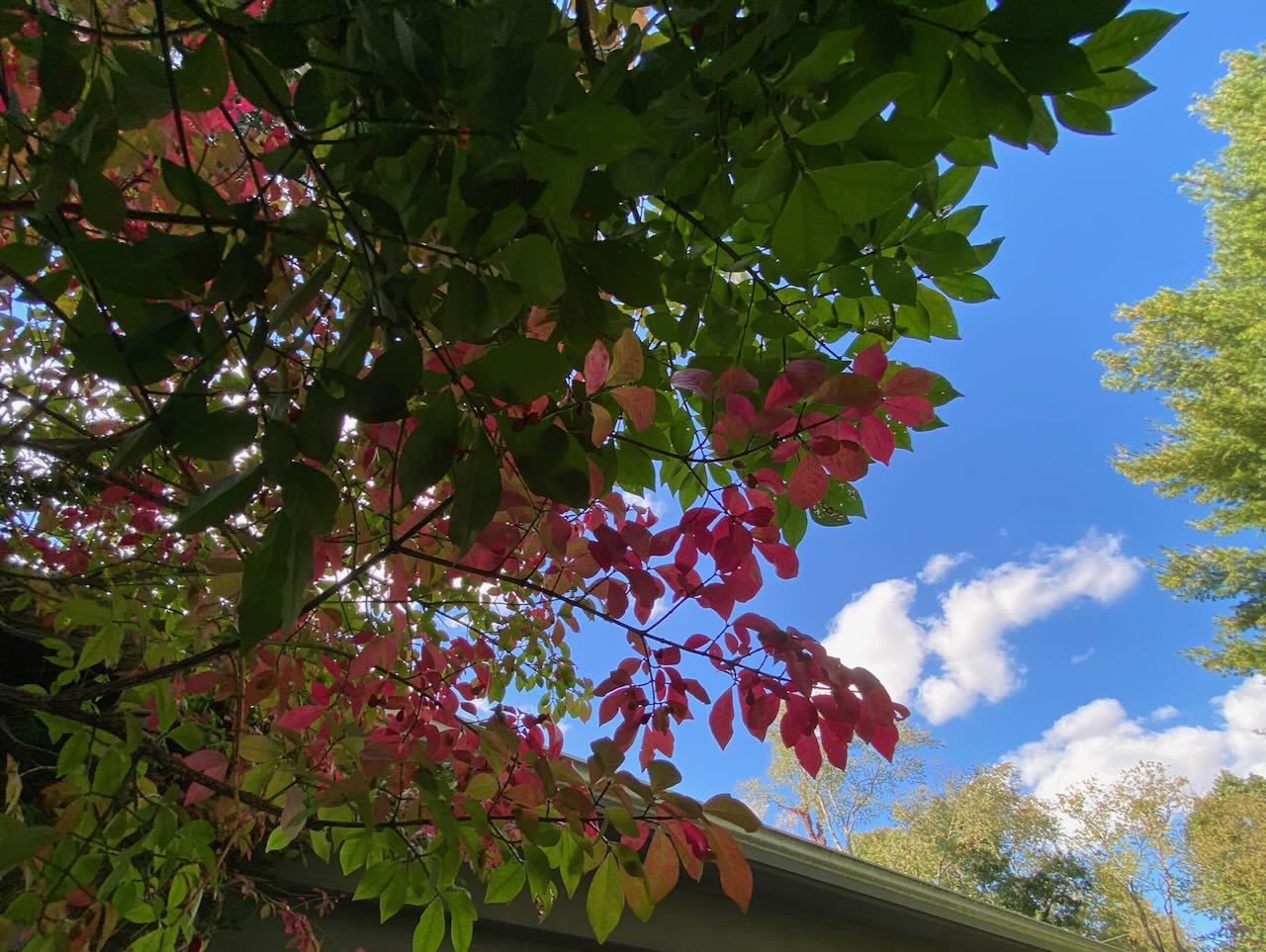
As color drains from the flowerpots, the burning bush begins lighting up. It’s said to be invasive, and it probably would be if the critters in my yard would leave it alone. It’s a favorite for topiary among the deer, and its berries are loved by the birds. Its proper name is euonymus, which means well-named. Which is a little weird, since “well named” sounds like they know we’ll really call it “burning bush,” a well-fitted name.
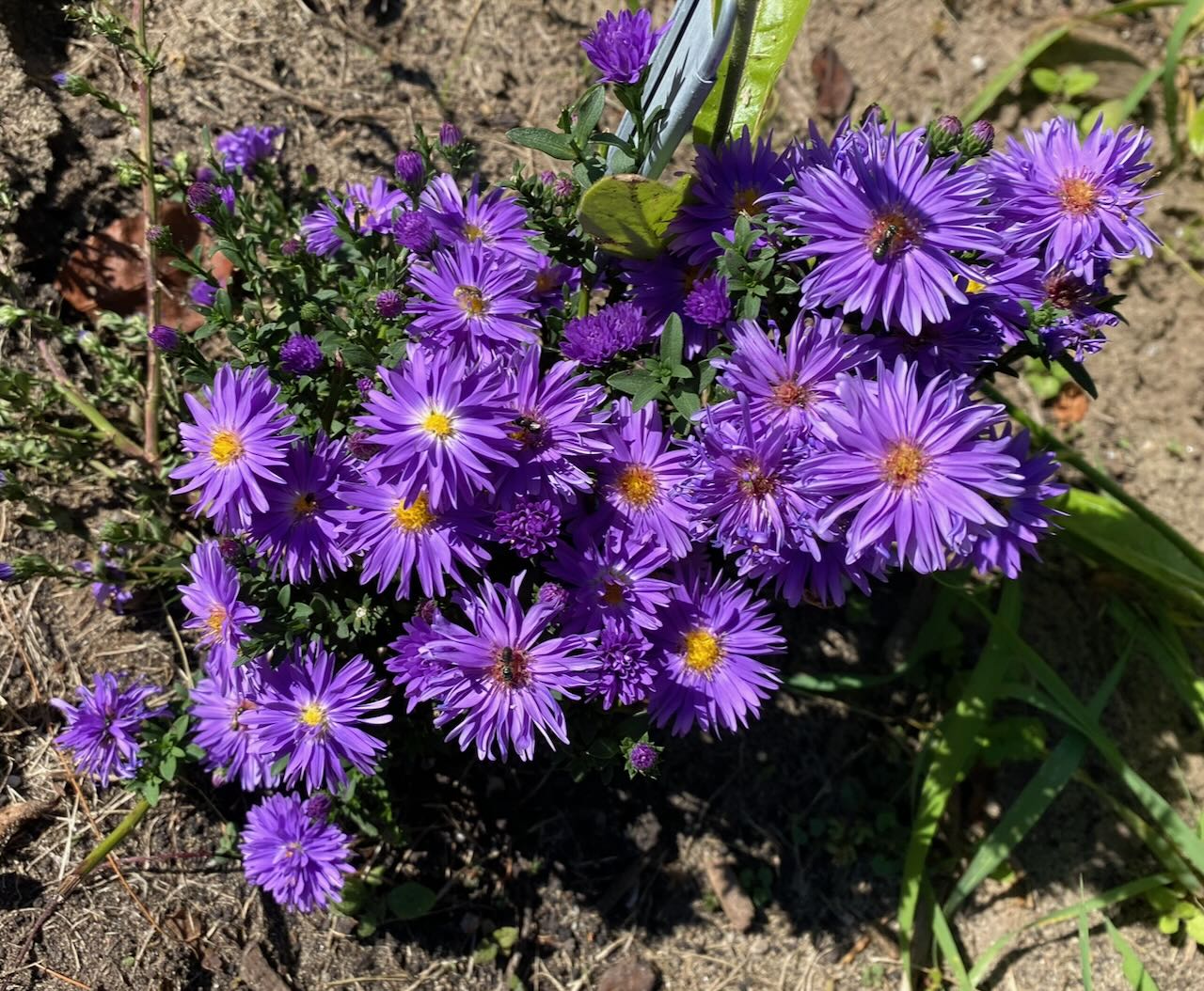
Red and gold are typical autumn colors, but I’m partial to the blues and purples of asters, which also come out in the shortening days. I’ve tried for years to get them to establish in my yard. They bloom so late in the season, I thought maybe I was accidentally weeding them out in their early growth. But here they are this year, popping up all over – everywhere I strewed seeds that never germinated or placed a plant that failed to thrive, at last here they are, suddenly flourishing. The grace of the garden. I’m going through the yard putting in plant markers at each clump, so I’ll recognize them as they come up again next year. I want them to become a regular part of my garden’s community, and it’s so easy to mistake the nature of things that are still developing.

