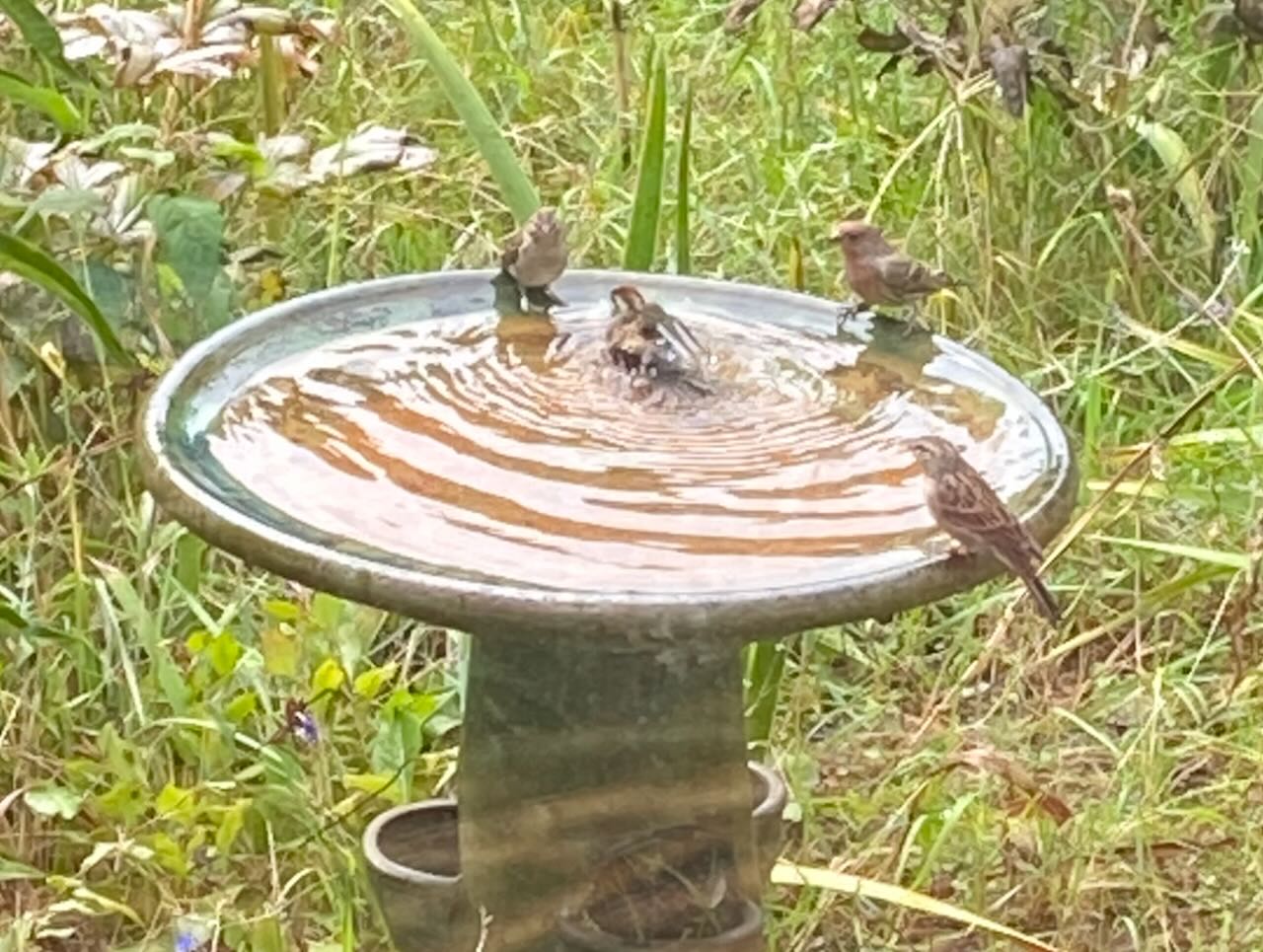
Michigan sits under both the Atlantic and the Mississippi Flyways, and in spring and fall many migrants pass through. So when, sitting by the window to write, I noticed movement at the birdbath, I thought exotic species might be involved. But no – it was the local community, sparrows and finches, diving, bathing, drinking, and generally disporting themselves at the spa. Whatever the birds were feeling, it looked joyful to me. Chickadees showed up and were admitted; blue jays showed up, and all the other birds left. Were the jays aggressive, or did they just take up too much space?
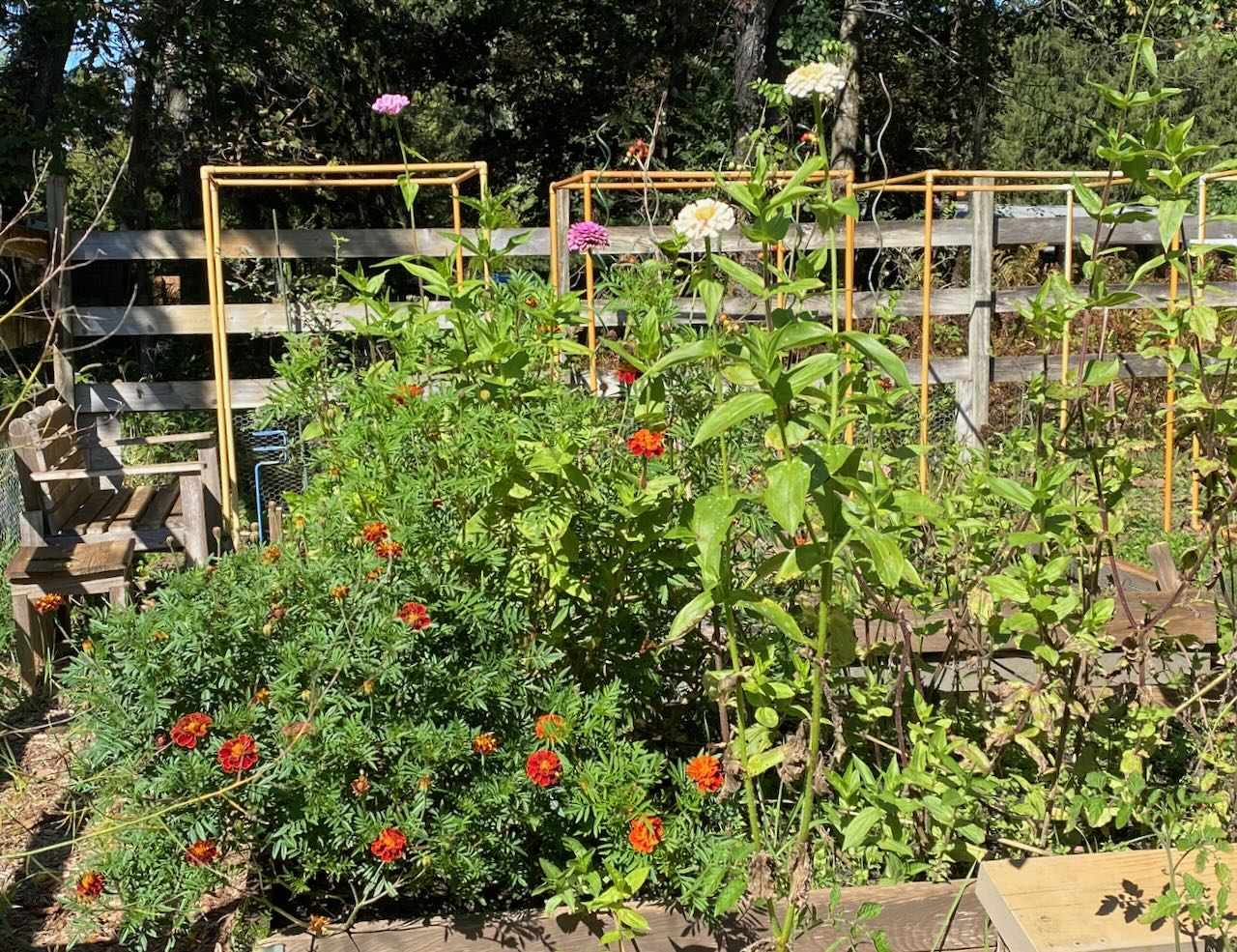
This year I tried a lot of companion plantings, with mixed results. The basil among the tomato plants did really well while the tomatoes did not, but local gardeners without basil also had poor tomato crops. The radishes among the squash might have helped, except a rabbit got into the garden and ate all the squash leaves. Having some extra Queen Sophia Marigold seeds, I tossed them into the edge of the zinnia and cosmos bed. Tall varieties of zinnias and cosmos tend to flop, then grow in zany angles as their leading edges stand back up. But well, look at this – the marigolds held the zinnias and cosmos up straight. Where there were no marigolds they keeled over.
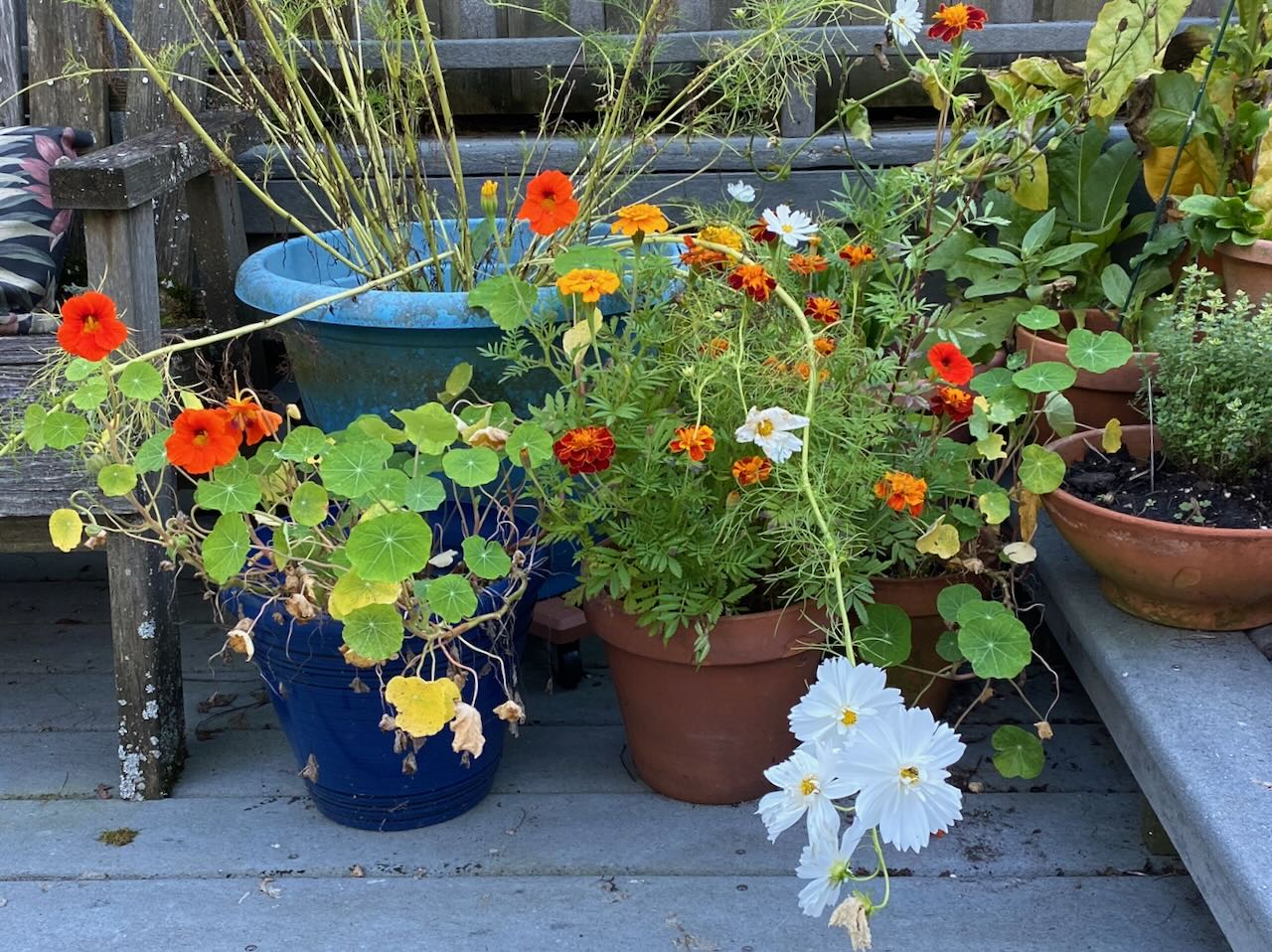
My usual approach to companion planting is to shove a lot of flowerpots together and hope they riot well in each other’s company. Many of my flowers have resigned from blooming, as shade from the house advances over them, but this part of the deck still gets some sun. The nasturtiums and marigolds soldier on while the cosmos droops gracefully over them. Maybe next year I’ll boost some marigolds up into the cosmos pot, for support.
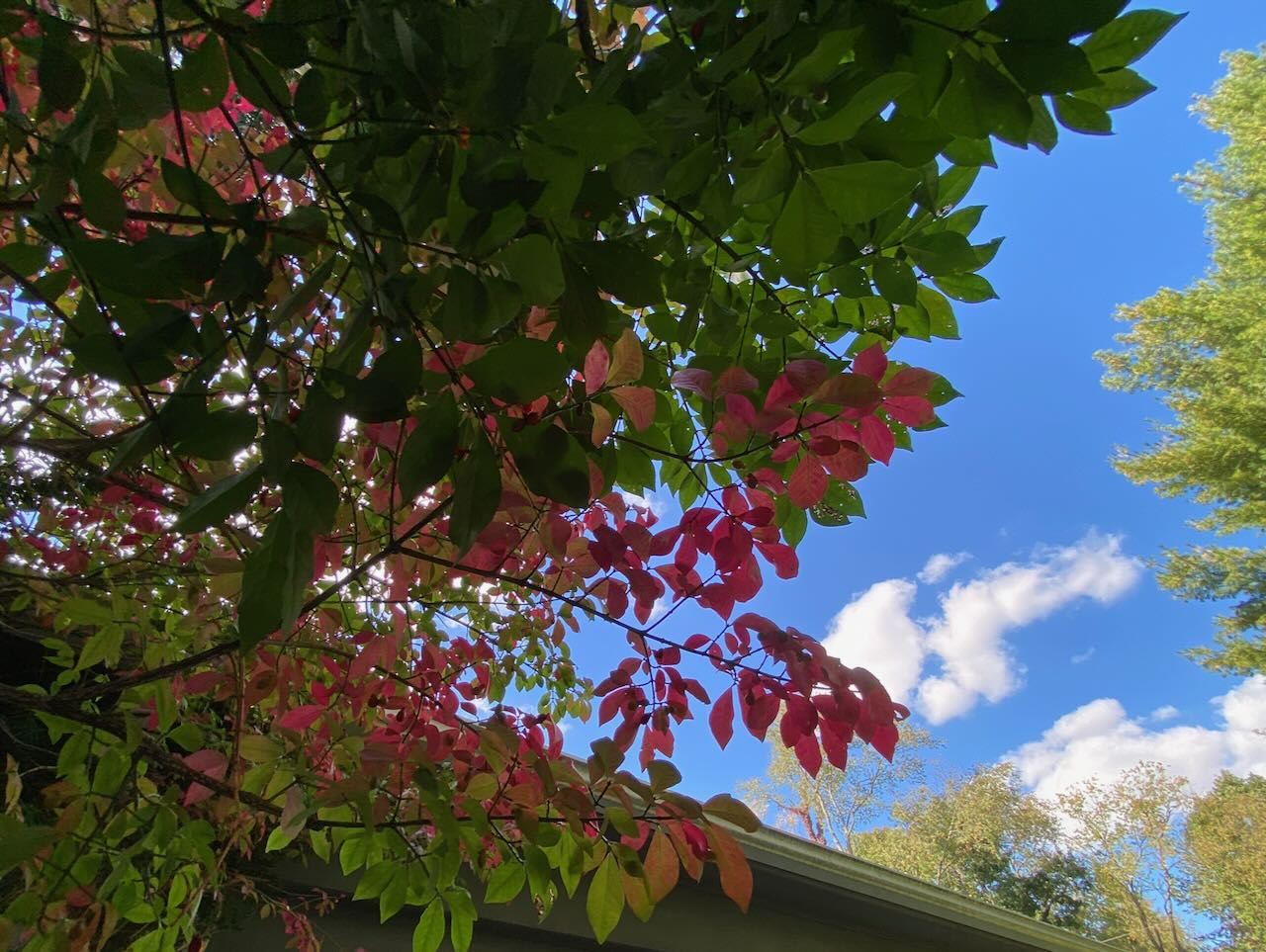
As color drains from the flowerpots, the burning bush begins lighting up. It’s said to be invasive, and it probably would be if the critters in my yard would leave it alone. It’s a favorite for topiary among the deer, and its berries are loved by the birds. Its proper name is euonymus, which means well-named. Which is a little weird, since “well named” sounds like they know we’ll really call it “burning bush,” a well-fitted name.
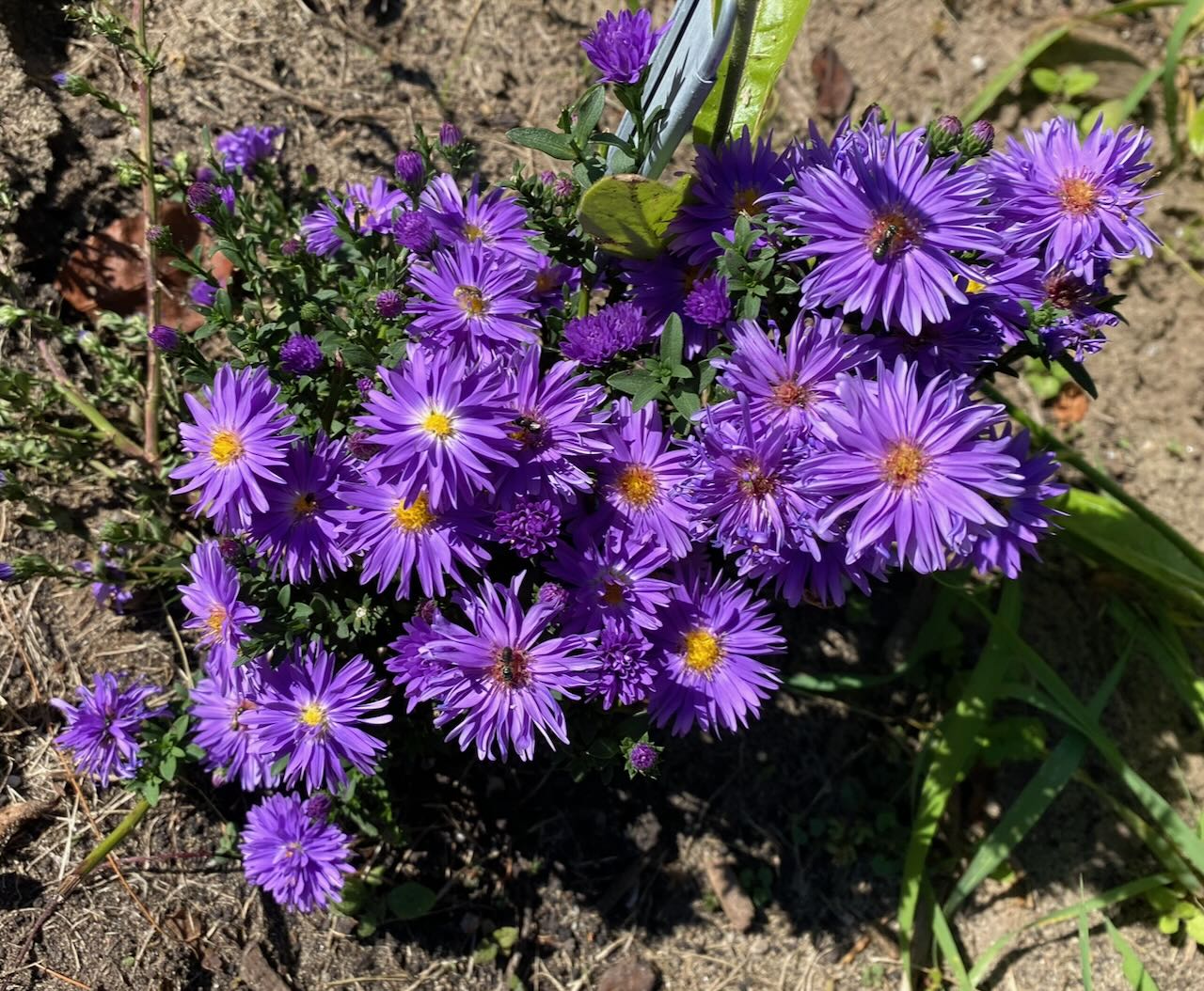
Red and gold are typical autumn colors, but I’m partial to the blues and purples of asters, which also come out in the shortening days. I’ve tried for years to get them to establish in my yard. They bloom so late in the season, I thought maybe I was accidentally weeding them out in their early growth. But here they are this year, popping up all over – everywhere I strewed seeds that never germinated or placed a plant that failed to thrive, at last here they are, suddenly flourishing. The grace of the garden. I’m going through the yard putting in plant markers at each clump, so I’ll recognize them as they come up again next year. I want them to become a regular part of my garden’s community, and it’s so easy to mistake the nature of things that are still developing.
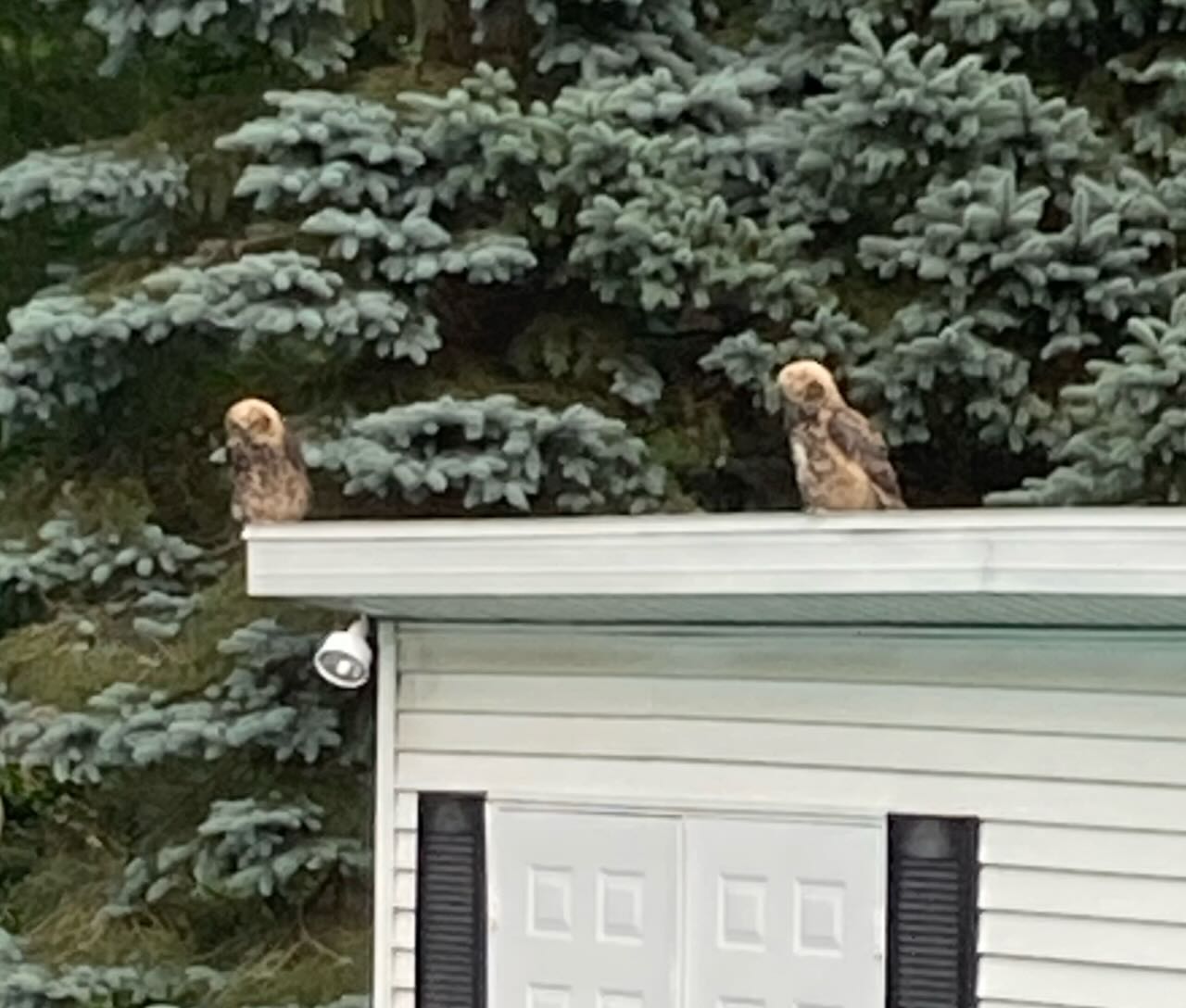 My neighbor texted me the other day to tell me there were two great horned owls on the roof of her pool house. They were eyeing the pool vacuum with great interest, in case it climbed out of the pool and was revealed as dinner. Eventually they lifted their heads, the larger one outstared the smaller, and the smaller retreated to the far corner of the roof. Since female great horneds are larger than males we assumed this was a couple, and anthropomorphized a spat for them. But this was way past mating season for great horned owls, and on reflection this was more likely Momma and a growing chick. Was she teaching him to hunt? Trying to get him to fend for himself? Trying to get some time to herself for heaven’s sake? Still anthropomorphizing.
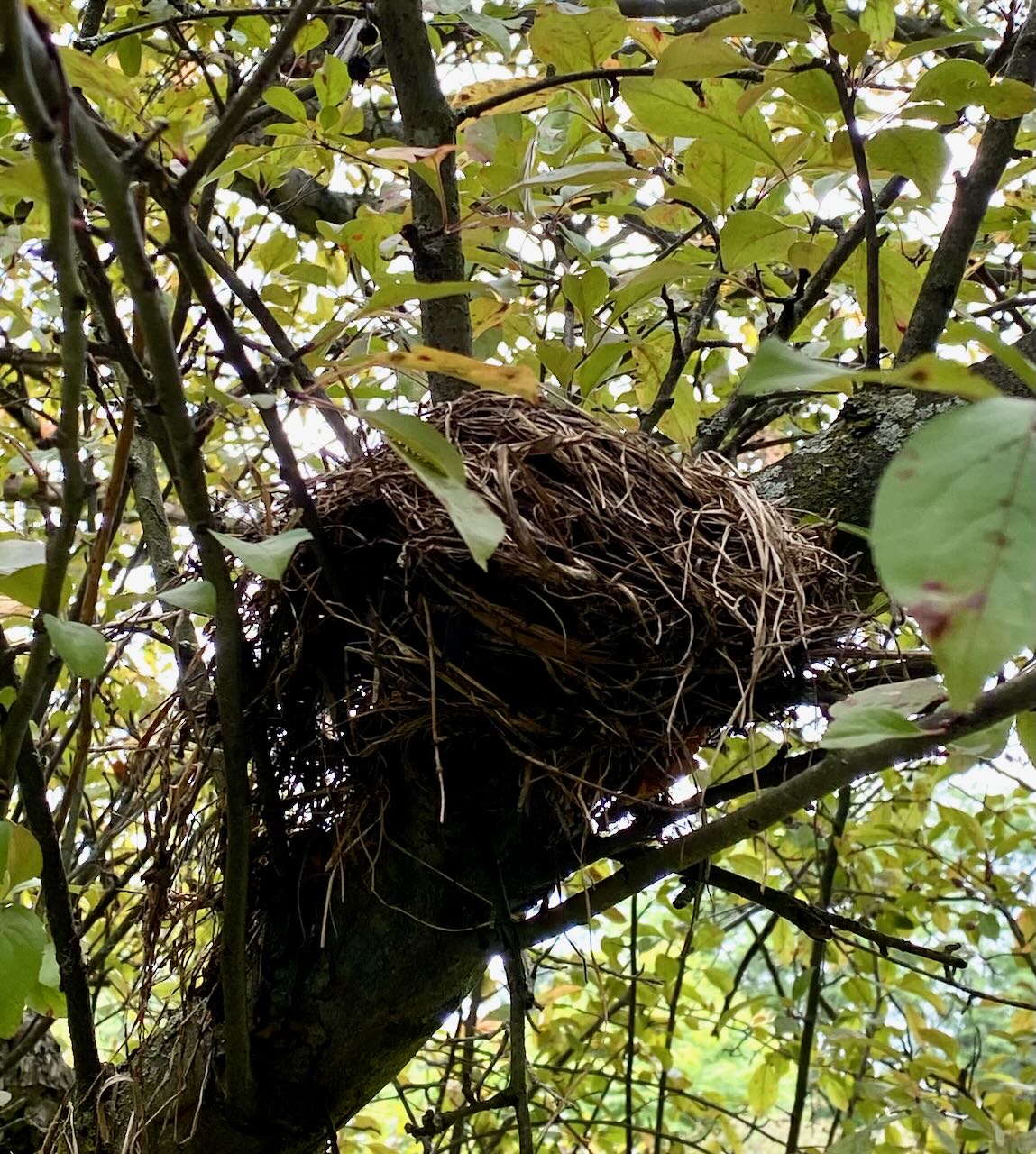 But birds, like people, do need to care for their young for a good chunk of their lives. We can relate. Not long after seeing the owls – though, sadly, after leaving my camera in the house – I walked out to my mailbox and found a baby robin hopping along the driveway near the crabapple tree. I could see where the nest was, though I couldn’t reach it. It looked like everyone else had fledged, but Junior had not quite made it. As he hopped he flapped his wings a bit, but didn’t get any lift.
 I walked after him wondering what I should do, but the point was soon moot. He headed for this nice, thick stand of mountain mint, disappeared into it, and began to cheep. Good cover, I thought. It was a nice, steady cheep, like a beacon. Then I noticed that baby and I were being watched by a full-sized robin on the lawn. I took the mail back into the house and looked out the window to see big robin pulling a worm from the lawn, and carrying it into the cheeping mintpatch.
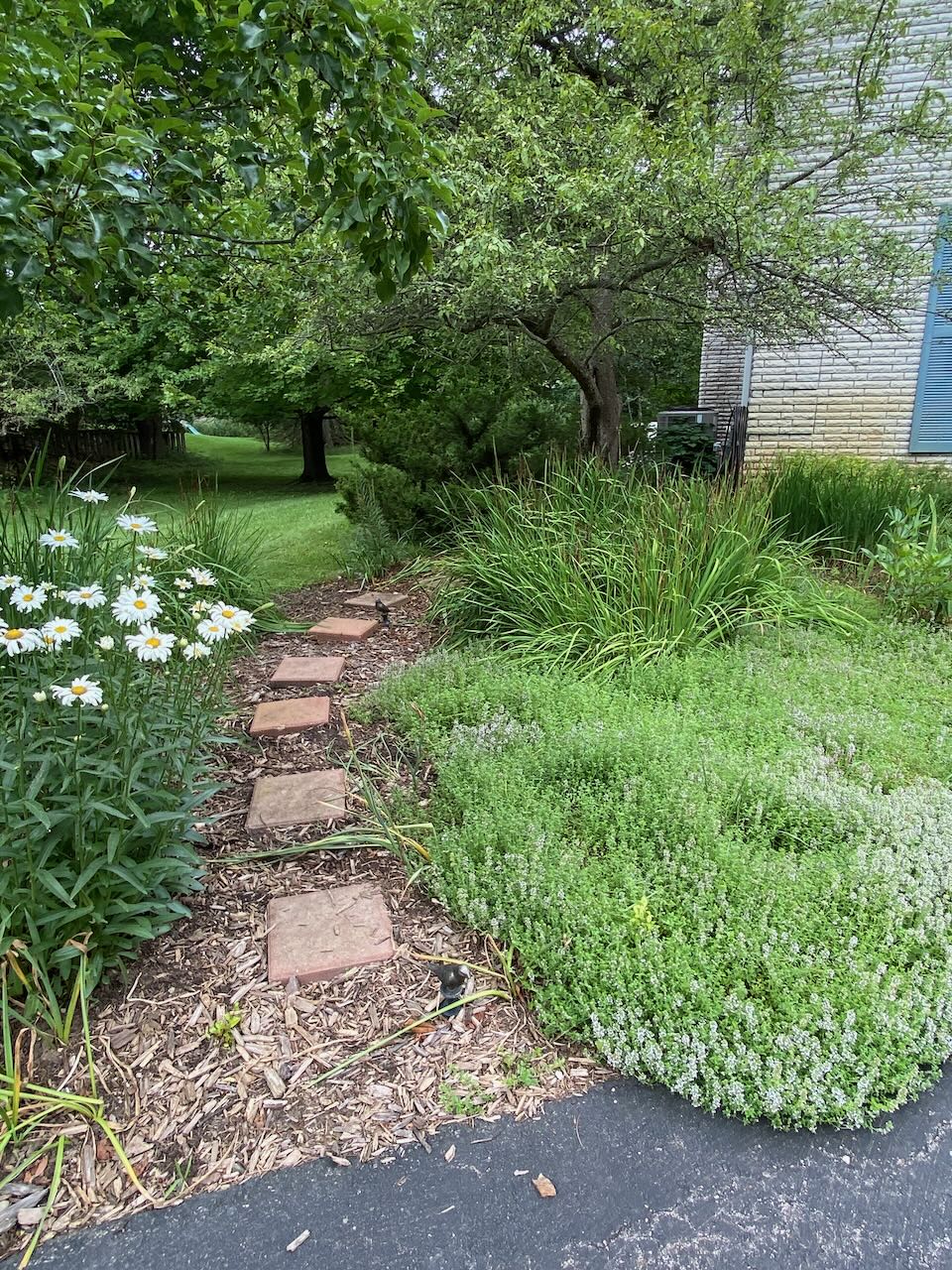 Next morning the cheeping came from a tall clump of Siberian Iris on the other side of my front door, and the parent robin waded in with another beakfull of worm. A successful night. There was cheeping and worm catering the next day too, from a little further back. A second successful night. The morning after that I didn’t hear him. Did baby bird learn to fly? Was he cheeping somewhere else? I hope those owls didn’t find him.
 I’ve read that fewer than half of all baby robins survive, and yet robins are not endangered. They’re busy all summer, laying eggs, feeding babies, traipsing around after fledglings, repeating the process two or three times per summer just to survive. Free as a bird, we say, watching them fly and hearing them sing. In fact they are bundles of purpose. I’m glad to see them taking the occasional break – or so I think of it – in the local spa.
 Of all the birds in my yard – and though I’m partial to Robins, for obvious reasons – my favorites to watch are the wrens. They’re tiny and adorable, they wag their tails, they hang around the house, and then they open their teensy beaks and this huge, rolling, gigantic wave of song comes out. How do they do that? When one of them sings outside a window, you’d swear he – or she – is inside the house. A group of them is called a “chime.”
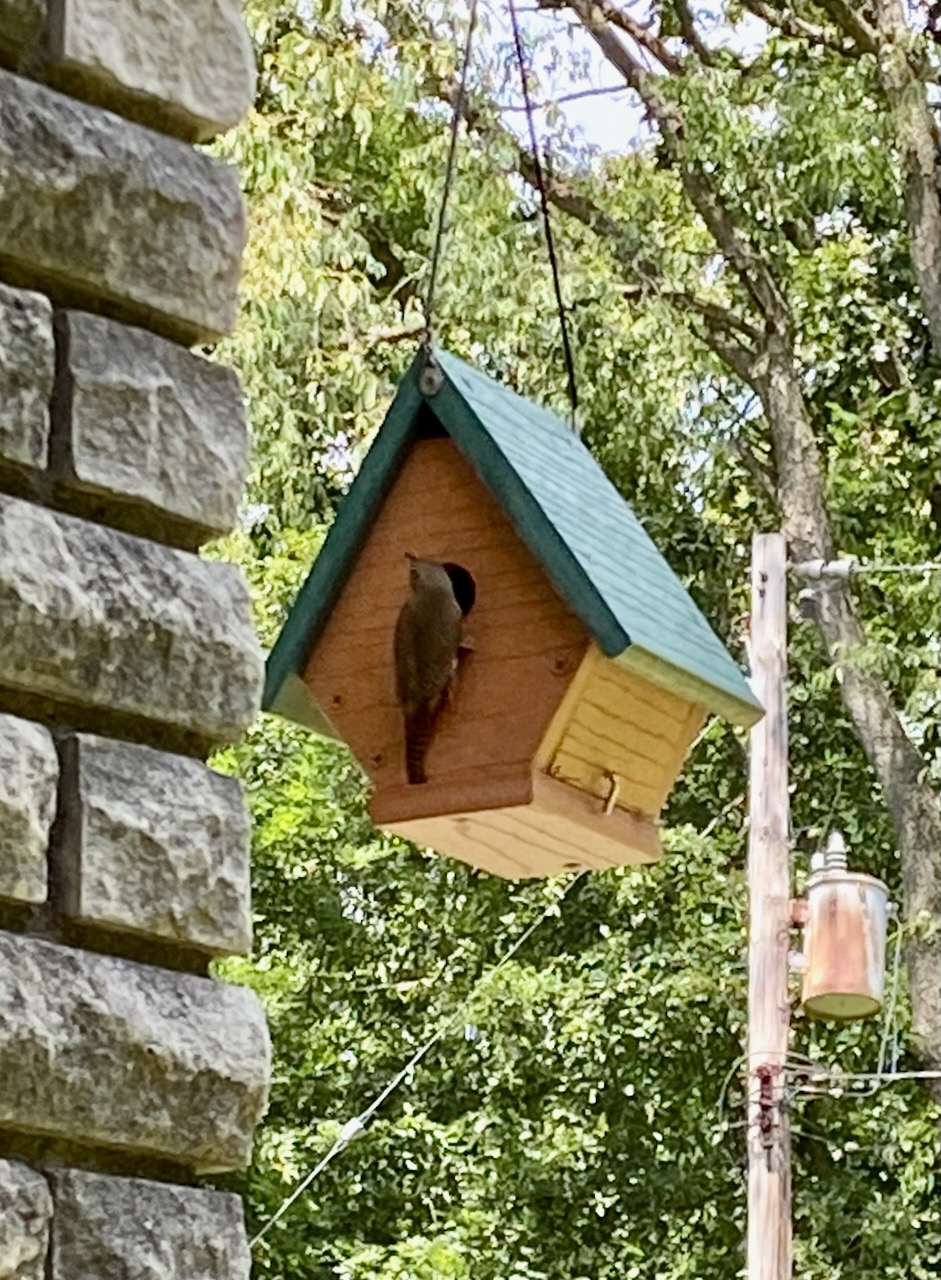 The hanging gourd they nested in last year fell apart over the winter. Doug was willing to build a wren house for me, but spring came so early that the birds were back while he was still working on the eighty-seven other projects I’d asked him for. Well, probably not eighty-seven, but you get the idea. So I went down to the local bird-supply store, bought a ready made wren house, and hung it from the eaves. I really felt it was inferior goods, and wasn’t sure the wrens would go for it. They did.
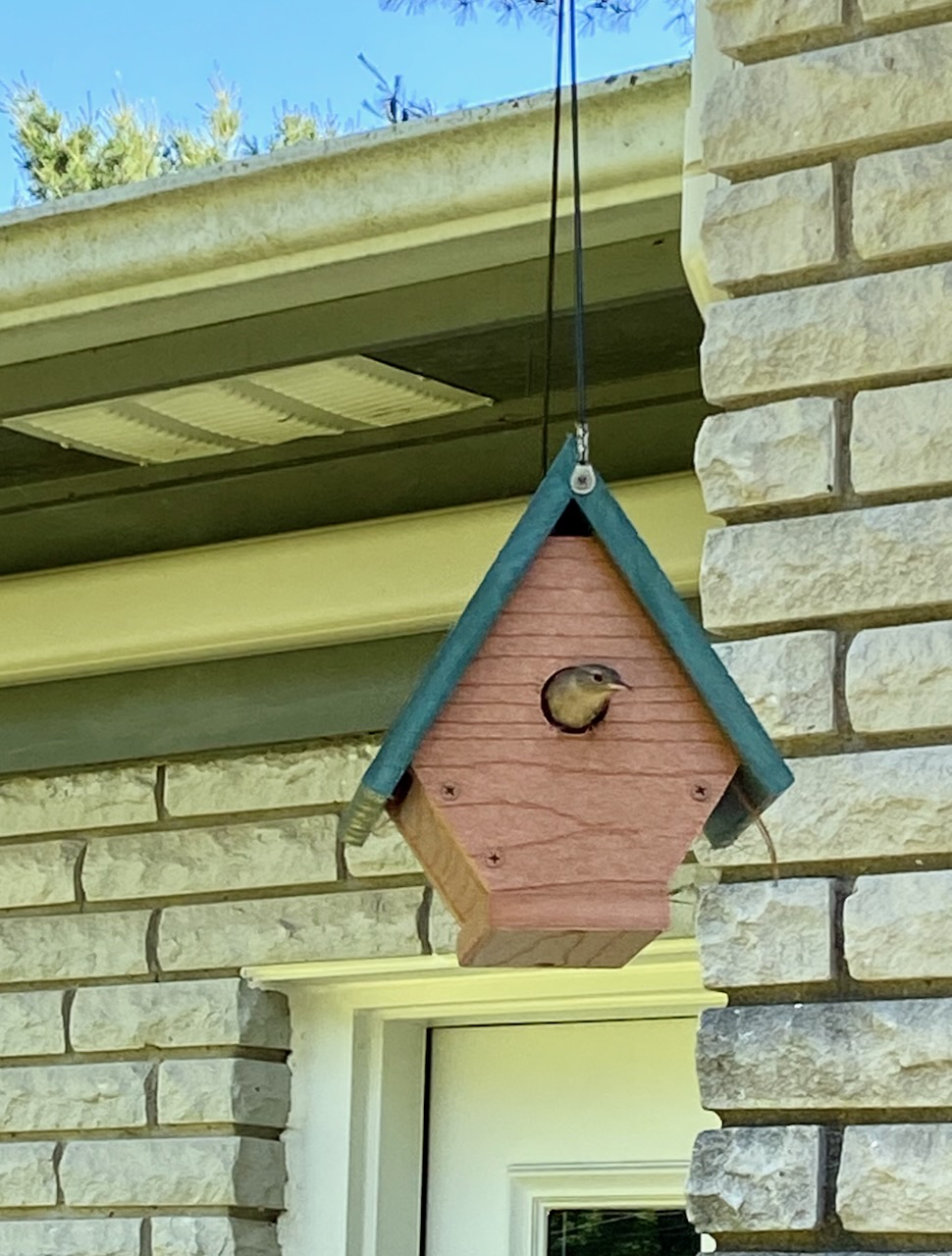 Apparently I was standing too close while taking these pictures and aroused parental wren suspicions. Whoever it was on duty – hard to tell male from female wrens – watched very carefully for several minutes. I tried to look nonchalant, backing off a little, but when I looked up again the wren leaped out into the air and took off flying, straight to the fake nest of the ceramic birdhouse.
 I was sorry the wren felt threatened, but pleased to know I had provided the fake nesting site. I hope it works well for them. And I did get a nice photo of flight.
 The wrens are used to me puttering at my garden bench or on the deck, so I went back to doing that, hoping to be recertified as harmless. But I did watch, making sure the wrens came back. It didn’t take them long, so I guess I’m not so scary after all.


