 It’s a word often used at the head of a year. As with many interesting words, it has meanings that overlap and inform each other.
We use it for firmness of purpose, as in New Year’s resolutions. We use it for fineness of detail in an image, as in the resolving power of a telescope, a microscope, a camera. We use it for the passing of discord into harmony in music. We use it for turning disputes and contention into peace. The word contains all this. Can we use our firmness of purpose to look not at the surface of our situation, but deep into its substance to see what it’s made of? Will what it’s made of help us turn its discord and contention into harmony and peace? That’s hard to see, and hard to do. It’s much easier to see the meaningless structures that stand in the way, obscuring the heart of the thing. It took thousands of years of the sun appearing to rise and set – as we still say it does – before we recognized that wasn’t the truth at all. We say that we hold to our beliefs, when often it’s the beliefs that have a grip on us.
 2020 was a year very much in need of resolution, in all the facets of that word. We didn’t get there. Let’s try again for 2021.
 In 2020, all three classical music stations I listen to started playing Christmas music before Thanksgiving – usually anathema – and they all gave the same apology for it: wasn’t it a year well worth hurrying on its way out? True, but it was a whole year of our lives. Wasn’t it good for something?
 Several writers have noted that this plague was a demonstration of how, all across the planet, we are irrevocably interdependent. I think this was what motivated the outrage of those who protested being required to wear masks. They said it violated their liberty, but what it really violated was their wish that they, their communities, maybe all the U.S., were and could remain separate from that whole rest of the world, whose influence they saw as something pernicious that could, should, and would be kept at bay. An old, deep strain of American thought, tapped by recent politicians but not invented by them.
 If adversity builds character, what a lot of character we all must have now. Let’s hope we can use it to muster the strength to give up ideas that have outlived their relevance. For gardeners, the return of seed catalogs reaffirms that a new season is approaching, filled with possibility. Old favorites and new varieties, the tried-and-true and the experimental, it’s all there to choose from. I greet my seed catalogs with a smile, looking forward. Happy New Year!
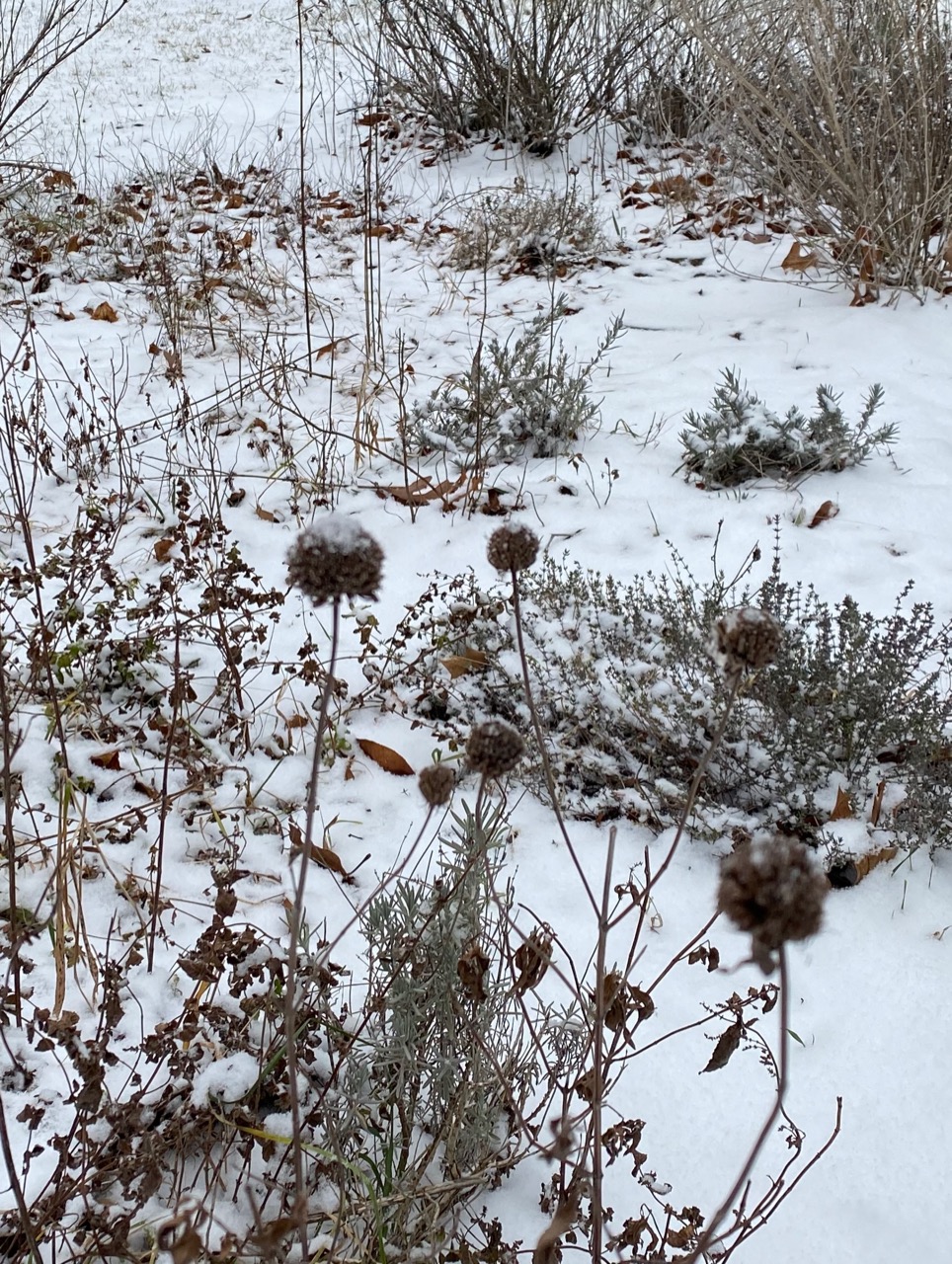 I was happy to oblige. As I wrote up some notes for her, I thought also about the nature of advice. It’s a lot like literary criticism. You have to distinguish between your personal taste and eternal truth. Maybe that’s overstating it, but haven’t we all put in some “easy care” plants that were, in fact, total divas? Some supposedly prolific tomato plants that turned strangely reticent in our care? Groundcovers apparently determined to become planetcovers? How much time and maintenance do you enjoy, or tolerate? I say if there’s a plant that gives you trouble, rip it out and never let it cross your garden path again. A weed is anything growing where you don’t want it. I like to recommend leaving old stalks and seedheads standing over the winter, both to provide shelter for wildlife and because I love how they look in the snow. Some gardeners – and some neighbors – think this looks like a big mess.
 So advice based on another’s experience can be a shortcut, but the best way to find what works for you, is to try things. Keep trying them. If a plant fails in one place, move it somewhere else. Pay attention to how the garden responds, and draw new conclusions from it.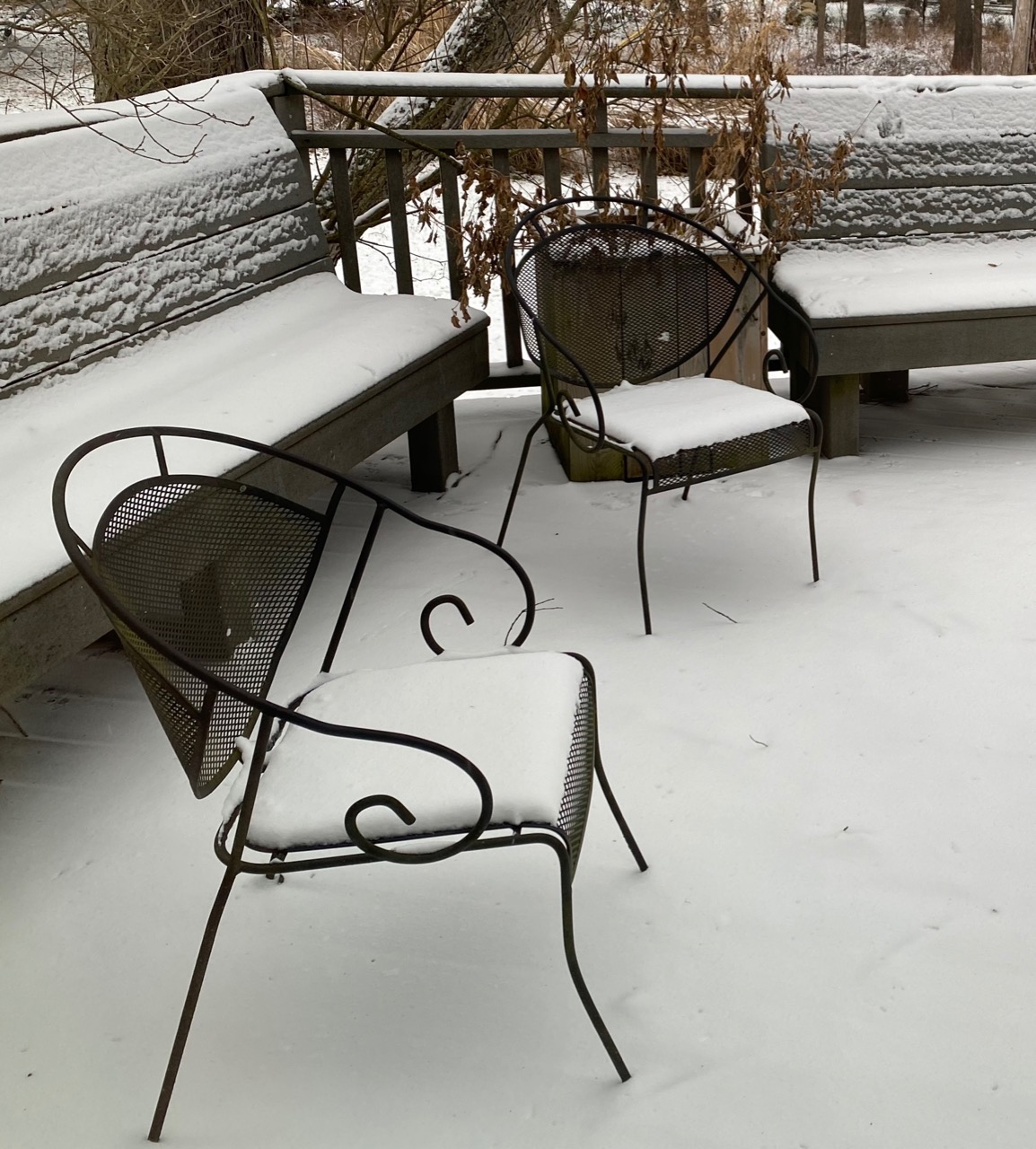
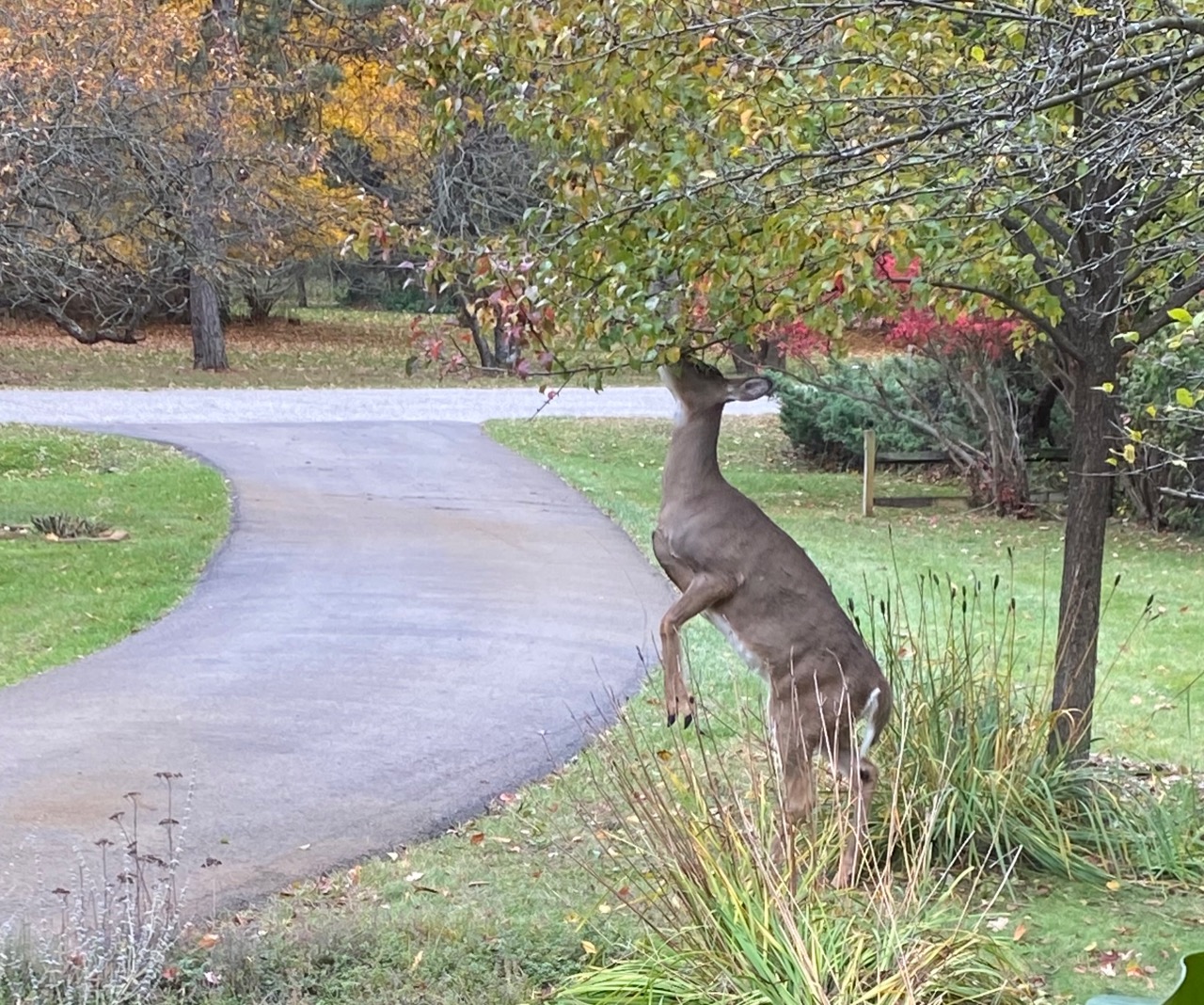 One of the late sources of food for the critters in my yard is the ornamental pear tree. It makes tiny, hard pears about the size of the end of my thumb, inedible for people but irresistible to deer and squirrels. First they eat the ones that fall to the ground, then they indulge in a little topiary.
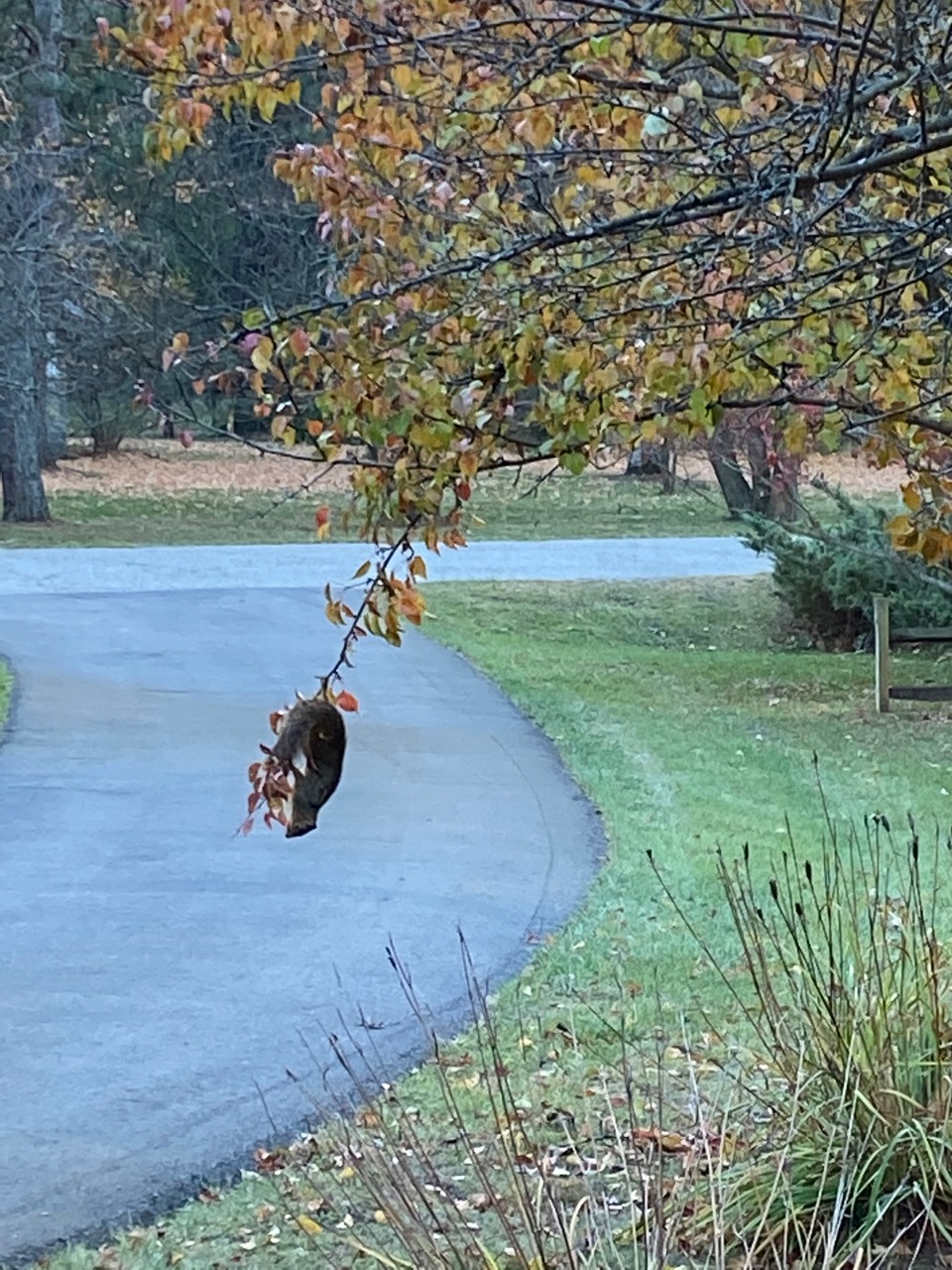 The tall stalks you can see standing under the tree are the stems of my Siberian Iris. There was a time when I’d have cut them all down, tidying up, but I have seen the error of my ways. I learned that the hollow stems become shelters in which Michigan’s solitary bees can hibernate. This was news to me because I used to live in Southern California, where bees have no need to hibernate. How lovely to discover that I could ditch a chore and be ecologically correct at the same time.
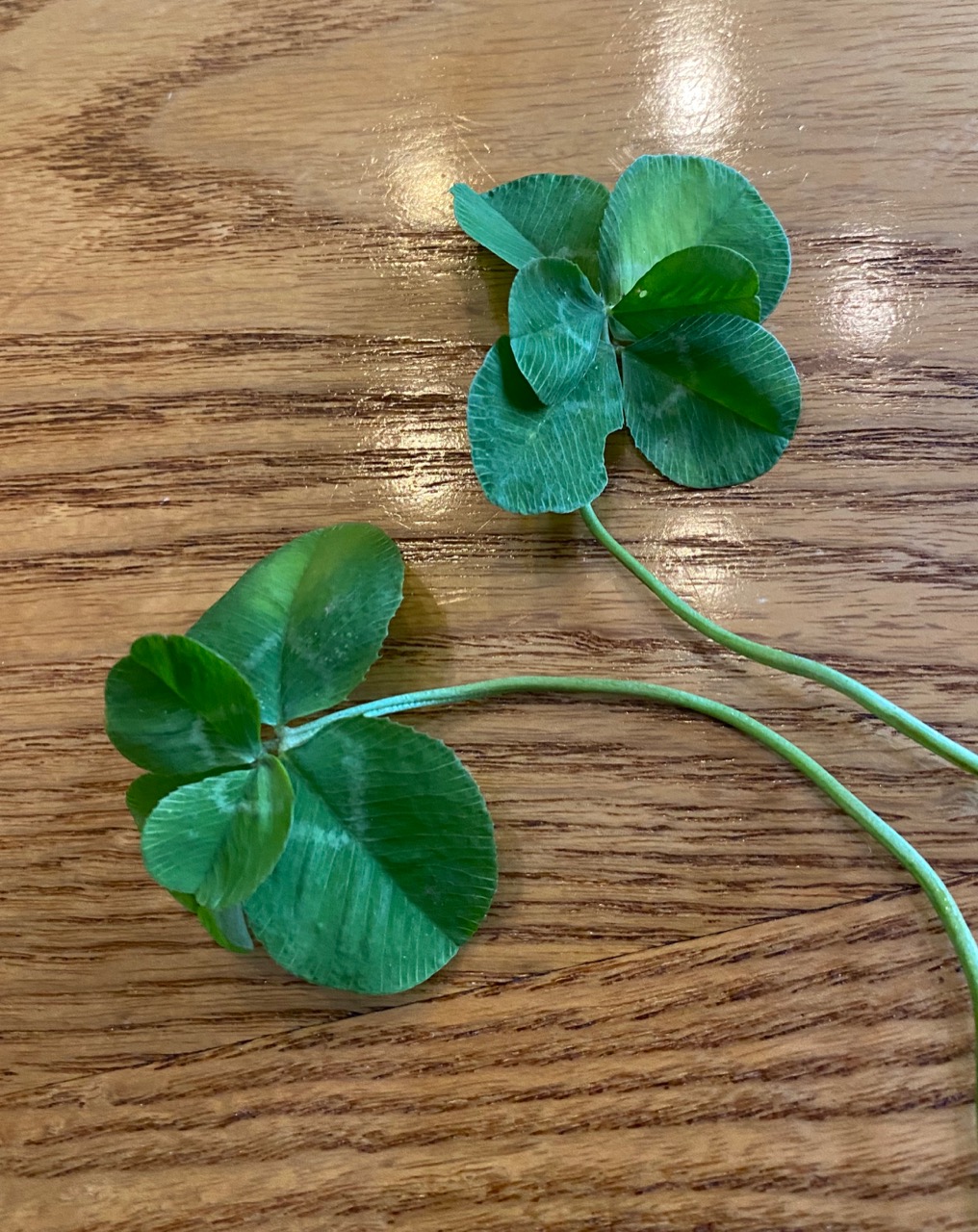 We now have serious, white, twinkling frosts most nights, but the clover persists in several raised beds in the garden. There is one corner in particular that has continually generated good luck tokens since October: not only four-leafed clovers, but five-leafed and six-leafed ones! I have been up to my eyebrows in wishes. A friend says that five-leafed clovers must be given away for the wish to come true, but that’s not in my folktale culture. I was raised to believe that giving away good luck like that was a sign of ingratitude. I am cherishing these clovers, exuberant in their late lives, extravagant of leaf in defiance of the lessening daylight. Inspiring. Just to look at them is good luck – though when I wish on them I do close my eyes.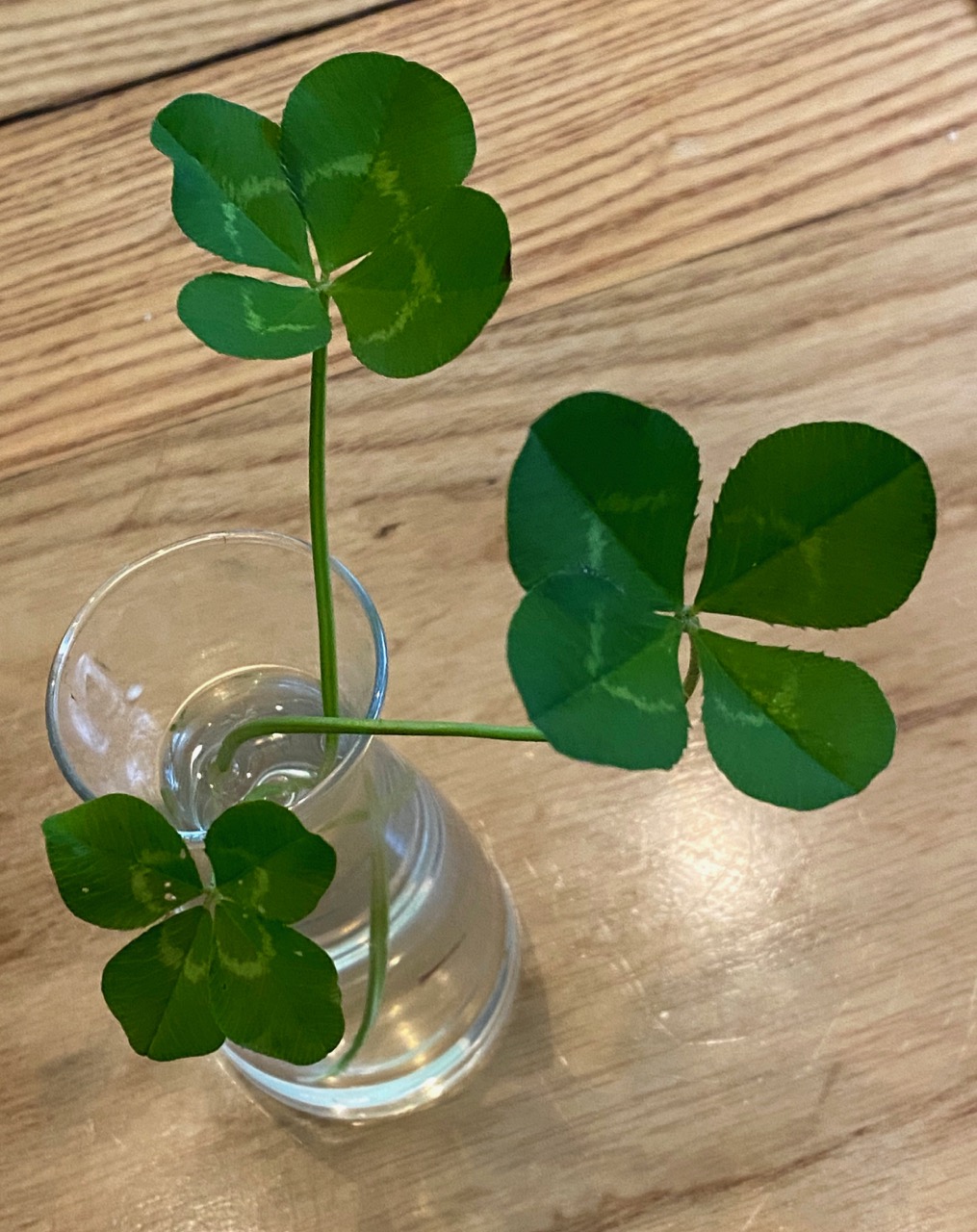
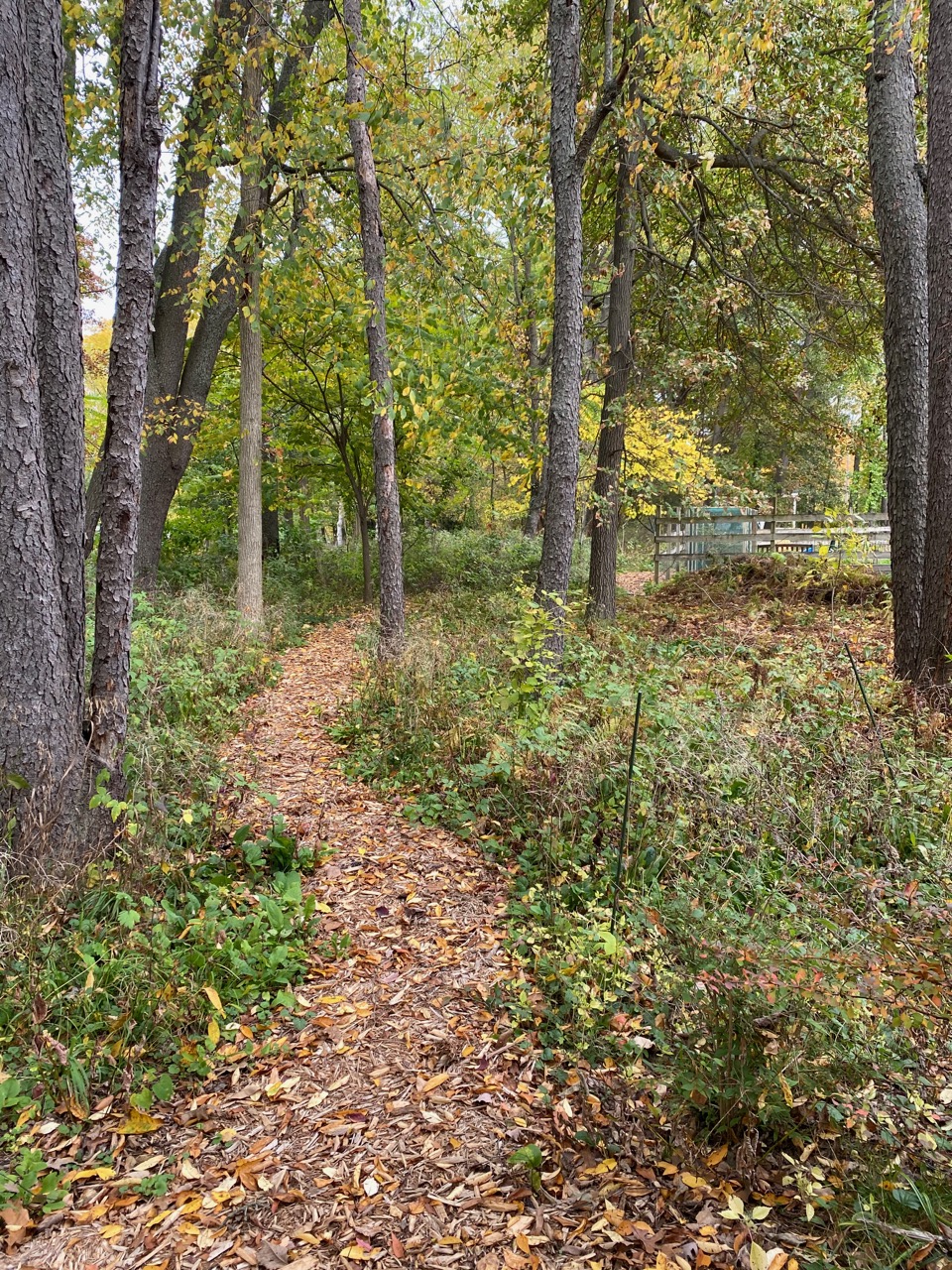
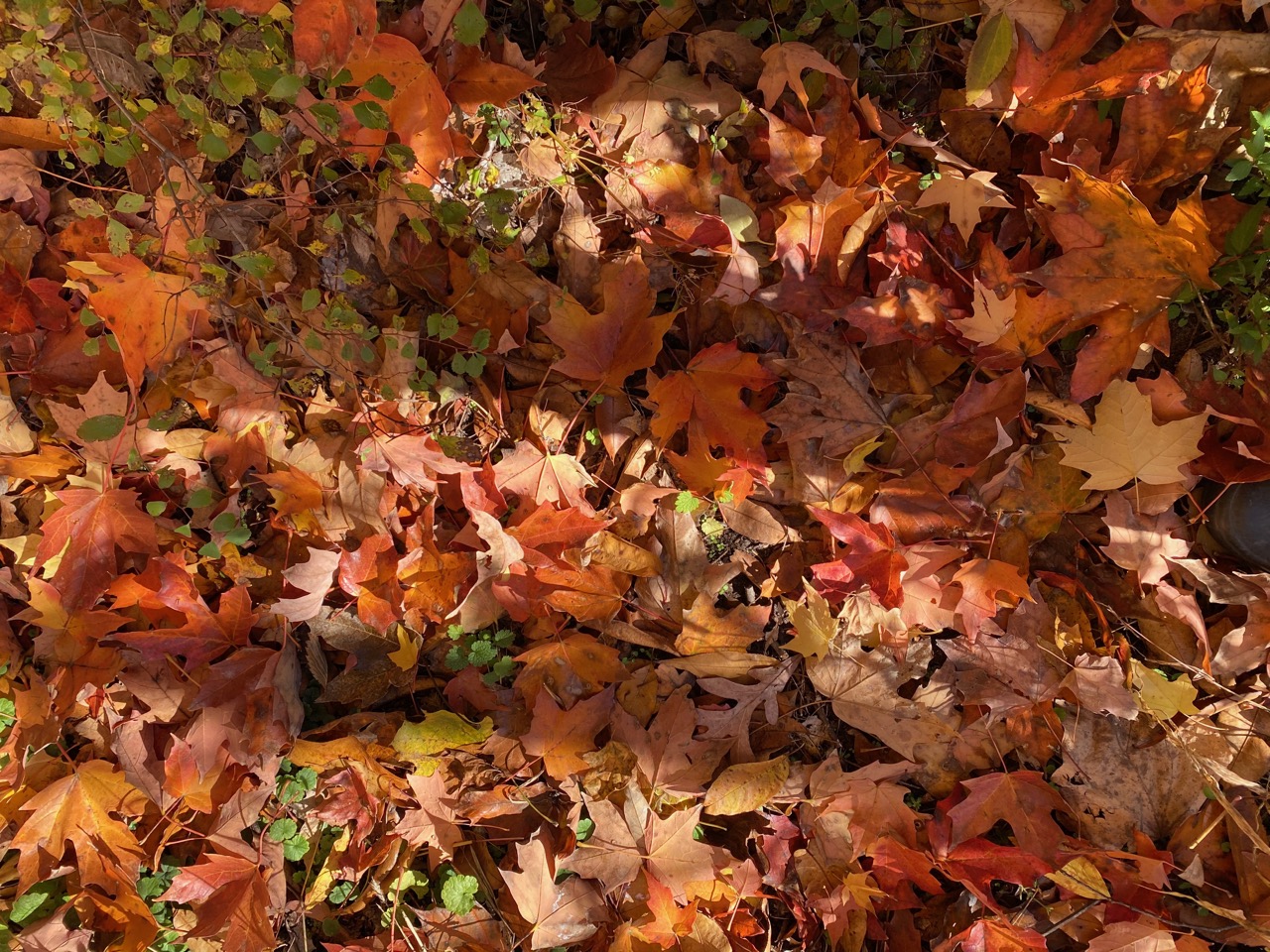 Now the leaves are off about half the trees, the lawn a litter of red and gold slowly going brown. Charlie came and mowed, not to cut the grass, but to chop the leaves into mulchy bits for the wind to scatter evenly over the tired yard. I filled brown yardwaste bags with the remains of plants that showed signs of fungus or other disease, and set them out for collection. Then there are all the plants that would be considered healthy except they’re dead. From frost. Tangled pumpkin vines get piled up onto the raised beds from which they escaped. Anything tall and hollow that looks like it could harbor hibernating bees gets left standing. Two of the remaining empty beds get cleared out for tulips.
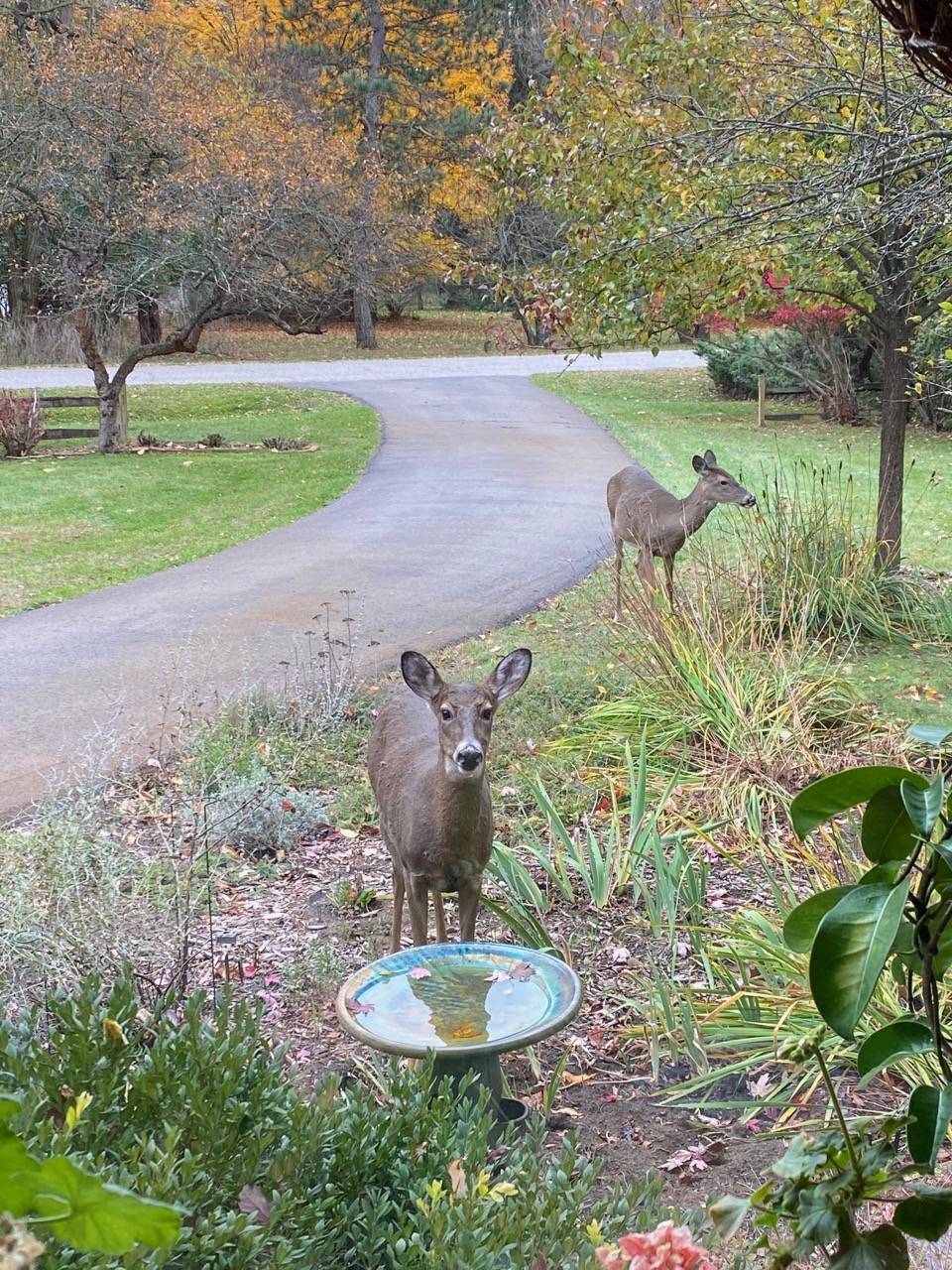 I put the tulips in the fenced garden to keep the deer from eating them, so I can cut them for bouquets come spring. Narcissus are toxic to deer, so those can go boldly into the front yard, the herb garden, the peony patch – anywhere. Even the most clueless fawn leaves them alone. It’s sort of a wonderful association, isn’t it – narcissus and toxicity. I’m sure there’s an evolutionary explanation for this difference between tulips and narcissus, but how telling that the poisonous flower shares its name with the Narcissus of mythology who fell in love with his own image. Toxic self absorption: the narcissist has a Greek root in common with “narcotic.” Luckily for the deer they have figured this out.
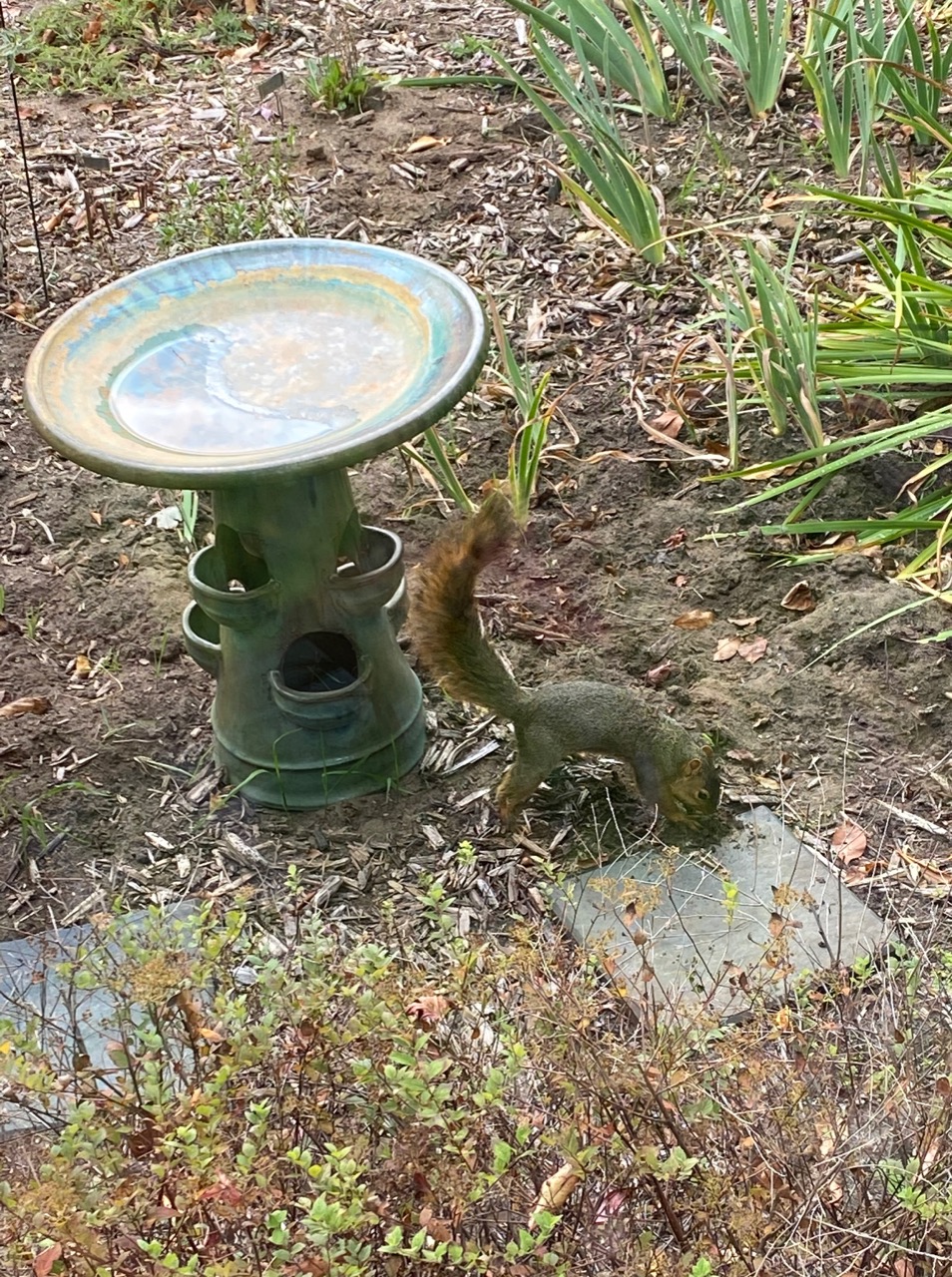 Tulips however, are edible. A Dutch friend tells me that during wartime when they had nothing else to eat, the Dutch sauteed and ate their tulip bulbs, which were delicious (don’t try this now – today the bulbs are treated with fungicides). So I hoe up a trench in the raised garden bed, and plant the tulip bulbs. I’ve said it before, but it’s still true: the end of one season is the start of another.
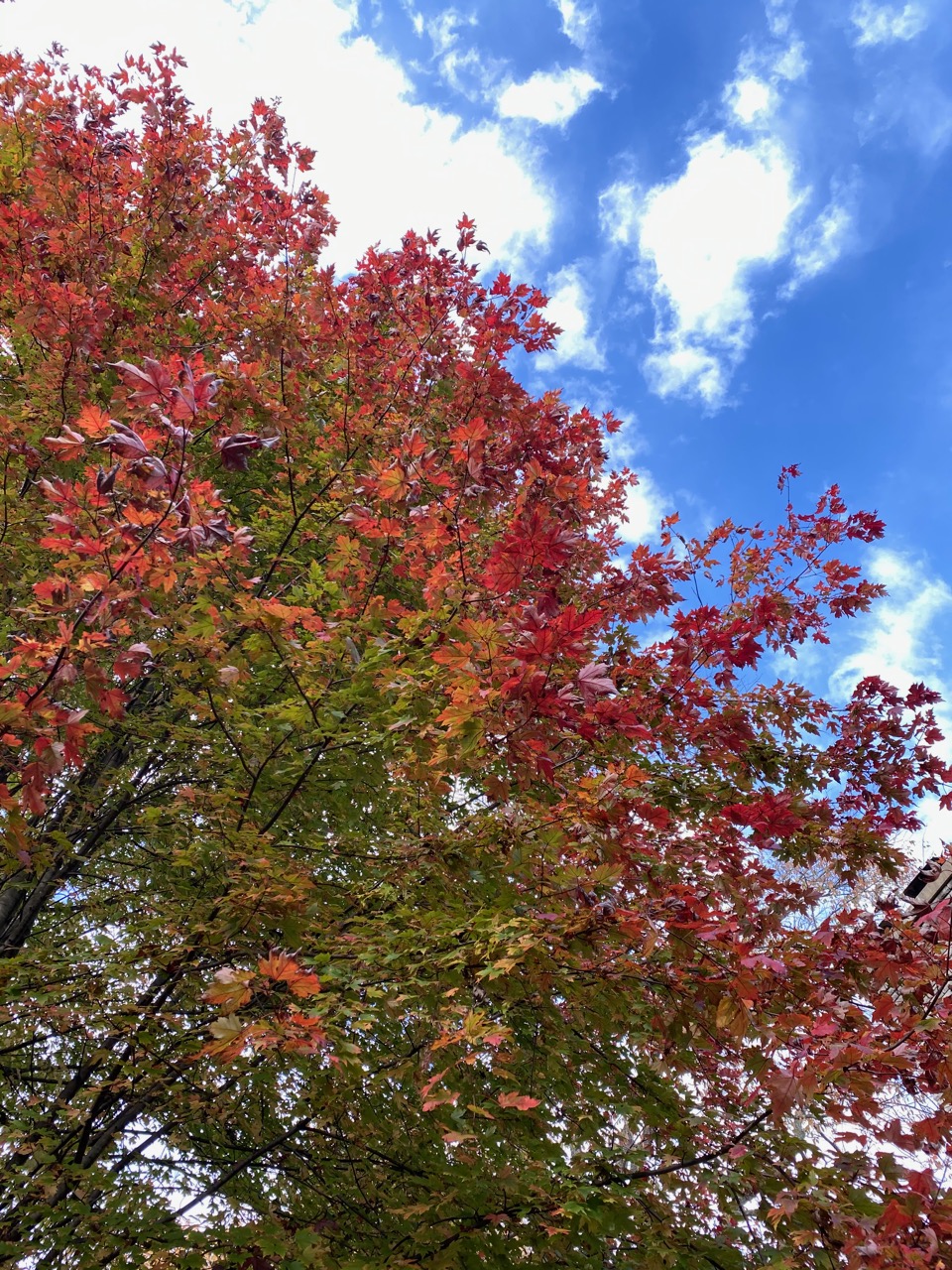 Autumn is my favorite time of year. This is true even though orange is my least favorite color. I make an exception for it in October: trees, pumpkins, marigolds, be as orange as you want and more glory to you. The colors are especially gorgeous this year, 2020 making up to us a little for its bad behavior. We need all the beauty we can get, and I’m very grateful to have it.
 I looked out across my yard this morning to an almost comically busy array of birds and beasts. Squirrels toted chestnuts the size of their heads, deer nosed the ground for fallen crabapples, robins flocked to the red dogwood berries, and the woodchuck wallowed next to the rabbit in the clover. I didn’t get a picture, but you would have thought it was photo-shopped.
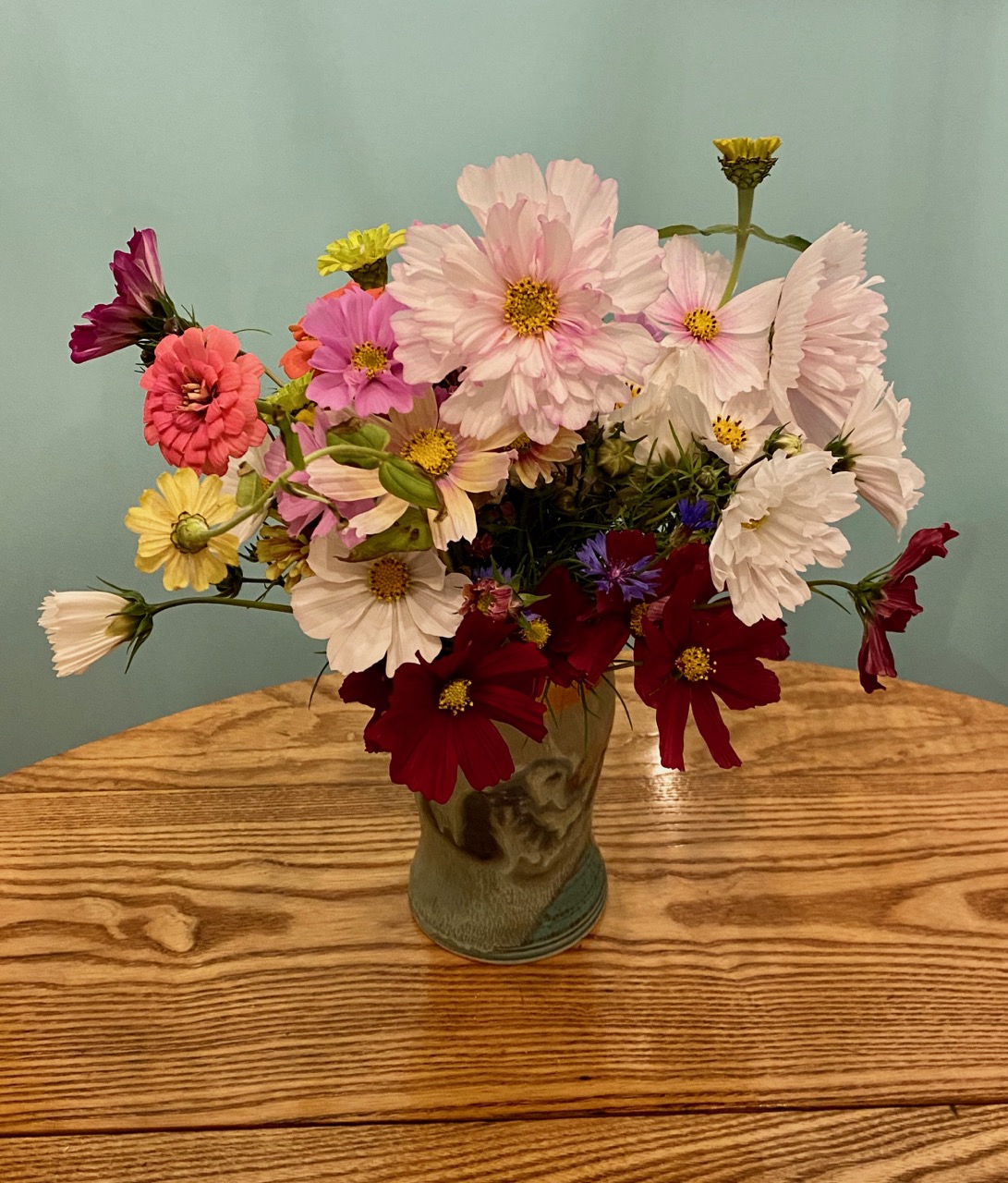
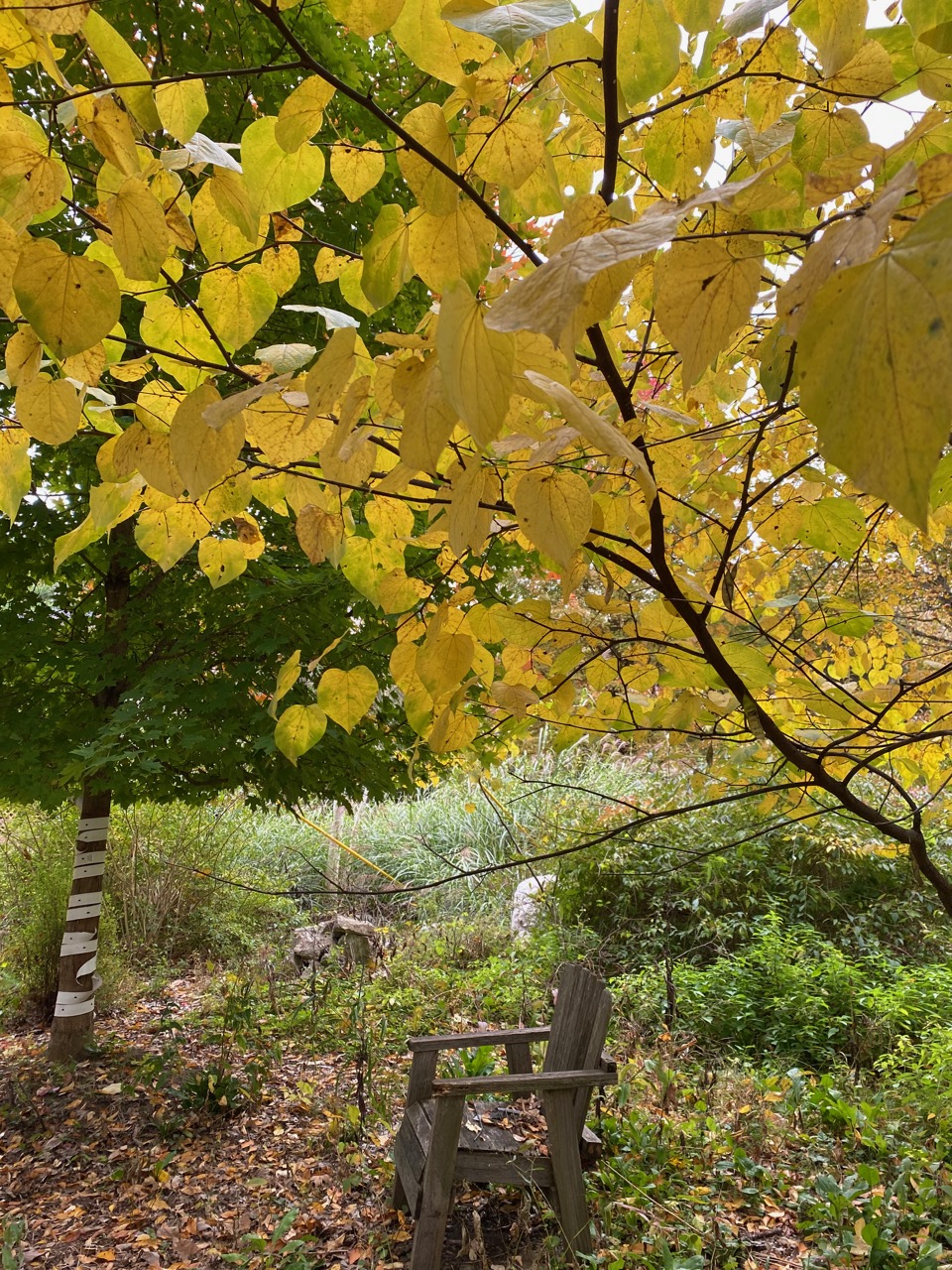 I felt like a slacker in all this activity – my garden’s pretty much done. There was no frost the night I wrote about last time, but tonight I expect there will be. My task of the day was to gather all the rest of the flowers, if you can call that a task. A gift. An honor. A revelry. An antidote to the news, to the pandemic, to politics. After I brought them in I took another walk under the bright trees: redbuds, sugar maples, beautiful and enduring native Americans. As are the cosmos, zinnias, and marigolds. It helps to have great heaps of beauty when ugly things are happening. Drown them out, trees and flowers, drown out the ugly noise.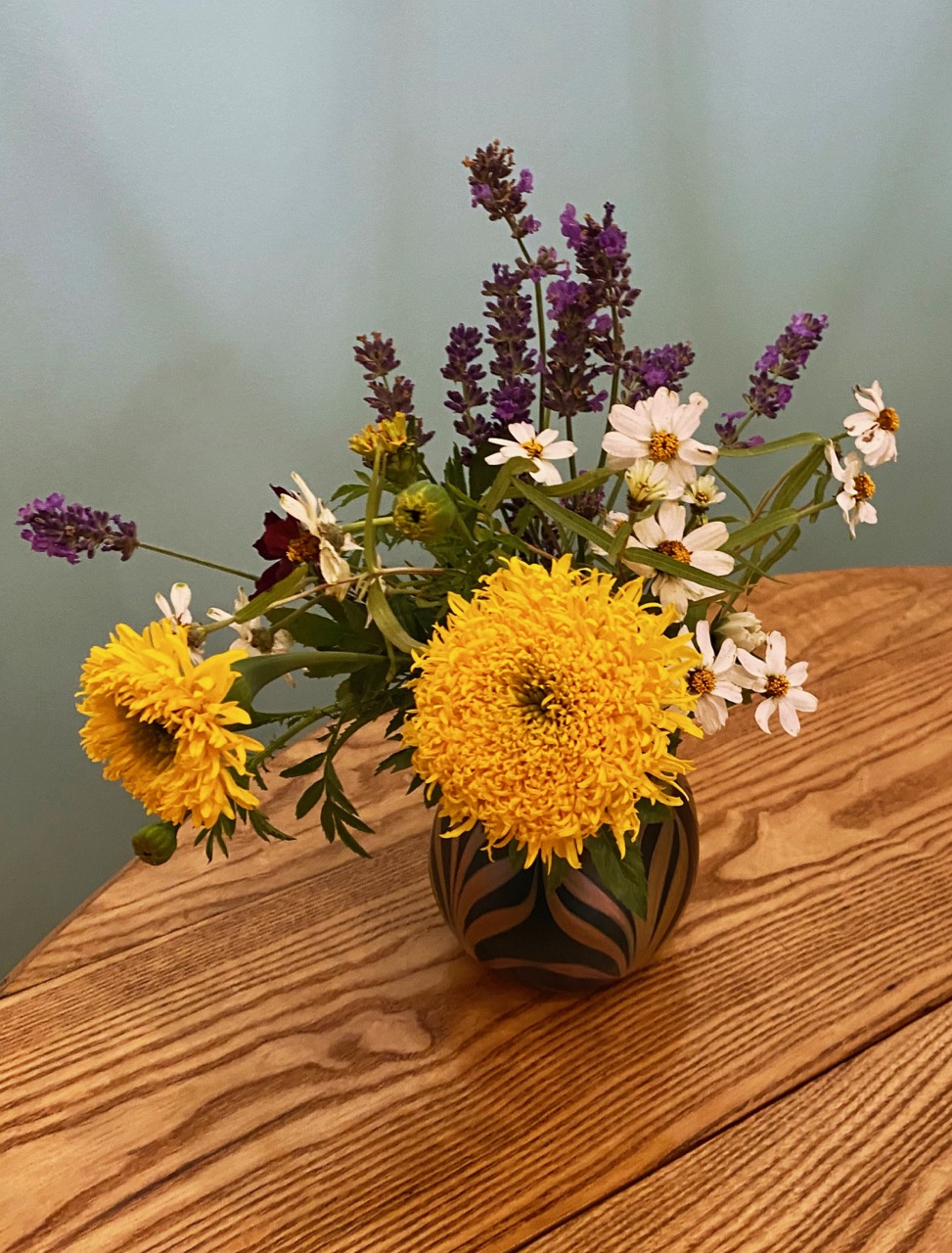
 the flower beds. An early frost is heartbreaking, because it’s generally followed by weeks of good growing weather – but there are all your plants, dead. So we draped the beautifully named Floating Row Cover over the tops of the tomato stakes, the heads of the zinnias, and the bodies of the eggplants, and went inside. In the morning there was frost on Doug’s car out in the driveway, but none elsewhere. I undraped all the ghostly fabric trappings, folded them up, and brought them in, leaving the tomatoes to ripen in renewed sunlight.
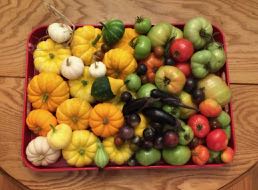 Time to bring in the last of the harvest. I saw the globes of green tomatoes, the towers of zinnias, the blowsy sprays of cosmos, but good heavens, where were all these little pumpkins hiding? I’d been feeling very cross about my crop of Jack Be Littles and Baby Boos producing nothing but huge leaves. Aha! Under the huge leaves, the little pumpkins were laughing at me. Then again, from the top of the compost pile some very large volunteer pumpkins were also laughing at me. These winter squash are quite the tricksters.
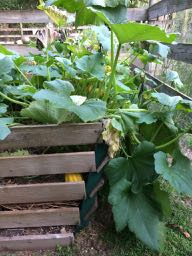 I won’t know till morning whether frost got the garden. Frost is another trickster. It brushes past here, settles over there, pools in a place you never noticed and maybe don’t believe is at the bottom of a slope. It may powder the lawn and draw crystals in the birdbath, but when the morning sun hits, they’re gone. You see the damage that was done among the ravaged, tender plants, but the perp is nowhere to be found. There’s nothing to do but gather up the evidence and cart it out to the compost. Partly I’ll be sad. Partly I’ll be wondering what that compost pile will surprise me with next year.
 Summer slides into fall, and the late bloomers are in their glory. How can I not love that? Cosmos and zinnias that were nothing but leaf and stem through July and half of August are bursting with flowers now, and will keep it up until the frost comes. I chose the zinnia seed by color, mostly creams, pinks, and corals. Cosmos turns out to be available in ruffled versions, as well as the classic wide skirt, so I planted them in a variety of shapes and colors – inside the garden fence, because deer can’t be trusted. The bouquets just keep on coming,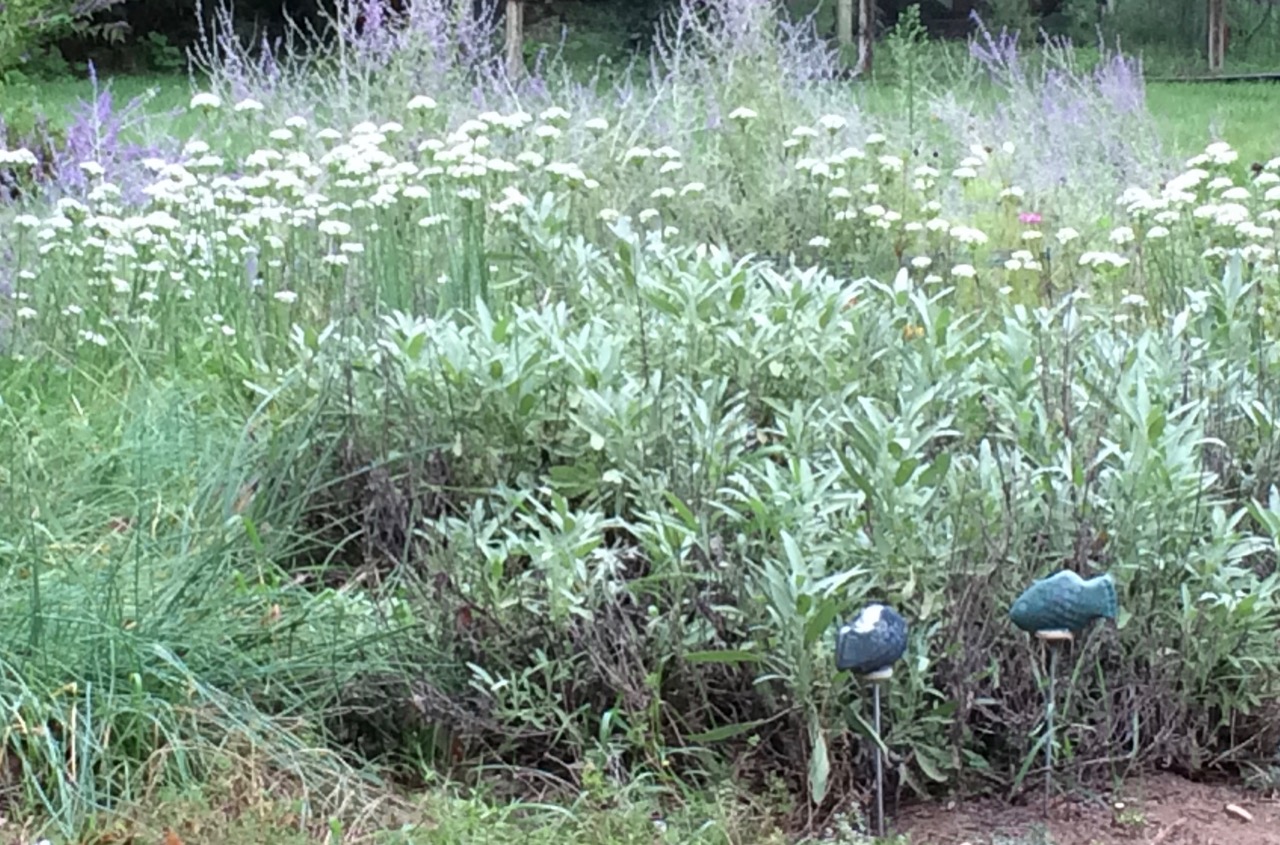
 But the star of the yard is the clematis. Remember the clematis? Autumn clematis, it’s called, and the photo shows why. The new trellis supports it well, does an excellent job of keeping it off the asparagus, and has room for another year or two of growth, or so I hope.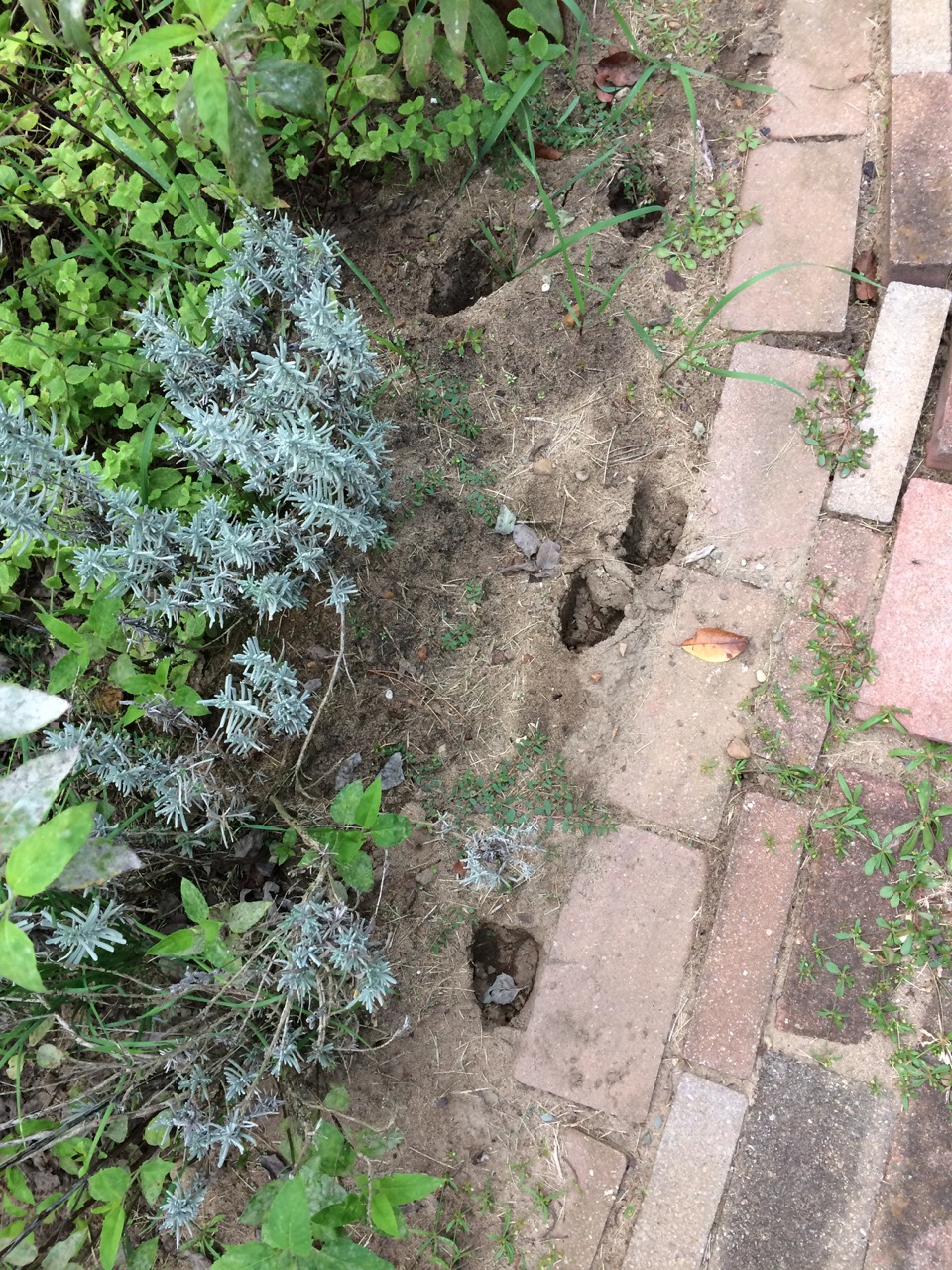
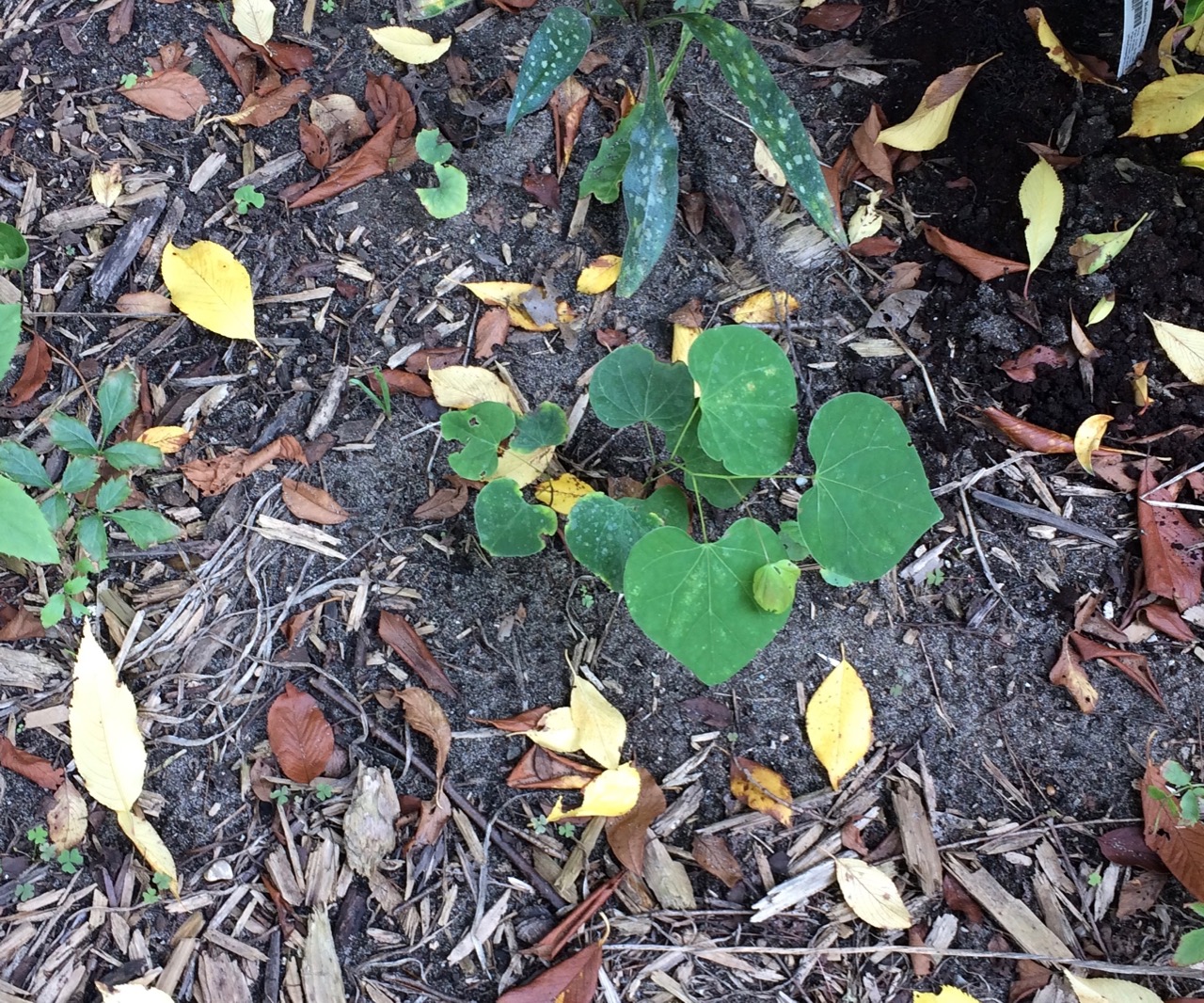 Weeding the front garden bed last week, I discovered a redbud sprout several inches tall. I was sure it wasn’t there the week before; but how could it not have been there the week before, and be several inches tall now? Then I went to thin interlopers out of the lamium, and darn if there wasn’t another redbud. I pulled thistles from under a pine tree, and well, look – a whole redbud grove. There was one in the fenced garden. One in the blueberry cages. One against the garage wall.
 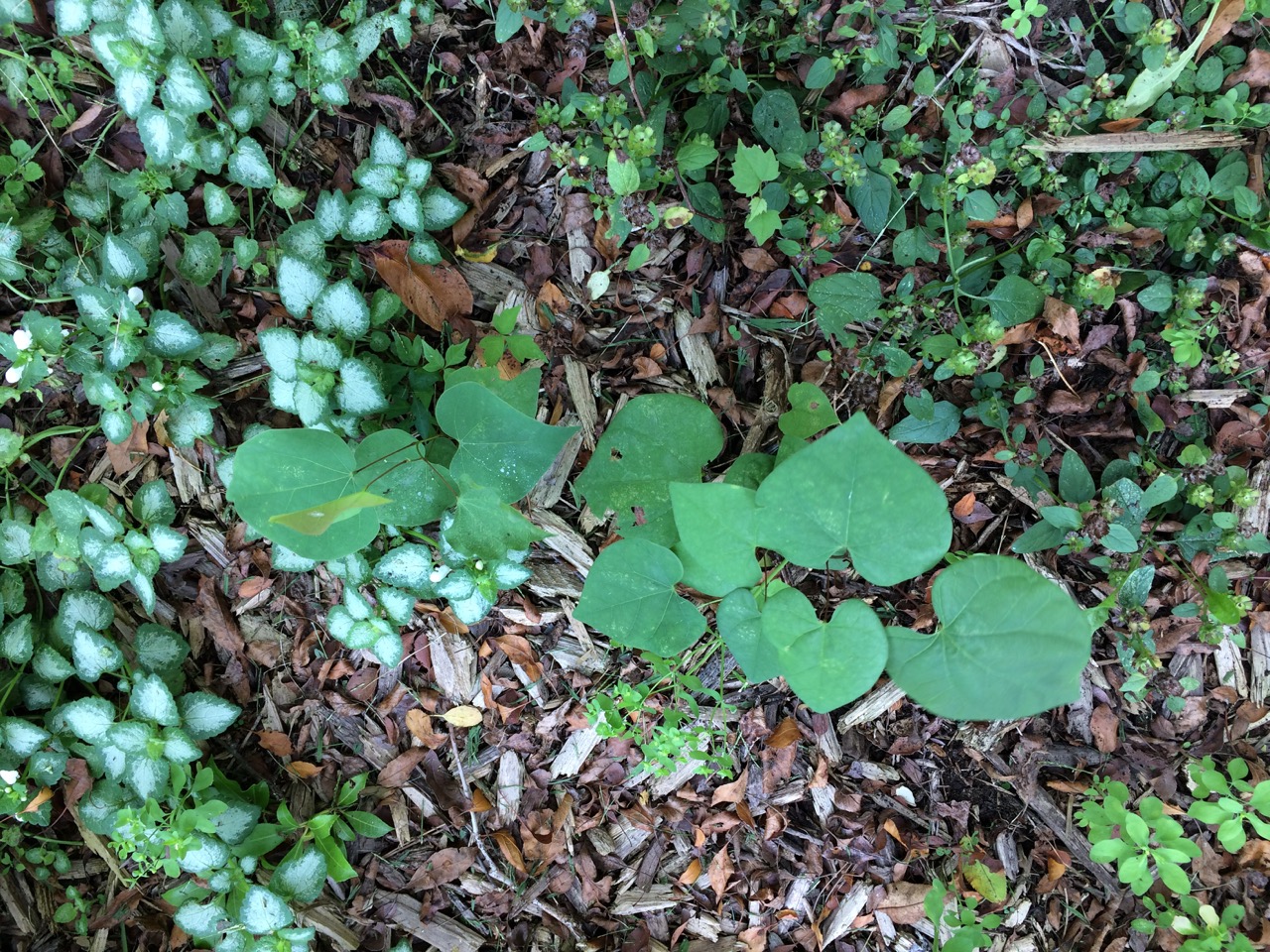 They were everywhere. I had never seen this amount of redbud fecundity before. Was it the long, cool spring? The alternating hot/chill summer weather? Had the deer been eating them before and now suddenly had a change of diet? Was it just because this is the strangest year ever?
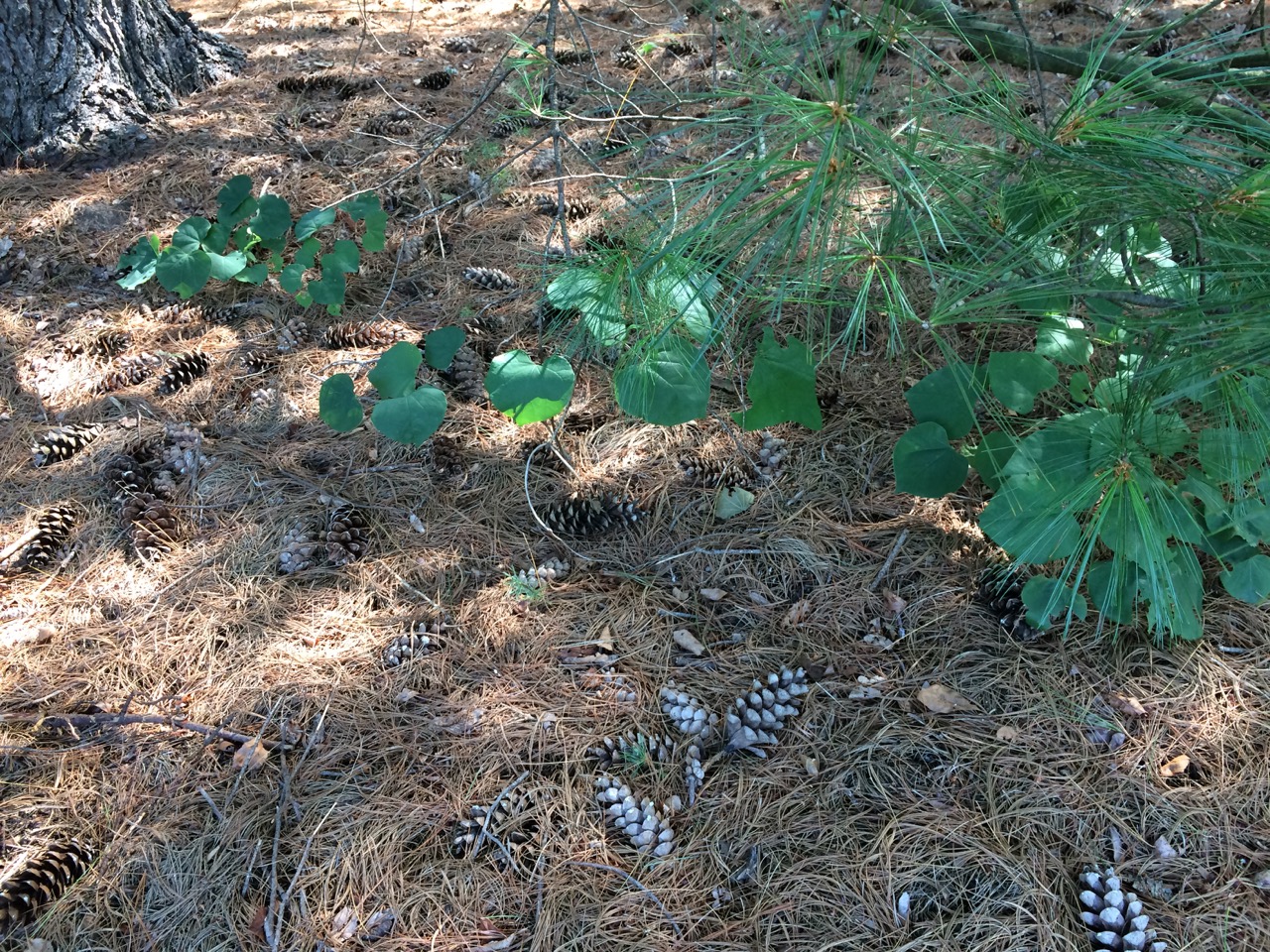 Well, they are beautiful trees. We planted a couple when we moved in here, but little did we know they would generate so many volunteers. If I’m going to have a redbud forest, I thought I should learn something about their care. So I went online. I read that they live 50 to 70 years, and I read that they seldom lived more than 20. I read that they weren’t picky about soil, and I read that they needed soil that drained well. I read that they liked sun and I read that they required shade. Most disturbingly, I read that they were also called Judas Trees. I was dubious, because they’re small and don’t have the kind of structure a person could easily hang himself from. Clearly, at least half of this information was of very poor quality, and naturally this made me doubt all of it.
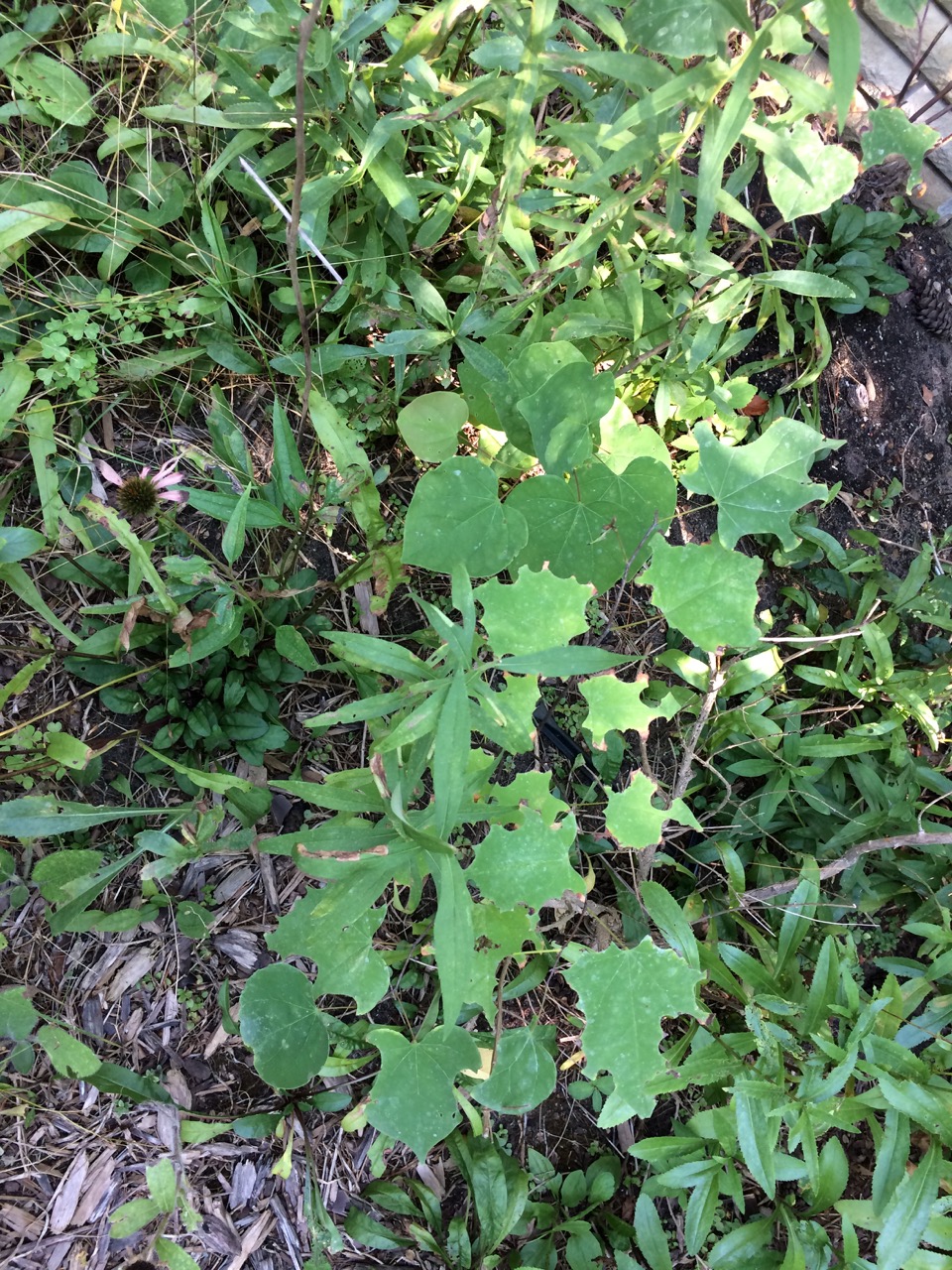 So the redbuds and I are on our own. We will do this without help from the Magical Intertubes, though I am using them to tell you this tale. I plan to pay close attention to what the redbuds are doing out there, encourage those that thrive, and transplant those that don’t. Dream all you want about a garden, if it’s not a fact-based operation it will fail.
 Robin Richstone