Sideways Into Spring

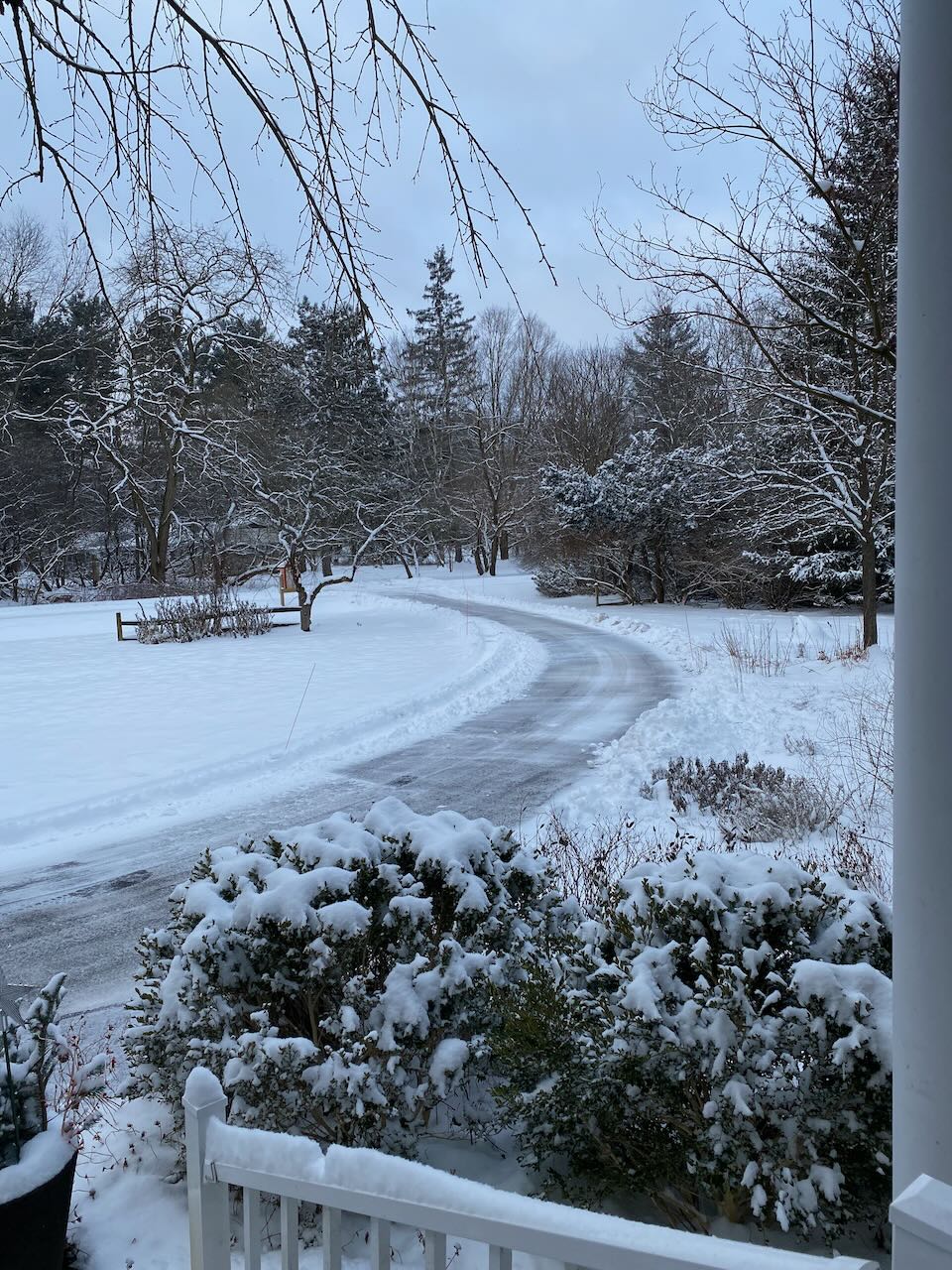
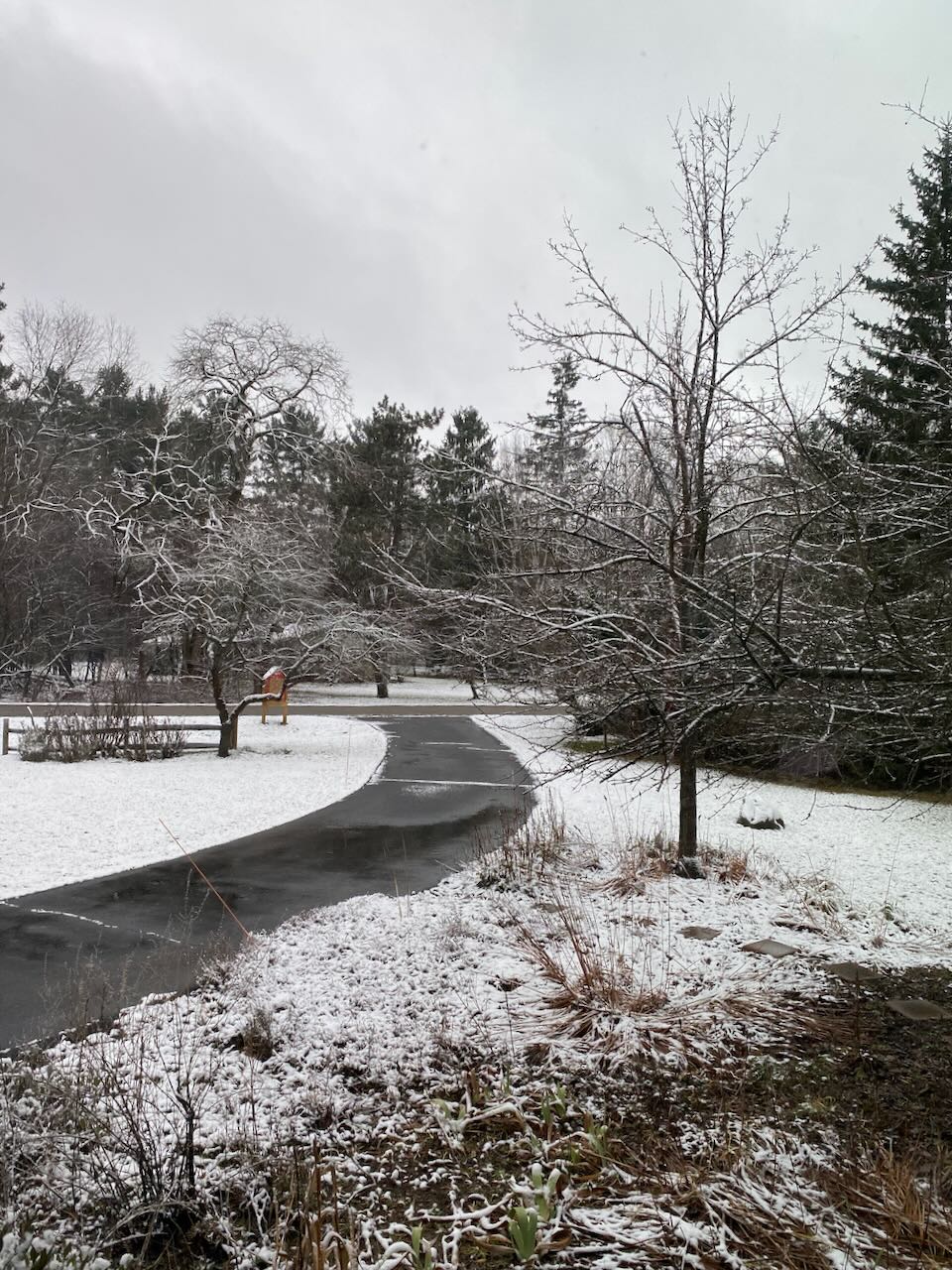
Winter, it seems, regrets having spent so little snow on us, and is making reparations while it can. There hasn’t been enough snow so far this season to hide all the grass, and many are the Michiganders complaining about it: nowhere to snowshoe; no way to sled; not even enough for a decent snowman. But today we have four inches on the ground, and seven more are predicted for the weekend. I’m happy for those who can now enjoy their winter sports. Meanwhile, I’m perfectly content sitting inside watching the dance of snow come down while I page through my seed catalogs. 

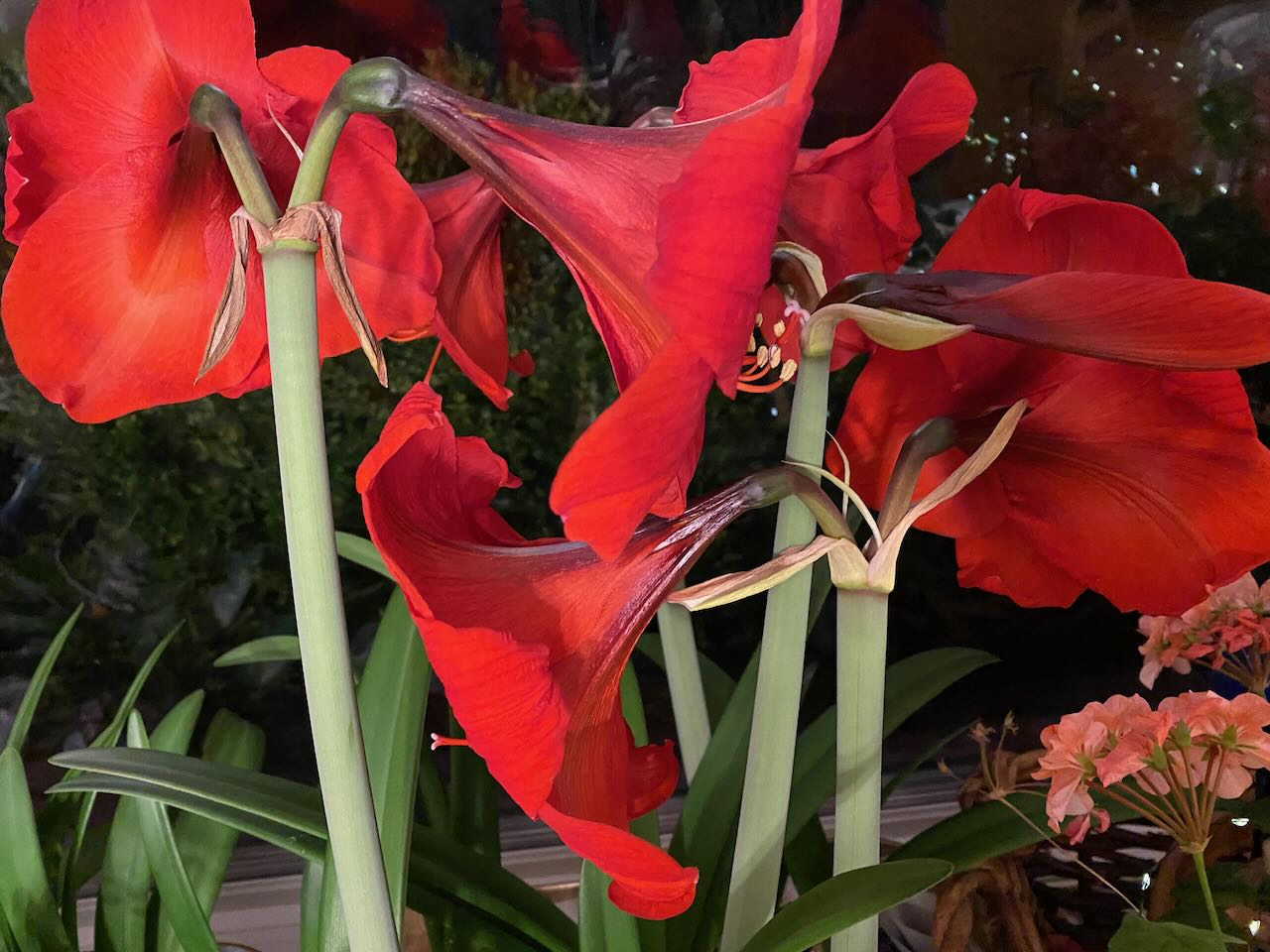
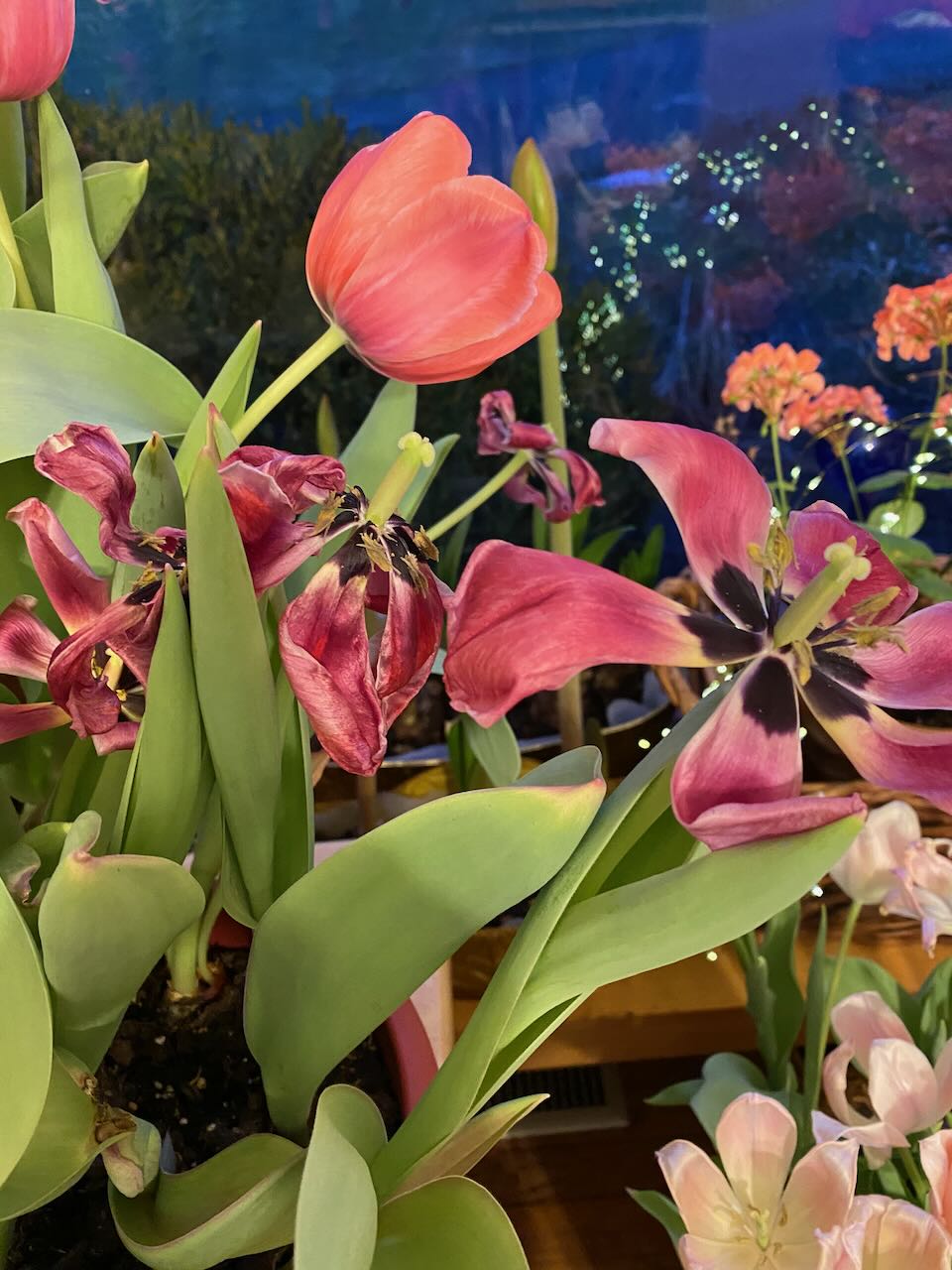
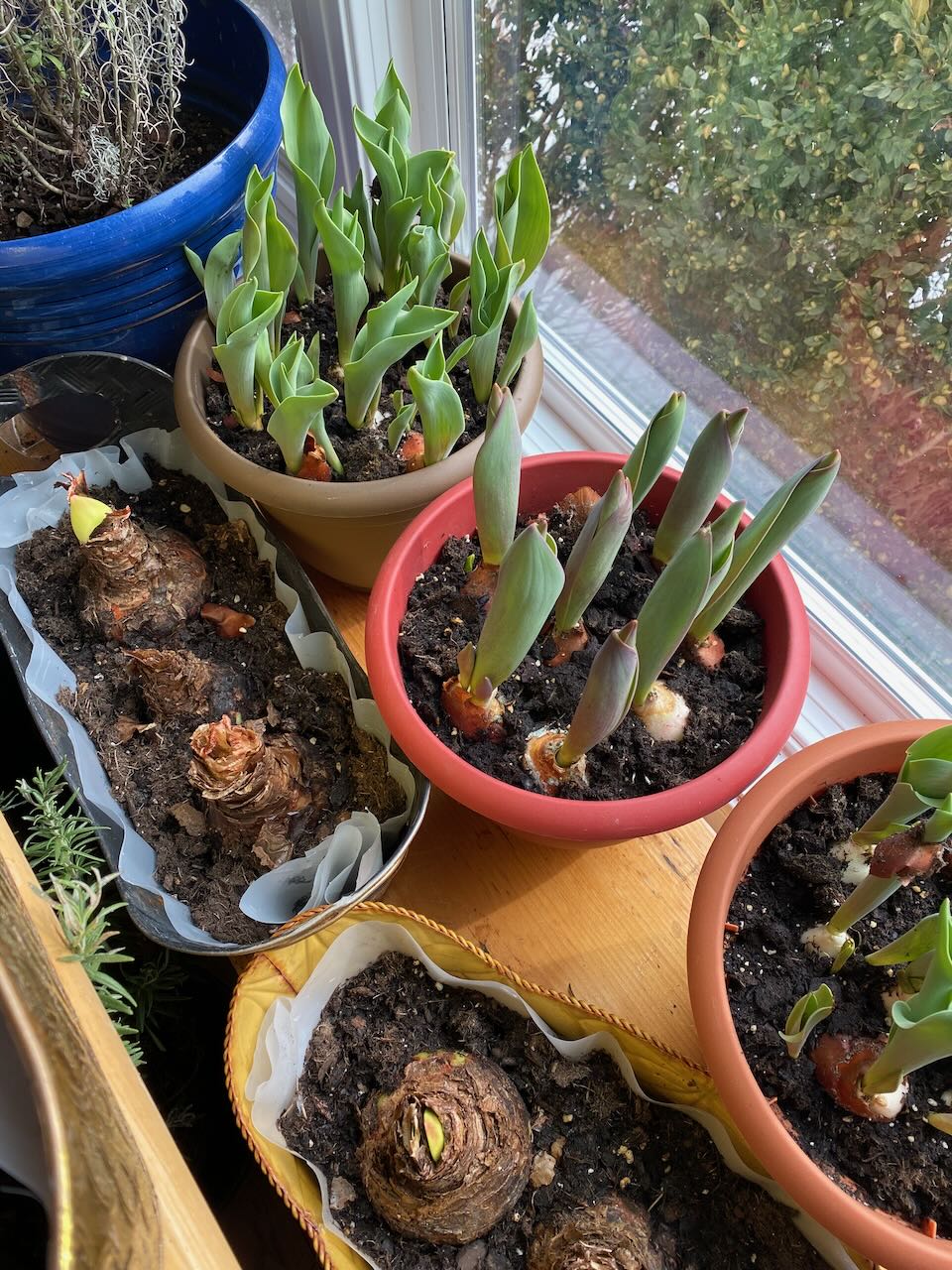
I potted up my tulip bulbs last fall, put them in the garage to chill, and last week brought them into the light and warmth of my front window, where they joined the amaryllis bulbs liberated from my dark but not freezing closet. I like to see spring start first on the windowsill, and watch it spread from there into the yard.

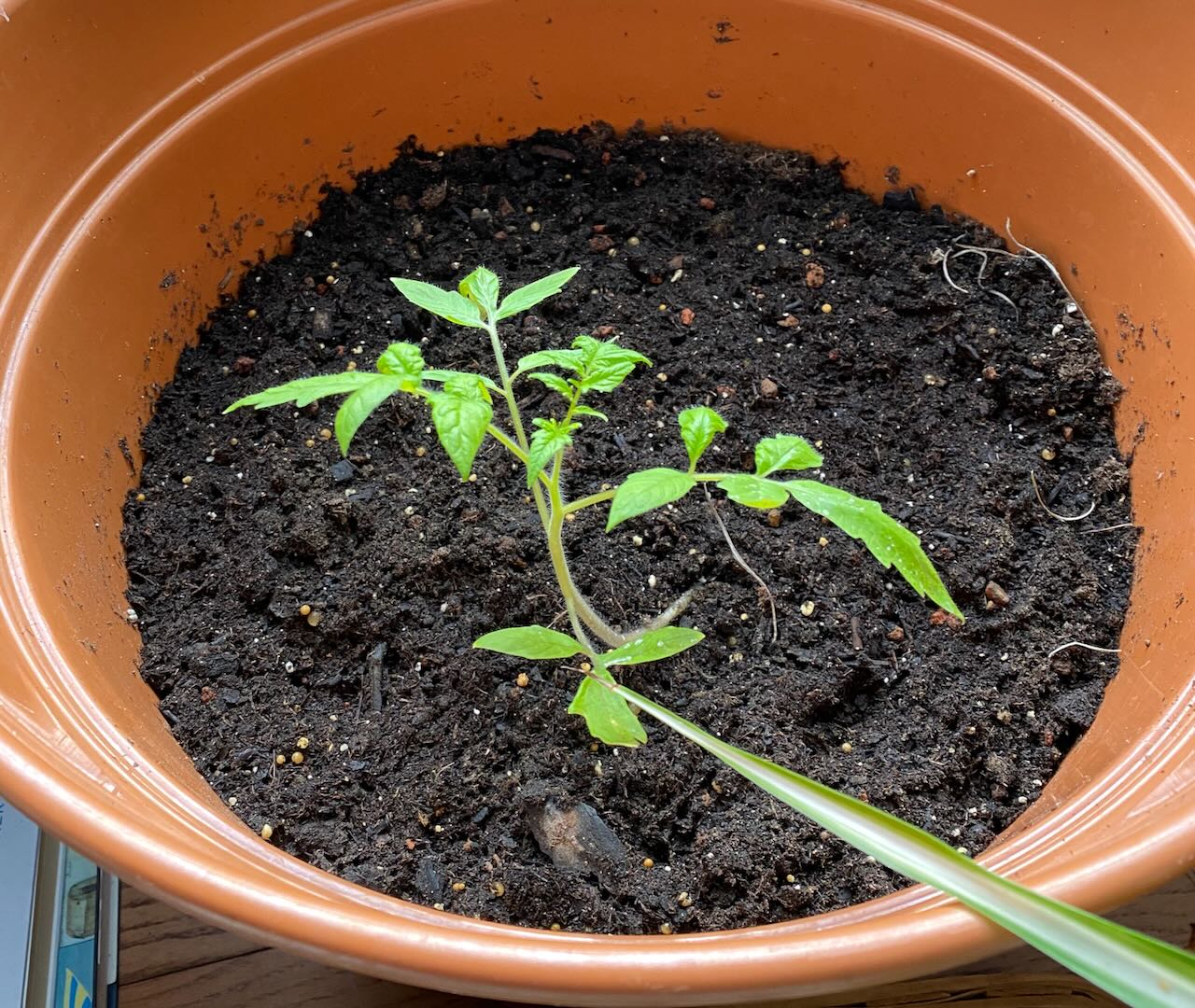
I meant to start my indoor tomato before Christmas so it could be setting fruit by now. A little late on that, but the seedling is coming along nicely. I had two of them last year, but they need really big pots that take up a lot of space, so I cut back to one this year. I’m trying to decide whether to put a trellis in the pot this time, or tie some twine to the curtain rod. It’s a Cobra tomato, intended for greenhouses, and quite tasty.

While I was rearranging pots to make room for the tulips, amaryllis, and tomato, I took advantage of an idea my friend Cindy gave me for reining in frolicsome spider plants. You stick a plant support into the spider’s pot, gather up all the spider plant runners as if you were going to make a pony tail, and catch them through the loop at the top of the plant support. Voila! A spider tower. My spider plant mocked me by immediately throwing a new runner out to the side. The will of a spider plant to propagate cannot be denied.

Fire and Ice

In many folk traditions, fire is called the Trickster: the hearth, the center of the home, comfort, warmth, hypnotic calm looking into flames in a fireplace; keep the home-fires burning. Then one day fire, our friend, our helper, pushes, wild against the boundaries we’ve set for it, and destroys everything. Fire, the magical, reassuring transformation of wood into heat, suddenly ravenous, turns our familiar, substantial surroundings into wind and ash. My friends, my former neighbors in Altadena are sifting through that ruin now. 

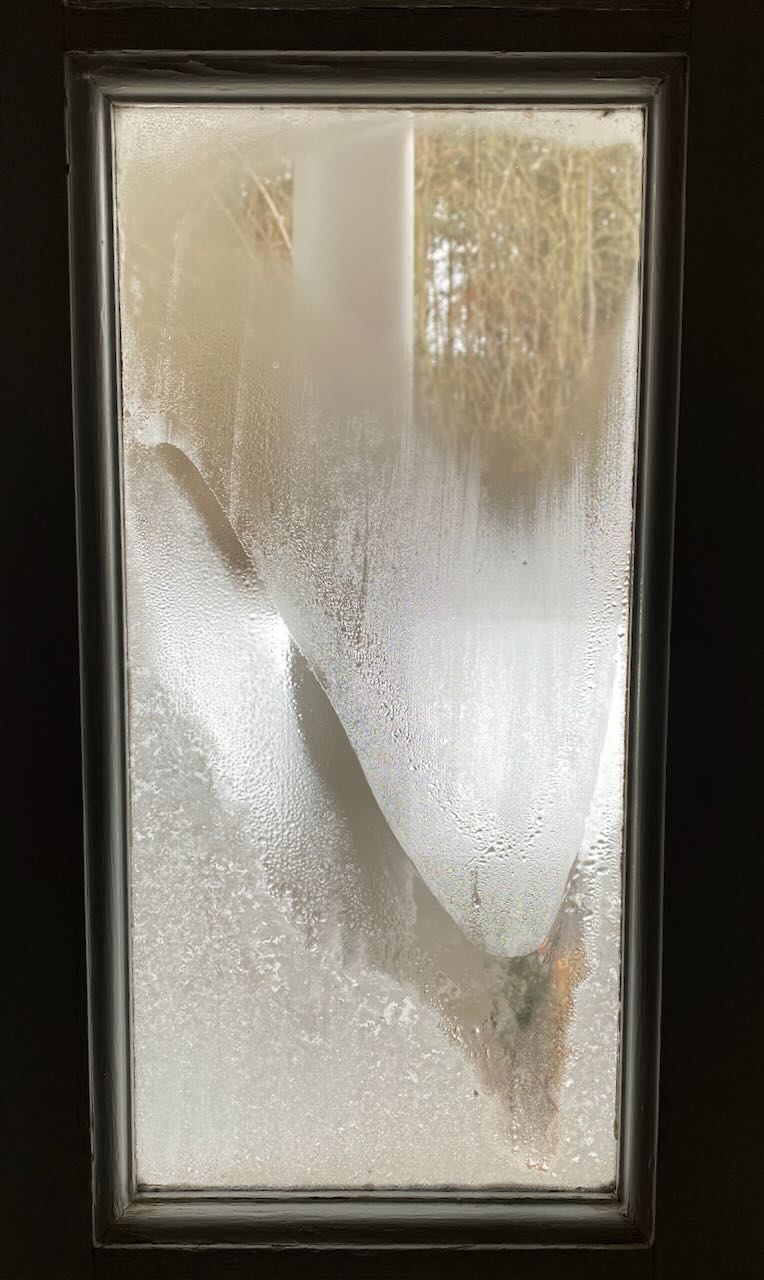
Here in Ann Arbor, most of a continent away, warm air from the captive, well-behaving fire in my furnace breaks against the frozen cold of a single-pane glass window, and paints it with a streaky coat of ice. On the inside. As many times as Doug has explained the physics of this to me, it still feels astonishing that heat, essentially fire, can do this.

This little window sits alongside the front door. On the other side of that door is winter, not a very snowy one yet, but very cold. I sweep the snow off the porch steps, since otherwise people walking on them emboss footprint-shaped ice patches into the surface, slippery and hard to scrape off. Another mystery of physics: mini-glaciers created by human weight and shoe leather. Or whatever bootsoles are made of these days.
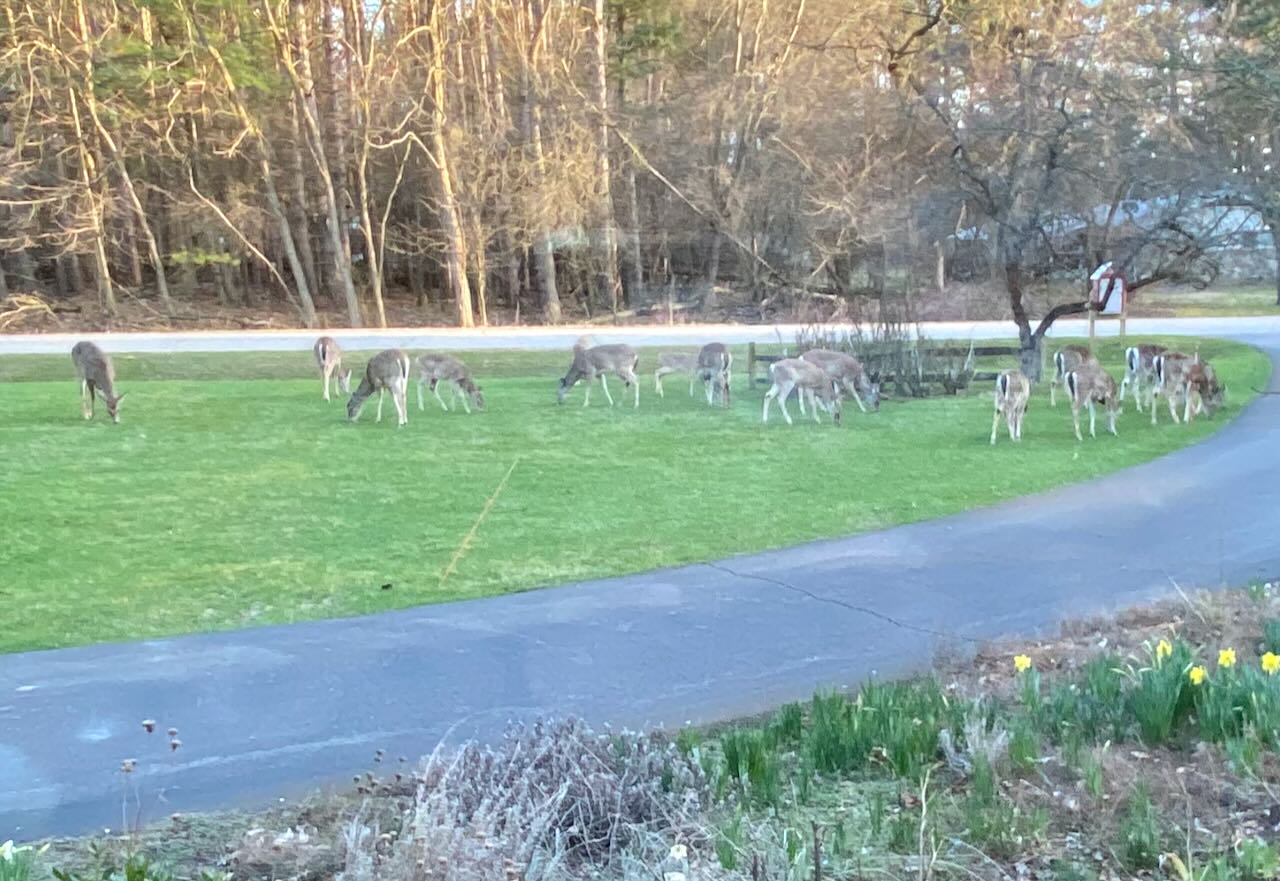
The deer are in the backyard this morning. They circulate around my sleeping garden, breaking through snow and ice with their sharp hooves to get at whatever it is they’re eating. There’s much less of it now, yet they bunch themselves into herds of twelve or fourteen in winter, presumably to share body heat. They have no fire. Is there any animal other than humankind that uses fire? That thought to catch a piece of wildfire and bring it home, to bank it up, to keep it going, to restart it when it failed? To stop it when it over-reached? How brave that first user of fire was, persevering as everyone else ran for their lives. I was going to say it took a long time to learn to control it, but maybe we aren’t there yet. The brave people now are those who come running at need to put it out.

What Would You Take With You

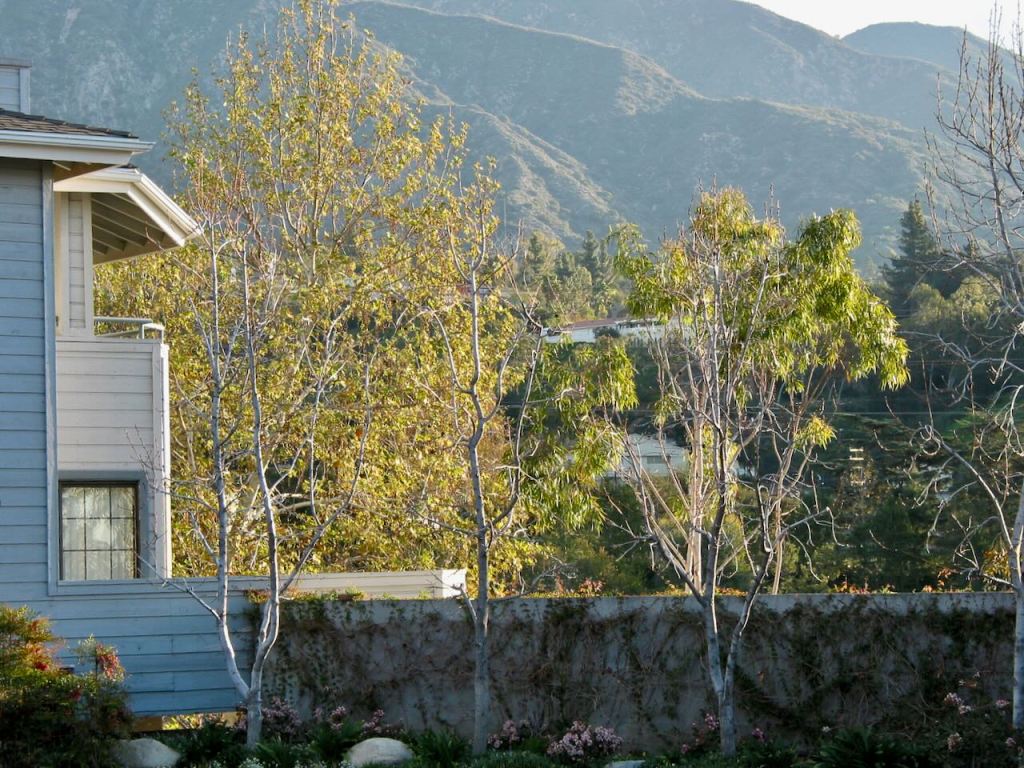
When I lived in Altadena, no one in the rest of the country had heard of it. Uphill from Pasadena, just like it sounds, it sits on the skirt-hems of those mountains that backdrop the Rose Parade, comfortably anonymous. It was anonymous as usual this year on New Year’s Day; one week later wildfires called Altadena’s name. The whole country’s heard of it now.

So here’s my question: you have to evacuate under “immediate threat to life.” What do you take with you? Would you have a better list if you thought it through ahead of time, or would facing the moment of truth give you clarity, and focus? Official lists of what to take feature things like birth certificates, marriage certificates, title deeds, and insurance documents. Really? My entire desk does not fit in my car, and surely these things are replaceable. An extremely organized person might have them all in one big envelope, or maybe have photos of them all on their phone. Too late now.

Clothing, though replaceable, is on the list since it’s an immediate need. My friend Jean once told me of a time when she faced an evacuation “warning,” which means there’s more time. She went to her children’s closets and pulled out clothing for them; went to her husband’s closet and pulled out clothing for him; then went to her own closet, took a look, said “Nah,” and closed the door. I greatly respect her ability to see opportunity in the prospect of loss. She did not, in fact, have to evacuate. I always hoped she went out and bought some new clothes anyway.

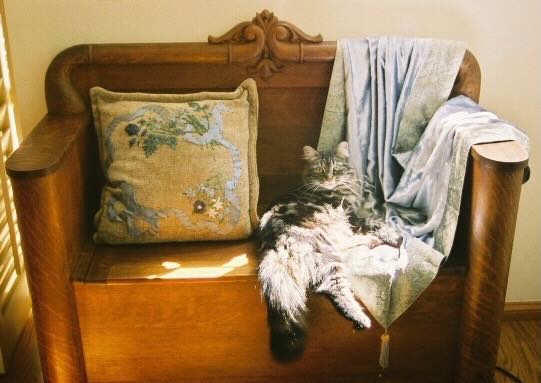
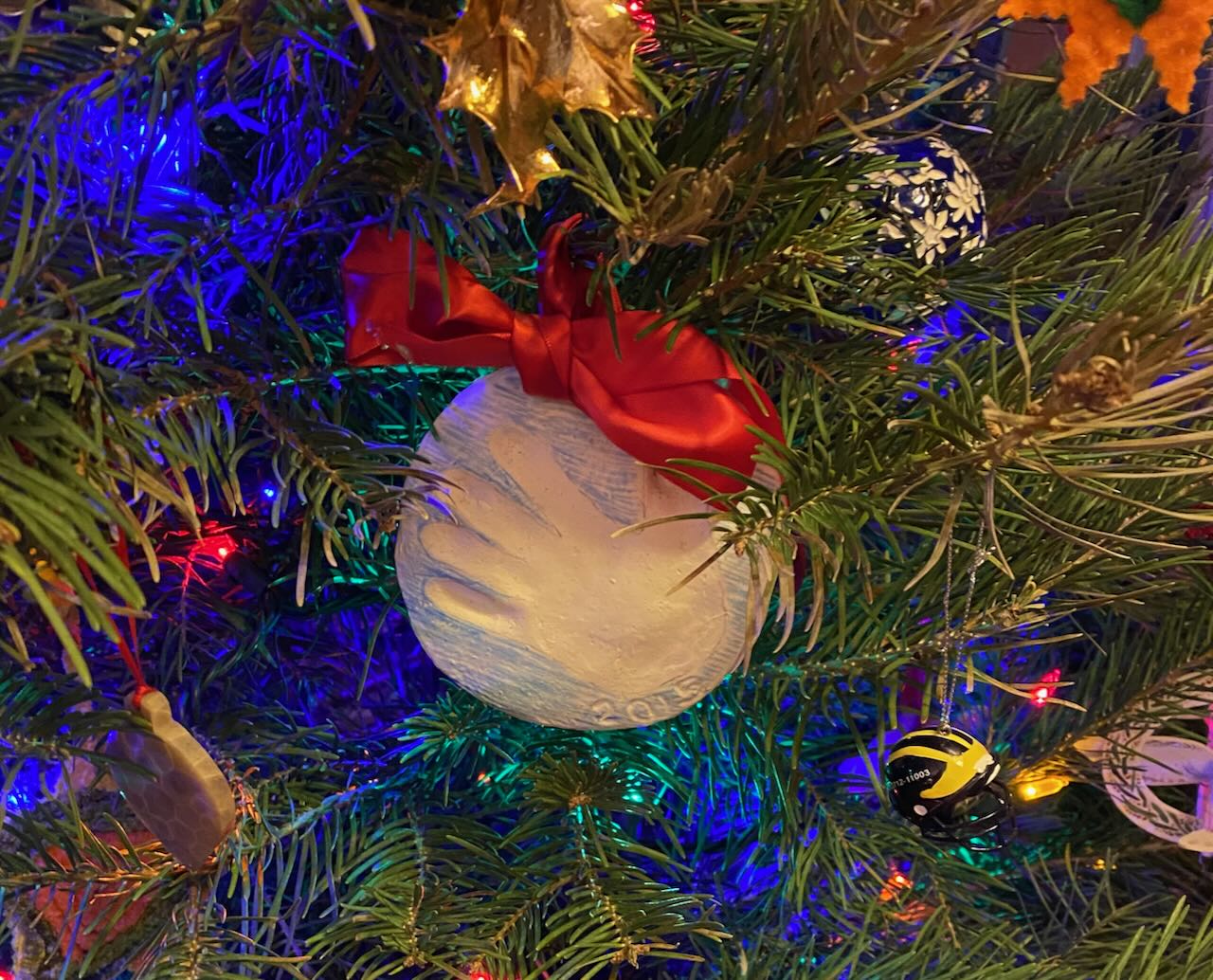
But what about the irreplaceable? People sometimes make the error of assuming that, since I’m a poet, I don’t value material things. Wrong. Poets love things. Keats wrote “A thing of beauty is a joy forever.” Williams wrote “no ideas but in things.” Pablo Neruda, an avowed communist, wrote odes – scads of odes – to material things. He loved them he said, for “the trace of someone’s fingers/ on their handle or surface.” The Christmas ornaments my children made when they were small; the quilts my grandmother made for me; the antique windowseat my father and I refinished together when I was a teenager: irreplaceable. They are safe with me here, in Ann Arbor, but I can only imagine how it would feel to lose them in ash and chaos. “Evacuate” has in it the root for vacuum: empty. Let’s hope the time comes soon when Altadena fills itself back up, and returns to anonymity.

On New Year’s Day

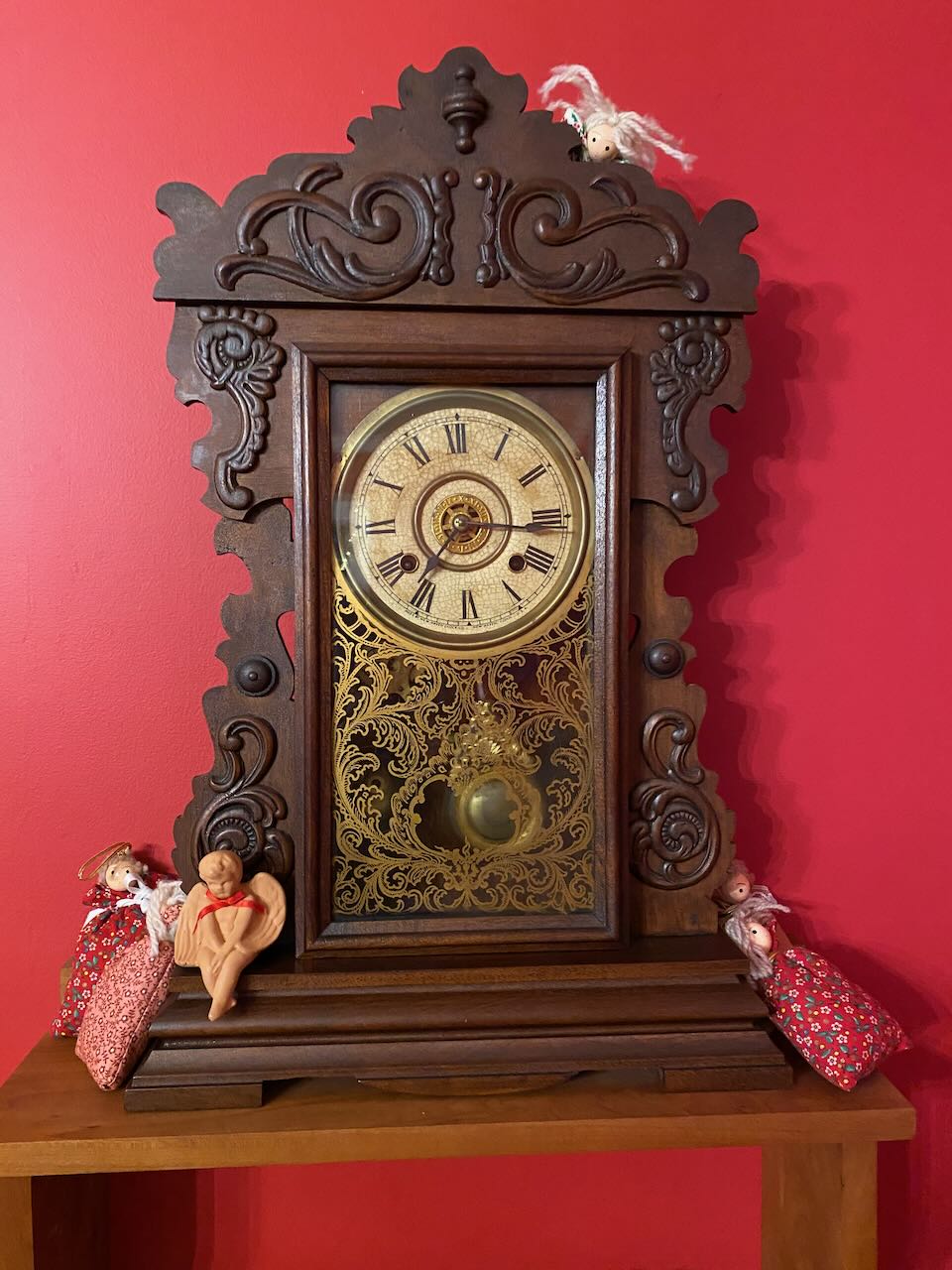
b angel clockHappy New Year, the day that looks both forward and back. This is my antique clock, that rang in the New Year last night as it did through my childhood, when it sat on our living room mantelpiece and it was my job to wind it. I was the one among my siblings who’d wind it slowly enough not to break the mainspring. The little angels visit the clock when I decorate for Christmas, and they will fly back up to heaven, or somewhere, after January 6th when the decorations come down.

Once again our early December snow vanished, disappointingly, in days of rain before Christmas. So I was surprised, yesterday, to notice what looked like bits if snow surviving on the lawn behind the deck. But wait – not snow. Pillow fluff. It was bits of the pillow fluff the little red squirrel tore out of a deck cushion last August. Did she toss it out of her nest as a bad choice after all? Did its synthetic fluffiness make it too easy for the wind to blow it out of position? I started wondering about nesting materials for squirrels, but tripped over the word – squirrels – and wondered about that instead. Could it be a Native American word, maybe Ojibwa or Ottowa? But no, it’s from the Old World: Middle English from Old French from Latin from Greek, in which it was skia (shade) plus oura (tail), a nice description of the way it holds its tail. How about chipmunk then – was that a native Michiganian word? Indeed, in Ojibwa the word “chipmunks” is “ajdamoog,” turning into chipmunks the same way Ojibwa turned into Chippewa. “Chipmunk” sounds like it should mean cheeky little devil, but it means “one who descends trees headlong,” and is in fact the name of – the red squirrel!

Doug and I toasted in the New Year watching the ball drop in Times Square via television – old school, I guess, not to have streamed it. The temperature dropped overnight, and we woke this morning to a thin snowfall. A little more snow would have covered the yard like a clean sheet of paper, ready for a fresh start. The snow this morning brightened things up but let the past show through, reminding me that’s it’s always there, the base under all new beginnings.

b new year snow

Into the Holiday Mood

b relicsThe best thing about decorating the house for the holidays is unpacking my ornaments and distributing them through as many rooms as possible. Doug helps me carry all the boxes up from the basement, and as I open them I lift out every Christmases I ever had. Which at this point is a lot of Christmases. It’s true I don’t possess actual pieces from my childhood any more, but those from my children’s childhood recall my own to me. The stars made of bread-dough clay, flowers of cornstarch clay, and god’s eyes of yarn, emerge from their careful tissue wrappings as though in a sparkling blaze, and light up the winter day. I put on Christmas music, sing along, pour myself some eggnog, and restore the ornaments to the season they were made for.

b ornamentI used to make these yarn angels – it’s why I taught my daughter to make them. My children, grown now, refer to these ornaments as my Holy Relics. I hang them alongside store-bought travel souvenirs and gifts from a lifetime of friends. Every year an ornament or two breaks, or falls, or in some other way meets the end of its useful life, and every year I make something new and add it to the tree.

b paper wresthy 1Recently a friend gave me a stack of books she cleaned out of her house. There was a whole set of encyclopedias and an array of books she had once used teaching English in Poland, including dictionaries and songbooks. The pages of the songbooks were large and inspiring, meant as they were for lifting voices out of paper and ink. Pretty miraculous. I couldn’t read them, but I thought they made a glorious wreath.

b paper wresth 2The encyclopedia was in English, so I can tell you the pages that made this wreath were full of Billiards and Bergamot, among other Volume Two subjects.

b paper flowersMy new tree ornaments this year were also made of paper, this time Japanese origami paper. Another friend showed me how to fold it into pairs of flower petals, which were then glued together to make a circle. To hold the pieces together while the glue dried, I used the miniature clothespins my Dad used as clamps when he made ship models. My children, my parents, countries I have learned from, countries I have traveled to, all these cultures and all these generations fill the branches of my tree. Multiculturalism is out of fashion these days, but it’s beautiful and memorable in my living room, here at the time of year when the light prepares to come back.

Another Season’s Change

b sageThanksgiving marks the pivot point between fall and winter. The leaves are all down, Christmas lights have begun going up, and a bit of snow has joined in the decorating trend. One of my surprises moving to Michigan from California, was still having fresh sage in the garden for the Thanksgiving turkey platter. I did have to brush the snow off of it, but it looked great and smelled wonderful.

b thanksgivingThe turkey platter is a family heirloom. I didn’t have the best relationship with my mother growing up, but as I set the table it meant a lot to me to have her silver, her black glass candlesticks, her blue Staffordshire souvenir plates, her turkey platter. I lifted and placed these things and thought about what her life was like, what she might have wanted to do with it and what she did. She used to tell me stories that changed as she told them, that differed from time to time. That was how it seemed to me then. Now I think it was all the same story, just seen from different perspectives.

b dried flowersThanksgiving is a good time for appreciating what you have. No more zinnias or cosmos in the garden, but the nigella and goldenrod, standing tall and dry outside in the cold, make a lovely arrangement.

b thanks (1)There’s leftover pumpkin pie for breakfast, while on the front porch the frost is definitely on the pumpkin.

b nov skySnow outlines the trees, blows off, comes back, blows off. The sky’s not the same twice in ten minutes.

b poinsettiasOn my windowsill another transition is happening: the poinsettias, so lush and green when I brought them in form the deck, are starting to turn red. The next season is coming along.

Winding Down

b stagAfter weeks of summer and fall bumping into each other in a jumble, fall seems to be emerging triumphant at last. The stags are about done destroying small trees by using them to rub the velvet off their antlers. I’m still waiting for one of them to graciously leave his shed antlers in exchange – seems like the least he could do. Maybe this will be the year.

b gloriosasBetween the light frosts and the subsiding hours of sunlight most of my flowers and tomatoes are gone, but out in front, facing south, one rudbeckia plant persists. It’s not the only rudbeckia out there, but it’s the only one still blooming. A mystery of nature.

b foxgloveOver in the shady section, a single foxglove has re-bloomed. It was pink the first time, but has paled in the shortened hours of daylight. The foxgloves are spaced widely, so in their case it’s understandable that individuals may have different amounts of light, or shelter, or competition from other plants. Less mysterious.

b lettuceOut in the fenced garden, once the tomatoes were gone, I planted lettuces in the cold frame. They’re flourishing. This is very satisfying to me as a gardener, but the flaw in the plan is that I really don’t eat much salad in cold weather.
b radishThat was the trouble with radishes too, until I learned that they can be cooked. How did I get to be as old as I am, and never knew this? They’re so cute out in the garden, with their little round, red shoulders peeking out of the dirt, and they demand so little in the way of warmth and sunlight, I can’t resist planting them when random space becomes available. I’m still working out the best recipes for them.

b pathMeanwhile, the main path into my woods needed help. I spread several layers of the Sunday New York Times over the old path, poured a bucket of water over that so it wouldn’t blow around as I worked, and topped it with mulch. That will be one less thing to do come spring, when things to do are plentiful. As much as I love gardening, there comes a time when I really need a break. If spring is the reward for winter and harvest is the reward for spring, winter is the reward for three seasons of hard work. Just curl up with a good book and eat all those quarts of tomato sauce.

Memorial Again

b late colorThe late warm season continues. Most of the flowers are gone, but there’s still a lot of autumn color. The spirea planted in front is mostly down to bare branches, but this one in a pot on the deck is still in glory. This is odd, first because the front yard gets more sunshine, facing south, and the deck faces north; but also because roots in the ground get more protection from weather than roots in pots do. Nature surprises us whenever she wishes. The potted spirea is a volunteer – a pot of nigella was colonized by free-range spirea seed, and quickly became too lovely to remove. Here it is garnished by a couple of immigrant maple leaves, likely carried by whatever forces brought the spirea seed.

b mapleHere’s the donor tree for those maple leaves, with just a little left in its branches to continue decorating the yard.

b mintMy herb collection has a mixed response to autumn. I had to bring the basil indoors, but thyme and sage will persevere outside all the way to Thanksgiving. The pot of mint may not last quite so long, but meanwhile has collected its own leaf embellishment.

b memorialMeanwhile, after much inspection via the internet, I ordered a memorial stone for my wonderful cat, Zerlina. Many of those offered had elaborate decorations and extensive text, but none came up to Zerlina’s level of elegance. I chose one in her colors, with a soft shape. Not that a stone will be puffy, but hard angled edges seemed wrong. Doug came out to the garden with me while I buried her ashes in the center of the garden next to the thyme, and placed the stone on top. I needed the hugs. Then I sat for a while on my glider bench, thinking about her. The thyme will spread, and maybe I’ll encourage it to surround the whole stone. I haven’t decided yet, but thyme sounds like it belongs with memorials.

b pumpkin hearthThen I went back into the house, where I picked up all the pumpkins and put them back in different places. I had to remember that things can change. And I found a sort of puffy one for the hearth.

Winterizing

b sprinklersThis morning my sprinkler guy, Craig, came and winterized the system. It’s pretty exciting to watch – he hooks up his air compressor, and it blows the water out of all the pipes at once, like an inverted thunderstorm. All over the yard, clouds rise out of the ground as if the woodchuck is popping open a lot of champagne.

b bougWe haven’t had a frost yet, but with the cooler temperatures and shorter hours of daylight, what flowers remain won’t need me to water them. When I moved here fifteen years ago, Labor Day was the time to bring in your tender plants before the frost. Now, Columbus Day is in plenty of time. My bougainvillea gets a spot the sunniest window.

b pillowNext up will be bringing the pillows in from the deck. You see the white puff on this one – that’s the spot where the little red squirrel has been pulling stuffing out and carrying it away. I tried to take a picture of him at it, but he was way too fast for me. I also tried to see where he was taking it, but he was too fast for that, too. My first impulse when I saw this marauder, was to save the pillow by bringing it in. Two considerations made me leave it out there: one, that taking it away would encourage him to break into another pillow, whereas leaving it might mean only this one pillow was damaged; and two, it was very entertaining to watch him pack improbable amounts of fluff into his mouth for each trip. Squirrels don’t hibernate, but build nests for warmth in the winter.

b burning bush berriesIt doesn’t take a frost for the burning bushes to live up to their name. The color is glorious, and it’s very generous with its seeds, a benefit to the birds and small mammals that stay for the winter. Burning bush is not native, and in many areas is considered an invasive pest with no natural predators. Around here, though, the deer are happy to step up.

b punkinsOut in the garden I still have a few zinnias, but mostly I have miniature pumpkins. I love growing them myself because they’re small enough not to overrun the garden, and I get to cut them with long stems and curlicues still attached. Here they are perched on the hearth of my fireplace, on normal size bricks for a sense of scale. I’ll go down to one of the farms this week to buy some big pumpkins – some for the house, and some to set out on the porch where, when they’re finished building nests out of my pillow, the squirrels will have a handy pumpkin snack.

Rain

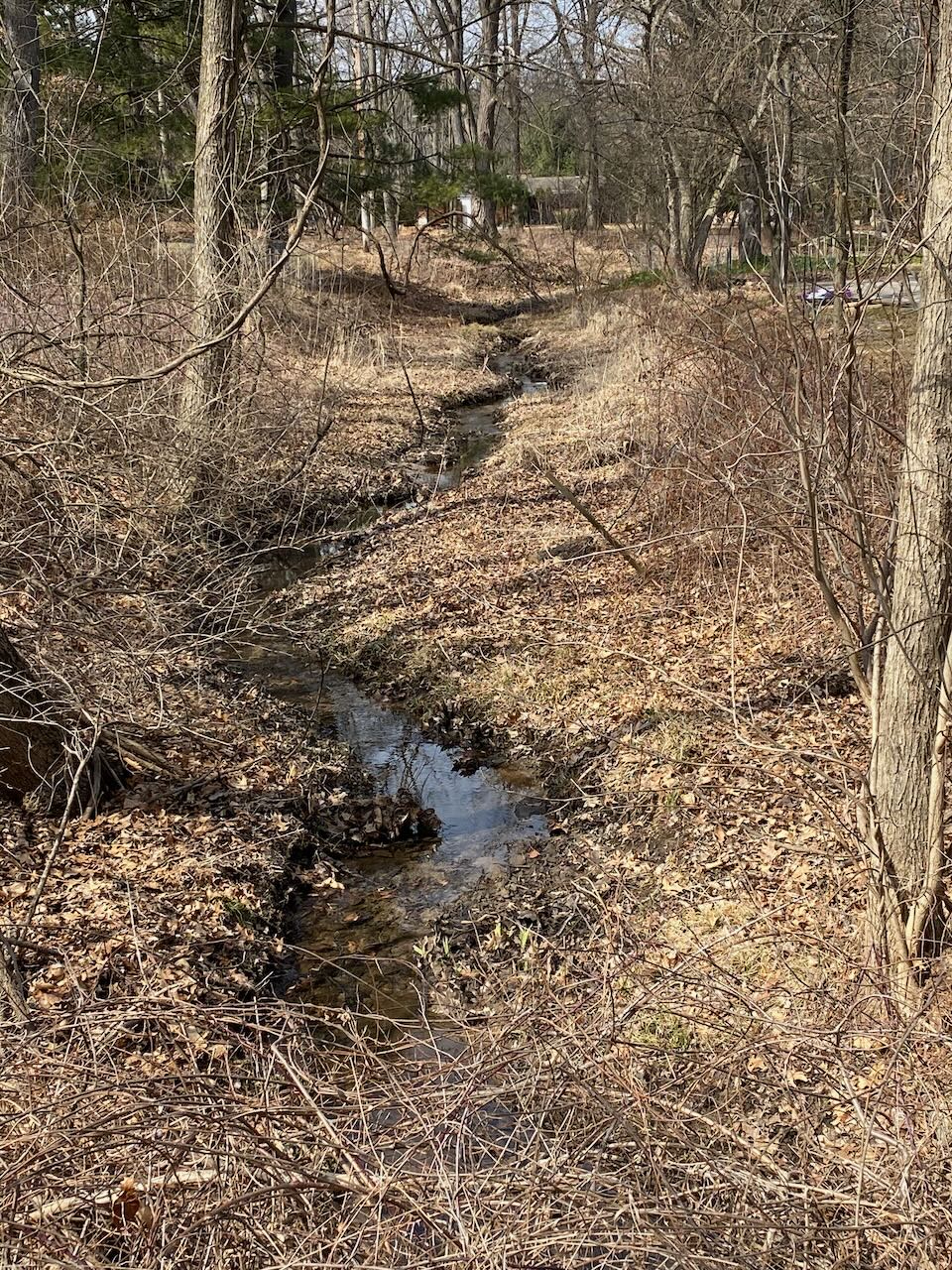
b burning bushI’m not complaining about the rain here. Michigan is far from the ravages of the hurricane, getting only its wispy edges as the system falls apart, and the rain – normal amounts of rain over ordinary periods of time – is necessary and appreciated. The tiny creek in my neighborhood is still a tiny creek. I’m grateful for that, and deeply sympathetic to the towns, counties, and states dealing with floods today. I wish for them a prompt return to the kind of day I walked out to in my yard this morning. Everything glowed. The burning bush was a lantern, announcing October – topiaried, as you see, by the deer. Burning bush can be invasive, but our local deer would never let that happen.

b flowersI always say that autumn is my favorite season, but really it’s the transitions from each season to the next that are my favorite places in the calendar. In honor of this occasion, I put pots of marigolds and black petunias out by the front steps. Petunias get a little goofy in rain, but they’ll have a good drink and then open back up when it’s over. Meanwhile they’re making little bats out of themselves, to go with the marigolds’ pumpkin spiciness.

b rainProbably the biggest rain transformation is the driveway. The plain old asphalt is, this morning, an impressionist study in grey. There’s a lot to see in it – maybe North and South America? A witch with a teddy bear? The picture shifts, with the light, as I walk along. partly reflecting trees and partly tossing the light around.

b needle rainThe back section of the driveway has the added attraction of pine needles. A deconstructed haystack? The aftermath of a haircut? A length of houndstooth checked wool waiting to be made into a sports jacket? The little stack of logs at the far end is there to remind Edison, whose trucks have been in the neighborhood trimming trees ahead of blizzard season, not to roll their cherry-picker rig onto my septic field.

b clouds 2Clouds are pretty much smooth and grey while it’s raining, but after the storm they can get glorious. I hope people in the disaster zone recover soon, and reestablish happy relations with nature.