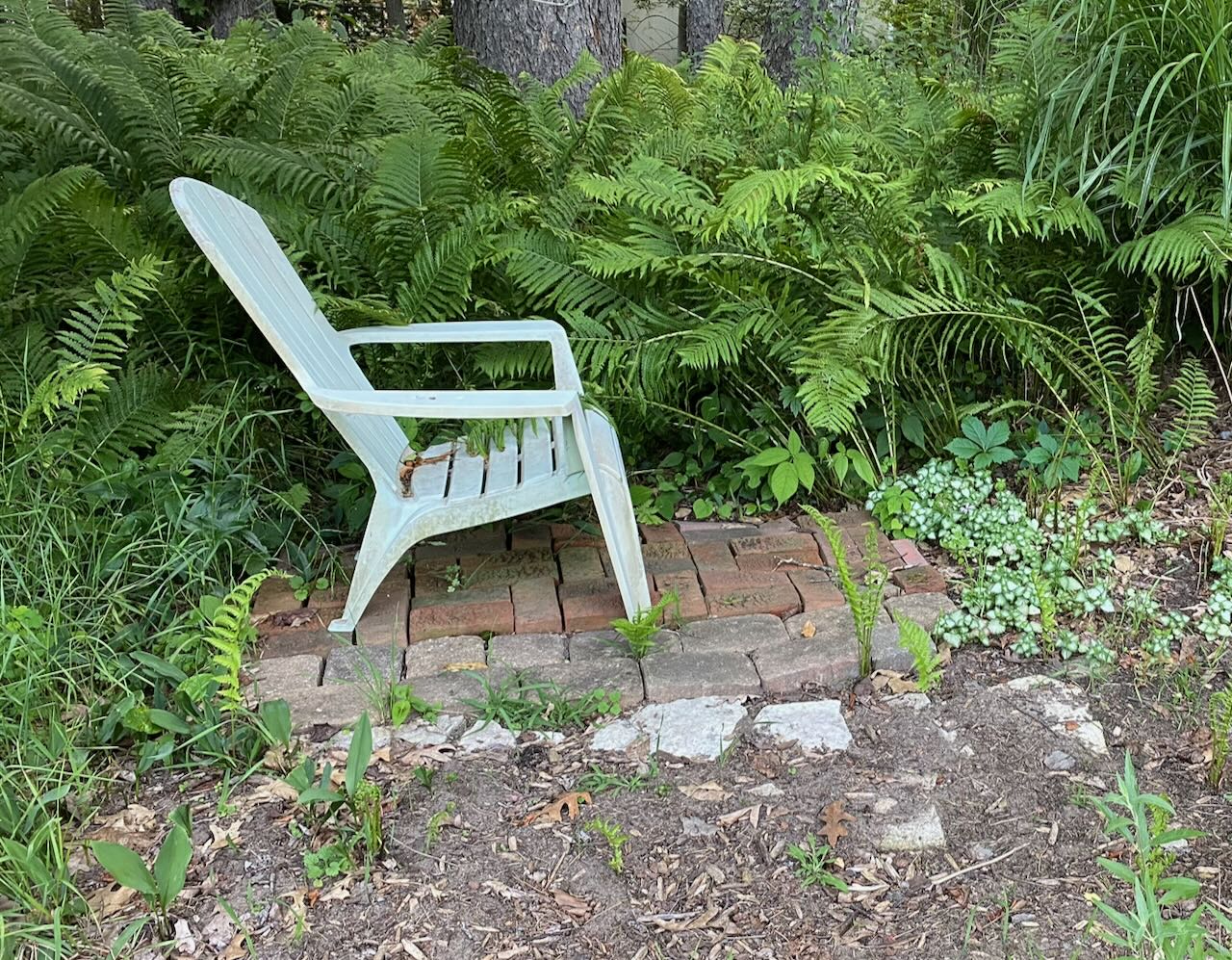
July weather has arrived, and Doug and I are having our usual disagreement about it. Eighty degrees is hot, he says, a typical Michigander view. Eighty degrees isn’t even warm enough for a sleeveless dress I say, a Southern Californian. Dry California heat is different from humid Michigan heat, he tells me. Yes, I say, but I’m sitting right next to you here in humid Michigan and I say it’s not hot. Then I go sit in a shady spot under a tree among the ferns, and he misses out, though he doesn’t consider that he’s missing anything. And I do worry that if I sit there too long the ferns will engulf me – look at them trying, inching up between the bricks, swamping even the lilies of the valley.
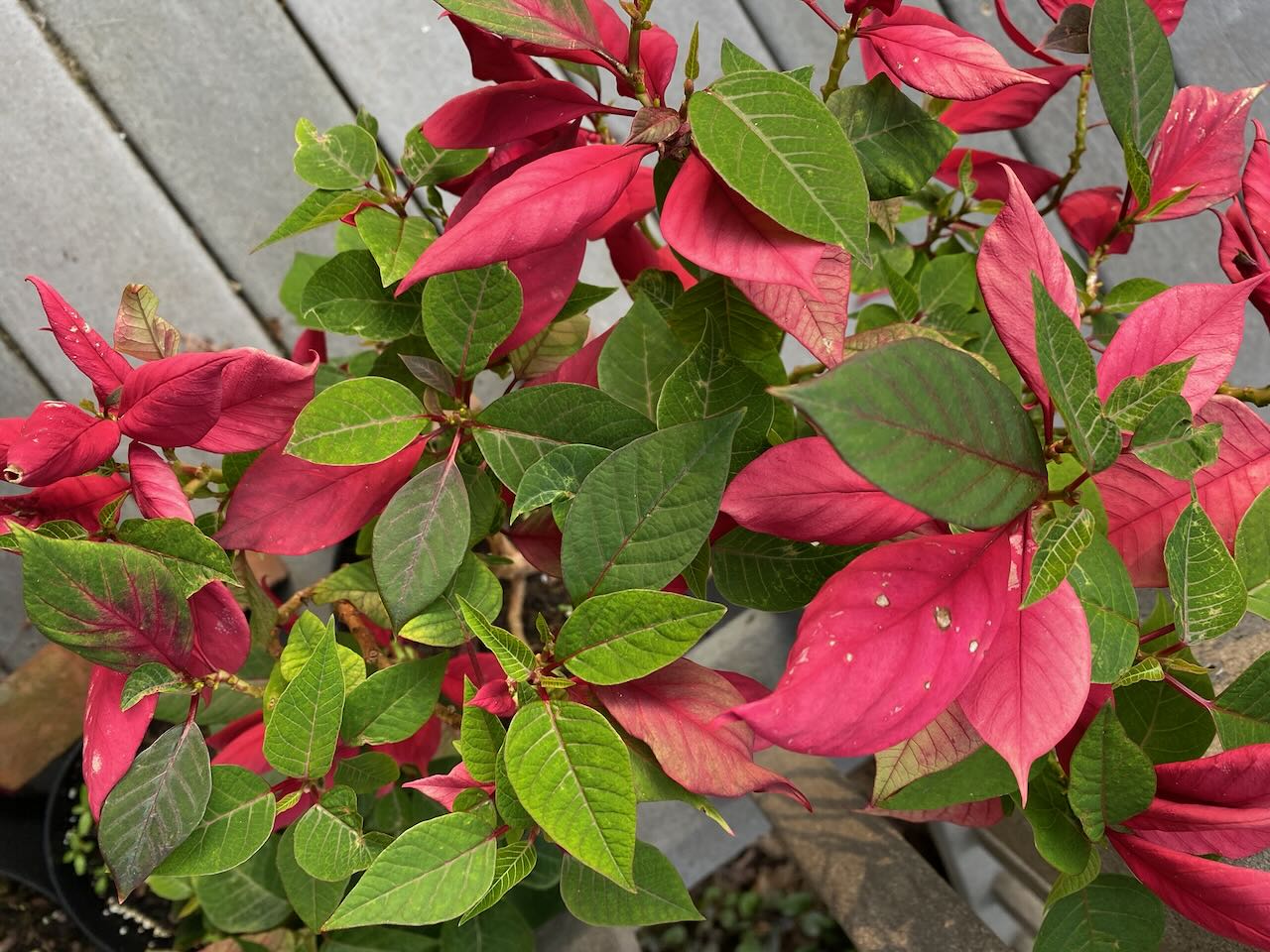
The poinsettias, like me, enjoy coming outdoors for the summer. They had grown so thin and weepy indoors, this vacation was just what they needed, pulling a new green summer wardrobe over their heads; summer camp for Christmas plants. But I know I can rely on them. Indoor winter light will turn them red again when the time comes.
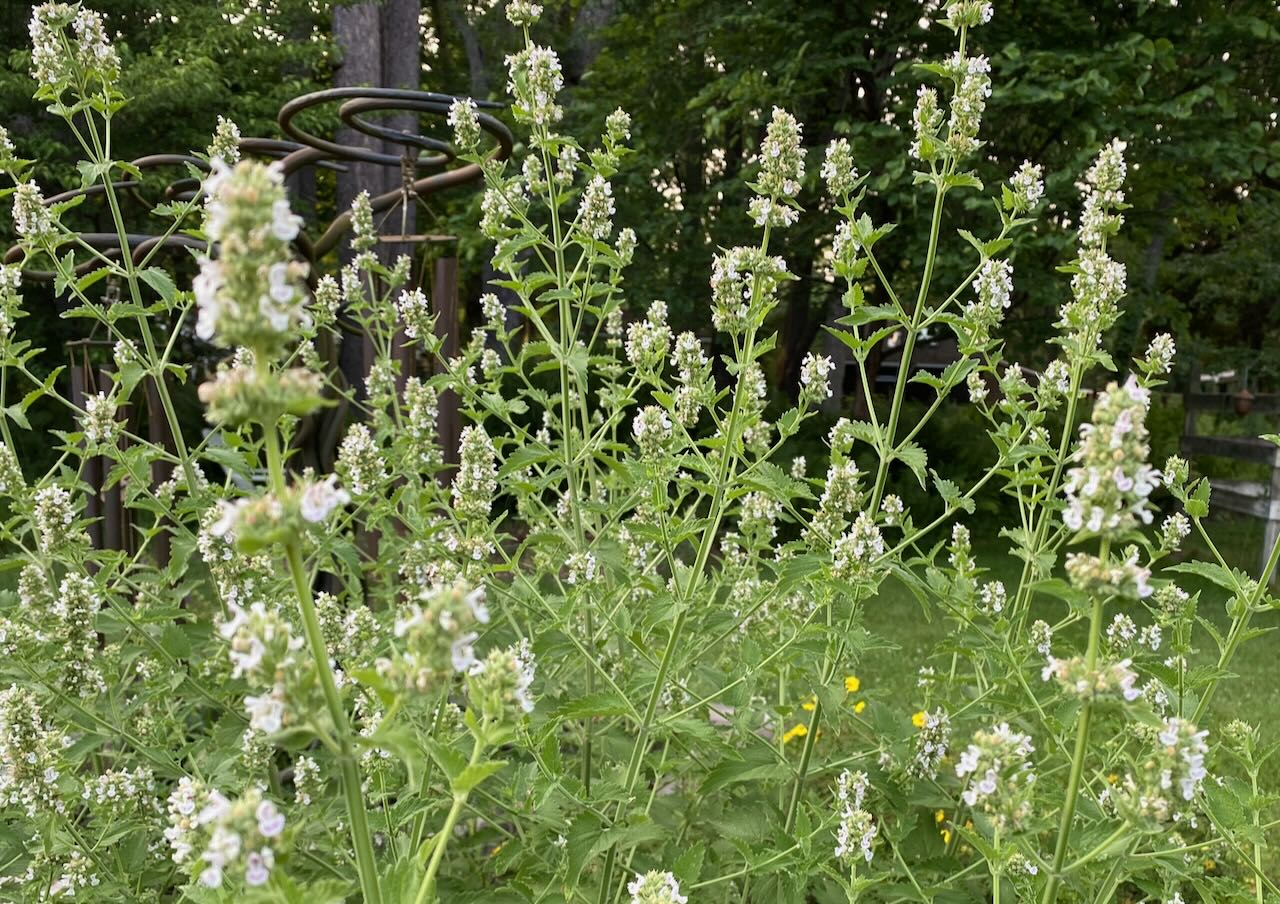
In a Michigan summer it doesn’t get dark till after nine at night. There’s plenty of light to grow things like this gigantic swath of burgeoning shrubbery, four feet high and about as wide. One search engine thinks it’s catnip and one thinks it’s lemon balm, but I didn’t plant either of them so, whatever else, it’s definitely a volunteer. I brought some in and Frassy rejected it as catnip, but she’s picky about her treats.
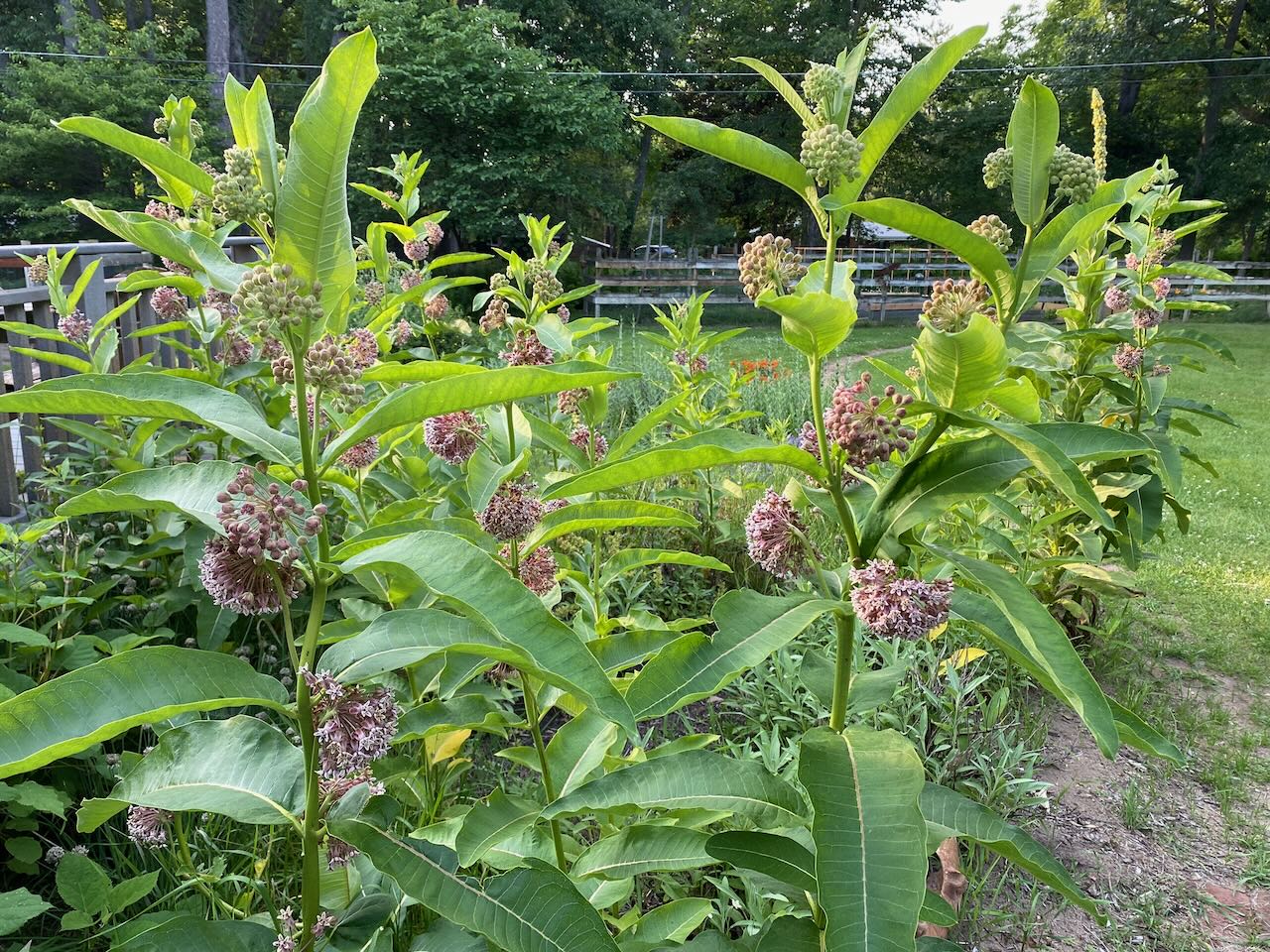
Last year’s milkweed was from deliberate seeds, but this year they have added to their number on their own account. They look ready for entire flocks of monarchs, but as yet I’ve seen only two dancing attendance on them. Is it too hot for butterflies? Milkweed is toxic to most animals, so I was surprised to find some of the mid-height leaves munched off, as if by deer. We have three new fawns, inexperienced enough to eat something like that. I’d be happier if it was the woodchuck but she’s too wily.
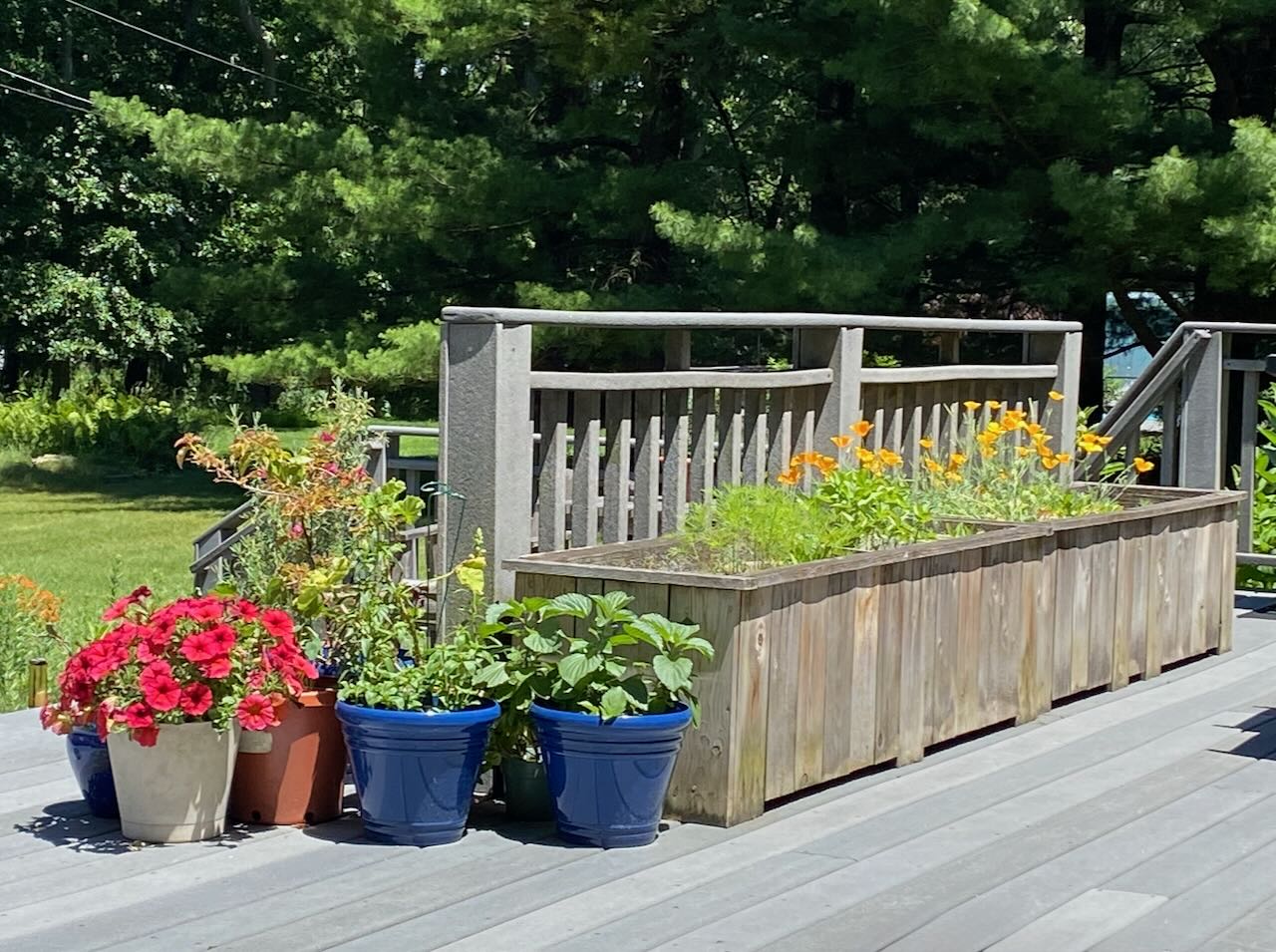
There’s also a mix of the deliberate and the accidental on the deck. The purchased petunias, taking the opposite route from the poinsettias, are going for a hot, summery red. Behind them the bougainvillea, after sulking tragically indoors the last few months, is stretching every finger in the sun and heat, just beginning to get the polish on its nails. The other pots are mostly full of greenery from zinnia and cosmos seeds I started a few weeks ago, but there in the middle of them is a glorious flash of California poppies, volunteer repeats from last summer. The seed must have survived the Michigan winter and frosty spring, waiting it out until the soil warmed up and local conditions matched its native needs. The poppies rose to the occasion. They’re split decision between me and Doug – eighty degrees is not too hot for daytime, but way too hot at night. As nights warm up they fade, waving goodbye in a fall of petals and fine seed. They’ll be back.


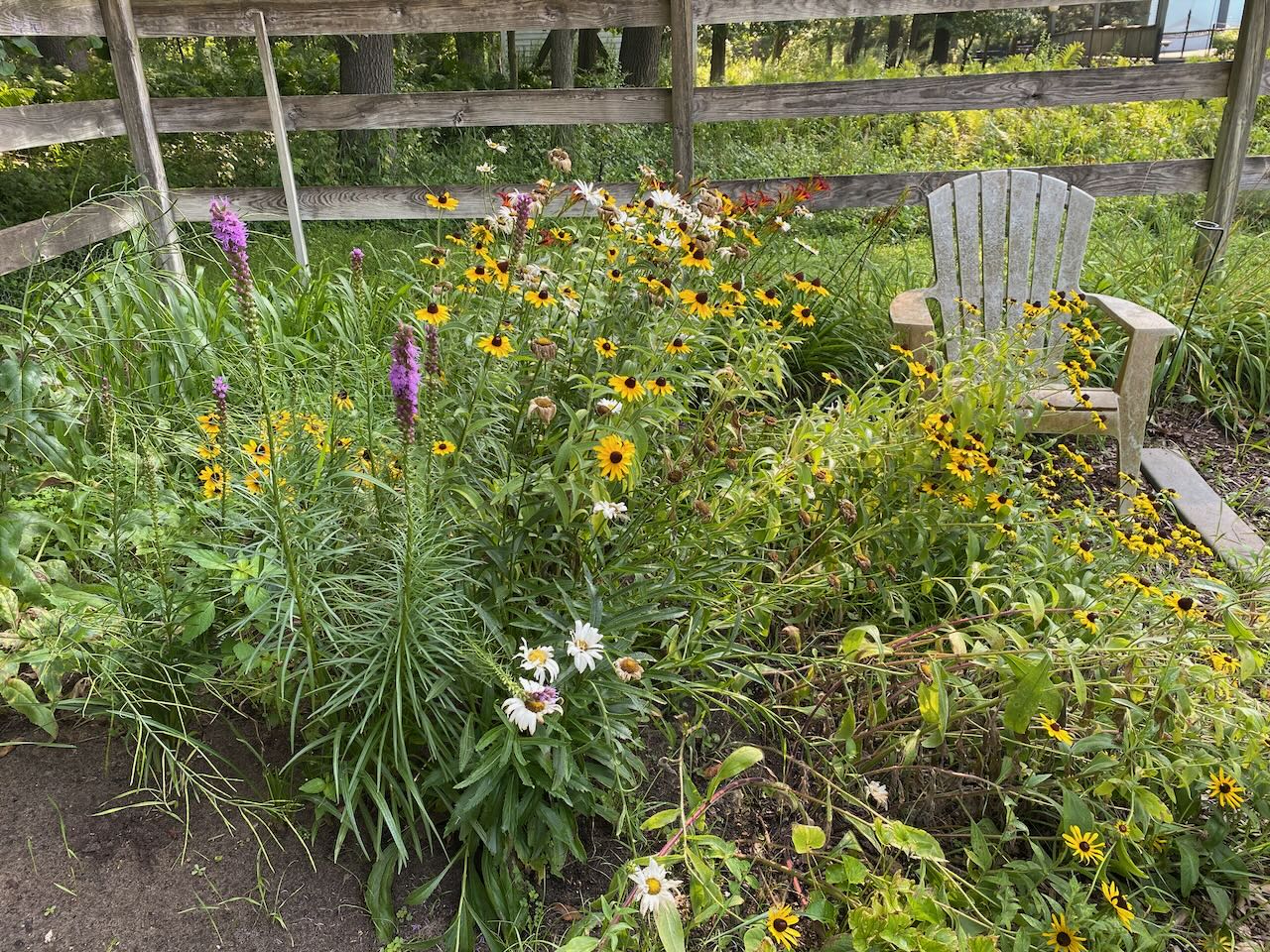
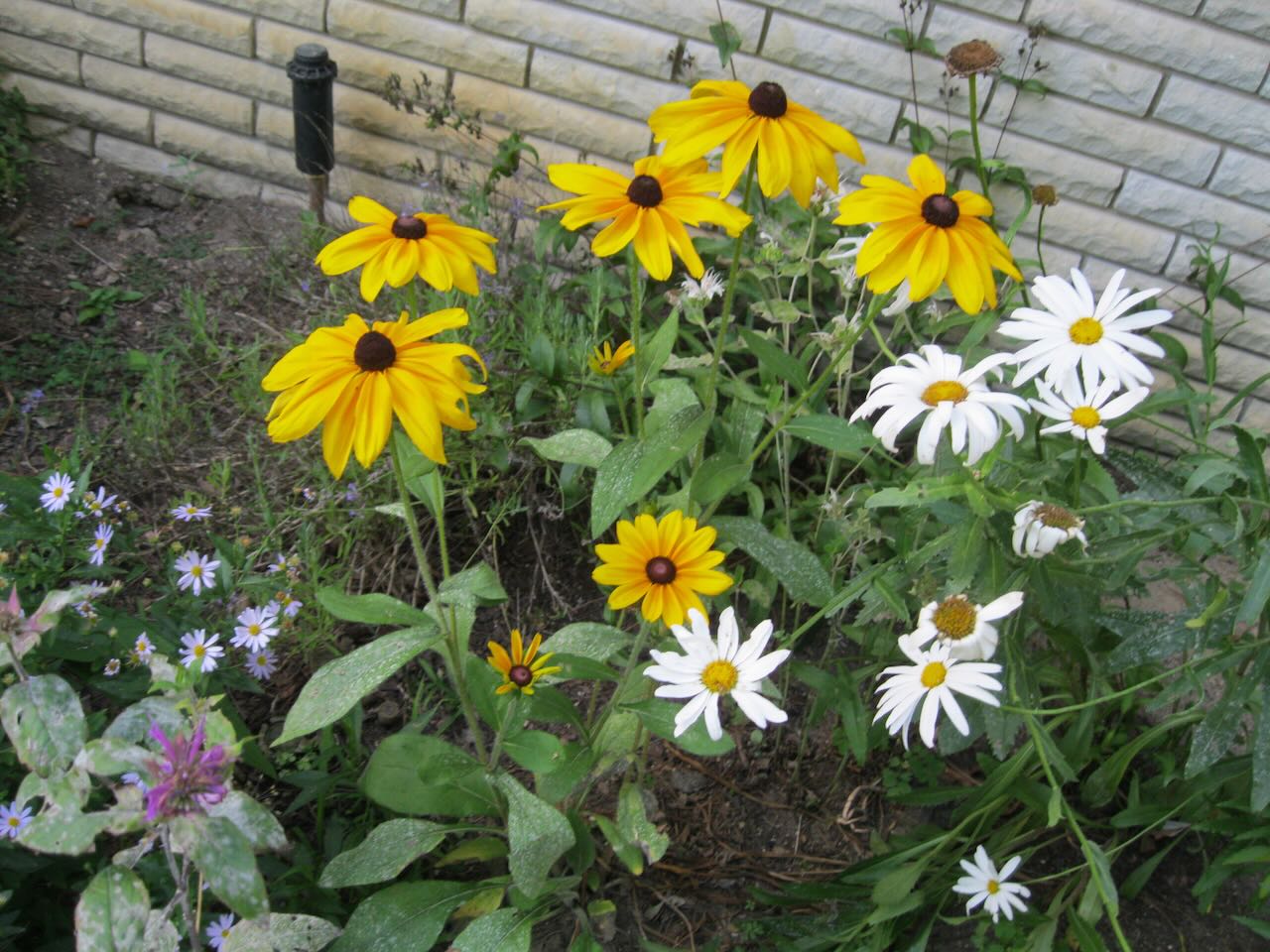 My friend Cindy is always a little sad when the rudbeckia bloom because in Michigan, she says, it means summer is almost over. But Labor Day is no longer the benchmark it once was, not even for schoolchildren, who are increasingly likely to go back to class in August. No one would say summer is over in August. And this year frost is not predicted for southeast Michigan until November, so I think she has plenty of summer left.
 So do the fawns. I’m told they’re mostly born in June, but we don’t see them foraging in our yard until mid-July, and more of them in August. They will lose those spotted markings as they grow their winter coats, usually starting in September. It will be interesting to see when that happens this year.
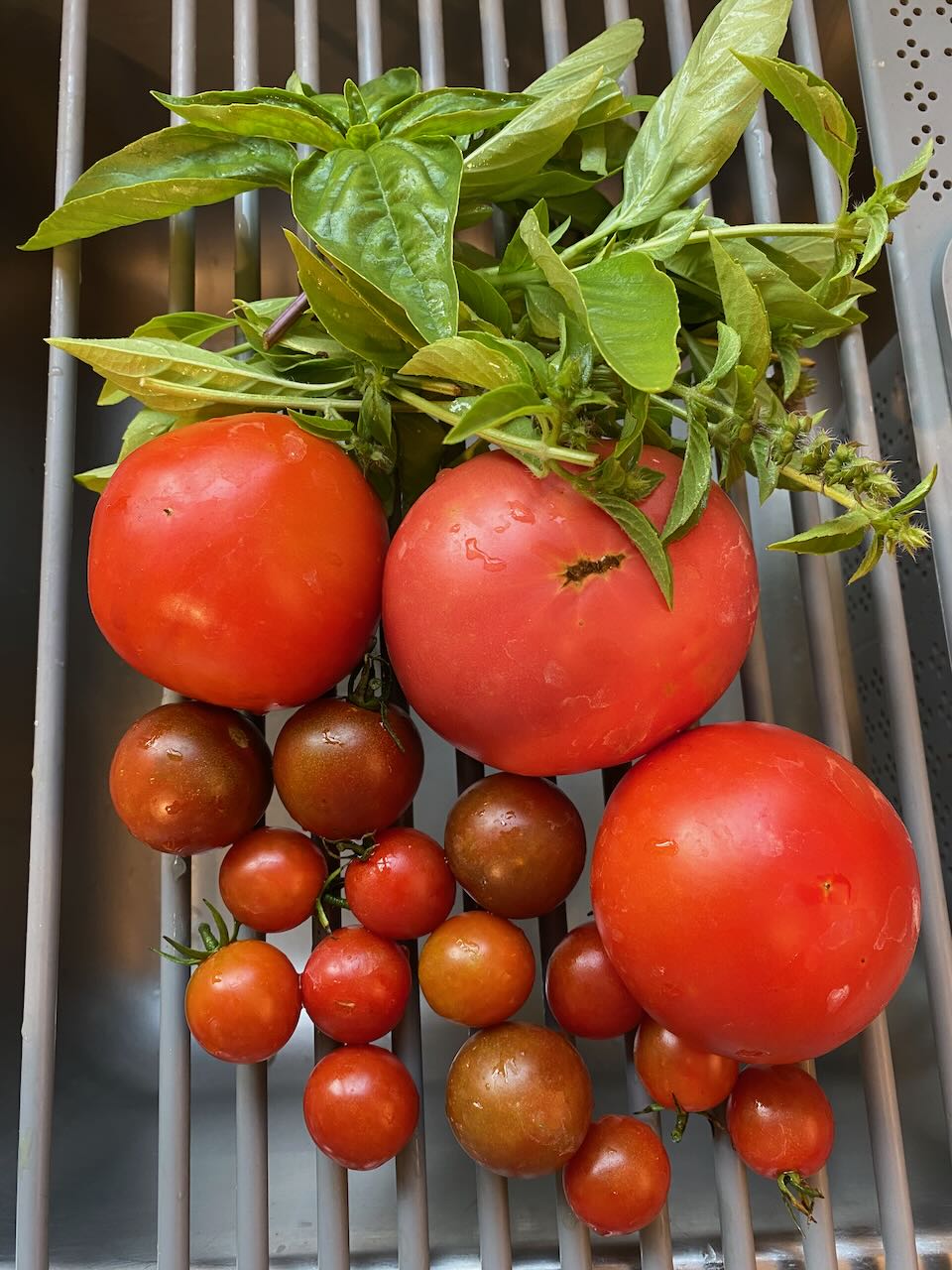 Bumper Crop
