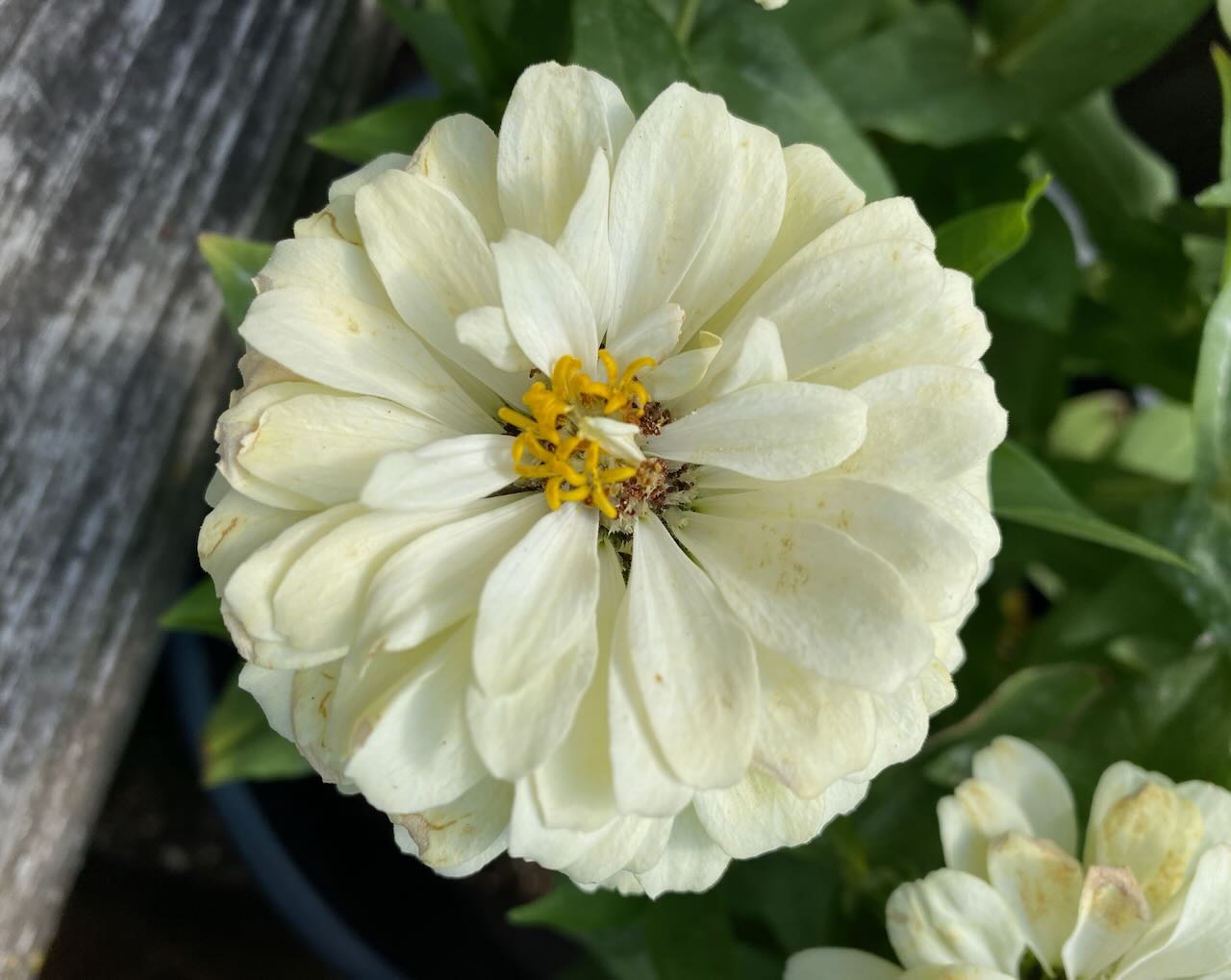
I once had a job as a substitute art teacher. The class was an elective for seventh graders but, truth be told, many were there because their first choice elective was full. They really wanted to be swimming. They said they couldn’t draw. I told them the problem was, they weren’t seeing what they were looking at. I gave each of them paper, pencil, and a zinnia fresh cut from my garden. Pretend, I said, that you are an ant, crawling around the edge of each petal, all the way to the center of the flower. Draw the ant trail you will make. They did, and they were amazed at what beautiful drawings of zinnias they made.
It inspired me to write a poem about an ant on a zinnias – Magellan of ants, traveling around and around, discovering a universe mysteriously changed from what it was when he started out, in the garden. As Georgia O’Keeffe once said, “…nobody sees a flower, really – it is so small—we haven’t time—and to see takes time…” I grow my zinnias from seed and fall in love with them, and when – as often happens – I feel I don’t have time to paint them, I take these photos.
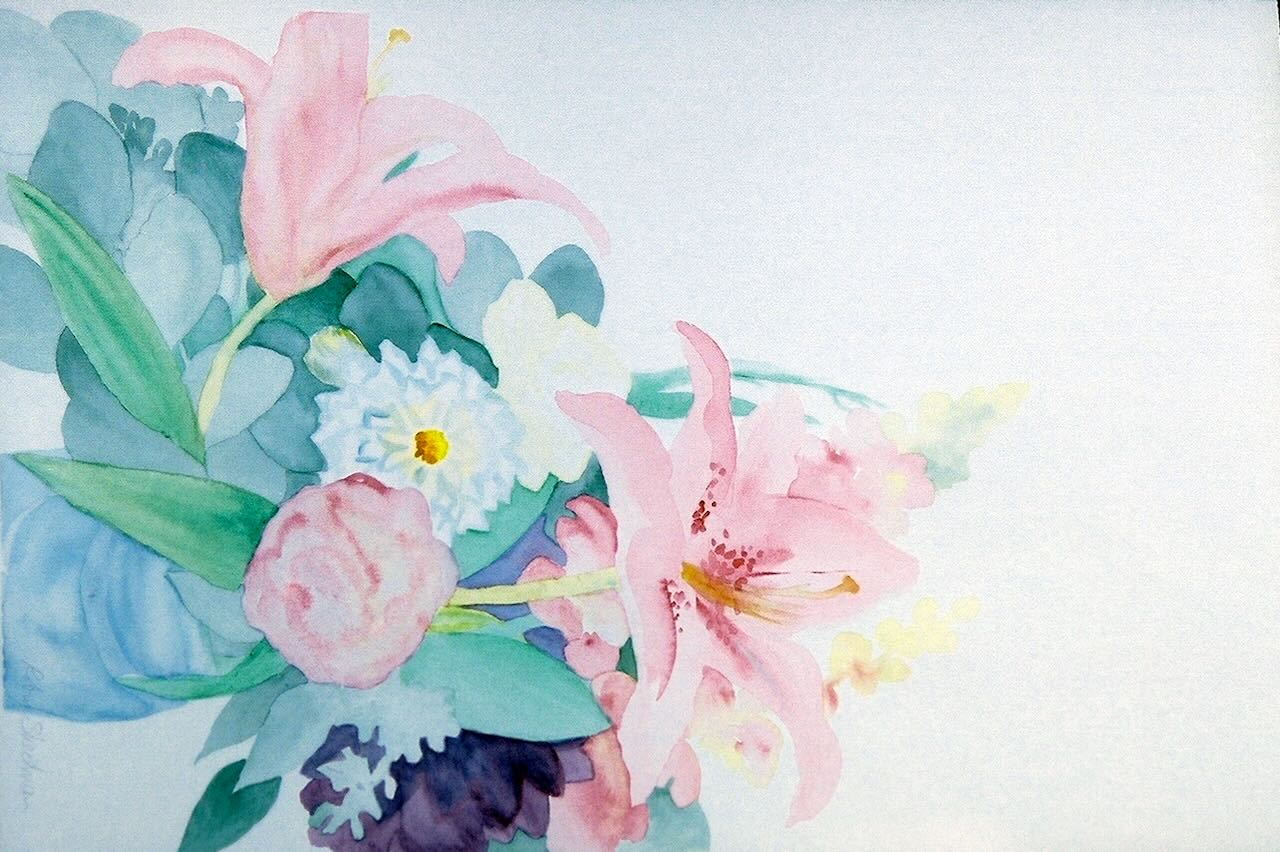
But I see them better when I paint them. The store-bought lilies and rose dominate this painting, but that’s one of my zinnias nestled in the middle. The lilies had a fabulous scent; I can smell it every time I look at this picture.
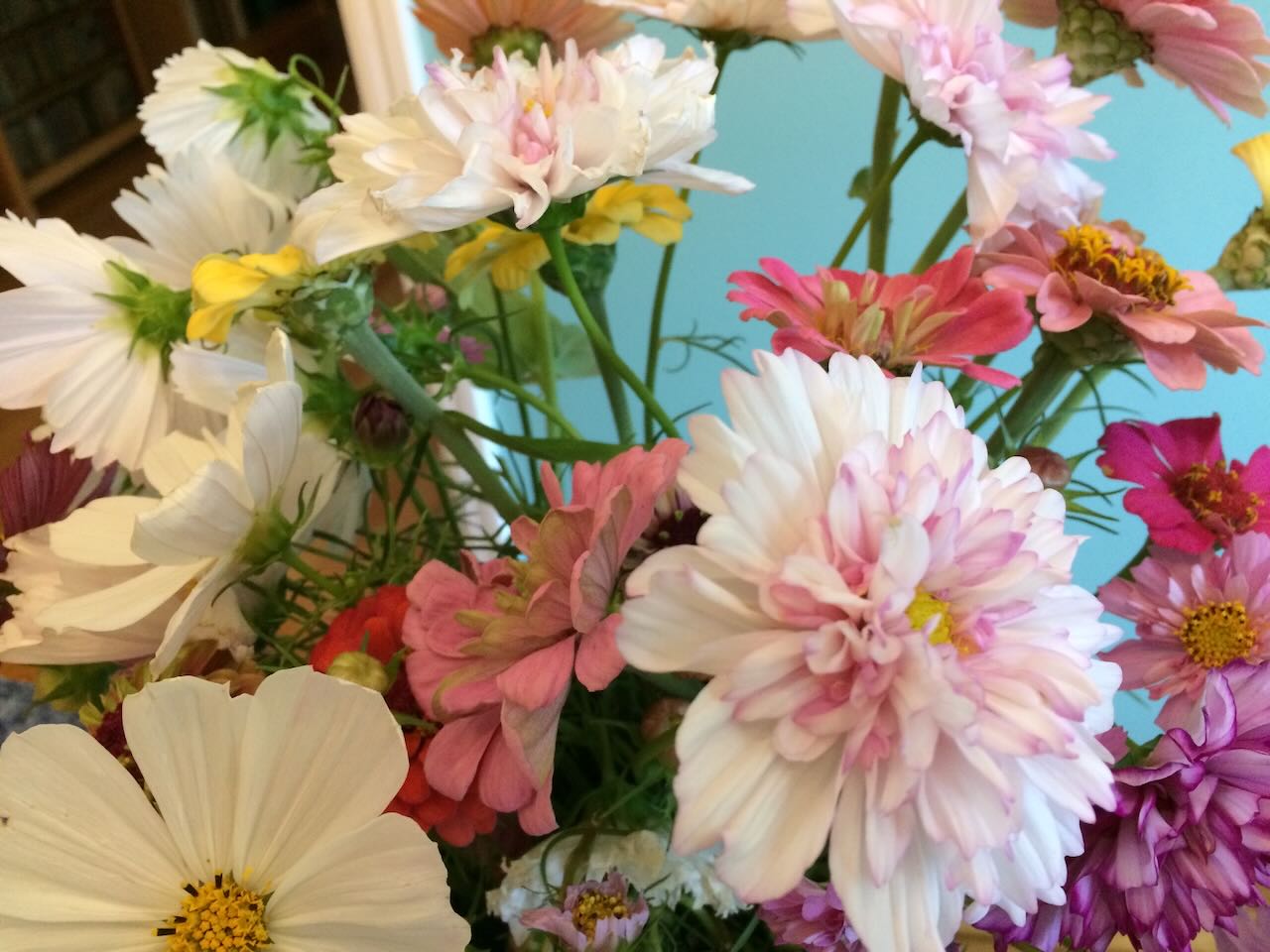
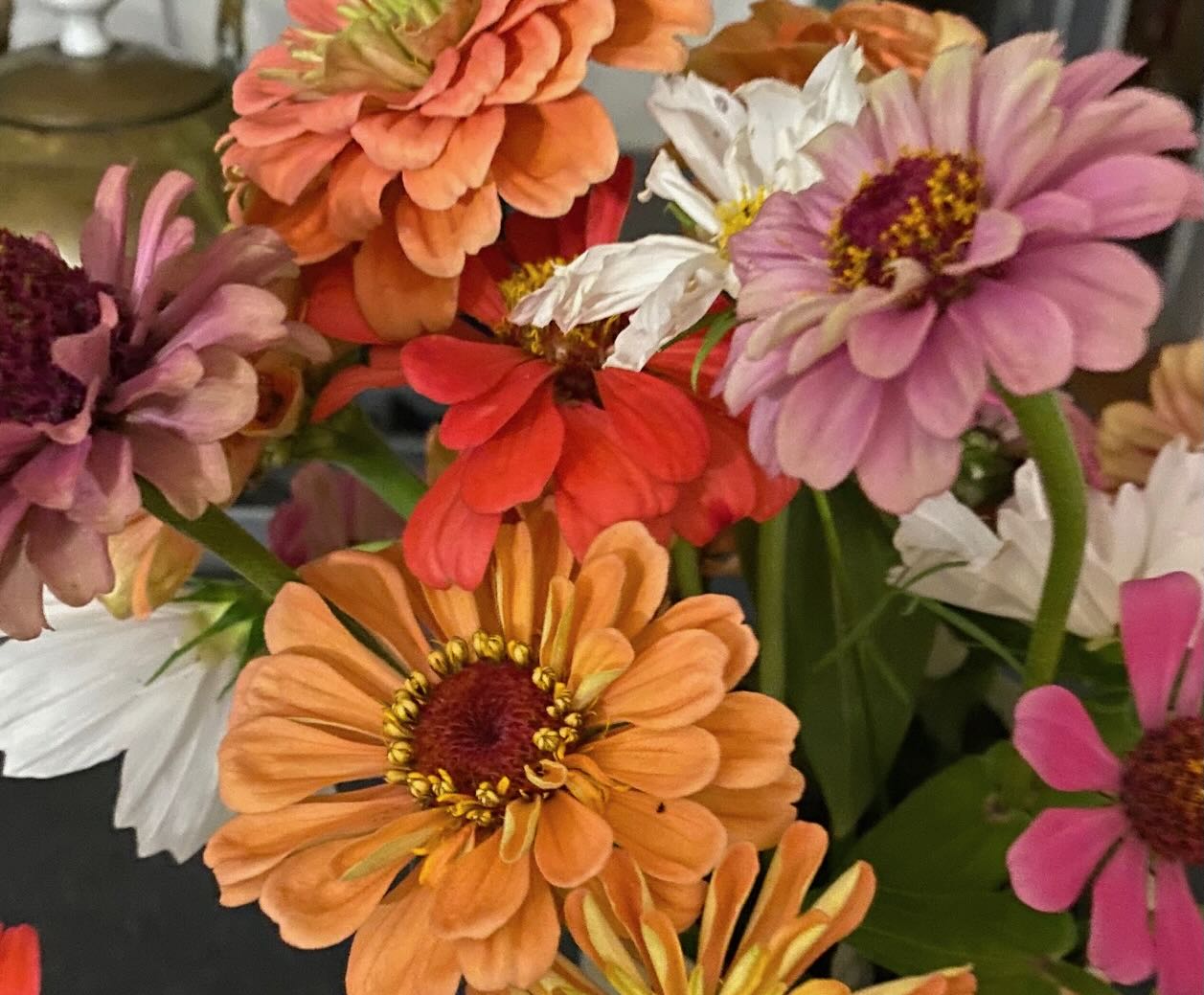
But my main garden flowers are zinnias and cosmos. I wrote a poem about cosmos too; it ends: “Vain petals like a pinwheel/drop in a sudden shower/who would name the universe/after such a flower?” The cosmos flower is said to symbolize order and harmony, most of them having a simple structure like the one on the bottom left of the photo. But because we can’t leave well enough alone, the outrageously ruffled beauty in more or less the center is cosmos, too. A more complex universe; it mixes well with zinnias.
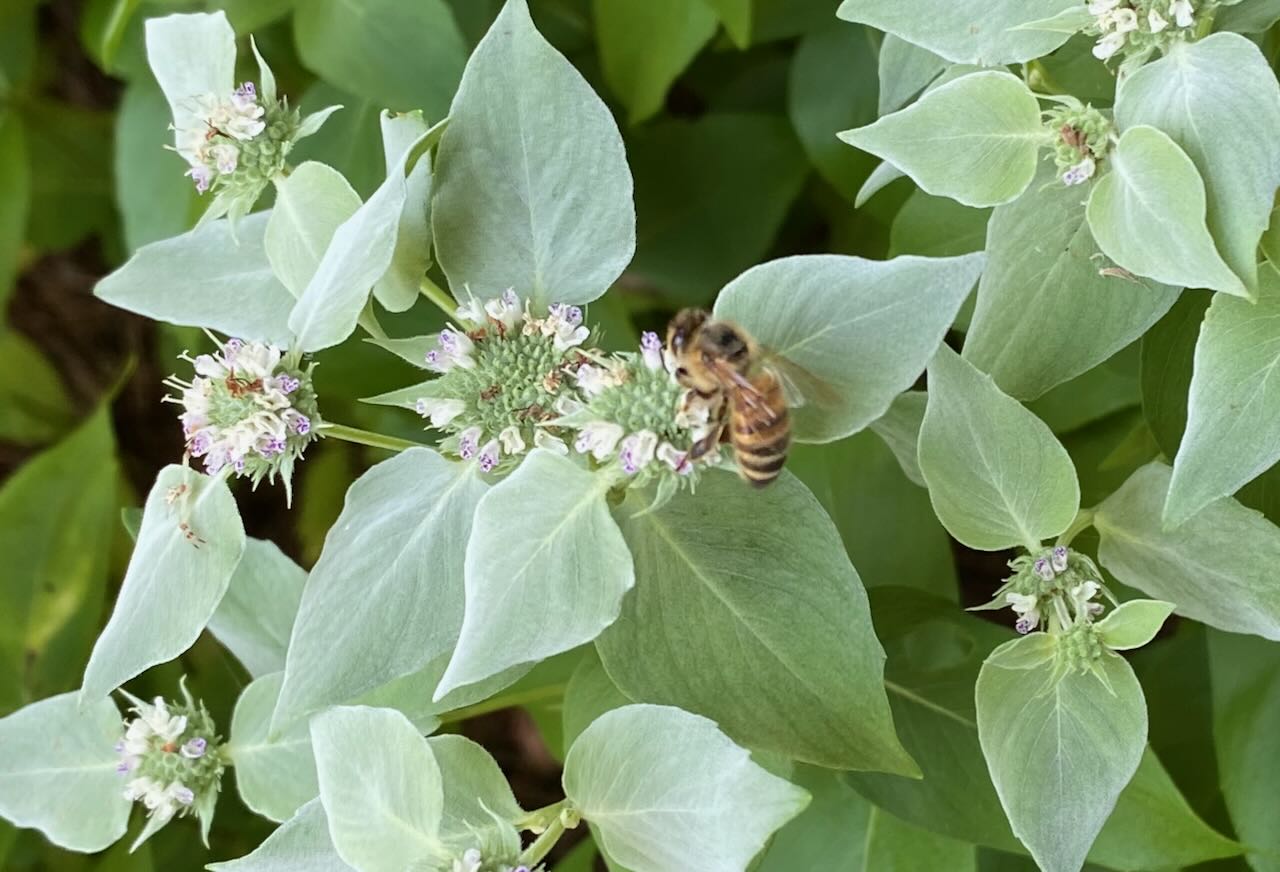
I was walking through the yard, hoping to get a photo of actual ants on actual zinnias – it happens – when a gently buzzing sound made me realize what I was more likely to find on flowers. Bees. The mountain mint, in bloom now, was covered with them. Bees don’t mess around circumambulating – they head right into the center of things. Purposeful, confident, no time to stroll around. They know what they’re looking for, and they find it.








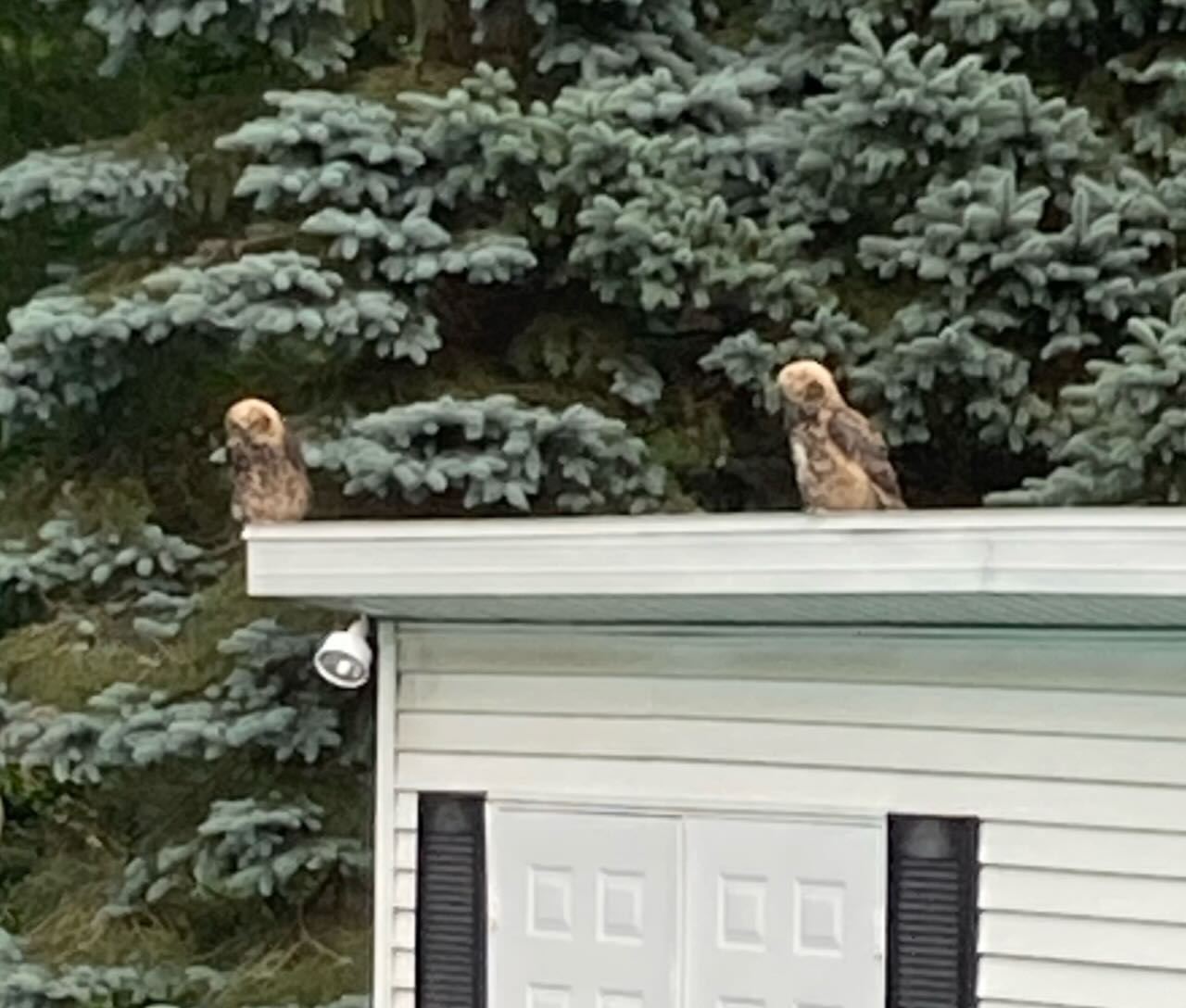 My neighbor texted me the other day to tell me there were two great horned owls on the roof of her pool house. They were eyeing the pool vacuum with great interest, in case it climbed out of the pool and was revealed as dinner. Eventually they lifted their heads, the larger one outstared the smaller, and the smaller retreated to the far corner of the roof. Since female great horneds are larger than males we assumed this was a couple, and anthropomorphized a spat for them. But this was way past mating season for great horned owls, and on reflection this was more likely Momma and a growing chick. Was she teaching him to hunt? Trying to get him to fend for himself? Trying to get some time to herself for heaven’s sake? Still anthropomorphizing.
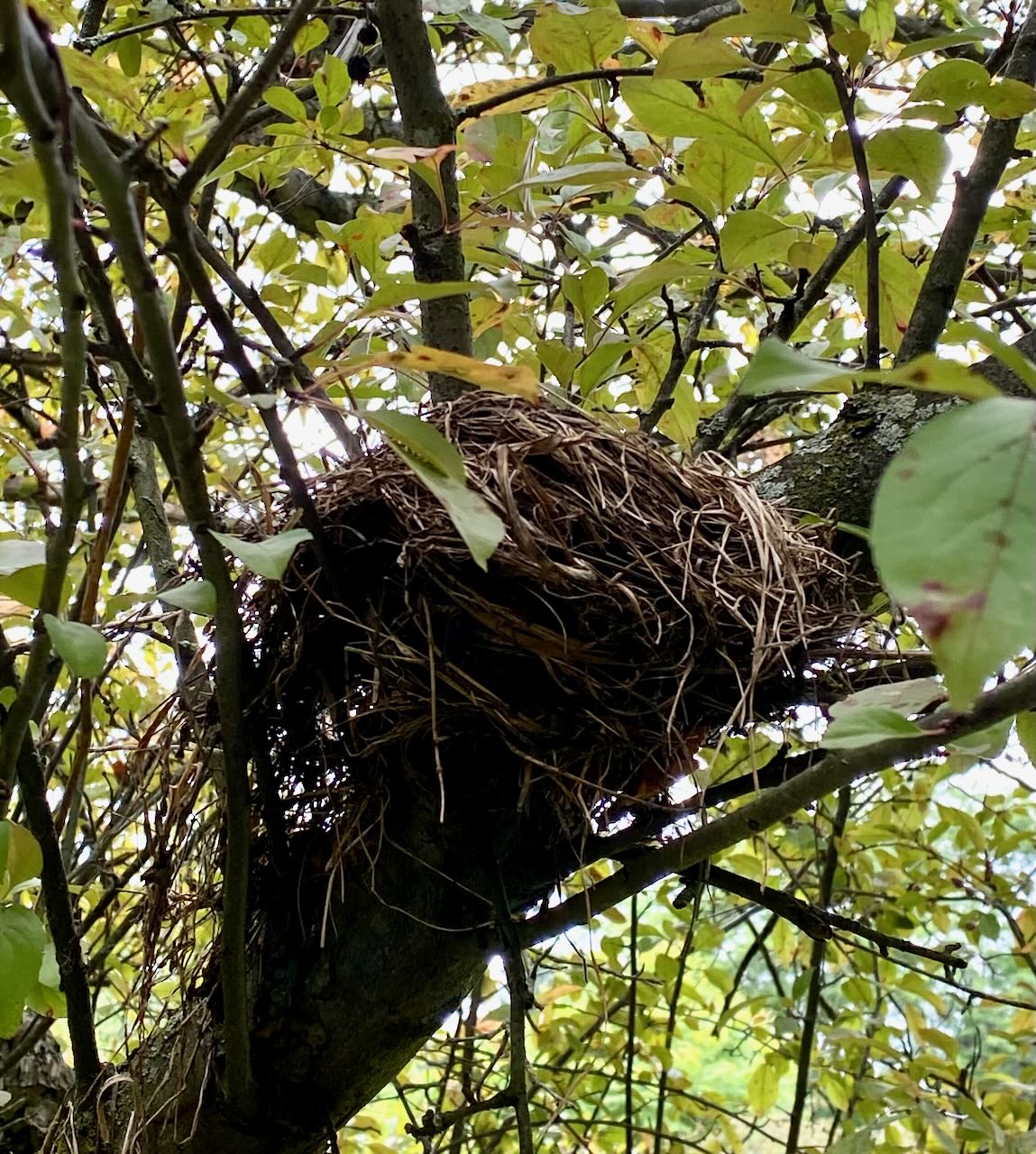 But birds, like people, do need to care for their young for a good chunk of their lives. We can relate. Not long after seeing the owls – though, sadly, after leaving my camera in the house – I walked out to my mailbox and found a baby robin hopping along the driveway near the crabapple tree. I could see where the nest was, though I couldn’t reach it. It looked like everyone else had fledged, but Junior had not quite made it. As he hopped he flapped his wings a bit, but didn’t get any lift.
 I walked after him wondering what I should do, but the point was soon moot. He headed for this nice, thick stand of mountain mint, disappeared into it, and began to cheep. Good cover, I thought. It was a nice, steady cheep, like a beacon. Then I noticed that baby and I were being watched by a full-sized robin on the lawn. I took the mail back into the house and looked out the window to see big robin pulling a worm from the lawn, and carrying it into the cheeping mintpatch.
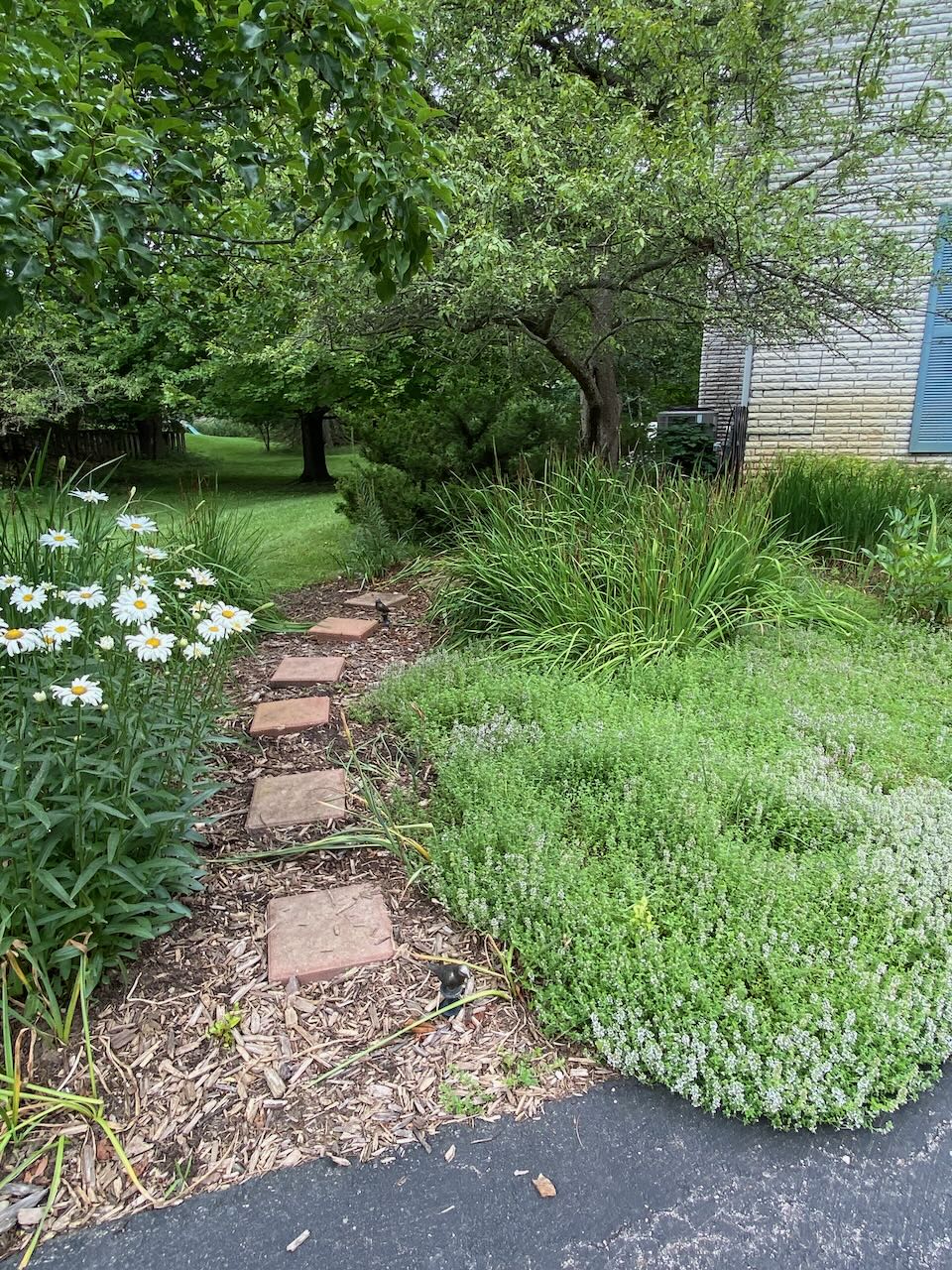 Next morning the cheeping came from a tall clump of Siberian Iris on the other side of my front door, and the parent robin waded in with another beakfull of worm. A successful night. There was cheeping and worm catering the next day too, from a little further back. A second successful night. The morning after that I didn’t hear him. Did baby bird learn to fly? Was he cheeping somewhere else? I hope those owls didn’t find him.
 I’ve read that fewer than half of all baby robins survive, and yet robins are not endangered. They’re busy all summer, laying eggs, feeding babies, traipsing around after fledglings, repeating the process two or three times per summer just to survive. Free as a bird, we say, watching them fly and hearing them sing. In fact they are bundles of purpose. I’m glad to see them taking the occasional break – or so I think of it – in the local spa.
 One of the joys of the spring garden is surprise. Where did these ultra-fluffy, double pink columbine come from? Not only don’t I remember buying them, I don’t remember even knowing they existed. Could they have arrived as seeds embedded in bird droppings? Such an ignoble origin. Could there be a Johnny Columbineseed at large in Ann Arbor, spiriting unusual flowers into unsuspecting gardens under cover of night?
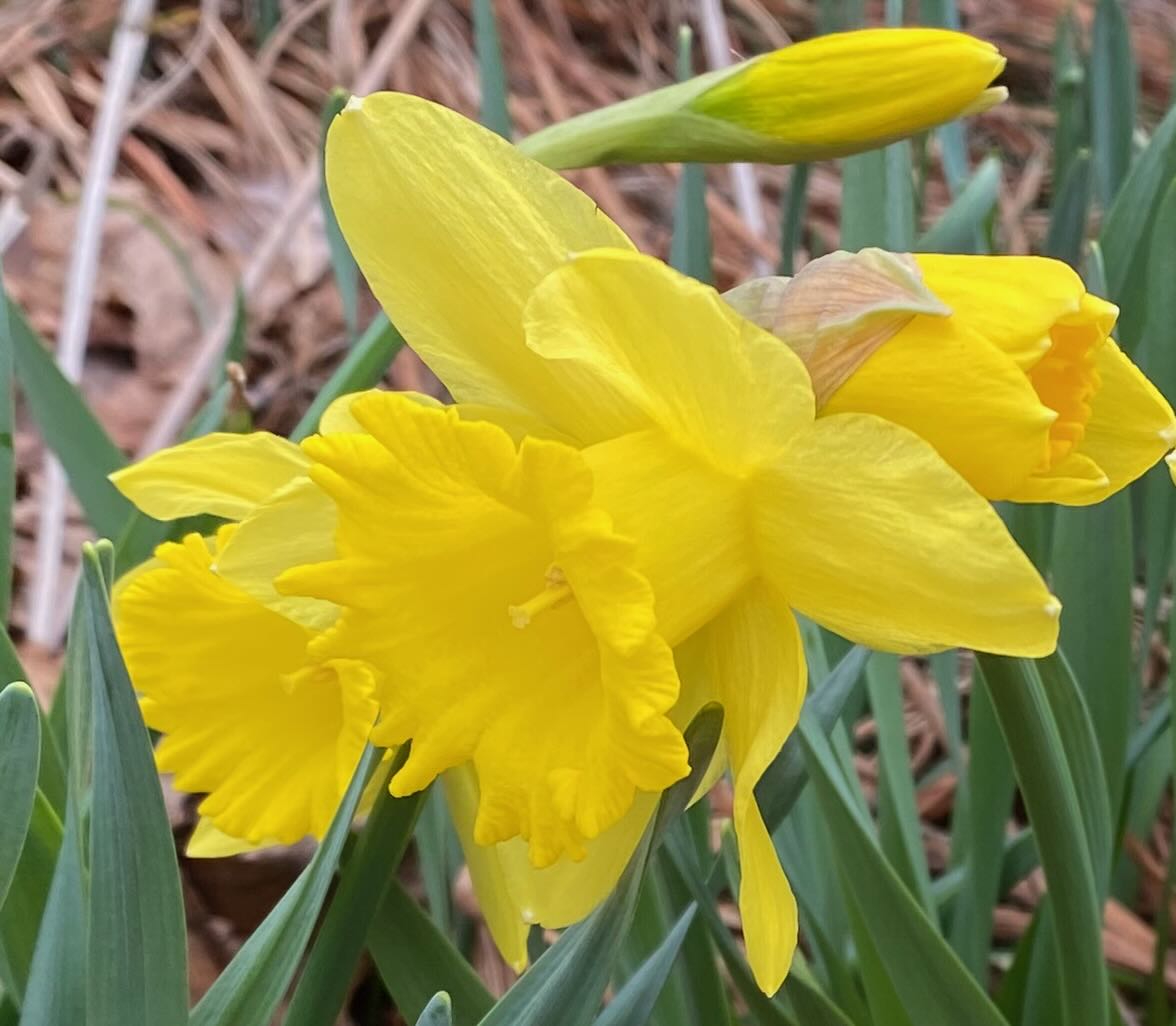
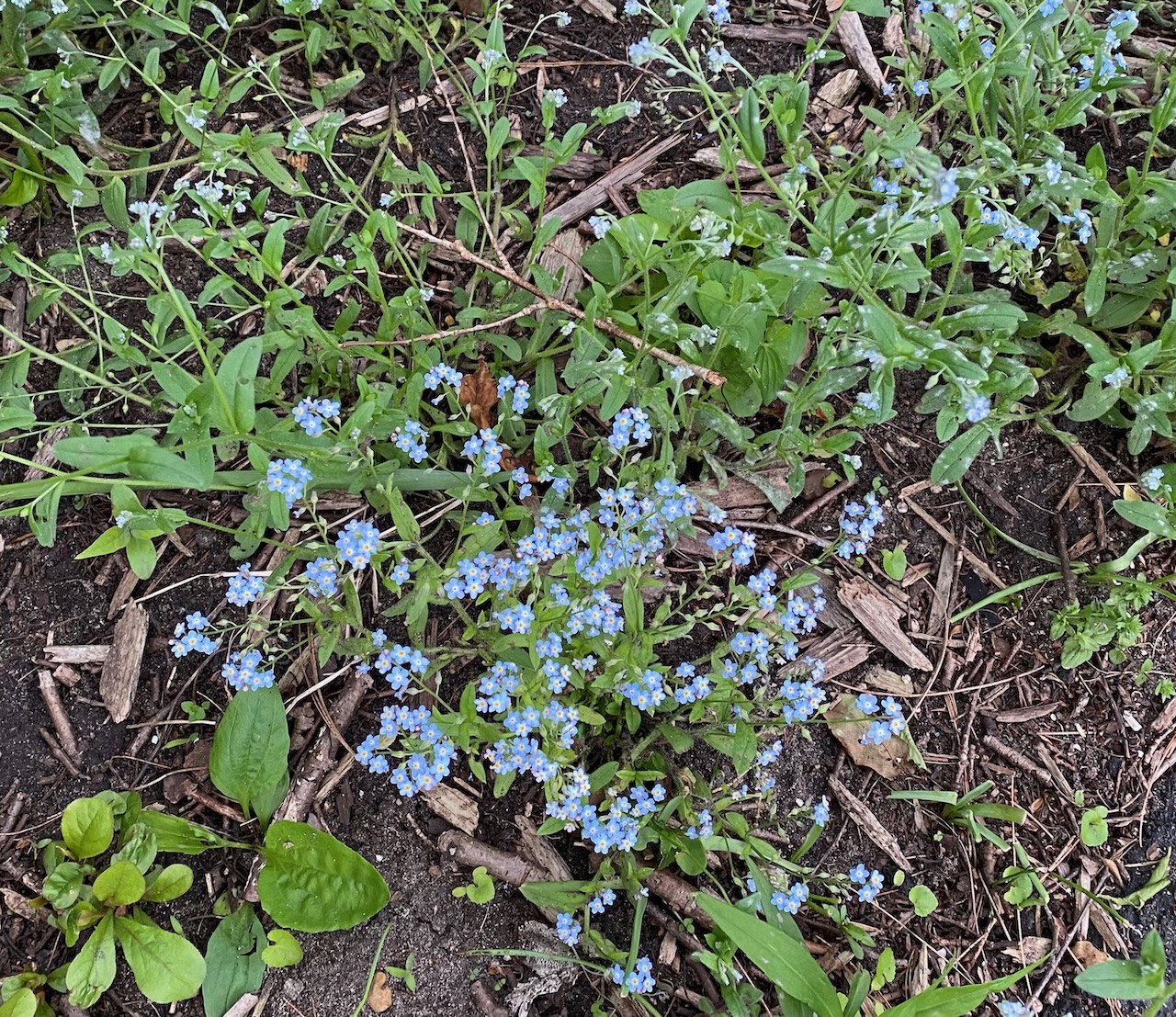 Then over here, how did one tiny patch of forget-me-nots take over the entire flowerbed, even crowding out weeds? A blue haze under the fading spikes of daffodil leaves, it manages to be really in your face despite such tiny petals. It should be called I-dare-you-to-forget-mes.
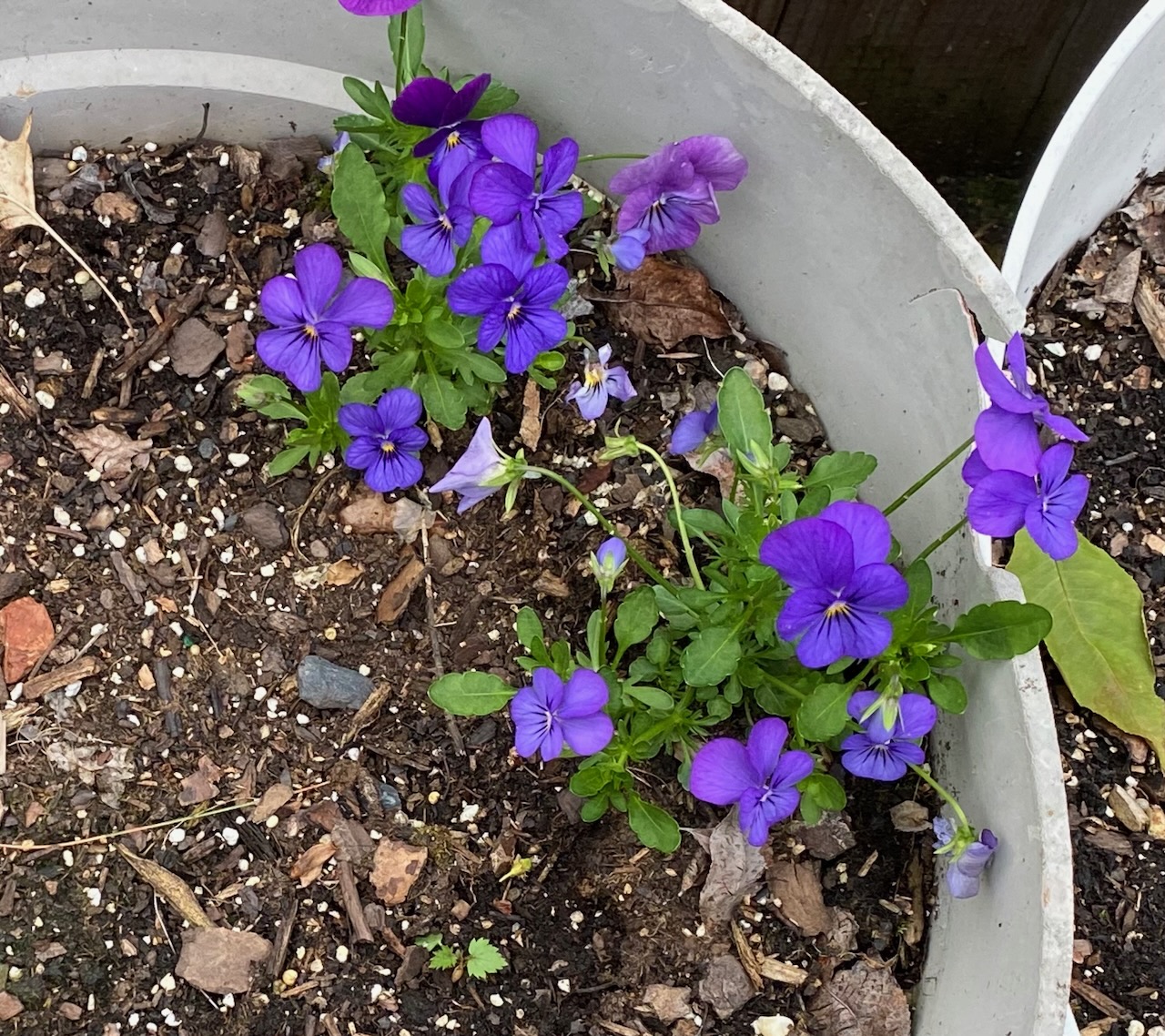 Moving around to the back yard, a flower pot that once held cosmos has come up with a crop of these little purple flowers, small enough to be violets but somehow I wasn’t convinced. Pansies were in the pot next to it last year. My garden books say four petals up and one down makes it a pansy, two petals up and three down is a violet. Two up, one down, and two sticking out to the side? Panselets?
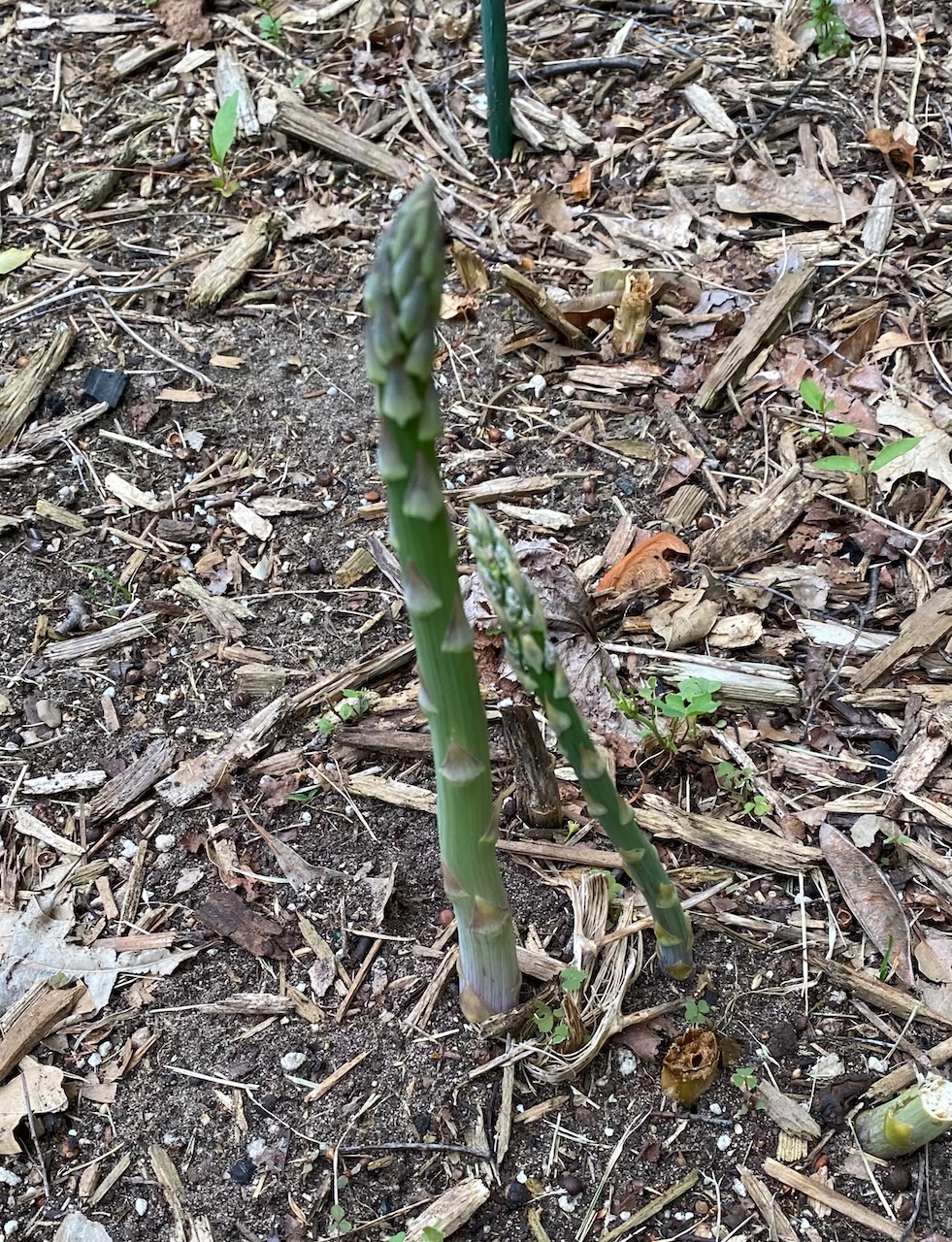 And then there’s the asparagus patch. I’ve seen it every year since we moved into this house, but it still makes me laugh to see the way it comes up out of the ground, looking for all the world like someone has snuck out to the garden and stood a bunch of asparagus spears upright in the dirt as a practical joke. But no, they’re growing right out of the ground. The second joy of the spring garden: that dirt, water, and sunlight turn into food and beauty, whether the way we expected or not.
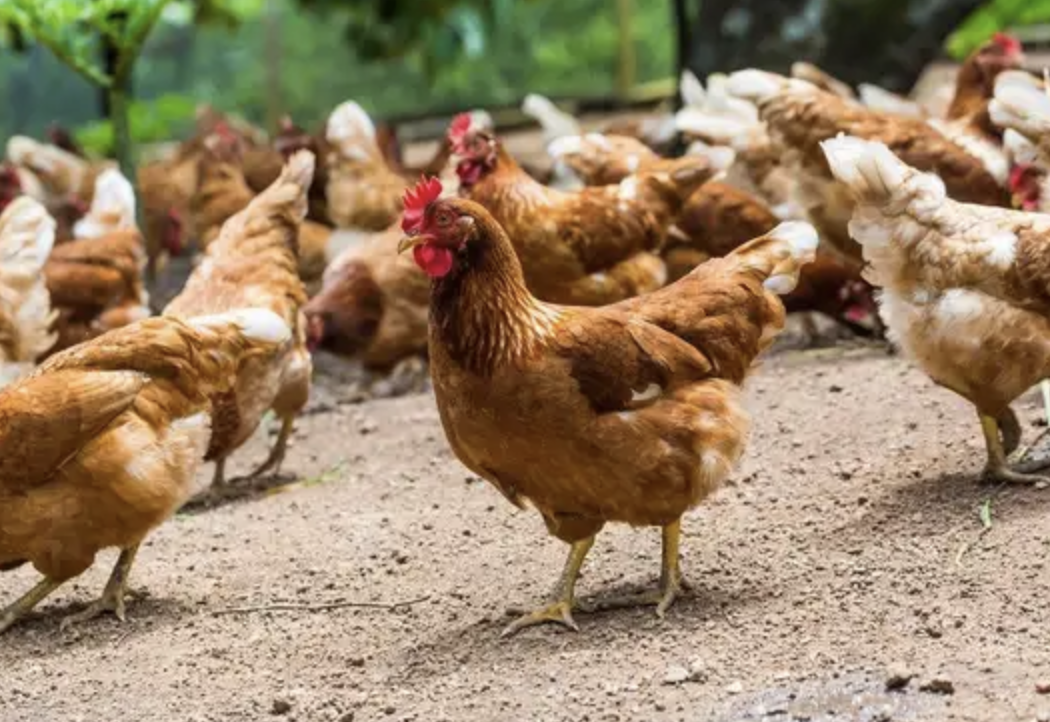
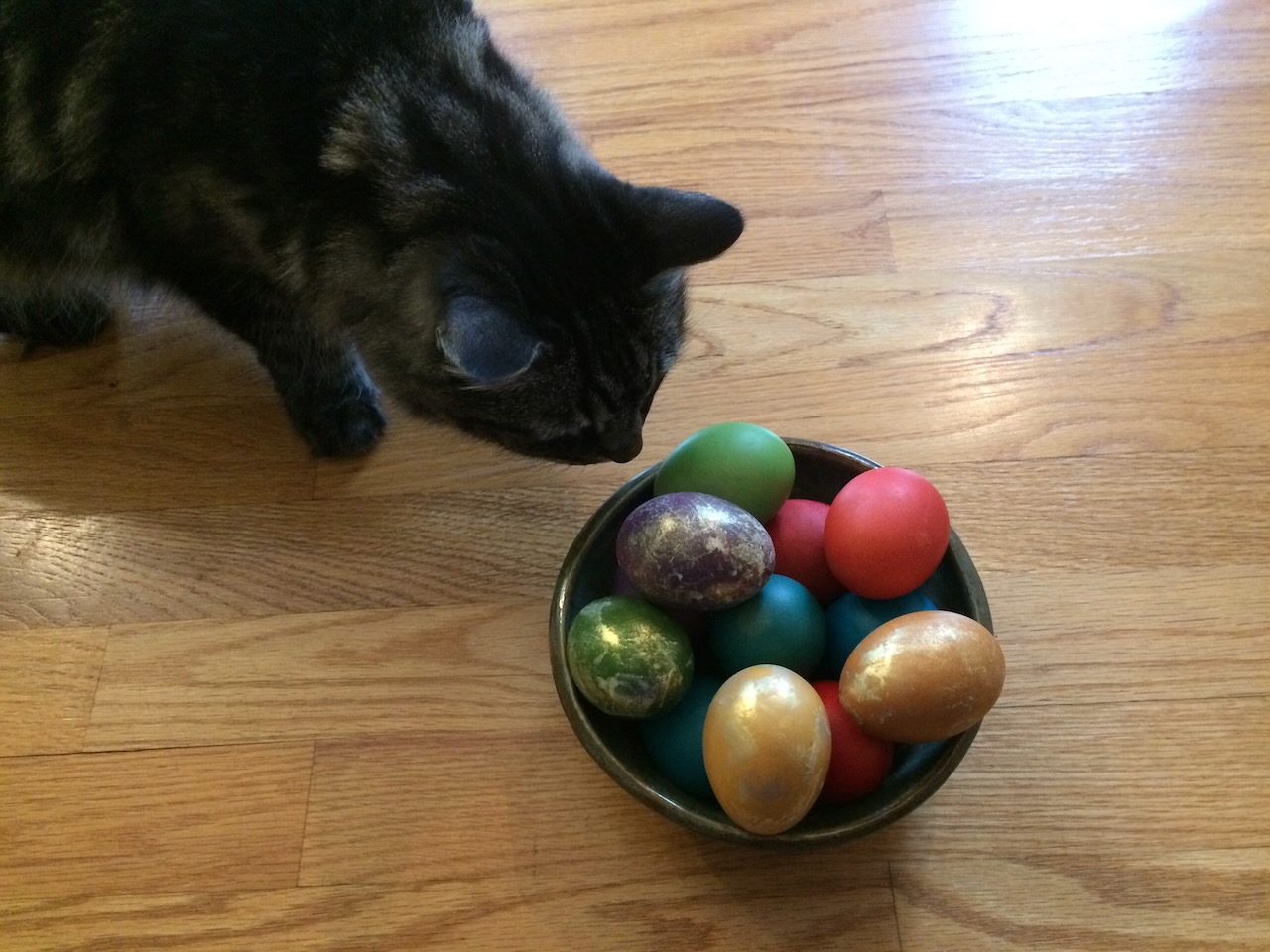 It seems odd coming right after Easter like this, but happy April Fools Day! Salt in the sugar bowl, bubble wrap under the rug – are they classics, or cliches? Here’s a poem for which I gathered and strung together all the chicken cliches I could think of. Credit to Blain’s Farm and Fleet of Jackson, Michigan, for the chicken flock photo.