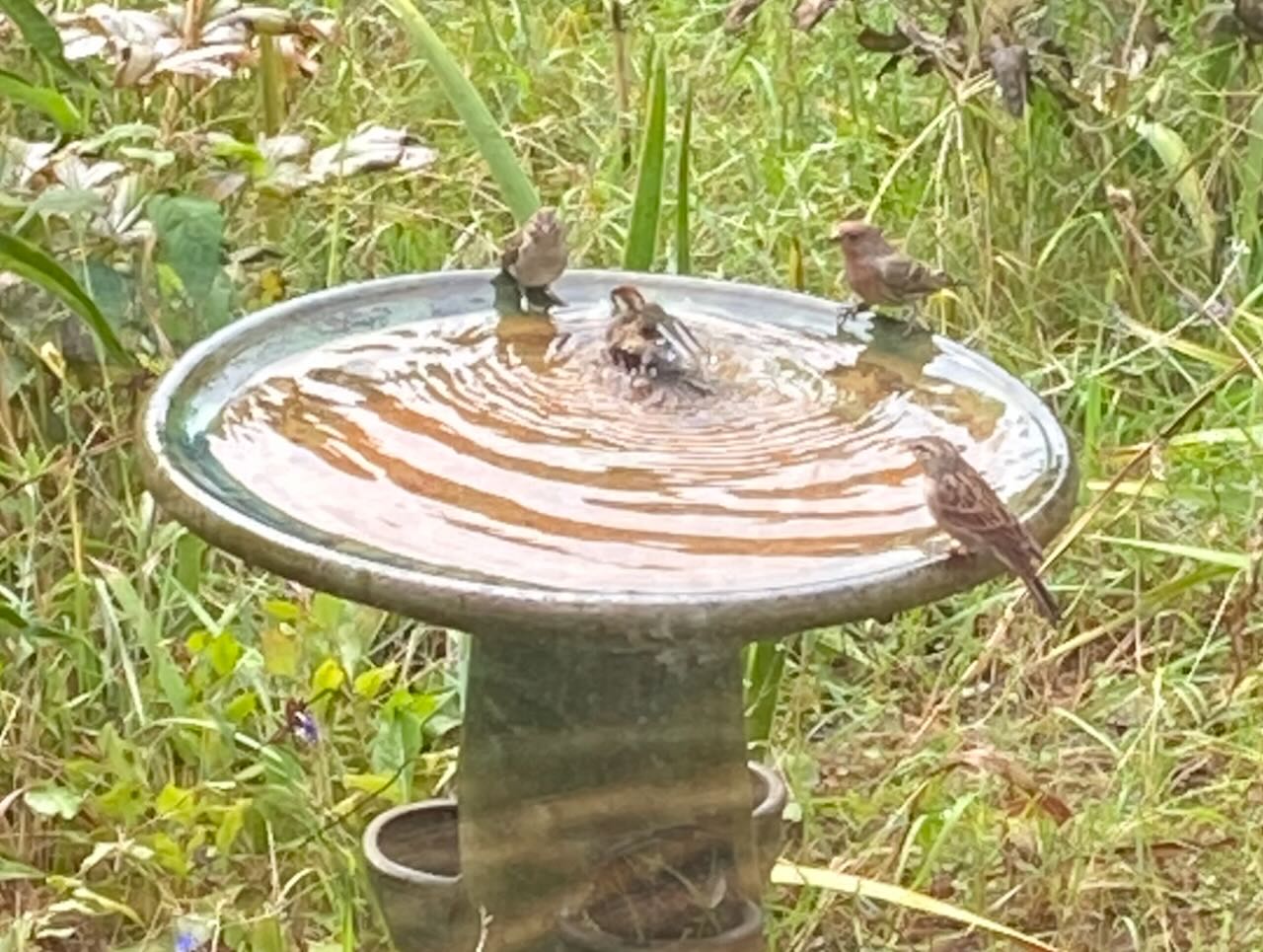
Michigan sits under both the Atlantic and the Mississippi Flyways, and in spring and fall many migrants pass through. So when, sitting by the window to write, I noticed movement at the birdbath, I thought exotic species might be involved. But no – it was the local community, sparrows and finches, diving, bathing, drinking, and generally disporting themselves at the spa. Whatever the birds were feeling, it looked joyful to me. Chickadees showed up and were admitted; blue jays showed up, and all the other birds left. Were the jays aggressive, or did they just take up too much space?
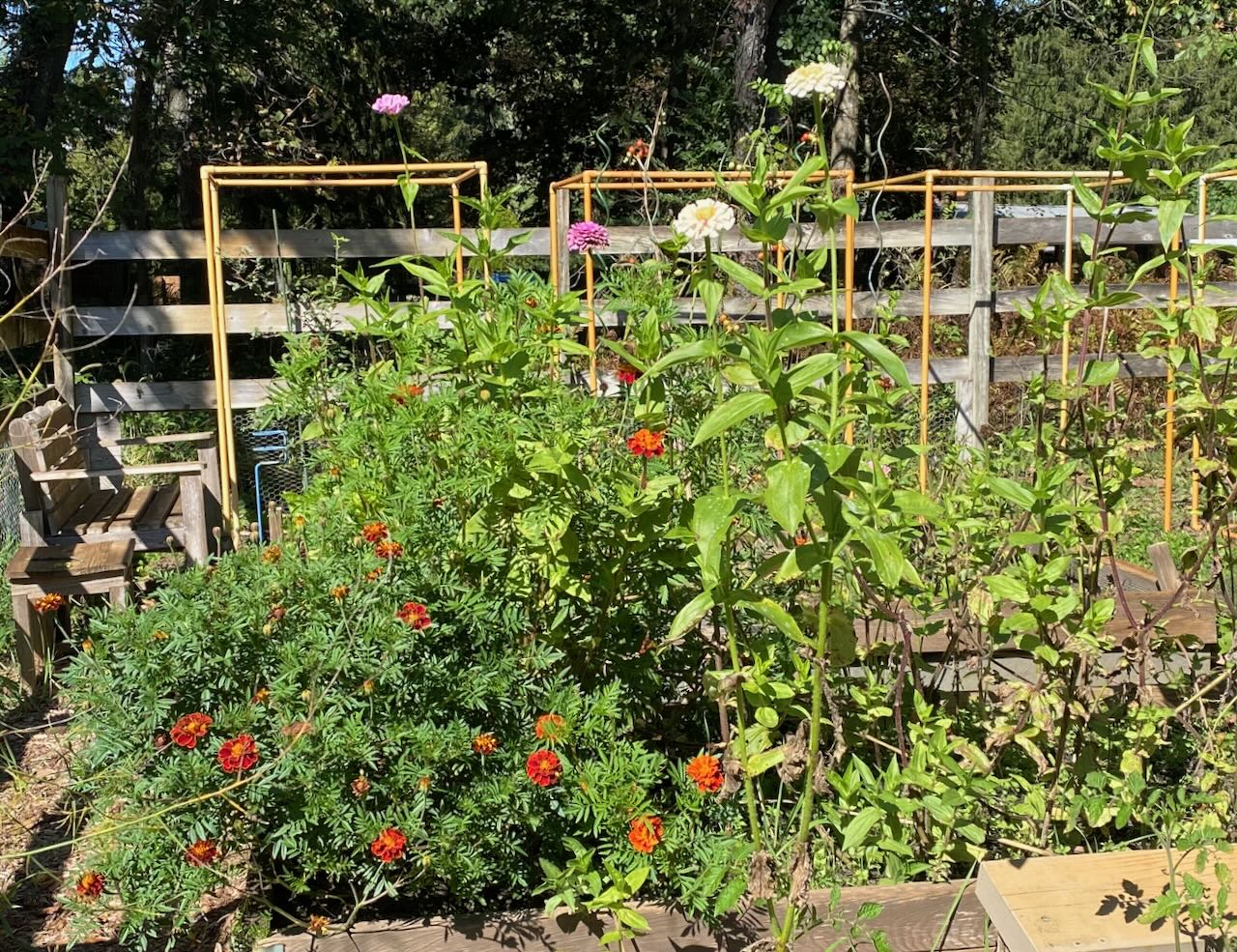
This year I tried a lot of companion plantings, with mixed results. The basil among the tomato plants did really well while the tomatoes did not, but local gardeners without basil also had poor tomato crops. The radishes among the squash might have helped, except a rabbit got into the garden and ate all the squash leaves. Having some extra Queen Sophia Marigold seeds, I tossed them into the edge of the zinnia and cosmos bed. Tall varieties of zinnias and cosmos tend to flop, then grow in zany angles as their leading edges stand back up. But well, look at this – the marigolds held the zinnias and cosmos up straight. Where there were no marigolds they keeled over.
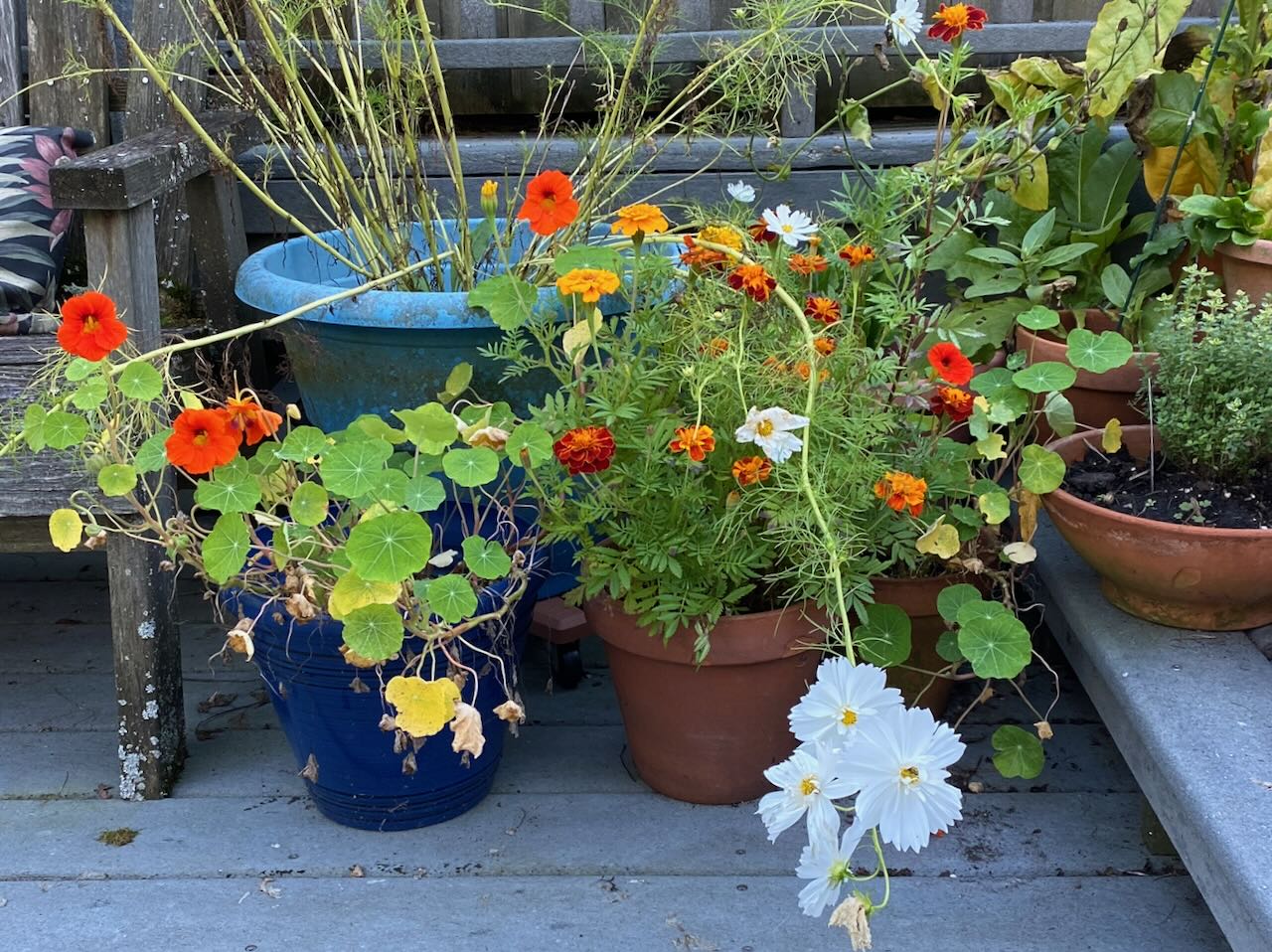
My usual approach to companion planting is to shove a lot of flowerpots together and hope they riot well in each other’s company. Many of my flowers have resigned from blooming, as shade from the house advances over them, but this part of the deck still gets some sun. The nasturtiums and marigolds soldier on while the cosmos droops gracefully over them. Maybe next year I’ll boost some marigolds up into the cosmos pot, for support.
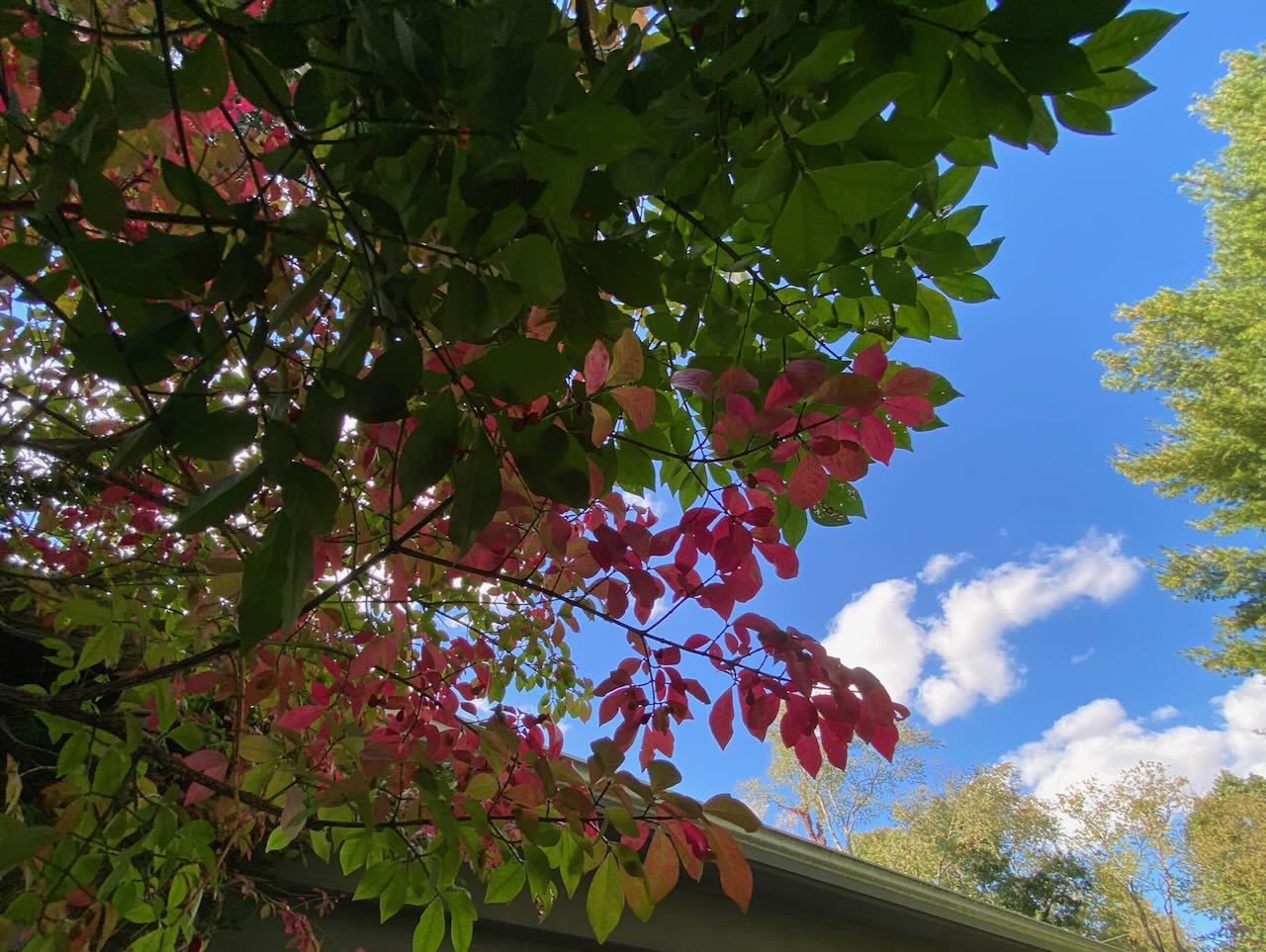
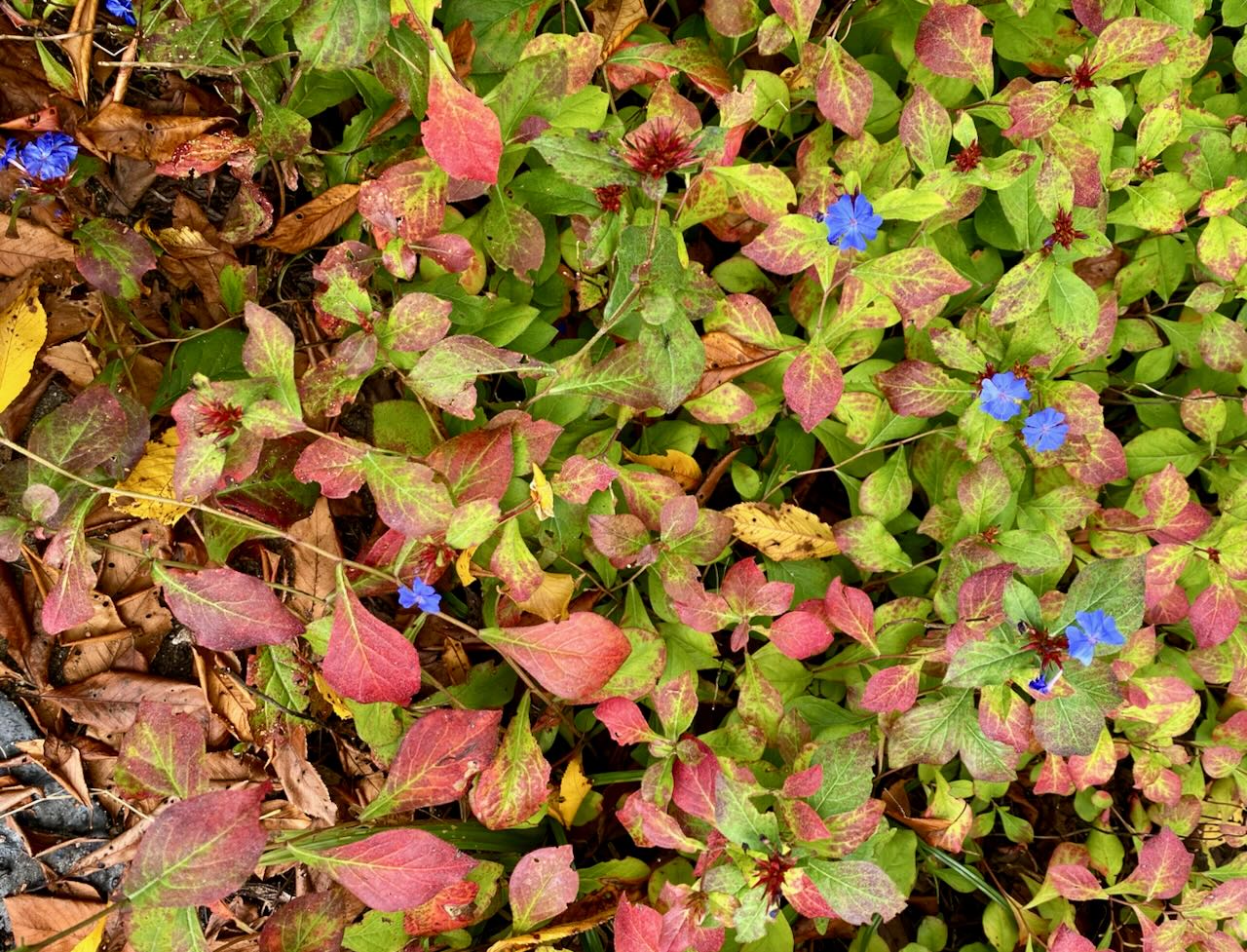
As color drains from the flowerpots, the burning bush begins lighting up. It’s said to be invasive, and it probably would be if the critters in my yard would leave it alone. It’s a favorite for topiary among the deer, and its berries are loved by the birds. Its proper name is euonymus, which means well-named. Which is a little weird, since “well named” sounds like they know we’ll really call it “burning bush,” a well-fitted name.
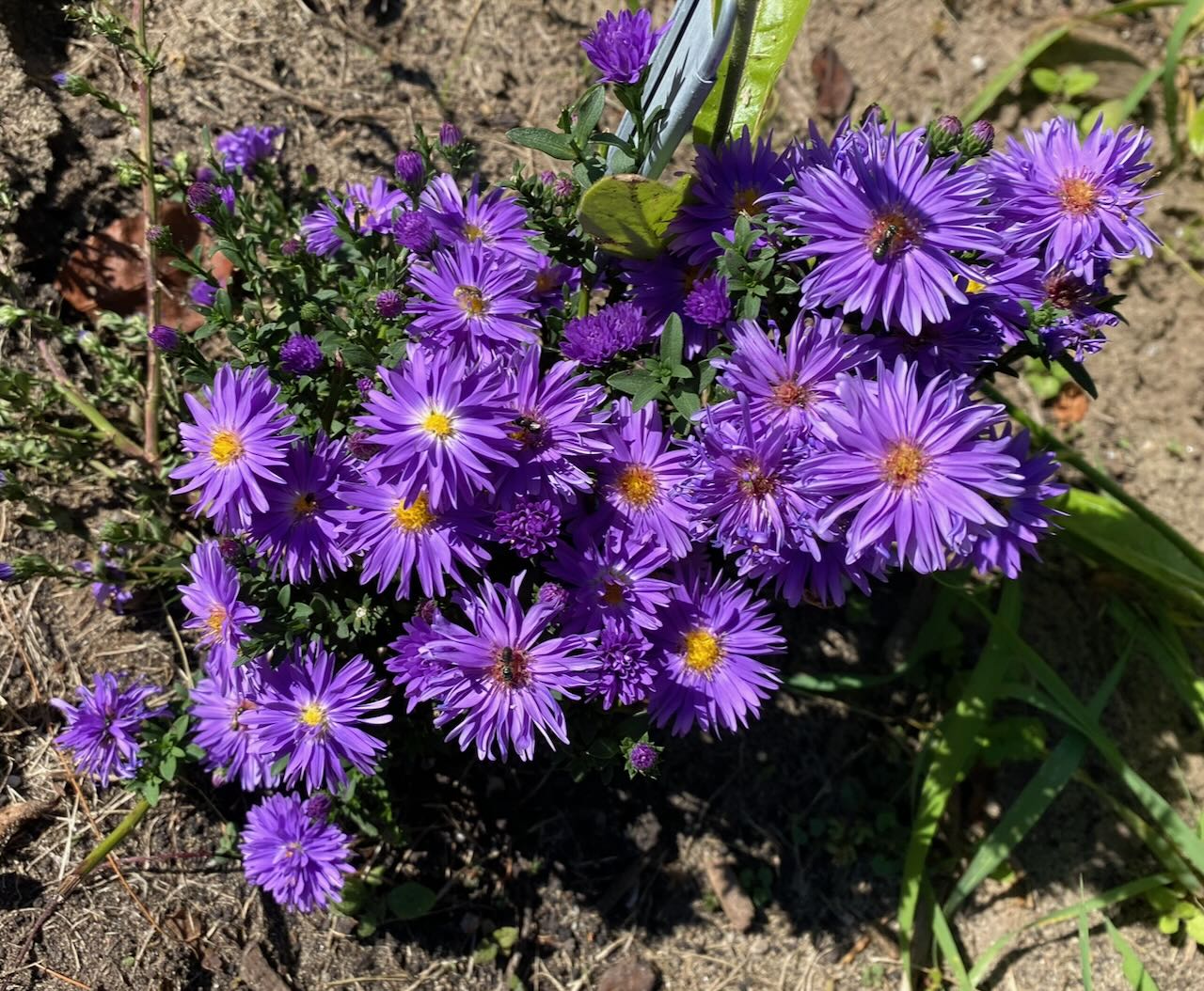
Red and gold are typical autumn colors, but I’m partial to the blues and purples of asters, which also come out in the shortening days. I’ve tried for years to get them to establish in my yard. They bloom so late in the season, I thought maybe I was accidentally weeding them out in their early growth. But here they are this year, popping up all over – everywhere I strewed seeds that never germinated or placed a plant that failed to thrive, at last here they are, suddenly flourishing. The grace of the garden. I’m going through the yard putting in plant markers at each clump, so I’ll recognize them as they come up again next year. I want them to become a regular part of my garden’s community, and it’s so easy to mistake the nature of things that are still developing.



 Still February, the trees still hung with snow, but the bulbs on my windowsill are talking spring. They’re cozy enough on the plant stand Doug made for them, at a sunny, south-facing window with a heat register on the floor below. You can see Zerlina down there on her cushion, showing her appreciation with a nap.
 I mostly keep the amaryllis going from year to year, setting them outdoors when the weather warms up, lifting and storing the bulbs indoors in the fall, and potting them up again after Christmas. But every year I lose one or two, so every year I buy one or two new ones.
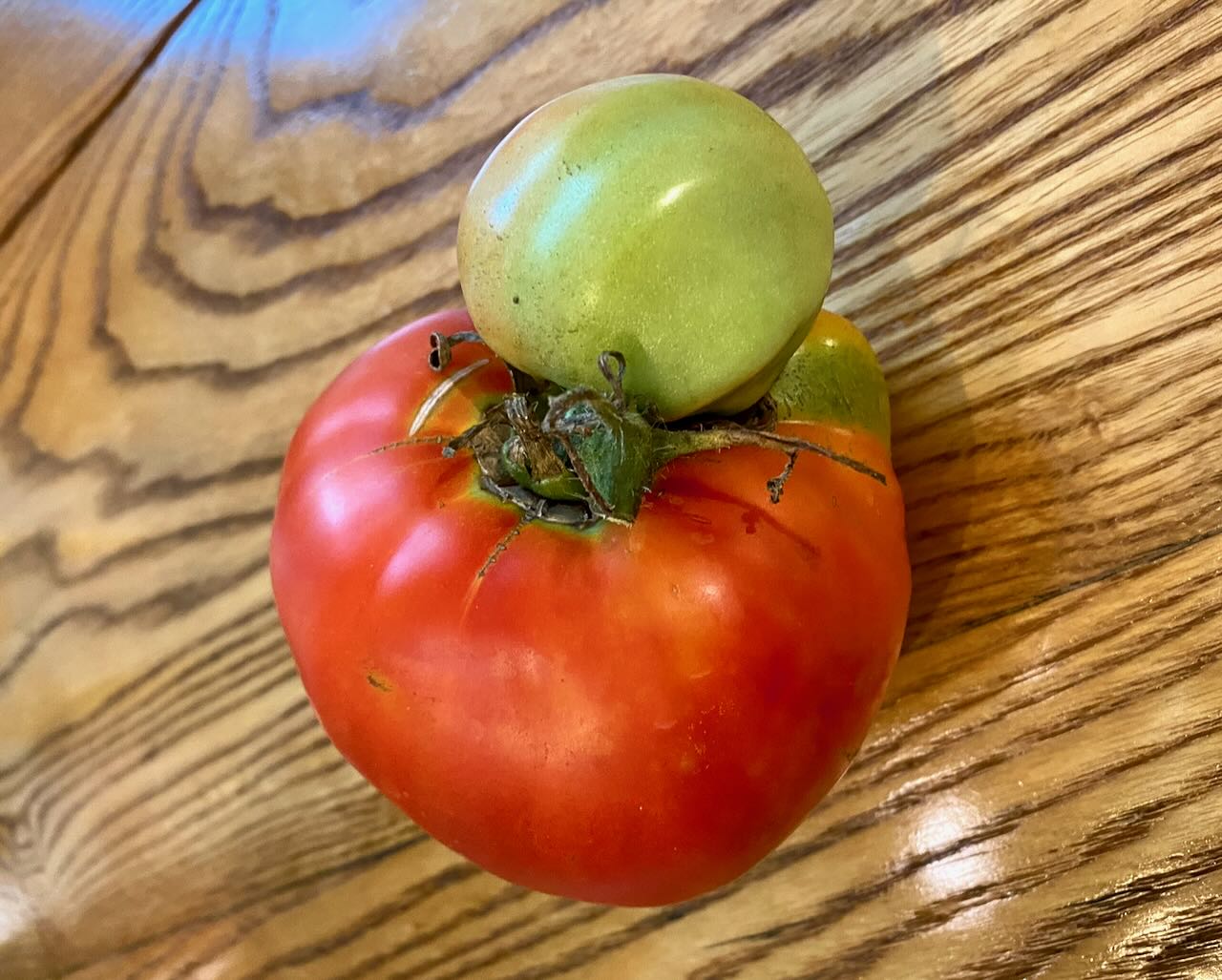
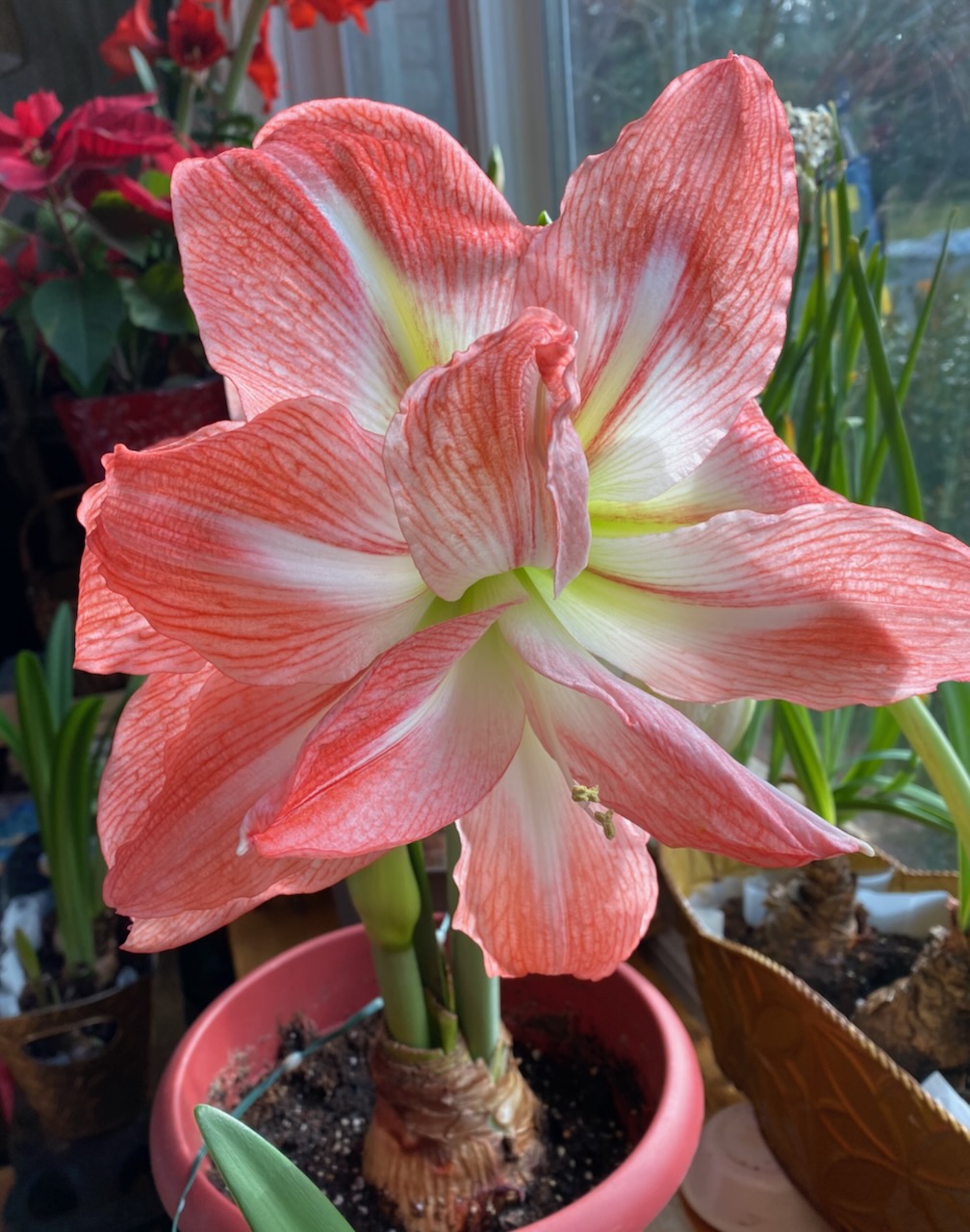 This is a close-up of my new bulb this year, an Amadeus. Is it named for Mozart, or is it Beloved of God? Amaryllis is named for a shepherdess Virgil wrote about, in Latin, but the name apparently comes from Greek amarysso, to sparkle. And it’s native to South Africa. I would love to know its indigenous name, but the internet has not been forthcoming. There’s an International Association for Plant Taxonomy that oversees official plant names, but any seed catalog will reveal that common names are a mix of history and marketing. The names of tomato varieties are always fun, and frequently informative. Early Girl and Longkeeper are useful to know, while Mortgage Lifter and Supersteak evoke the plump and sizeable. Tomato is pretty close to its indigenous Nahuatl name, Tomatl. Far preferable to solanum lycopersicum.
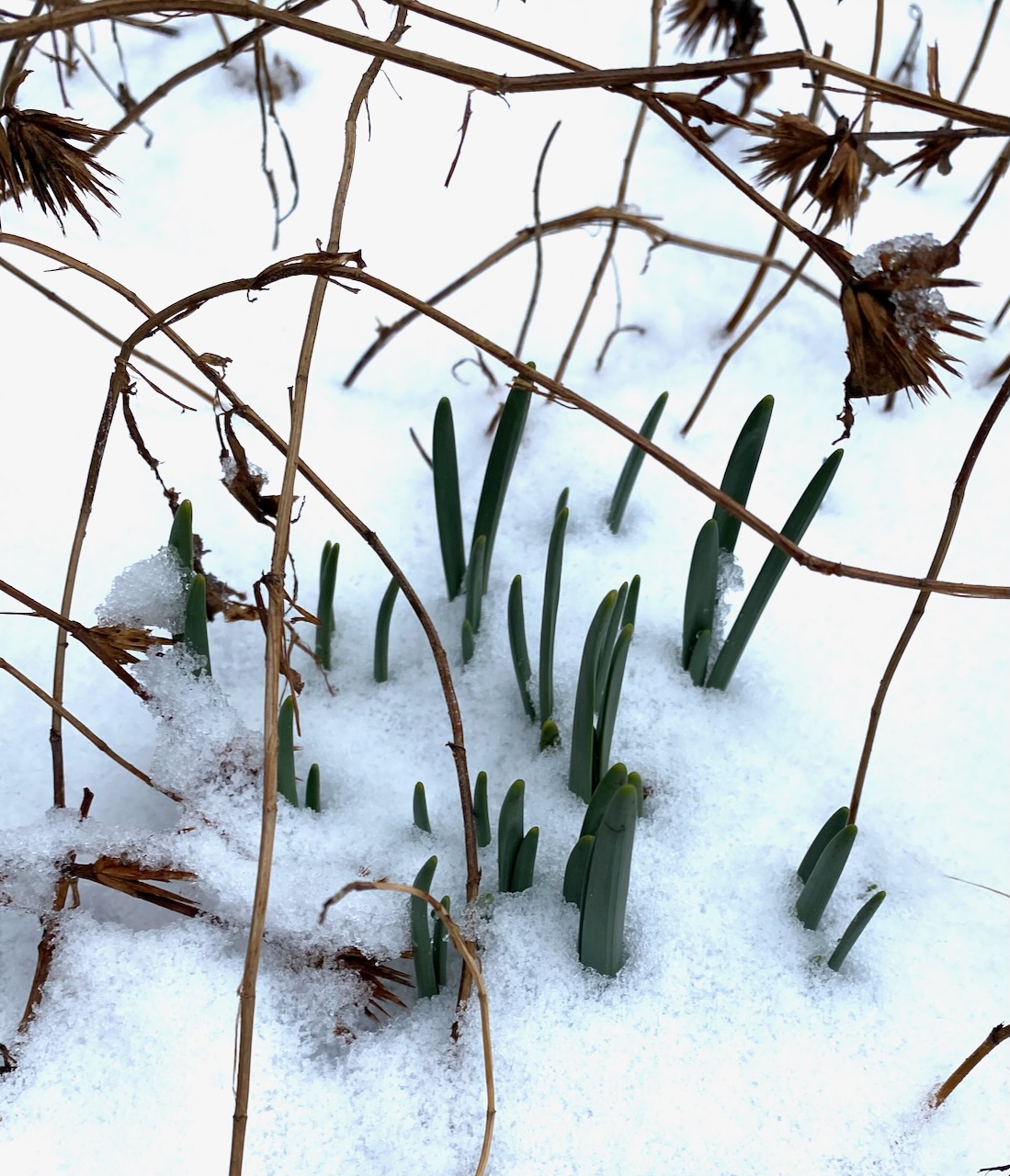 Meanwhile, the narcissus is starting to nose up through the snow. Narcissus should have a name joyfully recognizing how the flower announces spring, instead of being named for the fellow who fell in love with his own reflection. Is some kind of warning implied here, like not getting carried away by spring? Maybe Greeks, with their Mediterranean climate, didn’t understand the impact of spring on the rest of us. Our common name, daffodil, is a corruption of Asphodel, also Greek but a totally unrelated flower. It was good to corrupt it, since asphodel is associated with the underworld, but daffodil sounds like happy fun.
 Hellebore is also a Greek name, possibly having to do with it being toxic, but it’s starting to bloom here in my yard, pushing the snow out of its way, right on time for its common name, Lenten Rose. It’s not a rose at all, but when you finally see a flower, even one that isn’t sweet, where no flower has dared go for months, let us call it a rose.
