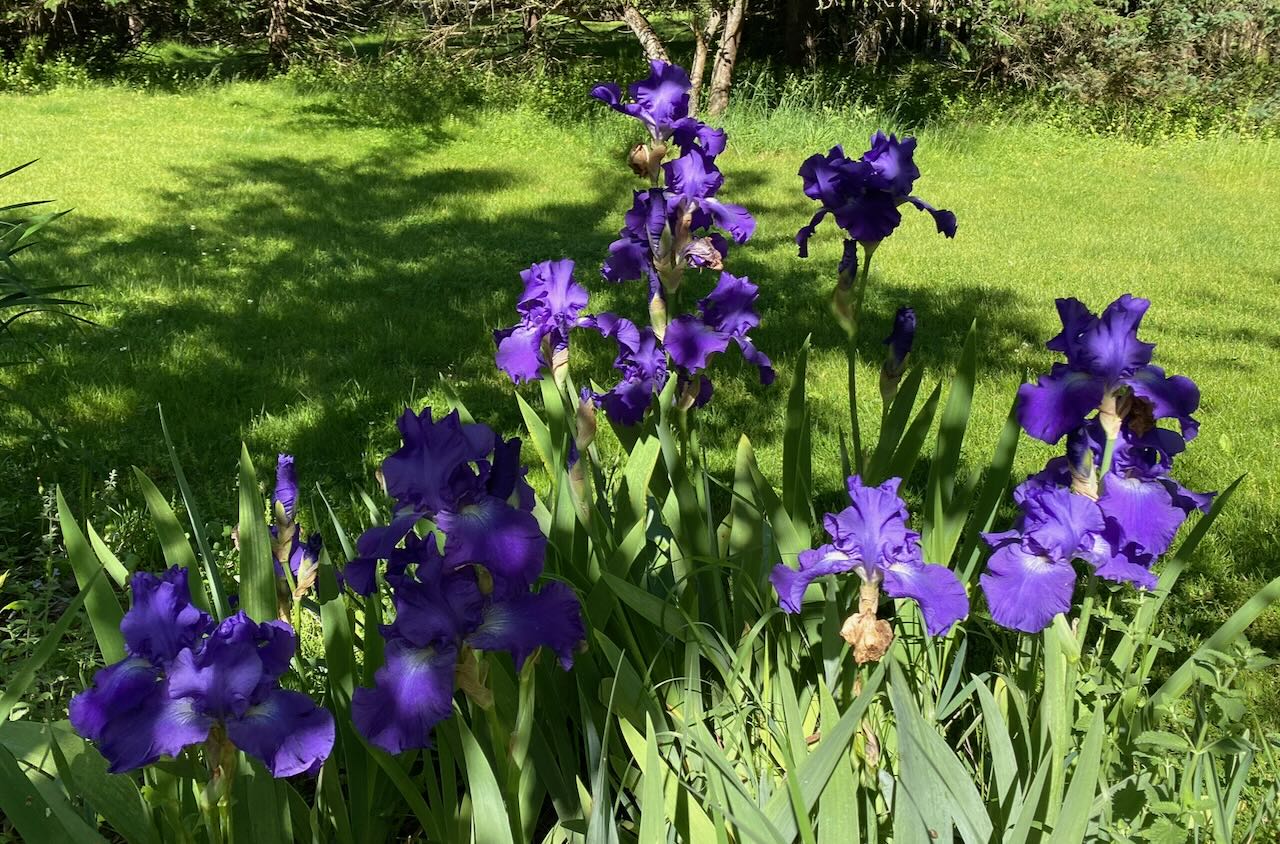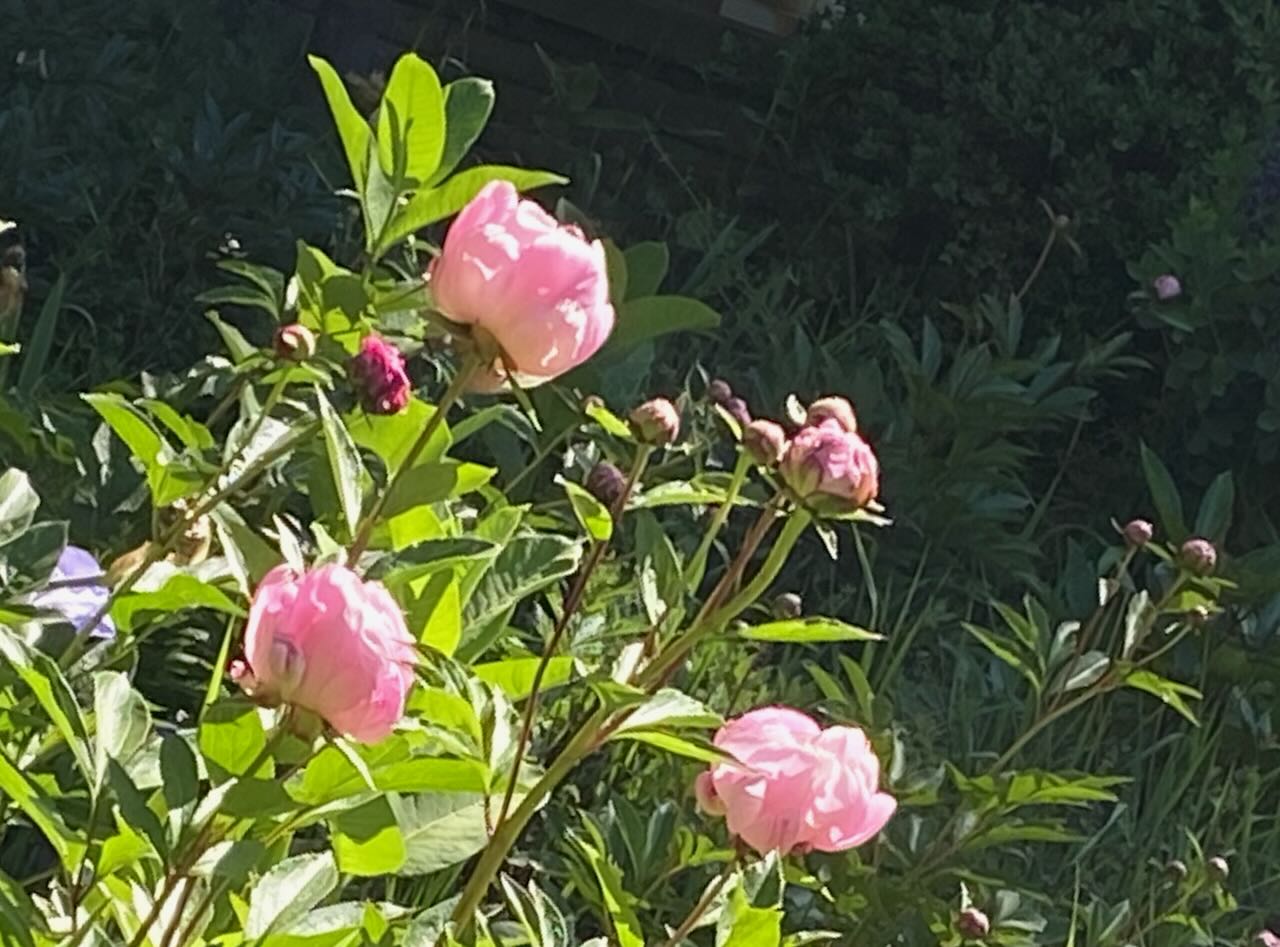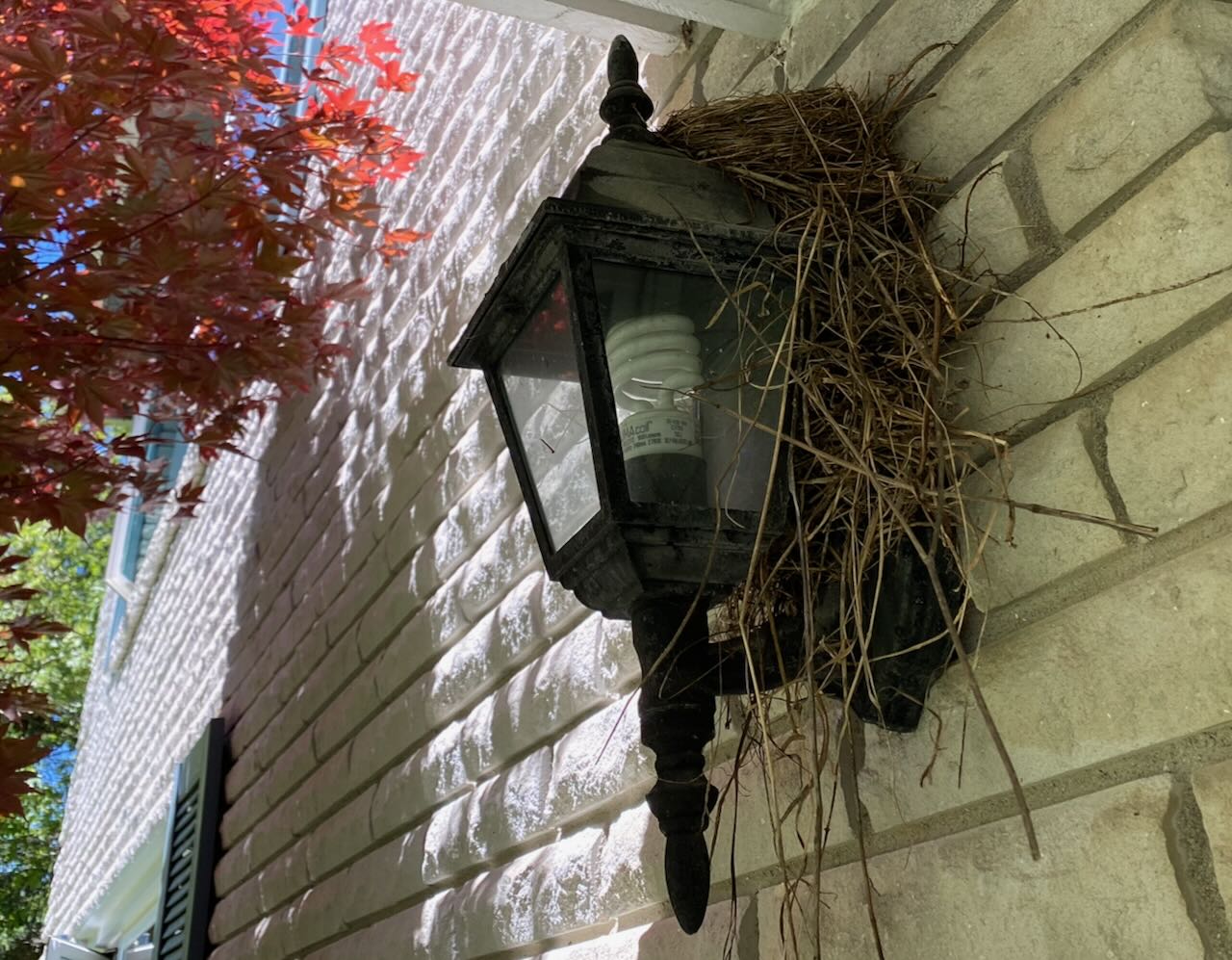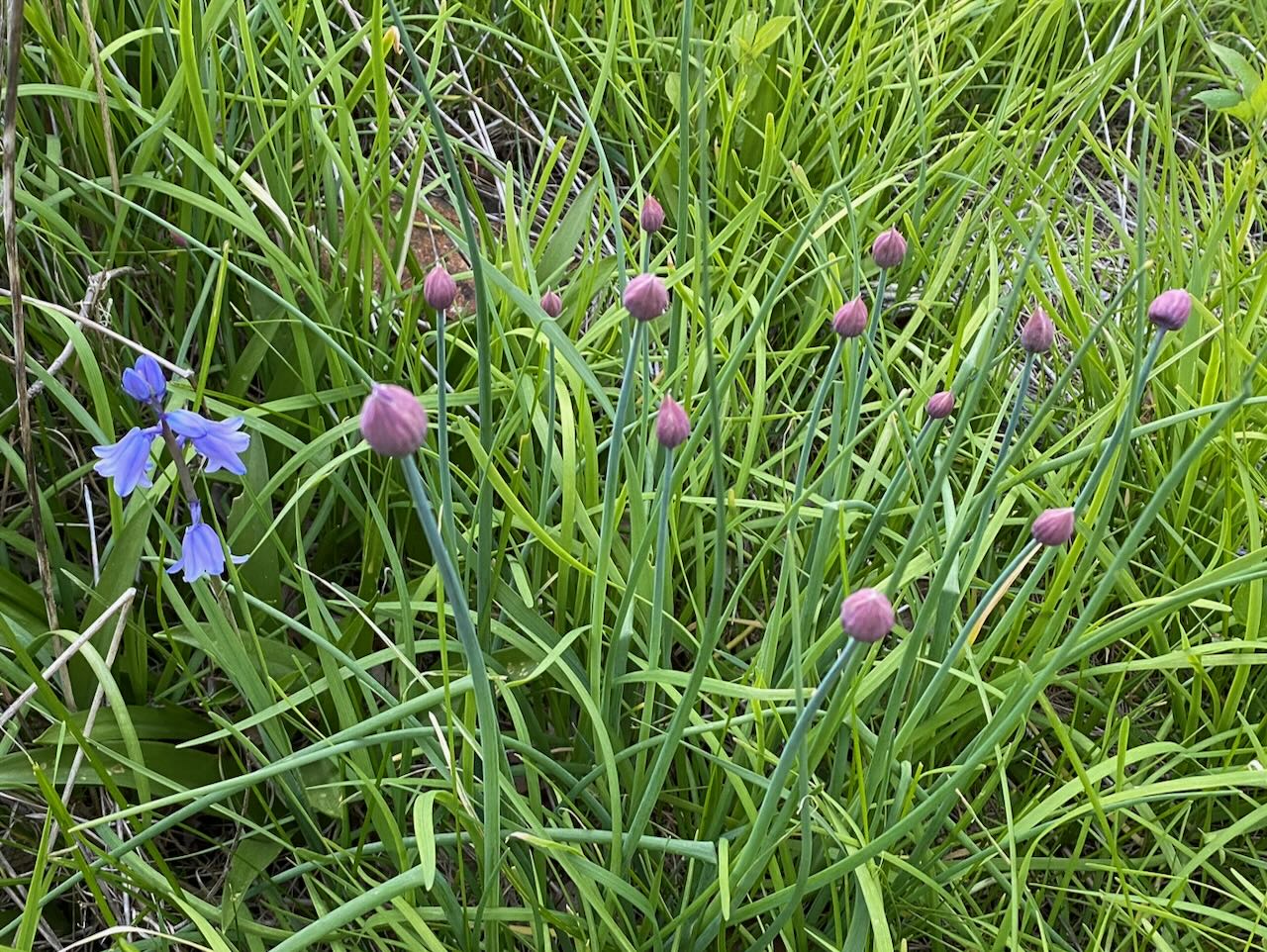
The weather’s been up, down, and sideways this spring, uncertain enough to keep my seedlings stuck in the house, looking out their sunny window as erratic frost rolls and unrolls over the lawn. But out in the yard, the perennials are not confused. The reliable chives wave their purple goodbyes to the daffodils, while the last of the wild hyacinths refuses to cede ground. Nice try, but nothing can stop the chives.
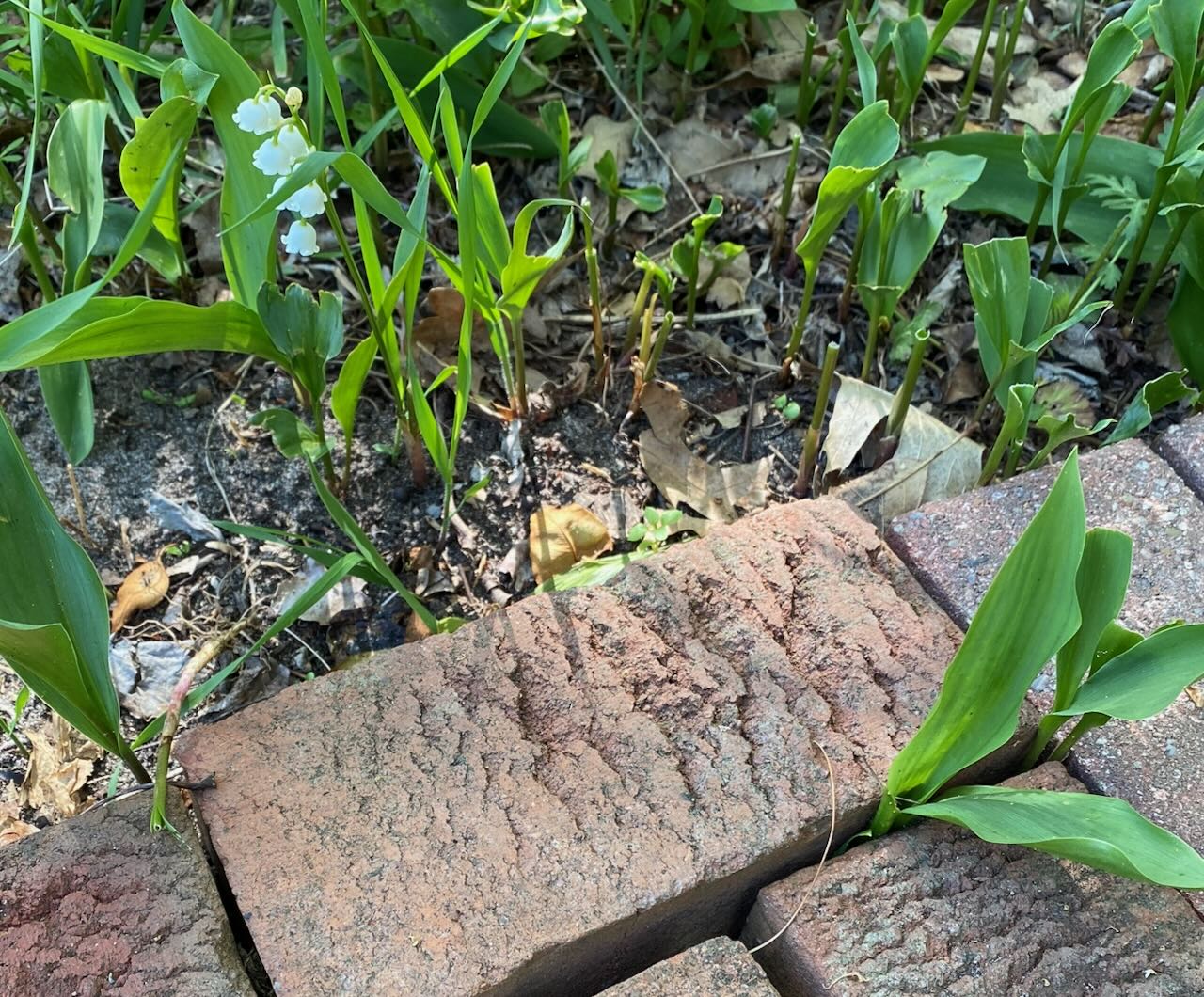
Across the lawn from the herb garden, at the edge of the woods, I’ve made a tiny patio of a few rows of bricks. It’s just big enough for a single chair, me, and a cup of tea, maybe a book. The lilies of the valley would like me to know, though they look dainty and possess the scent of sweet innocence, that they are a power to be reckoned with, and should have been consulted. Their outrider will move that brick if I don’t stop him.
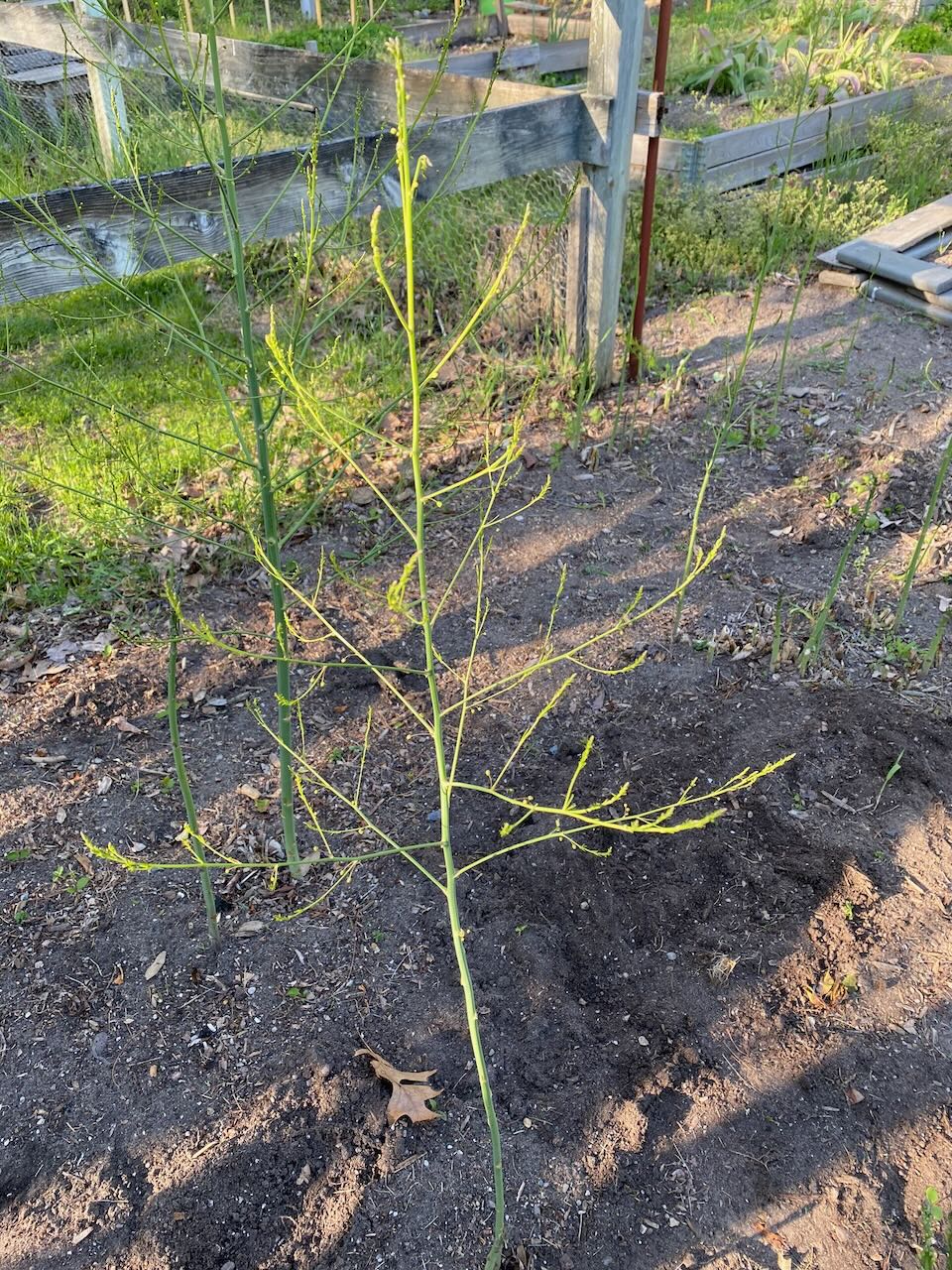
The asparagus, another perennial, has been poking its fingers up through leaf mold for weeks now, and the time has come for me to stop cutting and carting them off for dinner, and let them feed themselves instead. They’re at the stage now where they look like, well, sort of skanky Christmas trees – the tightly-closed tips expanded into branches, but the ferny leaves not yet fluffing them out.
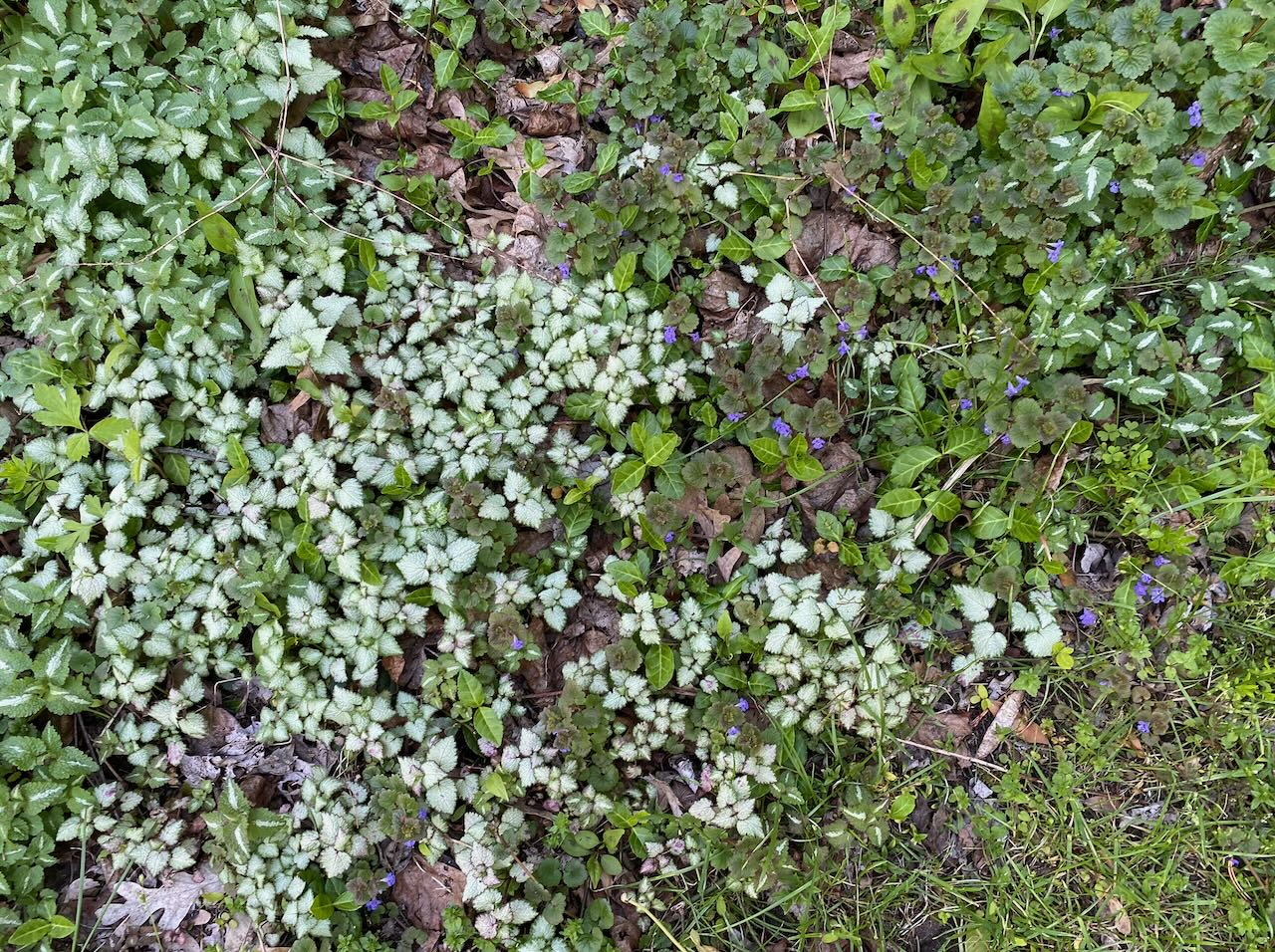
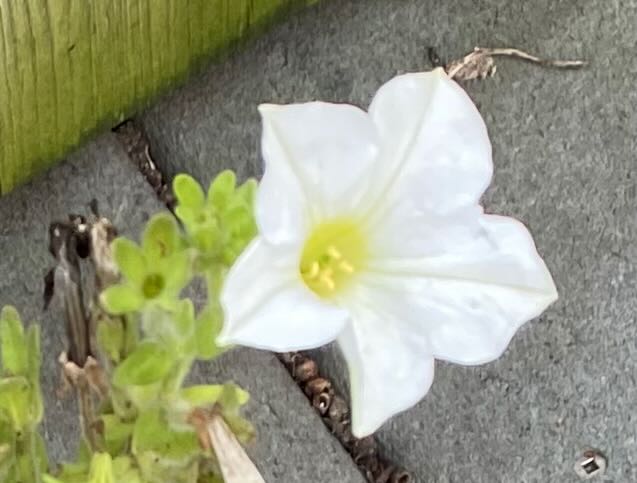
Sturdy, reliable, undemanding, how nice that these trusty plants come back every year with no effort on my part. My lamium, for example – such an excellent groundcover. But what’s that little purple flower sneaking into the picture from the upper right hand corner? Creeping Charlie! A weed! Alas, a perennial too, and just as determined to come back as all the others. The traits so wonderful in a plant you want, so aggravating in a plant you don’t. It’s hard to see their habits as the same, but they are.
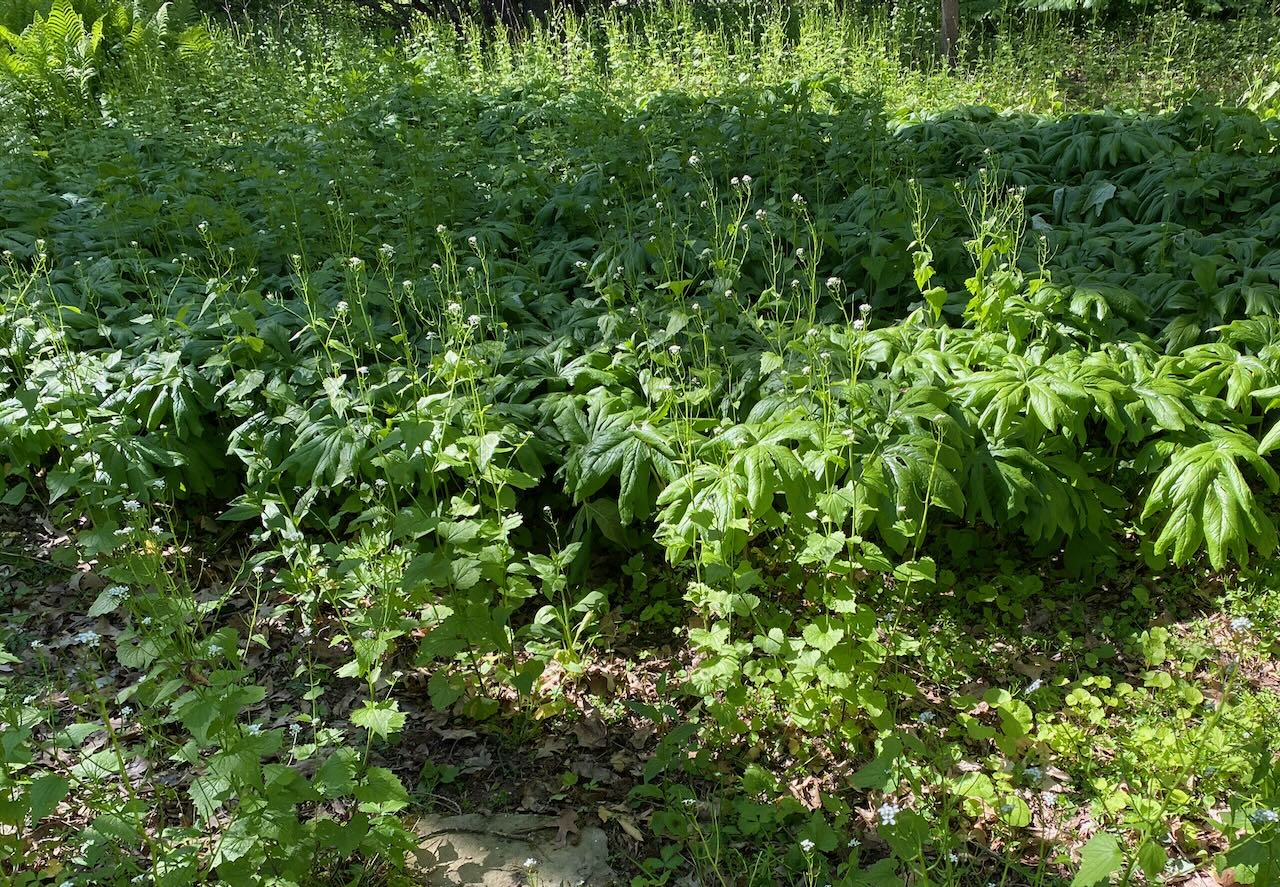
Take garlic mustard, for instance. Early colonists brought it with them as a desirable salad green, but few here today consider it palatable. Including me – I’ve tried it. It’s not perennial, but so profligate of seed it might as well be. When I first moved to Michigan and saw stands of garlic mustard blooming in spring, I thought it was lovely. Then I discovered its aspirations to world dominance. Its specialty is swamping the opposition in a bid to turn diversity into monoculture, as though some mega-chemical company were in charge. If only my basil would do that.


After weeks of summer and fall bumping into each other in a jumble, fall seems to be emerging triumphant at last. The stags are about done destroying small trees by using them to rub the velvet off their antlers. I’m still waiting for one of them to graciously leave his shed antlers in exchange – seems like the least he could do. Maybe this will be the year.
Between the light frosts and the subsiding hours of sunlight most of my flowers and tomatoes are gone, but out in front, facing south, one rudbeckia plant persists. It’s not the only rudbeckia out there, but it’s the only one still blooming. A mystery of nature.
Over in the shady section, a single foxglove has re-bloomed. It was pink the first time, but has paled in the shortened hours of daylight. The foxgloves are spaced widely, so in their case it’s understandable that individuals may have different amounts of light, or shelter, or competition from other plants. Less mysterious.
Out in the fenced garden, once the tomatoes were gone, I planted lettuces in the cold frame. They’re flourishing. This is very satisfying to me as a gardener, but the flaw in the plan is that I really don’t eat much salad in cold weather.
That was the trouble with radishes too, until I learned that they can be cooked. How did I get to be as old as I am, and never knew this? They’re so cute out in the garden, with their little round, red shoulders peeking out of the dirt, and they demand so little in the way of warmth and sunlight, I can’t resist planting them when random space becomes available. I’m still working out the best recipes for them.
Meanwhile, the main path into my woods needed help. I spread several layers of the Sunday New York Times over the old path, poured a bucket of water over that so it wouldn’t blow around as I worked, and topped it with mulch. That will be one less thing to do come spring, when things to do are plentiful. As much as I love gardening, there comes a time when I really need a break. If spring is the reward for winter and harvest is the reward for spring, winter is the reward for three seasons of hard work. Just curl up with a good book and eat all those quarts of tomato sauce.
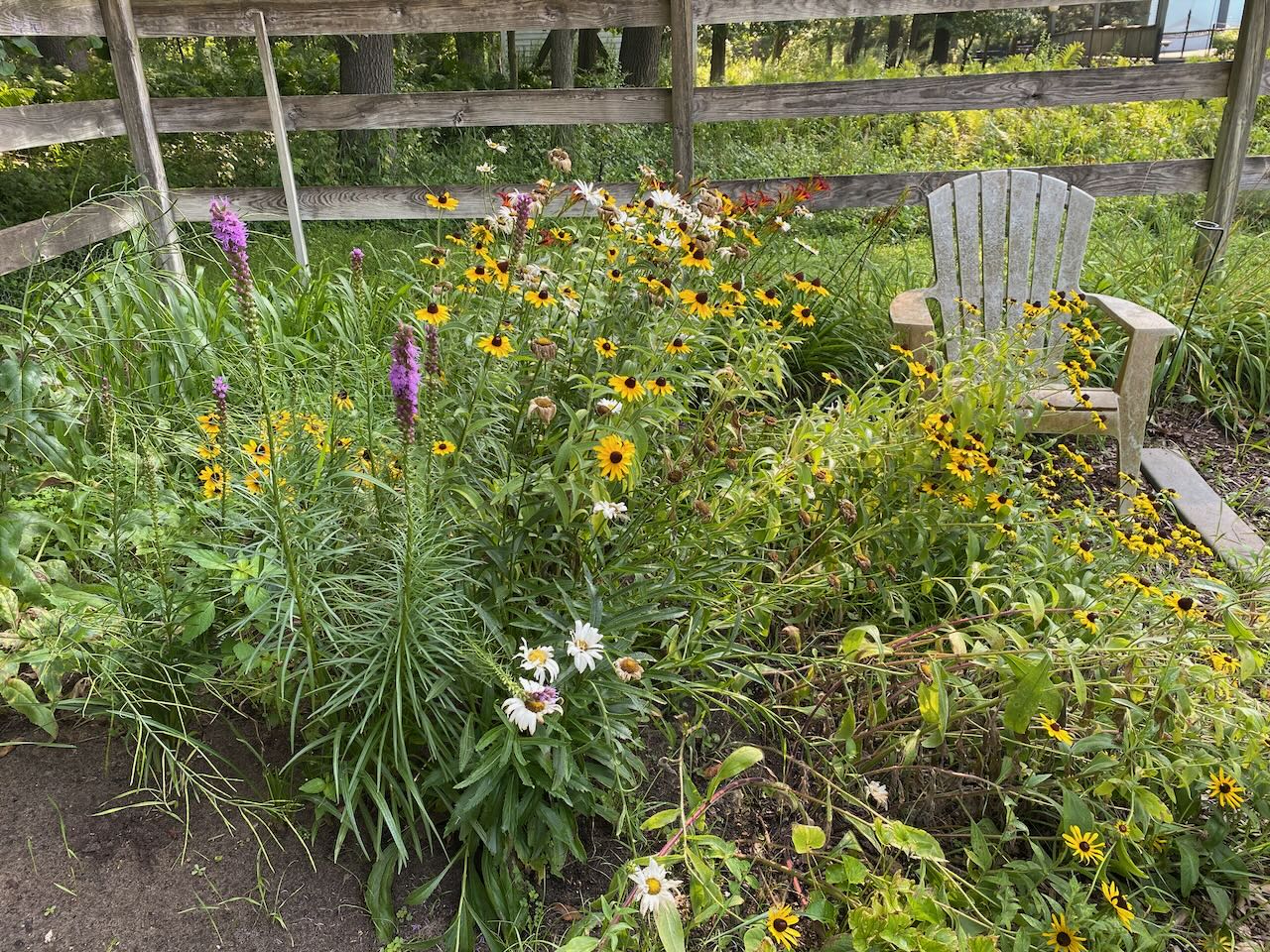
My friend Cindy is always a little sad when the rudbeckia bloom because in Michigan, she says, it means summer is almost over. But Labor Day is no longer the benchmark it once was, not even for schoolchildren, who are increasingly likely to go back to class in August. No one would say summer is over in August. And this year frost is not predicted for southeast Michigan until November, so I think she has plenty of summer left.
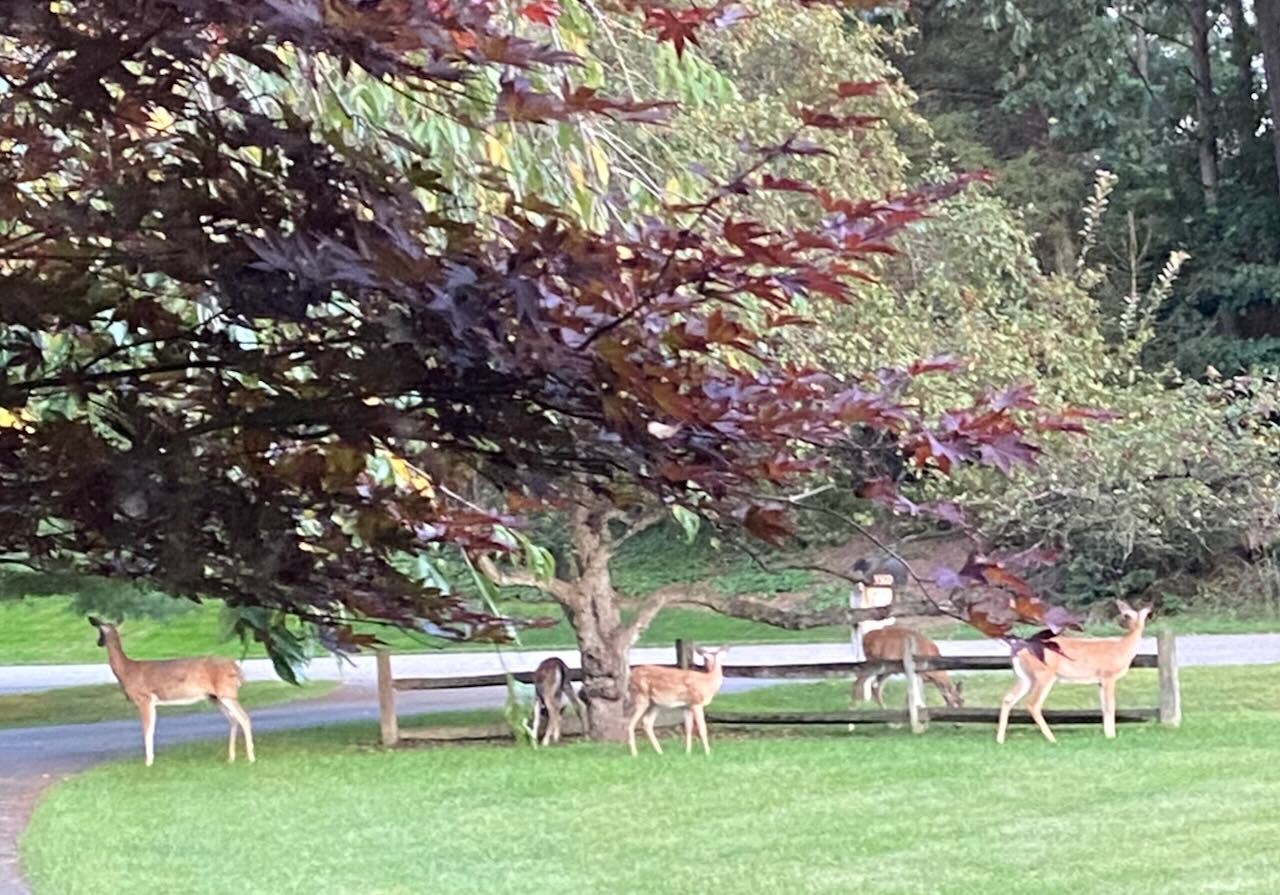
So do the fawns. I’m told they’re mostly born in June, but we don’t see them foraging in our yard until mid-July, and more of them in August. They will lose those spotted markings as they grow their winter coats, usually starting in September. It will be interesting to see when that happens this year.
Bumper Crop