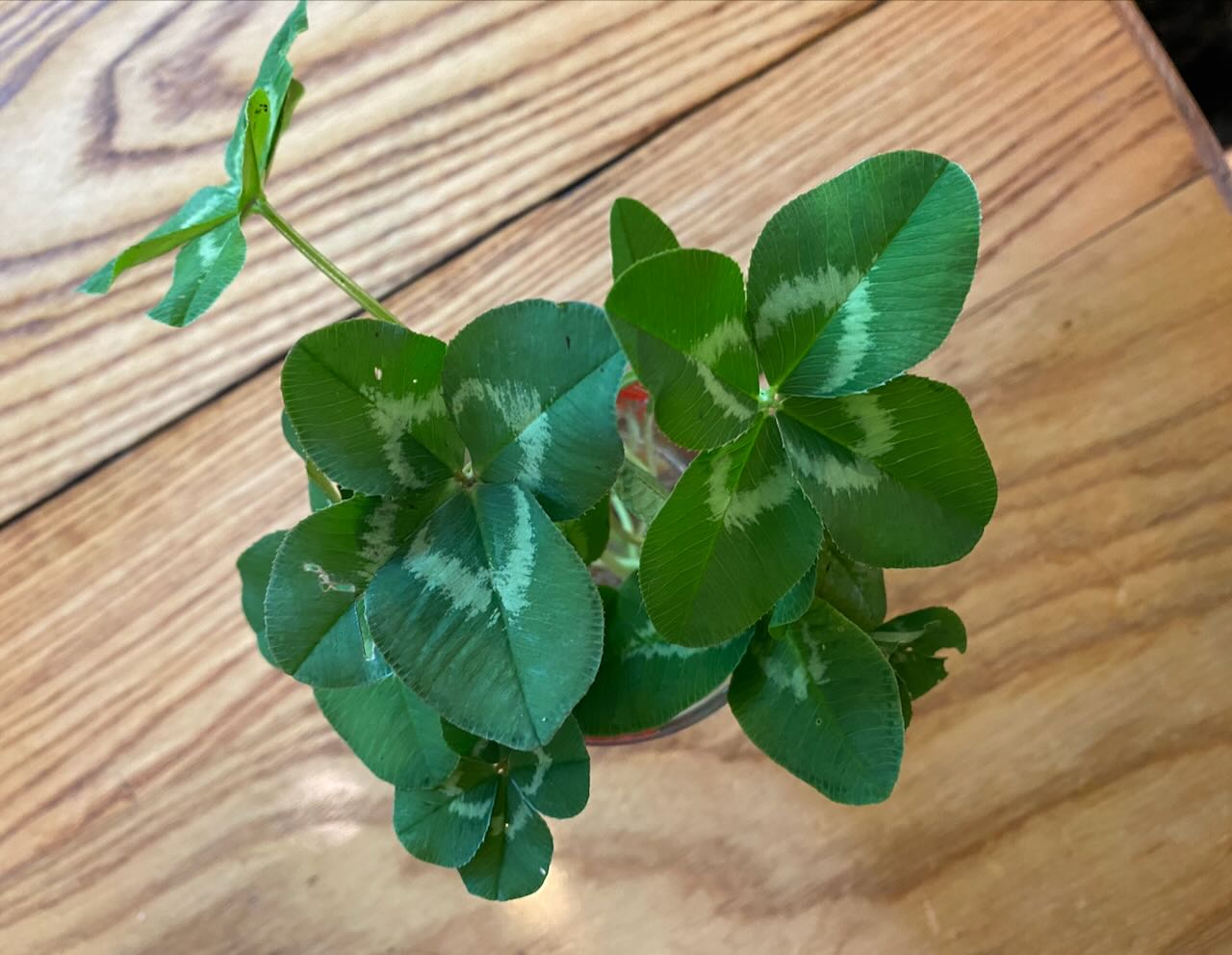
It’s been an especially lovely week to be out in the yard and garden. We’ve had a run of gorgeous weather, so that prepping the raised beds for their tomato plants and flower seeds was less like a chore and more like sunbathing. I cleared off the weeds, sheared the clover, spread compost, and glanced down idly, wondering if there would be four-leaf clovers this year. Yes! There they were, laughing up at me – half a dozen good luck omens, casually waiting to be noticed and carried into the house. Why should flowers have all the fun?
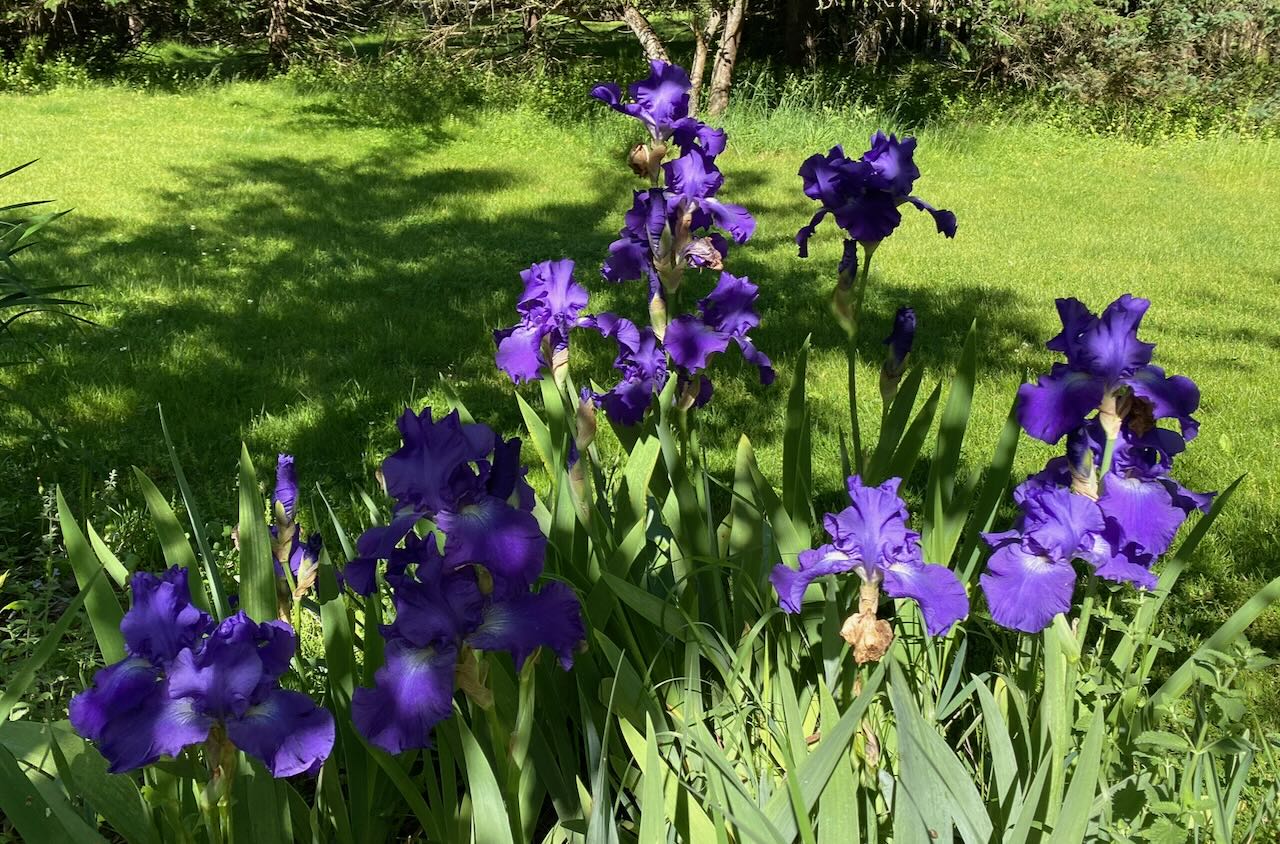
In the front yard all the perennials are showing up in order. The crabapple finishes flowering, the pear tree finishes flowering, and the iris knows it’s next. How do they do that? The bearded iris toward the back, the Siberian iris in front, and the pear tree off to the left make a joint project of shadows together on the newly bright lawn.
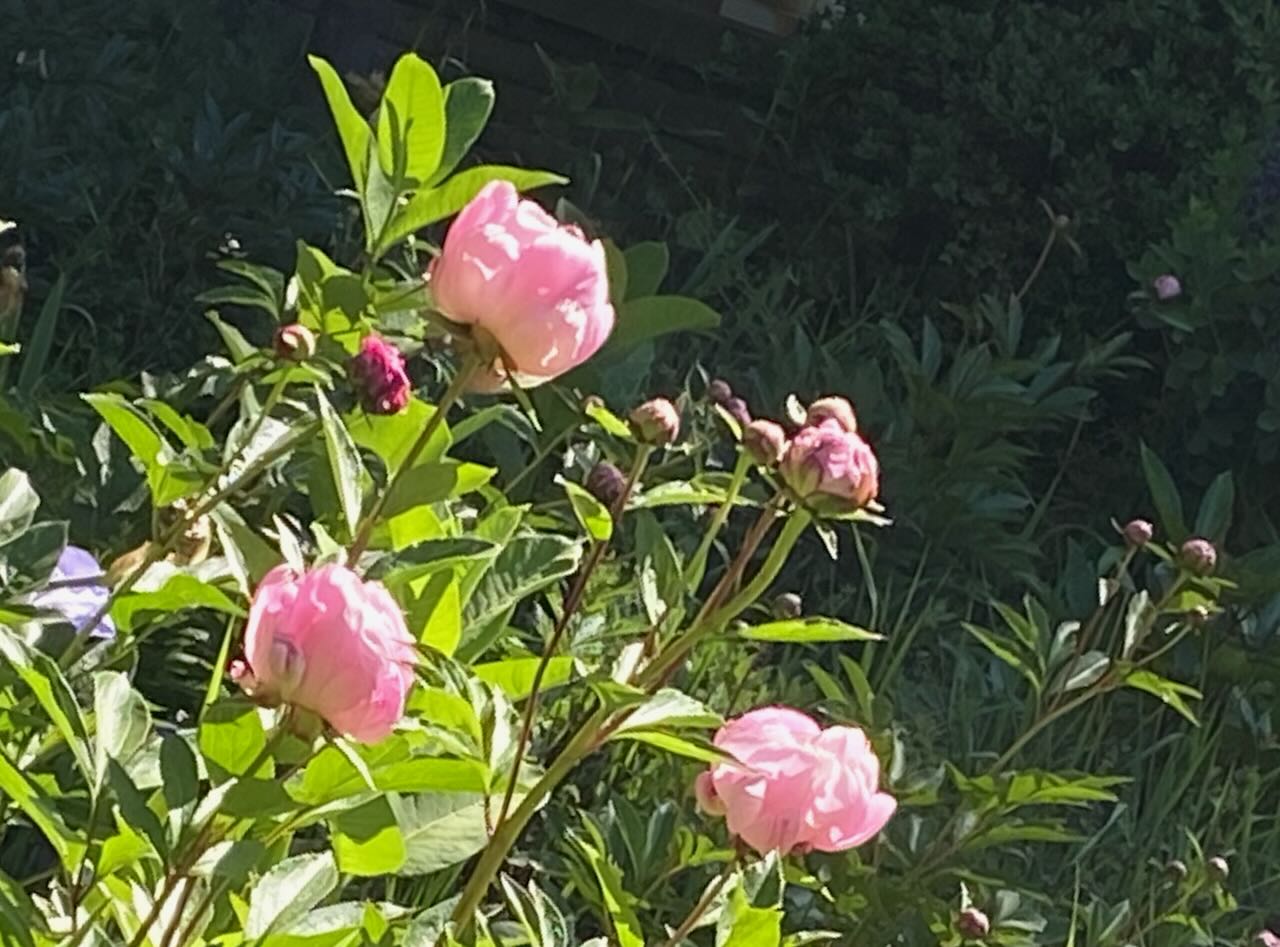
And once the iris are underway, the peonies chime in. It’s turning out to be an excellent year for peonies – many blooms and many buds on every bush. This is a close-up of the peonies, so you can’t tell they’re interspersed with more irises. They seem to enjoy each other’s company. That inspired me to look into companion planting – the idea that certain plants do better together than separately. The classic example of this is the Three Sisters of native American farming practice: beans, squash, and corn. Beans fix nitrogen in the soil for the squash and corn, corn provides a support for the beans to climb, and squash shades the ground with its broad leaves, blocking out weeds. Since I don’t have room in my garden for corn and I don’t like beans, I’m looking for other combos instead.
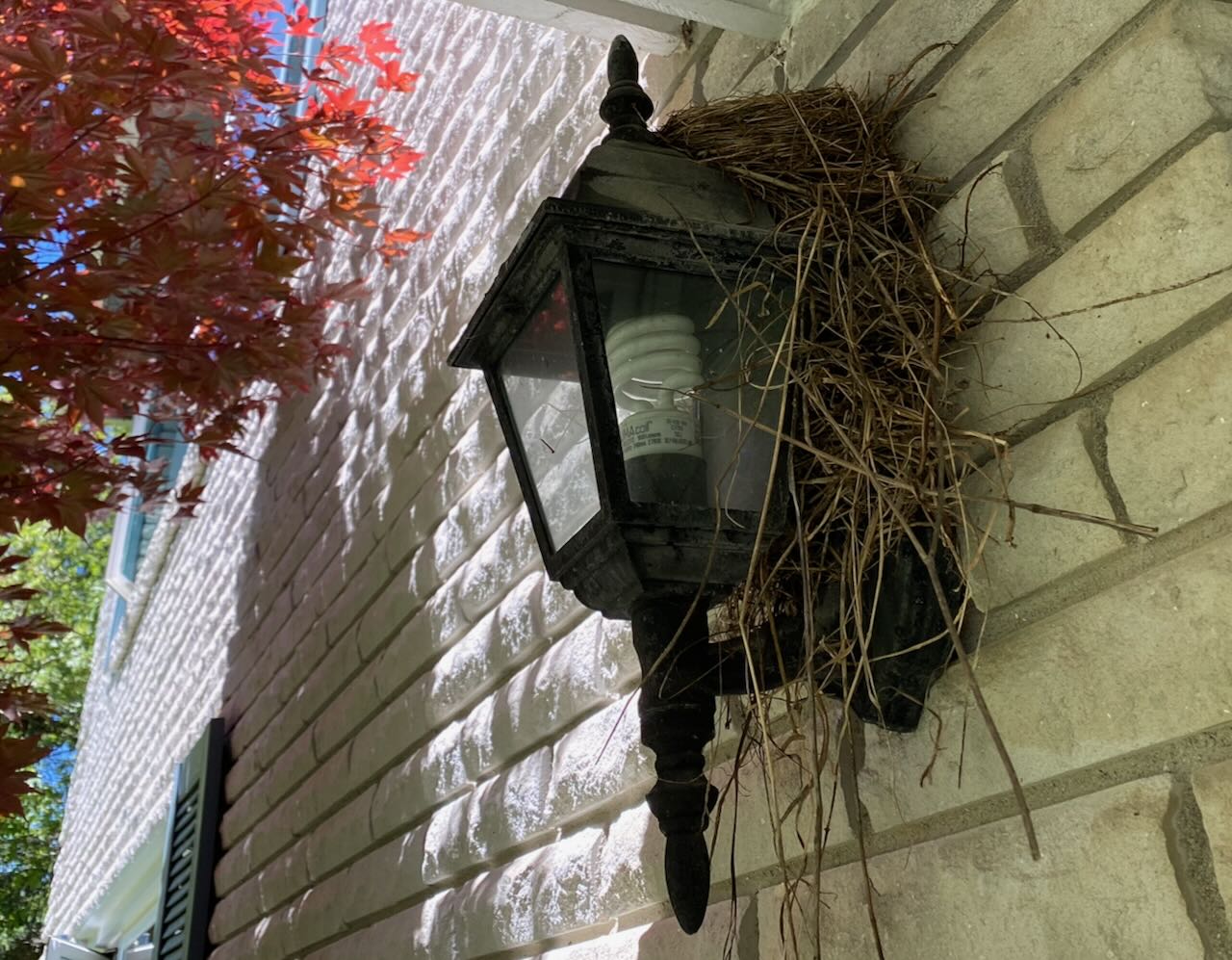
Meanwhile I found a different companion right at my front door. The shaggy part appeared first and I had my doubts, but once the gap between lantern and wall was filled in, a neat little nest appeared on top. It’s very touching to see that a bird feels safe from predators when close to people. We may be disturbing their flyways and disrupting their climate, but indeed the foxes, owls, and hawks flee when they see us coming. Birds have figured this out. You’d expect a creature that started out as a dinosaur to be adaptable like that.


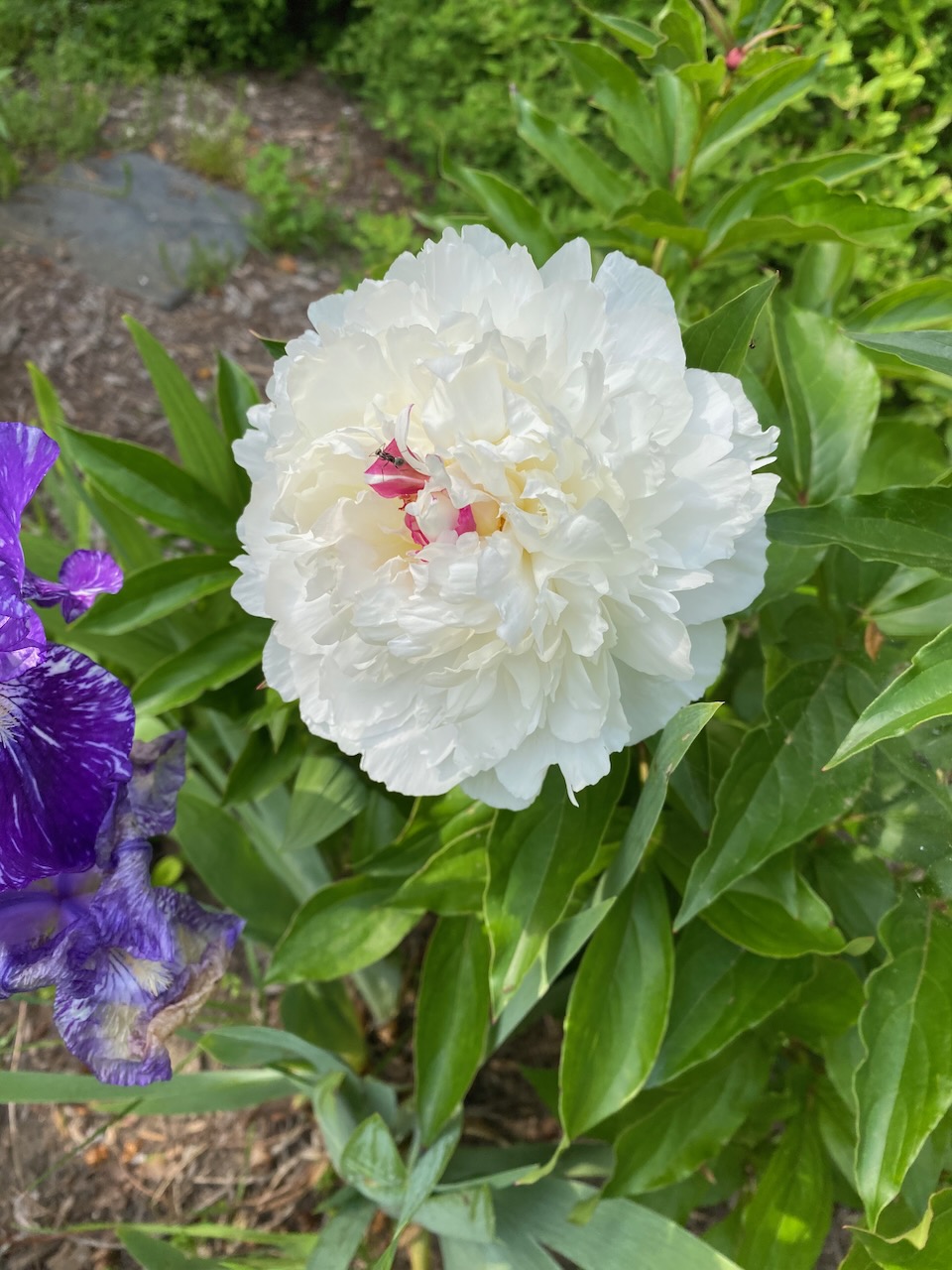 The forget-me-nots have gone to seed and the late asparagus spears have grown tall and branched into ferns, but the Michigan spring continues to overwhelm me with beauty and drama. This peony, though it’s originally an heirloom bred 150 years ago in France, is nevertheless called Festiva Maxima, which is Latin for Big Party. It produces lots of flowers in conditions where other peonies pout. Definitely a party girl, not a wallflower.
 In the even showier department, this one’s called Bowl of Beauty. The outer petals are more curved than they look in my photo, so yes, quite bowl-like.
 For drama, how about this sky? I was assured there was no threat of tornado, but it sure looked like it had something up its sleeve. Not even rain, as it turned out. Just drama.
 No rain so no rainbow so no pot of gold, but a plot of good fortune. They don’t always leap out at me, but I have two clumps of clover in my garden that regularly produced four-leaf clovers last year. They’ve come through again. One four-leafer lurks deep in the center of this photo.
 Then there’s mystery – this little path that looks like it goes somewhere magical, or at least interesting. Nope. It goes to my hose bib. Appearances can be deceiving; in fact, in a garden, we often aim for that. In Japanese gardening tradition this is called Borrowed Landscape. My lawn fades into my neighbor’s lawn before you get to that fence.
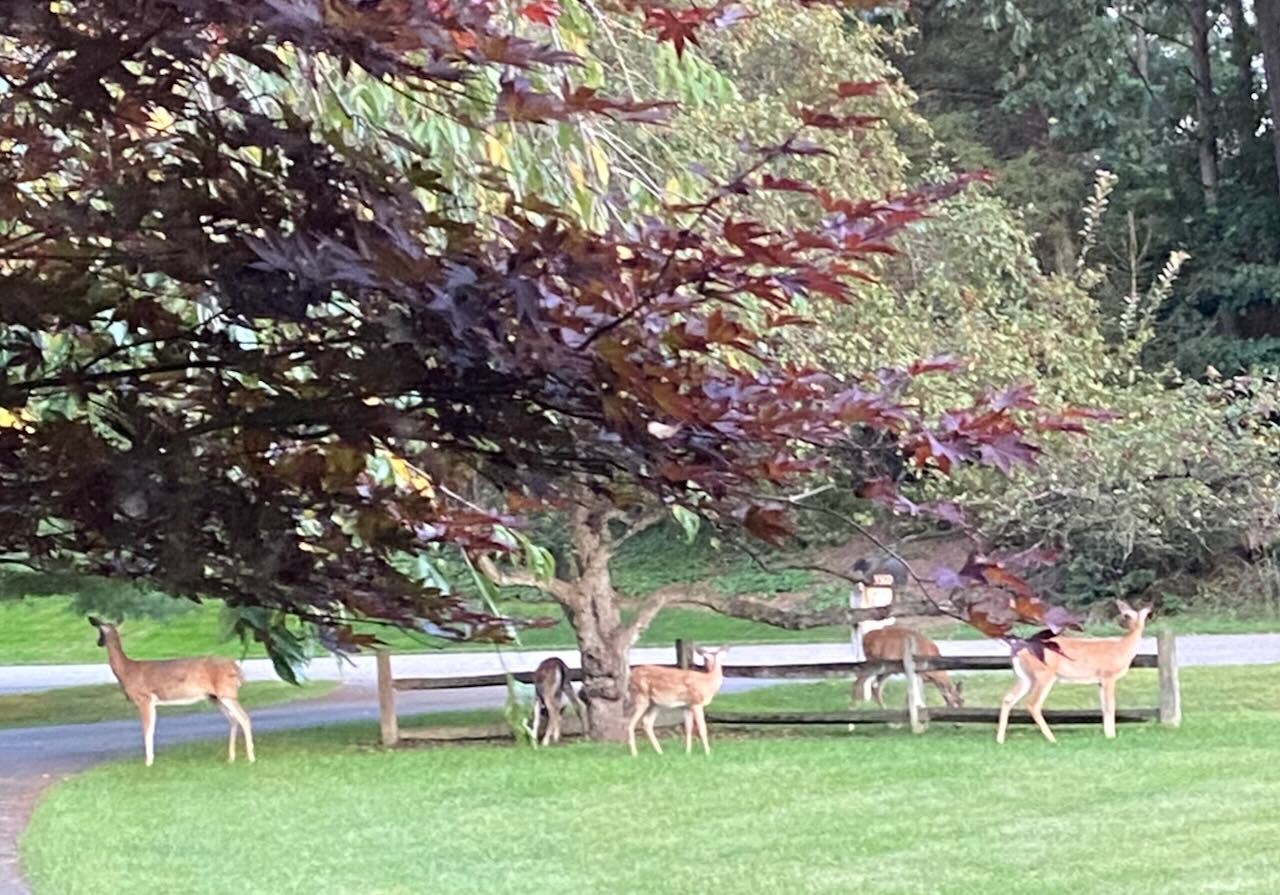
 And so we have it all here – beauty, drama, fortune, intrigue. I’ve been out in it all day, weeding, planting, staking, and of course spraying deer deterrent. When I find a four-leaf clover I bring it in, put it in a vase until it withers, then make a wish and add it to my “luck basket.” Still the same wish, and I can’t say what it is but we’ll all be very happy if it comes true.
