Perennial Thoughts

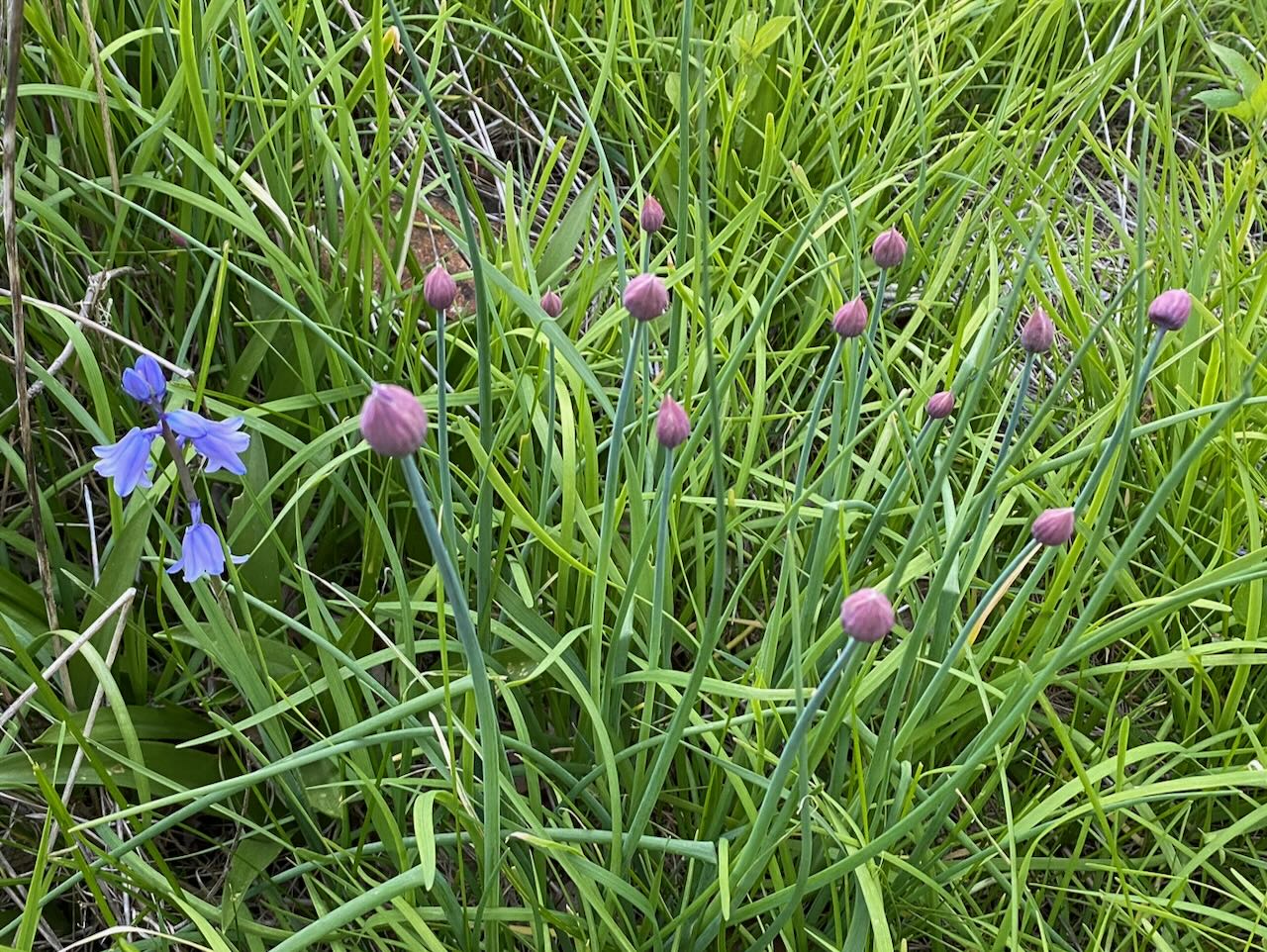
The weather’s been up, down, and sideways this spring, uncertain enough to keep my seedlings stuck in the house, looking out their sunny window as erratic frost rolls and unrolls over the lawn. But out in the yard, the perennials are not confused. The reliable chives wave their purple goodbyes to the daffodils, while the last of the wild hyacinths refuses to cede ground. Nice try, but nothing can stop the chives. 

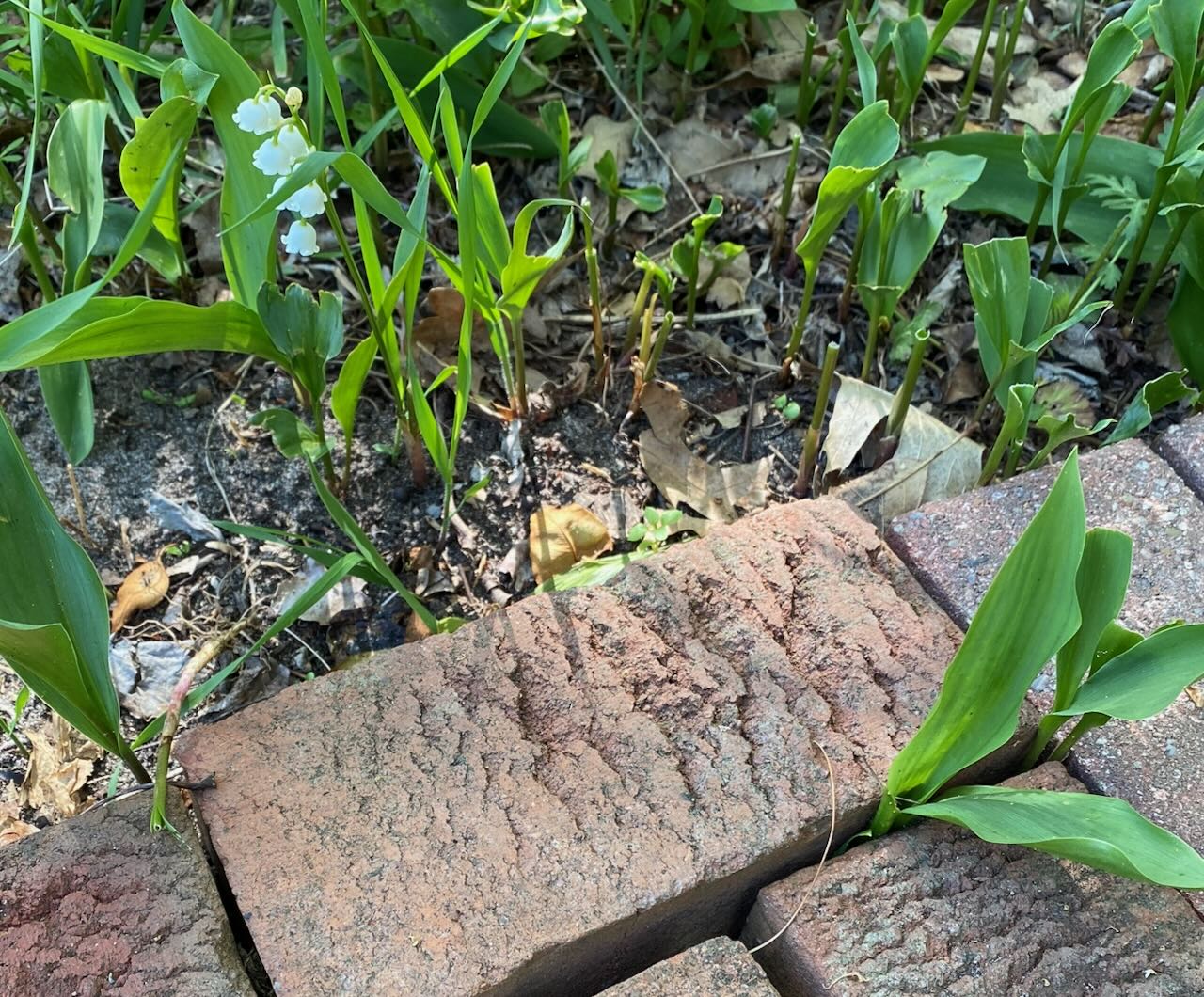
Across the lawn from the herb garden, at the edge of the woods, I’ve made a tiny patio of a few rows of bricks. It’s just big enough for a single chair, me, and a cup of tea, maybe a book. The lilies of the valley would like me to know, though they look dainty and possess the scent of sweet innocence, that they are a power to be reckoned with, and should have been consulted. Their outrider will move that brick if I don’t stop him.

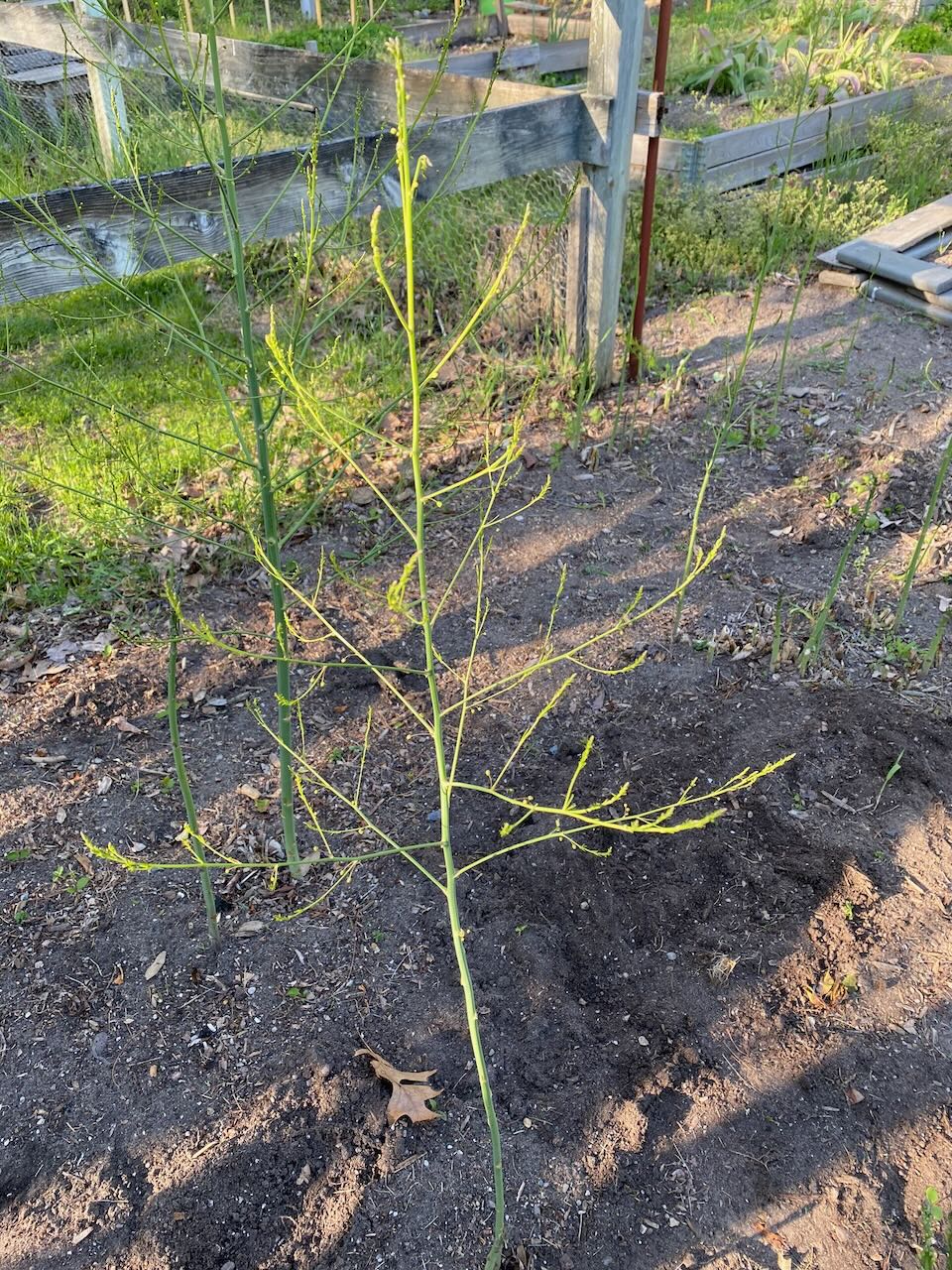
The asparagus, another perennial, has been poking its fingers up through leaf mold for weeks now, and the time has come for me to stop cutting and carting them off for dinner, and let them feed themselves instead. They’re at the stage now where they look like, well, sort of skanky Christmas trees – the tightly-closed tips expanded into branches, but the ferny leaves not yet fluffing them out. 

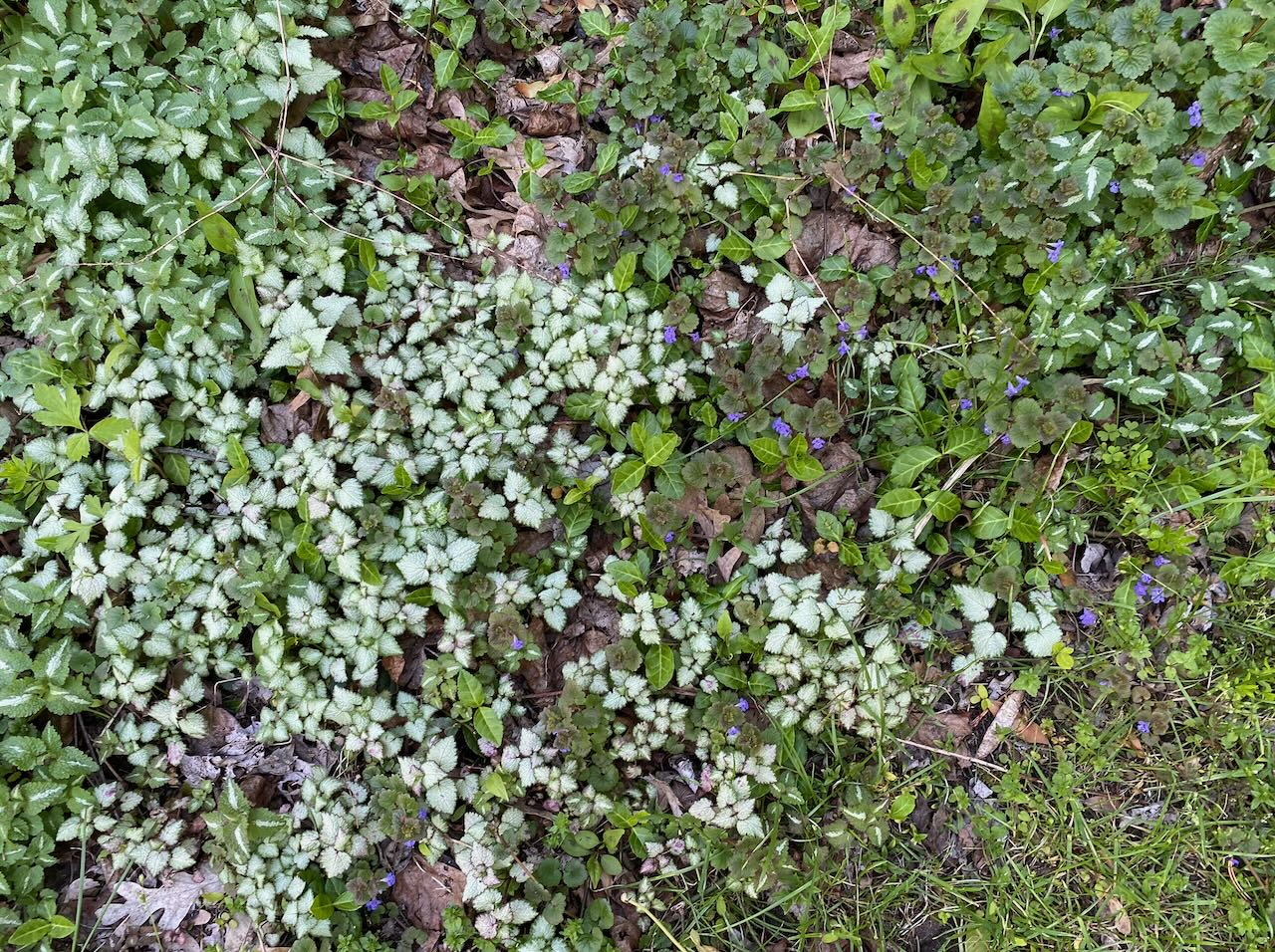
Sturdy, reliable, undemanding, how nice that these trusty plants come back every year with no effort on my part. My lamium, for example – such an excellent groundcover. But what’s that little purple flower sneaking into the picture from the upper right hand corner? Creeping Charlie! A weed! Alas, a perennial too, and just as determined to come back as all the others. The traits so wonderful in a plant you want, so aggravating in a plant you don’t. It’s hard to see their habits as the same, but they are.

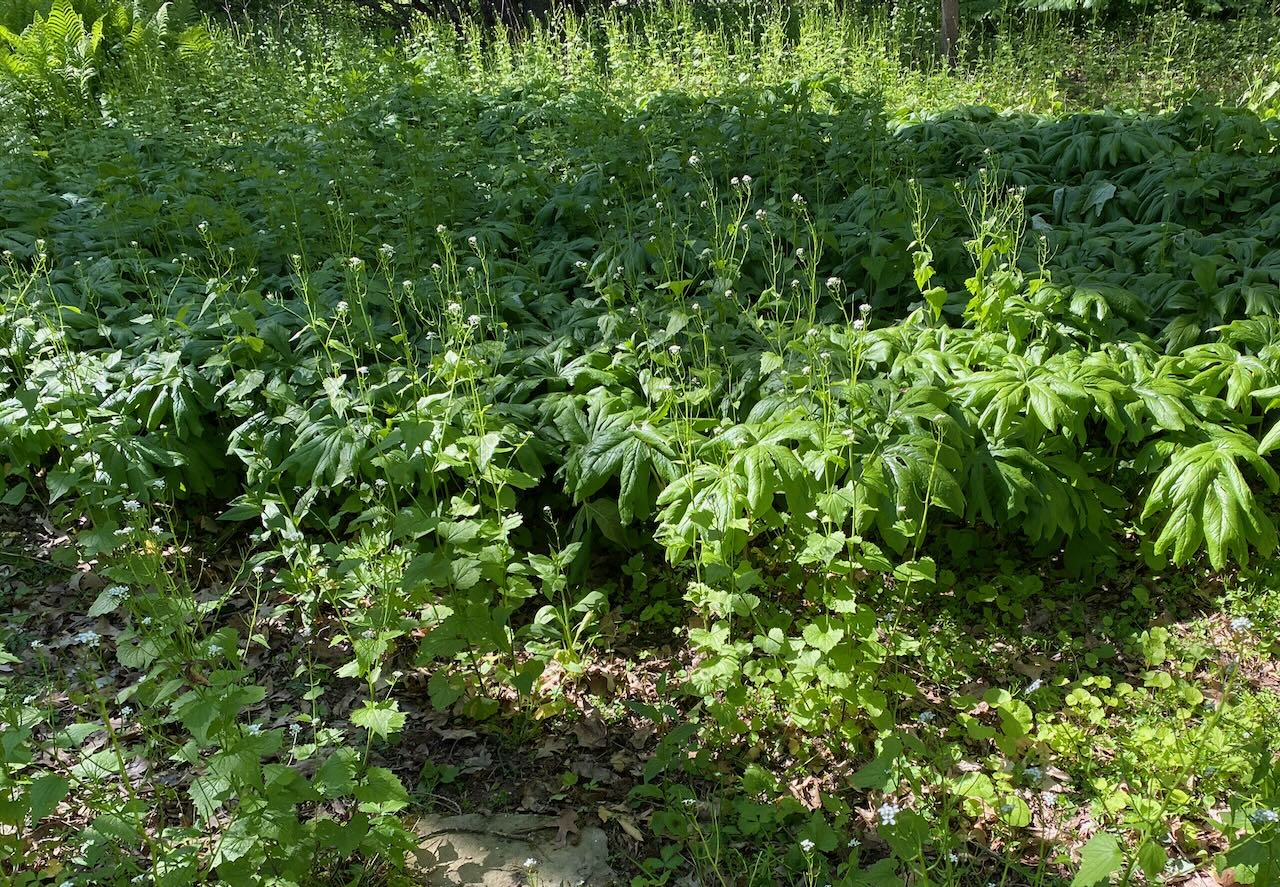
Take garlic mustard, for instance. Early colonists brought it with them as a desirable salad green, but few here today consider it palatable. Including me – I’ve tried it. It’s not perennial, but so profligate of seed it might as well be. When I first moved to Michigan and saw stands of garlic mustard blooming in spring, I thought it was lovely. Then I discovered its aspirations to world dominance. Its specialty is swamping the opposition in a bid to turn diversity into monoculture, as though some mega-chemical company were in charge. If only my basil would do that.


April Comes

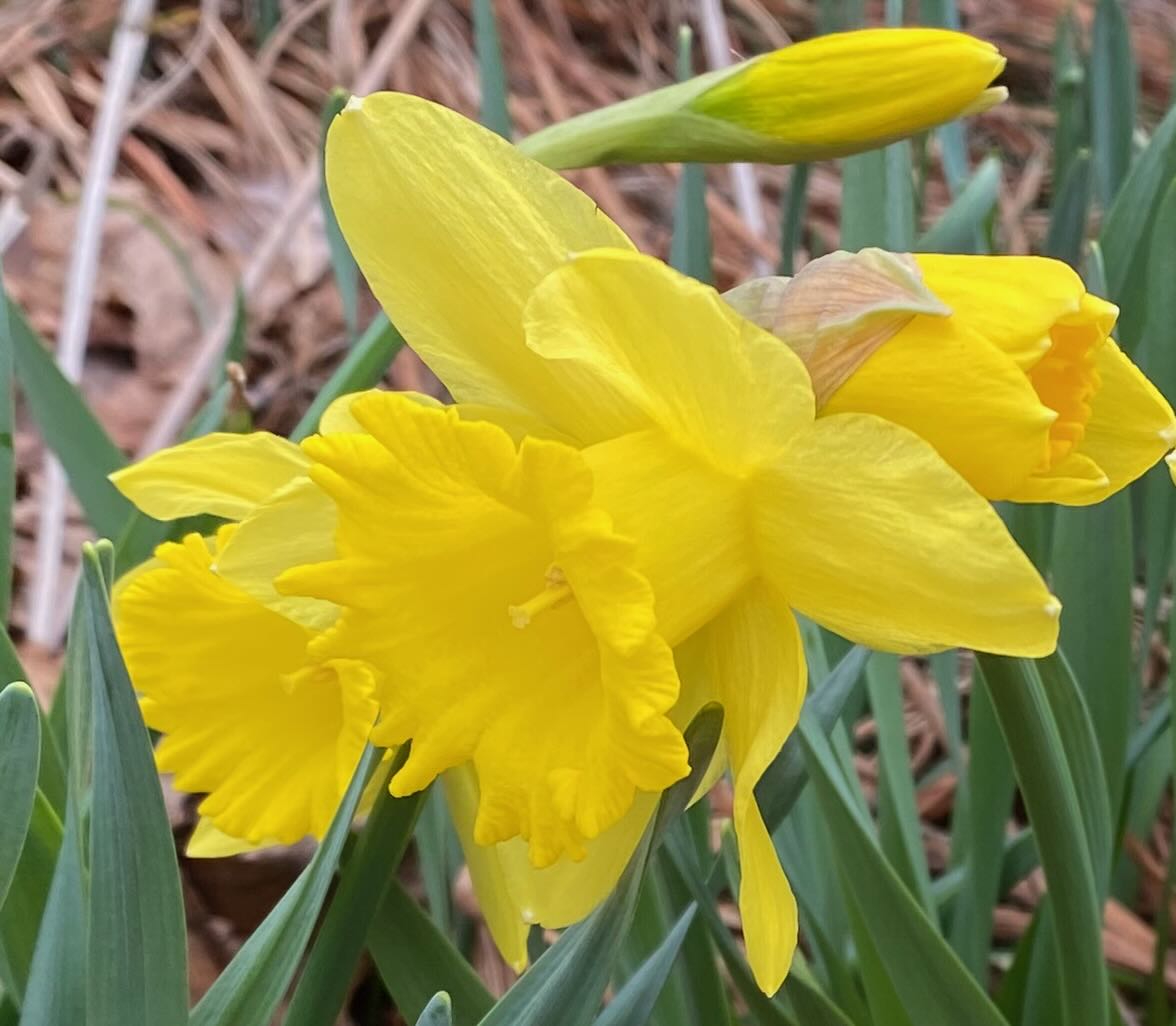
Now that we’re past groundhogs and the equinox, it’s really starting to look like spring. April veers from Fools’ Day to Arbor Day, sweeping Passover and Easter along in a current of National Poetry Month, rainshowers, and regrowth. If T.S. Eliot thought April was the cruelest month for pushing out lilacs before he was ready, what did he think of the daffodils? Look at them there, mocking misanthropes. Go daffodils, I say.

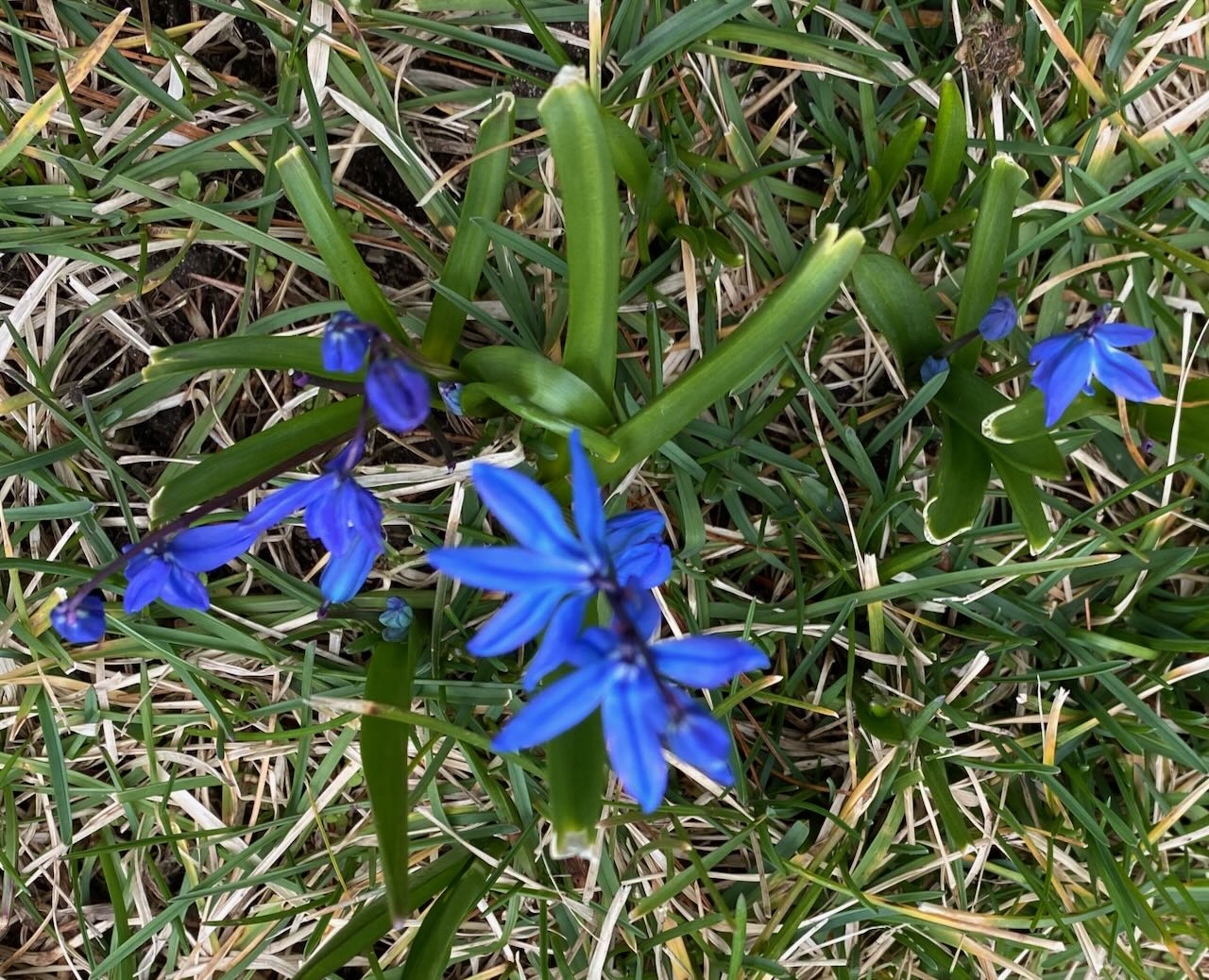
Last fall Doug helped me plant a lot of scilla in the lawn, perfect bulbs for the job because they bloom and fade before the grass needs mowing. Also, the deer and rabbits won’t eat the flowers. They will, however, nip off the emerging tips of the leaves. It’s a little hard to tell which perpetrator is responsible for this damage – rabbits have sharp front incisors and make clean cuts; deer bites are more ragged. There are both types of damage here, so the bunnies and the Bambis are sharing. How lovely that would be if they were eating weeds. 
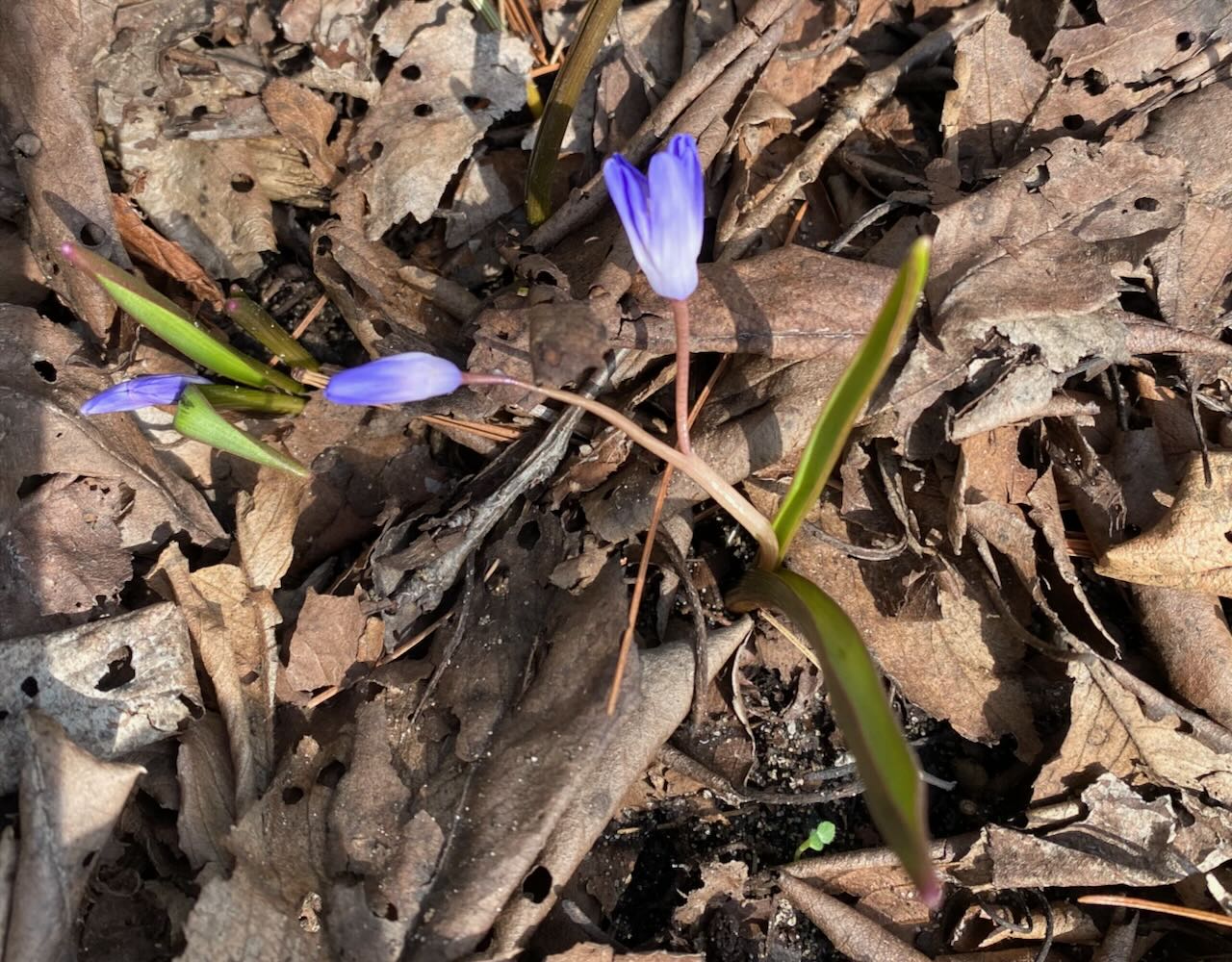
I like my flowers to naturalize into nice thick boisterous clumps, swaths, and patches, but I do think this little one growing all by itself in the leafmulch is very elegant. It was moved off its original spot by unknown forces of nature: hyperactive squirrels; frost heave; or maybe the human element of a snow plow going a little too deep, a little off target. Sometimes it turns out well when your plans go astray.

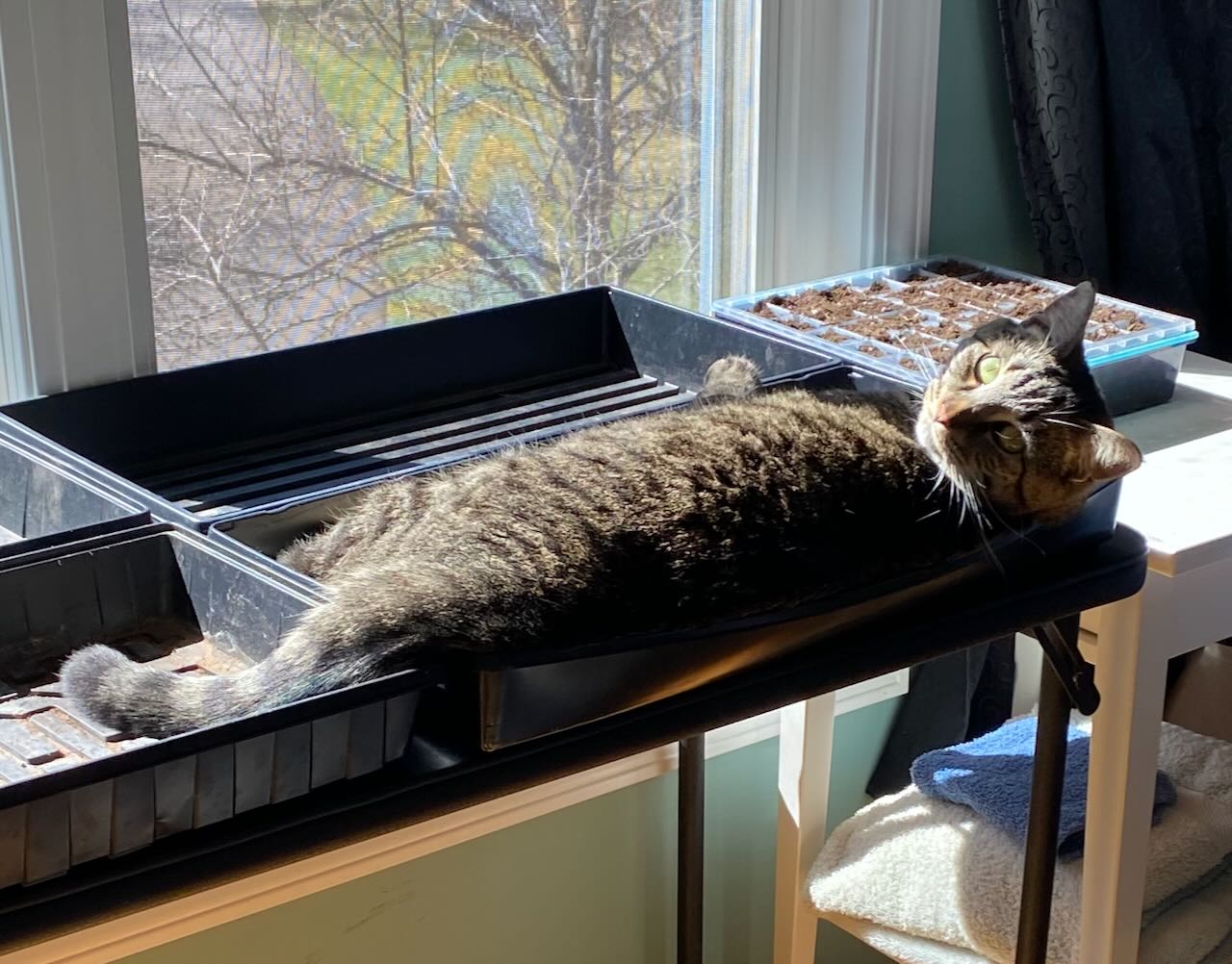
It’s time to start the seeds for my garden. Doug took the folding tables upstairs to the big sunny window in the guest room, we set them up, and I spread my trays across them. Frassy was extremely interested in this, even more so when I started filling pots with dirt. She stepped from one tray to the next, inspecting, and apparently approved enough to commandeer one of them for a nap.

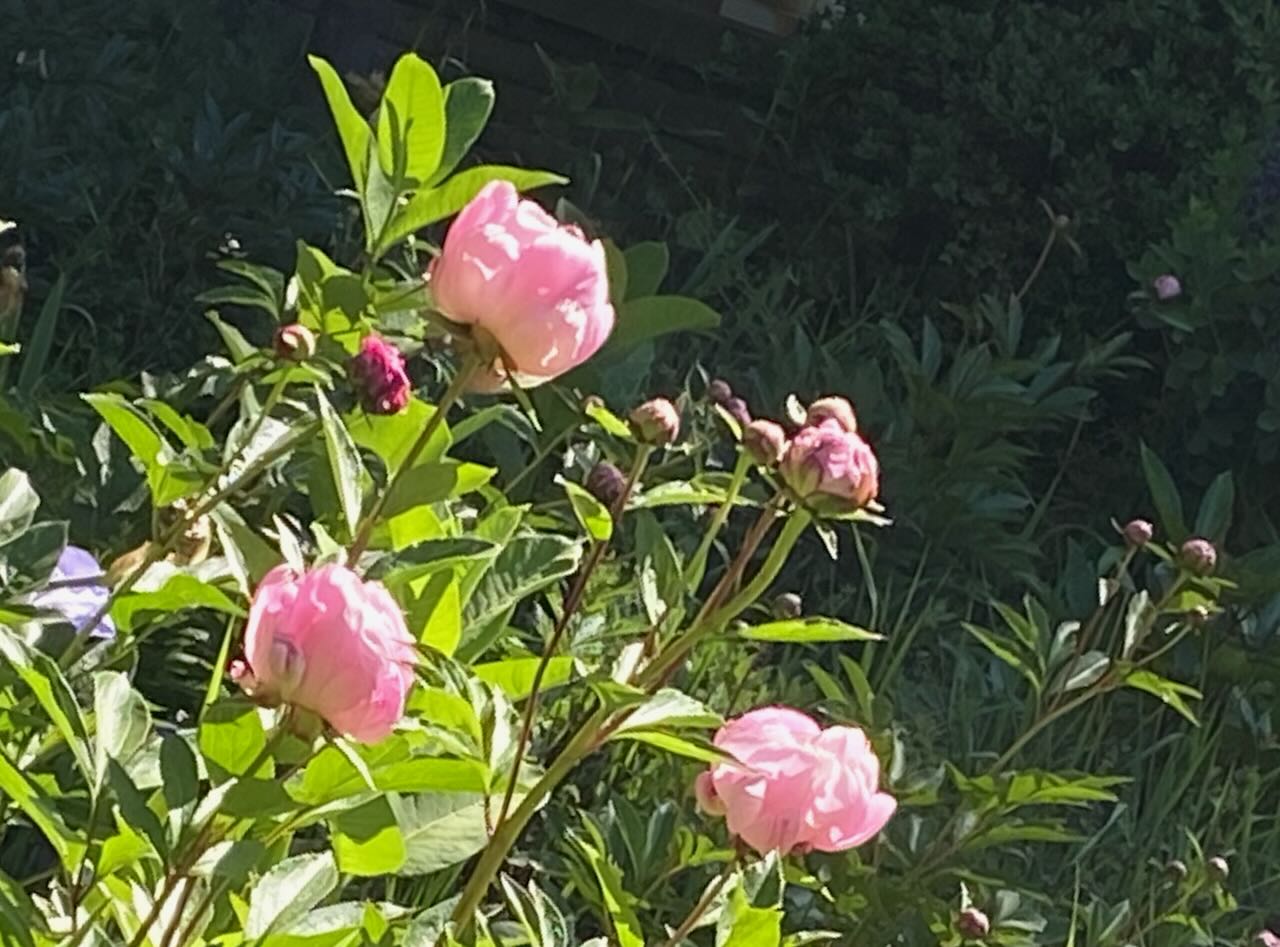
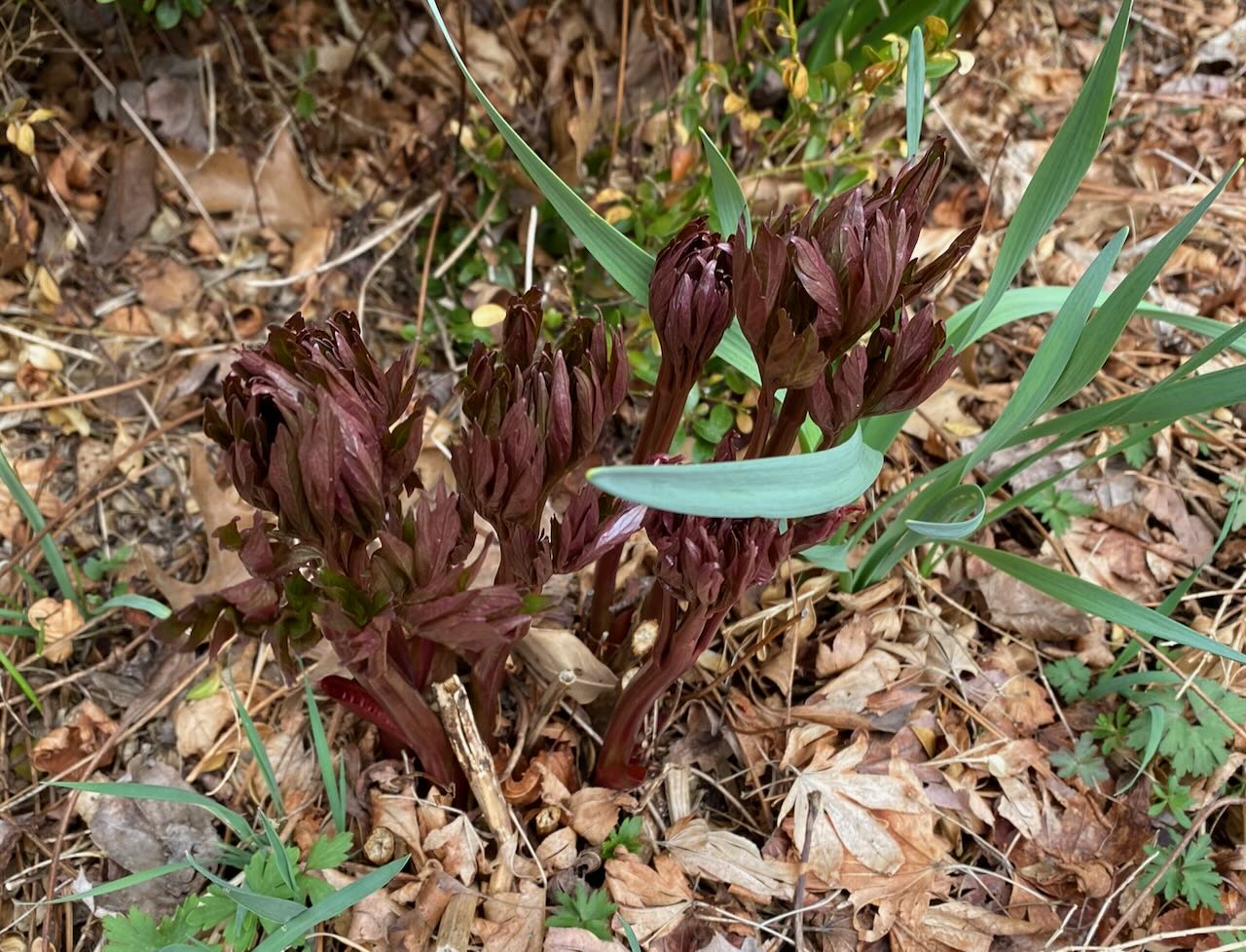
Outside, meanwhile, the perennials that vanished with winter are reasserting themselves. T.S. Eliot might see these as ghastly hands reaching up from the grave, but in fact they’re new growth rising from the roots of peonies. They have all of April and all of May to build out the torrent of ruffles and perfume that will burst from them in June; they’re in no rush. I’m happy as long as I can see it coming.


Winter, Light, and Windows

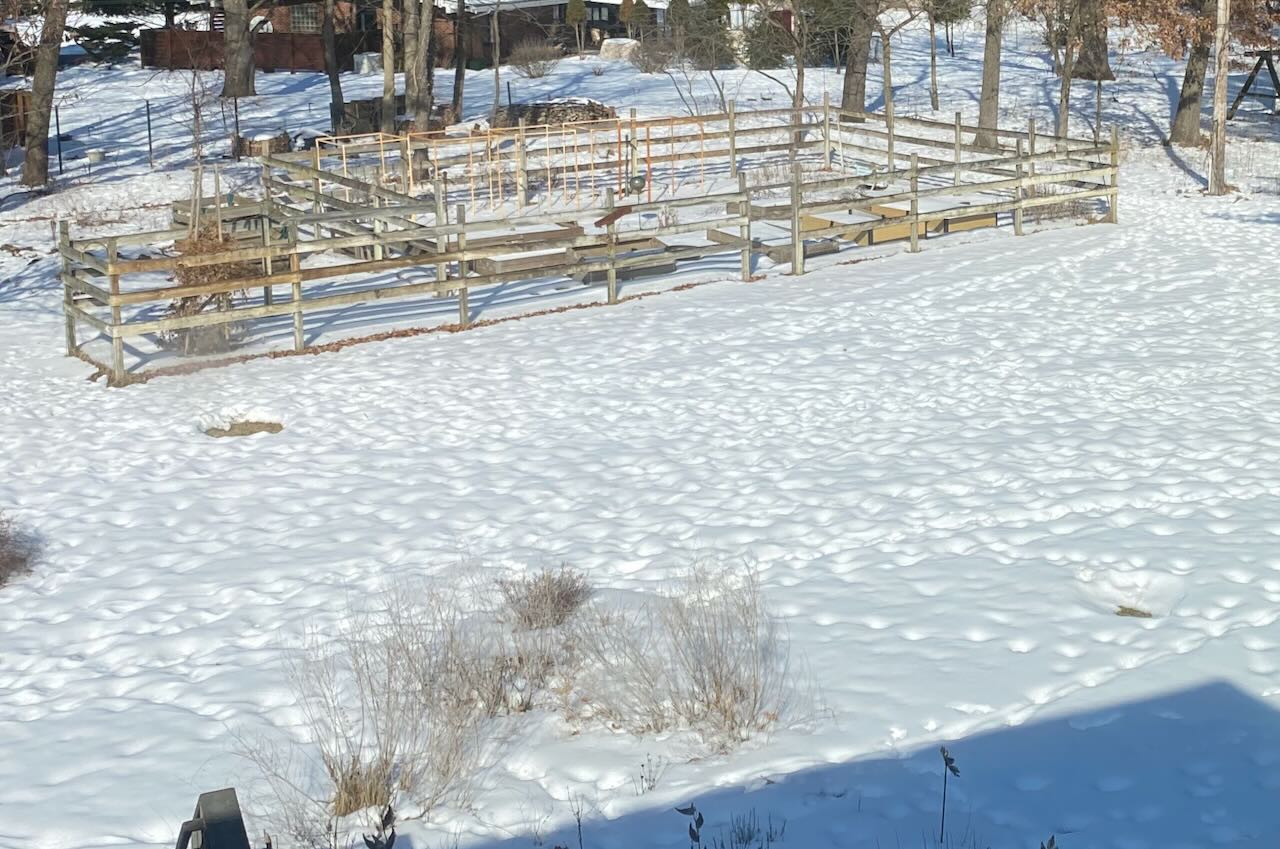
The weather’s been having a lot of fun with us. Over the last week we’ve been up and down the thermometer from ten degrees to fifty and back, with the coming week predicted to do the same. In the warm spells the snow goes, and when the snow goes we lose a lot of information. In this photo from a few days ago, you see a clear demonstration of why I only grow my tomatoes behind a fence. A few other animals wander through, but that’s mostly the heart-shaped hoofprints of deer.

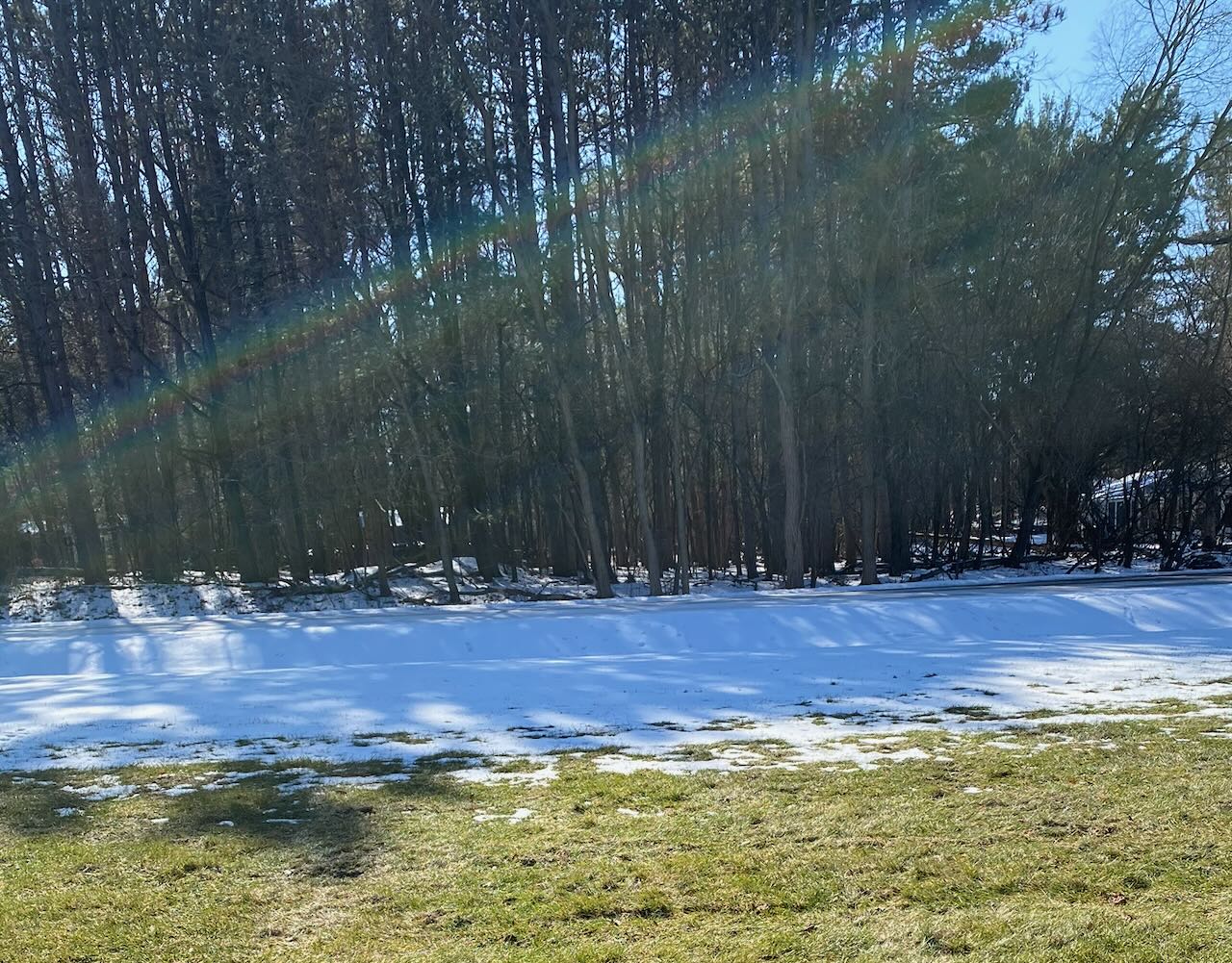
That evidence is gone now, but the strengthening light has its own games to play. To me this photo shows the lovely effect of the sun’s rays reaching out like fingers of a warm, gentle hand. My grandmother saw it as “the sun drawing water.” I thought that was awfully prosaic, but it’s another possible point of view: where I see something coming down, she saw something going up. It’s so common for different people to look at the same thing and see it differently, it must be an advantage to a community – whatever’s happening in the world, you have options in deciding what to do. 

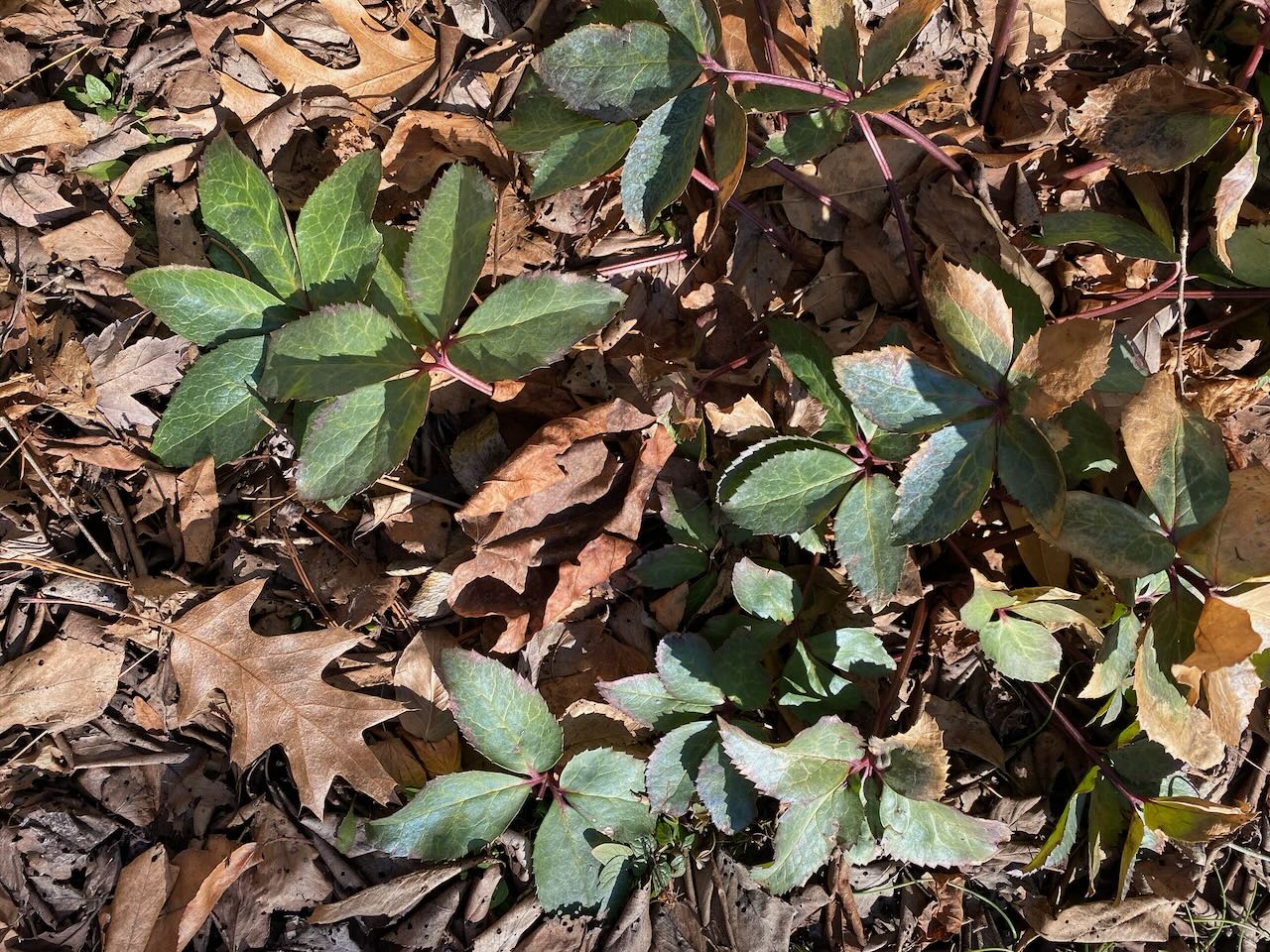
Whether the sun is pulling them up or their roots are pushing them out, my hellebores are positioning themselves to be ready for the race to spring. They don’t exactly die back in winter but they lie low. Their newly perked-up posture chimes with their nickname, Lenten Roses, and bodes well for flowers well before Easter. 

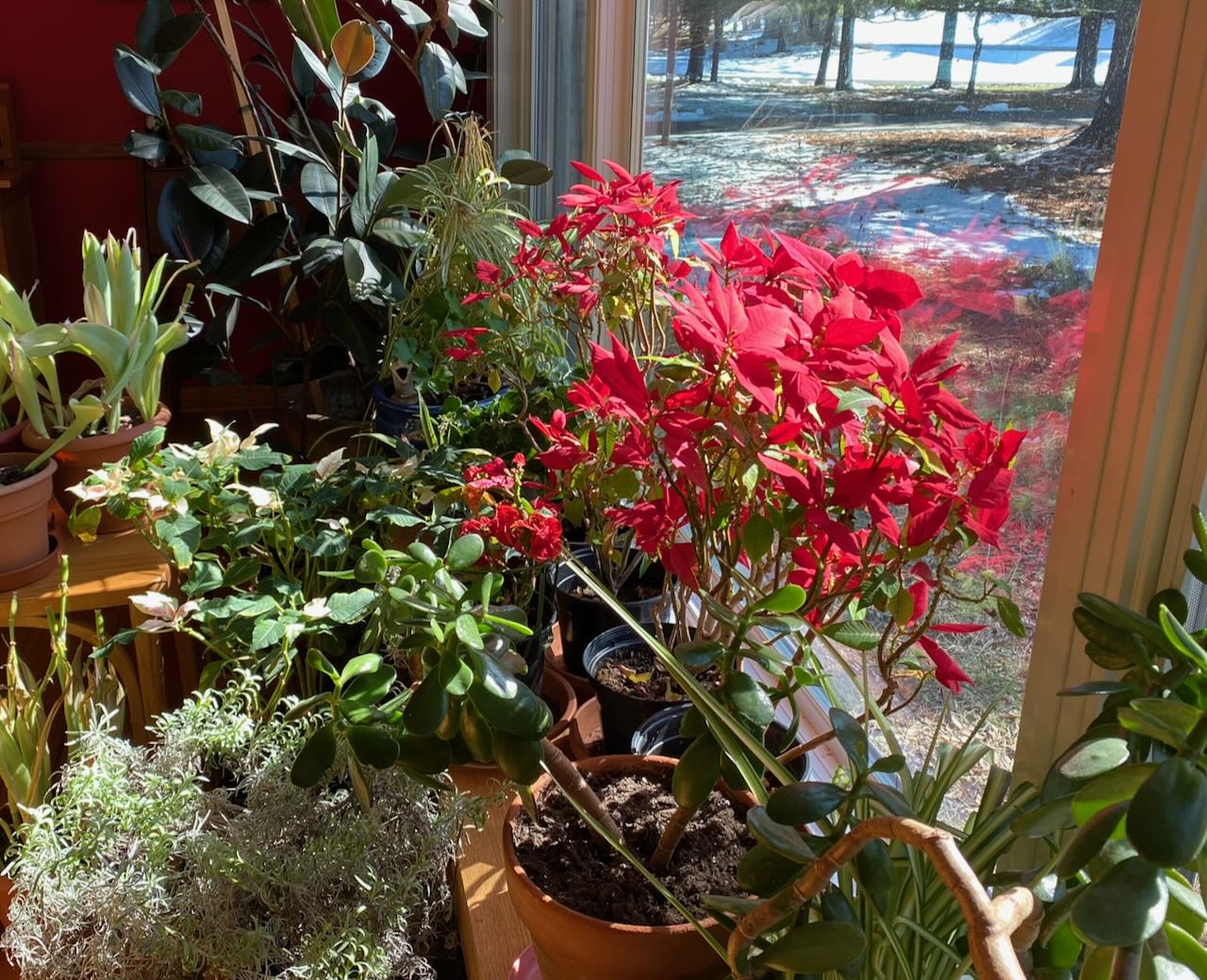
The increasing light also plays games with my indoor plants. From the dining room window it looks like there’s something red blooming outside on the snow, or at least some persistent fallen leaves. But no. It’s the reflected glory of the poinsettias, the window partly a mirror and partly transparent in this particular afternoon sunshine. 

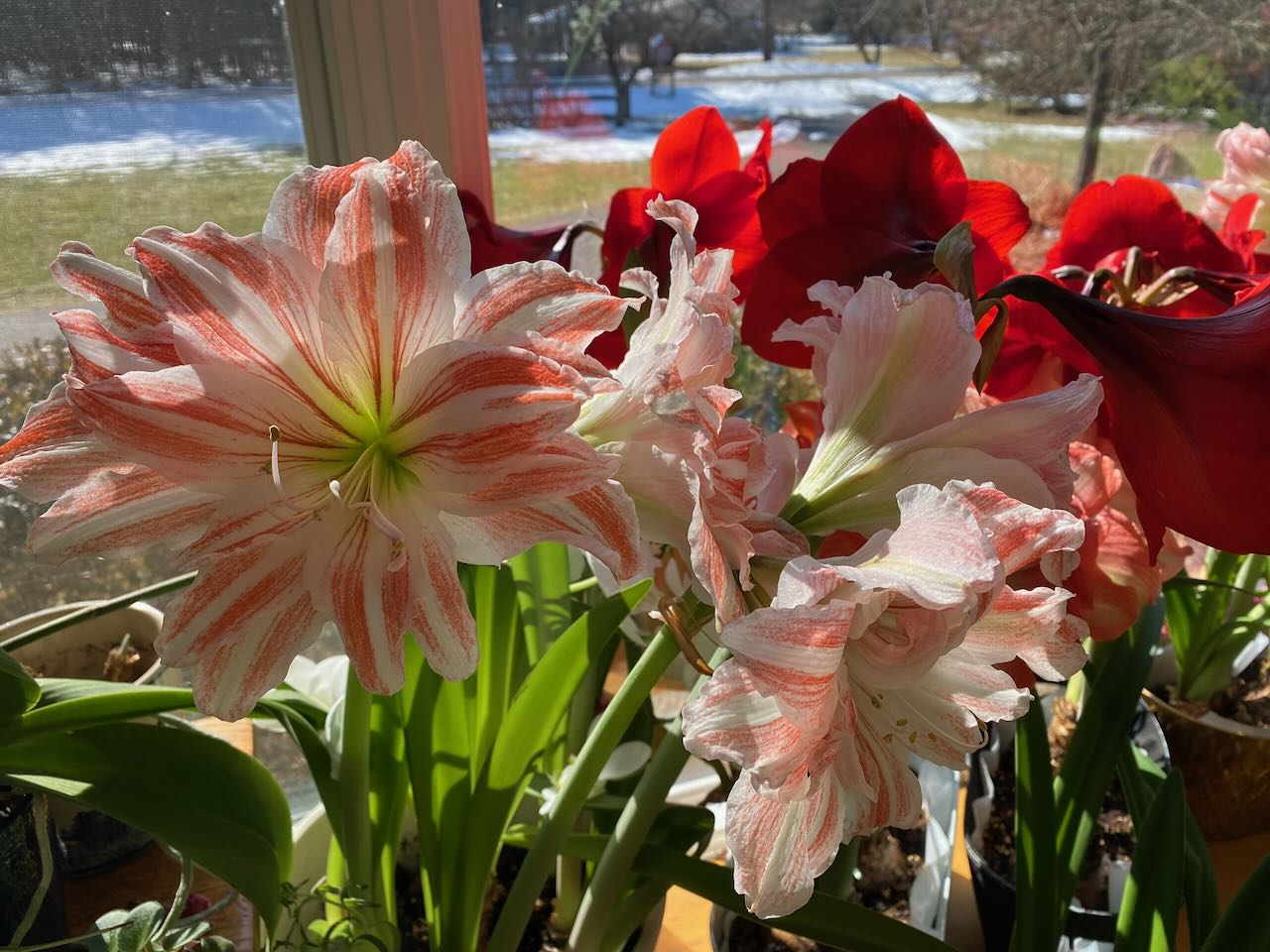
There’s a little of the same thing going on at my studio window, though you have to look beyond the riot of frills and frolic that is my amaryllis collection to see it. The red phantom of an amaryllis has materialized way out by the road, where a last strip of snow hangs on in the shadows. Is it a ghost of the past winter? A mirage of the coming spring? Now new snow is falling, thin and unconvincing, much of the ground too warm to sustain it. The red ghosts are gone but their fleshly originals are still at my windows, stretching out to lean against the glass, in case the sun calls on them again for a bit of magic.

Resilience

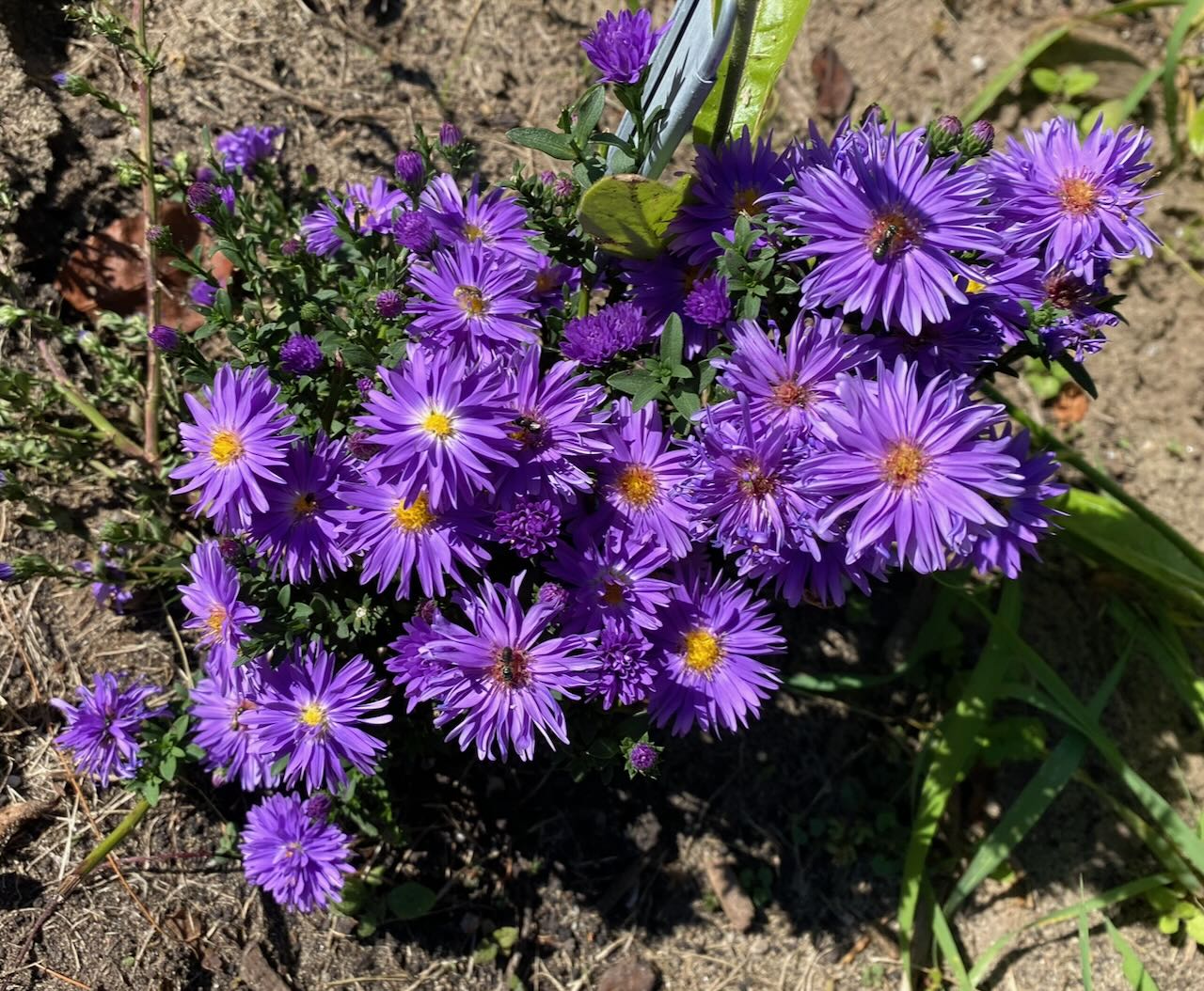
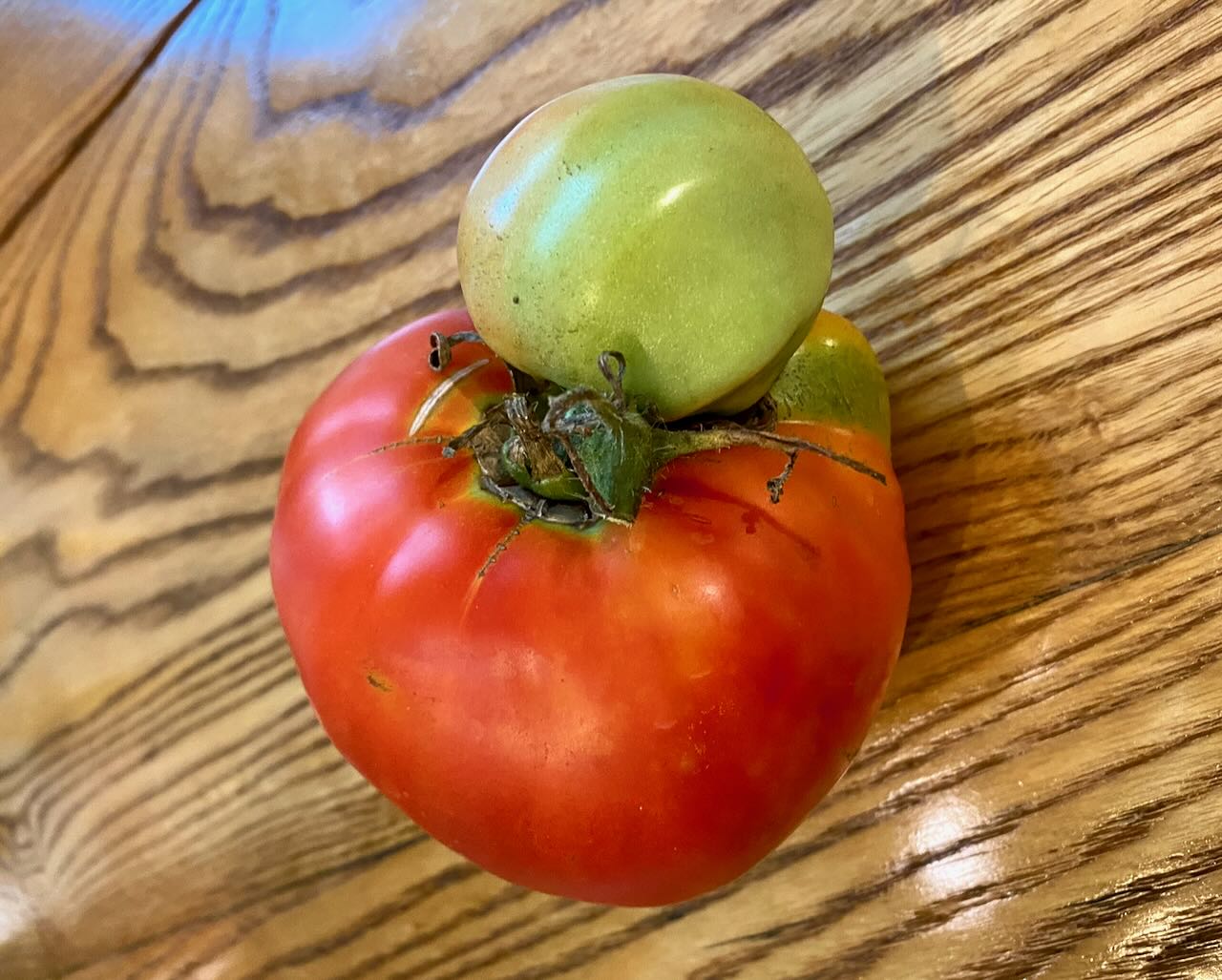
Our first frost happened a couple of nights ago, drawing a map of hardiness, protection, and resilience across the garden. The hardy perennials, like these asters, didn’t notice, originating as they do in climates that reward ability to cope with winter. Tender annuals, like my basil and tomatoes, withered and keeled over. I had already brought into the house several pots of basil and all the green tomatoes still on the vine, in anticipation of this. These are plants whose ancestors never met with winter weather, and had no need to adapt to it.

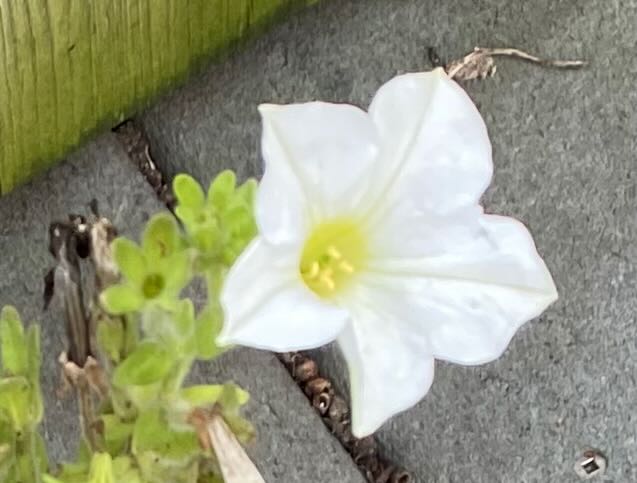
Then there are hardy annuals, like petunias. They can resist the kind of winters we had in Southern California, which did sometimes include a light frost in late December. They seem to be familiar with this and will persevere through it, but when the hard, serious frost comes, they succumb. Marigolds and pansies are also in this category. Okay, so far all is neat and clear in the life cycles of my garden plants.

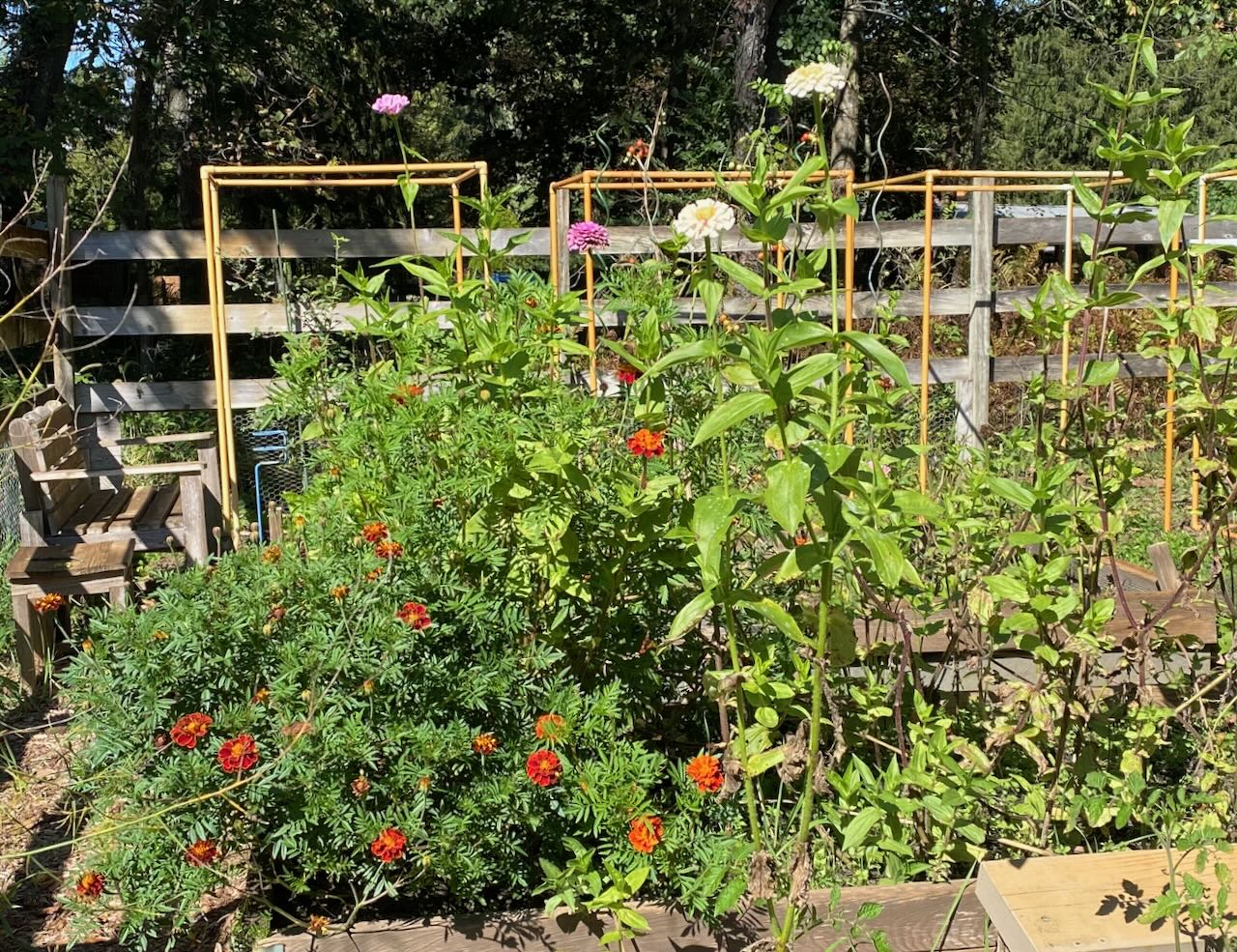
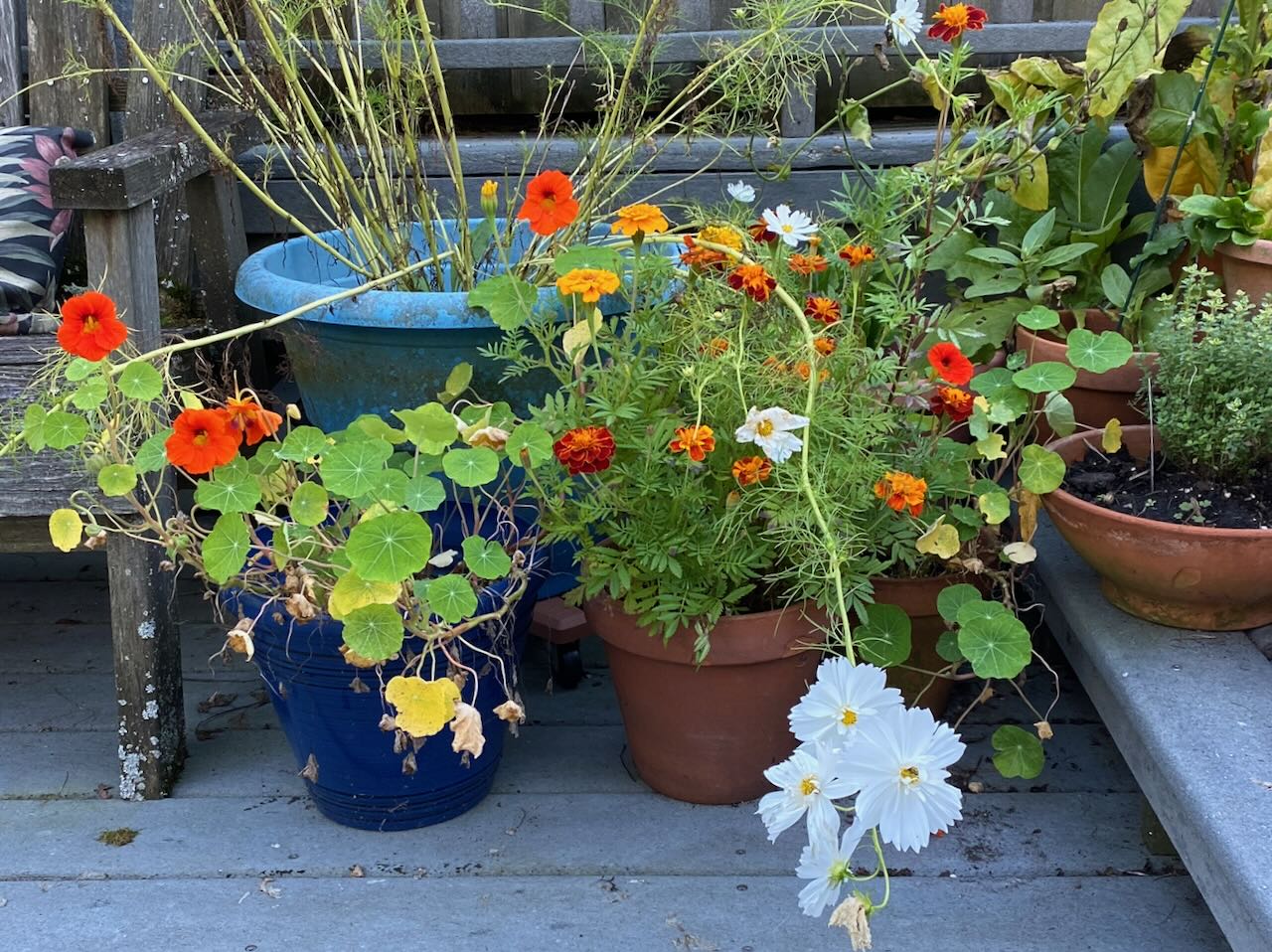
But then we have this scenario from the way back of the garden. Marigolds, check, still abloom as expected. But there’s that cosmos standing tall and happy, while all the other cosmos in the garden is dead. Sort of looks like the marigolds talked them into it. Good story, but the reality is different. There’s a tall black cherry tree just outside the picture, leaning over the garden fence enough to shelter the cosmos from the sky. The same thing that makes this part of the garden too shady for plants like tomatoes, expected to ripen fruit, offers protection from light frost.

So the resilience a plant shows in the face of frost can be inborn, or it can be situational. It’s the job of the gardener to situate the plant where it can have its best outcome. Here’s some milkweed in process of its best outcome, which is not the propagation of Monarch butterflies, but the launching of its frothy seeds into chilly autumn air that carries them into the future.

September Deepening

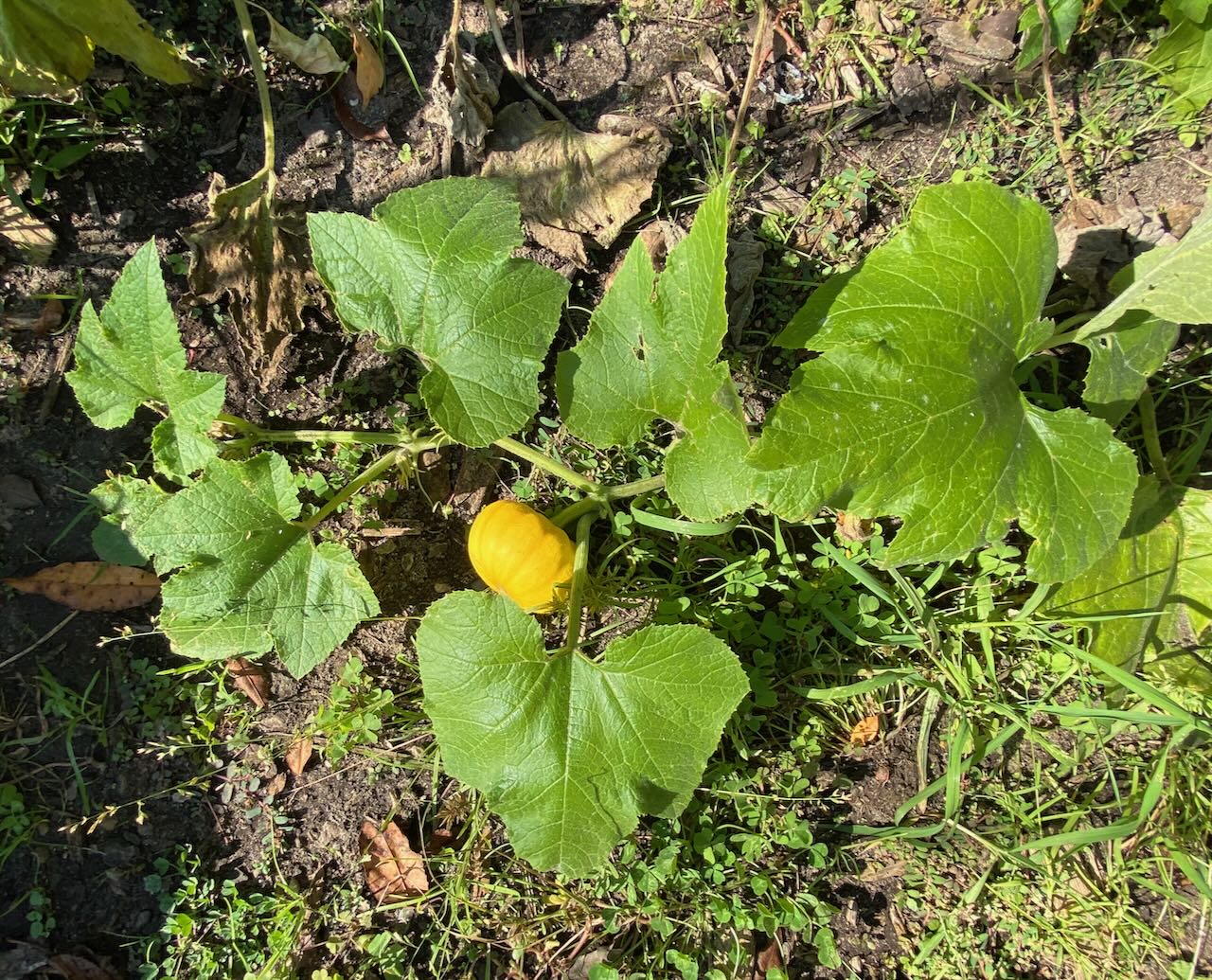
All my favorite parts of the year are the transitions, but the one I love best is the shift from summer to fall. It demonstrates that change is good – an eternal spring would produce no harvests. Change ripens the tomatoes and fills out the Baby Boo and Jack Be Little pumpkins. 

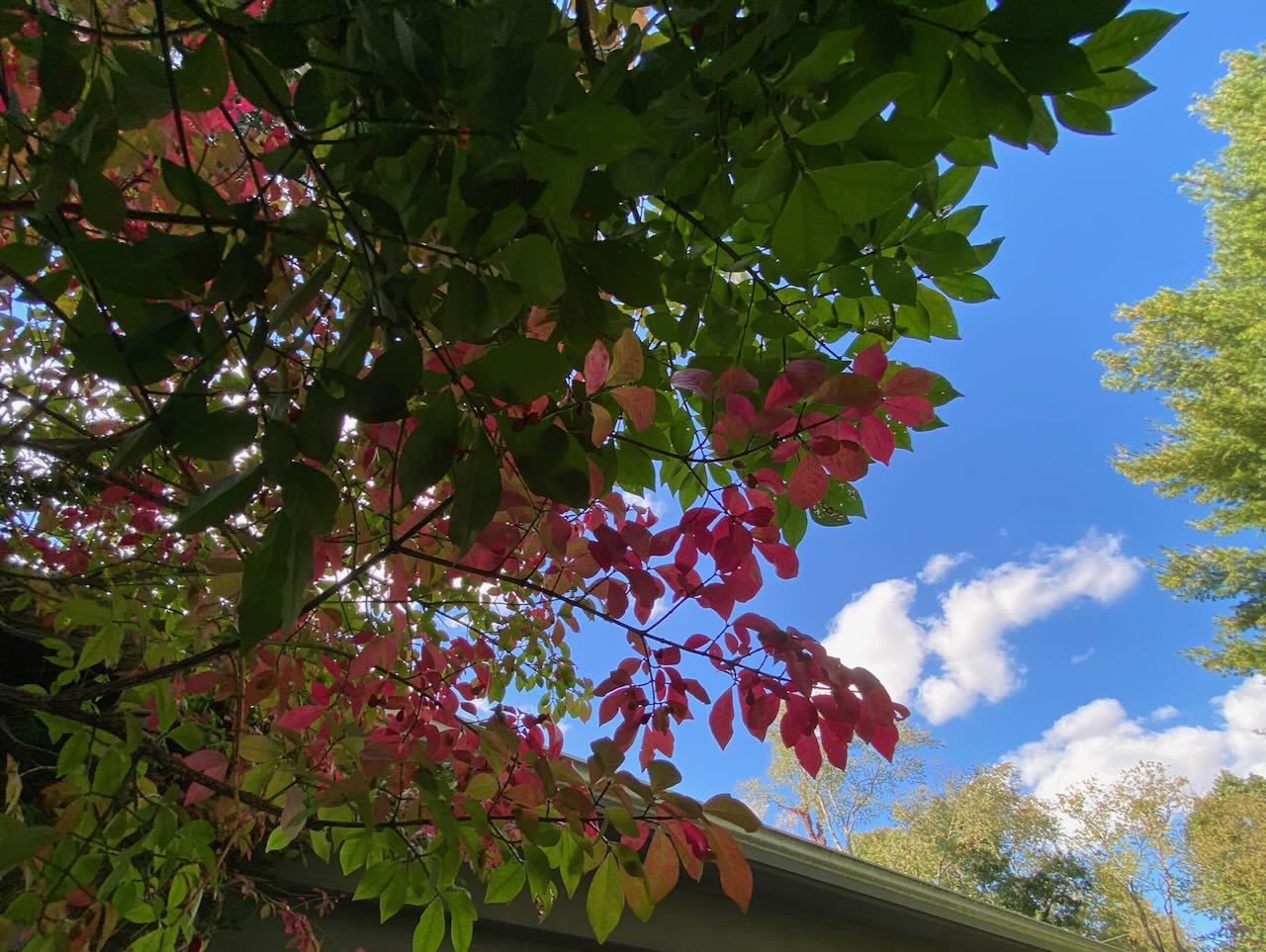
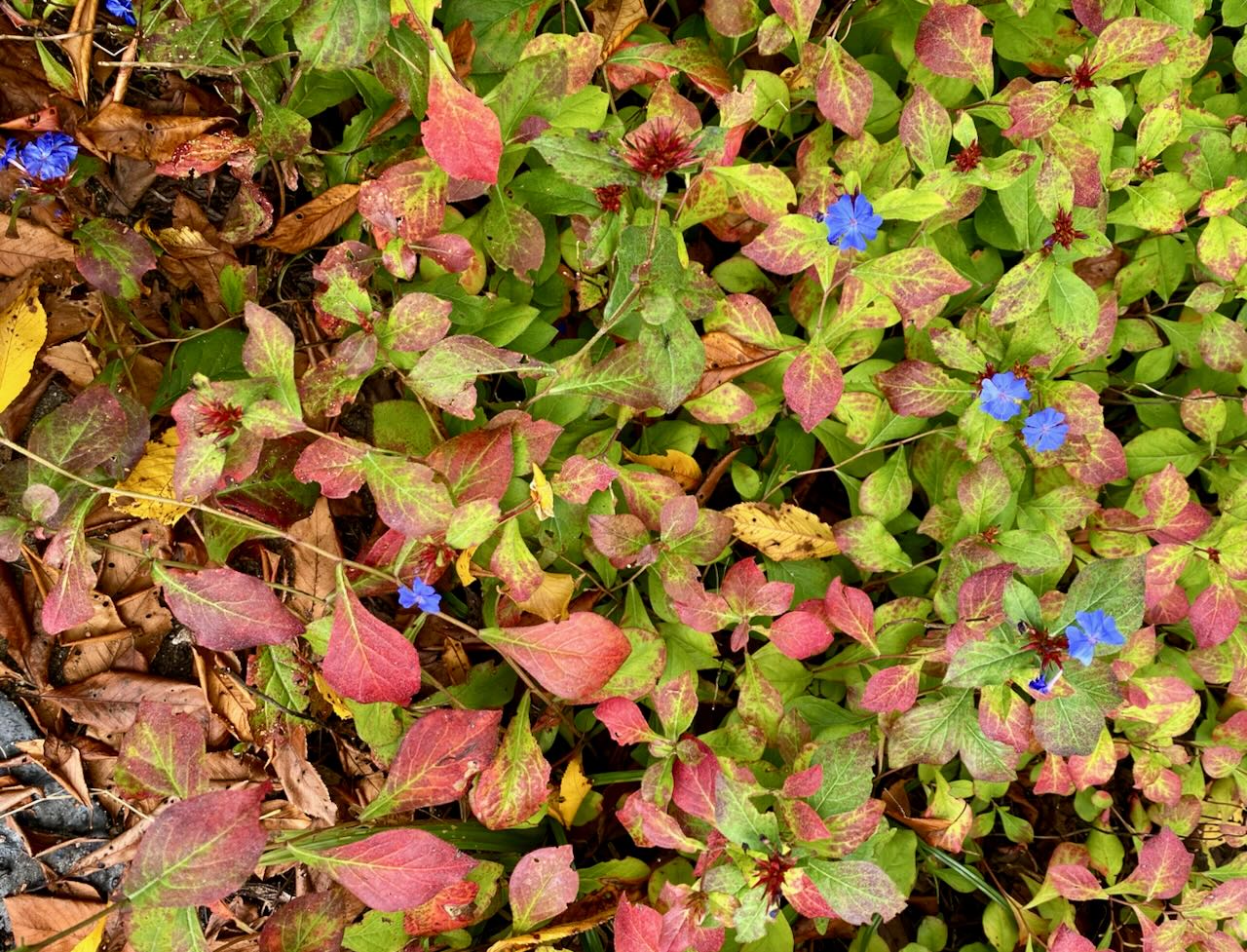
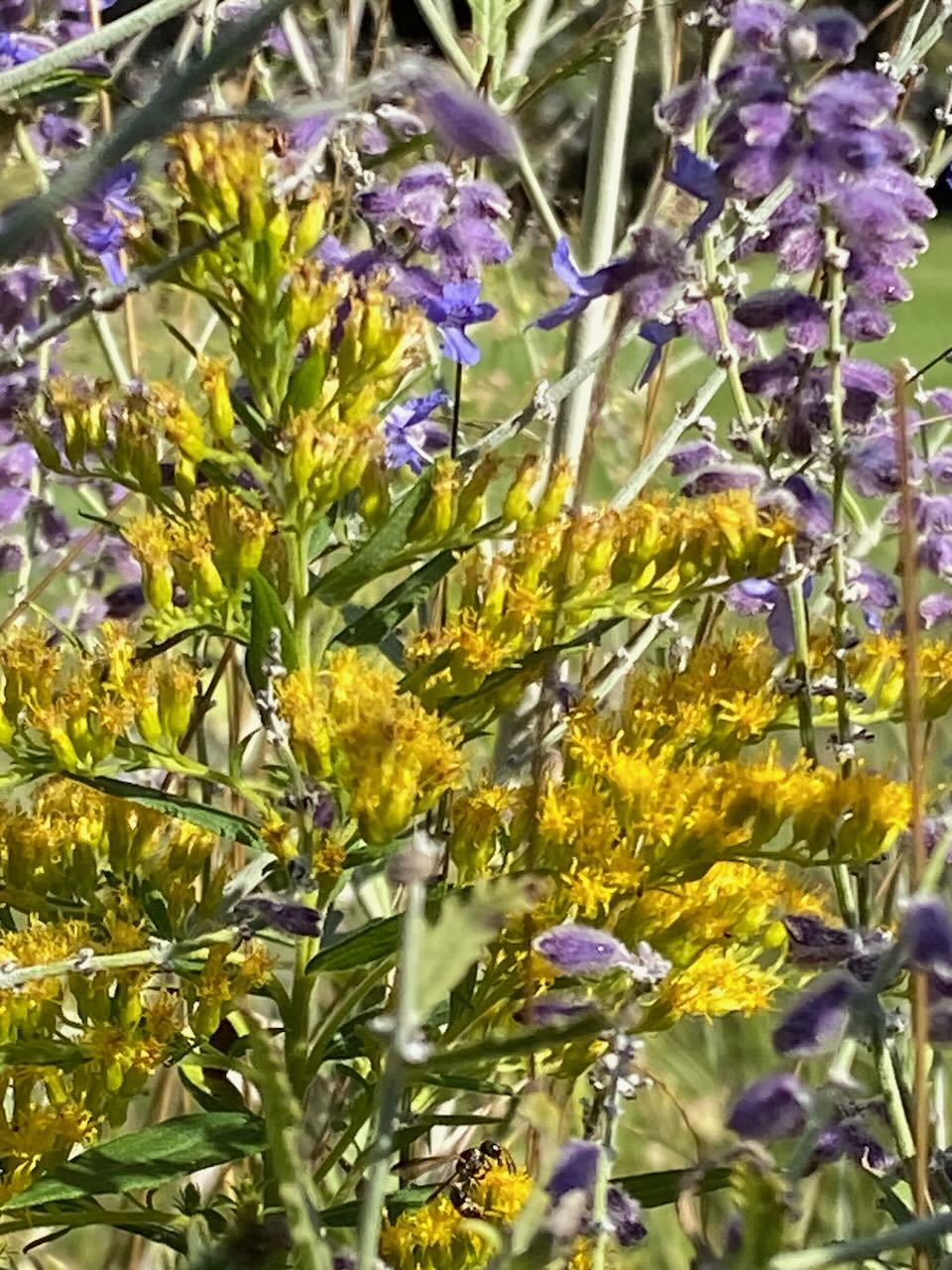
It’s the time of year when a little red begins seeping into leaves, but clouds of white appear on the autumn clematis, drifts of blue on the asters, and rafts of yellow on the goldenrod. Like any change it looks confused, confusing, maybe even chaotic. This is fodder for my urge to organize things, my favorite part of that being the planning stage. What should I do to make things better for the next growing season? Which tomatoes and pumpkins did best, which flowers overgrew their beds and need relocating? As the flowers that are finished blooming set seeds, which should I let go and which should I clean up? 

My reaction to change is, lean into it. My Dad used to say, whatever happened look for the good that can come of it – or the good you can do with it. Ripeness, as Shakespeare says, is all.

Late Summer Harvest

August is summer with a difference. Hours of daylight are still plentiful, but you can feel them drawing down, heading toward the equinox. No more strolling in the garden at ten p.m.; nights are cooler; but the harvest is rolling in. Tomatoes are coming into their own, and the squash – oh, the squash. I plant yellow crooknecks instead of zucchini so I have a chance to find them before they get as big as doorstops. Even so, they seem to have an amazing ability to be four inches long one day and twelve inches the next. I would be tempted to say they’re called squash because they squash anything else trying to grow near them, but being a wordsmith, of course I looked that up. One kind of squash comes from “quash,” a Middle English word now used chiefly for subpoenas, and the other from “asquutasquash,” from the Narragansett. It sounds like the Narragansett people taught the pilgrims how to eat some kind of squash they’d never seen before. 

The Narragansetts would also have had blueberries, a native North American fruit. I came across an argument online about whether the Indians called them “starberries,” but was unable to delve into it because AI kept changing “starberries” to “strawberries.” Thanks, but I’m well aware that no one calls blueberries strawberries.

The flowers that produce seeds instead of fruit are also hard at work generating harvest. The seed pods of my California poppies are so elegant, I have sometimes tried to preserve them. They’d look lovely in a dried flower arrangement but they always burst open, their goal achieved despite my desires.

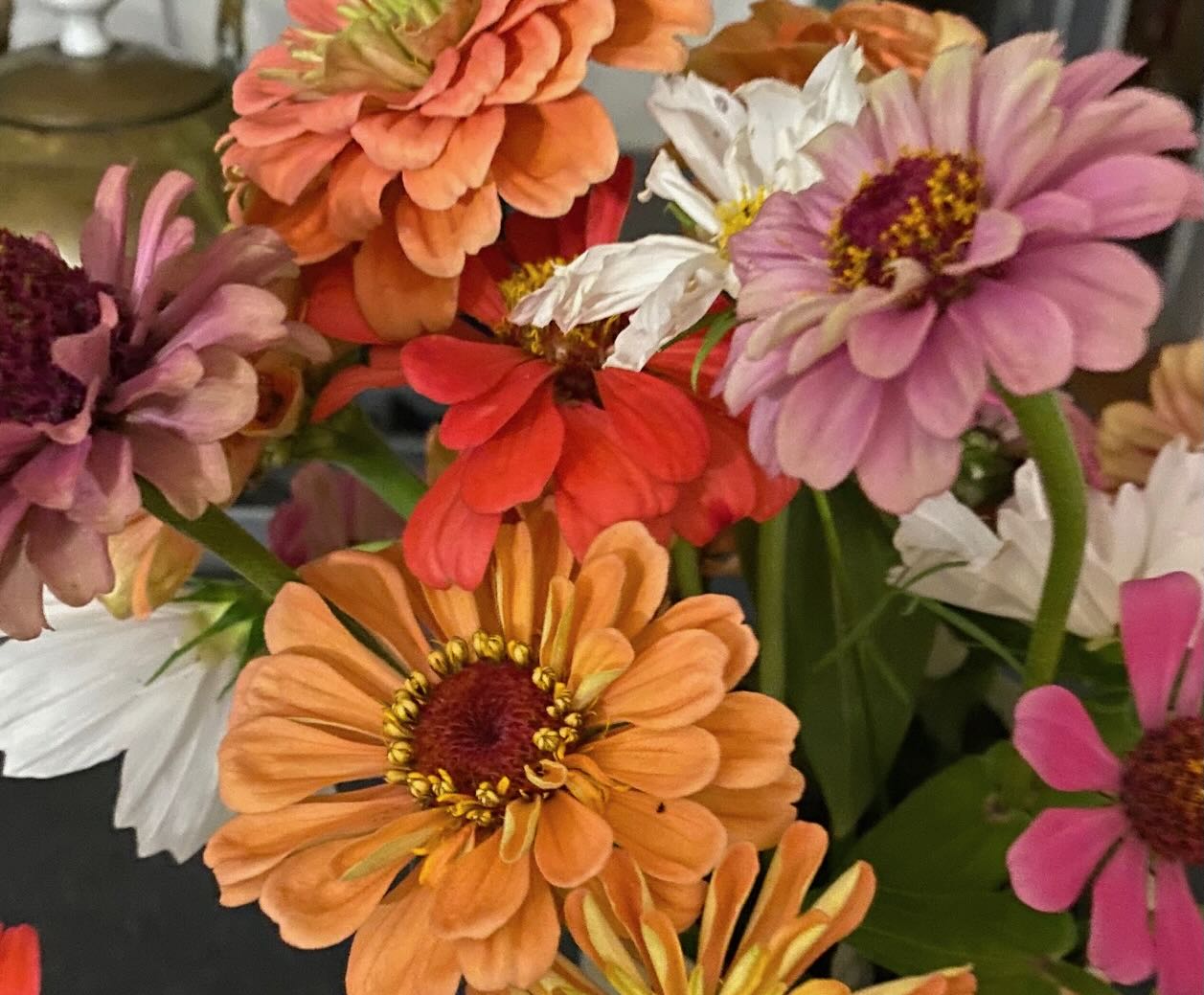
My zinnias produce new flowers and ripe seedheads in equal numbers right up till frost. They’re a mainstay of my bouquets, so I was disturbed one morning to find the petals munched off of a few of them. I spent some time searching carefully for miscreant bugs in need of control, but none appeared. A bit later, looking out the kitchen window, I laughed to see the riddle resolved: it was a goldfinch, ripping seeds out of the still-petalled seedheads. The petals fell to the deck, where they soon turned an inconspicuous brown. The stems bent over when he landed on them, but not so as to interfere with his snack. The really funny thing was that I was looking right at him thinking he was a bright yellow Cut and Come Again zinnia blowing slightly in the breeze, until he moved enough to show the black stripe on his wing. He was gone before I could get a photo of him at it.

The Little Girls

All day I tried to write a blog post about my beautiful summer flowers, but all I can think about is the little girls swept away in the Texas floods. Summer was beautiful for them, too, swimming and canoeing, supported by the river and trusting in the goodness of life as children do. They slept, and the world changed. They woke to thunder, and the lurch of a power they never knew the river had. 

Those sweet, small lives. Not only the devastated families whose daughters were lost, but also those girls who survived, now have this experience engraved on their hearts. All the rest of us, no matter our politics or attitudes toward climate disasters, have hearts rent by their pain right now.

Meanwhile in Texas, they will face the question of blame. Blame is useful if, instead of poisoning regret and generating revenge, it is targeted toward solutions to the problems that fed the disaster in the first place. To have a child, the saying goes, is to have your heart walking around outside your body. All those girls, beautiful as summer flowers, leave many empty spaces behind them, and only memories to fill them in. I hope the families of Camp Mystic can find comfort and solace in remembrance.

Keep Trying

People are complicated, come from different backgrounds, and have different experiences, so there are many things to disagree about. Argument is a perfectly legitimate form of human communication. Violence is not, yet we seem to go there all the time. There are more sad news stories today than I can, or want to, recount. I went to the garden for solace and there I found the bleeding hearts still blooming. Bleeding hearts came to North America from China, where they’re called purse peonies. Different ways of looking at things.

I still have a few regular peonies, too. Earlier this month the large and beautiful peony garden in Ann Arbor was assaulted, hundreds of its innocent flowers cut off and thrown to the ground. Flyers left behind announced this as a political act but it looked like spite. Did someone really expect the fallen flowers would bring allies to their cause?

The garden is much better at forming alliances. Here’s a bumblebee visiting my baptisia, where she will use her weight to open the flower, something smaller bees can’t do. Baptisia and bumblebees have worked out a deal. No manifestos were created, no weapons fired, the bee presumably her own ambassador.

The milkweed, still in bud, has a deal with monarch butterflies. When it blooms they’ll pollinate it, and in return its leaves will supply munching monarch caterpillars with a poison that keeps predators away, an alliance of mutual benefit. Poison can be considered a weapon, but for the monarch the point is deterrence. There is no wisdom in the mutually assured destruction of having your predator die after it eats you. 

There’s certainly struggle in the garden. The ferns have moved in so far onto the path through the woods, I’m going to have to pull some out. But when I do I’ll transplant them to the front yard, under the pine trees. I expect they will thrive in the mulchy shade there, where the grass is unhappy. Plants, like people, have different needs, sometimes hard to figure out. The least we can do is try.

Shoulder Season

When I moved to Michigan I learned a new term — shoulder season. This being Ann Arbor and Brady Hoke’s football team being where it was then, I thought it meant crying on someone’s shoulder between sports seasons. I was fond of Brady Hoke and hoped he’d do better, because he said he’d walk to get to Michigan and that was how I felt about it. But now here I was, and as winter slid into a spring too warm for sweaters and too cold for shorts, the meaning of the term came clear to me: not on the main path; sloping off from one place to another; like the shoulder of a road. Transition. 

Here are my red poinsettias, out enjoying the sunlight that will slowly turn them green, a color they will keep until I bring them inside come fall, and daylight lessens, and they turn red again.

Here are violets in strong profusion, while morning glories in pots to either side are barely sprouting. The violets will wither in the coming heat, but the morning glories will move in and take over.

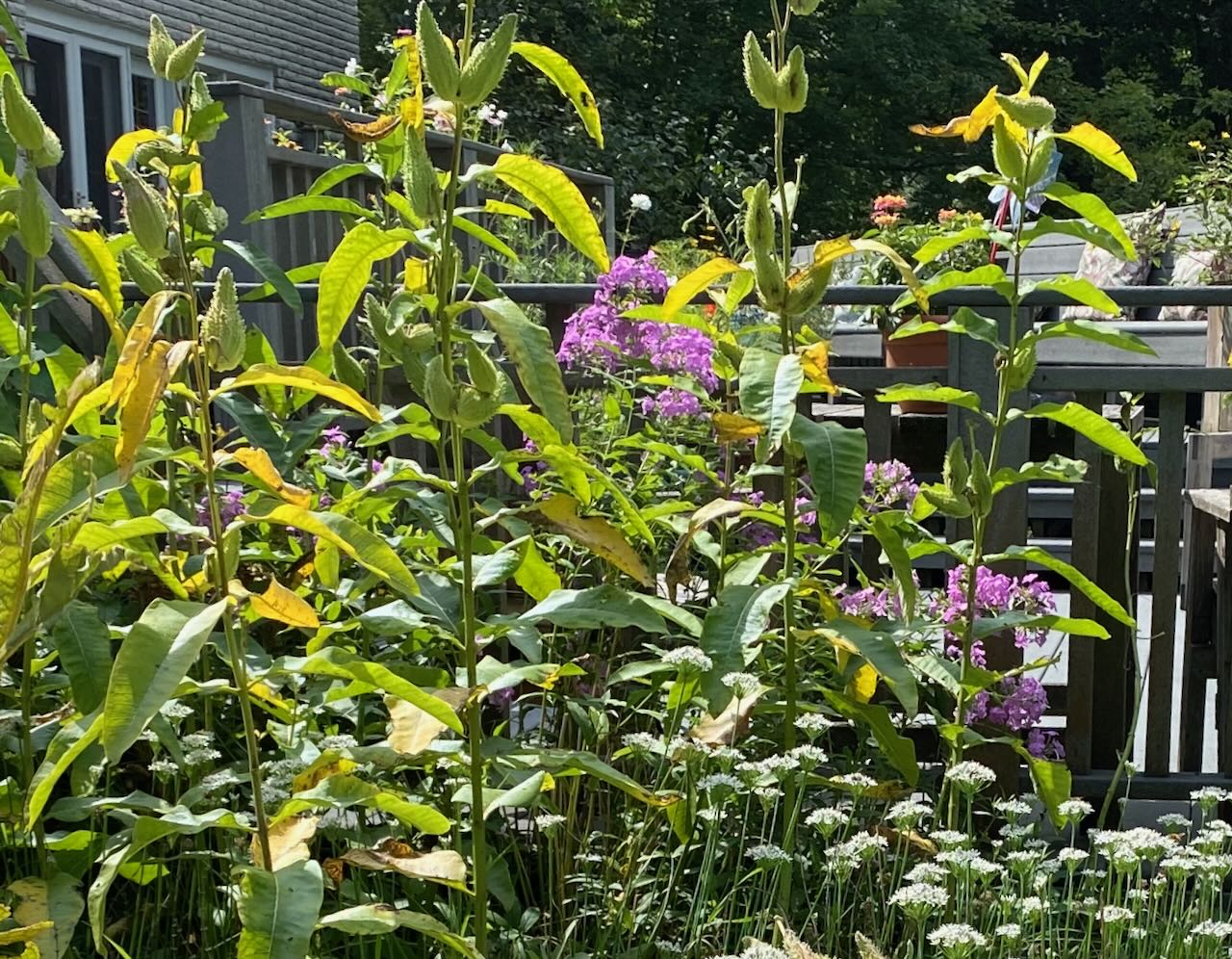
Here are yellow alliums and purple chives in bloom, while behind them milkweed has a long way to go before it flowers and feeds the monarch butterflies.

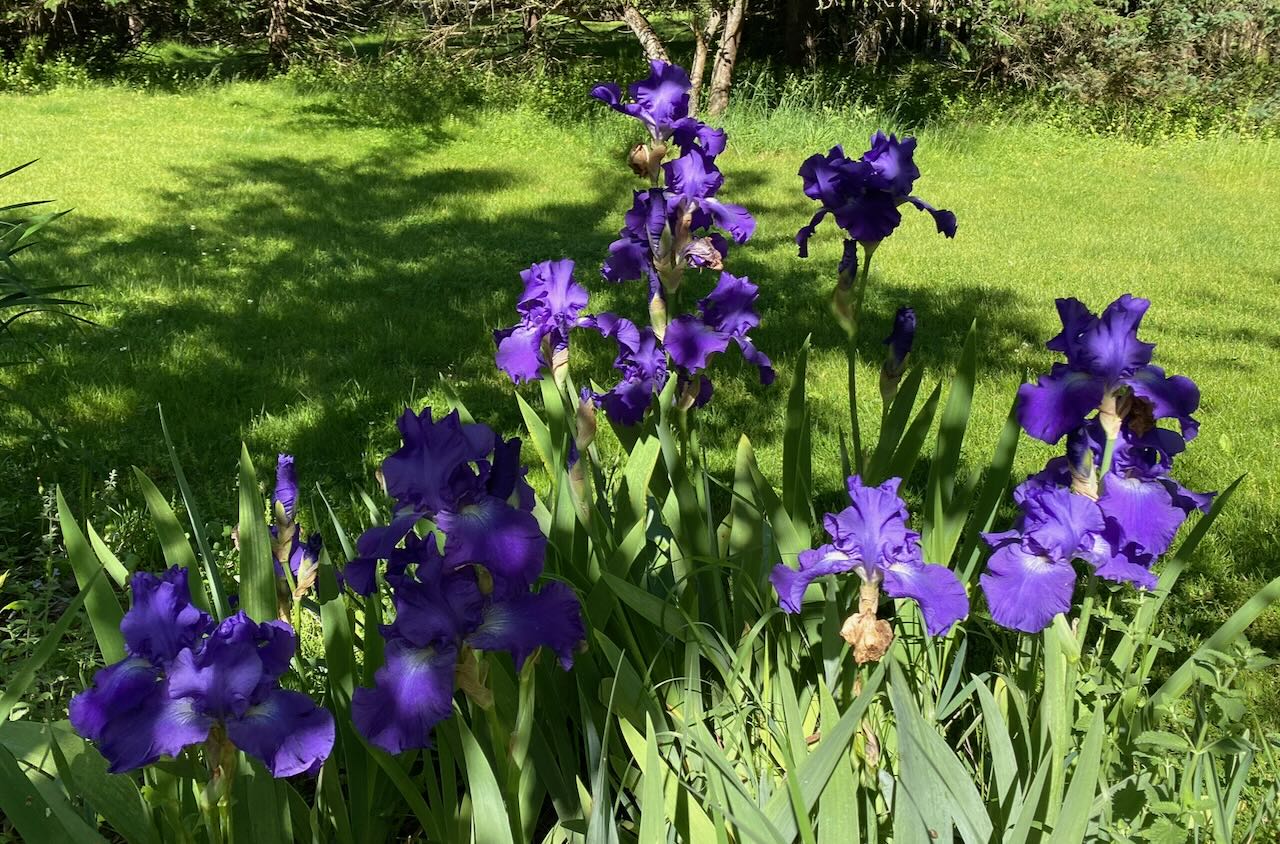
And here are Siberian iris spearing their way into a showy blue drift under the ornamental pear tree, whose flowers are already turning into fruit the deer will eat in August. Deer can be total pests but it’s strangely comforting that, despite my efforts at deterrence, they come back, resilient in the face of adversity. Fight the good fight, deer. I appreciate that more today than I ever have.

Things That Stay, Things That Change

Faithful to the season, the hellebores lifted themselves out of the dirt in time to wave hello to lent. I should have been paying closer attention, because I missed getting my paczki this year – a special Polish pastry available only at Mardi Gras. Not, of course, called Mardi Gras in Polish, but I have enough trouble spelling paczki (it’s pronounced “punchkey”) to venture another Polish word. Every year the hellebore tribe increases in my yard; they seem especially ruffly this year.

The tribe of the deer increased this year, too. Over the winter we had a group of eight, then a group of twelve, but now they’ve merged into a group of twenty, more than I’ve ever seen at once on my lawn. It’s odd, because normally the herds break into smaller units come spring. Maybe the deer equivalent of paczki is coming up in through the grass.

Another spring surprise for me was this orchid, a gift from a friend last year, reblooming. I’ve been given orchids before, enjoyed them while they bloomed, and then watched them wither and die. My previous experience with orchids was as corsages, or seeing them in California where they grew outdoors. So I assumed a windowsill was not great orchid habitat, yet here she is, all aglow. 

Behind her, in brighter light, is another outdoor California plant, a bougainvillea, which has come back from a near-death experience. It had dwindled to a total of four leaves before I realized the gnats in the room were a sign of fungus in its soil. I had a three-pronged attack for this, so I’m not sure which part worked. First I mixed hydrogen peroxide into a pitcher of water and soaked the soil with it, as a fungus killer. Then I poked holes in the soil nearest the sad bare branches and shook in some rooting powder, to try to regenerate healthy roots. Then I painted the four stalwart leaves with Miracle-gro, a foliar feeder, to help it out until its roots recovered. It worked! Yay!

Meanwhile, it’s been fun getting to know our new cat. Frassy has found all Zerlina’s old favorite spots, and invented a few of her own. Zerlina was afraid of sticks, or anything sticklike, from which we guessed she had once been abused with them. Frassy seems to be trauma-free. She’s especially fond of Doug. Here he is playing with her with a feather toy on a stick. She’s already bitten through the string once – see the knot where I tied it back together? She’s also ferocious with her two toy mice. If we do really have a mouse in the house, I hope we won’t for long.