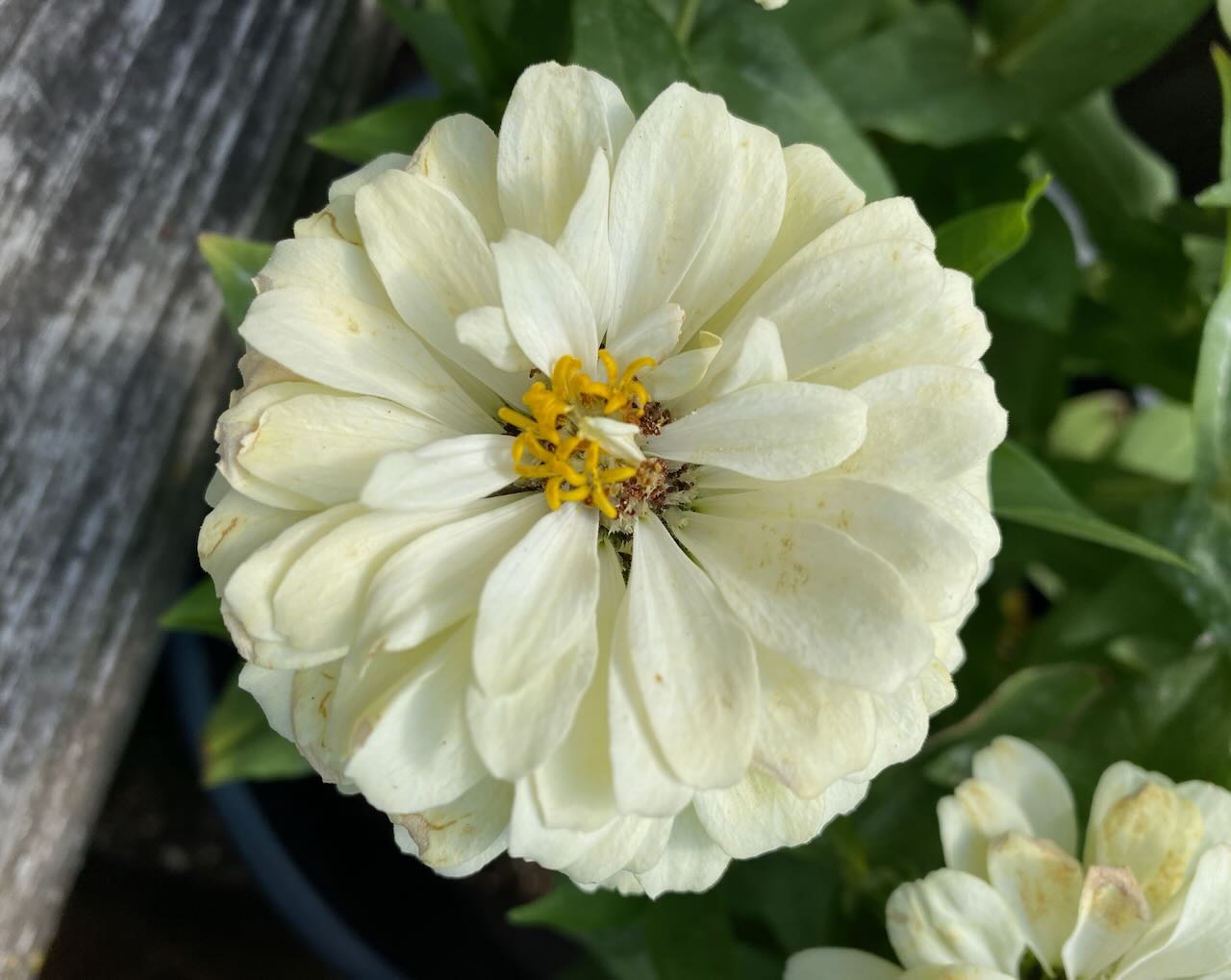
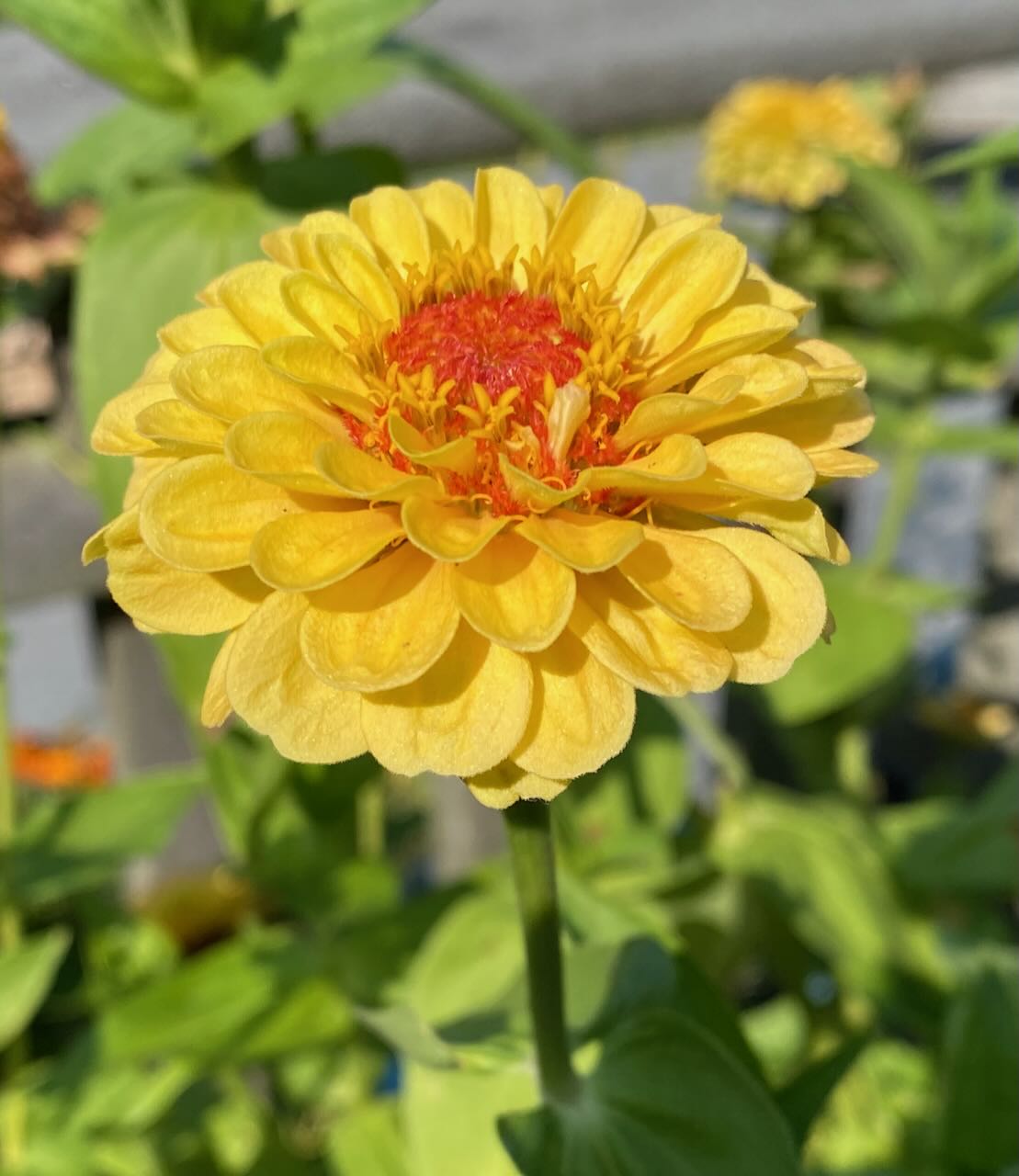
I once had a job as a substitute art teacher. The class was an elective for seventh graders but, truth be told, many were there because their first choice elective was full. They really wanted to be swimming. They said they couldn’t draw. I told them the problem was, they weren’t seeing what they were looking at. I gave each of them paper, pencil, and a zinnia fresh cut from my garden. Pretend, I said, that you are an ant, crawling around the edge of each petal, all the way to the center of the flower. Draw the ant trail you will make. They did, and they were amazed at what beautiful drawings of zinnias they made.
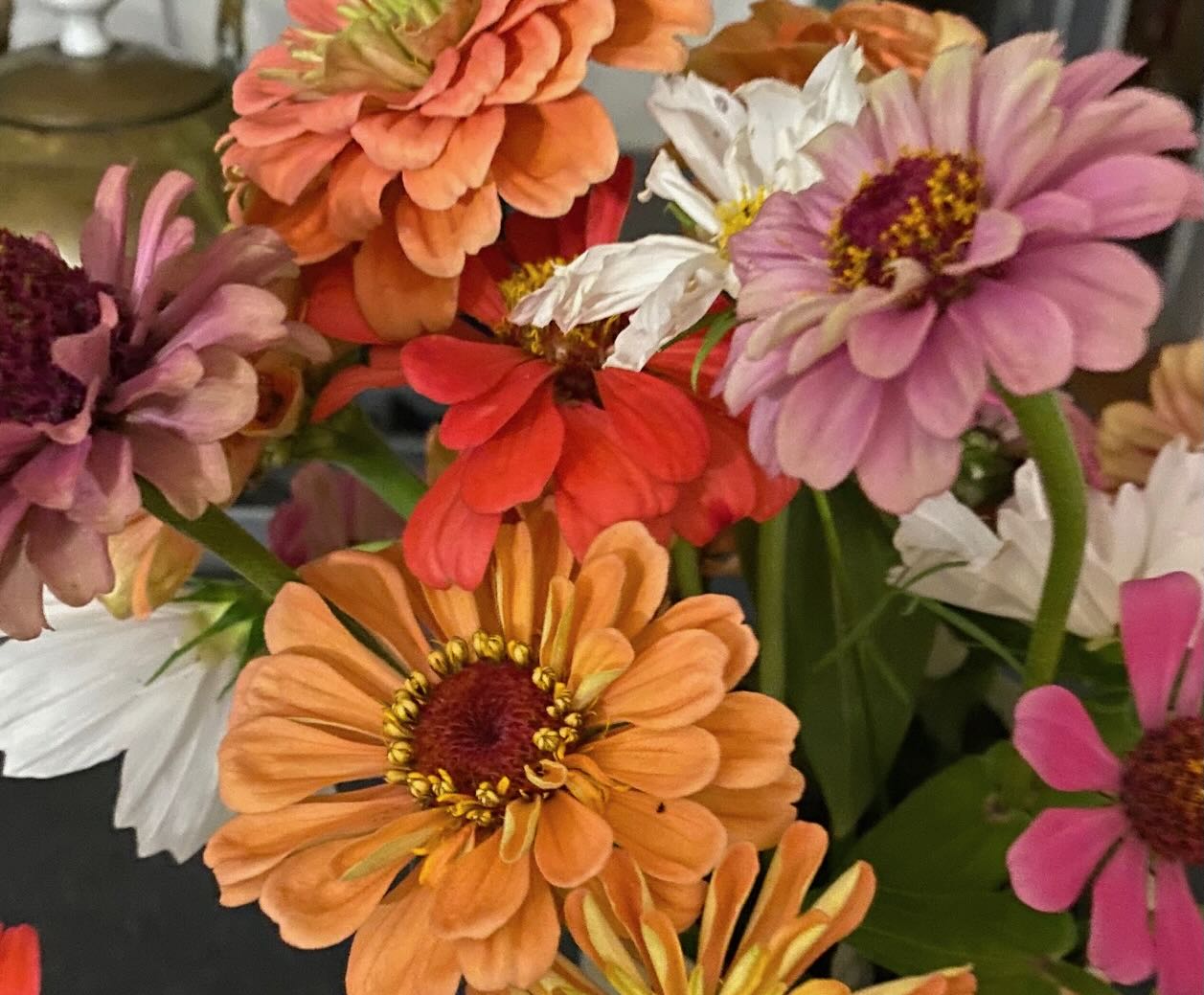
It inspired me to write a poem about an ant on a zinnias – Magellan of ants, traveling around and around, discovering a universe mysteriously changed from what it was when he started out, in the garden. As Georgia O’Keeffe once said, “…nobody sees a flower, really – it is so small—we haven’t time—and to see takes time…” I grow my zinnias from seed and fall in love with them, and when – as often happens – I feel I don’t have time to paint them, I take these photos.
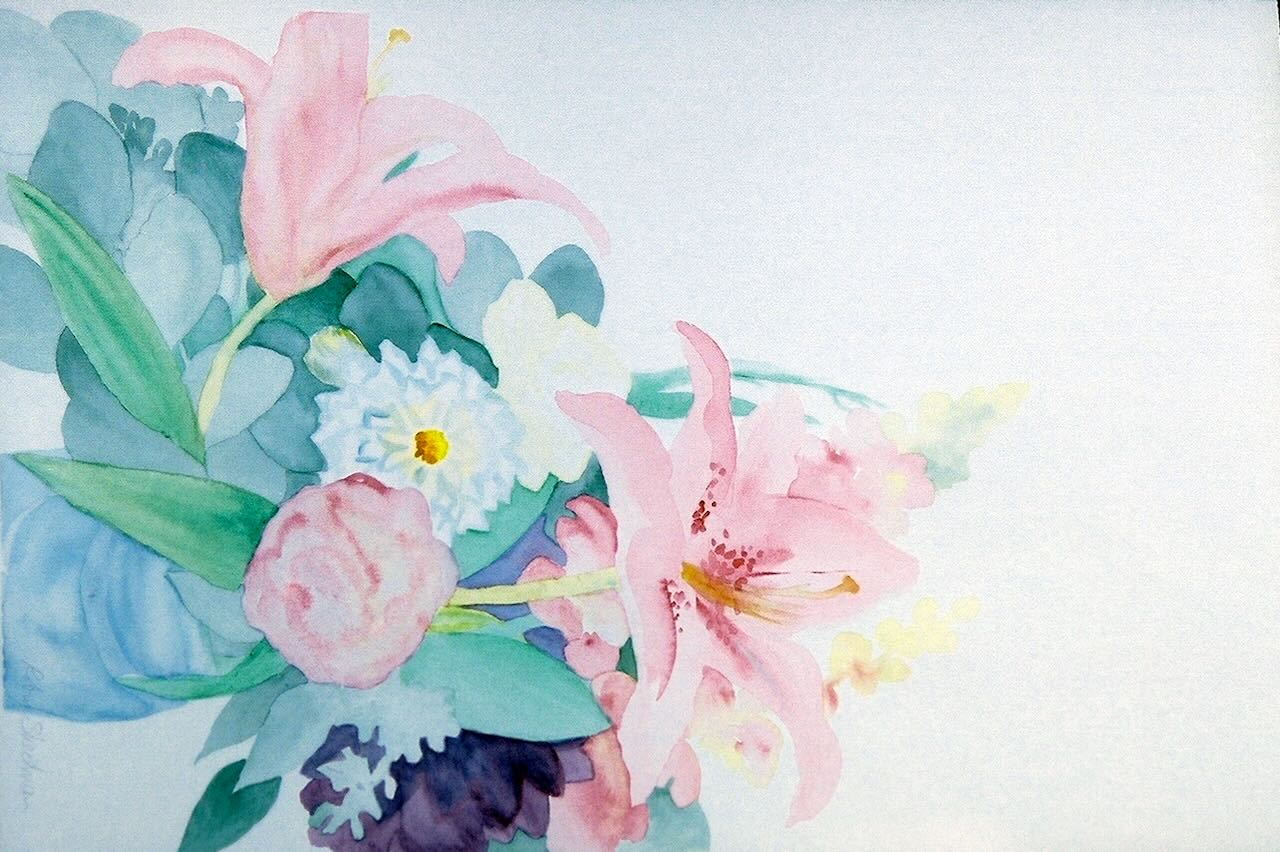
But I see them better when I paint them. The store-bought lilies and rose dominate this painting, but that’s one of my zinnias nestled in the middle. The lilies had a fabulous scent; I can smell it every time I look at this picture.
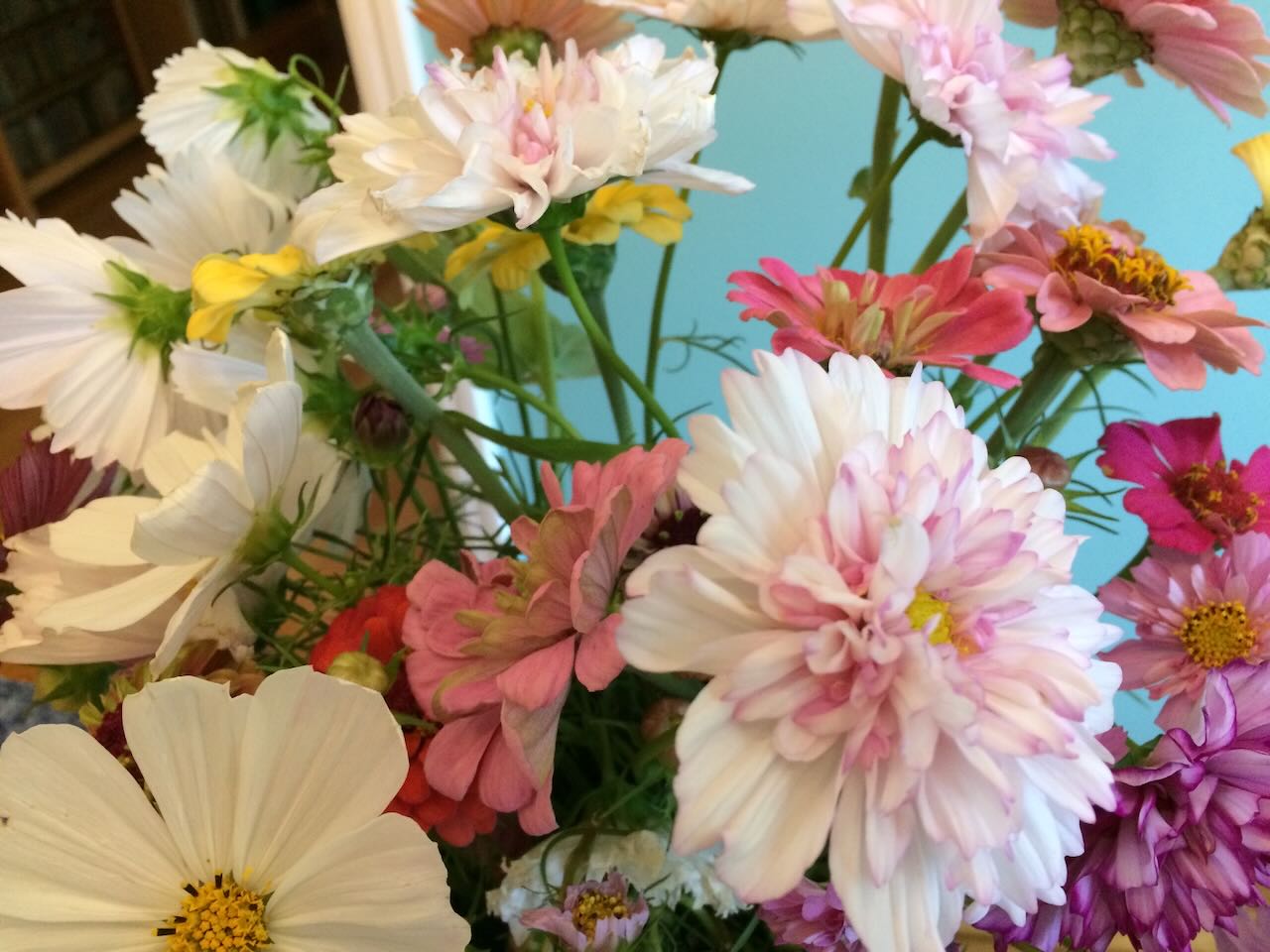
But my main garden flowers are zinnias and cosmos. I wrote a poem about cosmos too; it ends: “Vain petals like a pinwheel/drop in a sudden shower/who would name the universe/after such a flower?” The cosmos flower is said to symbolize order and harmony, most of them having a simple structure like the one on the bottom left of the photo. But because we can’t leave well enough alone, the outrageously ruffled beauty in more or less the center is cosmos, too. A more complex universe; it mixes well with zinnias.
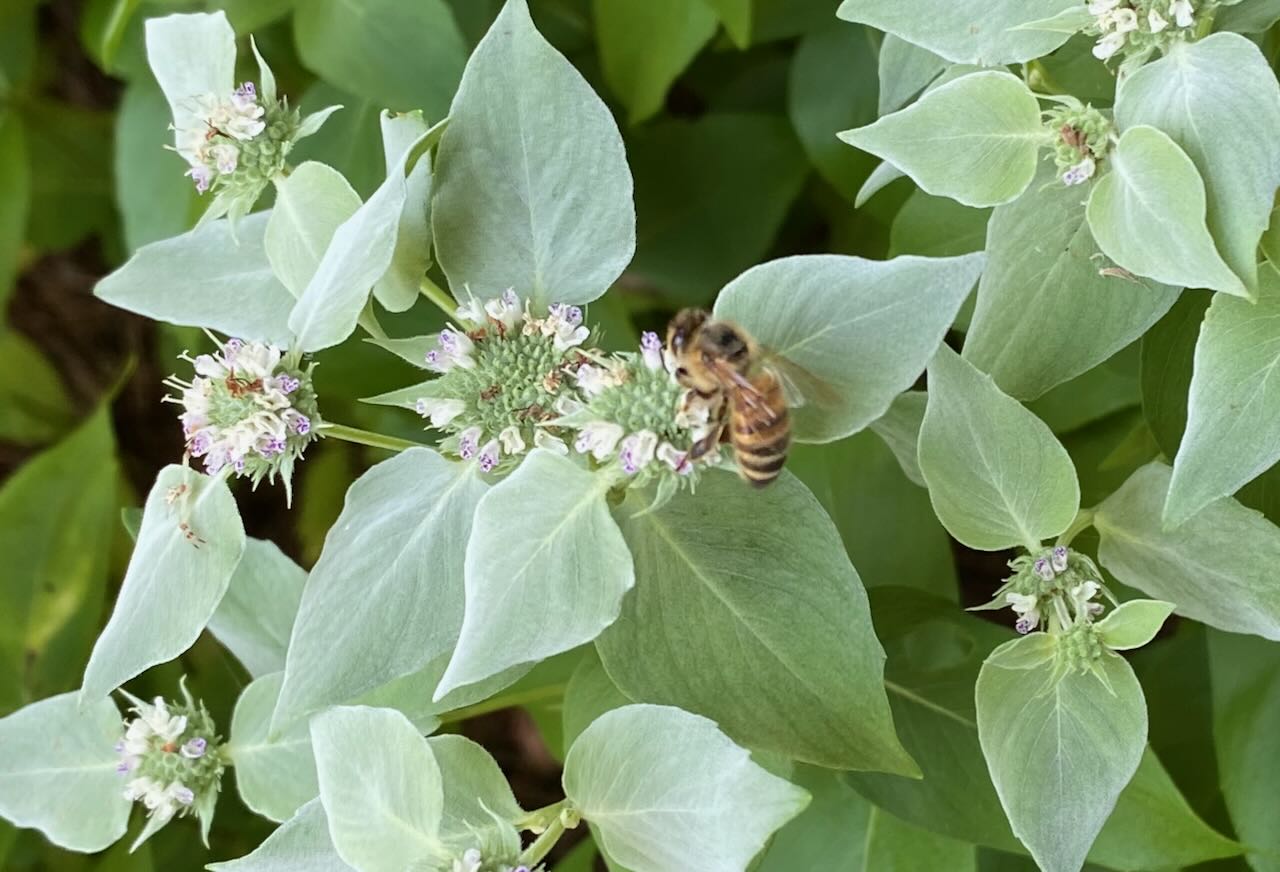
I was walking through the yard, hoping to get a photo of actual ants on actual zinnias – it happens – when a gently buzzing sound made me realize what I was more likely to find on flowers. Bees. The mountain mint, in bloom now, was covered with them. Bees don’t mess around circumambulating – they head right into the center of things. Purposeful, confident, no time to stroll around. They know what they’re looking for, and they find it.
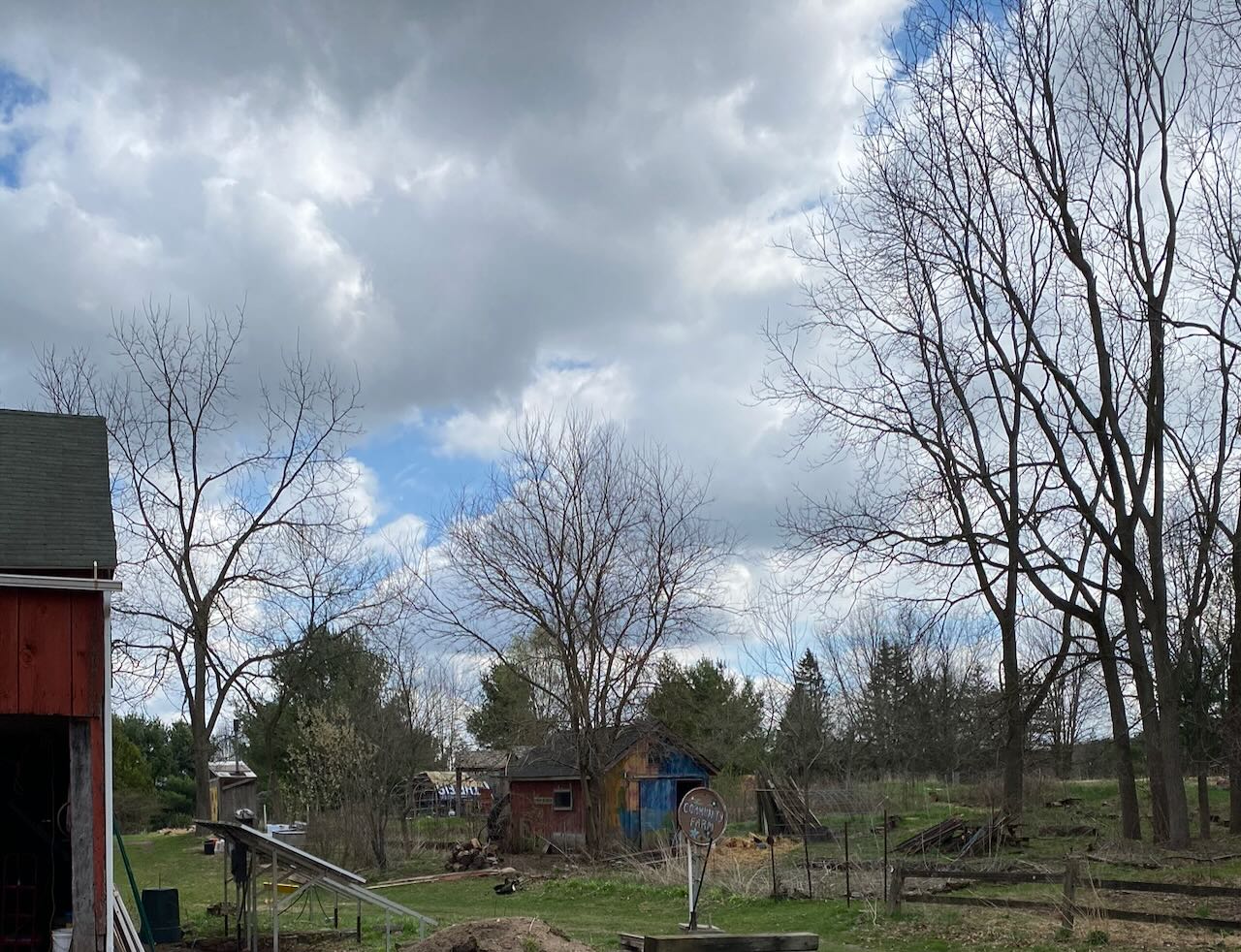



 I was puttering at my garden bench when I noticed a lot of bees whizzing past me. A little inspection revealed that they were coming from – and going to – a hole in the ground, just inches from where I stood. I set a large flower pot right up next to it, not to block them but to block me, from stepping into the nest. I’d seen a ground-bee colony once before, but had never looked up their lifestyles. This time I did: Mining Bees, genus andrena.
 The local botanical garden says they’re important pollinators of the Michigan native black cherry tree, carrying 18 times more cherry pollen than other bees. I have several of these trees in my yard, including one that hangs over the deck and makes a total mess for a month while the cherries fall. The cherries are small with a tiny, thin layer of flesh around the pit, so you could boil them up for jelly but you can’t eat them unless you’re a chipmunk. I do like to watch how the chipmunks fight over the cherries though there are enough to feed a whole neighborhood of chipmunks, possibly for the whole winter. So human of them. It briefly occurred to me that if I got rid of the bees, maybe I’d be pestered with fewer cherries. But I find the industrious, focused little bees endearing, so that’s out. They’re also big on pollinating tomatoes – thank you, bees – but my tomato blossoms are definitely too few these days for this much bee traffic. What’s blooming now? I have lots of zinnias,
 many marigolds,
 some bee-shaped snapdragons. None of them mentioned in the article, and nope, no bees on these flowers.
 It was hard to follow the bees in flight. They soared way up high before they traveled on, and I lost them in the sun. But scanning the yard, I thought I could see where they came down again. It wasn’t listed on the Bee Menu, but for heaven’s sake, isn’t this where you’d go if you were a bee – an Autumn Clematis, just bursting with bloom? I didn’t manage to catch them in this photo, but they were there. Busy, like all the best bees.
