On our walk this morning, a neighbor coming the other way with her poodle paused and gave us a significant look. “The eagle,” she said in a conspiratorial whisper, perhaps so the poodle wouldn’t hear, “is sitting about four feet above the nest. Easy to see his white head.”
This slowed our walk down considerably, trying to remember where the nest was that we hadn’t seen since last summer. But then we heard that screamy call, so like a seagull’s; and then we saw the white head against the sky, and the white tail flicking like a sunglint in shadows.
Happy Fourth of July, national emblem. How’s it going? We still have a country, dire predictions to the contrary notwithstanding. Are we all resilient enough to make it through this era of incivility together? I put American flags out in the yard, red-white-and-blue bunting and garlands hanging from rails and flowerpots. It’s everybody’s country, and it’s everybody’s flag. E pluribus unum.
I’m decorating because we’re having a barbecue. We’ll grill burgers and set out lemonade and iced tea and beer, and in fine Midwestern fashion the guests will all bring contributions to the meal. There will be amazing salads and excessively delicious desserts, and cultural traditions from all over the world will be appropriated. I approve.
And then there will be sparklers. We won’t wait until dark because there will be rapidly-tiring children, and in Michigan on the 4th of July the sun sets at 9:15 and twilight lasts till ten o’clock. Sparklers are bright enough to shine in the late light, dancing and twirling across the lawn in hands of all ages.
Then the guests will leave, the sparklers will be replaced by fireflies, and neighbors who go in for noisy fireworks will set them off. I wonder if the eagles are secure enough in their own nests to sleep through it.





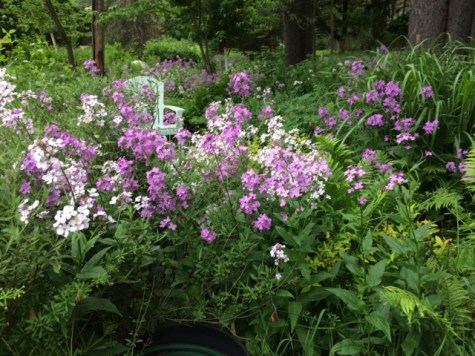 The dame’s rocket that was just coming out a couple of weeks ago has become exuberant. I’ve always loved exuberance in a flower and this rampant, luxurious petalmania is no exception. But I have also come to appreciate a certain kind of restraint.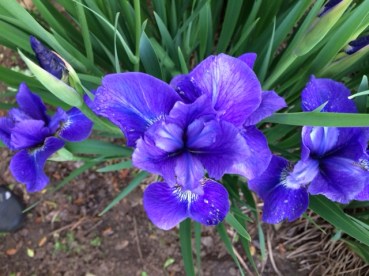
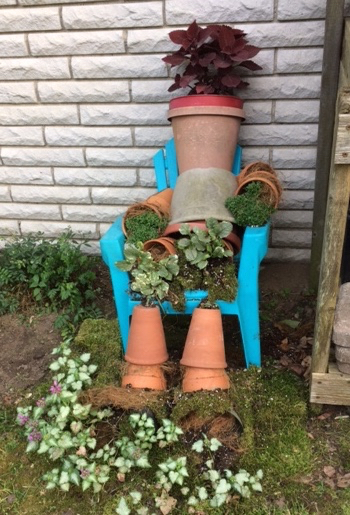 to my garden bench on the north side of the garage, and I’m still working out plants for her. Her lamium shoes have established themselves nicely, but it’s hard to keep her hands and knees watered, with the pots on their sides like that. These are all supposed to be perennials. Last year, her first on the scene, I tried Jacob’s Ladder for her hair, but though it’s doing very well on the ground there next to her, it didn’t like being in a pot. So this year she gets coleus, perennial in Pasadena but annual here. I won’t feel so bad when it dies. If it does well up to frost, she’ll get a new treatment in a different color every year, just like the hair of lots of other ladies.
 Sometime later I found out what war was, all loss, terror, and heartbreak, and then I was truly grateful for anyone able to pitch in and stop one. This meant the World War veterans, of course, but I had also heard of Victory Gardens. Now I thought I knew what they were – a way to stop war by getting people to garden. It made sense to me: if people put in the effort needed to grow things, to care for them patiently and see how beautiful they were, why would they want to blow them up?
 Here they are with tomato towers from two manufacturers: the galvanized ones from Burpee are heavier gauge, so they stand up to windstorms better; the green ones from Gardener’s Supply, which they call tomato ladders and which stack, are taller and support the tops of the vines better. I don’t have a favorite between them, and never having been one for matched sets of things, I like mixing both kinds. I have a third type of stake, too – the spiral kind – which I will deploy for the other tomatoes. I don’t use tomato cages. They make it too hard to weed, and anyhow, I like to claim I have free-range tomatoes.
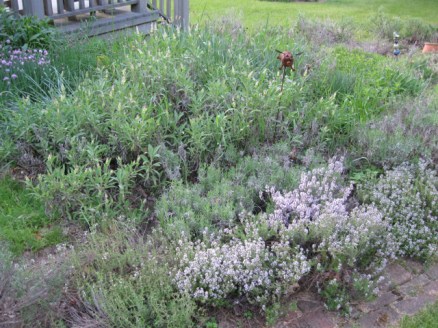 now and then, it really fends for itself. It has a long season, providing sage for Thanksgiving dinner and thyme whenever not covered with snow. The lavender, garlic chives, and chamomile are self-supporting, and it also boasts monarda, russian sage, and shasta daisies. The only annual is – or, will be – basil, various kinds, colors, and sizes. As soon as I get the aforementioned weeds out of the way.
 The lovely tall flowers blooming all around my chair here are dame’s rocket – not phlox, as I thought when I first saw them. Many people put them on an equal footing with garlic mustard and react to them with horror, but they are way less trouble, much easier to keep out of places they’re not wanted. And the deer don’t eat them, which is not true of phlox.
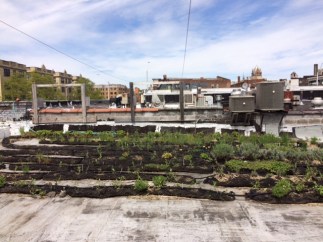
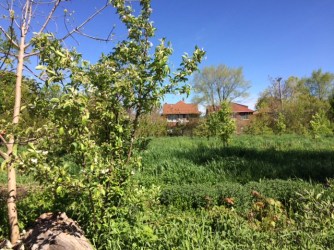 This combination would seem to make urban farming an obvious win, but as we learned on our tour, there are many complications. The soil is poor, and full of debris; the city still has many restrictions in place that limit farm options; and then there’s the human factor. For every group happy to have the tomatoes, there’s a group that wants its city back. What is the best use of this land? What is the possible use of this land?

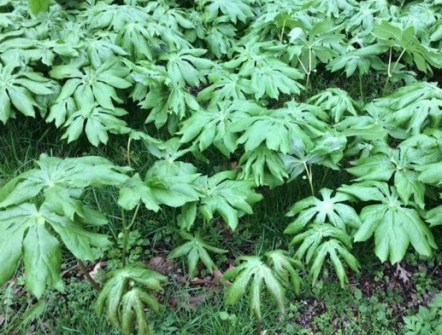 I had no idea what they were, so I posted a photo to Ann Arbor’s Natural Area Preservation facebook page and they identified it for me, along with their compliments on the garlic mustard removal. Mayapple. On further inspection each leaf had a dainty white flower under it, sort of like a lonely apple blossom; but the entire plant was poisonous. So my initial impression was correct: sinister. It’s interesting to think that we have some kind of inborn recognition system for dangerous plants, and intriguing to wonder who decided to undercut that native wisdom with a perhaps cynically chosen name.
 The year before last I planted two small dogwoods and the deer nearly killed them, stripping off bark as they used the trees to scratch the so-called “velvet” from their new antlers. Seems like they could at least have dropped the old antlers in my woods, in exchange. But in the fall I wrapped some protective material around the trunks and they are now recovering, even blooming a little.
 Robin Richstone