These are the days when the snowbirds come back to Michigan from Florida, and voice their disappointment that winter has outlasted their vacation. As a light snow drifts down, powdering bare patches of ground and outlining tree branches in that particularly attractive, lacy way, I rise to winter’s defense.
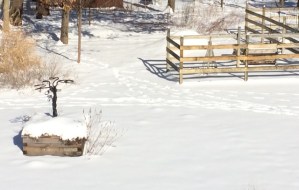
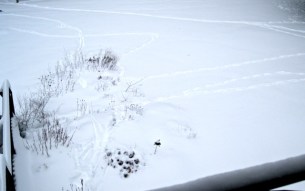
 First, winter is informative. The structure of trees, the depth of woodlots, the secret nests where birds and squirrels made their summer lives, are revealed both by the absence of leaves and by the snow echoing and outlining them. Shrubs that were a green curtain in summer become transparent, revealing burrows and pathways previously unsuspected. The snow clearly displays the tracks of animals you may never have seen, but which you now know have laid claim to your garden. The clarity of winter explains many things that were mysterious the rest of the year.
Second, it is restorative. There are plants, peonies for example, that do not flourish in warm climates because they need winter to rid them of parasites and buck them up for another round. For humans, it’s an opportunity to sit quietly and think about what to do next, to reassess last year’s efforts, successes and failures, and where things might be improved. This is specifically true of the garden, but not limited to it. Our entire culture recognized this long ago when we located our New Year in winter, in spite of so many other cultures placing it in spring. Spring is a new beginning, yes, but new beginnings go better if some planning comes first.
Third, to wish the winter was over is to wish away a quarter of your life. The older I get the less interested I am in speeding up the passage of time.
Fourth, it is beautiful. Can anyone be looking at the winter-wonderland effect 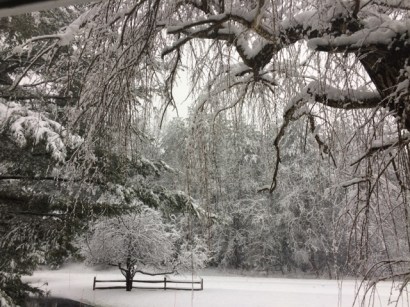 of a snowfall when they say winter is gloomy? Michiganders will see high, bloomy, rolling clouds and say the sky is grey, but if you’ve never lived with the “June Gloom” of the west coast’s seasonal low fog, you do not know what grey is. Yes, it’s cold outside, but you need sunglasses when you walk out in it.
The equinox is still a week away, so winter is entitled to hold the field. I see the hellebores are already shaking out their flowerbuds and the daffodils are nosing up, so those who are impatient for spring can take comfort. Meanwhile, I am going to sit here by the window with my cocoa, enjoying the season at hand.


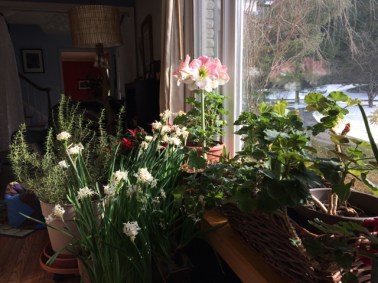 of the window, with my cup of cocoa and my indoor plants. The narcissus is about done and the amaryllis are starting. Geraniums, rosemary, and poinsettias are vacationing in their private tropical island, and will go home to the deck come May. But it’s that slice of snow you see in the middle distance that brings me a happy, settled sense that the world, despite all rumors to the contrary, is going on as it should.
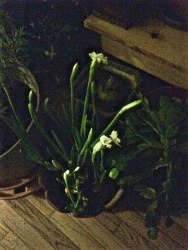 now? Their daffodil cousins are happy enough living outdoors, sleeping under a nice blanket of snow at the moment; but the paperwhites would die in the wilds of a Michigan winter. They are being coddled in here, with heat, and warm storebought soil, and water in its liquid state. They stretch luxuriantly toward the window. I may be waking them up, but no more than that. The force is theirs, not mine.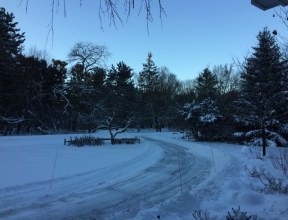

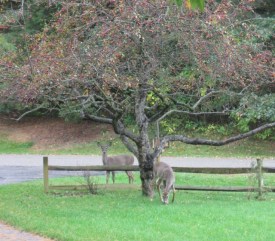
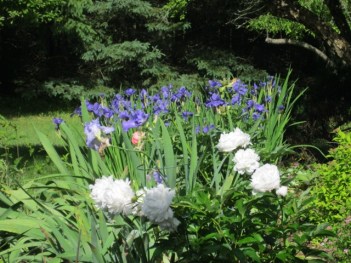 and thyme would stay green all winter; that deer didn’t eat fragrant herbs; and that it’s true, as they say, that the best thing for the garden is the shadow of the gardener. Not only did she give me advice, she also divided her peonies and gave me the divisions.
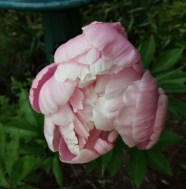 Kathy moved away from Ann Arbor to another place she loved, but she kept in touch with us. I saw her for the last time in the spring; this fall she died after an illness of a few months. But the world still holds her beautiful quilts; and the peonies she gave me are doing well, growing, and in their proper times still blooming, in my front yard.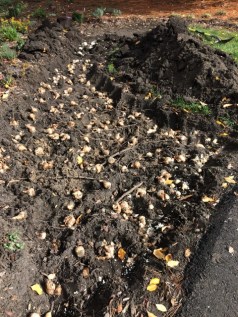
 October 26th. A frost advisory can lead to much agonizing – what to cut and bring in, what to cover and leave out – but this time it was clear. Harvest everything that was left, which wasn’t much. In the shortened hours of late October daylight very little was ripening anyway. I brought in my last armload of green and part-green tomatoes, and a few last cosmos and cornflowers, which looked oddly like William Morris wallpaper as they stood in their vase.
 the last remaining spot in the garden. He had offered to do this last spring, but I’d already planted the area in its unraised state so it had to stay as it was. Setting the bed up now would avoid timing issues next spring.
 Robin Richstone