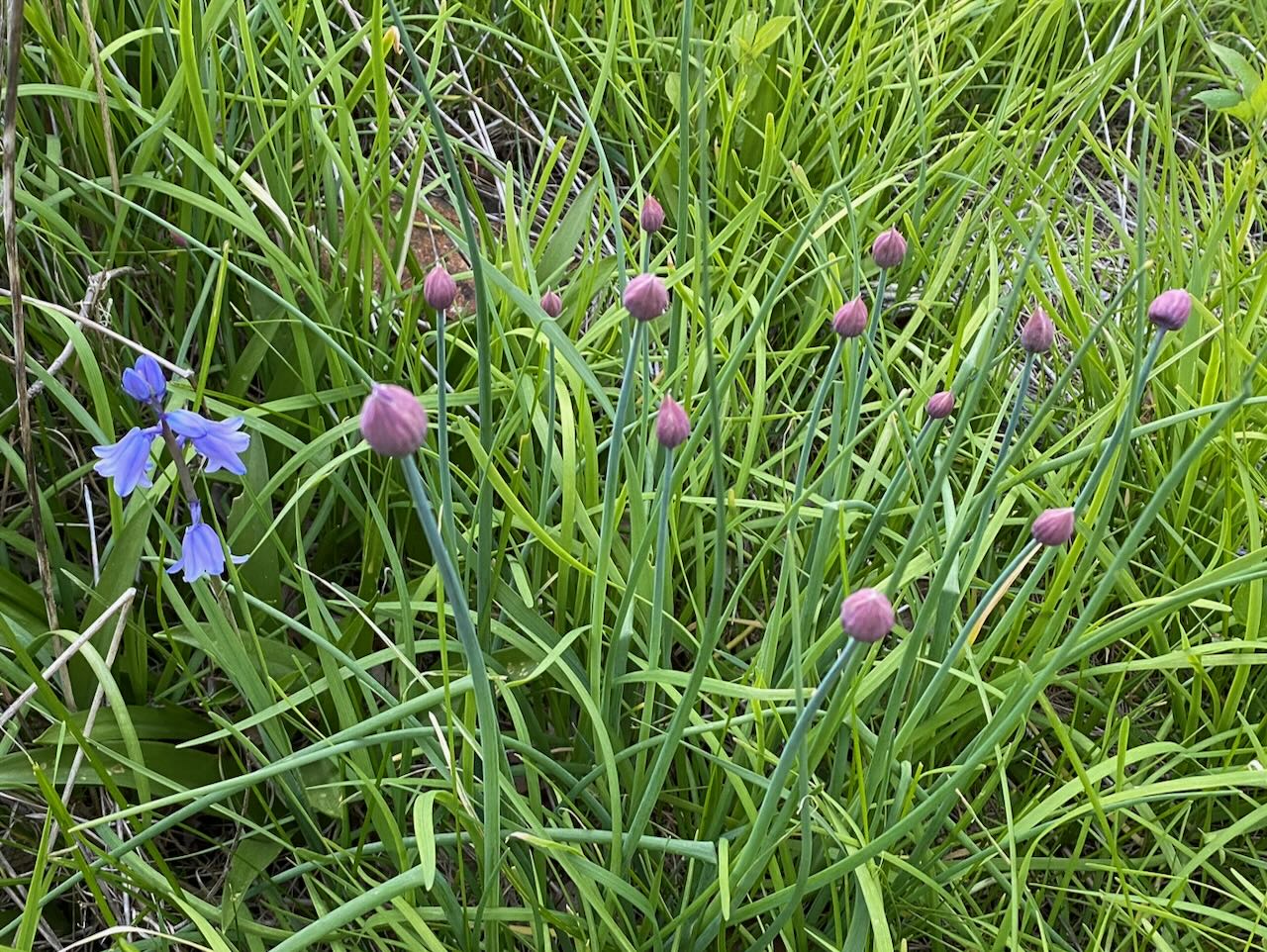
The weather’s been up, down, and sideways this spring, uncertain enough to keep my seedlings stuck in the house, looking out their sunny window as erratic frost rolls and unrolls over the lawn. But out in the yard, the perennials are not confused. The reliable chives wave their purple goodbyes to the daffodils, while the last of the wild hyacinths refuses to cede ground. Nice try, but nothing can stop the chives.
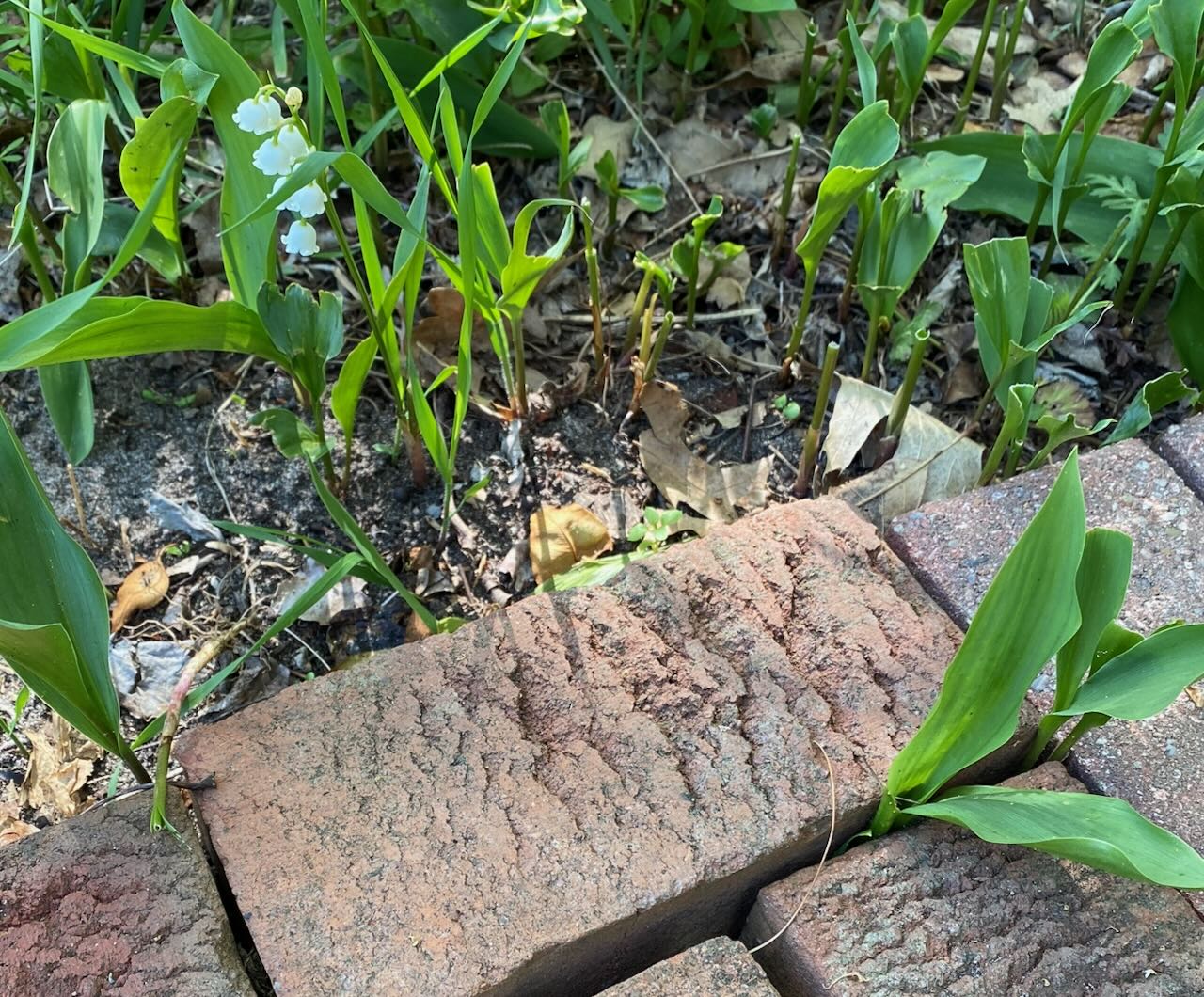
Across the lawn from the herb garden, at the edge of the woods, I’ve made a tiny patio of a few rows of bricks. It’s just big enough for a single chair, me, and a cup of tea, maybe a book. The lilies of the valley would like me to know, though they look dainty and possess the scent of sweet innocence, that they are a power to be reckoned with, and should have been consulted. Their outrider will move that brick if I don’t stop him.
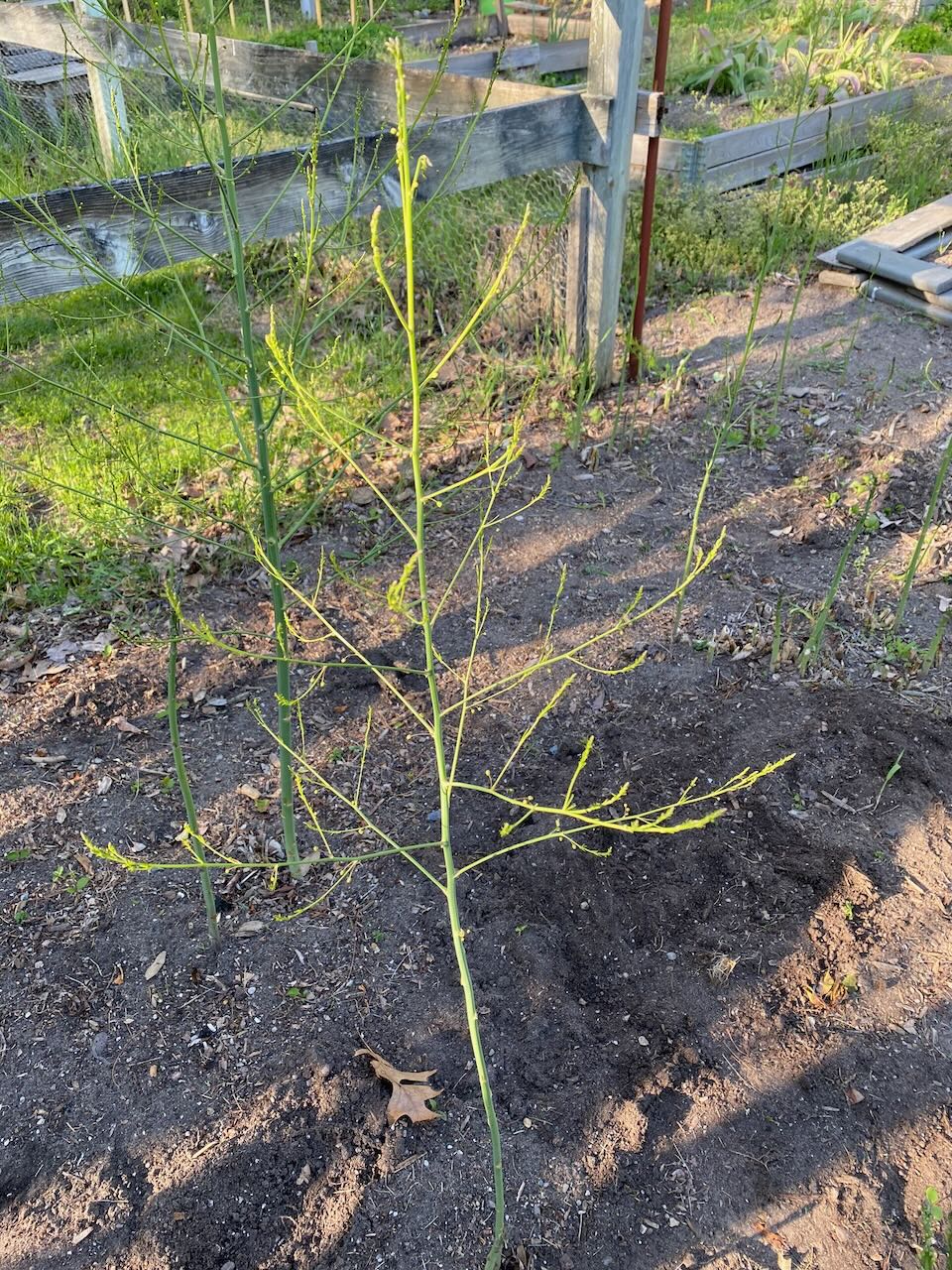
The asparagus, another perennial, has been poking its fingers up through leaf mold for weeks now, and the time has come for me to stop cutting and carting them off for dinner, and let them feed themselves instead. They’re at the stage now where they look like, well, sort of skanky Christmas trees – the tightly-closed tips expanded into branches, but the ferny leaves not yet fluffing them out.
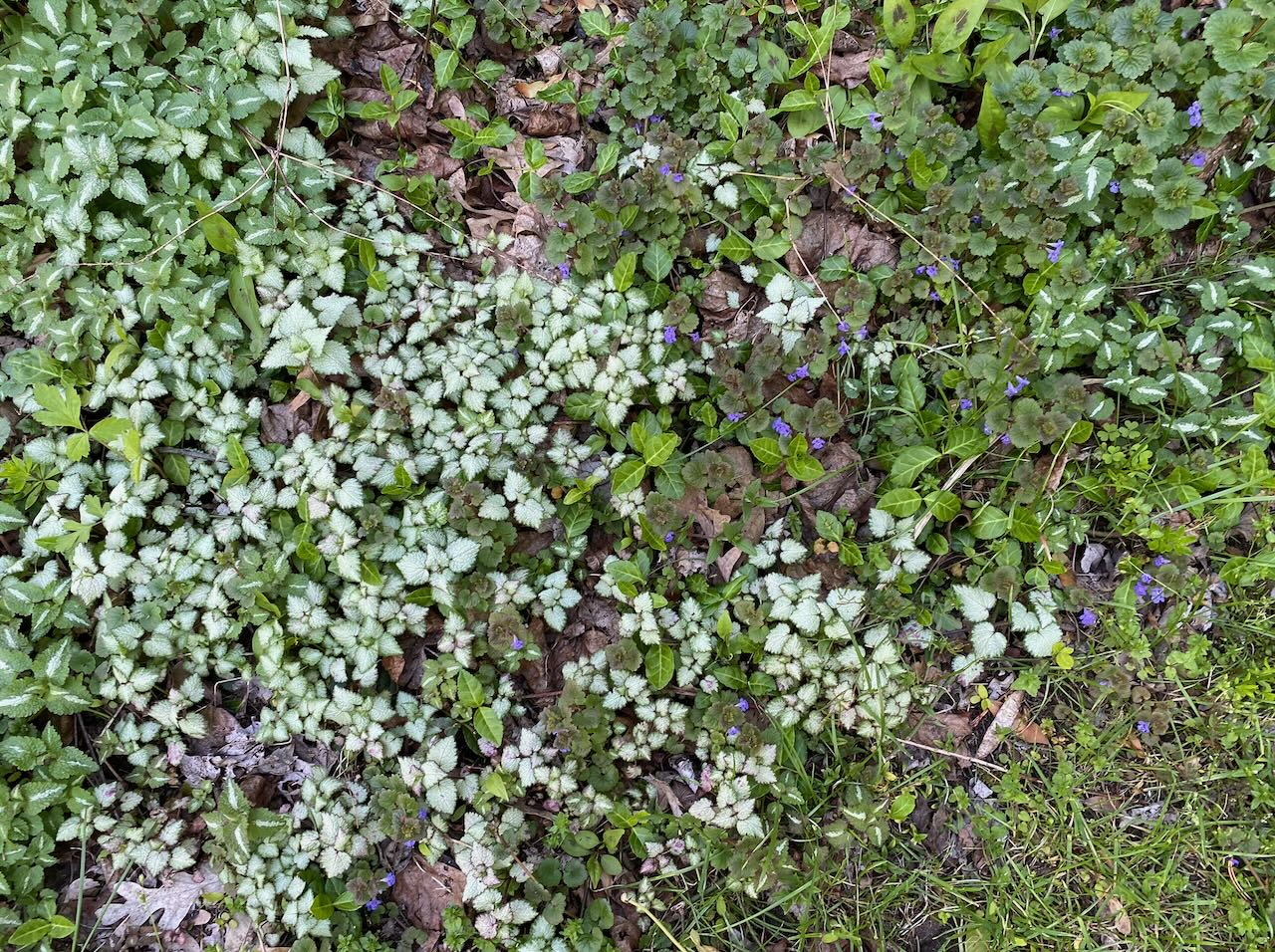
Sturdy, reliable, undemanding, how nice that these trusty plants come back every year with no effort on my part. My lamium, for example – such an excellent groundcover. But what’s that little purple flower sneaking into the picture from the upper right hand corner? Creeping Charlie! A weed! Alas, a perennial too, and just as determined to come back as all the others. The traits so wonderful in a plant you want, so aggravating in a plant you don’t. It’s hard to see their habits as the same, but they are.
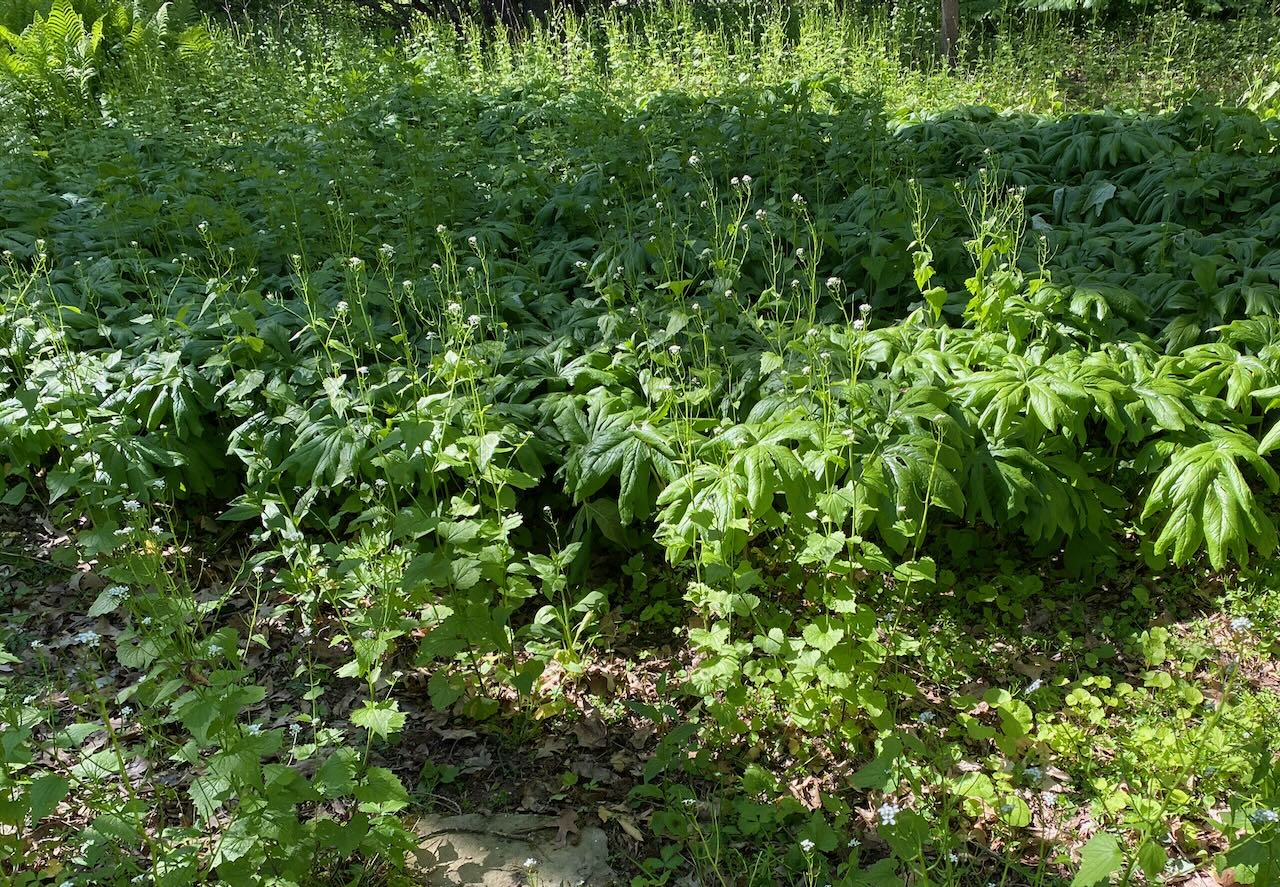
Take garlic mustard, for instance. Early colonists brought it with them as a desirable salad green, but few here today consider it palatable. Including me – I’ve tried it. It’s not perennial, but so profligate of seed it might as well be. When I first moved to Michigan and saw stands of garlic mustard blooming in spring, I thought it was lovely. Then I discovered its aspirations to world dominance. Its specialty is swamping the opposition in a bid to turn diversity into monoculture, as though some mega-chemical company were in charge. If only my basil would do that.
 Robin Richstone