
August is summer with a difference. Hours of daylight are still plentiful, but you can feel them drawing down, heading toward the equinox. No more strolling in the garden at ten p.m.; nights are cooler; but the harvest is rolling in. Tomatoes are coming into their own, and the squash – oh, the squash. I plant yellow crooknecks instead of zucchini so I have a chance to find them before they get as big as doorstops. Even so, they seem to have an amazing ability to be four inches long one day and twelve inches the next. I would be tempted to say they’re called squash because they squash anything else trying to grow near them, but being a wordsmith, of course I looked that up. One kind of squash comes from “quash,” a Middle English word now used chiefly for subpoenas, and the other from “asquutasquash,” from the Narragansett. It sounds like the Narragansett people taught the pilgrims how to eat some kind of squash they’d never seen before.

The Narragansetts would also have had blueberries, a native North American fruit. I came across an argument online about whether the Indians called them “starberries,” but was unable to delve into it because AI kept changing “starberries” to “strawberries.” Thanks, but I’m well aware that no one calls blueberries strawberries.
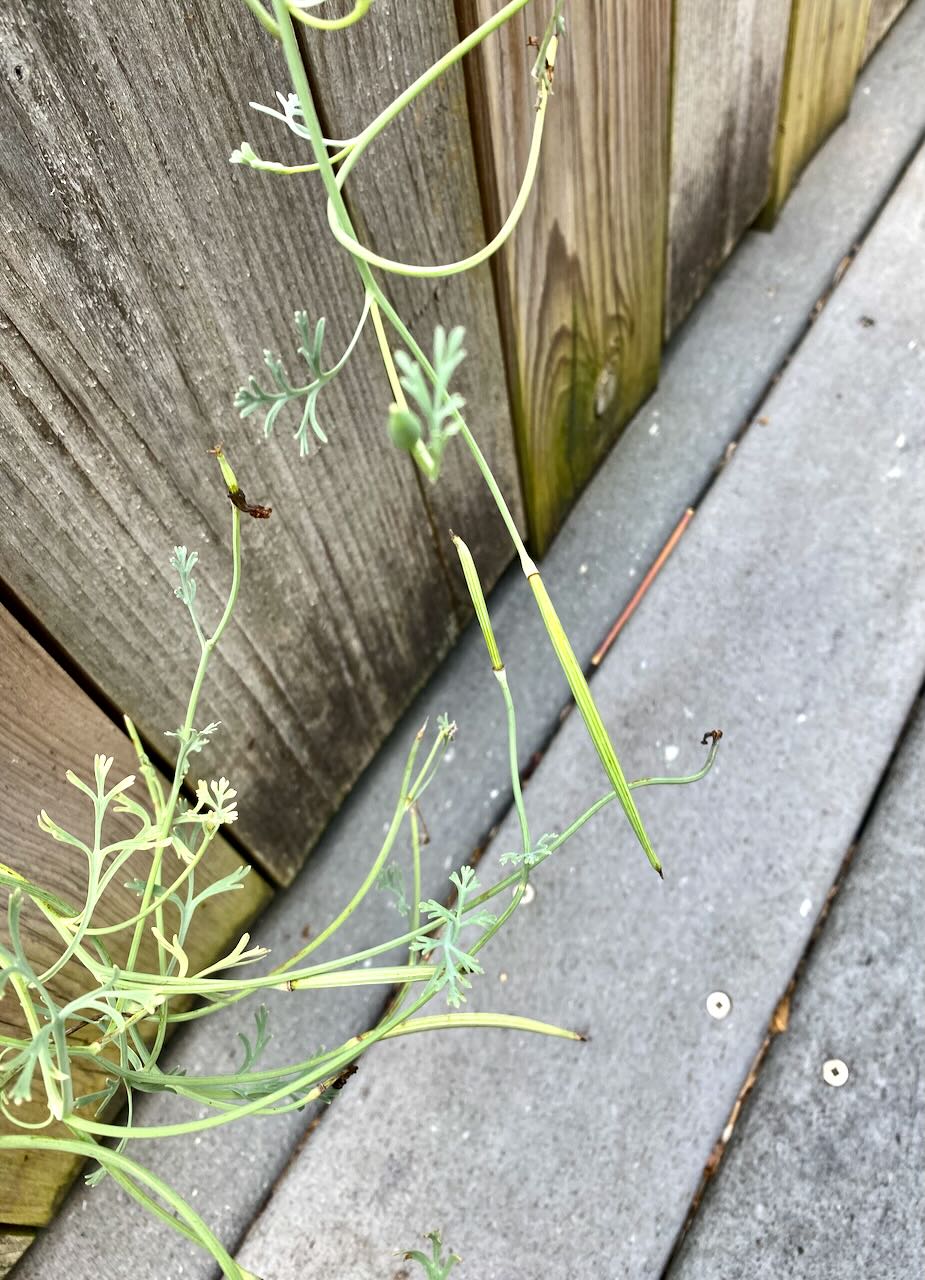
The flowers that produce seeds instead of fruit are also hard at work generating harvest. The seed pods of my California poppies are so elegant, I have sometimes tried to preserve them. They’d look lovely in a dried flower arrangement but they always burst open, their goal achieved despite my desires.

My zinnias produce new flowers and ripe seedheads in equal numbers right up till frost. They’re a mainstay of my bouquets, so I was disturbed one morning to find the petals munched off of a few of them. I spent some time searching carefully for miscreant bugs in need of control, but none appeared. A bit later, looking out the kitchen window, I laughed to see the riddle resolved: it was a goldfinch, ripping seeds out of the still-petalled seedheads. The petals fell to the deck, where they soon turned an inconspicuous brown. The stems bent over when he landed on them, but not so as to interfere with his snack. The really funny thing was that I was looking right at him thinking he was a bright yellow Cut and Come Again zinnia blowing slightly in the breeze, until he moved enough to show the black stripe on his wing. He was gone before I could get a photo of him at it.
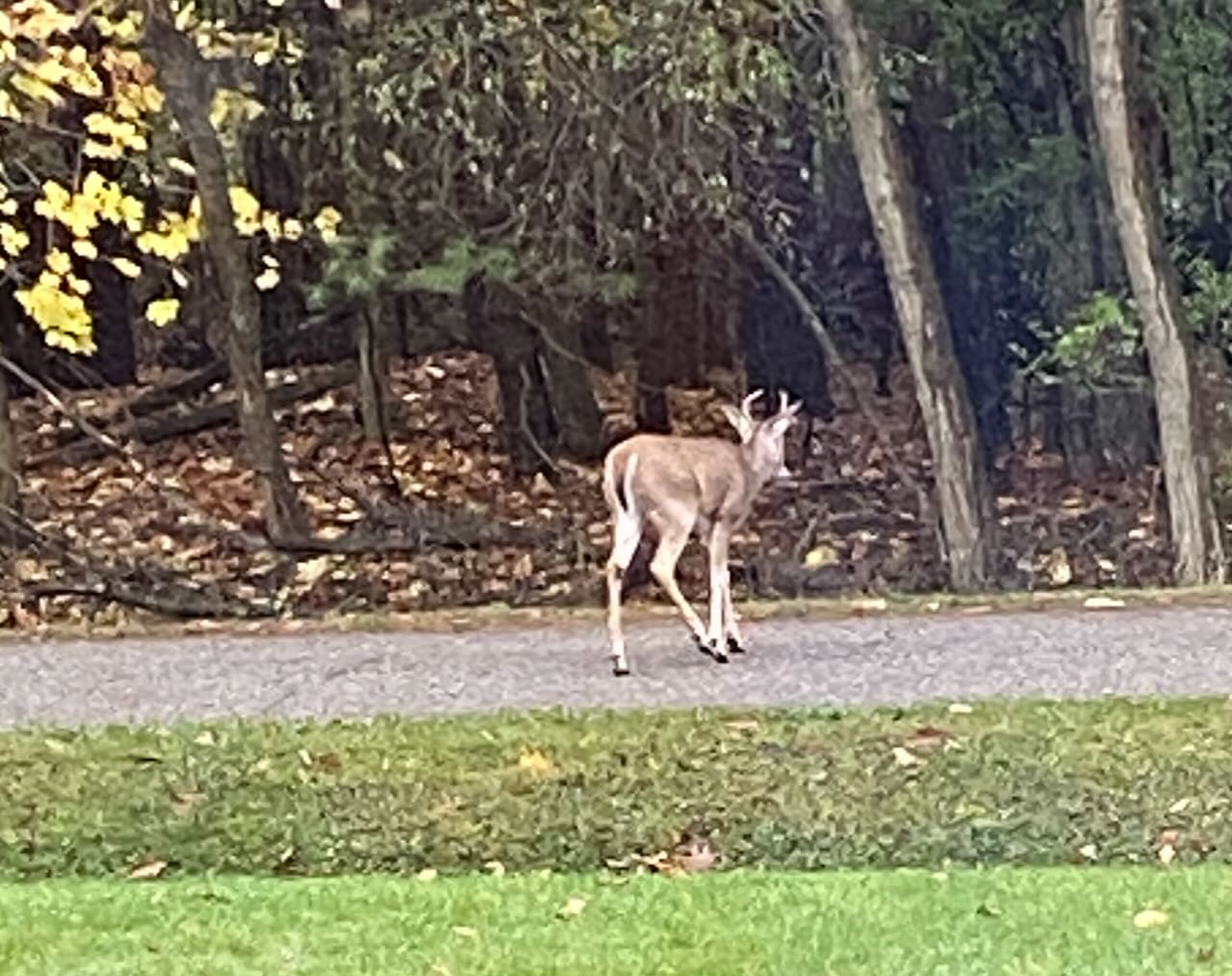 After weeks of summer and fall bumping into each other in a jumble, fall seems to be emerging triumphant at last. The stags are about done destroying small trees by using them to rub the velvet off their antlers. I’m still waiting for one of them to graciously leave his shed antlers in exchange – seems like the least he could do. Maybe this will be the year.
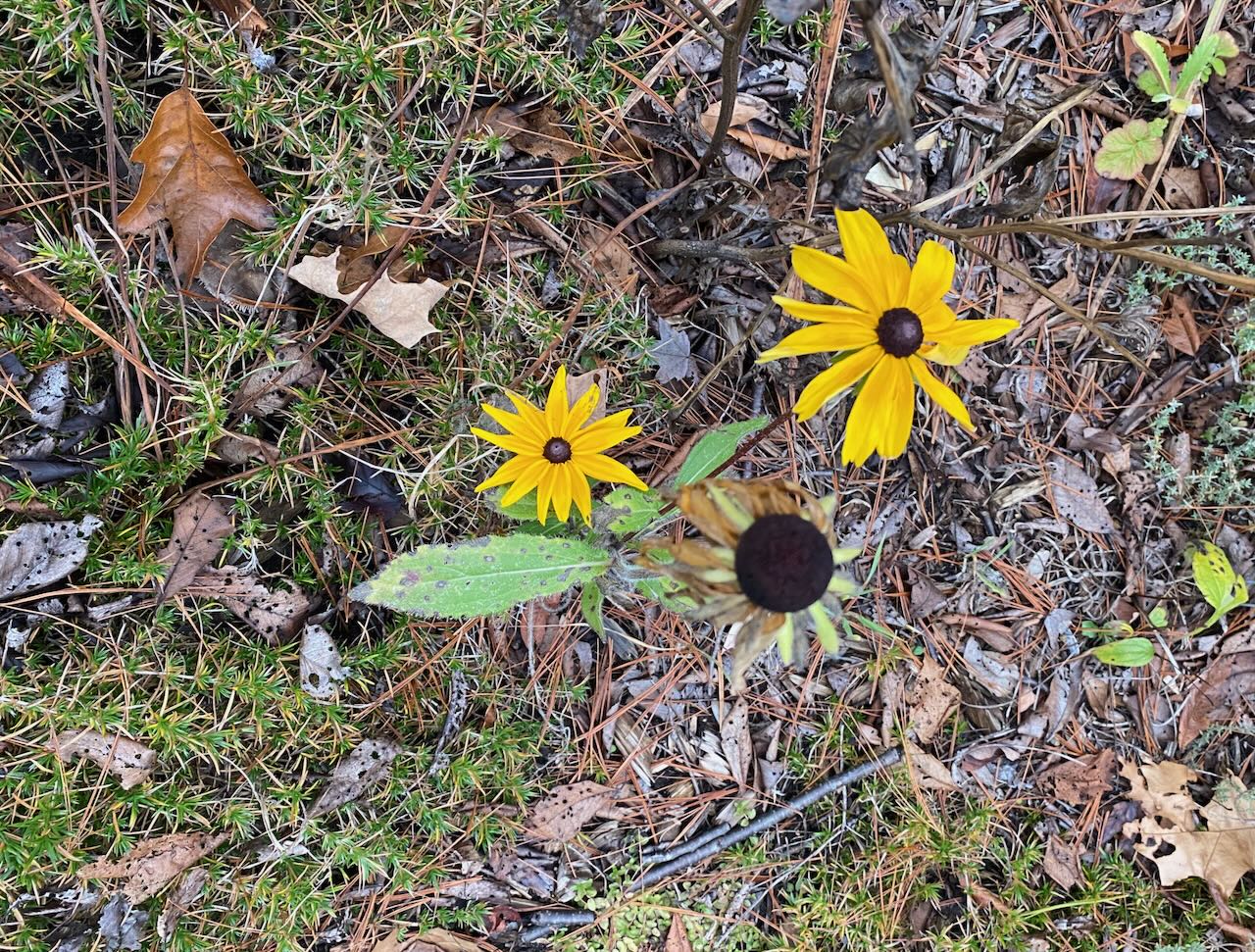 Between the light frosts and the subsiding hours of sunlight most of my flowers and tomatoes are gone, but out in front, facing south, one rudbeckia plant persists. It’s not the only rudbeckia out there, but it’s the only one still blooming. A mystery of nature.
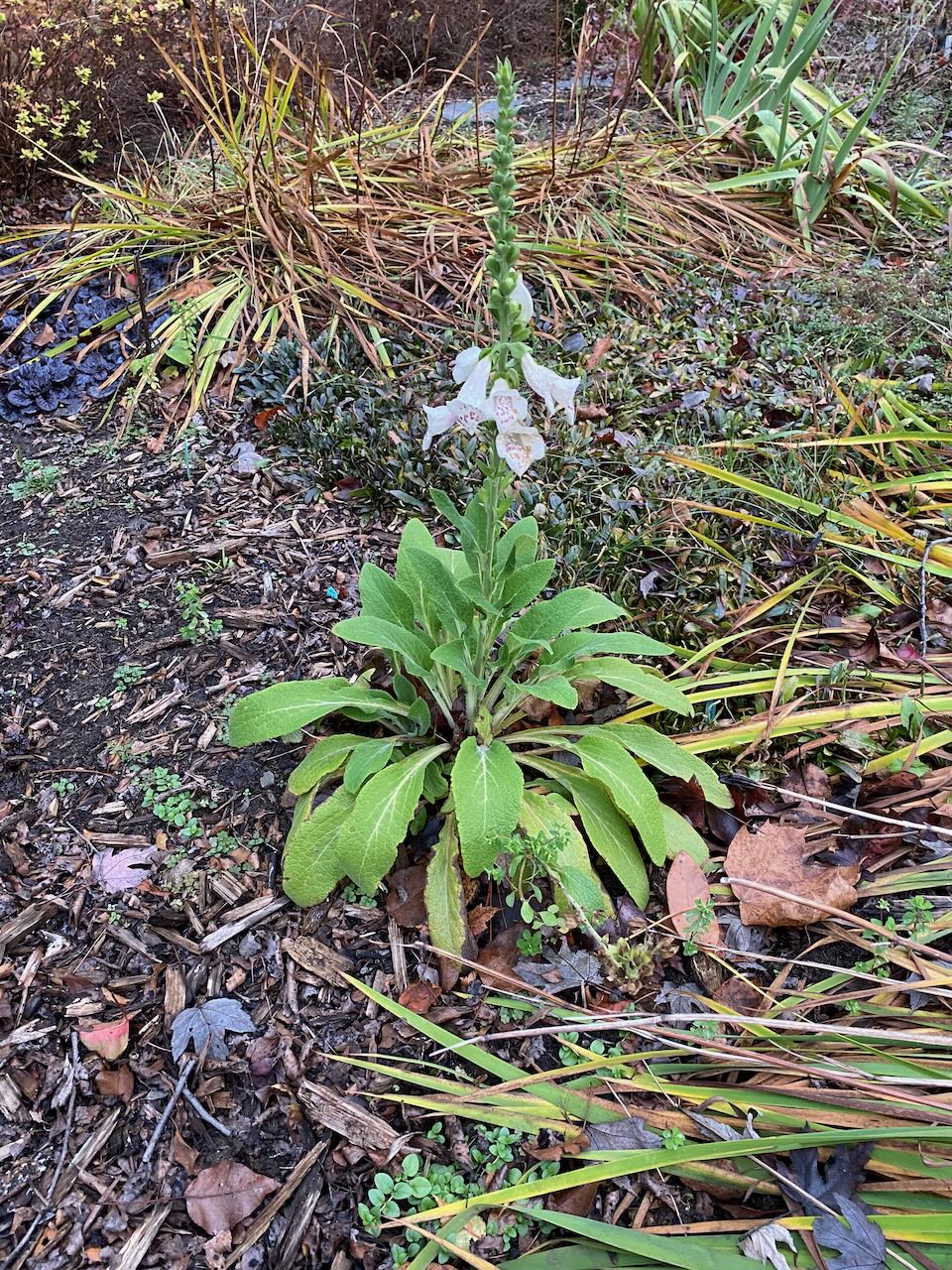 Over in the shady section, a single foxglove has re-bloomed. It was pink the first time, but has paled in the shortened hours of daylight. The foxgloves are spaced widely, so in their case it’s understandable that individuals may have different amounts of light, or shelter, or competition from other plants. Less mysterious.
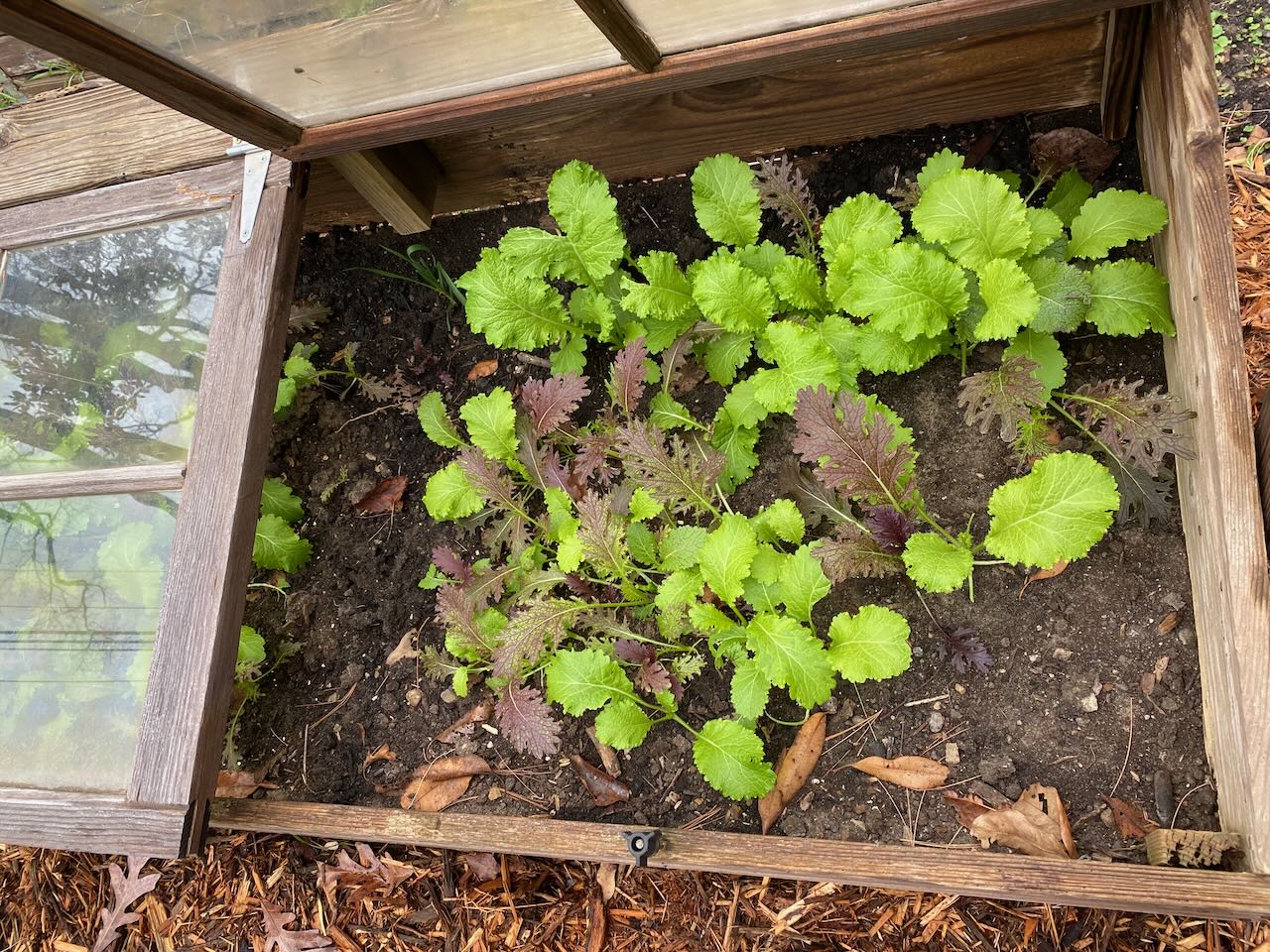 Out in the fenced garden, once the tomatoes were gone, I planted lettuces in the cold frame. They’re flourishing. This is very satisfying to me as a gardener, but the flaw in the plan is that I really don’t eat much salad in cold weather.
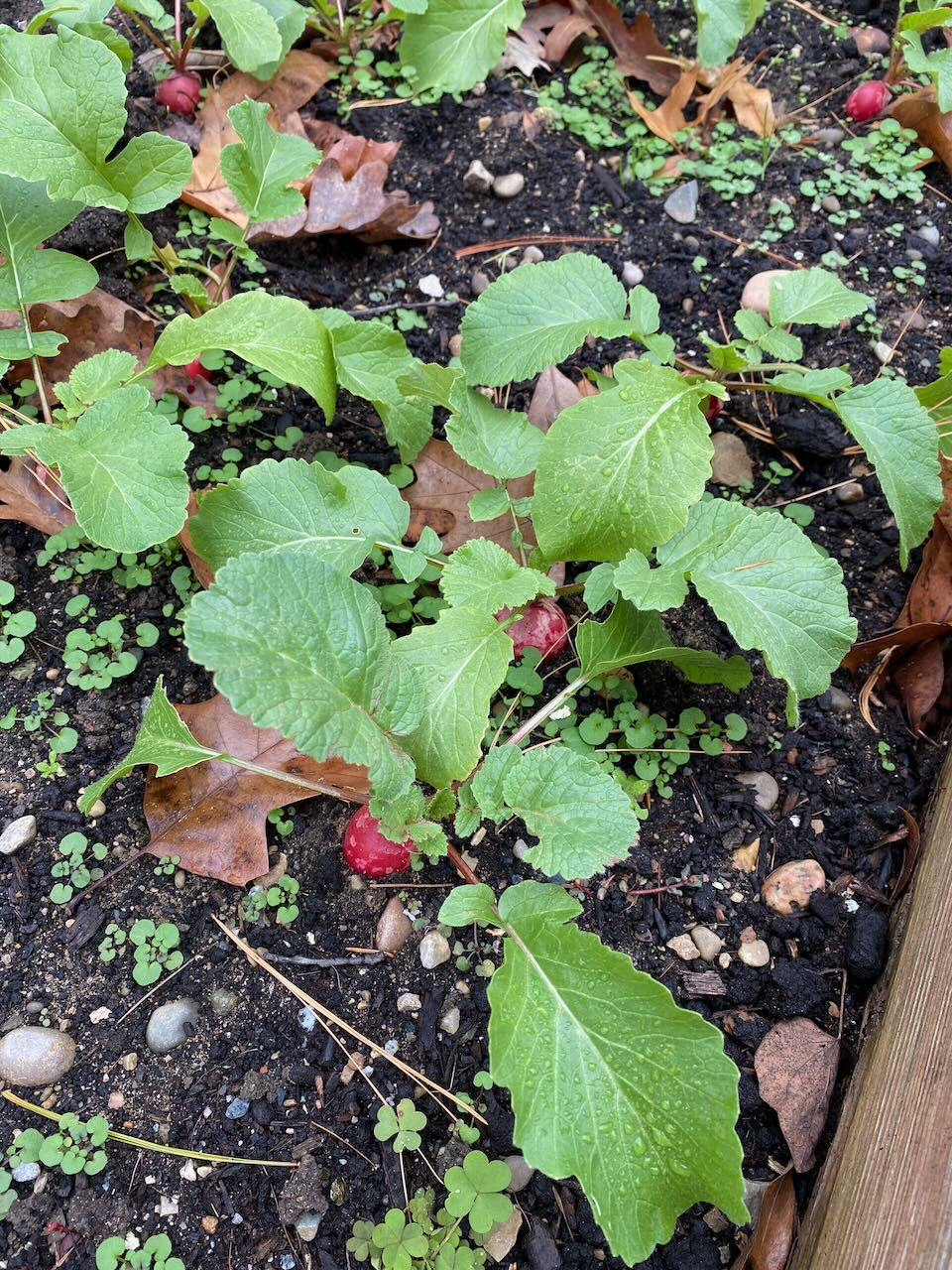 That was the trouble with radishes too, until I learned that they can be cooked. How did I get to be as old as I am, and never knew this? They’re so cute out in the garden, with their little round, red shoulders peeking out of the dirt, and they demand so little in the way of warmth and sunlight, I can’t resist planting them when random space becomes available. I’m still working out the best recipes for them.
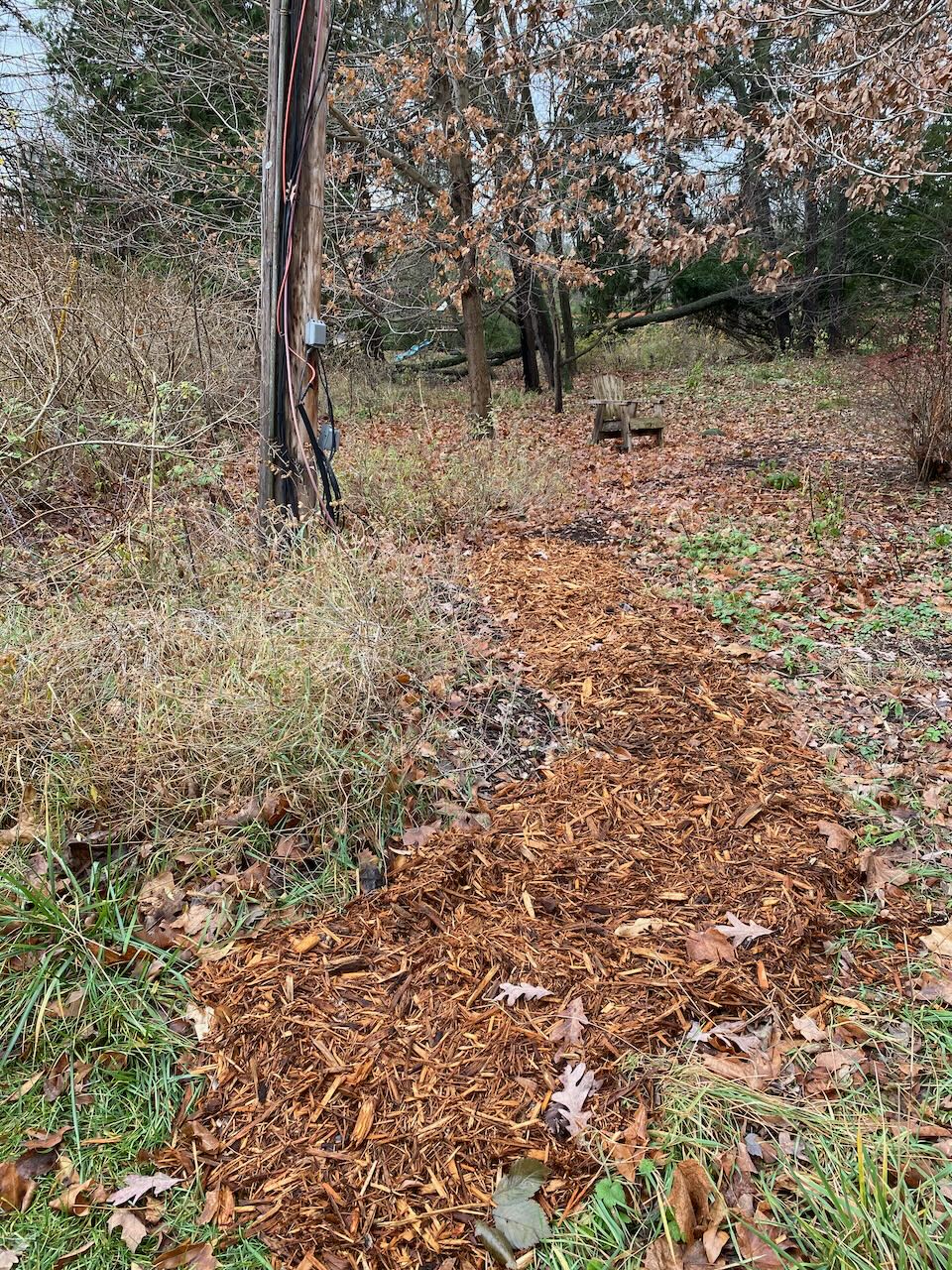 Meanwhile, the main path into my woods needed help. I spread several layers of the Sunday New York Times over the old path, poured a bucket of water over that so it wouldn’t blow around as I worked, and topped it with mulch. That will be one less thing to do come spring, when things to do are plentiful. As much as I love gardening, there comes a time when I really need a break. If spring is the reward for winter and harvest is the reward for spring, winter is the reward for three seasons of hard work. Just curl up with a good book and eat all those quarts of tomato sauce.
 Robin Richstone