Snow and Shadows

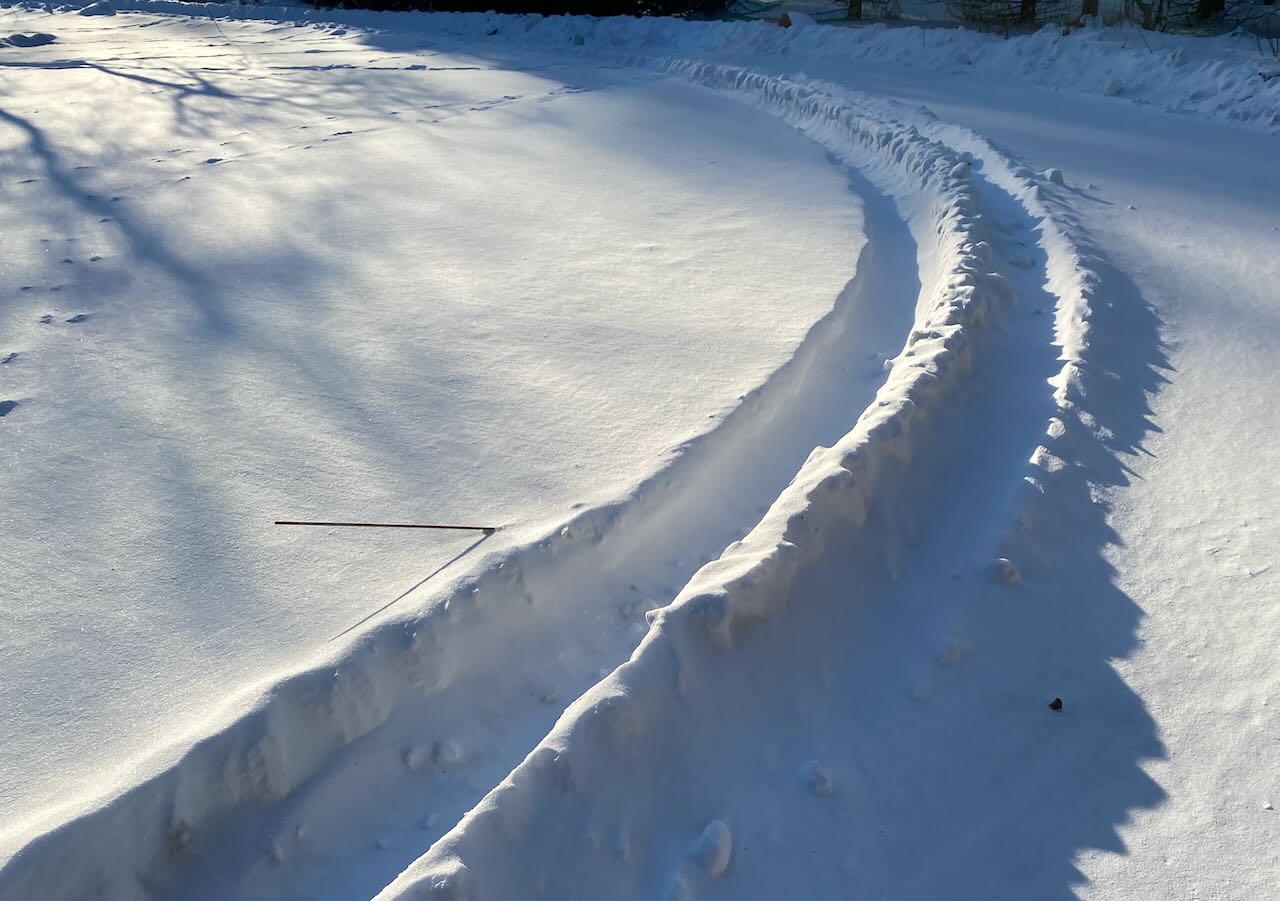
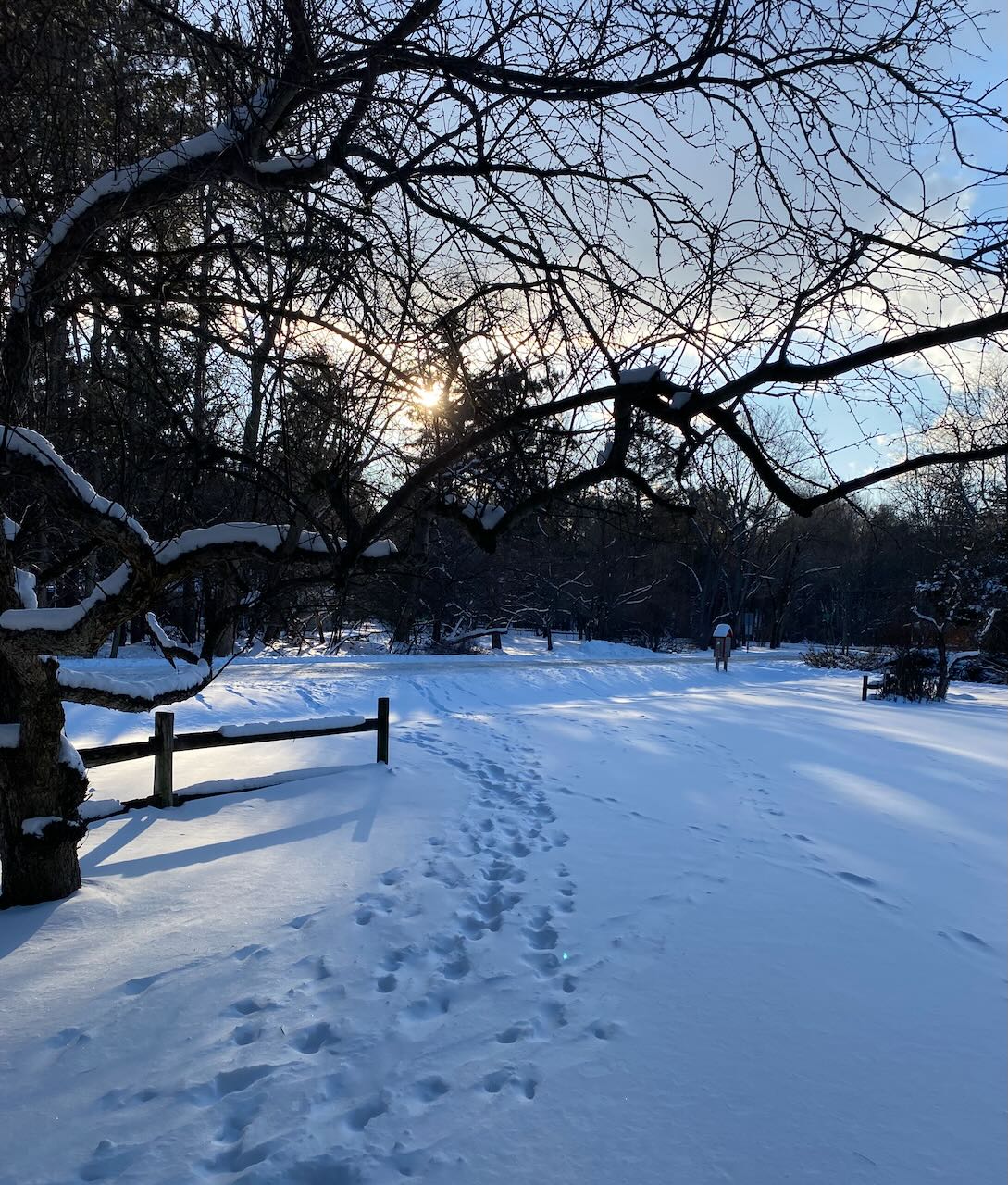
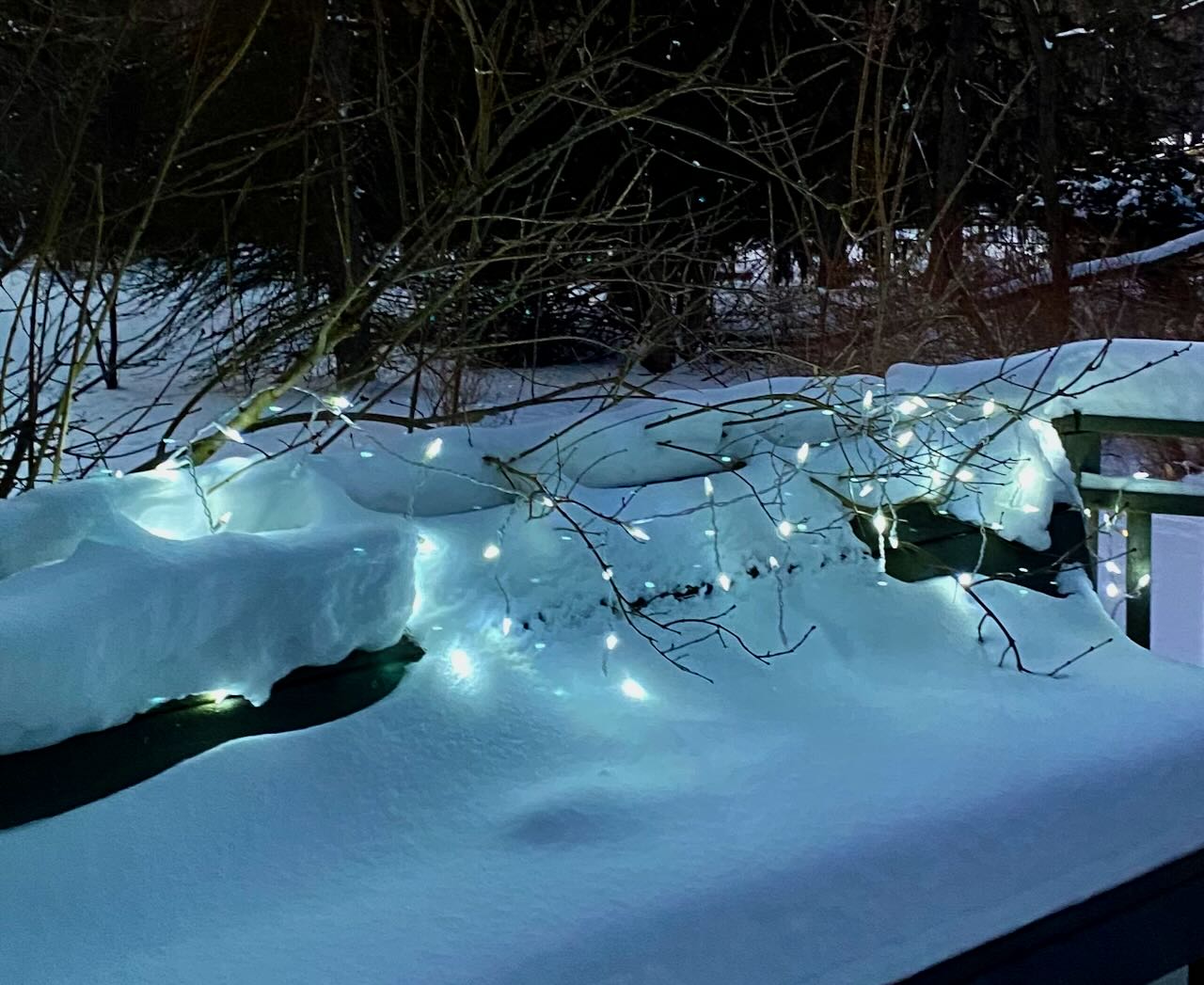
I put on my insulated snow pants, Doug’s thick, heavy alpaca sweater that he found too warm to wear, wool socks, snow boots, down-filled gloves, and my great big hooded down coat, and went out to take pictures of this beautiful, if hyperactive, winter. The sky was bright, the snow was brilliant, and the shadows were deep. Even the tracks of Christen’s truck, where she plowed our driveway, made a dramatic statement. The world was black, white, and blue.

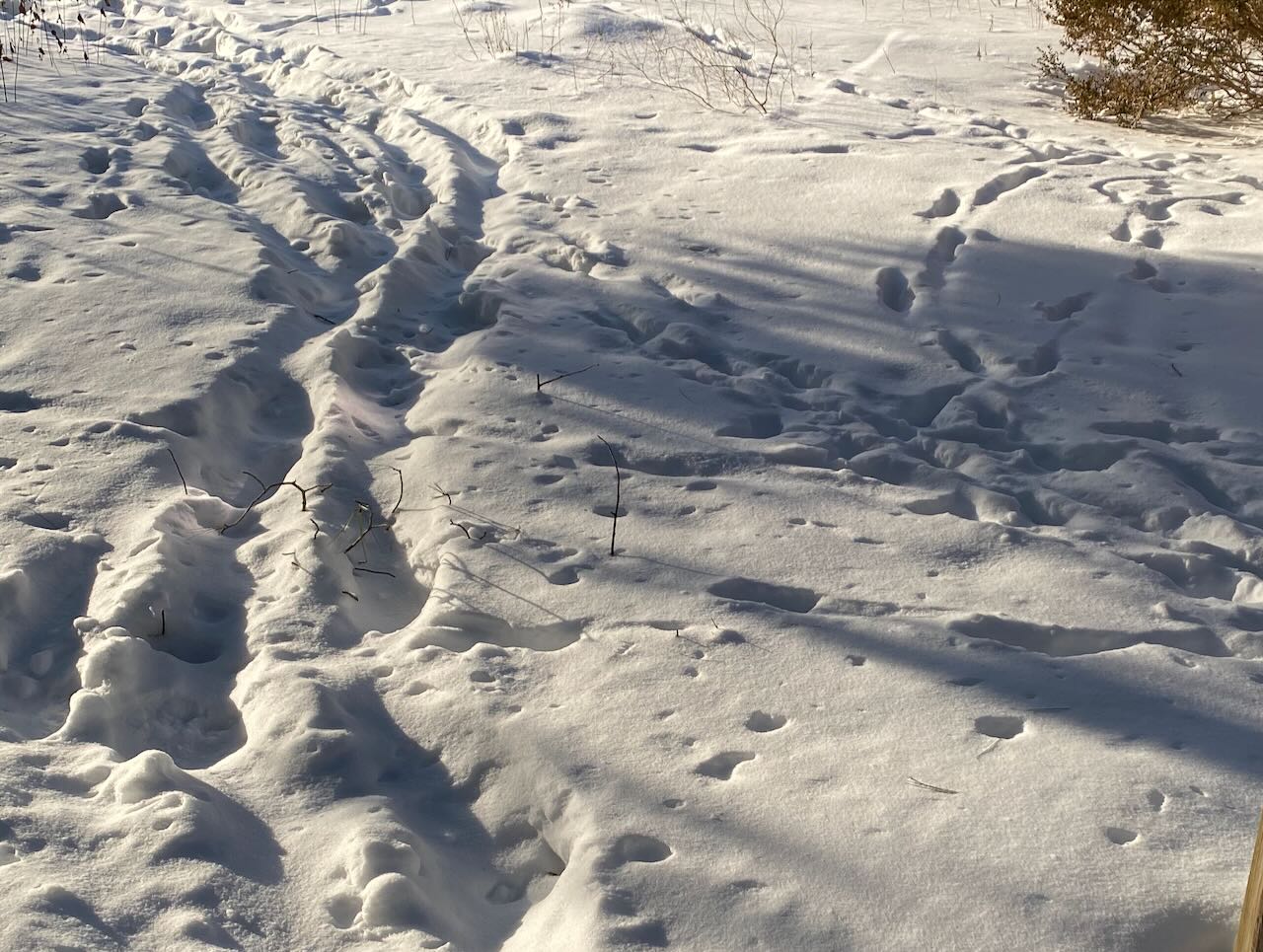
The snow became a record of everything happening in the yard. I walked to the mailbox and back to put a letter out, leaving a swoopy swath, a frozen wake. When I went out again to bring in arriving mail I saw my footprint trail and got inspired – or maybe goofy. The cursive loop on the upper right is my path back.

The deer made more sensible trails, skirting the crabapple tree where, alas, there was no more fallen fruit, on their way from the river to the woods. Some clouds passing through moved the shadows around. My gloves were supposed to work on touchscreens, but my phone failed to recognize them. I pulled one oversize sweater sleeve out from my coat cuff over my hand, slipped off the glove, and snapped the shutter. Except a phone doesn’t have the kind of shutter that snaps. I think I activated it to scan.

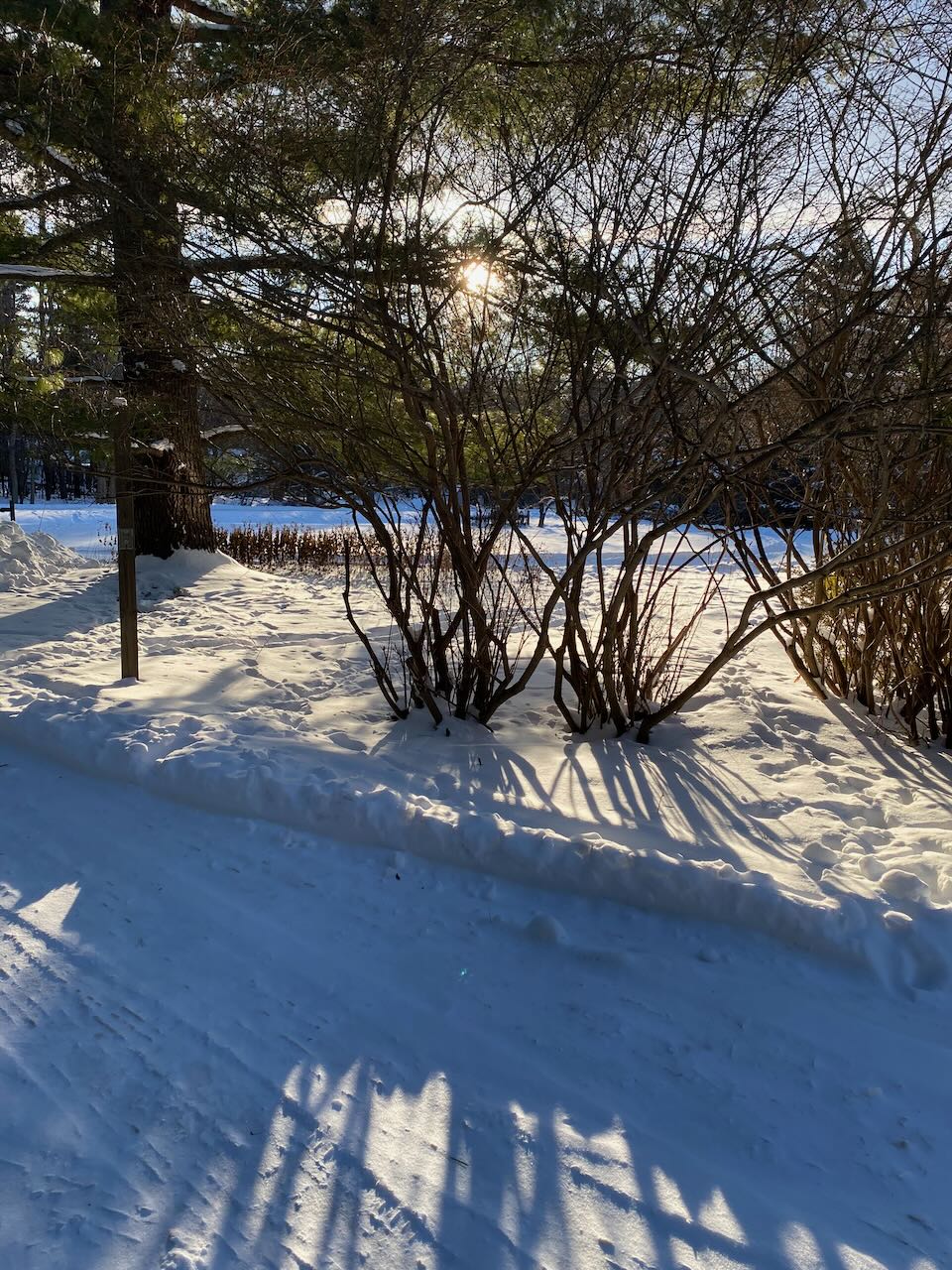
Winter shadows bring out so much structure we otherwise don’t see. Documenting it reminded me of another function of shadows. Tomorrow will be Groundhog’s Day! The premise is ridiculous in Michigan, where starting at February second we are absolutely going to have six more weeks of winter, shadows or not. Furthermore, our local groundhog comes out of her burrow at random times during the winter, for her own woodchucky reasons. She makes amusing, long wallows as she shuffles through the snow between the woods and the deck. But a bit of the ridiculous to lighten up life in its coldest moments is not amiss.

Then I came inside, removed my insulating layers, fixed a cup of tea, and scrolled through my photos. They were full of animal tracks, but the only critter out there was me, protected by fur, wool, and feathers, whose providers perhaps found shelter under our decks, sheds, and woodpiles. A mutual aid society. The sun slid off to the west and the string of lights on the deck came on, both muffled and emphasized by the softly folded snow. The lights burn for six hours and then the timer turns them off, leaving the sky undisturbed and whoever’s sleeping under the deck in peace. I feel a lot more charitable toward the deer and woodchucks, and even squirrels, in winter. It’s hard times for them, and after all I have no flowers or tomatoes to worry about. In hard times everyone needs all the friends they can get.

The Deer in the Yard

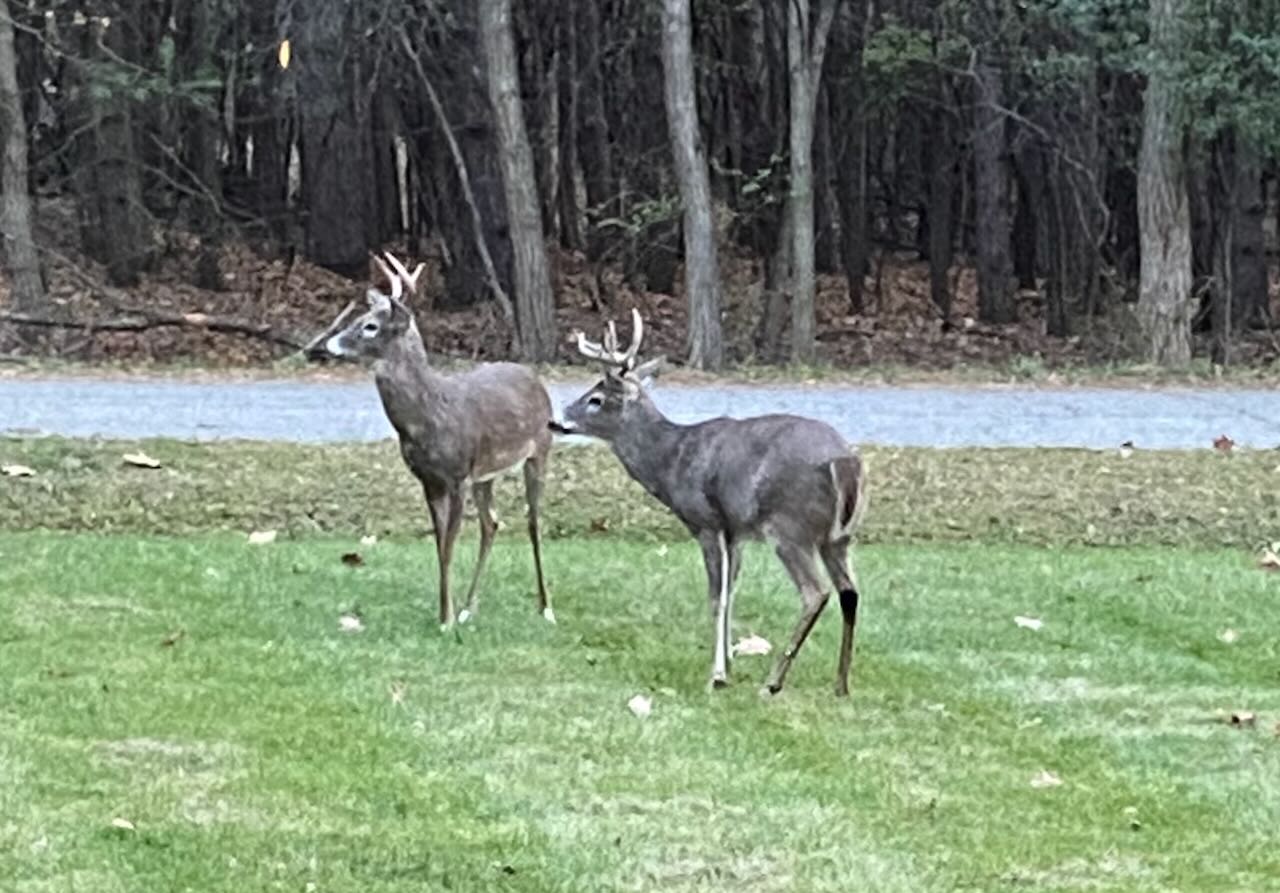
It’s mating season for white tailed deer and Mr. Eight-point, the buck on the scene with my local herd, had a challenger. Mr. Six-point came along prospecting for the last of the fallen crabapples. It’s hard to tell from these pictures, but in real life he was clearly the smaller of the two. Nevertheless, when the older buck showed up the younger stood his ground. They bowed their heads and engaged, as I watched from my window.

I would call it locking horns except they were deer, so they were locking antlers. They seemed intent on the process, until a car came down the street toward them. Then they broke off the tussle with one accord, watched until the car was past, and went right back to it.

There were no running starts, just a walking approach to each other, entanglement, and some pulling up and back that looked pretty indecisive. They engaged, disengaged, and engaged again. It was slow, even stately, and went on for ten or fifteen minutes, and then it was over. 

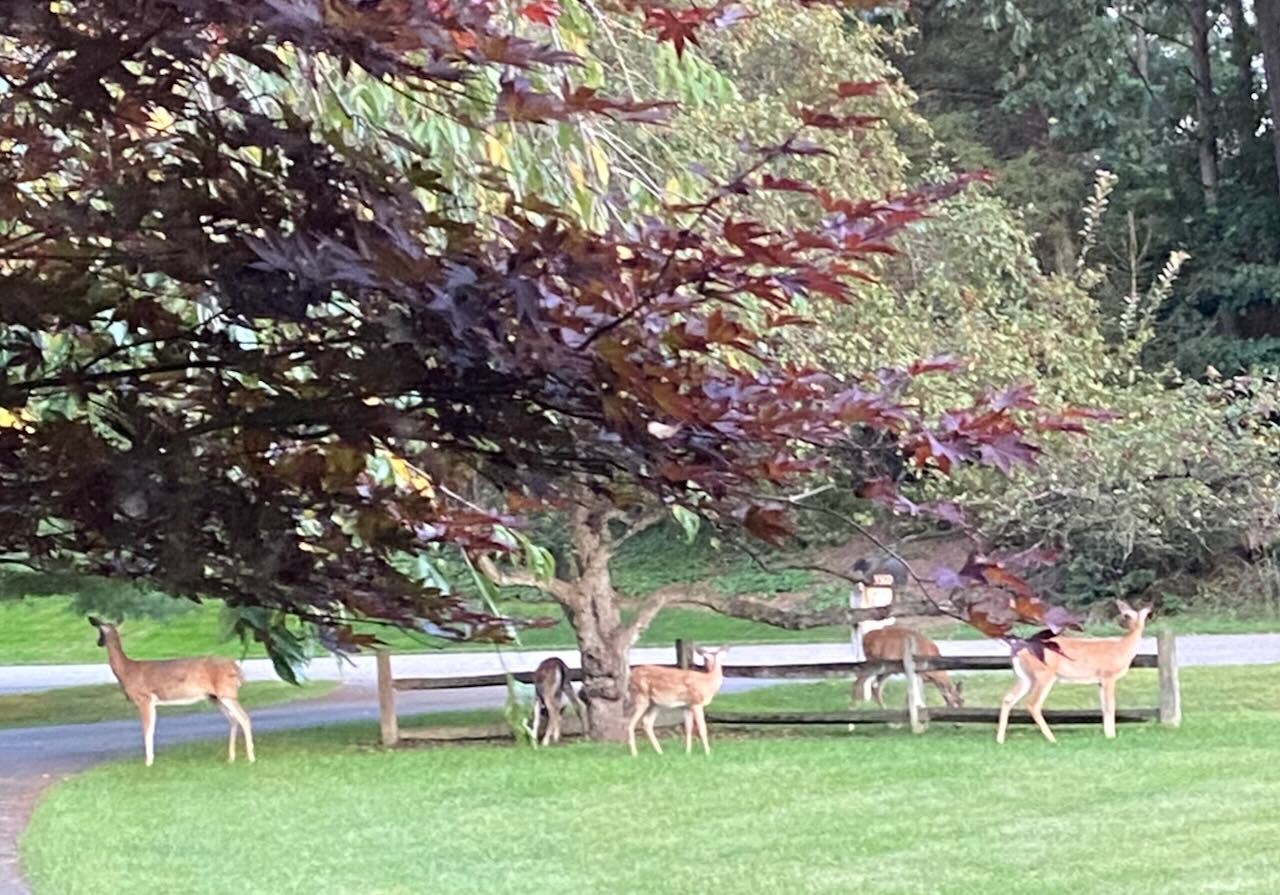
Mr. Eight-point rejoined the does and fawns, who were off under my neighbor’s trees practicing their Christmas Sleigh Procession technique, totally ignoring the fight, or argument, or whatever it was, between the males. Mr. Six-point lingered under the crabapple tree for a few more minutes, saving face, then wandered off into the woods. How civilized, I thought, but considering how civilization is doing these days, the bucks were ahead.

By now the sun was setting, giving good evidence for the advantages to deer of being crepuscular. There’s a latecomer doe in this photo, but she’s hard to see. I didn’t know she was there when I took the photo – just a photo of a nice sunset – until she emerged from the skirts of the evergreens and trotted off to meet her kin. Startled, I checked the photo and yes, she was there all the time. My eyes were on the sky. You can only see what you are looking at.

November Clouds

Doug thinks of birthdays in astronomical terms. Congratulations on completing another orbit, he’ll say, and I picture myself zooming out into space, floating planet-like against a background of dark sky and bright stars, hair wafting, skirt billowing. Whereas in fact, on the evening completing this particular orbit, we were having dinner at a luxurious restaurant, consuming the products of sunlight on farm fields and pastures filtered through ten thousand years of agriculture and the hands of chefs and waiters, as anchored to earth as we could be as it rolled us through the universe.
When we look at the sky we don’t usually consider that we’re in it, even when clouds come all the way down to the ground. Sometimes we see in those clouds a metaphor for gloom, sadness, and unhappy fates; at other times an end to drought, a gift to farmers, a respite from heat. Was the storm coming or going in this photo? There was certainly a real answer, a weather map answer, at the moment the photo was taken. Lifted from its moment as a photo is, we can give it any story that suits us where we are now. 

Here’s another beautiful Michigan scene, enhanced, I would say, by clouds. It’s a local farm’s You Pick flower patch in its days of former glory, gone to standing seedheads, offering nourishment to such small creatures as hang on here while we orbit through the winter. The clouds, again, connect us to the sky.

Or here are some extremely, maybe even comically, muscular clouds, seen through my workroom window in their brief existence. I expected drama from such clouds – maybe a tornado? Hailstones? Nothing happened; they dissolved into airy nothing, the natural element of clouds. 

It’s an old saying, that you need clouds sometime, to appreciate the clear blue skies when they come. I say appreciate the clouds. They do wonderful things with the sun, which you can’t look at without their intercession. They decorate the sky, giving us a reason to keep our focus upward. I mean the real clouds here, but feel free to apply it as a metaphor wherever you need one. Happy orbiting.
Slow to Get the Message

So I looked out my window at this nice bucolic scene, the deer browsing among the fallen crabapples on the front lawn. Very peaceful and lovely. Then I noticed one of the deer kept chasing another one away. They usually shared quite amicably but I’d seen this before, and this was the time of year for it. The chaser was the lead doe, and the chasee was a young fellow with just the first, nubby suggestions of coming antlers on his forehead. A button buck. She’d chase him off a short distance, he’d come back, she’d chase him off again, over and over. She was determined. I pictured thought bubbles over their heads: “Hey Mom it’s me” from the button buck, and “You’ve got those things on your head, get out” from the doe. It makes me very sad for him, but I guess this is how deer prevent inbreeding. 

It’s hard to think of winter coming, with the weather as warm as it’s been through September. It’s been giving me cognitive dissonance – on warm Michigan days I expect the sun to be up till 9:30 or 10:00 at night, but it’s setting by 7:30. No more saving yard work for after dinner: the warm weather keeps the tomatoes ripening, so I keep weeding them.

The zinnias and cosmos continue too, but as they get taller and taller, reaching for the retreating sun, they’ve started toppling over into the mini-pumpkin patch. That’s not a giant zinnia, it’s a wee pumpkin.

Rooting around under the tomatoes, I found another four-leaf clover. There’s one plant in here that turns them out fairly consistently, so I can be generous with what I wish on them. I used this one to wish good luck to young mister button buck.

Keep Trying

People are complicated, come from different backgrounds, and have different experiences, so there are many things to disagree about. Argument is a perfectly legitimate form of human communication. Violence is not, yet we seem to go there all the time. There are more sad news stories today than I can, or want to, recount. I went to the garden for solace and there I found the bleeding hearts still blooming. Bleeding hearts came to North America from China, where they’re called purse peonies. Different ways of looking at things.

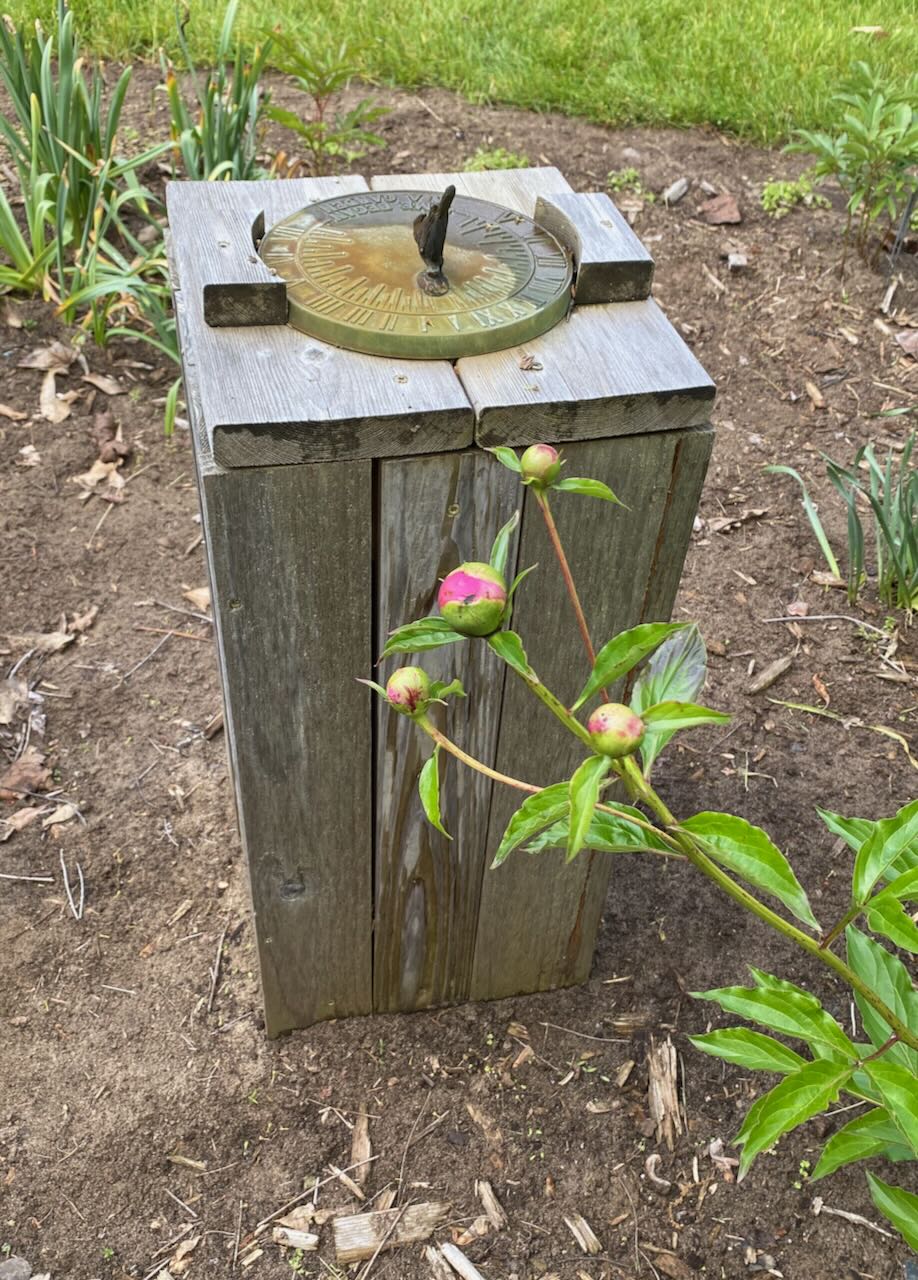
I still have a few regular peonies, too. Earlier this month the large and beautiful peony garden in Ann Arbor was assaulted, hundreds of its innocent flowers cut off and thrown to the ground. Flyers left behind announced this as a political act but it looked like spite. Did someone really expect the fallen flowers would bring allies to their cause?

The garden is much better at forming alliances. Here’s a bumblebee visiting my baptisia, where she will use her weight to open the flower, something smaller bees can’t do. Baptisia and bumblebees have worked out a deal. No manifestos were created, no weapons fired, the bee presumably her own ambassador.

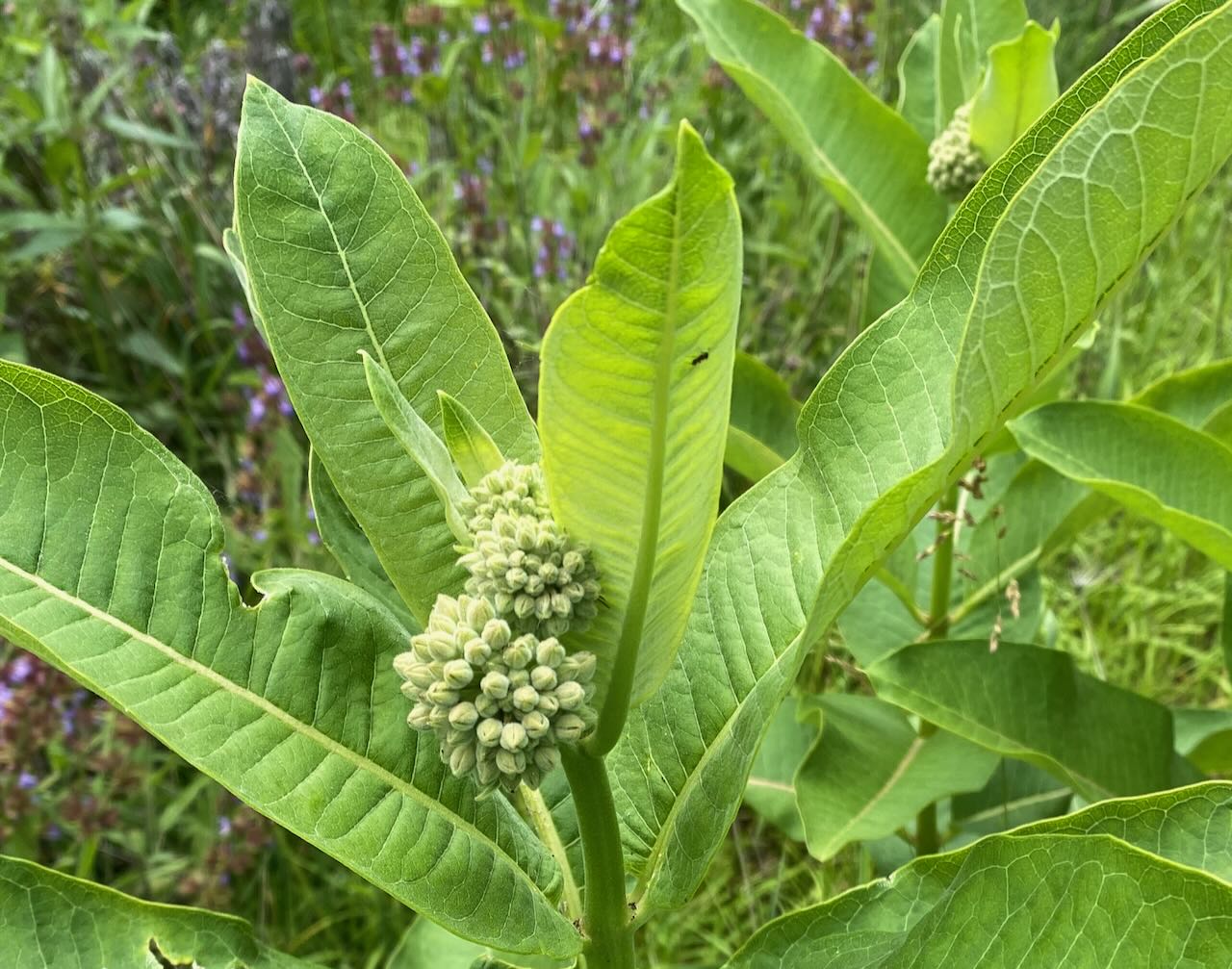
The milkweed, still in bud, has a deal with monarch butterflies. When it blooms they’ll pollinate it, and in return its leaves will supply munching monarch caterpillars with a poison that keeps predators away, an alliance of mutual benefit. Poison can be considered a weapon, but for the monarch the point is deterrence. There is no wisdom in the mutually assured destruction of having your predator die after it eats you. 

There’s certainly struggle in the garden. The ferns have moved in so far onto the path through the woods, I’m going to have to pull some out. But when I do I’ll transplant them to the front yard, under the pine trees. I expect they will thrive in the mulchy shade there, where the grass is unhappy. Plants, like people, have different needs, sometimes hard to figure out. The least we can do is try.

Shoulder Season

When I moved to Michigan I learned a new term — shoulder season. This being Ann Arbor and Brady Hoke’s football team being where it was then, I thought it meant crying on someone’s shoulder between sports seasons. I was fond of Brady Hoke and hoped he’d do better, because he said he’d walk to get to Michigan and that was how I felt about it. But now here I was, and as winter slid into a spring too warm for sweaters and too cold for shorts, the meaning of the term came clear to me: not on the main path; sloping off from one place to another; like the shoulder of a road. Transition. 

Here are my red poinsettias, out enjoying the sunlight that will slowly turn them green, a color they will keep until I bring them inside come fall, and daylight lessens, and they turn red again.

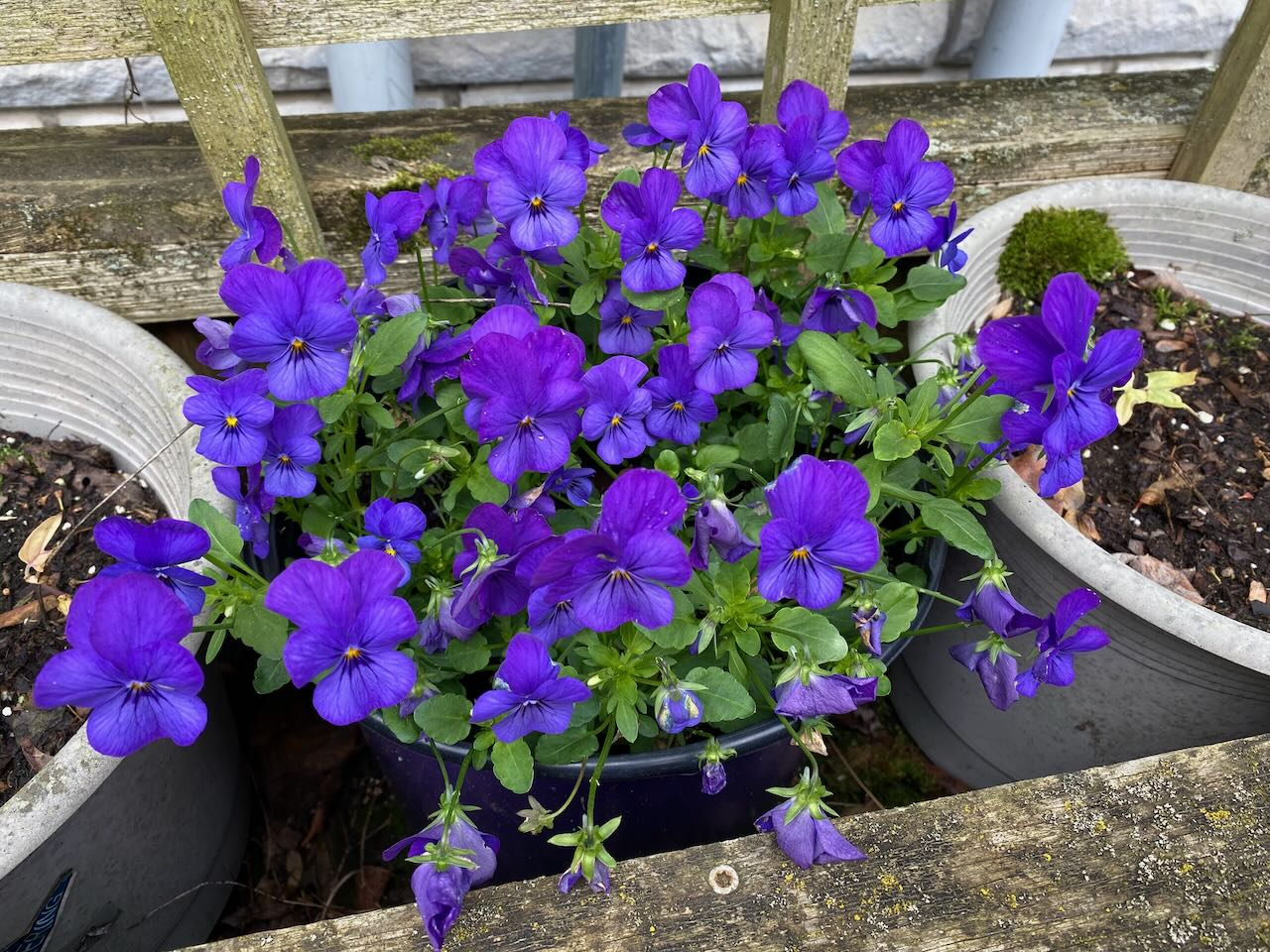
Here are violets in strong profusion, while morning glories in pots to either side are barely sprouting. The violets will wither in the coming heat, but the morning glories will move in and take over.

Here are yellow alliums and purple chives in bloom, while behind them milkweed has a long way to go before it flowers and feeds the monarch butterflies.

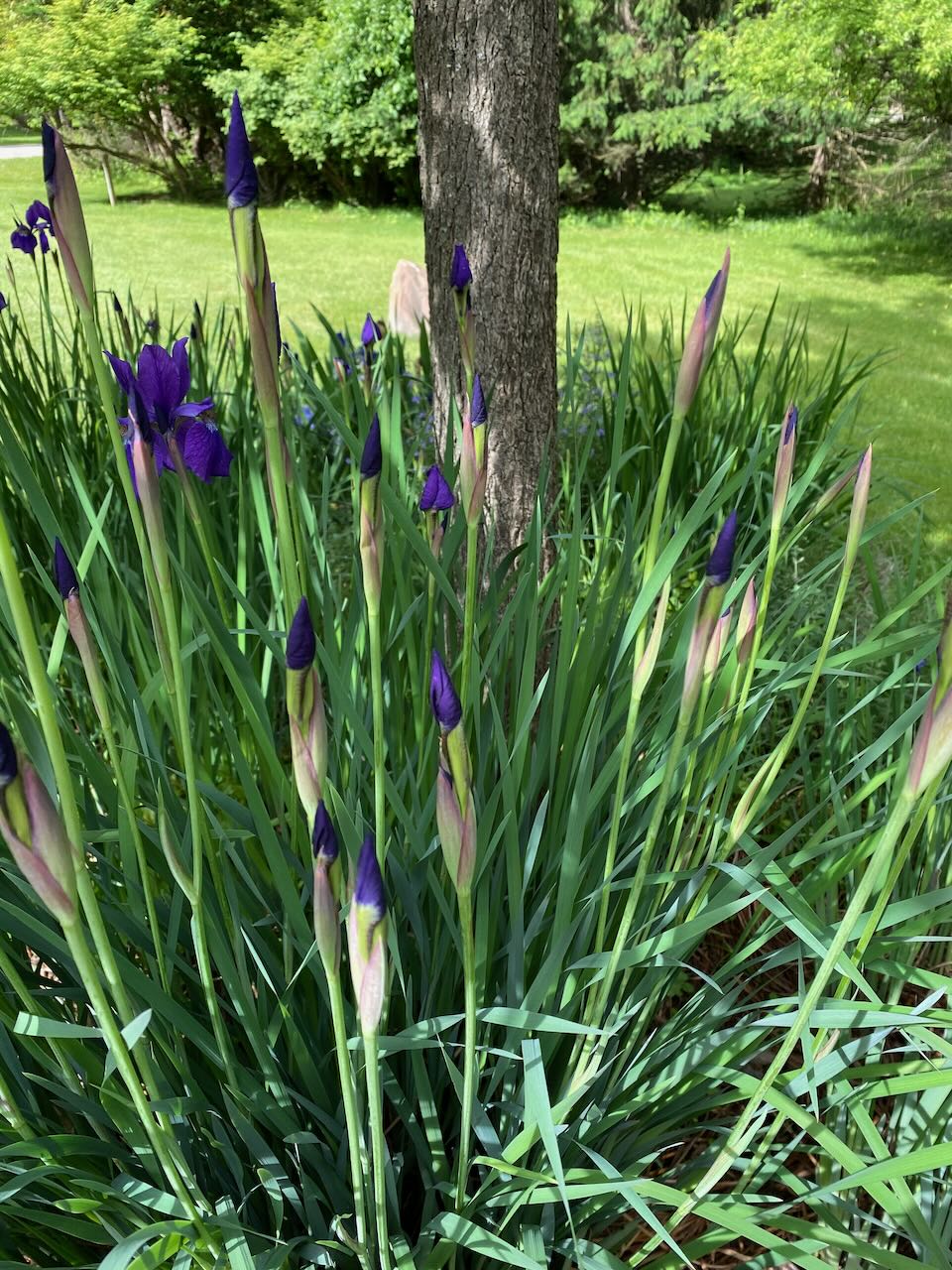
And here are Siberian iris spearing their way into a showy blue drift under the ornamental pear tree, whose flowers are already turning into fruit the deer will eat in August. Deer can be total pests but it’s strangely comforting that, despite my efforts at deterrence, they come back, resilient in the face of adversity. Fight the good fight, deer. I appreciate that more today than I ever have.

Things That Stay, Things That Change

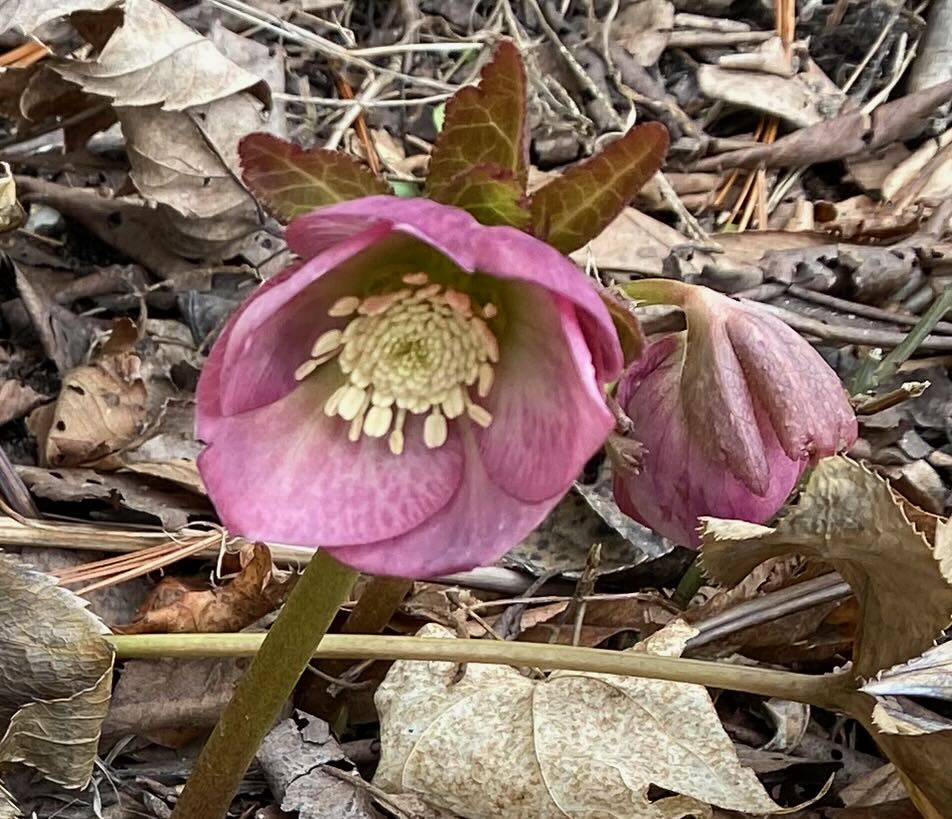
Faithful to the season, the hellebores lifted themselves out of the dirt in time to wave hello to lent. I should have been paying closer attention, because I missed getting my paczki this year – a special Polish pastry available only at Mardi Gras. Not, of course, called Mardi Gras in Polish, but I have enough trouble spelling paczki (it’s pronounced “punchkey”) to venture another Polish word. Every year the hellebore tribe increases in my yard; they seem especially ruffly this year.

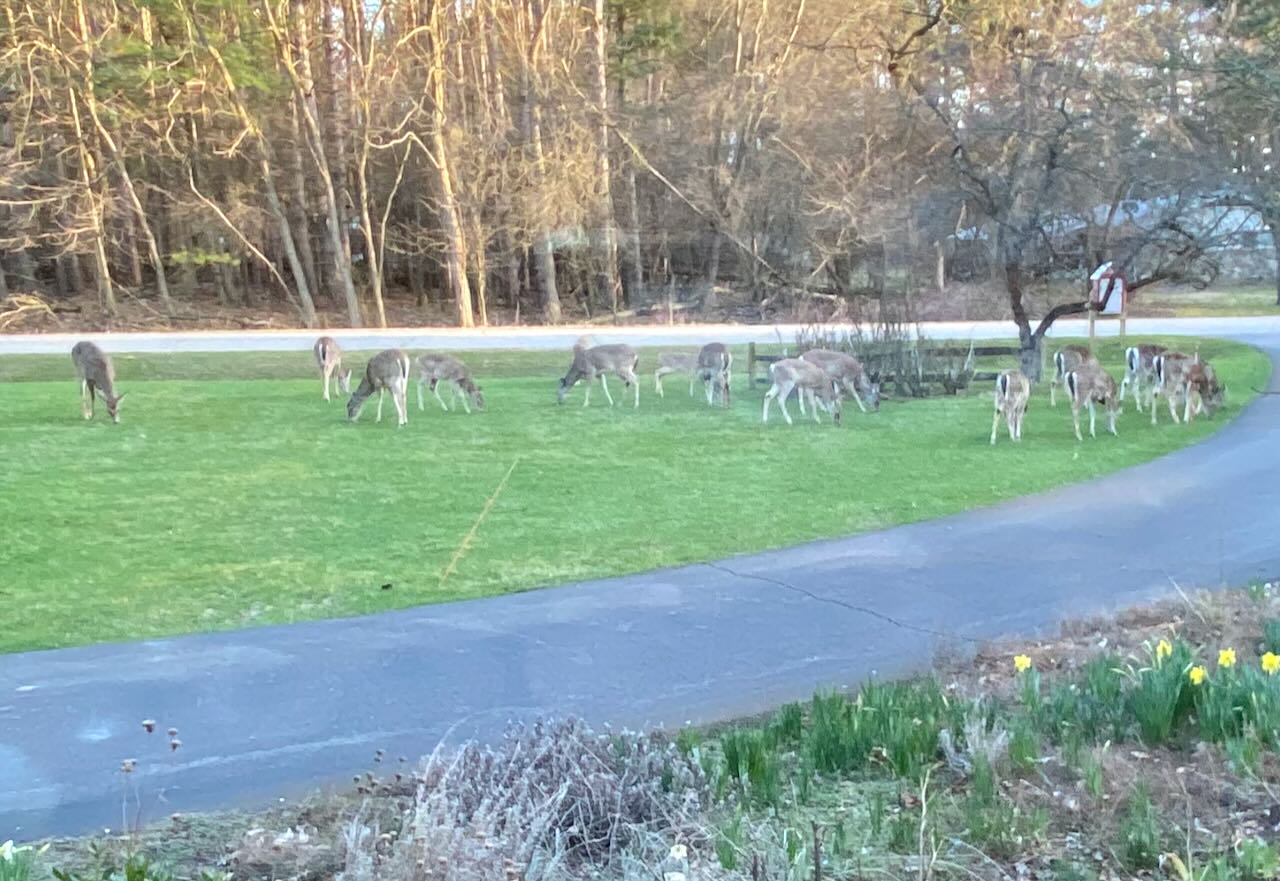
The tribe of the deer increased this year, too. Over the winter we had a group of eight, then a group of twelve, but now they’ve merged into a group of twenty, more than I’ve ever seen at once on my lawn. It’s odd, because normally the herds break into smaller units come spring. Maybe the deer equivalent of paczki is coming up in through the grass.

Another spring surprise for me was this orchid, a gift from a friend last year, reblooming. I’ve been given orchids before, enjoyed them while they bloomed, and then watched them wither and die. My previous experience with orchids was as corsages, or seeing them in California where they grew outdoors. So I assumed a windowsill was not great orchid habitat, yet here she is, all aglow. 

Behind her, in brighter light, is another outdoor California plant, a bougainvillea, which has come back from a near-death experience. It had dwindled to a total of four leaves before I realized the gnats in the room were a sign of fungus in its soil. I had a three-pronged attack for this, so I’m not sure which part worked. First I mixed hydrogen peroxide into a pitcher of water and soaked the soil with it, as a fungus killer. Then I poked holes in the soil nearest the sad bare branches and shook in some rooting powder, to try to regenerate healthy roots. Then I painted the four stalwart leaves with Miracle-gro, a foliar feeder, to help it out until its roots recovered. It worked! Yay!

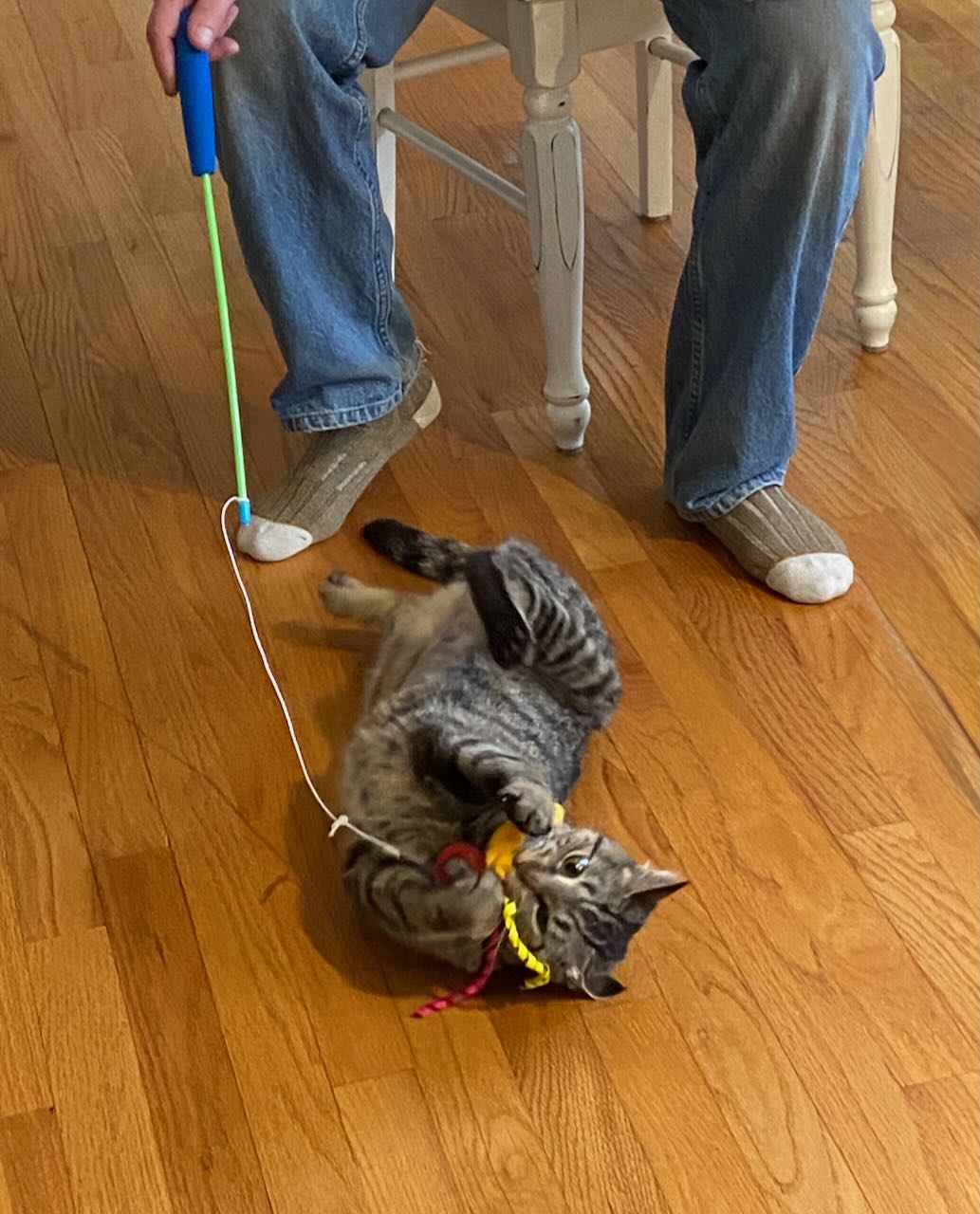
Meanwhile, it’s been fun getting to know our new cat. Frassy has found all Zerlina’s old favorite spots, and invented a few of her own. Zerlina was afraid of sticks, or anything sticklike, from which we guessed she had once been abused with them. Frassy seems to be trauma-free. She’s especially fond of Doug. Here he is playing with her with a feather toy on a stick. She’s already bitten through the string once – see the knot where I tied it back together? She’s also ferocious with her two toy mice. If we do really have a mouse in the house, I hope we won’t for long.

Song and Rain

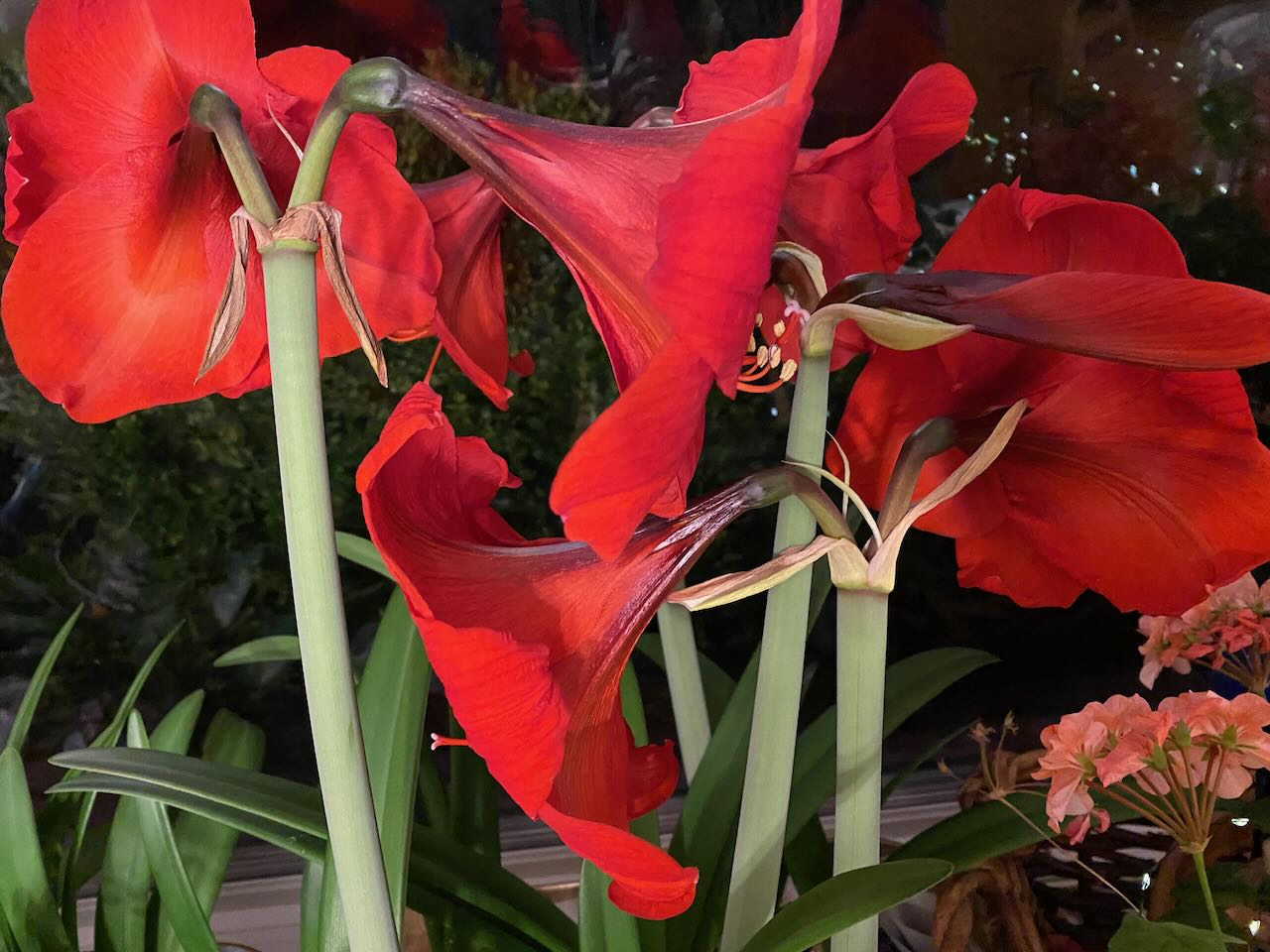
The tulips at my windowsill are done now and the amaryllis have come into glory, turning their backs to me because the sun is so much more compelling. Birds that were here all winter but mostly hiding in the shrubbery, are now flaunting themselves in song – certainly song from the cardinals and robins. I’m not sure I’d call it that from the bluejays. Still, it serves their purpose, claiming a territory, finding a mate, the tasks of approaching spring. 

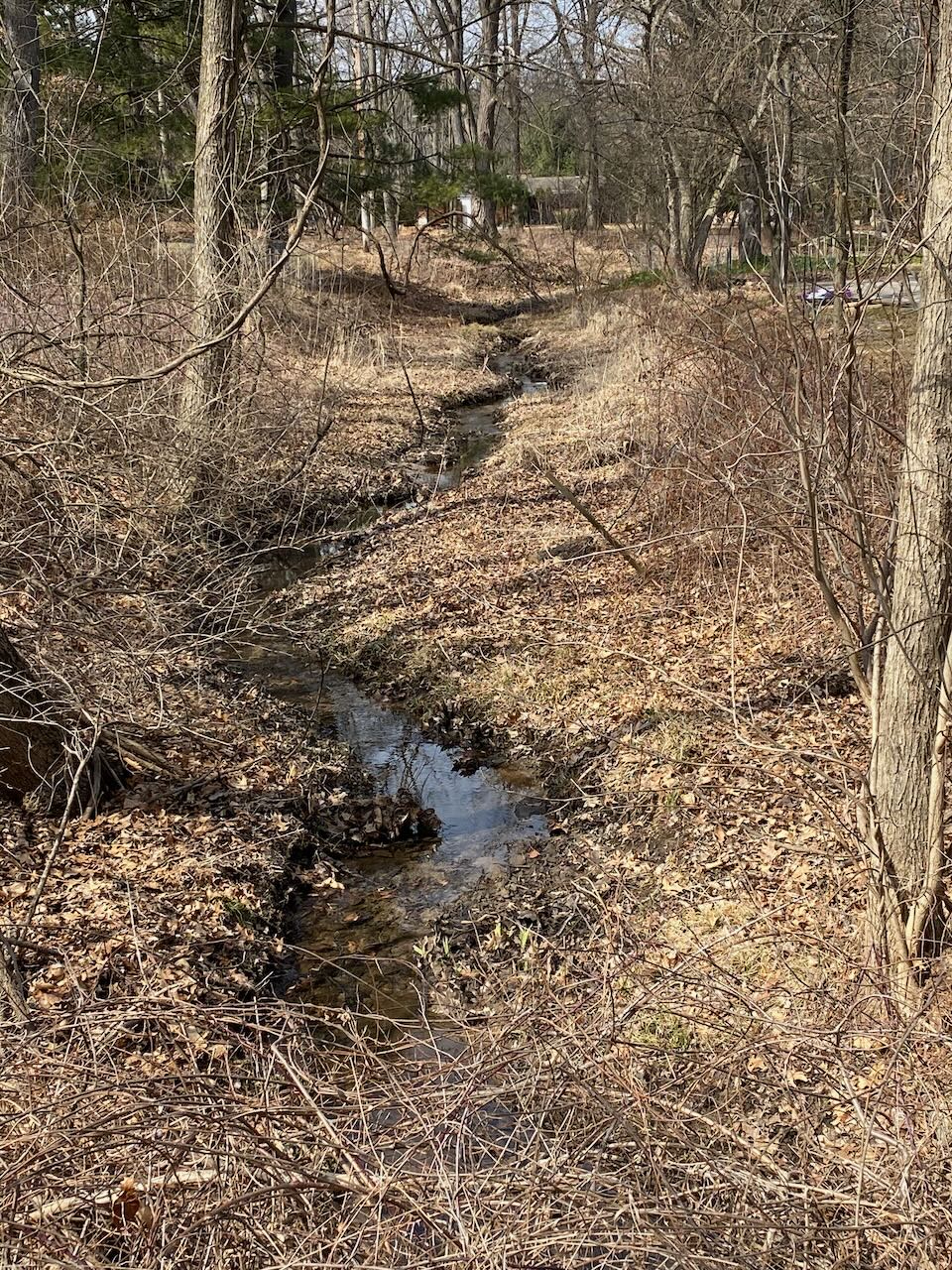
The snow has turned to rain, sometimes as it falls. The ice is gone from our small neighborhood creek, where bare branches and flattened grass give us a longer view than usual of the path it provides for deer on their way to the river. That’s one of my favorite things about winter – how it changes the way we see things.

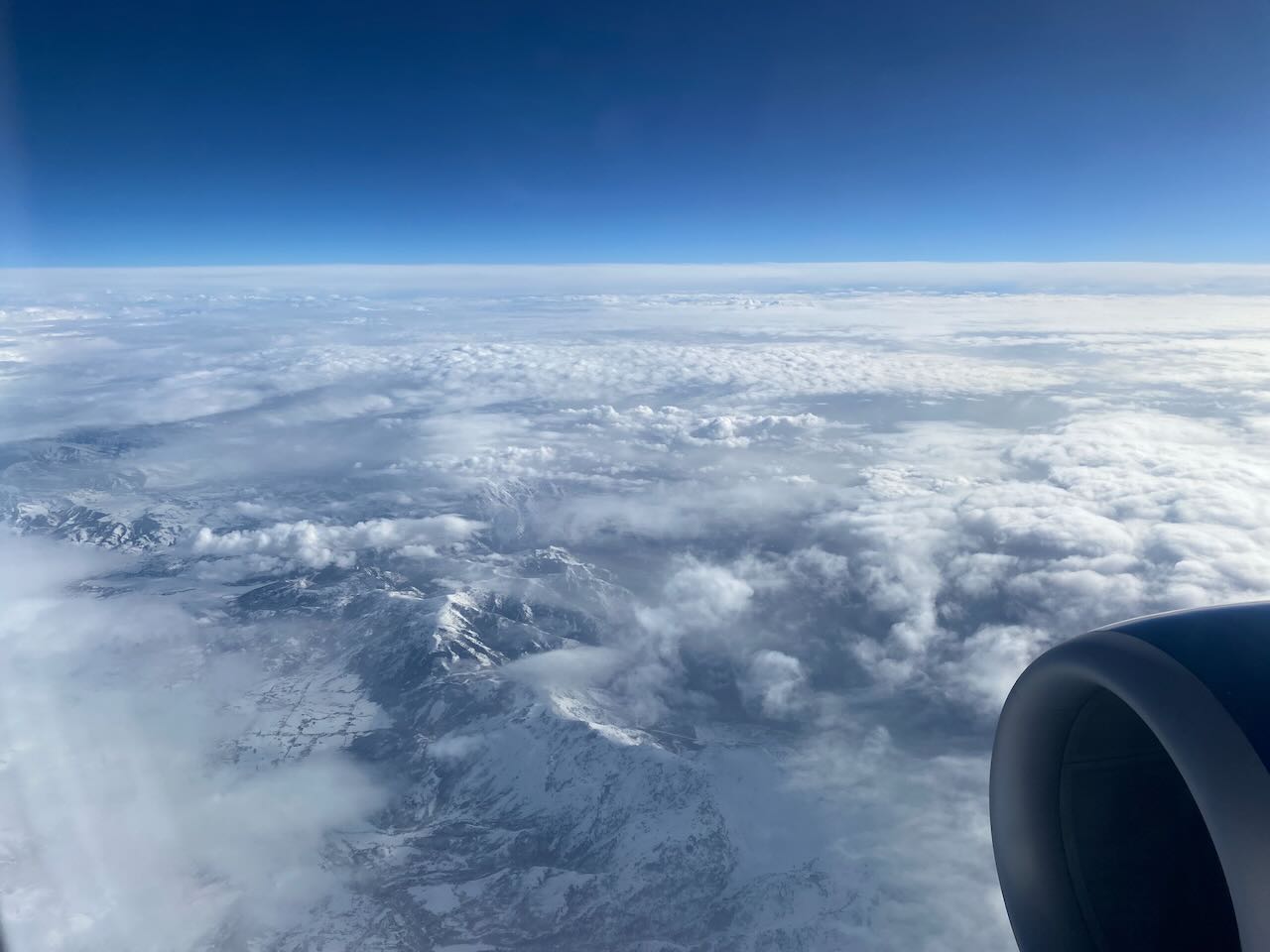
There’s a song about changing viewpoints, starting with clouds, that I always think of when I’m on an airplane. I like to sit in the window seat and watch the familiar, detailed ground turn into vast maps, and clouds become veils and carpets. I take photos and make sketches but nothing’s gelled into a painting yet. 

The sky is a rich source of painterly inspiration from below as well as above. Walking up my street yesterday I saw this. How would I paint clouds so they came out like that? Painted ultra-realistically, wouldn’t they look fake? These particular trees are evergreens so the view is seasonless, but if I painted in bare branches, or hung them with snow, or flowers, or red leaves, the same sky would tell a different story every time.

This is one of my favorite early-spring photos, taken a few years ago. I love how the tree seems to grow out of the barn, entirely because of where I stood to take the picture. The trees are bare; the sky looks like it might want to snow but will have to settle for rain. Once the tree leafs out, the barn, from this angle, will disappear. With all the development happening in our area, it may already be gone. 

The Natural Demonstration of Change

I call this room my studio; sometimes Doug calls it my office. It holds my desk, my art supplies, my craft supplies, much of my indoor gardening, and my writing chair. Builders and real estate agents called it the living room, a term that’s always puzzled me – living, as opposed to what? I love the beautiful light from these big windows and Doug preferred the basement for his woodshop, so the deskartcraftgardenwriting room is mine. I find much inspiration watching the change of weather, wildlife, bloom, and growth in this one little slice of view. This was my view yesterday morning, the flowers all inside, the snow lingering.

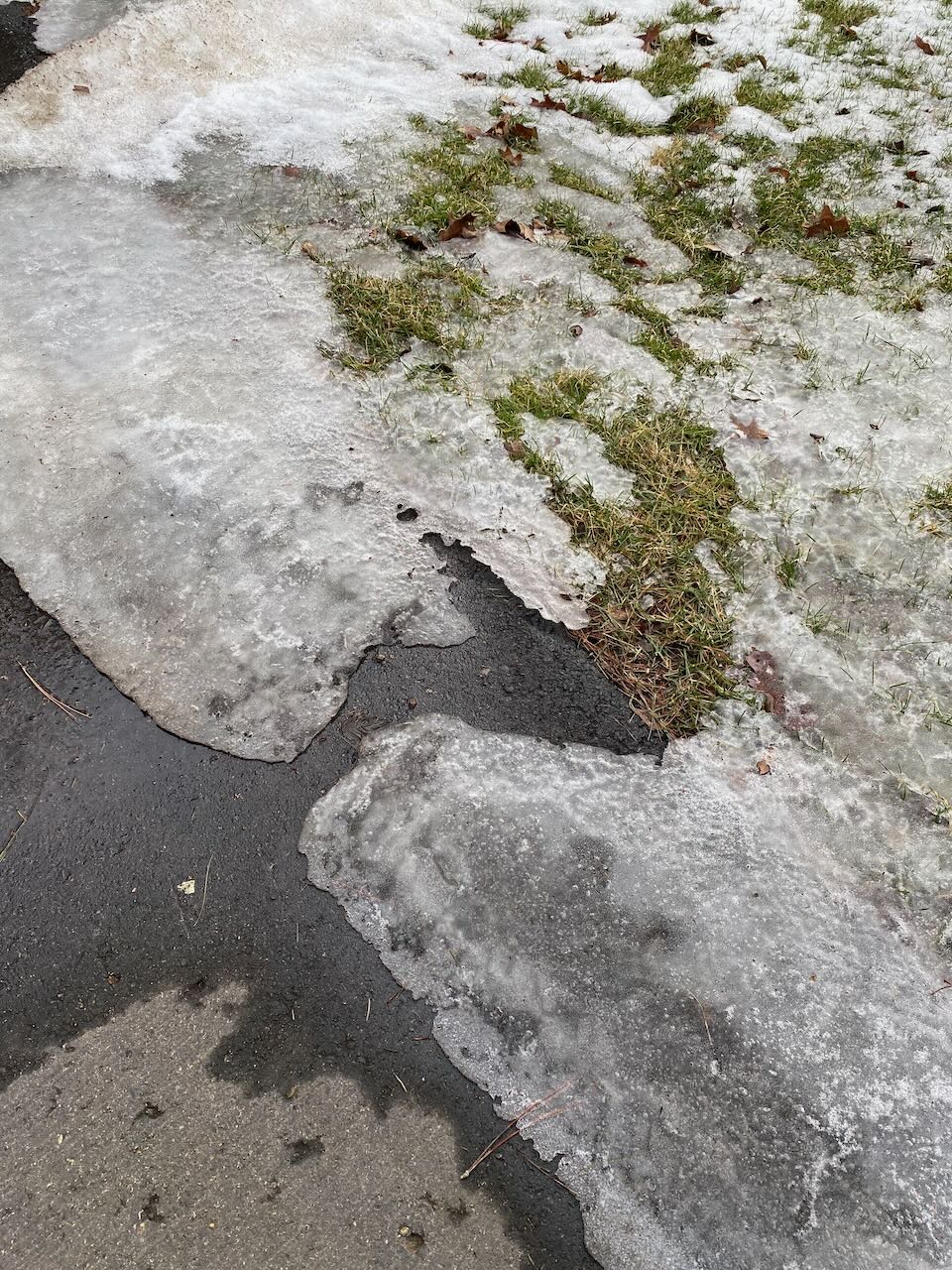
As I walked out in the afternoon, the ice at the top of the driveway looked like a much wider view from an airplane window, flying over Midwestern farms and lakes as winter loosened into spring.

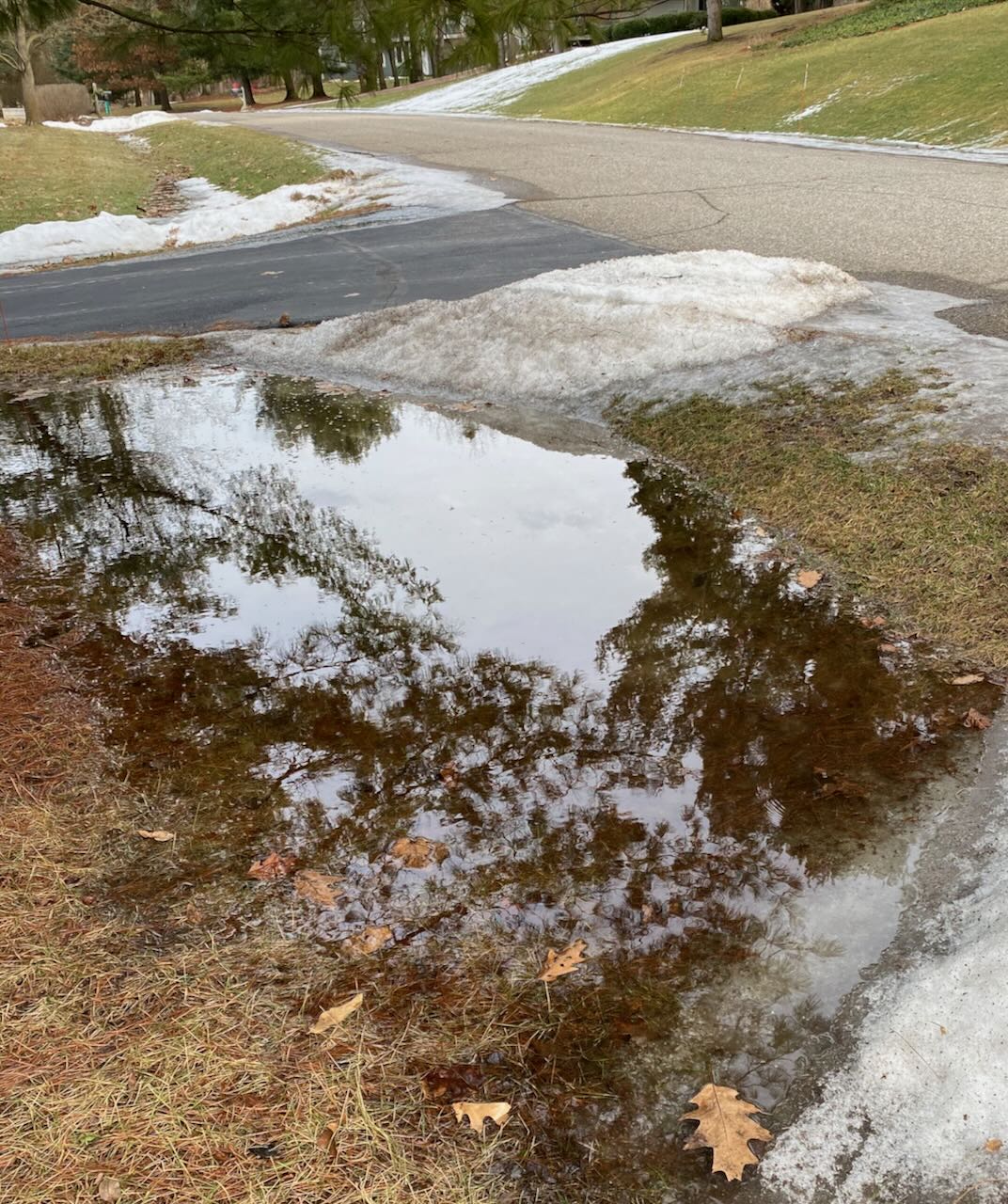
On the other side of the driveway our Spring Lake has appeared as usual. This is where the snow piles up when Christen plows us out, storm after storm, all winter. Early warming weather melts the snow, but the ground stays frozen so the water can’t drain away. Nice little pond, but by the time the ducks come back it’s gone.

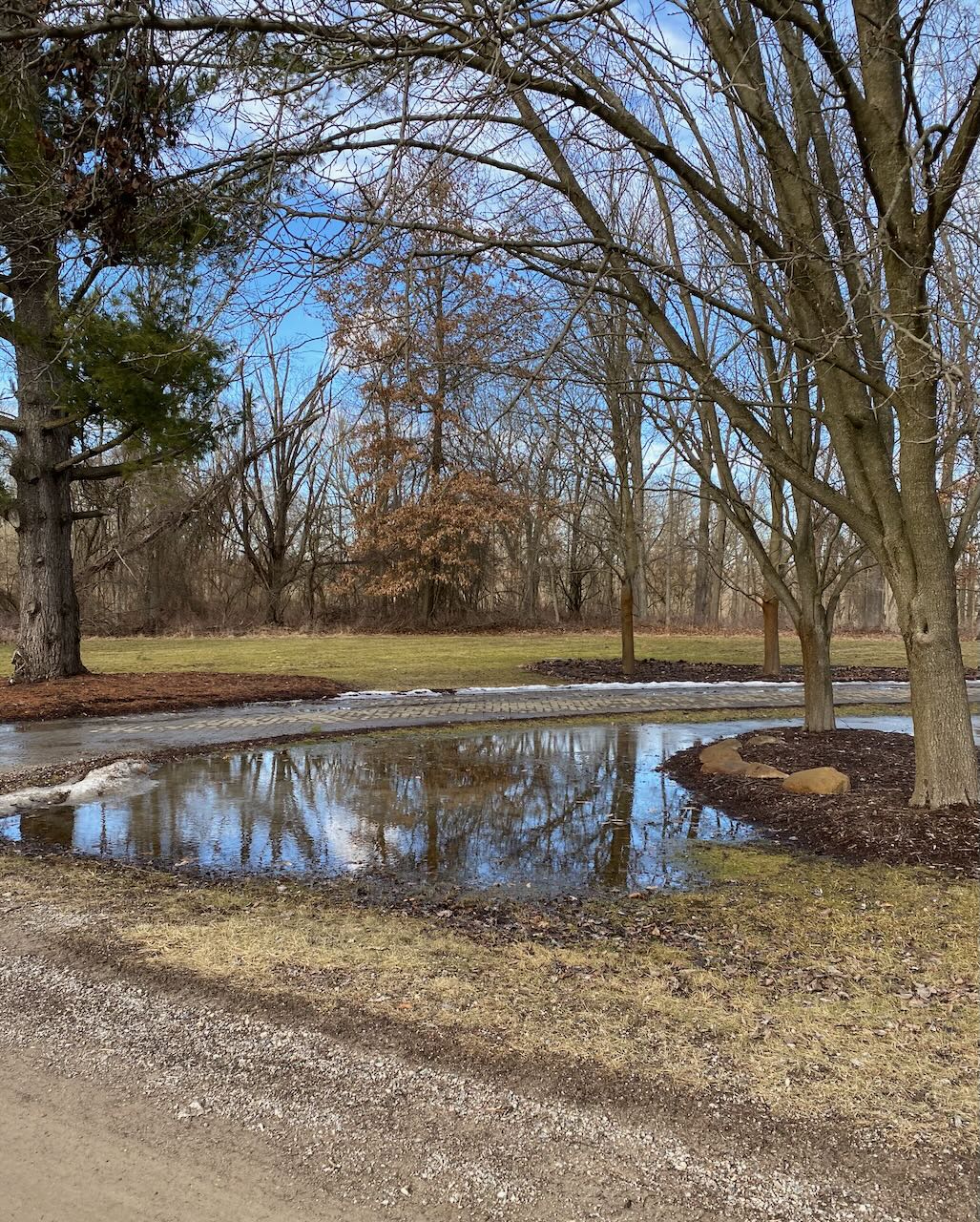
By dinnertime it was 52 degrees outside, and many more ephemeral lakes had appeared. The prettiest one is up the road where the pavement ends and the dirt road begins, changing the drainage picture somewhat – this little lake is even more ephemeral.

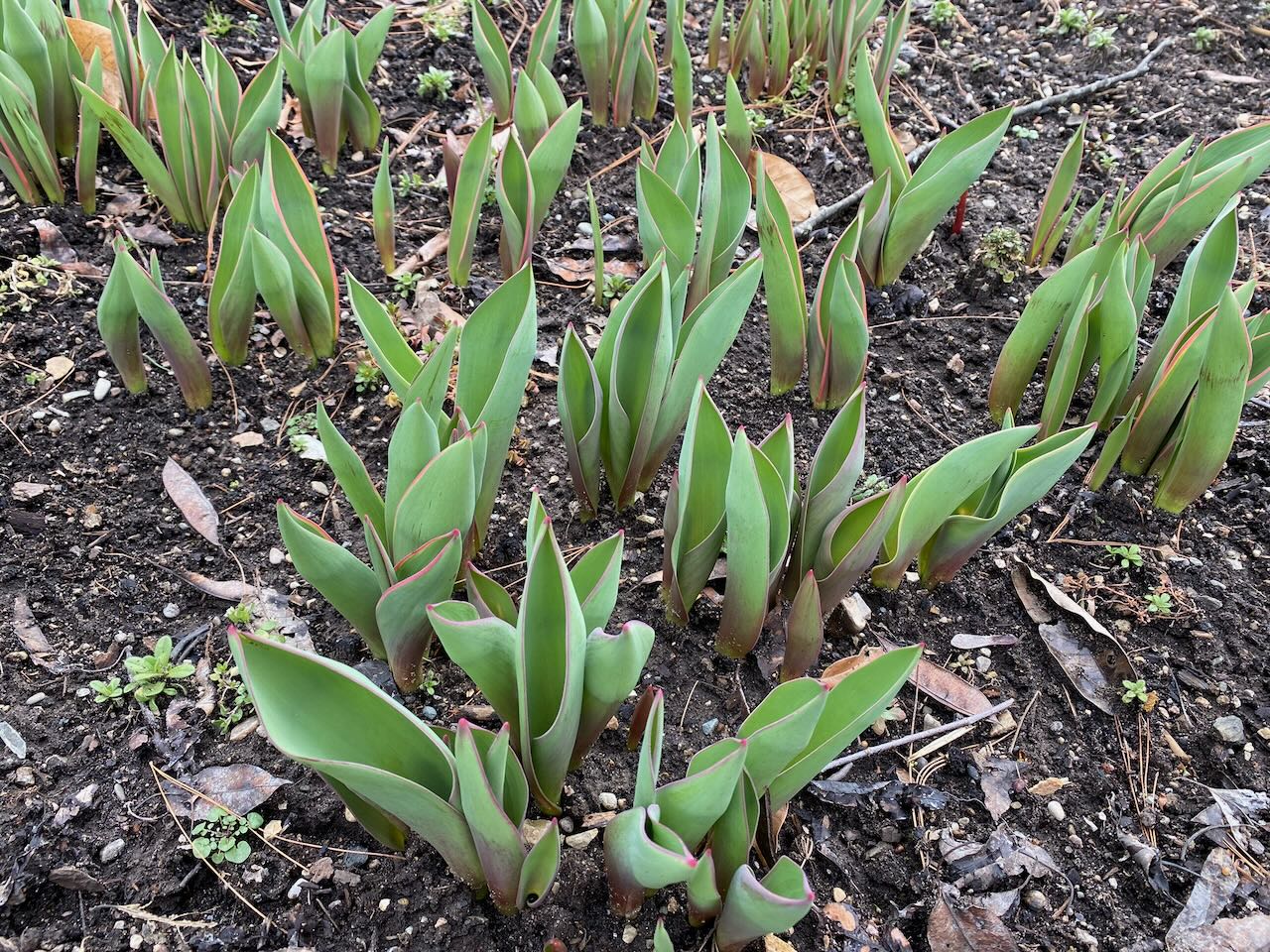
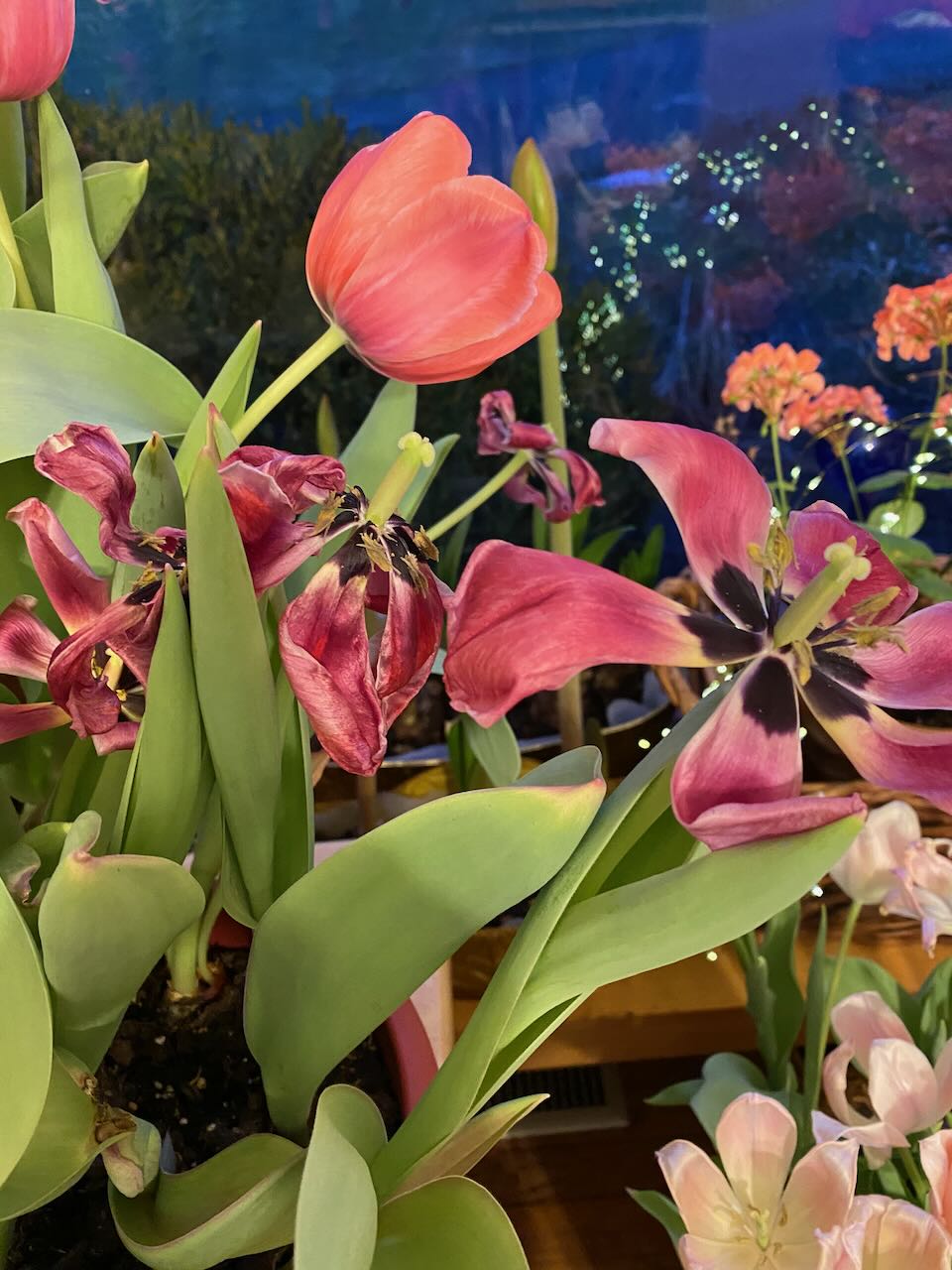
Then come nightfall everything froze again, and I retreated to my Tulip View. The tulips, a mix of past and present, are blooming and fading under the small string of twinkle lights I couldn’t resist leaving up after Christmas. I have friends who are impatient for spring, but I find I enjoy this up and back – it’s like saying to time, you think you’re going in just the one direction? Ha, Michigan has news for you. Time’s arrow deflected, for a moment, in its flight.

On New Year’s Day

b angel clockHappy New Year, the day that looks both forward and back. This is my antique clock, that rang in the New Year last night as it did through my childhood, when it sat on our living room mantelpiece and it was my job to wind it. I was the one among my siblings who’d wind it slowly enough not to break the mainspring. The little angels visit the clock when I decorate for Christmas, and they will fly back up to heaven, or somewhere, after January 6th when the decorations come down.

Once again our early December snow vanished, disappointingly, in days of rain before Christmas. So I was surprised, yesterday, to notice what looked like bits if snow surviving on the lawn behind the deck. But wait – not snow. Pillow fluff. It was bits of the pillow fluff the little red squirrel tore out of a deck cushion last August. Did she toss it out of her nest as a bad choice after all? Did its synthetic fluffiness make it too easy for the wind to blow it out of position? I started wondering about nesting materials for squirrels, but tripped over the word – squirrels – and wondered about that instead. Could it be a Native American word, maybe Ojibwa or Ottowa? But no, it’s from the Old World: Middle English from Old French from Latin from Greek, in which it was skia (shade) plus oura (tail), a nice description of the way it holds its tail. How about chipmunk then – was that a native Michiganian word? Indeed, in Ojibwa the word “chipmunks” is “ajdamoog,” turning into chipmunks the same way Ojibwa turned into Chippewa. “Chipmunk” sounds like it should mean cheeky little devil, but it means “one who descends trees headlong,” and is in fact the name of – the red squirrel!

Doug and I toasted in the New Year watching the ball drop in Times Square via television – old school, I guess, not to have streamed it. The temperature dropped overnight, and we woke this morning to a thin snowfall. A little more snow would have covered the yard like a clean sheet of paper, ready for a fresh start. The snow this morning brightened things up but let the past show through, reminding me that’s it’s always there, the base under all new beginnings.

b new year snow