The Deer in the Yard

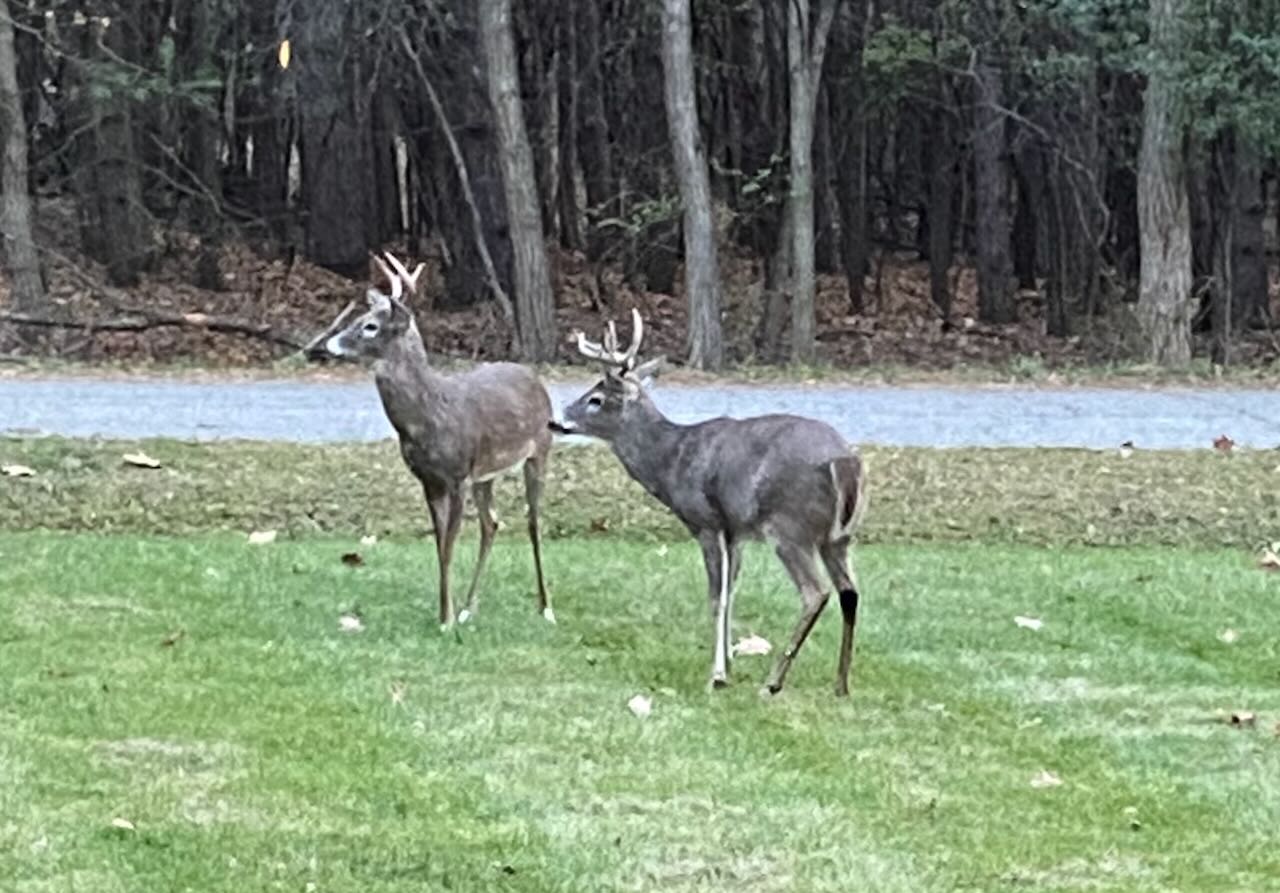
It’s mating season for white tailed deer and Mr. Eight-point, the buck on the scene with my local herd, had a challenger. Mr. Six-point came along prospecting for the last of the fallen crabapples. It’s hard to tell from these pictures, but in real life he was clearly the smaller of the two. Nevertheless, when the older buck showed up the younger stood his ground. They bowed their heads and engaged, as I watched from my window.

I would call it locking horns except they were deer, so they were locking antlers. They seemed intent on the process, until a car came down the street toward them. Then they broke off the tussle with one accord, watched until the car was past, and went right back to it.

There were no running starts, just a walking approach to each other, entanglement, and some pulling up and back that looked pretty indecisive. They engaged, disengaged, and engaged again. It was slow, even stately, and went on for ten or fifteen minutes, and then it was over. 

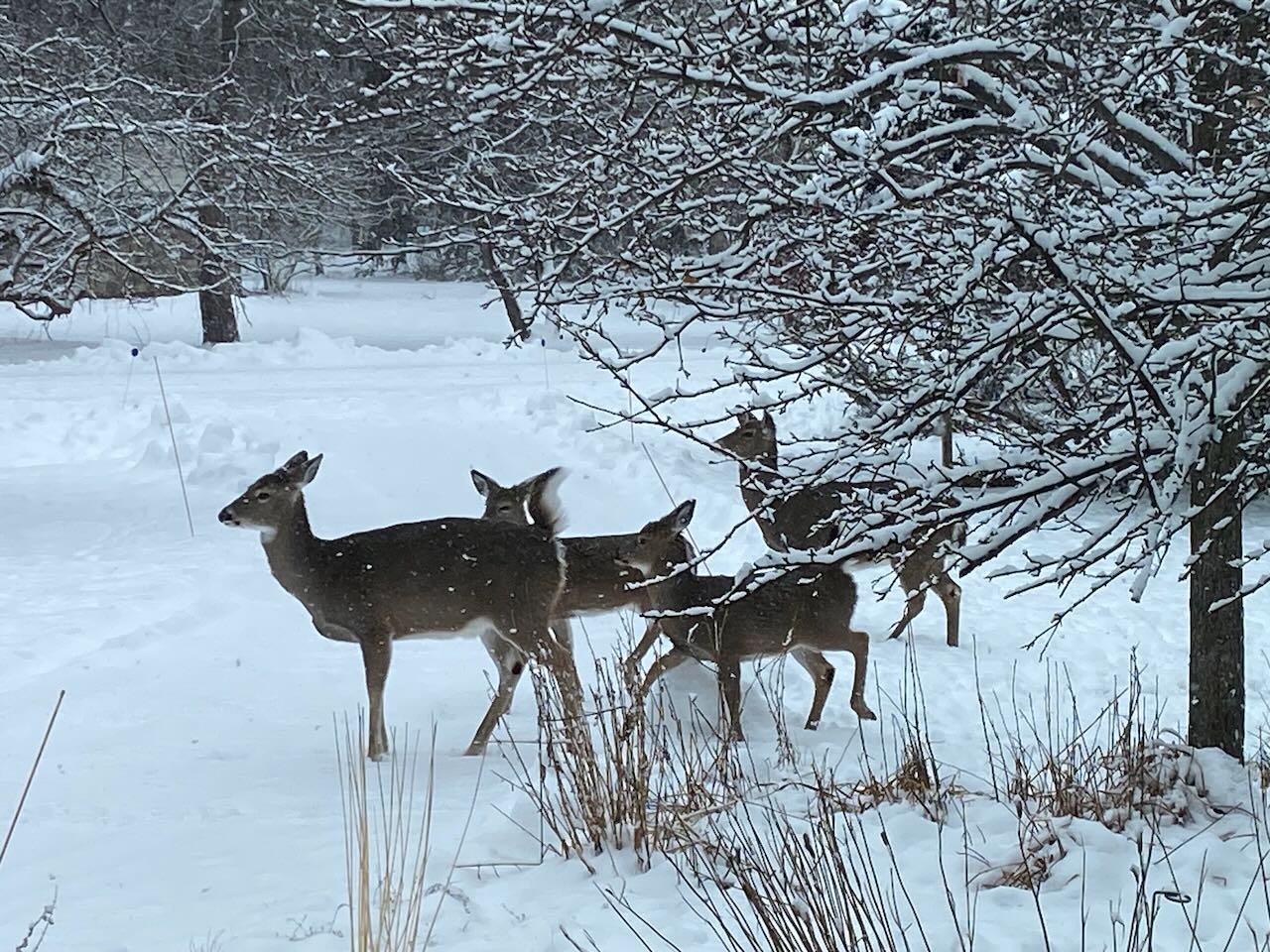
Mr. Eight-point rejoined the does and fawns, who were off under my neighbor’s trees practicing their Christmas Sleigh Procession technique, totally ignoring the fight, or argument, or whatever it was, between the males. Mr. Six-point lingered under the crabapple tree for a few more minutes, saving face, then wandered off into the woods. How civilized, I thought, but considering how civilization is doing these days, the bucks were ahead.

By now the sun was setting, giving good evidence for the advantages to deer of being crepuscular. There’s a latecomer doe in this photo, but she’s hard to see. I didn’t know she was there when I took the photo – just a photo of a nice sunset – until she emerged from the skirts of the evergreens and trotted off to meet her kin. Startled, I checked the photo and yes, she was there all the time. My eyes were on the sky. You can only see what you are looking at.

November Clouds

Doug thinks of birthdays in astronomical terms. Congratulations on completing another orbit, he’ll say, and I picture myself zooming out into space, floating planet-like against a background of dark sky and bright stars, hair wafting, skirt billowing. Whereas in fact, on the evening completing this particular orbit, we were having dinner at a luxurious restaurant, consuming the products of sunlight on farm fields and pastures filtered through ten thousand years of agriculture and the hands of chefs and waiters, as anchored to earth as we could be as it rolled us through the universe.

When we look at the sky we don’t usually consider that we’re in it, even when clouds come all the way down to the ground. Sometimes we see in those clouds a metaphor for gloom, sadness, and unhappy fates; at other times an end to drought, a gift to farmers, a respite from heat. Was the storm coming or going in this photo? There was certainly a real answer, a weather map answer, at the moment the photo was taken. Lifted from its moment as a photo is, we can give it any story that suits us where we are now. 

Here’s another beautiful Michigan scene, enhanced, I would say, by clouds. It’s a local farm’s You Pick flower patch in its days of former glory, gone to standing seedheads, offering nourishment to such small creatures as hang on here while we orbit through the winter. The clouds, again, connect us to the sky.

Or here are some extremely, maybe even comically, muscular clouds, seen through my workroom window in their brief existence. I expected drama from such clouds – maybe a tornado? Hailstones? Nothing happened; they dissolved into airy nothing, the natural element of clouds. 

It’s an old saying, that you need clouds sometime, to appreciate the clear blue skies when they come. I say appreciate the clouds. They do wonderful things with the sun, which you can’t look at without their intercession. They decorate the sky, giving us a reason to keep our focus upward. I mean the real clouds here, but feel free to apply it as a metaphor wherever you need one. Happy orbiting.

Resilience

Our first frost happened a couple of nights ago, drawing a map of hardiness, protection, and resilience across the garden. The hardy perennials, like these asters, didn’t notice, originating as they do in climates that reward ability to cope with winter. Tender annuals, like my basil and tomatoes, withered and keeled over. I had already brought into the house several pots of basil and all the green tomatoes still on the vine, in anticipation of this. These are plants whose ancestors never met with winter weather, and had no need to adapt to it.

Then there are hardy annuals, like petunias. They can resist the kind of winters we had in Southern California, which did sometimes include a light frost in late December. They seem to be familiar with this and will persevere through it, but when the hard, serious frost comes, they succumb. Marigolds and pansies are also in this category. Okay, so far all is neat and clear in the life cycles of my garden plants.

But then we have this scenario from the way back of the garden. Marigolds, check, still abloom as expected. But there’s that cosmos standing tall and happy, while all the other cosmos in the garden is dead. Sort of looks like the marigolds talked them into it. Good story, but the reality is different. There’s a tall black cherry tree just outside the picture, leaning over the garden fence enough to shelter the cosmos from the sky. The same thing that makes this part of the garden too shady for plants like tomatoes, expected to ripen fruit, offers protection from light frost.

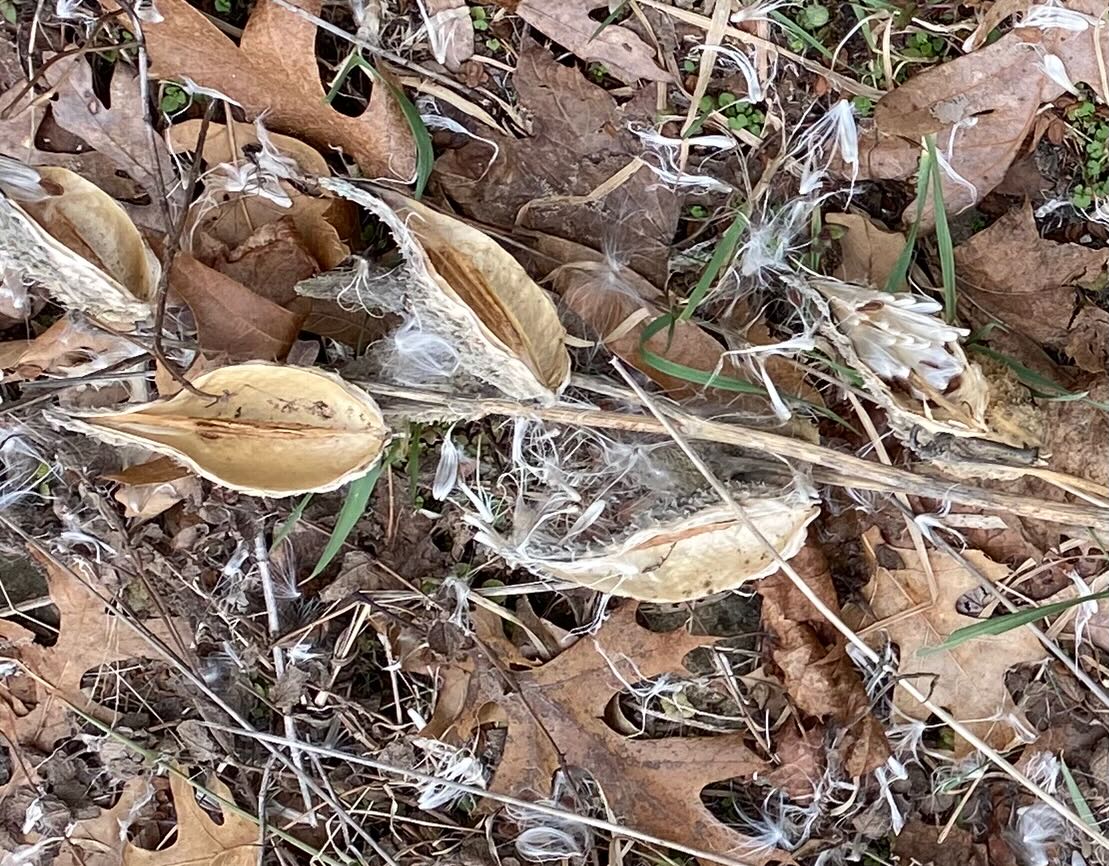
So the resilience a plant shows in the face of frost can be inborn, or it can be situational. It’s the job of the gardener to situate the plant where it can have its best outcome. Here’s some milkweed in process of its best outcome, which is not the propagation of Monarch butterflies, but the launching of its frothy seeds into chilly autumn air that carries them into the future.

Pumpkin Time

When I told Doug I was heading out to the pumpkin farm, he said “don’t overdo it.” Which made me smile, because there’s a huge gap between my idea of overdoing it and his idea of overdoing it. Wells Pumpkin Farm is far too rich a resource to be denied. I had a base of Baby Boos and Jack Be Littles raised in my own garden, but they needed company. Wells Farm came through, with two little gourds that looked a lot like figs. 

A big flat Cinderella white pumpkin was completely irresistible, but would have looked lonely sitting on the hearth all by itself. I gave it some friends: a Royal Blue, which looks green, and a Warty Gnome, which looks like a warty gnome. The Cinderella was satisfyingly heavy to pick up, and rather gloriously sloshed with bits of mud and hay, adding to its autumn aura. I didn’t even have to wipe it down when I got it home, because the dirt and hay rubbed off on my flannel shirt.

But Cinderella is hardly the only story this time of year. The hall table tells a different one every time I look at it, but definitely more Halloween than happily ever after. It’s pretty dark in that hallway, but another nice warty little orange guy and a green one with white stripes brightened it right up.

Then I put out a skeletal creature with a toothy grin to darken things back down. All the pumpkins in his photo are fake, so no overdoing of the pumpkin farm was involved. Overdoing of craft shops and Halloween pop-up stores, maybe yes.

This American Tondo had great color shifts, and a super-beefy stem amusingly out of proportion to its snug round shape. It seemed dignified and comical, both at once. Its name, too – and being into words as I am, I had to look that up. Its formal name is Tonda Padania, tonda being Italian for round, and Padania a valley in Italy. All pumpkins originate in the Americas, but this variety is said to have been developed in Italy. American Tondo could be a compromise, or an argument. 

But for truly wild shapes, a Turk’s Head, a Crown of Thorns, and an Autumn Wings are a lovely tableau. It makes me happy to see them there on the kitchen counter, bringing in some autumn to compensate for the fading out of the tomatoes. Goodbye BLT sandwiches; hello pumpkin pie.

Slow to Get the Message

So I looked out my window at this nice bucolic scene, the deer browsing among the fallen crabapples on the front lawn. Very peaceful and lovely. Then I noticed one of the deer kept chasing another one away. They usually shared quite amicably but I’d seen this before, and this was the time of year for it. The chaser was the lead doe, and the chasee was a young fellow with just the first, nubby suggestions of coming antlers on his forehead. A button buck. She’d chase him off a short distance, he’d come back, she’d chase him off again, over and over. She was determined. I pictured thought bubbles over their heads: “Hey Mom it’s me” from the button buck, and “You’ve got those things on your head, get out” from the doe. It makes me very sad for him, but I guess this is how deer prevent inbreeding. 

It’s hard to think of winter coming, with the weather as warm as it’s been through September. It’s been giving me cognitive dissonance – on warm Michigan days I expect the sun to be up till 9:30 or 10:00 at night, but it’s setting by 7:30. No more saving yard work for after dinner: the warm weather keeps the tomatoes ripening, so I keep weeding them.

The zinnias and cosmos continue too, but as they get taller and taller, reaching for the retreating sun, they’ve started toppling over into the mini-pumpkin patch. That’s not a giant zinnia, it’s a wee pumpkin.

Rooting around under the tomatoes, I found another four-leaf clover. There’s one plant in here that turns them out fairly consistently, so I can be generous with what I wish on them. I used this one to wish good luck to young mister button buck.

September Deepening

All my favorite parts of the year are the transitions, but the one I love best is the shift from summer to fall. It demonstrates that change is good – an eternal spring would produce no harvests. Change ripens the tomatoes and fills out the Baby Boo and Jack Be Little pumpkins. 

It’s the time of year when a little red begins seeping into leaves, but clouds of white appear on the autumn clematis, drifts of blue on the asters, and rafts of yellow on the goldenrod. Like any change it looks confused, confusing, maybe even chaotic. This is fodder for my urge to organize things, my favorite part of that being the planning stage. What should I do to make things better for the next growing season? Which tomatoes and pumpkins did best, which flowers overgrew their beds and need relocating? As the flowers that are finished blooming set seeds, which should I let go and which should I clean up? 

My reaction to change is, lean into it. My Dad used to say, whatever happened look for the good that can come of it – or the good you can do with it. Ripeness, as Shakespeare says, is all.

Remembering Jean Burden

Every September first I think of Jean Burden. This was her birthday – September Morn, she would say, and laugh. She was a poet, an essayist, a teacher, and a cat lover, and would have been one hundred eleven years old today. This photo is from one of her lovely Christmas parties, probably when she was in her seventies. She died at ninety three. I met Jean soon after moving to Altadena, when I mailed off a set of poems to the poetry editor of Yankee magazine. Yankee, published in New Hampshire, was always in our Long Island house when I was growing up, and deep in its back pages was a single page of really good, serious poetry. I had a poem about a blizzard that I thought was a good fit, but it was aiming high to hope to be published where famous poets trod. I sent it off with a few others and a self-addressed, stamped reply envelope – that’s how it was done before email and websites – and waited to hear back. I was surprised and delighted when it arrived with a letter accepting “The Blizzard,” and the amazing news that Yankee’s poetry editor lived in Altadena! She also invited me to be in her poetry workshop. And that’s how I met Jean Burden.

Jean was in her sixties and I wasn’t thirty yet. She was elegant, knowledgeable, confident, and lived in a wonderful small house that might have been part of a farm before the suburb filled in around it. Though I’d had a few poems published in places of no particular distinction, I had never read my poems aloud to anyone. I was nervous and self-conscious but she was gracious and kind, setting out cookies and tea for the group. She could be brutal about the poems themselves, but not to the poets. One of her favorite expressions when someone was devoted to a line, or an image, that didn’t work, was. “Cut it out. You can always use it in another poem.” We had fun applying this to random words and situations, but really it was good advice. She helped us back up and look at our poems more objectively, checking what we said against what we meant. Sometimes a poem surprised you as you wrote it.

My copies of her first book of poems, Naked as the Glass, and her second, Taking Light From Each Other, bloom with bookmarks for my favorite poems. The pet care books she wrote under the pen name Felicia Ames are still available in used editions. Cats were her thing, as they are mine; another bond. My copy of her anthology of cat poems, A Celebration of Cats, is tattered from use. I still have a stuffed toy cat from her collection that was given to me after she died.

Her book Journey Toward Poetry is a good grounding in her approach. She says about her college studies with Thornton Wilder, that she was starved for “not only criticism, invaluable as this can be, but the contagion of enthusiasm for the art itself that can only be communicated by someone actively engaged in and committed to it.” Every year I got to meet, and sometimes have a seminar or dinner with, each wonderful poet invited to read at the Jean Burden Annual Poetry Series at Cal State LA. I felt the contagion of enthusiasm she wrote about, having Howard Nemerov advise me to take a line out of a poem, or even driving Maxine Kumin to the train station. Jean was long gone when her lovely little house was lost in the January fires, the porch where the cats sat, the small garden where they hunted, the rooms where poetry and laughter bounced off the walls. Whatever remained of it has been cleaned away, carted off to a landfill. It’s ready, now, for the next thing to happen there. 
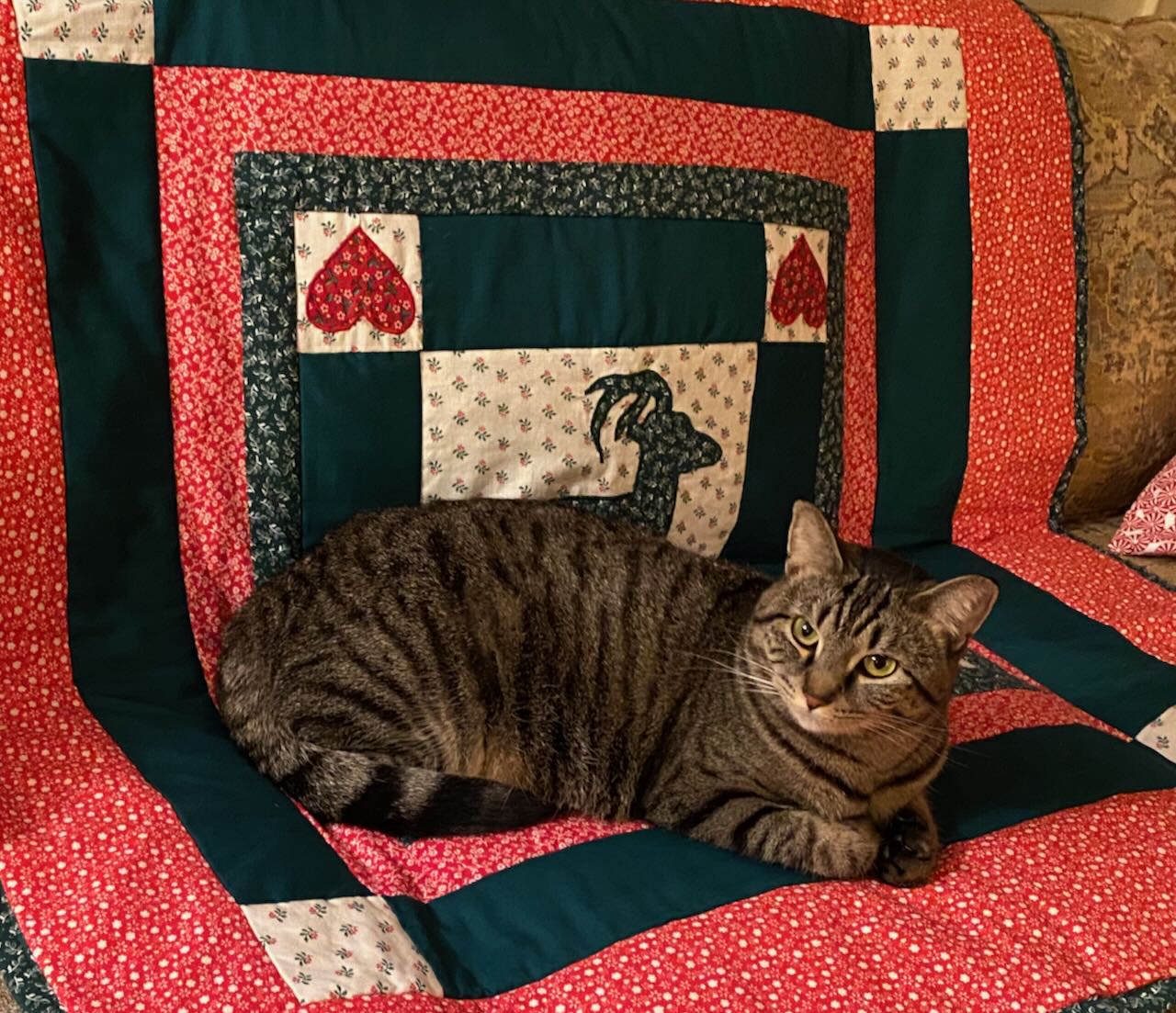
Frassy Upside Down

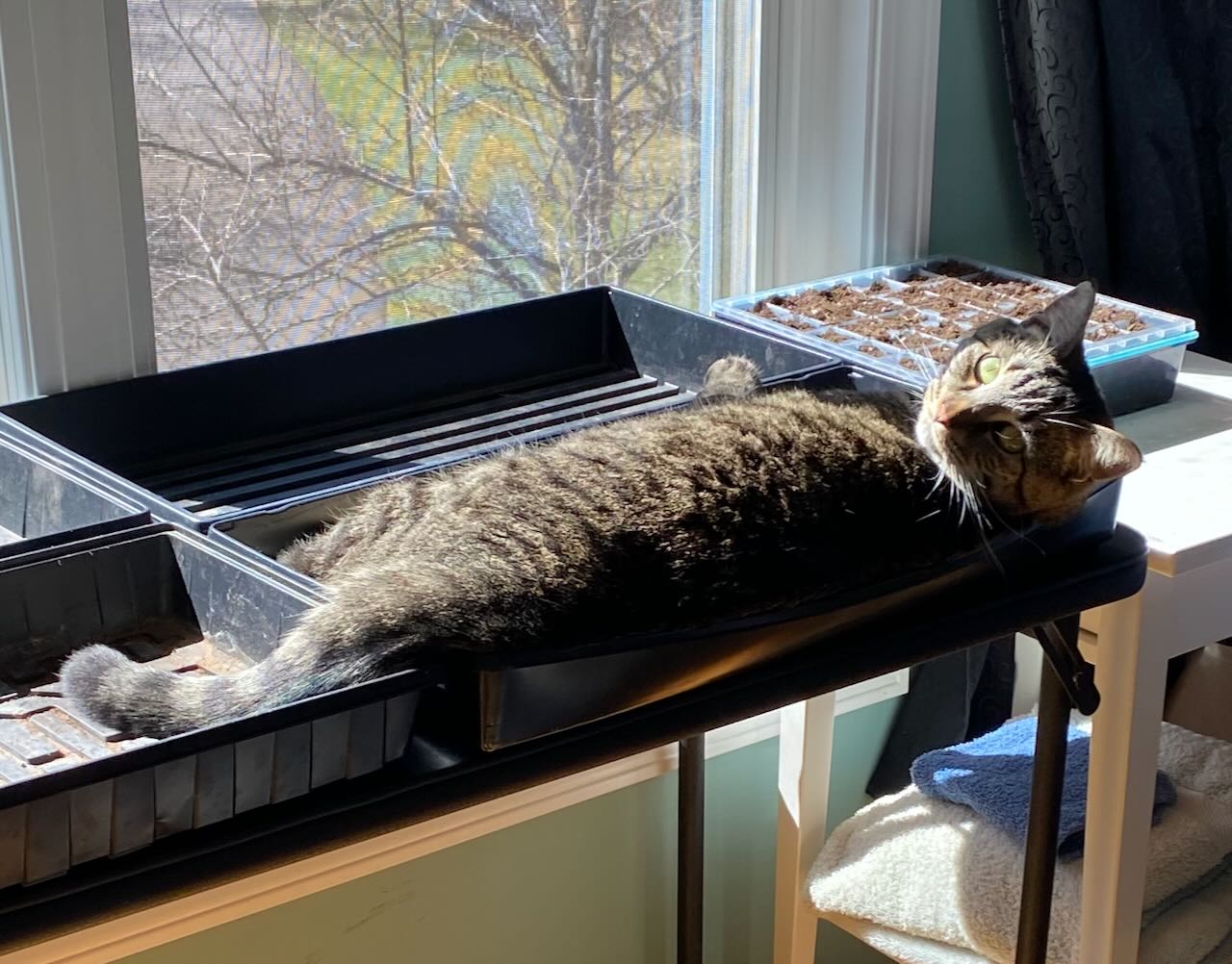
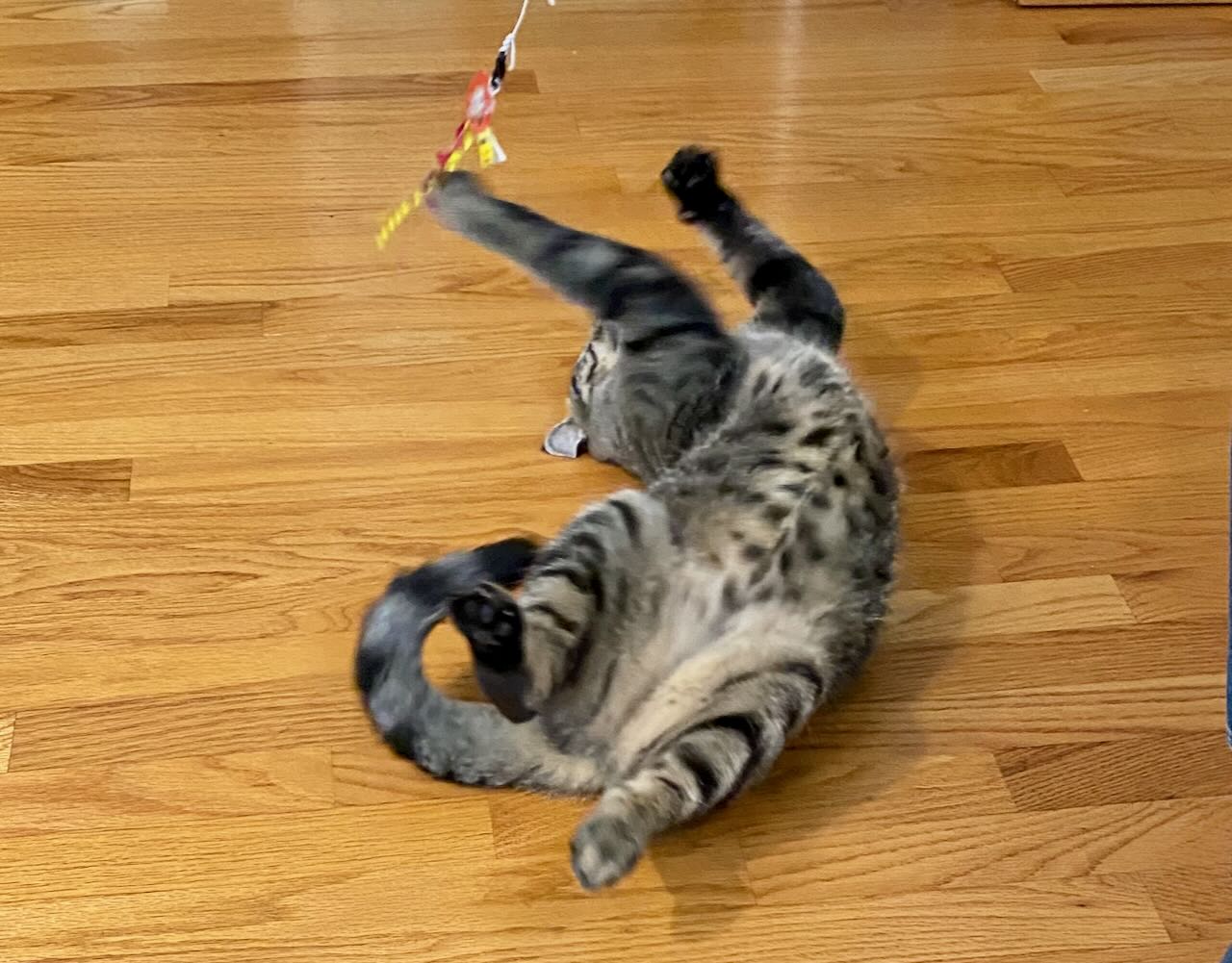
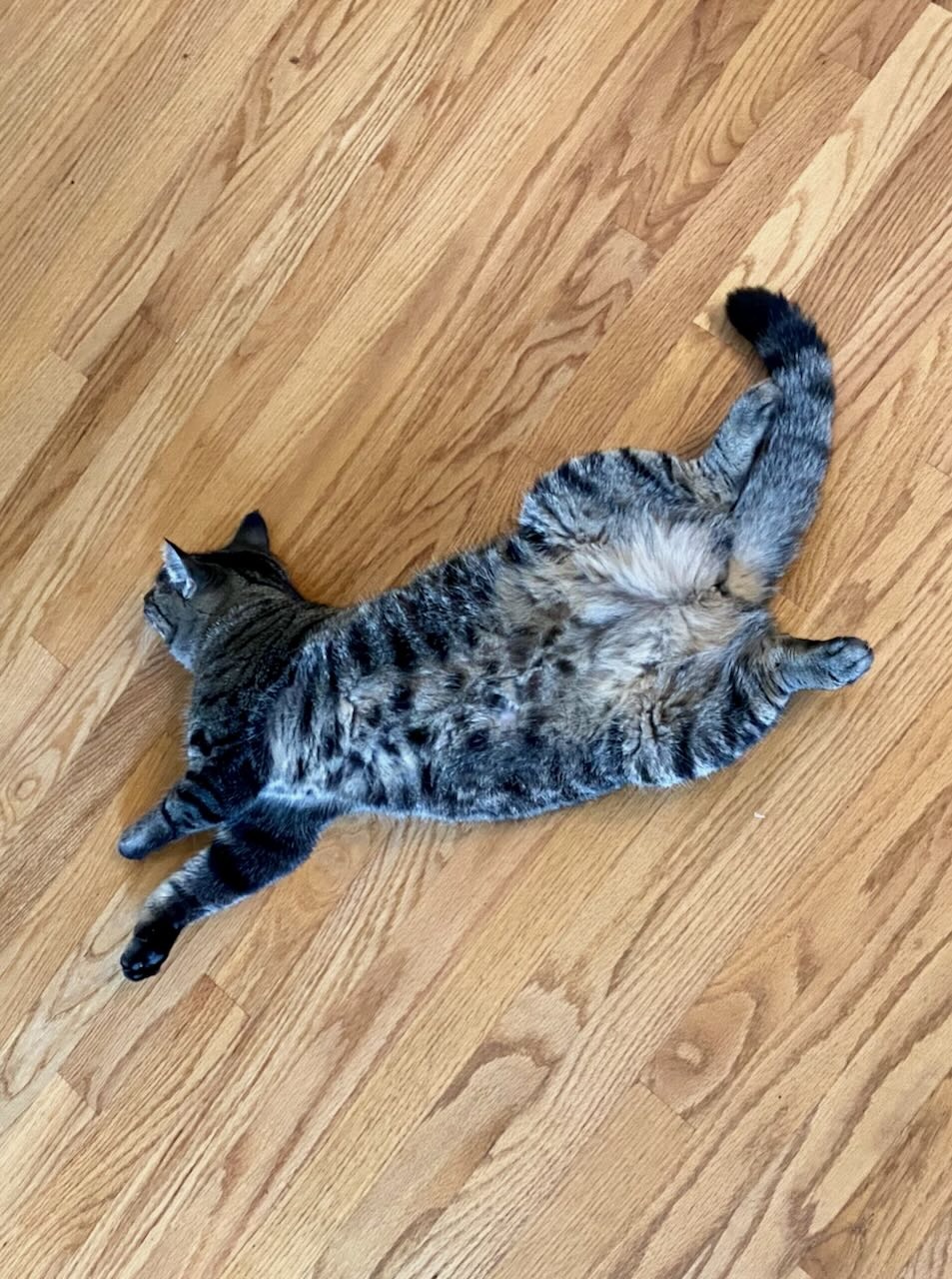
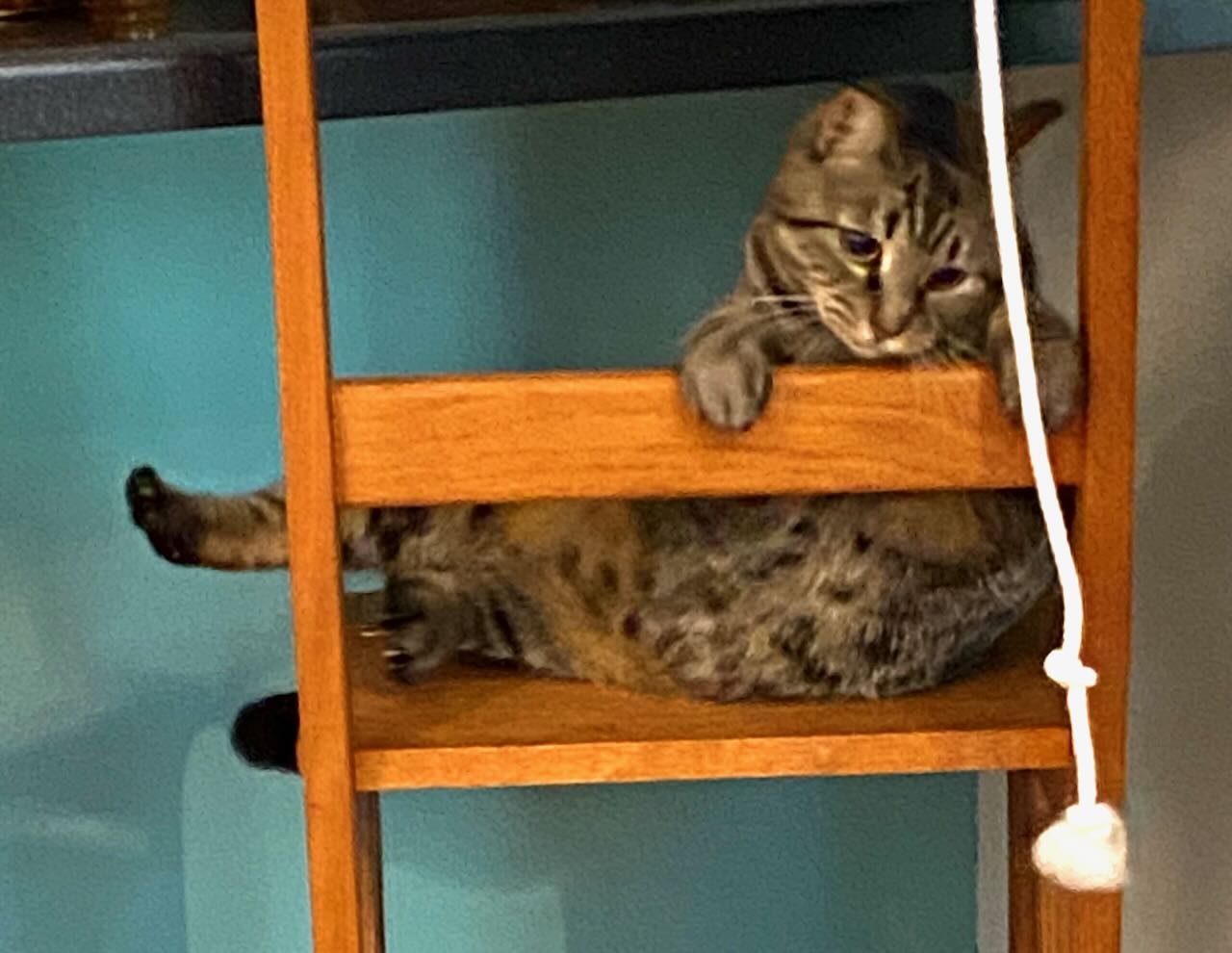
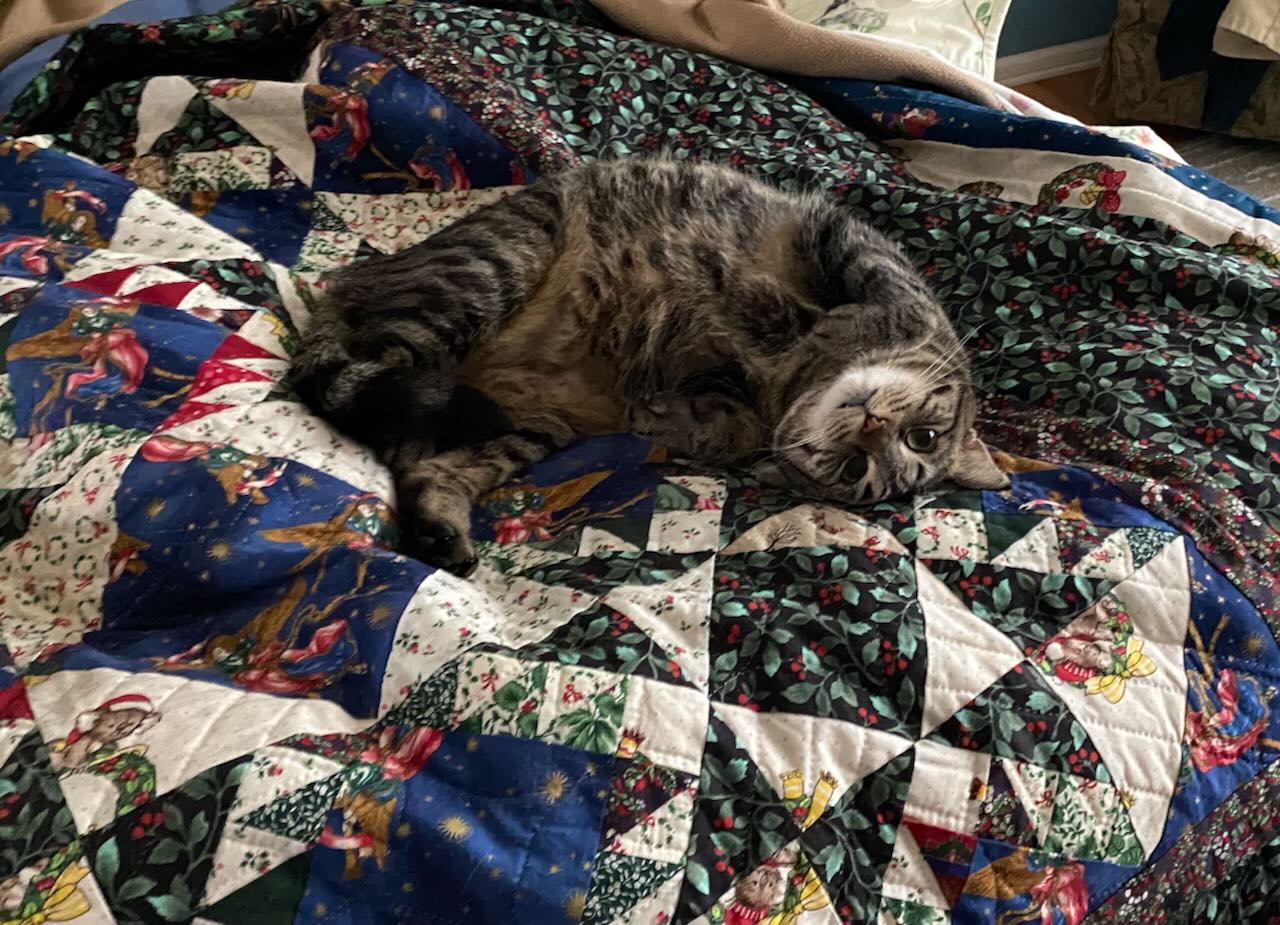
I’ve never had a cat who liked to lie on her back as much as Frassy does. It’s not just in hot weather – she does this no matter the temperature in the house. 

Ballet?

Calisthenics? 

When she also turns her head upside down, it reminds me of how much I enjoyed that as a child – lying on my back looking at the ceiling, pretending it was the floor, picturing myself walking around on it, stepping up over the doorways. 

But what’s in Frassy’s mind when she looks at the world this way?

I put words in her mouth all the time, but my thoughts are unlikely to be hers. It’s hard enough to know what another human being is thinking – and yet we imagine we know the thoughts of our pets.

We especially imagine we know what our relationship to them is, what we mean to them, when all we can know is what they mean to us.

Frassy came up on my lap as I was writing this, and helped out. Or so I like to say. 

Late Summer Harvest

August is summer with a difference. Hours of daylight are still plentiful, but you can feel them drawing down, heading toward the equinox. No more strolling in the garden at ten p.m.; nights are cooler; but the harvest is rolling in. Tomatoes are coming into their own, and the squash – oh, the squash. I plant yellow crooknecks instead of zucchini so I have a chance to find them before they get as big as doorstops. Even so, they seem to have an amazing ability to be four inches long one day and twelve inches the next. I would be tempted to say they’re called squash because they squash anything else trying to grow near them, but being a wordsmith, of course I looked that up. One kind of squash comes from “quash,” a Middle English word now used chiefly for subpoenas, and the other from “asquutasquash,” from the Narragansett. It sounds like the Narragansett people taught the pilgrims how to eat some kind of squash they’d never seen before. 
The Narragansetts would also have had blueberries, a native North American fruit. I came across an argument online about whether the Indians called them “starberries,” but was unable to delve into it because AI kept changing “starberries” to “strawberries.” Thanks, but I’m well aware that no one calls blueberries strawberries.

The flowers that produce seeds instead of fruit are also hard at work generating harvest. The seed pods of my California poppies are so elegant, I have sometimes tried to preserve them. They’d look lovely in a dried flower arrangement but they always burst open, their goal achieved despite my desires.

My zinnias produce new flowers and ripe seedheads in equal numbers right up till frost. They’re a mainstay of my bouquets, so I was disturbed one morning to find the petals munched off of a few of them. I spent some time searching carefully for miscreant bugs in need of control, but none appeared. A bit later, looking out the kitchen window, I laughed to see the riddle resolved: it was a goldfinch, ripping seeds out of the still-petalled seedheads. The petals fell to the deck, where they soon turned an inconspicuous brown. The stems bent over when he landed on them, but not so as to interfere with his snack. The really funny thing was that I was looking right at him thinking he was a bright yellow Cut and Come Again zinnia blowing slightly in the breeze, until he moved enough to show the black stripe on his wing. He was gone before I could get a photo of him at it.

The Little Girls

All day I tried to write a blog post about my beautiful summer flowers, but all I can think about is the little girls swept away in the Texas floods. Summer was beautiful for them, too, swimming and canoeing, supported by the river and trusting in the goodness of life as children do. They slept, and the world changed. They woke to thunder, and the lurch of a power they never knew the river had. 

Those sweet, small lives. Not only the devastated families whose daughters were lost, but also those girls who survived, now have this experience engraved on their hearts. All the rest of us, no matter our politics or attitudes toward climate disasters, have hearts rent by their pain right now.

Meanwhile in Texas, they will face the question of blame. Blame is useful if, instead of poisoning regret and generating revenge, it is targeted toward solutions to the problems that fed the disaster in the first place. To have a child, the saying goes, is to have your heart walking around outside your body. All those girls, beautiful as summer flowers, leave many empty spaces behind them, and only memories to fill them in. I hope the families of Camp Mystic can find comfort and solace in remembrance.