Snow and Shadows

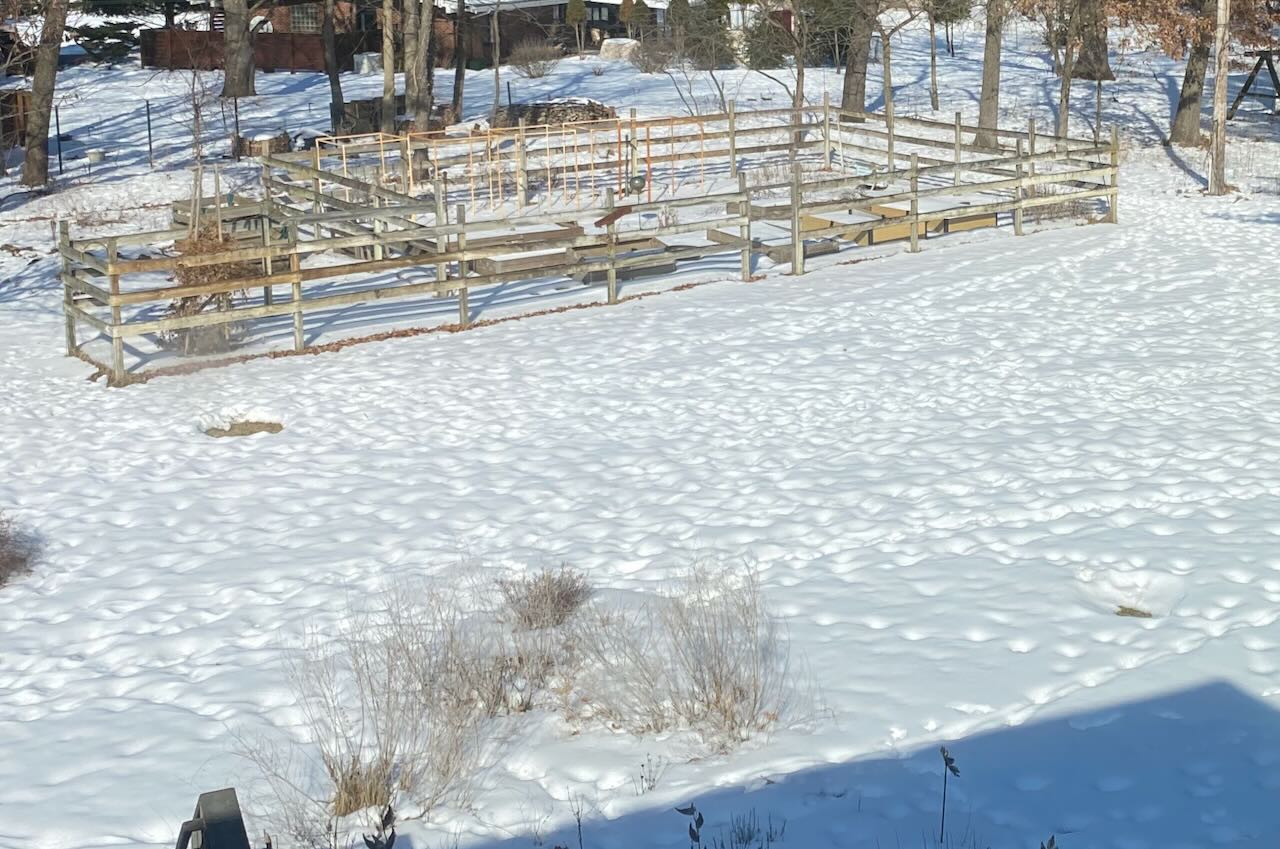
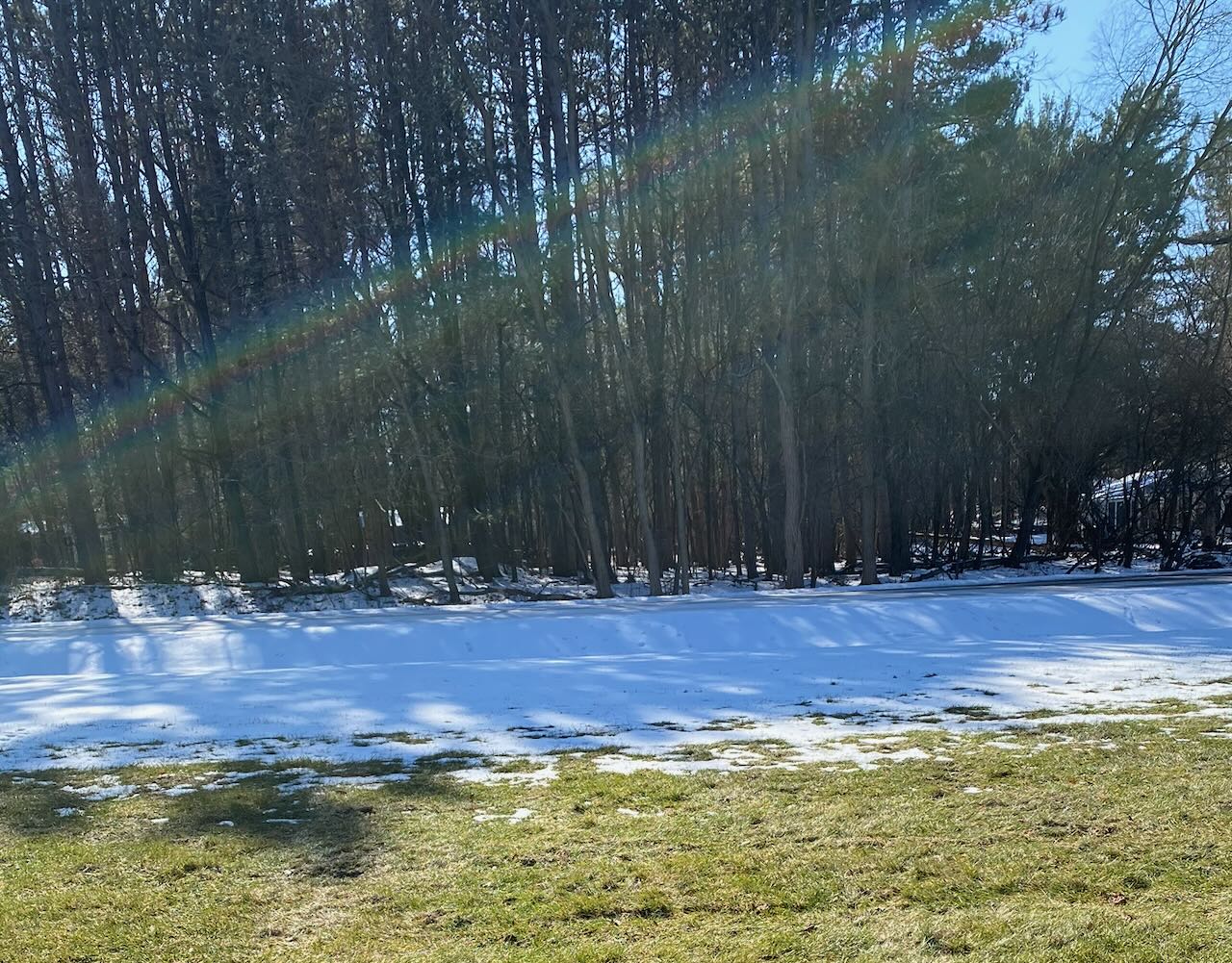
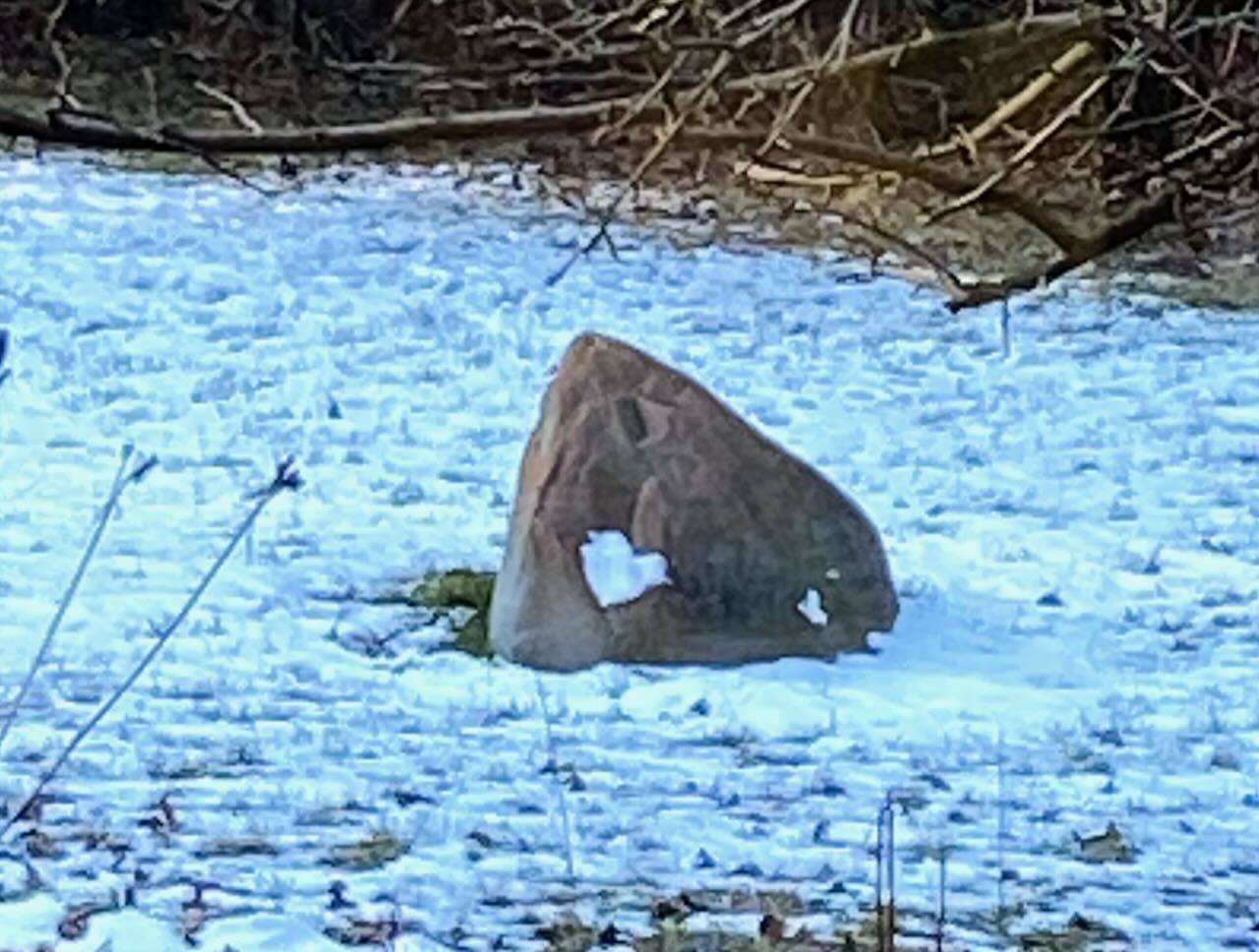
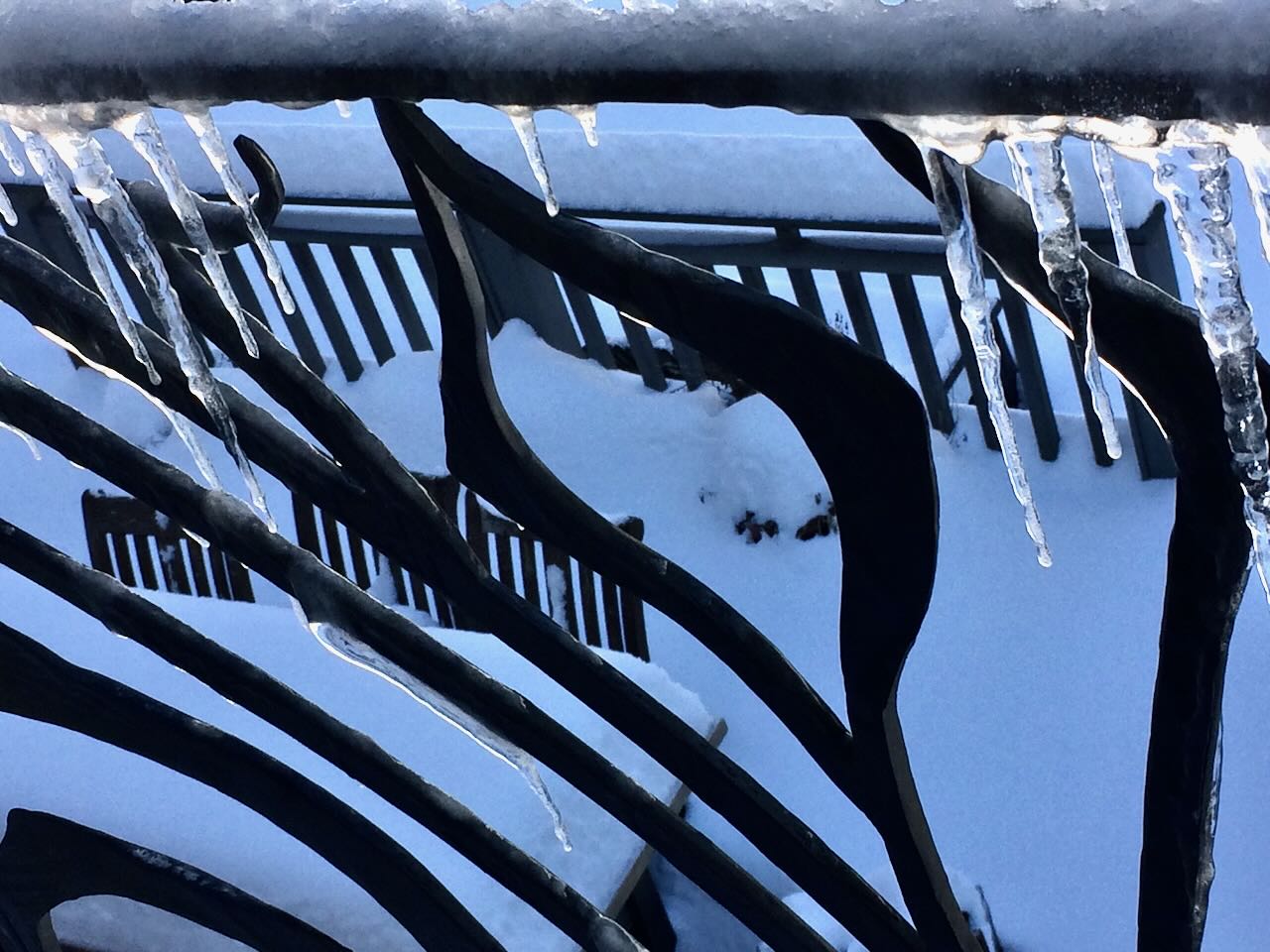
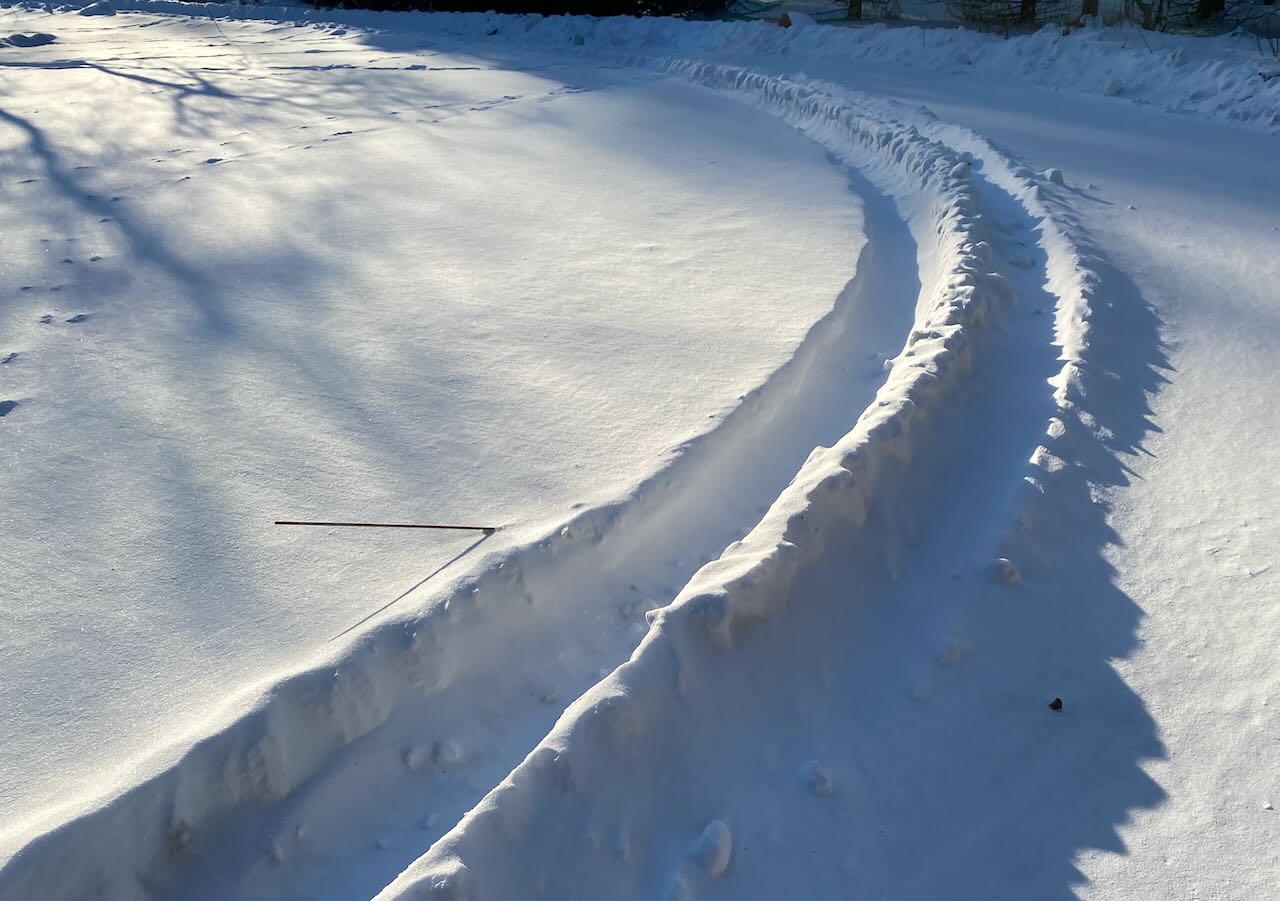
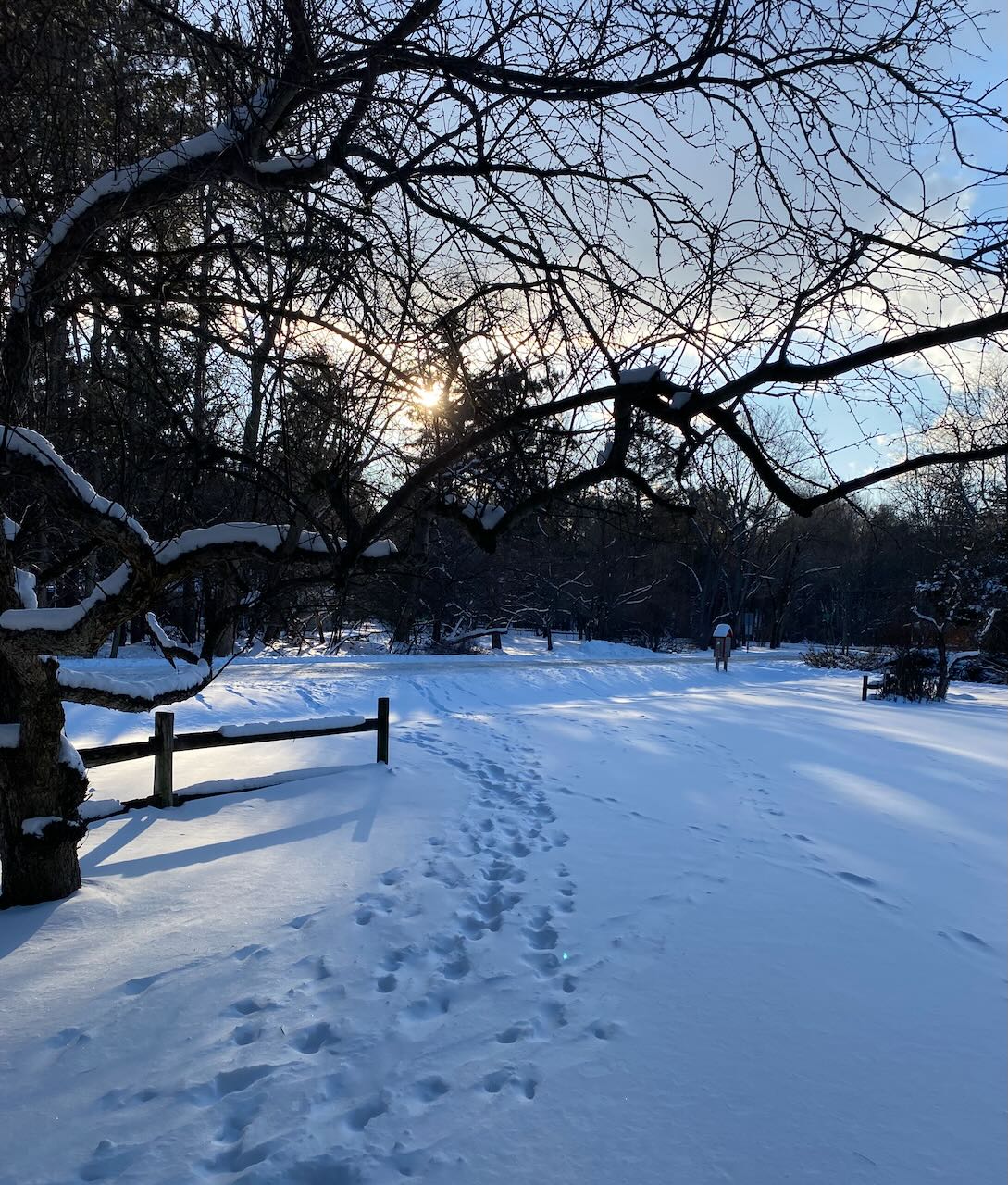
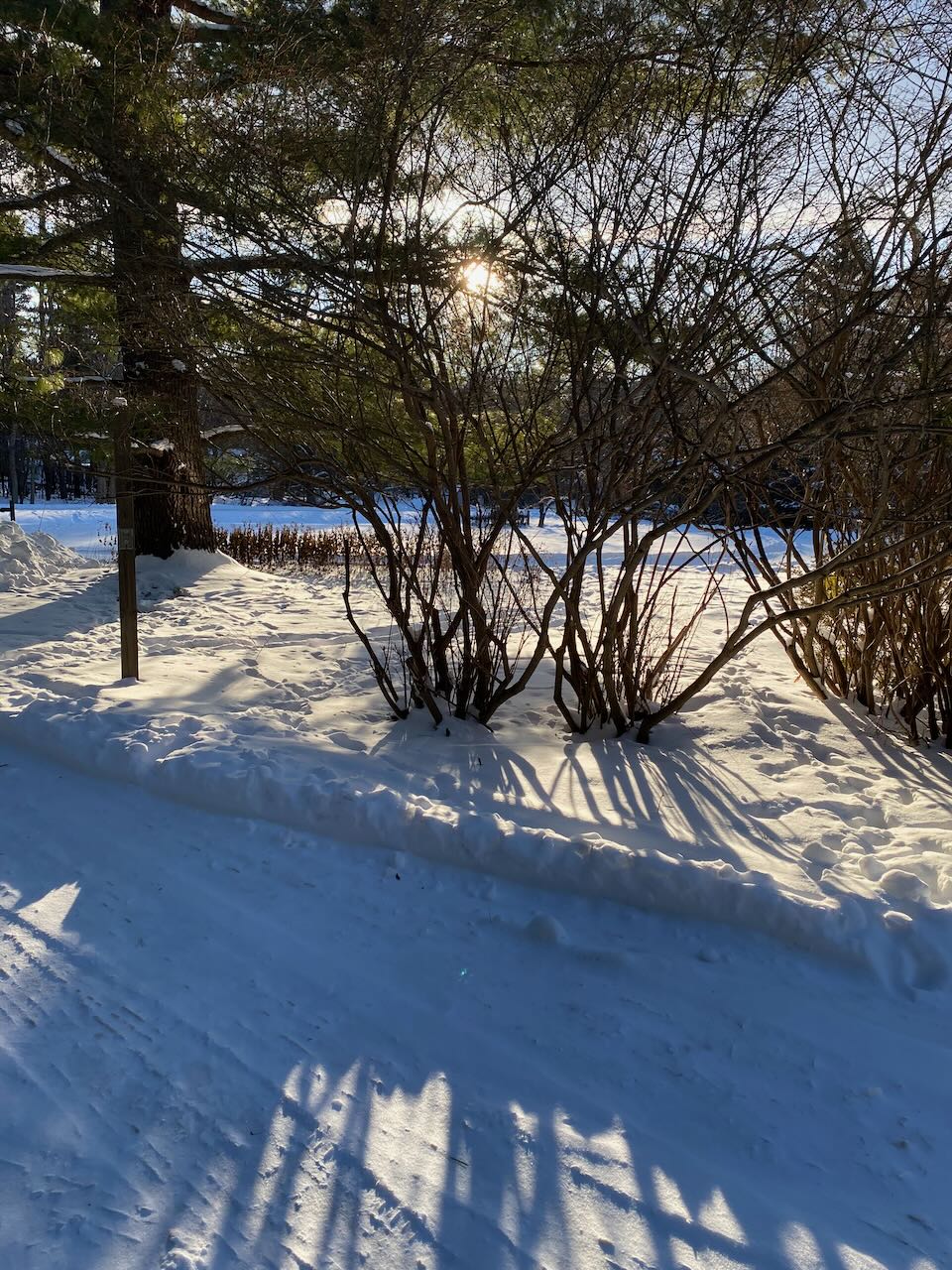
I put on my insulated snow pants, Doug’s thick, heavy alpaca sweater that he found too warm to wear, wool socks, snow boots, down-filled gloves, and my great big hooded down coat, and went out to take pictures of this beautiful, if hyperactive, winter. The sky was bright, the snow was brilliant, and the shadows were deep. Even the tracks of Christen’s truck, where she plowed our driveway, made a dramatic statement. The world was black, white, and blue.

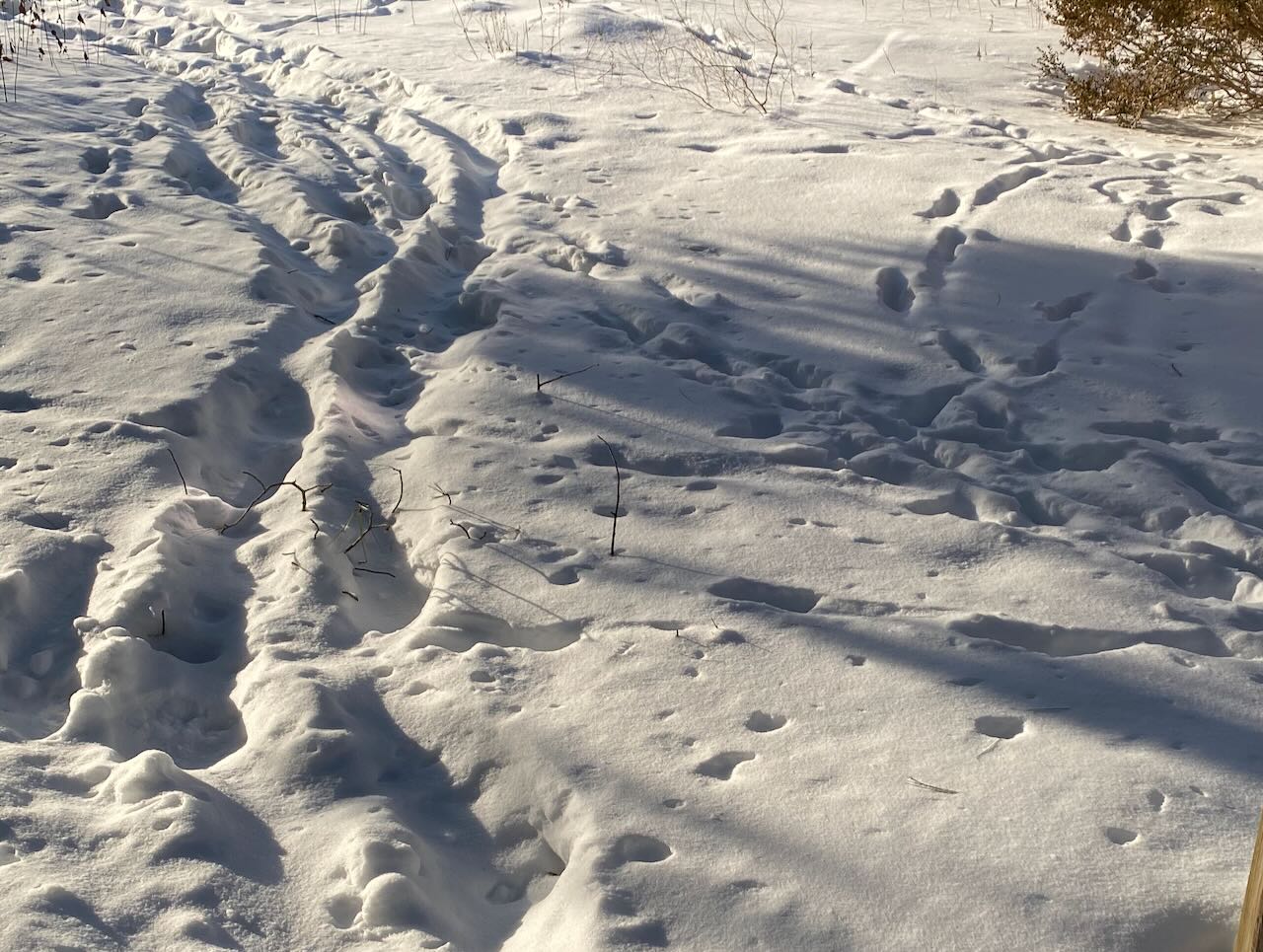
The snow became a record of everything happening in the yard. I walked to the mailbox and back to put a letter out, leaving a swoopy swath, a frozen wake. When I went out again to bring in arriving mail I saw my footprint trail and got inspired – or maybe goofy. The cursive loop on the upper right is my path back.

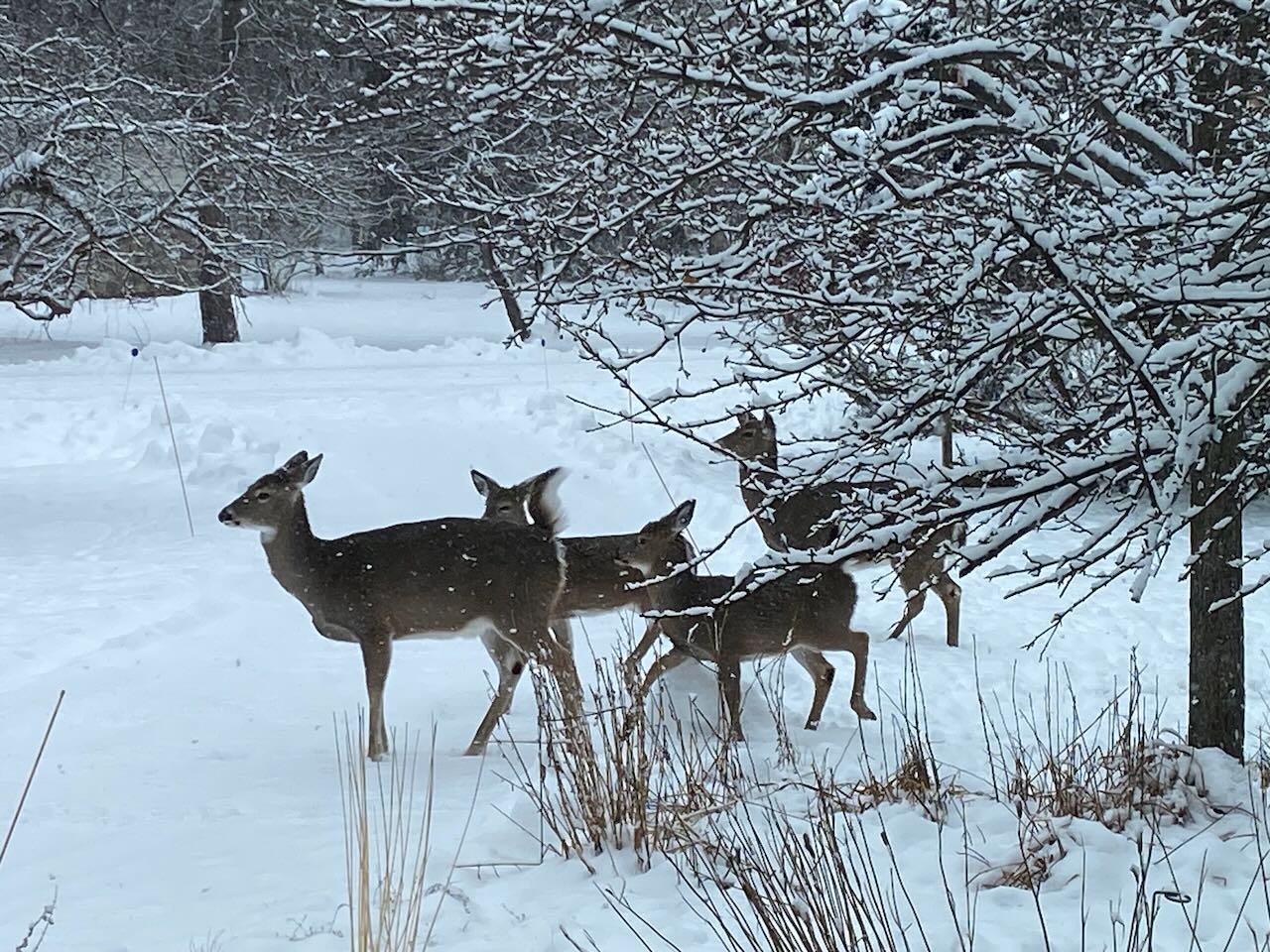
The deer made more sensible trails, skirting the crabapple tree where, alas, there was no more fallen fruit, on their way from the river to the woods. Some clouds passing through moved the shadows around. My gloves were supposed to work on touchscreens, but my phone failed to recognize them. I pulled one oversize sweater sleeve out from my coat cuff over my hand, slipped off the glove, and snapped the shutter. Except a phone doesn’t have the kind of shutter that snaps. I think I activated it to scan.

Winter shadows bring out so much structure we otherwise don’t see. Documenting it reminded me of another function of shadows. Tomorrow will be Groundhog’s Day! The premise is ridiculous in Michigan, where starting at February second we are absolutely going to have six more weeks of winter, shadows or not. Furthermore, our local groundhog comes out of her burrow at random times during the winter, for her own woodchucky reasons. She makes amusing, long wallows as she shuffles through the snow between the woods and the deck. But a bit of the ridiculous to lighten up life in its coldest moments is not amiss.

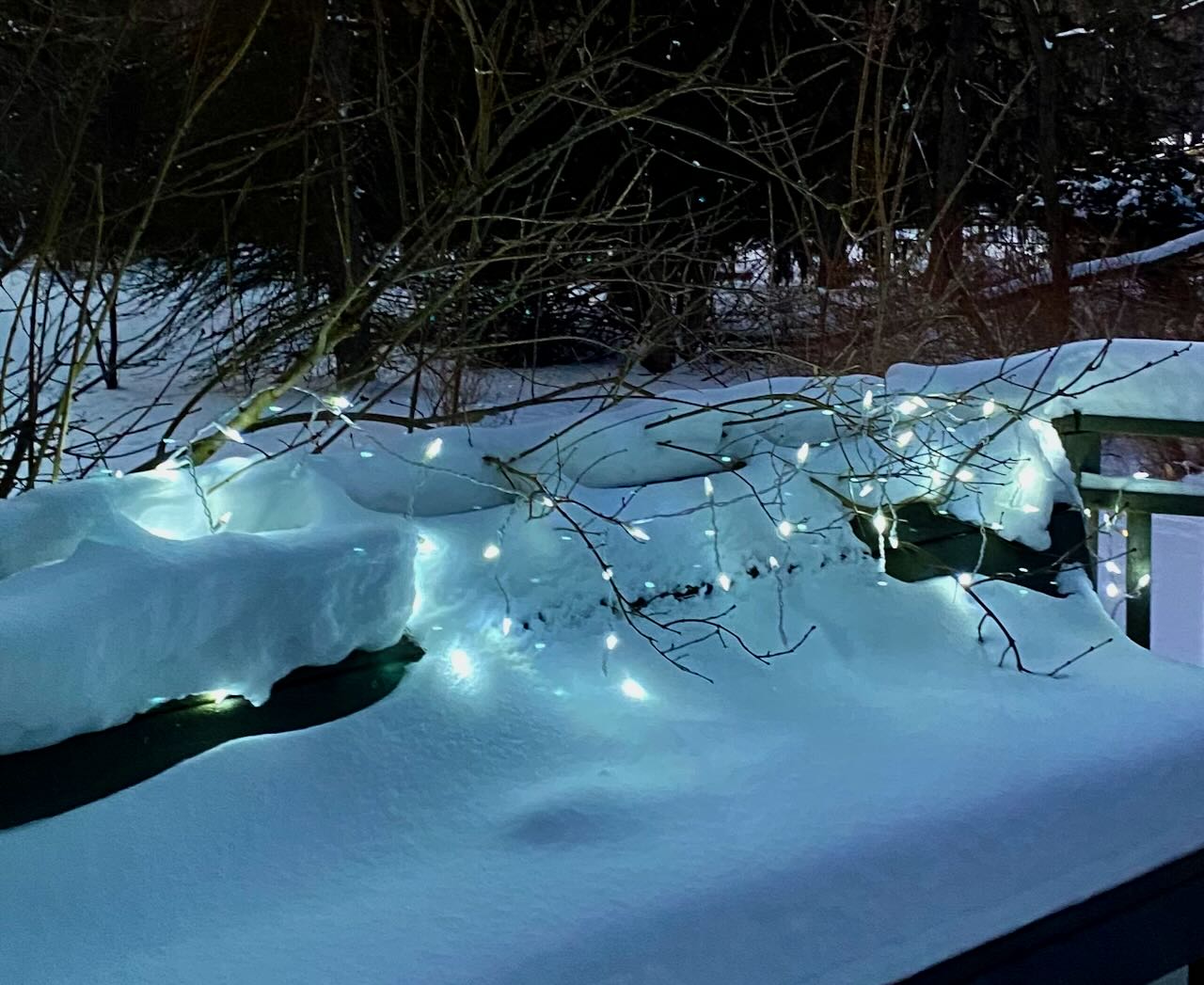
Then I came inside, removed my insulating layers, fixed a cup of tea, and scrolled through my photos. They were full of animal tracks, but the only critter out there was me, protected by fur, wool, and feathers, whose providers perhaps found shelter under our decks, sheds, and woodpiles. A mutual aid society. The sun slid off to the west and the string of lights on the deck came on, both muffled and emphasized by the softly folded snow. The lights burn for six hours and then the timer turns them off, leaving the sky undisturbed and whoever’s sleeping under the deck in peace. I feel a lot more charitable toward the deer and woodchucks, and even squirrels, in winter. It’s hard times for them, and after all I have no flowers or tomatoes to worry about. In hard times everyone needs all the friends they can get.

Another January Thing

Some time in the middle of January I feel the urge to put away the holiday decorations. Twelfth night has come and gone, the ladies, lords, maids, musicians, birds, and pear tree have all been bestowed. I no longer wonder, as I did when I was a child, if the six geese were actually laying the five gold rings. And if so, what was up with that one slacker goose? I unpin, unhook, and gather Christmas things from all corners of the house, and spend a couple of days sorting them into tubs and boxes. Frassy helps.

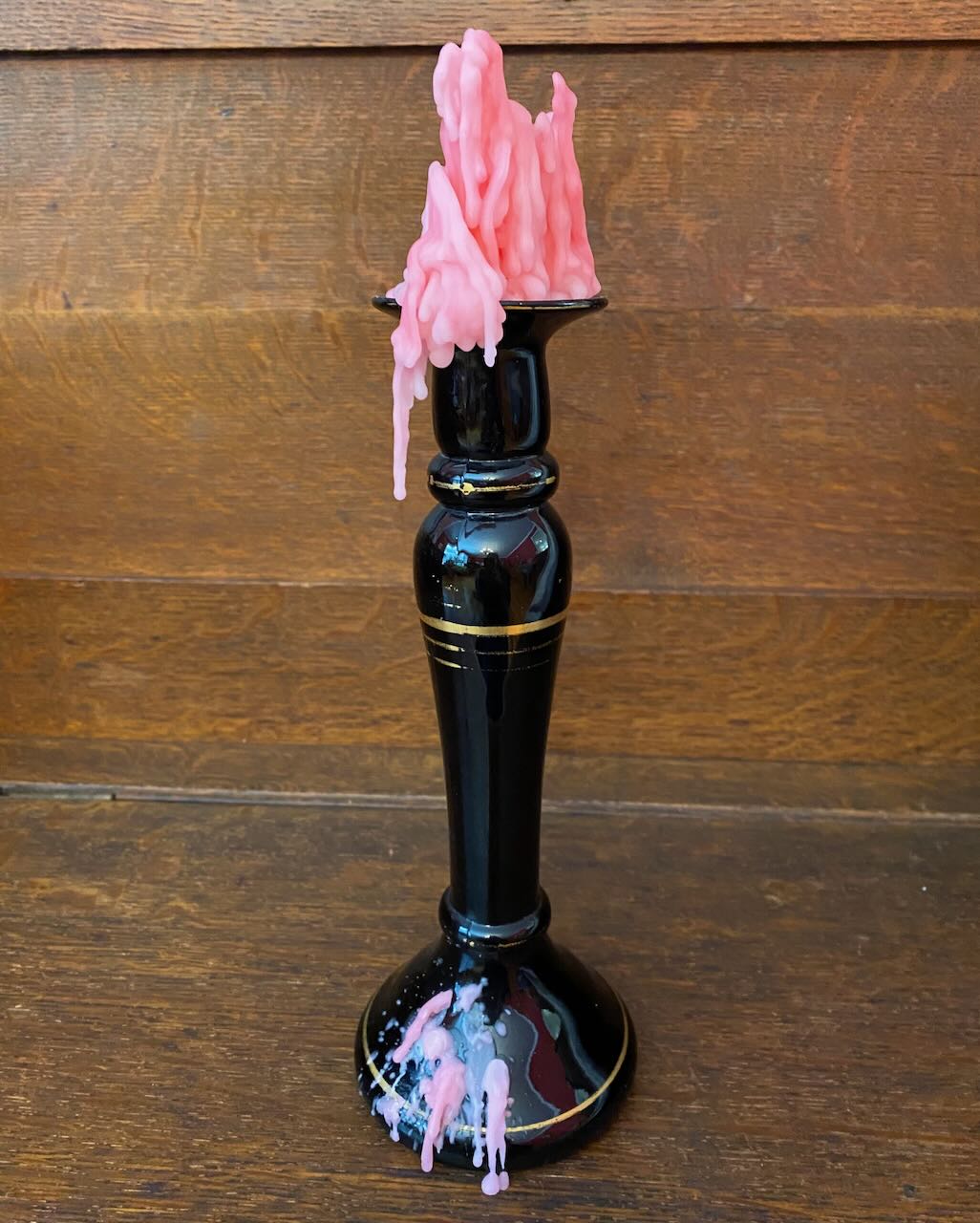
Most of my candles are dripless, but surprises do happen. This one started out white with red stripes, but the result – well, in orange or black it would have been great for Halloween. Kind of creepy looking. The main, melty stub left wax behind when I pulled it out, plus there were all the drips at the bottom. My go-to candlestick recovery program worked perfectly: heat the oven to 200 degrees, put some paper towels on a sheet pan, lay the candlesticks down on the paper towels, put it in the oven until the wax melts onto the paper towels, take out, and when the candlesticks are cool enough to handle but still warm, rub them all over with a rag. 

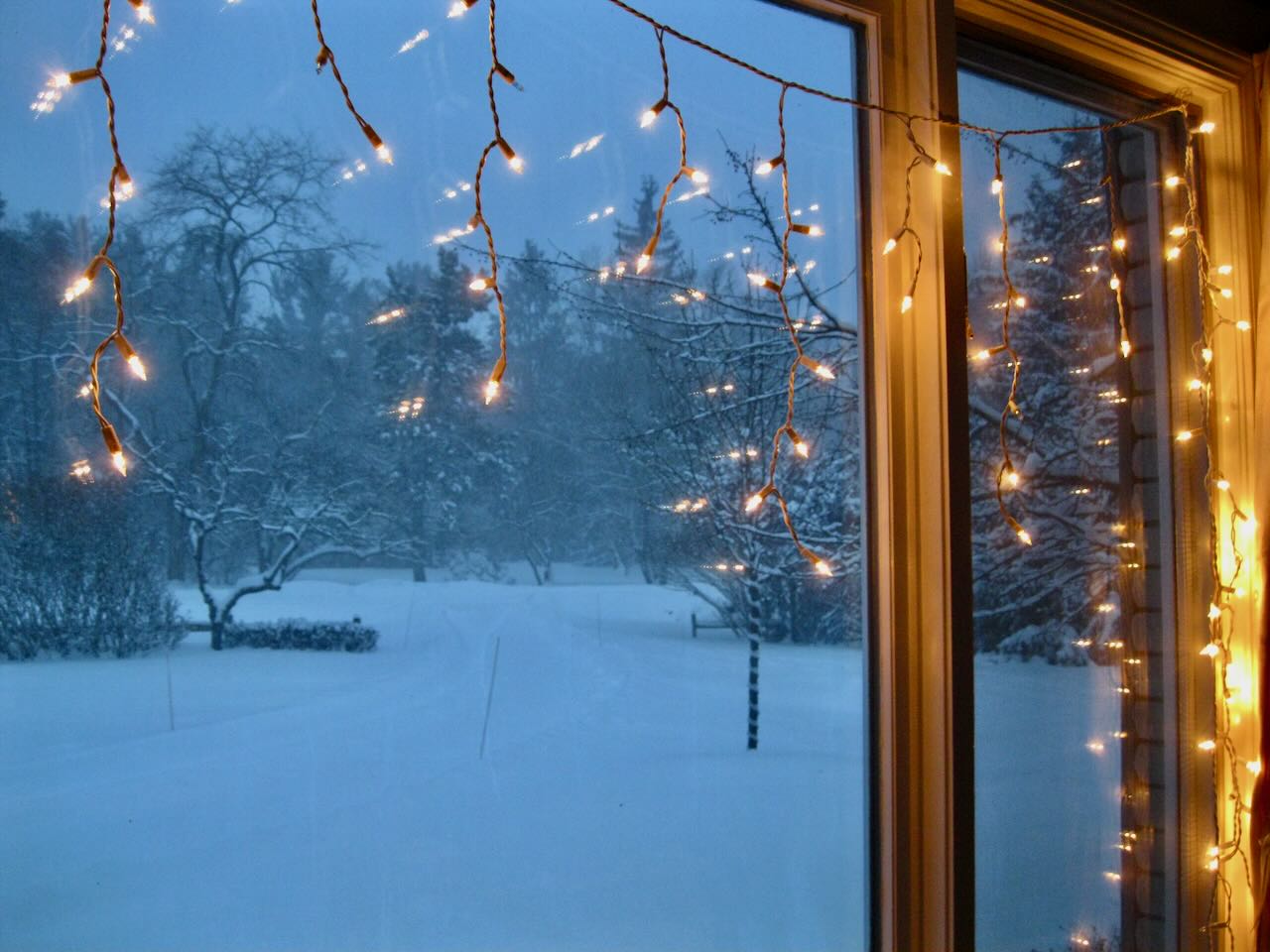
As much as I love putting the Christmas decorations up, it’s equally cheerful for me when I take them down. As my regular, everyday teacups and dishtowels go back into place, I appreciate them all over again: hello, souvenirs from all the years that have fed into this new one; January’s second fresh start. But I think I’ll leave the lights up a little longer. I string them on the inside of the windows, and they connect me to the snowy yard even when I stay inside.

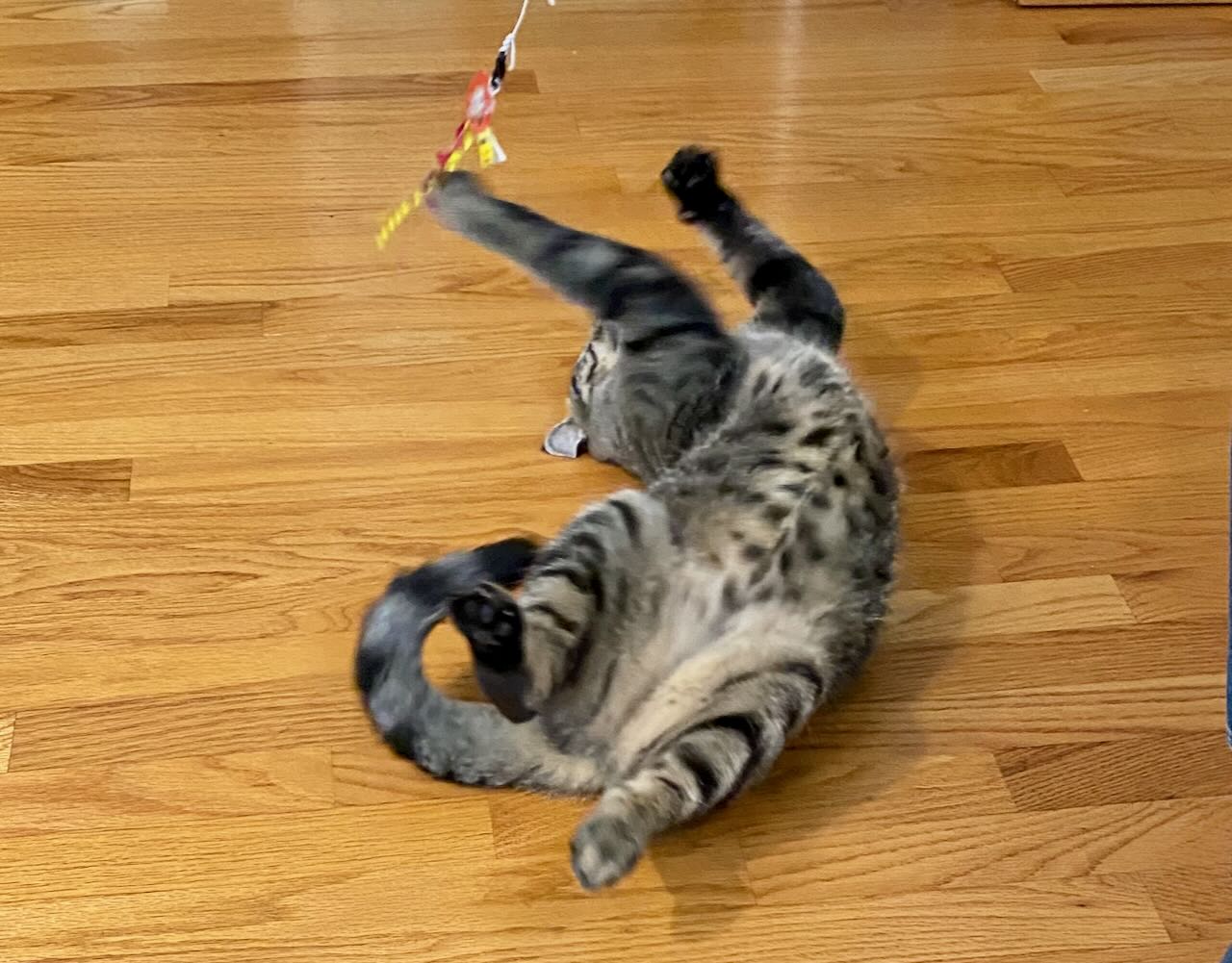
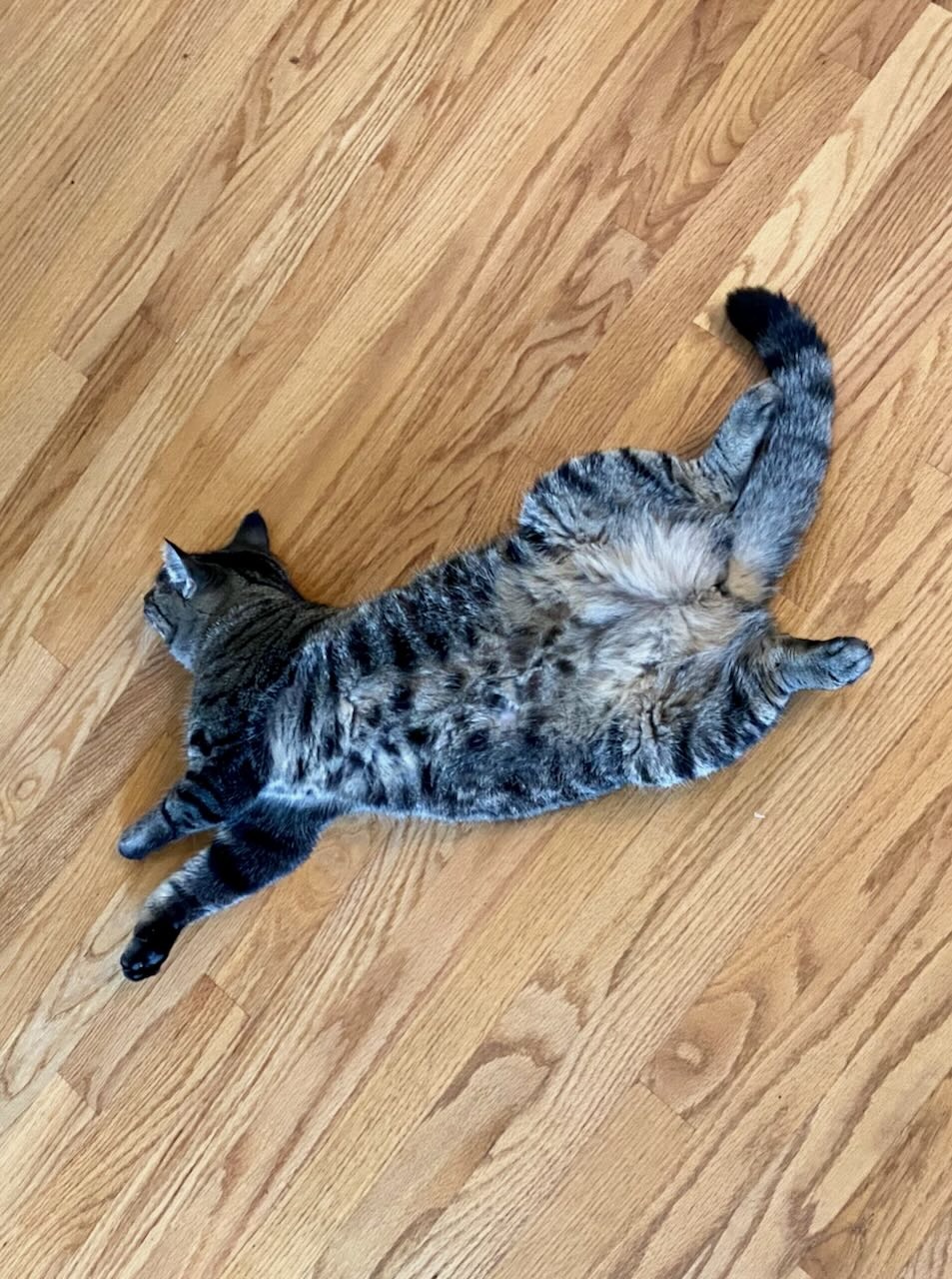
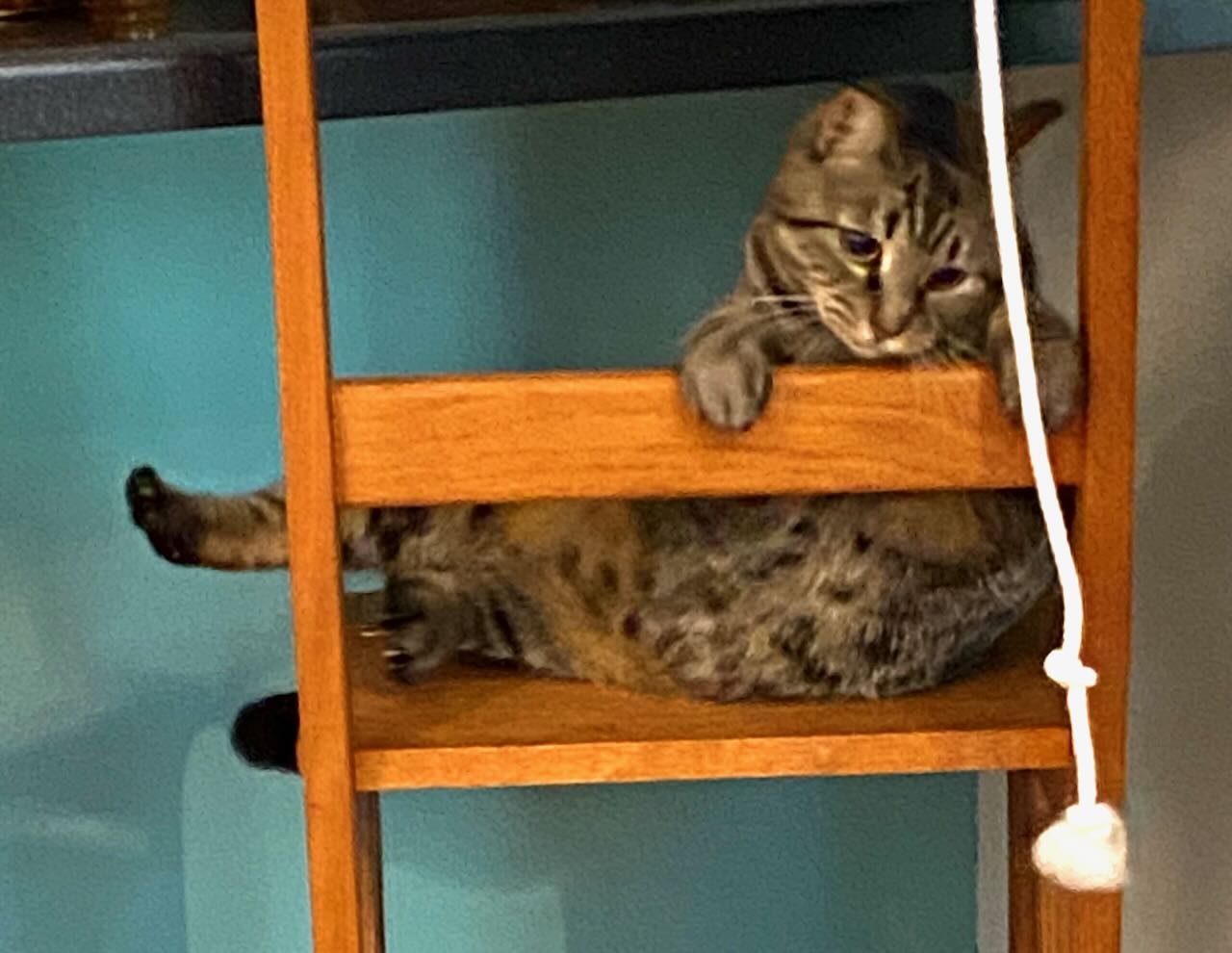
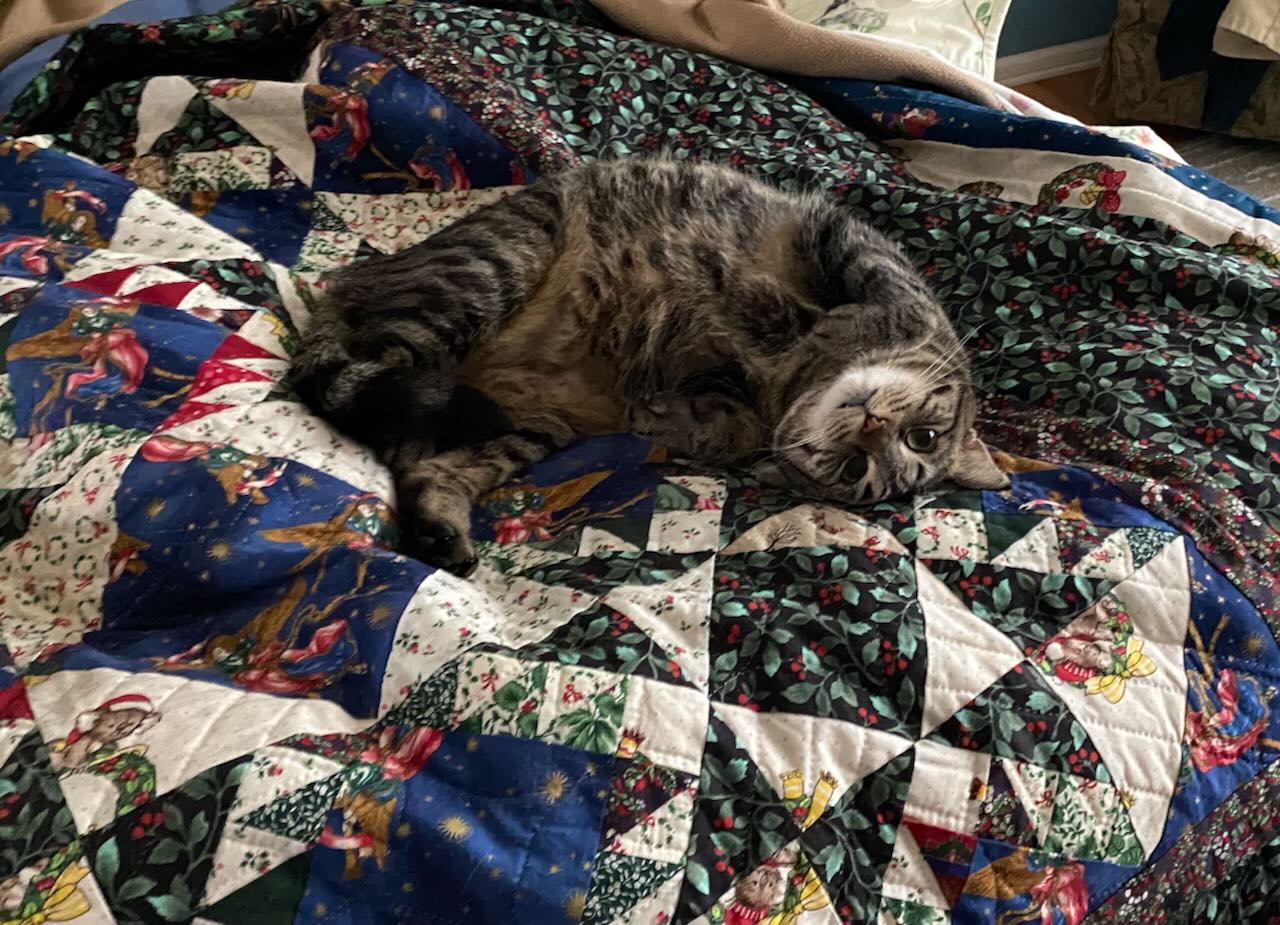
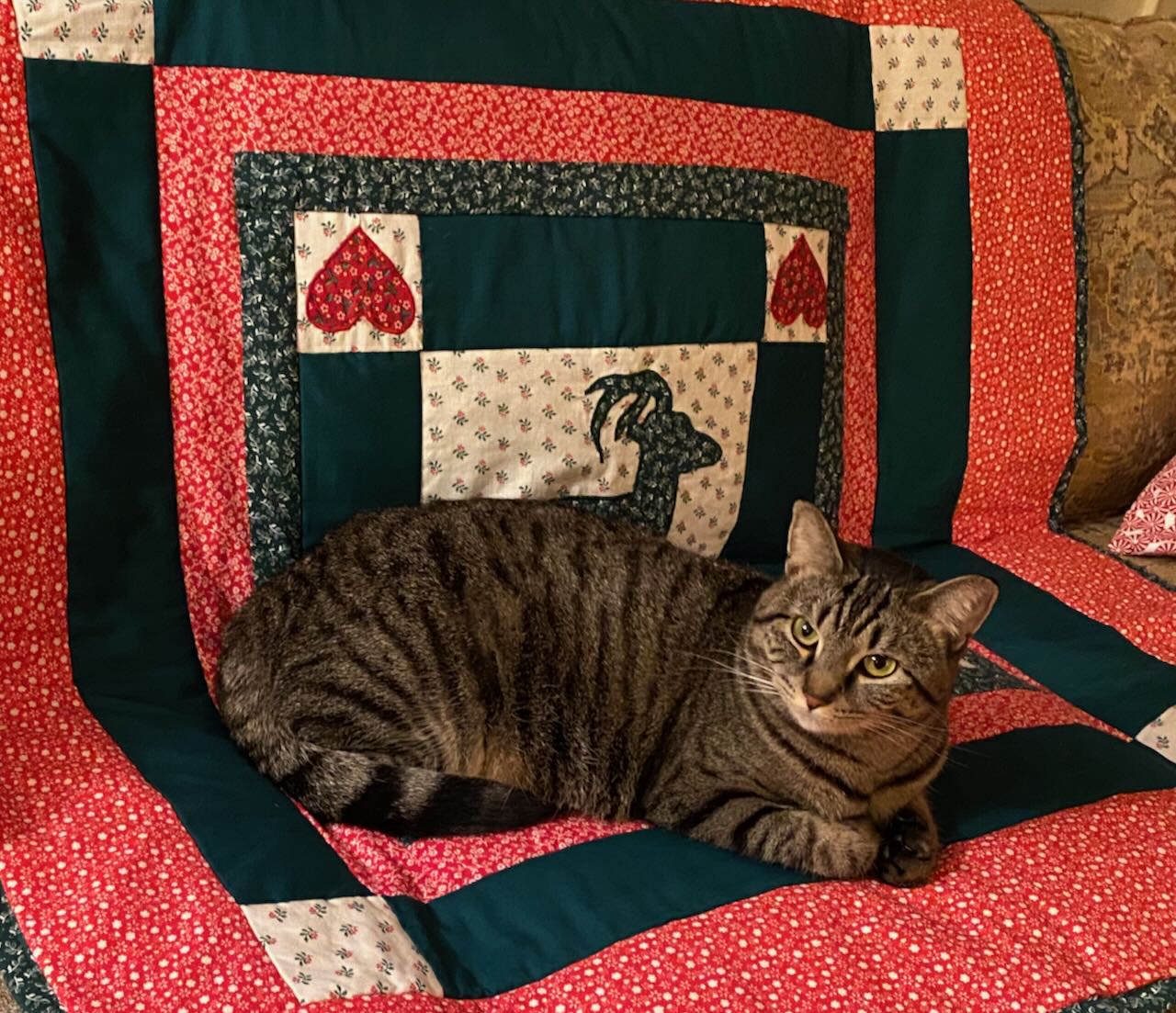
I did plan to fold up the Christmas quilt from the bed, but when I went upstairs Frassy was already there, exercising her inerrant cat sense of where I wanted to work next. She struck this pose as I came in, possibly because she knows I find it adorable, lessening the chance that I’d shoo her away.

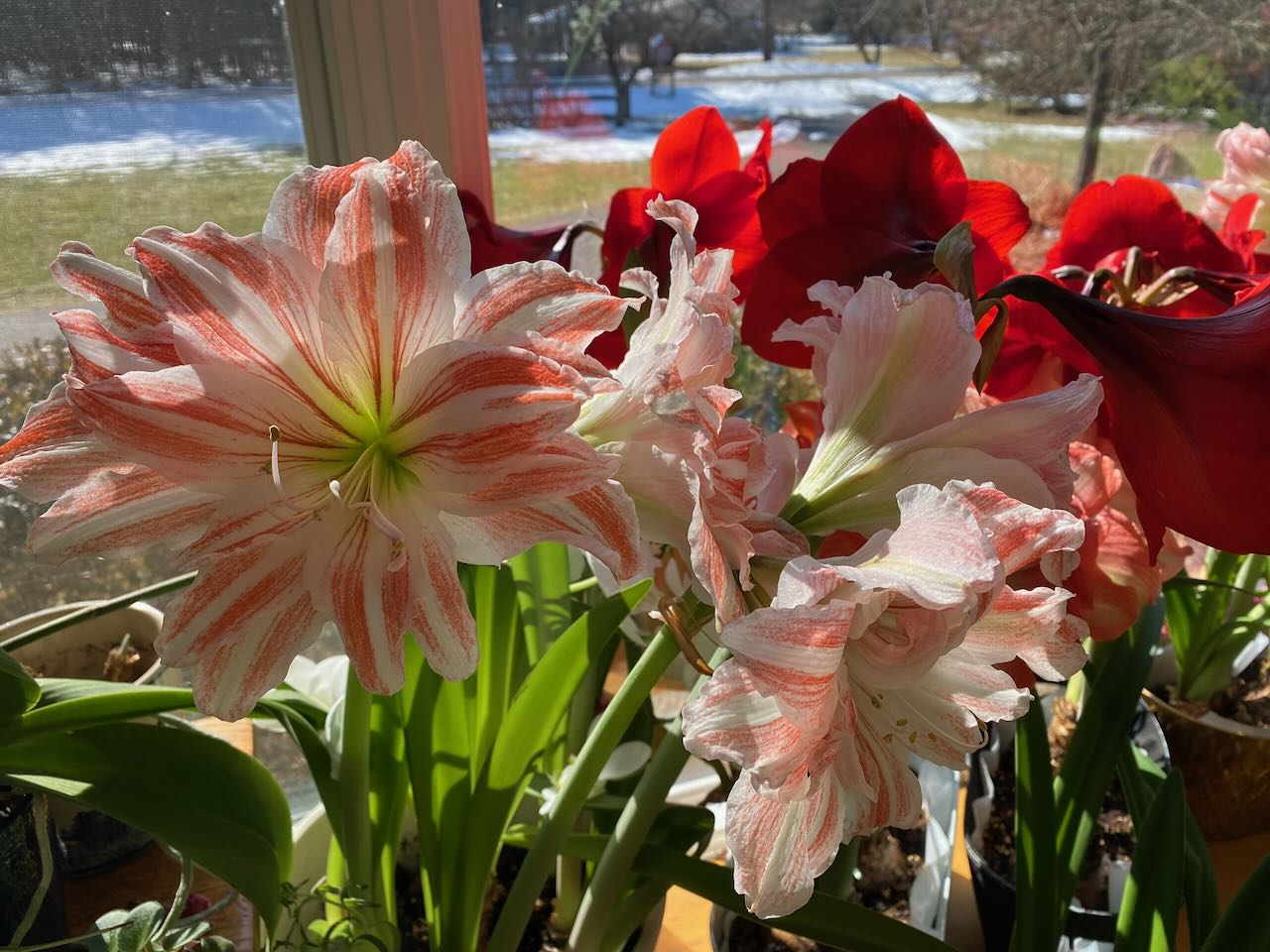
She settled in for a nap, and I realized it meant I could pot up my bulbs without her, um, help. I like to save the amaryllis and paperwhites for after Christmas, to fill in the gap between the end of the holidays and the start of gardening. Seed catalogs have already begun to arrive, but I’m stacking them up on their own shelf. I want to be able to find them again, but I’m not done with January yet.

Resolution

I like to start every new year with a resolution or two, chosen from my list – unwritten, but still a list – of things I really want to do, but keep not getting around to. Not things I should do but avoid, like exercise, or giving up snacks. There are so many happy, satisfying things that need doing and can be turned to instead. For instance, I’ve gotten behind on my favorite, persistently arriving magazine, because I haven’t been traveling. Magazines are perfect for places where your attention is frequently interrupted – airports and airplanes, for example – because they consist of discrete parts. You can finish a whole article while waiting for your flight to be called, and not lose the thread as will happen with a book. You can dip in and out of the letters, poems, and cartoons in between the good views out your window seat. I’m quite content not to be traveling these days, but I miss reading my New Yorkers. So that’s one possibility.

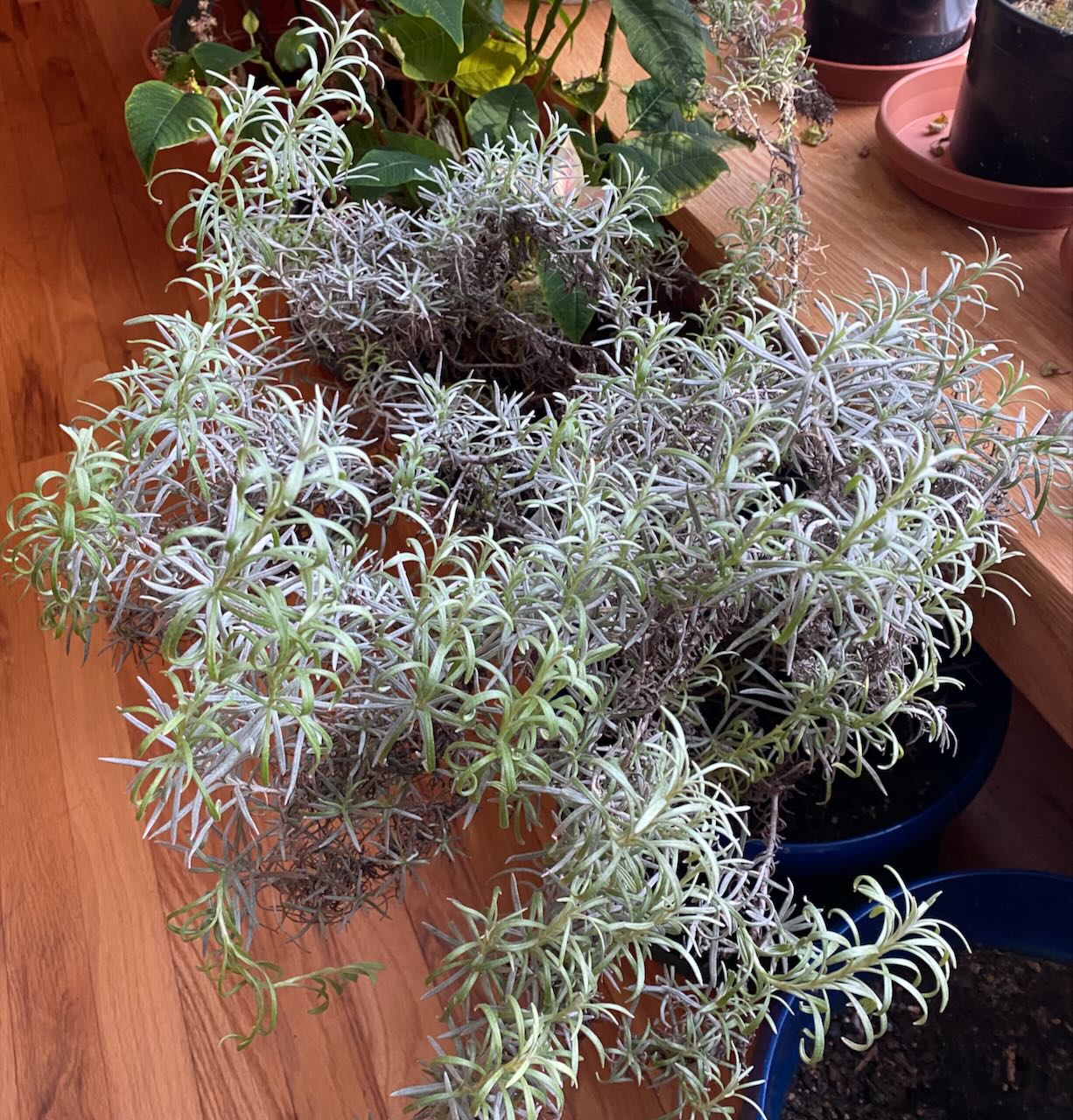
Then there’s my indoor gardening. I brought my curry leaf plant in for the winter so it wouldn’t die, and it didn’t die. It has such an abundance of wonderful, fragrant curry leaves that I really want to cut some and dry them, for future use. Would they make a nice tea? I don’t especially like to cook, but I do like to play with my plants.

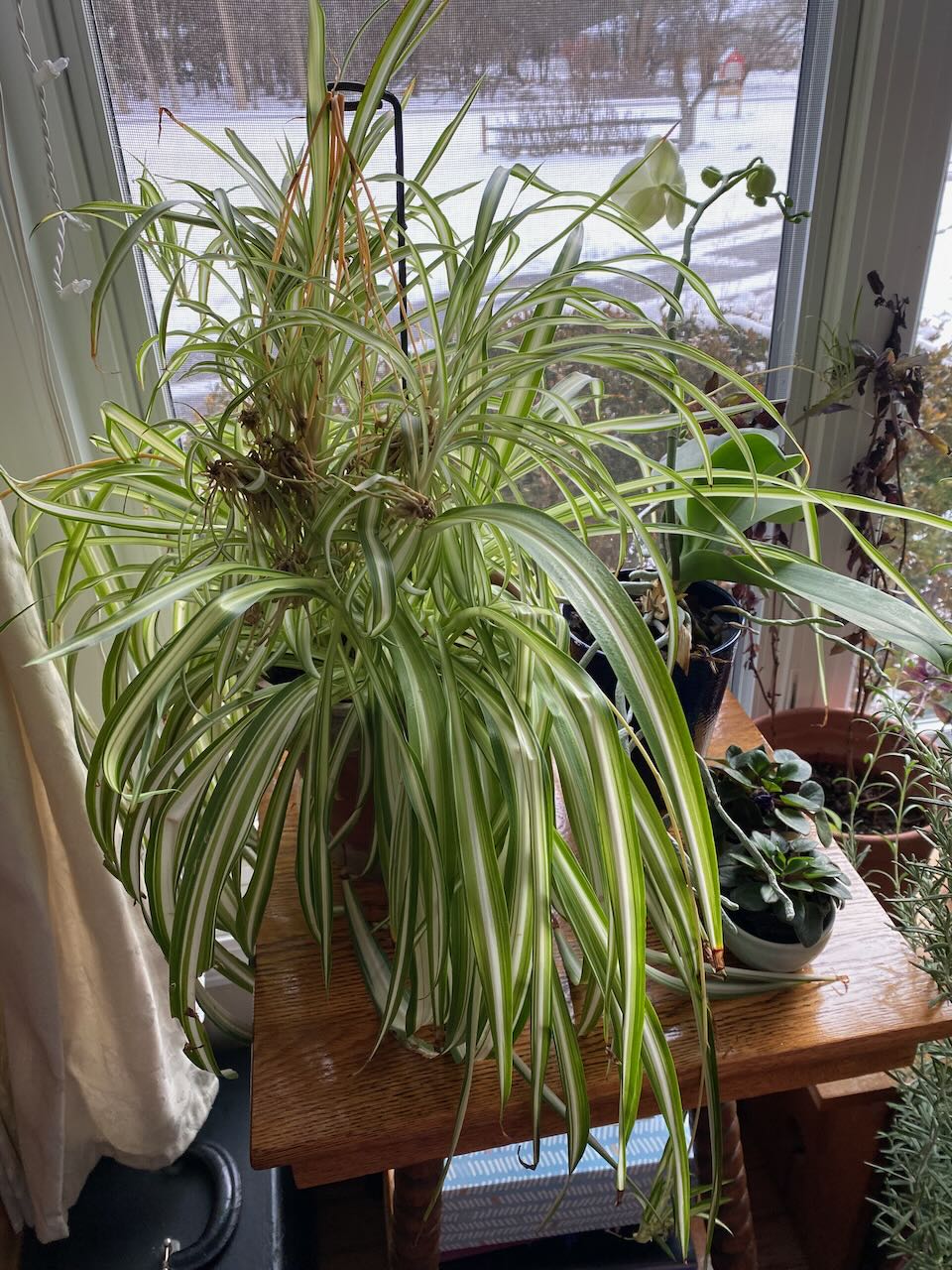
My spider plants could also use some attention. Their adorable enthusiasm for life leads them to throw out new, spindly limbs in all directions, each one flourishing a baby spider plant at the end. I’ve gathered these into plant supports over Mamaplant’s head so they don’t sprawl all over their neighbors, but every so often I cut them off, pot them up, and resettle them on other windowsills, sometimes in other people’s houses. It satisfies my urge to grow and propagate things, despite the snow you see on the other side of that window. So, more possibilities.

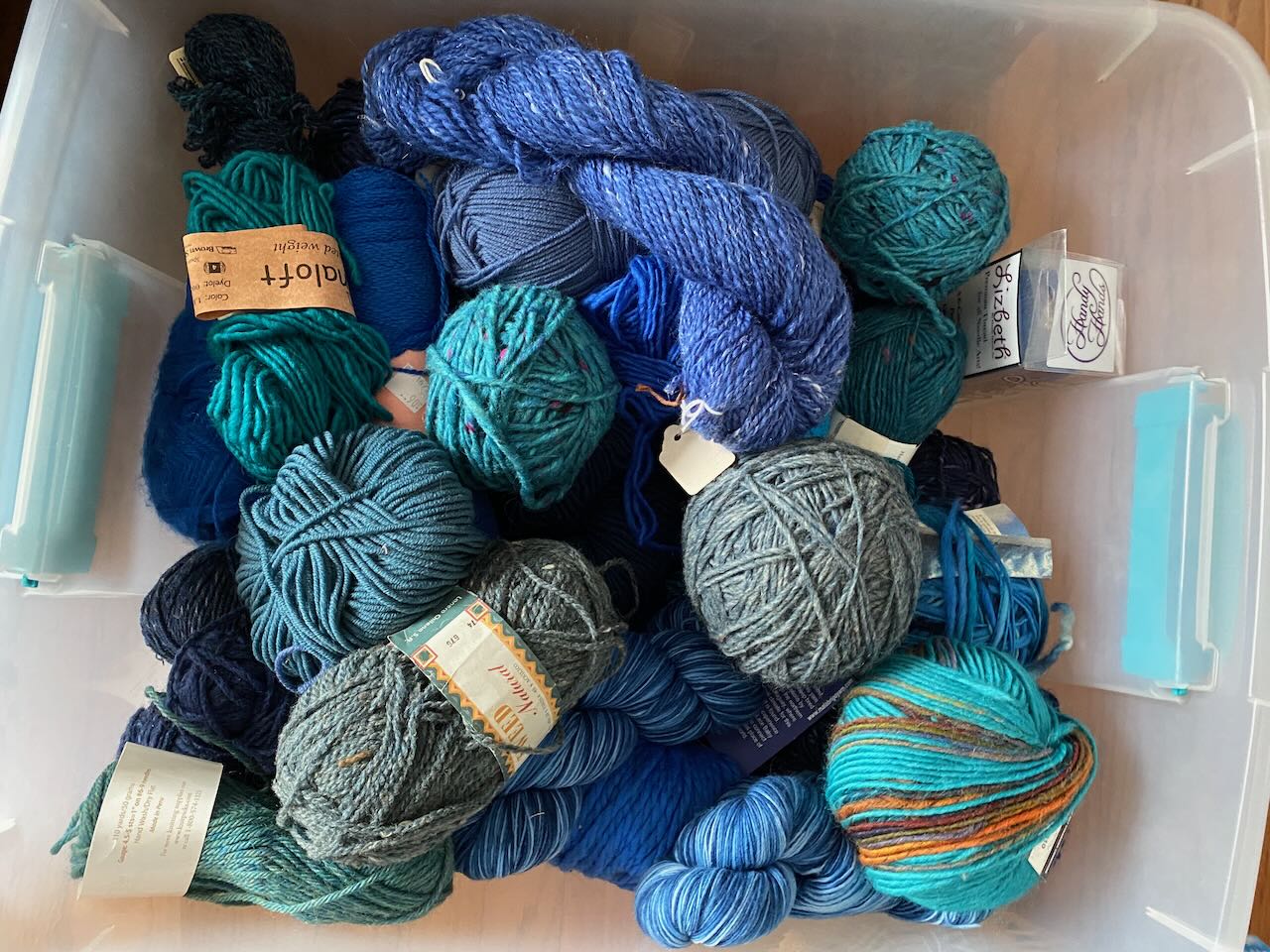
Then there’s all this yarn I’ve collected in what Kaffe Fassett calls a colorway. Whatever else I’m doing I like my hands to be busy, so knitting or crocheting is another pleasure. Frassy has a new habit – pawing a hank or ball of yarn out of its nest and carrying it around the house in her mouth, kitten-like. She doesn’t unwind or chase them, and I really don’t know if they are substituting for kittens or dead mice. But it gives me the added motivation of using the yarn while I can still find it. Also good to finish any scarves or sweaters before I run out of winter. 

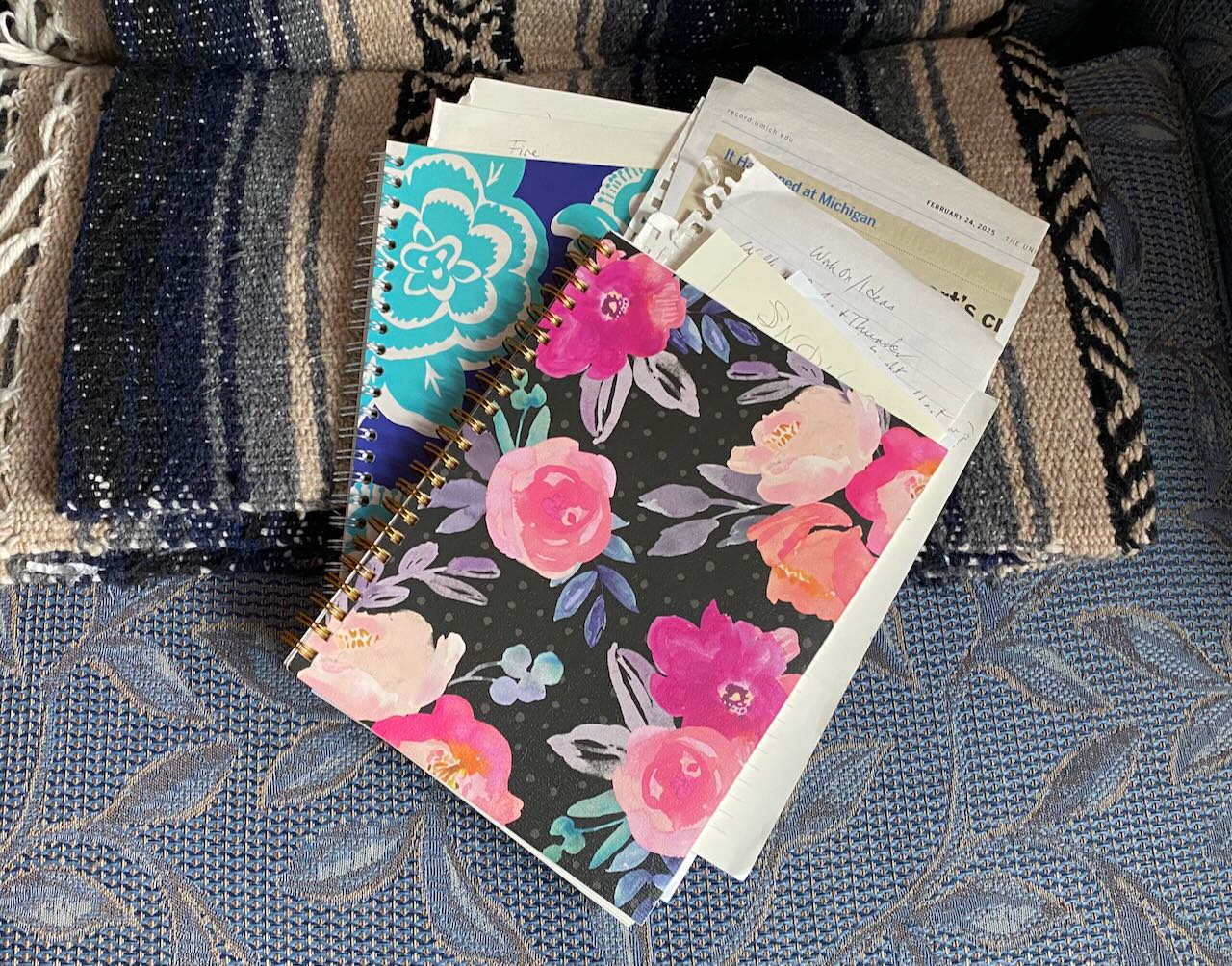
While I was saving yarn from Frassy, I came across not one but two little notebooks full of notes, bits, and pieces for poems. Between these and the many poems always in my head, it would be quite satisfying to convert some of these scraps into poems. Another possibility. I will choose one or two of these possibilities for my resolution this year, but can’t tell you which. New Year’s resolutions are like wishes on a star: I was taught that if you told anyone about them, they wouldn’t come true. It’s like why you say “break a leg” to a ballerina before she goes onstage, as though some malevolent force is listening in, ready to thwart your hopes. Wish her well and she’s doomed; wish her ill, and it’s certain not to happen. So, break a leg, one and all. Let’s see if we can nudge malevolent forces in the desired direction for 2026.

Deer Again

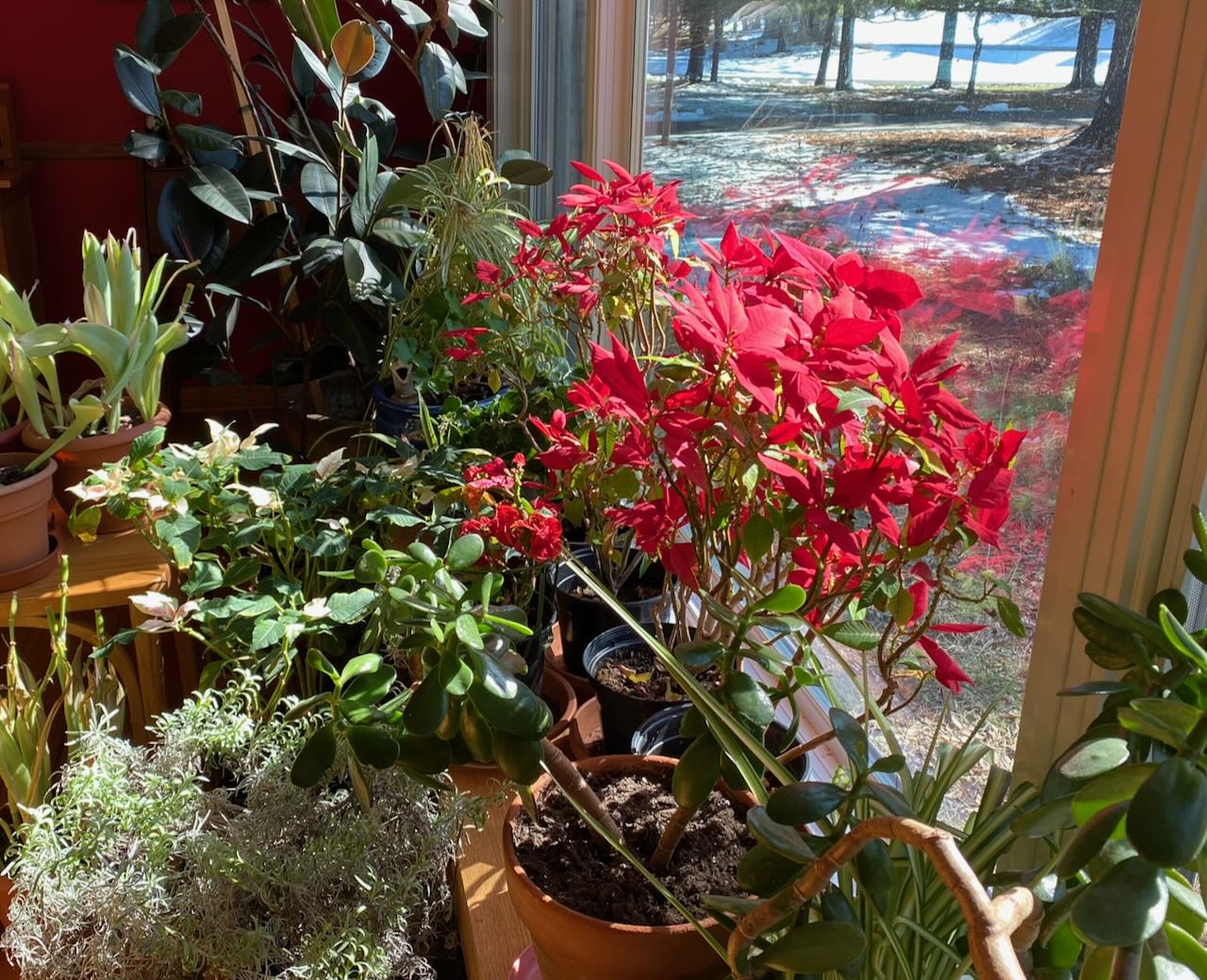
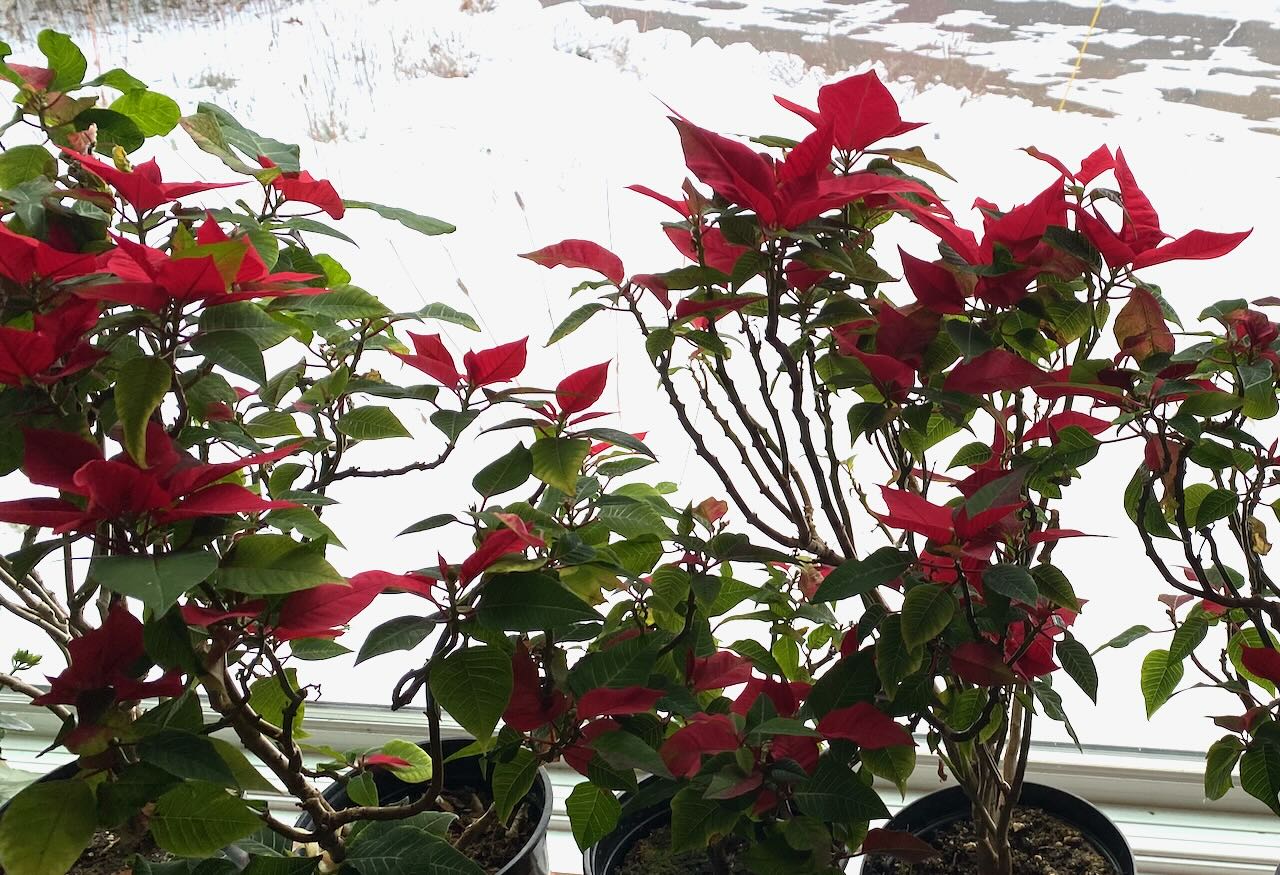
These are my poinsettias that spent the summer outside on the deck, where long hours of daylight turned them green. I always bring them in before frost and wait for the shortening days to turn them red again, but this year I accidentally discovered how to speed up that process. I ran out of regular houseplant food, and gave them the kind for flowering plants. It makes sense, as the red parts are not leaves but bracts, and bracts are specialized to support flowers. I’ve never heard this advised and it’s only happened this once, so may be coincidental. But I’m trying it from now on, so eventually I will know.

As you see beyond that windowsill, we have a lot of snow right now. Snow in December is delightful, at least for those of us who work from home or not at all. The deer, scourge of my garden in spring and summer, become scenic in a winter landscape. They might be posing for a Christmas card. The season must be difficult for deer, with food less abundant and more shelter needed, but just their perseverance gives an aura of reassurance, a feeling of peace. Hard times can be gotten through. 

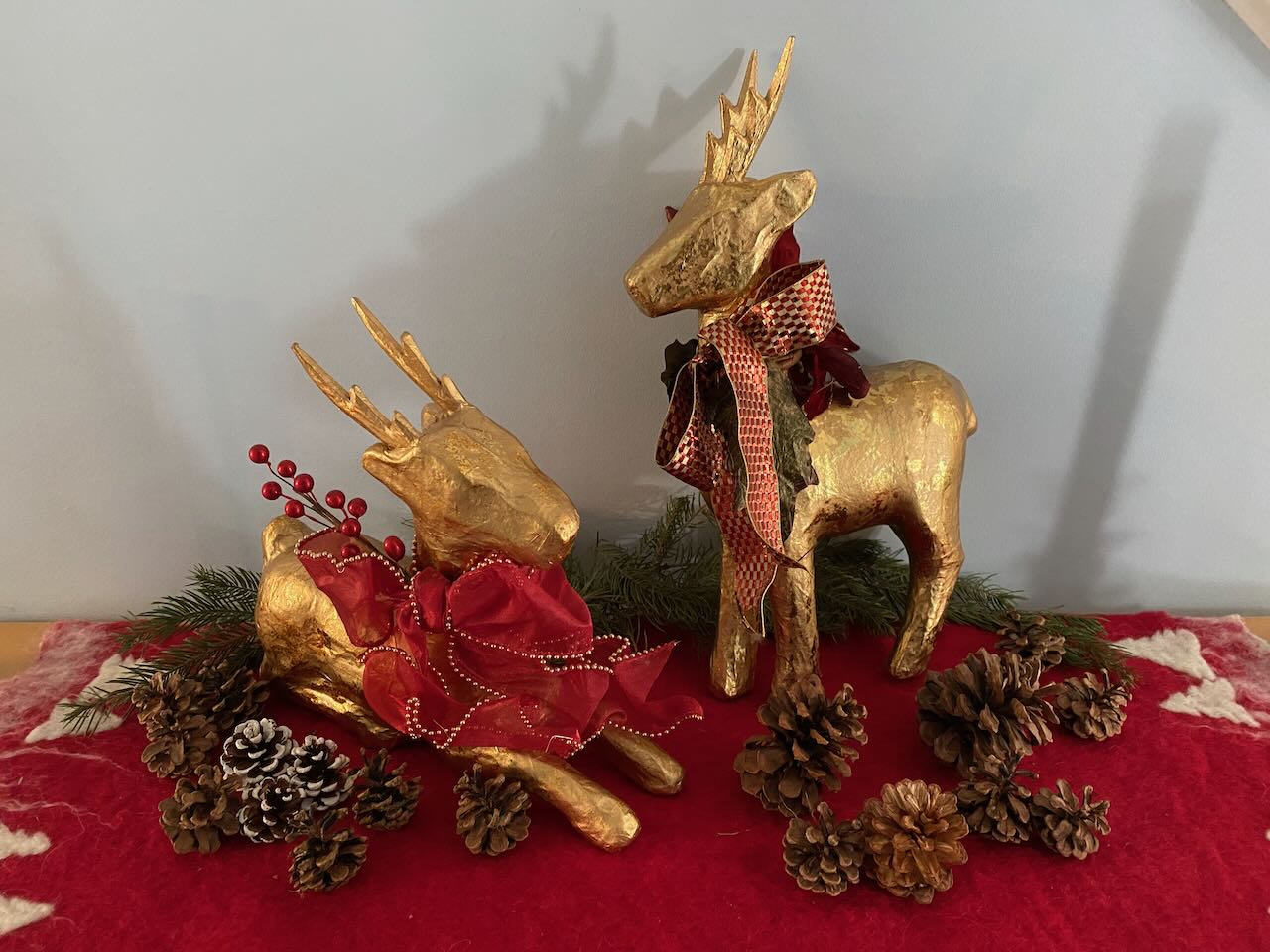
The typical seasonal representatives of deer, of course, are reindeer, and they are well represented in the winter decor in my home. Like all the best holiday decorations, these carry a lot of memories for me – Christmas parties, the very good friends I celebrated with, and especially my friend Andree, who applied the gold and tied the ribbons that distinguish these fellows. Or girls – I have learned that all reindeer have antlers, and only females keep them in the winter.

Frassy prefers a softer kind of reindeer. She has an easy life in our house, lounging on quilts, but on the other hand she has killed four mice since she moved in with us. If she had to survive in the wild, I expect she too would persevere.

The Deer in the Yard

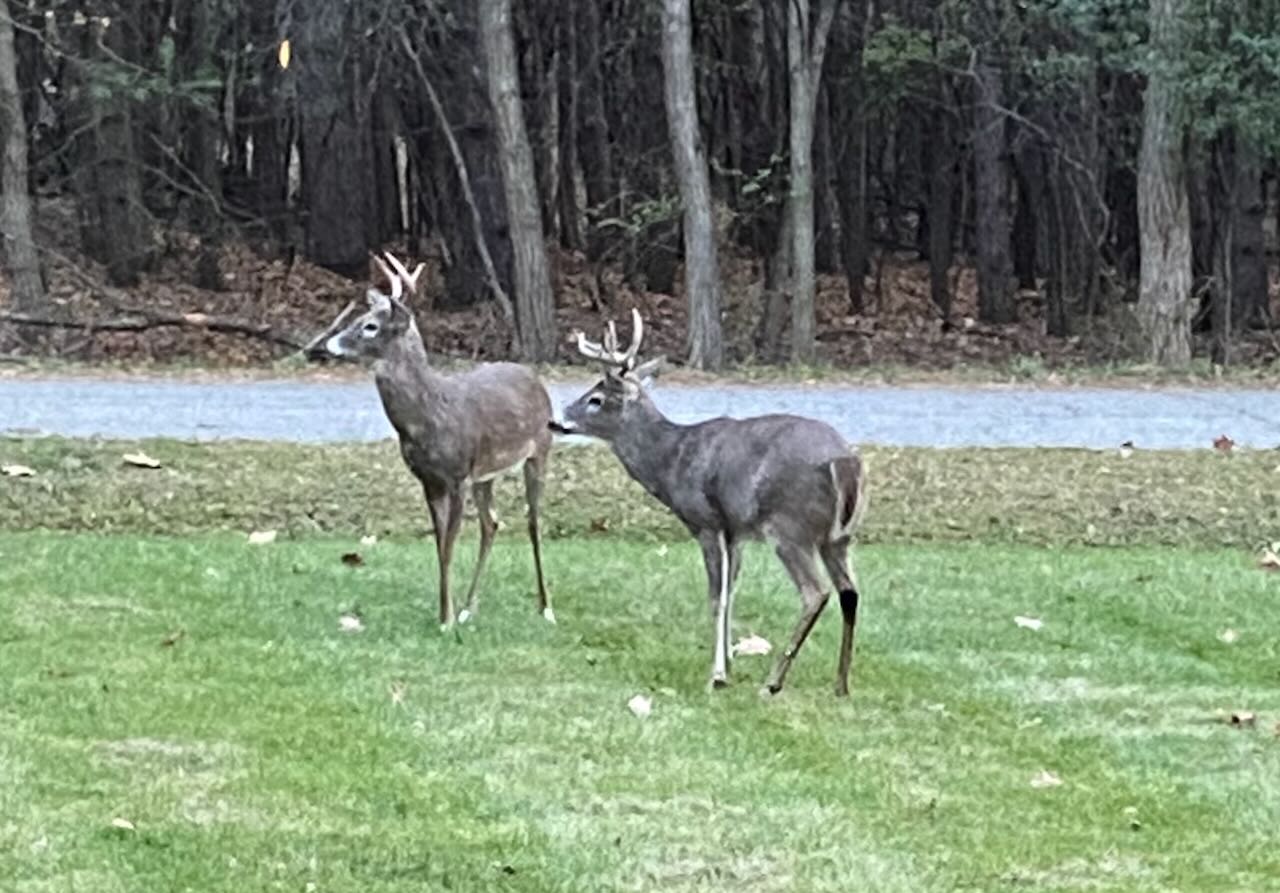
It’s mating season for white tailed deer and Mr. Eight-point, the buck on the scene with my local herd, had a challenger. Mr. Six-point came along prospecting for the last of the fallen crabapples. It’s hard to tell from these pictures, but in real life he was clearly the smaller of the two. Nevertheless, when the older buck showed up the younger stood his ground. They bowed their heads and engaged, as I watched from my window.

I would call it locking horns except they were deer, so they were locking antlers. They seemed intent on the process, until a car came down the street toward them. Then they broke off the tussle with one accord, watched until the car was past, and went right back to it.

There were no running starts, just a walking approach to each other, entanglement, and some pulling up and back that looked pretty indecisive. They engaged, disengaged, and engaged again. It was slow, even stately, and went on for ten or fifteen minutes, and then it was over. 

Mr. Eight-point rejoined the does and fawns, who were off under my neighbor’s trees practicing their Christmas Sleigh Procession technique, totally ignoring the fight, or argument, or whatever it was, between the males. Mr. Six-point lingered under the crabapple tree for a few more minutes, saving face, then wandered off into the woods. How civilized, I thought, but considering how civilization is doing these days, the bucks were ahead.

By now the sun was setting, giving good evidence for the advantages to deer of being crepuscular. There’s a latecomer doe in this photo, but she’s hard to see. I didn’t know she was there when I took the photo – just a photo of a nice sunset – until she emerged from the skirts of the evergreens and trotted off to meet her kin. Startled, I checked the photo and yes, she was there all the time. My eyes were on the sky. You can only see what you are looking at.

November Clouds

Doug thinks of birthdays in astronomical terms. Congratulations on completing another orbit, he’ll say, and I picture myself zooming out into space, floating planet-like against a background of dark sky and bright stars, hair wafting, skirt billowing. Whereas in fact, on the evening completing this particular orbit, we were having dinner at a luxurious restaurant, consuming the products of sunlight on farm fields and pastures filtered through ten thousand years of agriculture and the hands of chefs and waiters, as anchored to earth as we could be as it rolled us through the universe.

When we look at the sky we don’t usually consider that we’re in it, even when clouds come all the way down to the ground. Sometimes we see in those clouds a metaphor for gloom, sadness, and unhappy fates; at other times an end to drought, a gift to farmers, a respite from heat. Was the storm coming or going in this photo? There was certainly a real answer, a weather map answer, at the moment the photo was taken. Lifted from its moment as a photo is, we can give it any story that suits us where we are now. 

Here’s another beautiful Michigan scene, enhanced, I would say, by clouds. It’s a local farm’s You Pick flower patch in its days of former glory, gone to standing seedheads, offering nourishment to such small creatures as hang on here while we orbit through the winter. The clouds, again, connect us to the sky.

Or here are some extremely, maybe even comically, muscular clouds, seen through my workroom window in their brief existence. I expected drama from such clouds – maybe a tornado? Hailstones? Nothing happened; they dissolved into airy nothing, the natural element of clouds. 

It’s an old saying, that you need clouds sometime, to appreciate the clear blue skies when they come. I say appreciate the clouds. They do wonderful things with the sun, which you can’t look at without their intercession. They decorate the sky, giving us a reason to keep our focus upward. I mean the real clouds here, but feel free to apply it as a metaphor wherever you need one. Happy orbiting.

Resilience

Our first frost happened a couple of nights ago, drawing a map of hardiness, protection, and resilience across the garden. The hardy perennials, like these asters, didn’t notice, originating as they do in climates that reward ability to cope with winter. Tender annuals, like my basil and tomatoes, withered and keeled over. I had already brought into the house several pots of basil and all the green tomatoes still on the vine, in anticipation of this. These are plants whose ancestors never met with winter weather, and had no need to adapt to it.

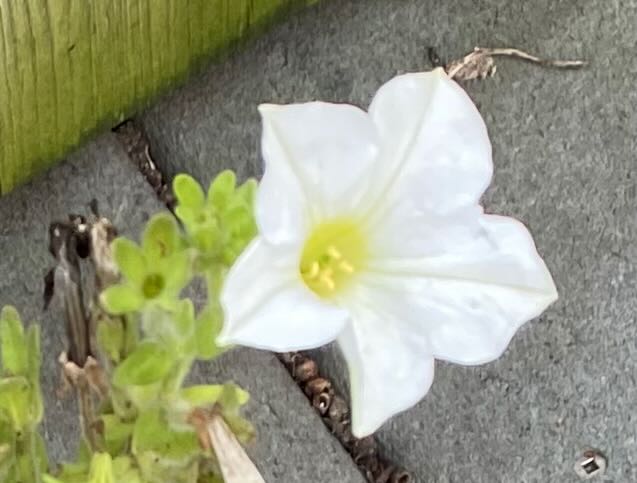
Then there are hardy annuals, like petunias. They can resist the kind of winters we had in Southern California, which did sometimes include a light frost in late December. They seem to be familiar with this and will persevere through it, but when the hard, serious frost comes, they succumb. Marigolds and pansies are also in this category. Okay, so far all is neat and clear in the life cycles of my garden plants.

But then we have this scenario from the way back of the garden. Marigolds, check, still abloom as expected. But there’s that cosmos standing tall and happy, while all the other cosmos in the garden is dead. Sort of looks like the marigolds talked them into it. Good story, but the reality is different. There’s a tall black cherry tree just outside the picture, leaning over the garden fence enough to shelter the cosmos from the sky. The same thing that makes this part of the garden too shady for plants like tomatoes, expected to ripen fruit, offers protection from light frost.

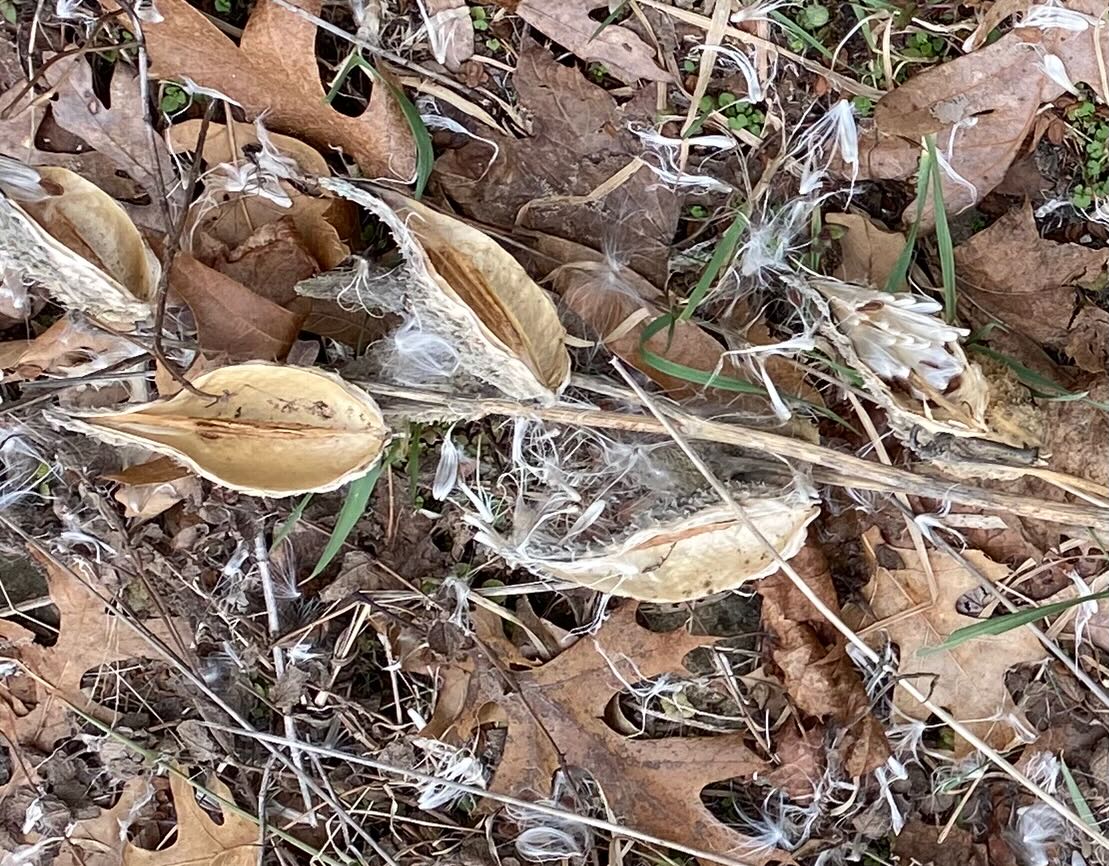
So the resilience a plant shows in the face of frost can be inborn, or it can be situational. It’s the job of the gardener to situate the plant where it can have its best outcome. Here’s some milkweed in process of its best outcome, which is not the propagation of Monarch butterflies, but the launching of its frothy seeds into chilly autumn air that carries them into the future.

Pumpkin Time

When I told Doug I was heading out to the pumpkin farm, he said “don’t overdo it.” Which made me smile, because there’s a huge gap between my idea of overdoing it and his idea of overdoing it. Wells Pumpkin Farm is far too rich a resource to be denied. I had a base of Baby Boos and Jack Be Littles raised in my own garden, but they needed company. Wells Farm came through, with two little gourds that looked a lot like figs. 

A big flat Cinderella white pumpkin was completely irresistible, but would have looked lonely sitting on the hearth all by itself. I gave it some friends: a Royal Blue, which looks green, and a Warty Gnome, which looks like a warty gnome. The Cinderella was satisfyingly heavy to pick up, and rather gloriously sloshed with bits of mud and hay, adding to its autumn aura. I didn’t even have to wipe it down when I got it home, because the dirt and hay rubbed off on my flannel shirt.

But Cinderella is hardly the only story this time of year. The hall table tells a different one every time I look at it, but definitely more Halloween than happily ever after. It’s pretty dark in that hallway, but another nice warty little orange guy and a green one with white stripes brightened it right up.

Then I put out a skeletal creature with a toothy grin to darken things back down. All the pumpkins in his photo are fake, so no overdoing of the pumpkin farm was involved. Overdoing of craft shops and Halloween pop-up stores, maybe yes.

This American Tondo had great color shifts, and a super-beefy stem amusingly out of proportion to its snug round shape. It seemed dignified and comical, both at once. Its name, too – and being into words as I am, I had to look that up. Its formal name is Tonda Padania, tonda being Italian for round, and Padania a valley in Italy. All pumpkins originate in the Americas, but this variety is said to have been developed in Italy. American Tondo could be a compromise, or an argument. 

But for truly wild shapes, a Turk’s Head, a Crown of Thorns, and an Autumn Wings are a lovely tableau. It makes me happy to see them there on the kitchen counter, bringing in some autumn to compensate for the fading out of the tomatoes. Goodbye BLT sandwiches; hello pumpkin pie.

Slow to Get the Message

So I looked out my window at this nice bucolic scene, the deer browsing among the fallen crabapples on the front lawn. Very peaceful and lovely. Then I noticed one of the deer kept chasing another one away. They usually shared quite amicably but I’d seen this before, and this was the time of year for it. The chaser was the lead doe, and the chasee was a young fellow with just the first, nubby suggestions of coming antlers on his forehead. A button buck. She’d chase him off a short distance, he’d come back, she’d chase him off again, over and over. She was determined. I pictured thought bubbles over their heads: “Hey Mom it’s me” from the button buck, and “You’ve got those things on your head, get out” from the doe. It makes me very sad for him, but I guess this is how deer prevent inbreeding. 

It’s hard to think of winter coming, with the weather as warm as it’s been through September. It’s been giving me cognitive dissonance – on warm Michigan days I expect the sun to be up till 9:30 or 10:00 at night, but it’s setting by 7:30. No more saving yard work for after dinner: the warm weather keeps the tomatoes ripening, so I keep weeding them.

The zinnias and cosmos continue too, but as they get taller and taller, reaching for the retreating sun, they’ve started toppling over into the mini-pumpkin patch. That’s not a giant zinnia, it’s a wee pumpkin.

Rooting around under the tomatoes, I found another four-leaf clover. There’s one plant in here that turns them out fairly consistently, so I can be generous with what I wish on them. I used this one to wish good luck to young mister button buck.

September Deepening

All my favorite parts of the year are the transitions, but the one I love best is the shift from summer to fall. It demonstrates that change is good – an eternal spring would produce no harvests. Change ripens the tomatoes and fills out the Baby Boo and Jack Be Little pumpkins. 

It’s the time of year when a little red begins seeping into leaves, but clouds of white appear on the autumn clematis, drifts of blue on the asters, and rafts of yellow on the goldenrod. Like any change it looks confused, confusing, maybe even chaotic. This is fodder for my urge to organize things, my favorite part of that being the planning stage. What should I do to make things better for the next growing season? Which tomatoes and pumpkins did best, which flowers overgrew their beds and need relocating? As the flowers that are finished blooming set seeds, which should I let go and which should I clean up? 

My reaction to change is, lean into it. My Dad used to say, whatever happened look for the good that can come of it – or the good you can do with it. Ripeness, as Shakespeare says, is all.