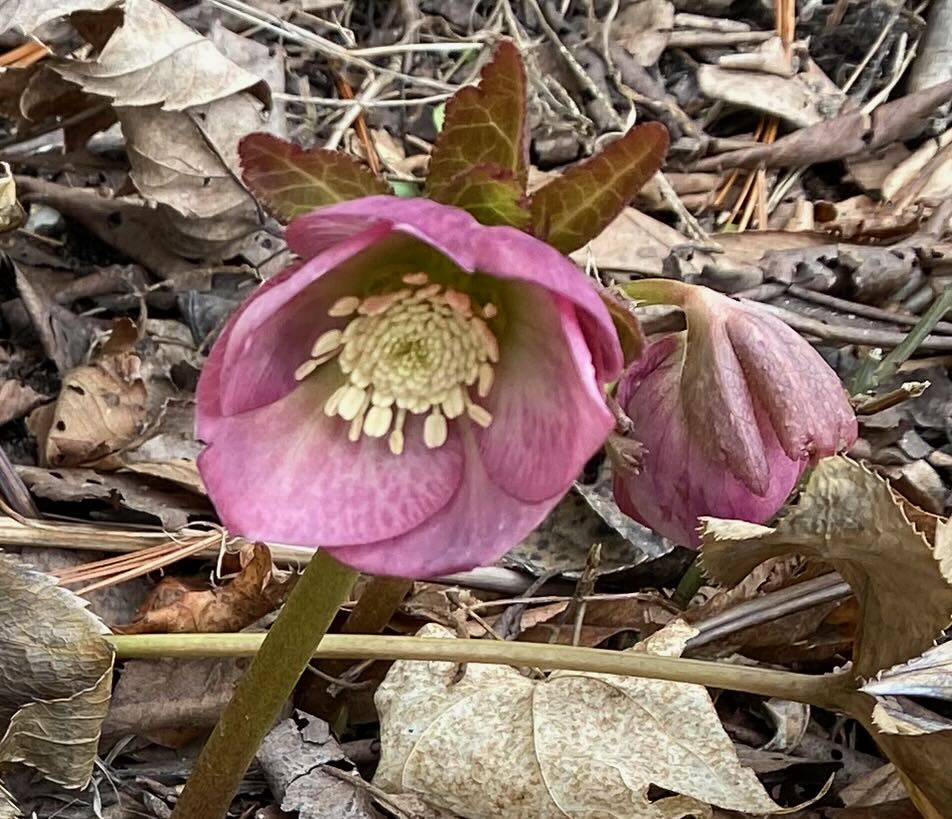
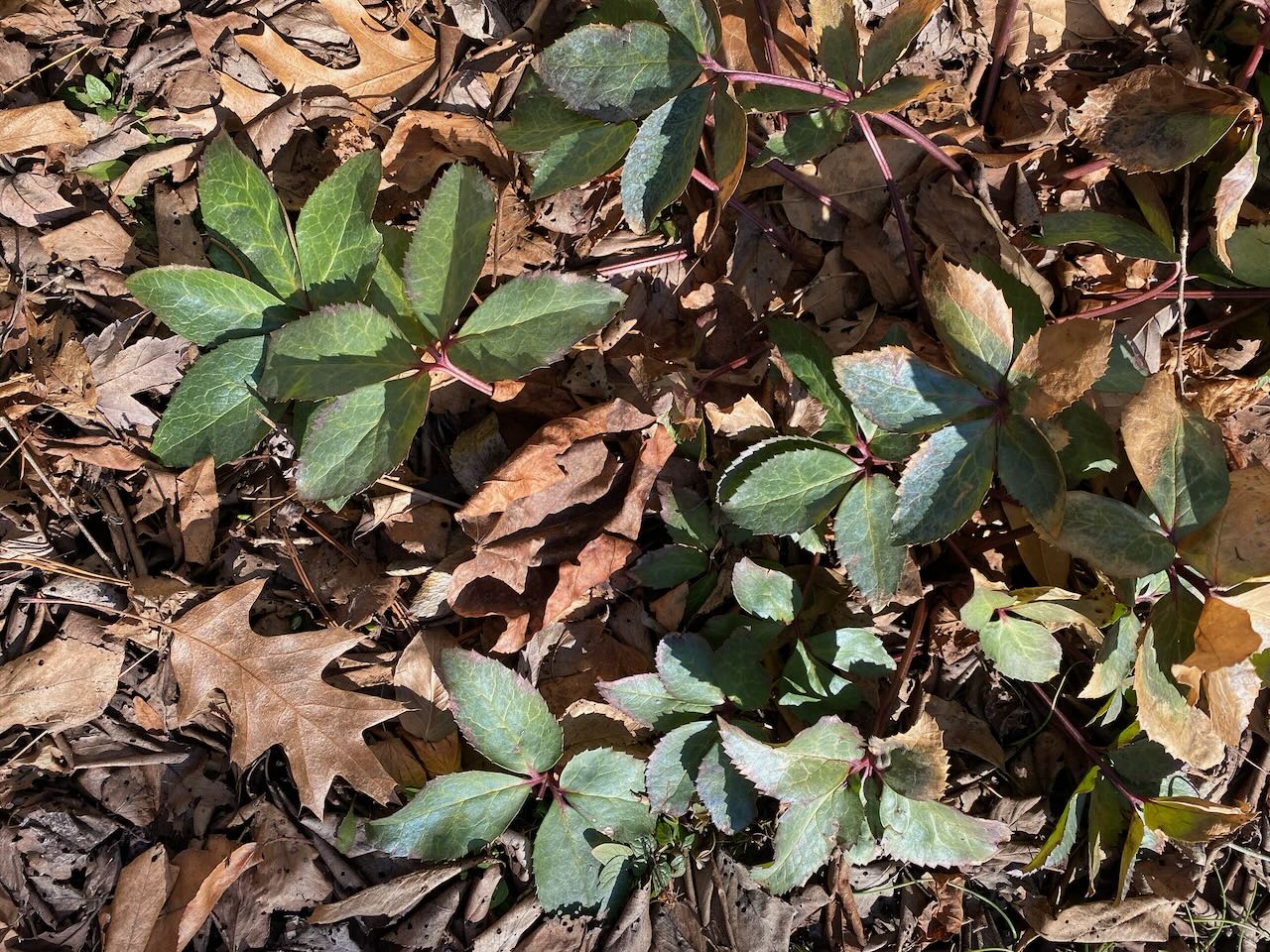
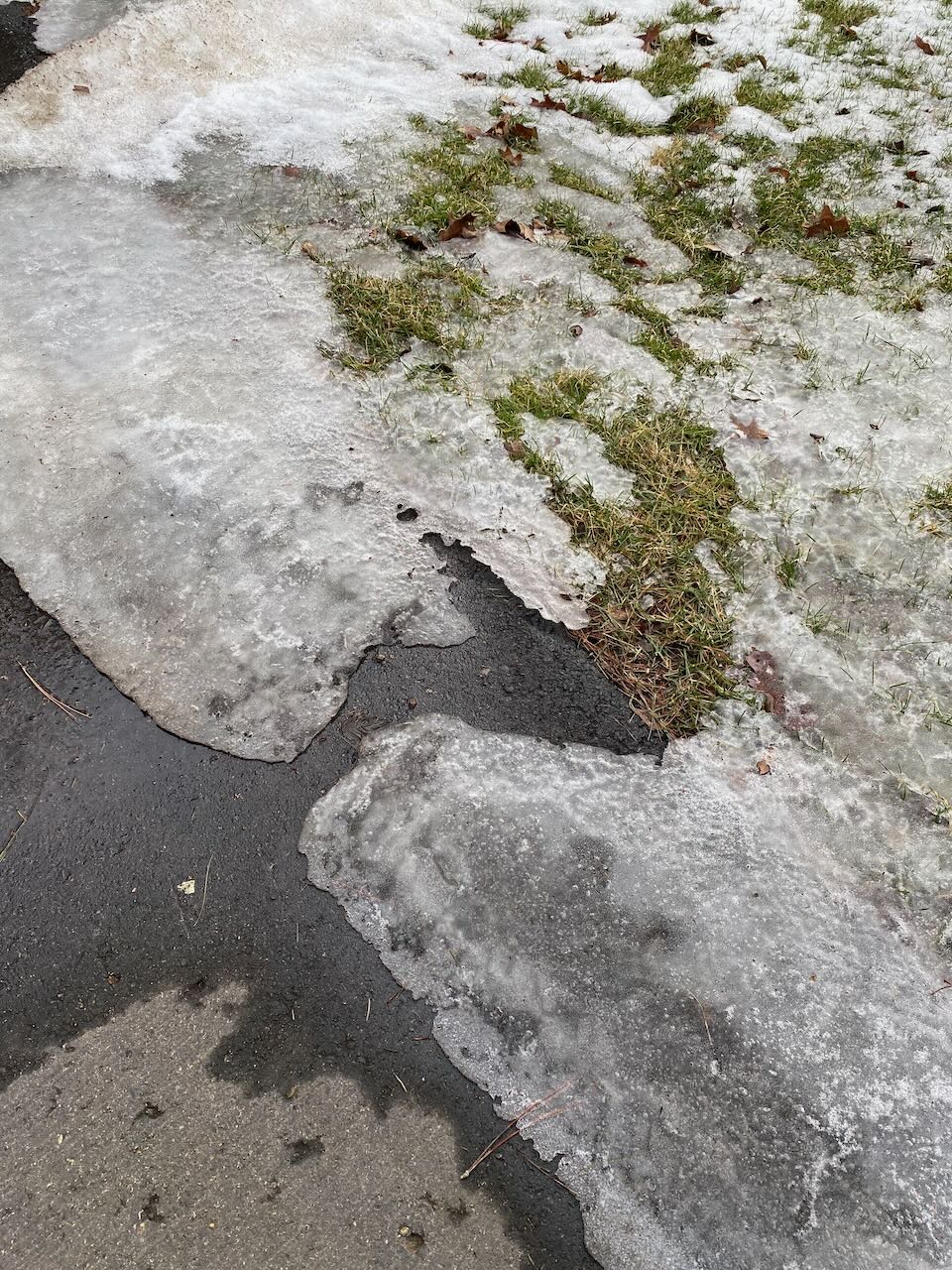
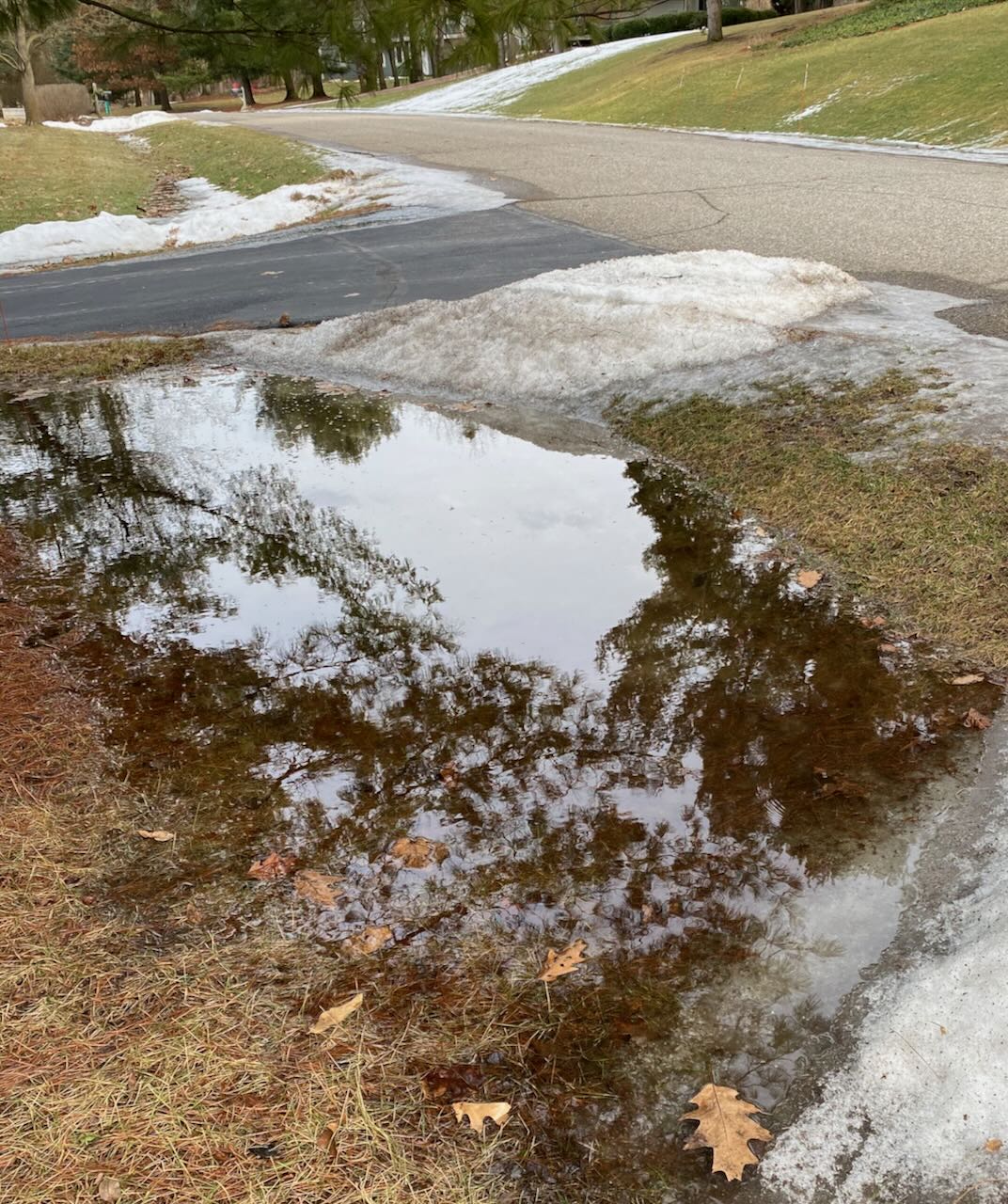
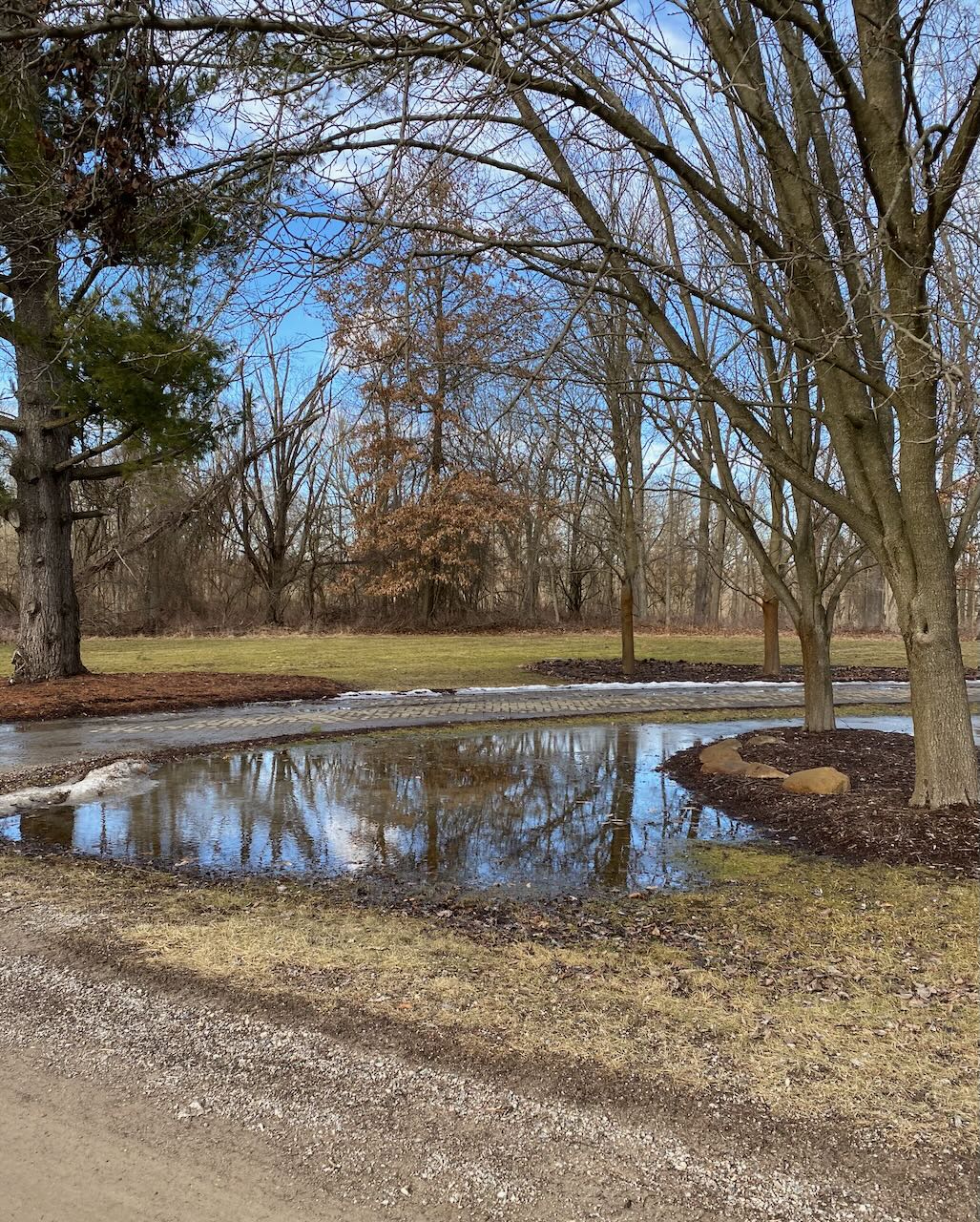
When Punxsutawney Phil saw his shadow six weeks seemed like a long stretch of time, but like all stretches of time it has passed. Faint signs of spring are accumulating. Stuff that looks like snow still escapes from the clouds, but by the time it’s on the ground it’s rain, and has even melted the big snow berms the plows pushed up. The hellebores whose blooming I doubted, have unfurled themselves in plenty of time to stake their claim as Lenten Roses.
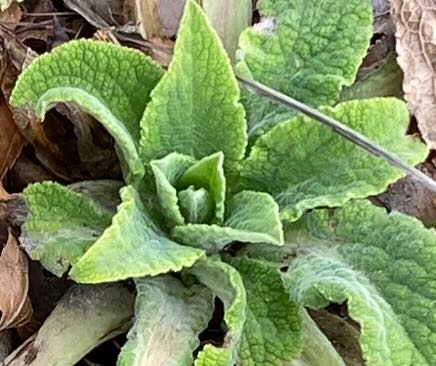
The foxgloves in the front yard are also waking up. They looked so dead for so long, but the bright green whorls stashed in their hearts have escaped into sunlight. The deer are attracted by the fresh color and step up with hopeful hearts, but when they get close enough they realize this is digitalis, and poisonous to eat. Which has a positive impact on the flowerbed, because while they’re standing there in their disappointment they deposit a lot of manure.
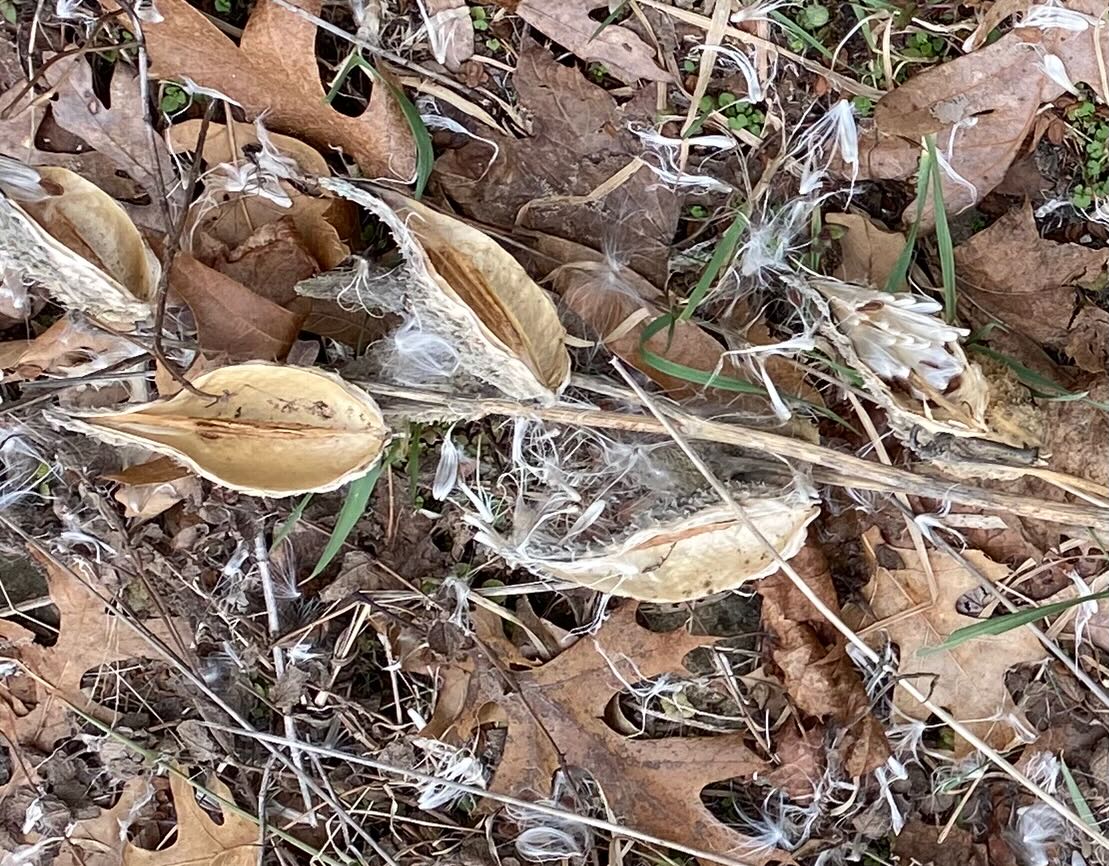
The milkweed in the back yard launched many seeds last fall, but held some back for spring. Winter laid the tall stalks on the ground, where the last winged white seeds fell out into snow and flew nowhere. Seeing them once the snow melted off, I thought – what’s that, dryer lint? Feathers? But it was milkweed seed, staking a claim to its parental territory, while the early crowd prospected further afield.
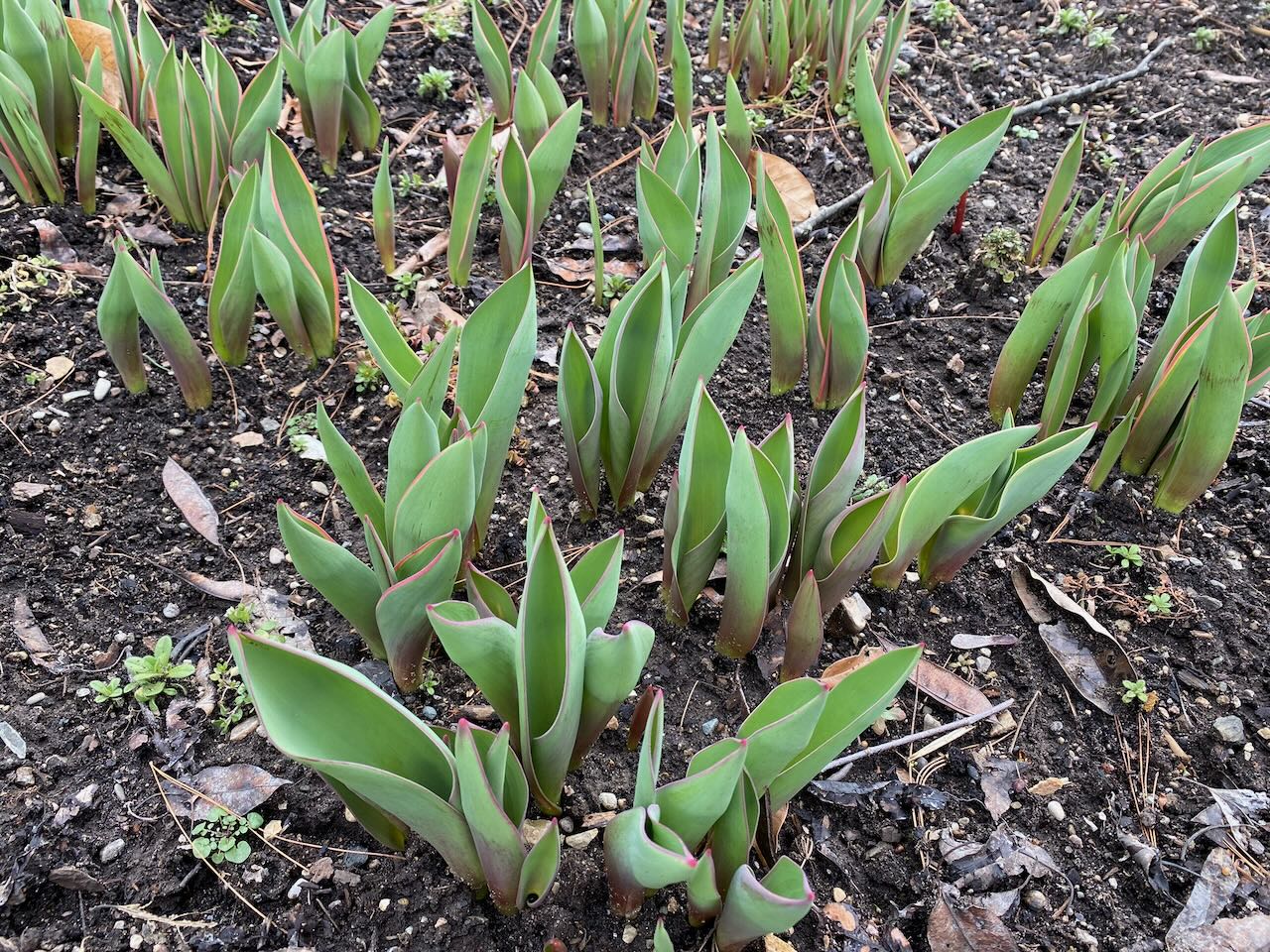
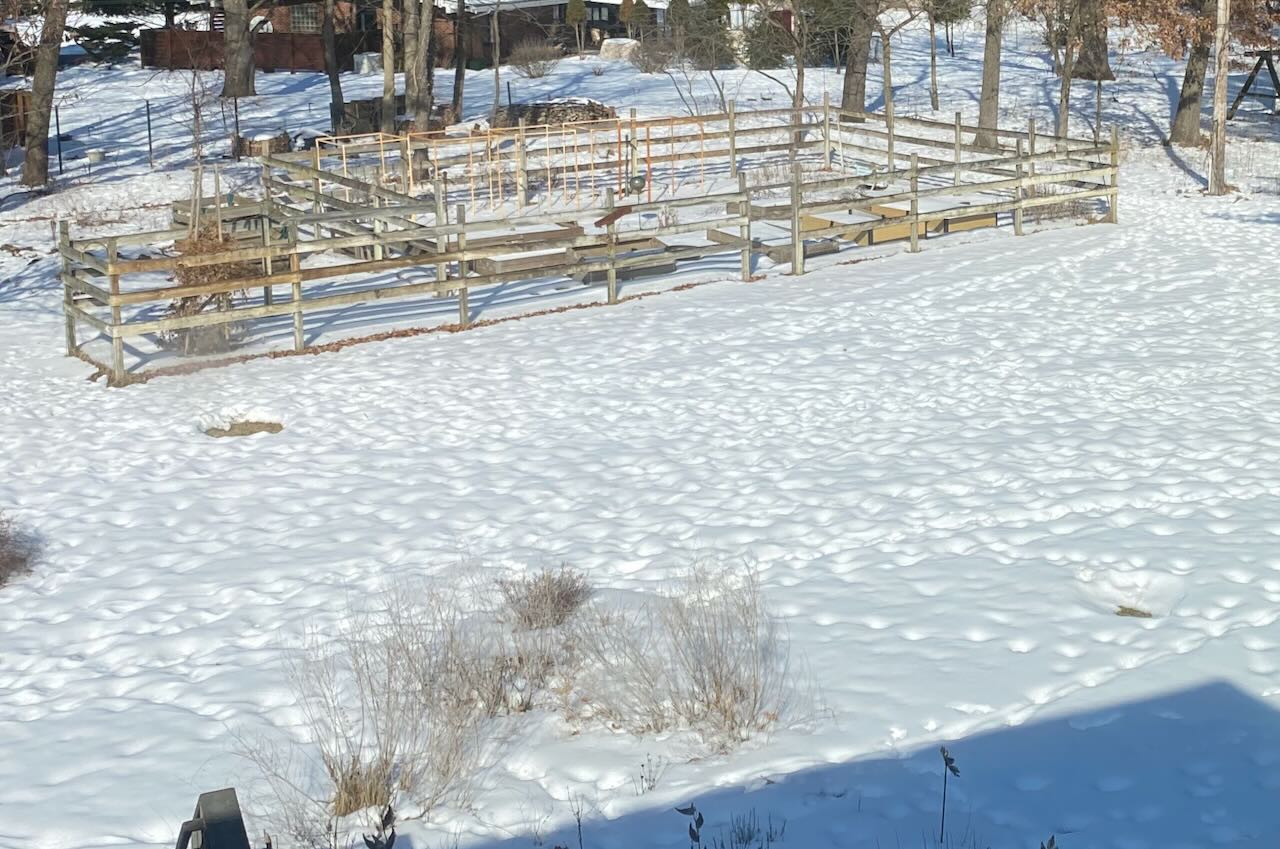
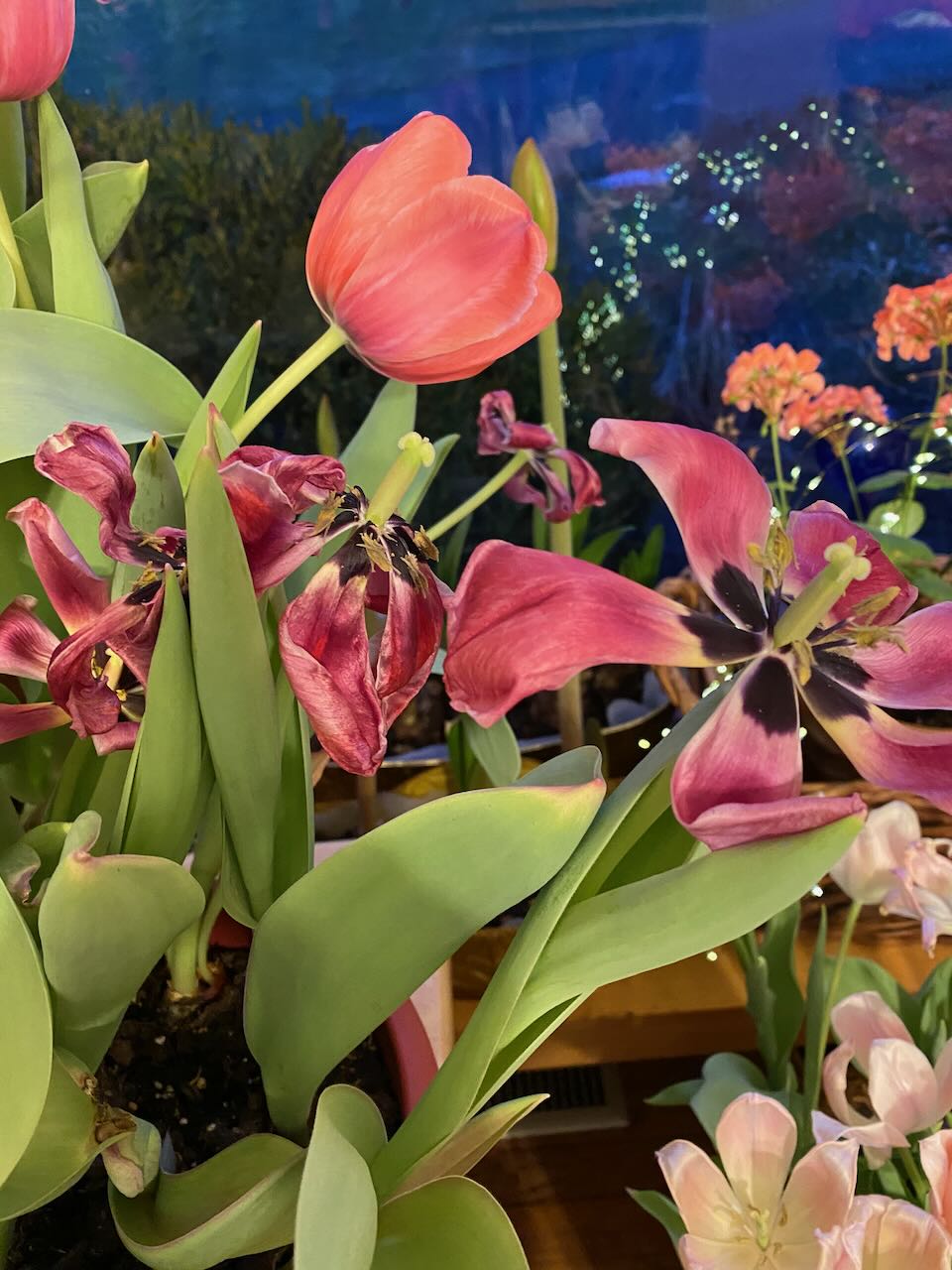
Through the last few weeks of up-and-down weather I’ve been checking for progress in the fenced garden. Several of the raised beds that grow tomatoes in summer spend the winter months nurturing tulip bulbs, and they need to send shoots nosing up a few weeks before they intend to bloom. So they had to be getting ready. I looked – nothing – looked – nothing – and then pop, a whole gang of them, fat tulip leaves like donkeys’ ears standing up out of the dirt of tomatoes past. It seemed to have happened faster than it could possibly have happened.
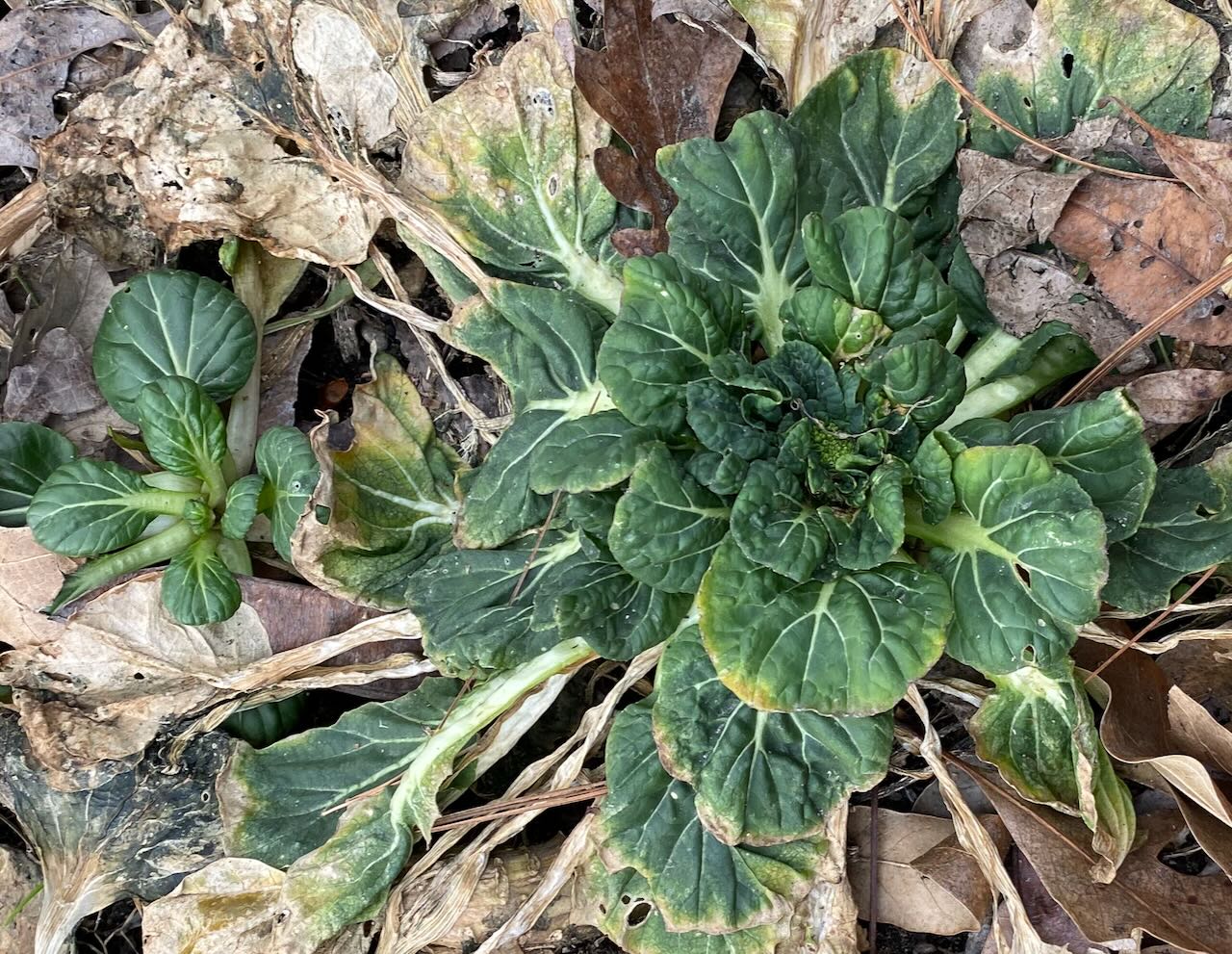
But however fast or slow, it was certainly expected. What I didn’t expect was two tatsoi plants in the next bed over, acting like perennials. Cold hardy is one thing, but surviving a Michigan winter is something else. Not all the tatsoi did. What made the difference? Mini-micro climate? Different snow cover? Good genes? Random luck? Will this survivor tatsoi differ in taste, toughness, or texture from tatsoi eaten in season? I would find out, but I don’t want to reward its efforts at resilience by ripping it out of the ground. For now I’m content to marvel at it. Resilience is a wonderful thing.


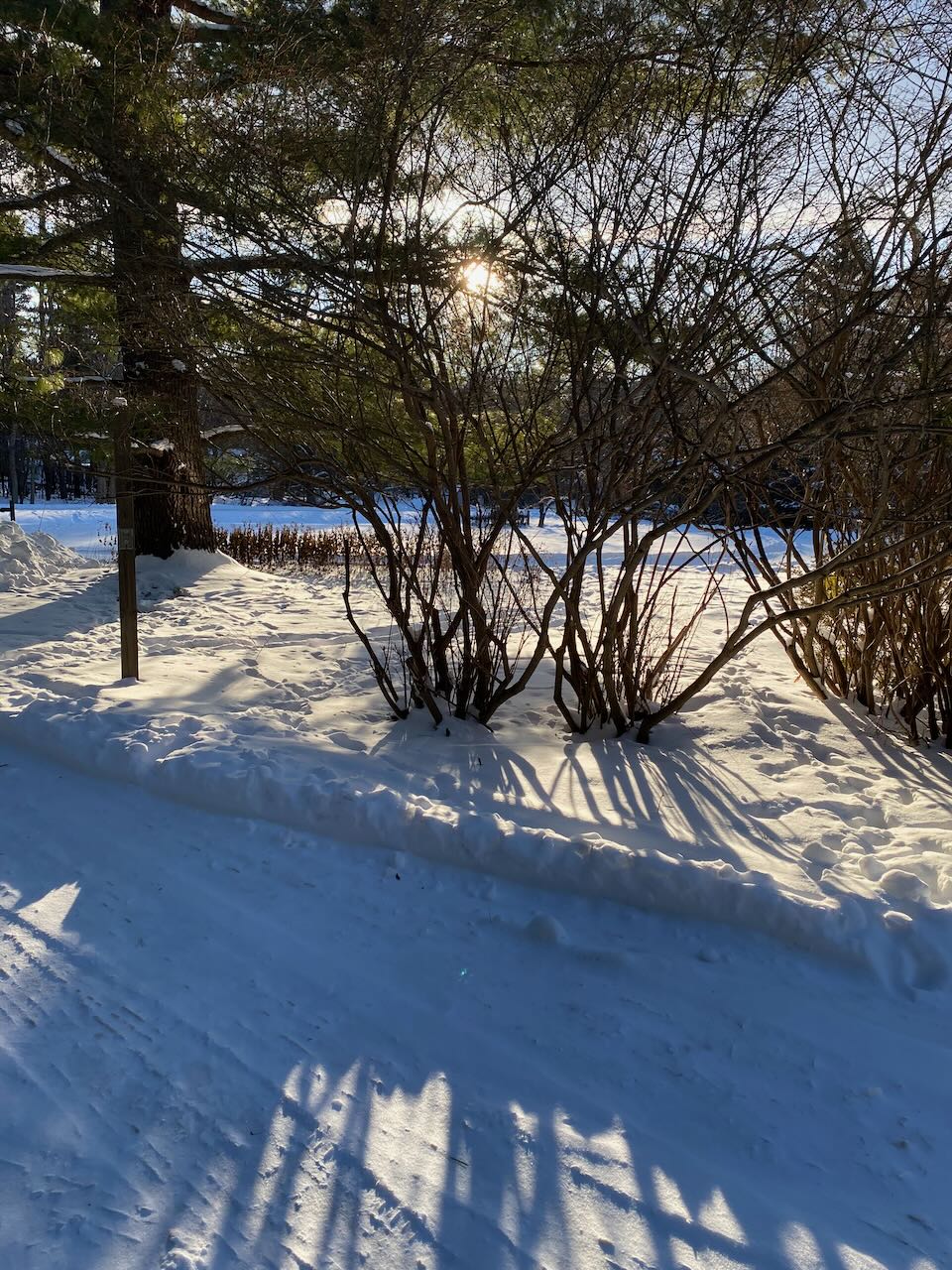
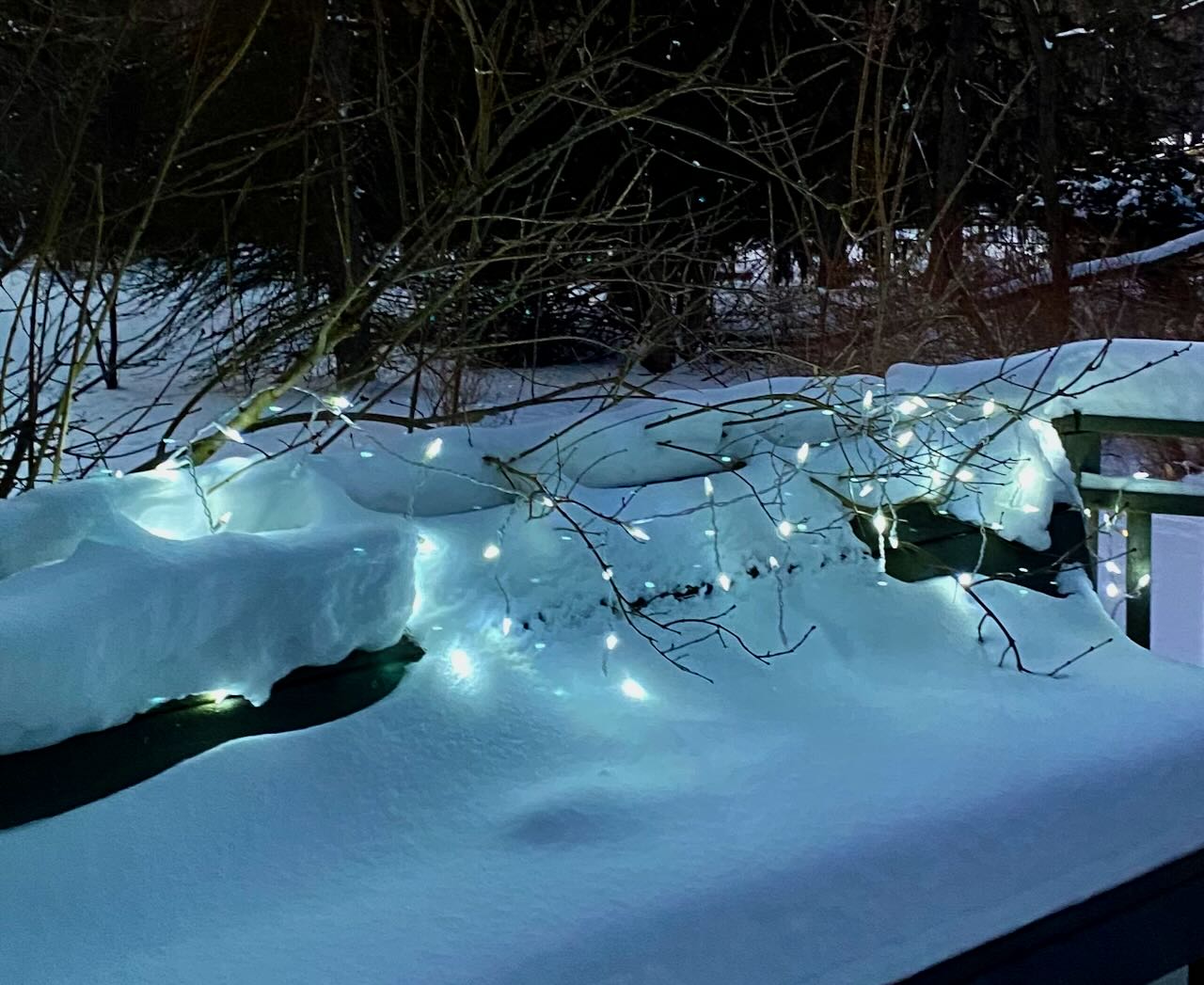
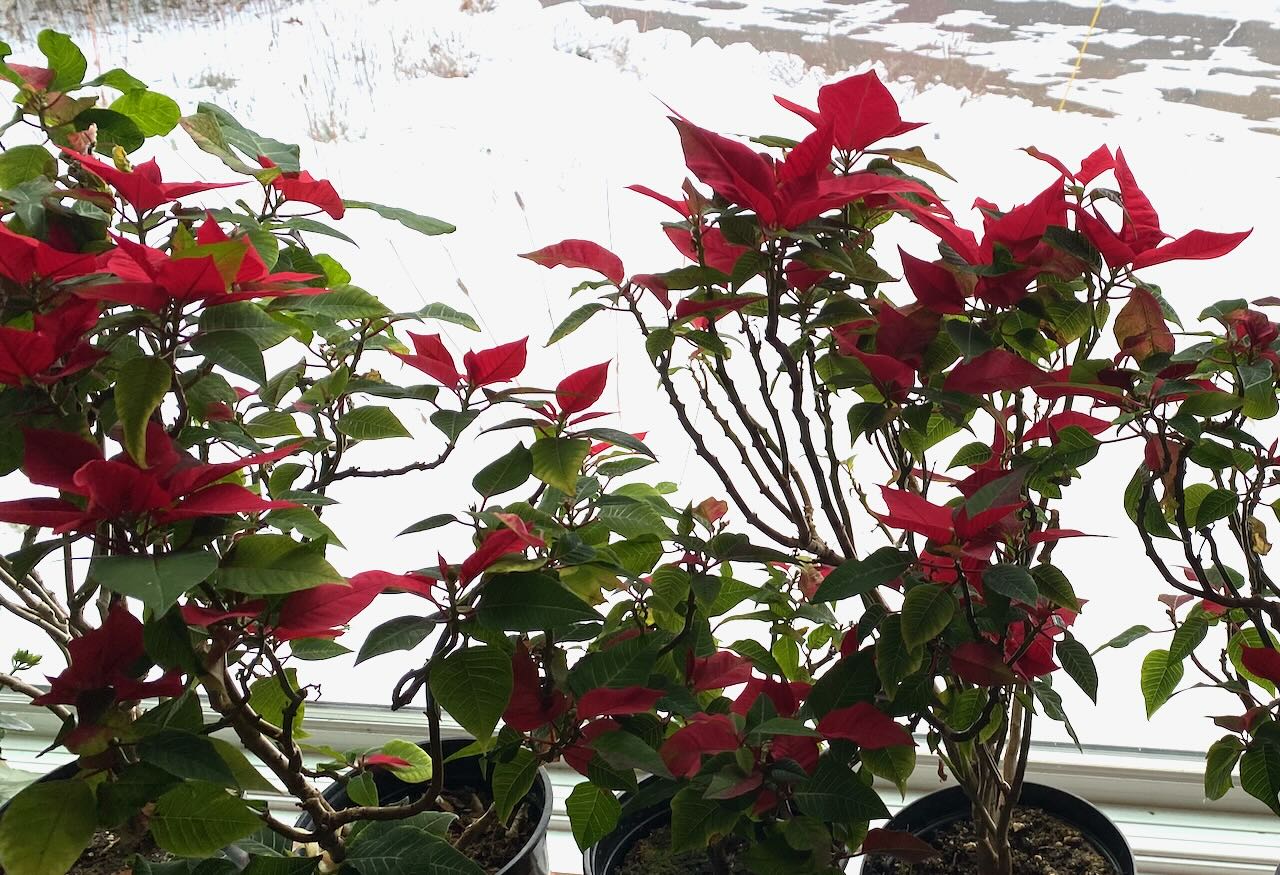
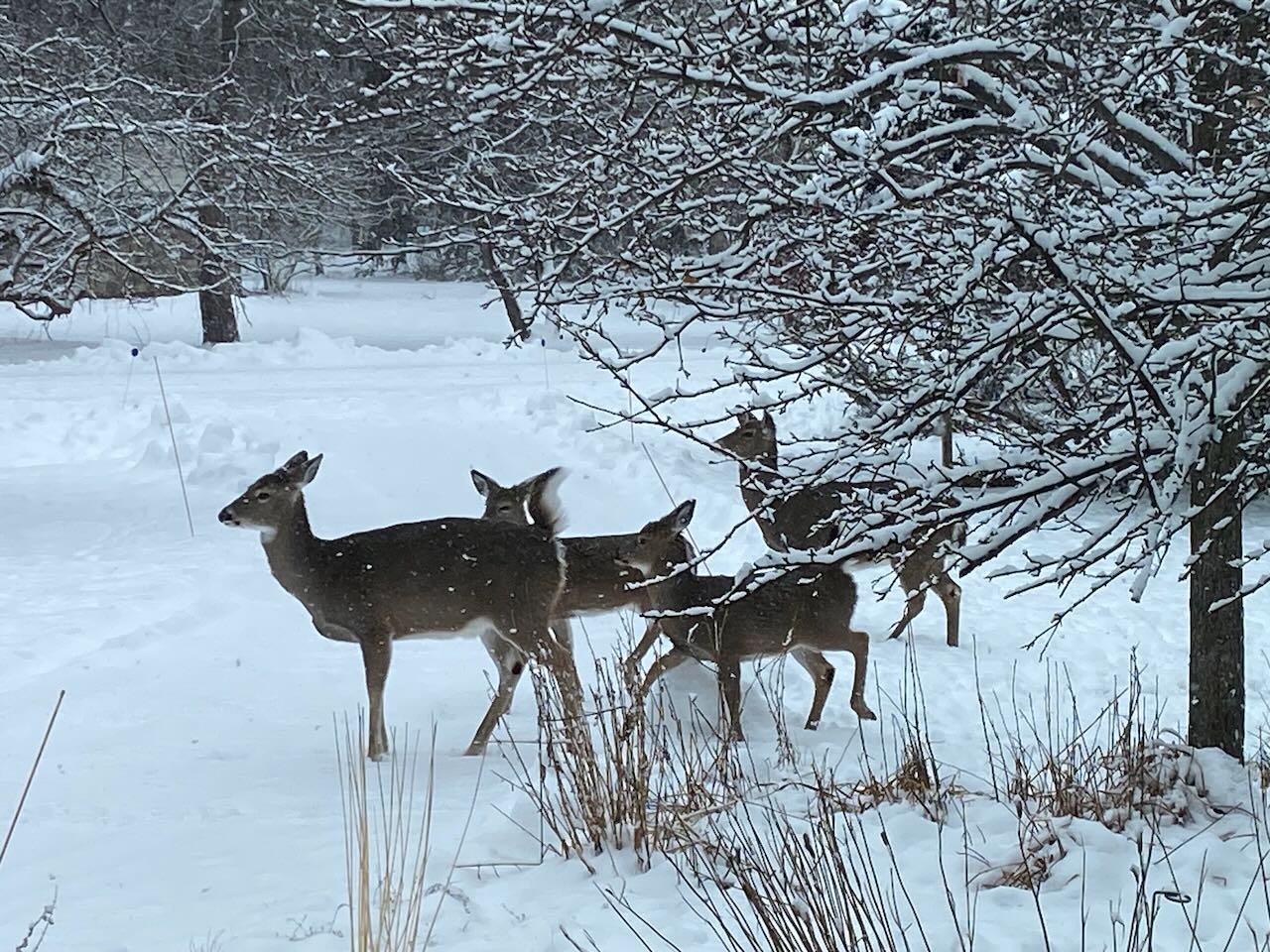
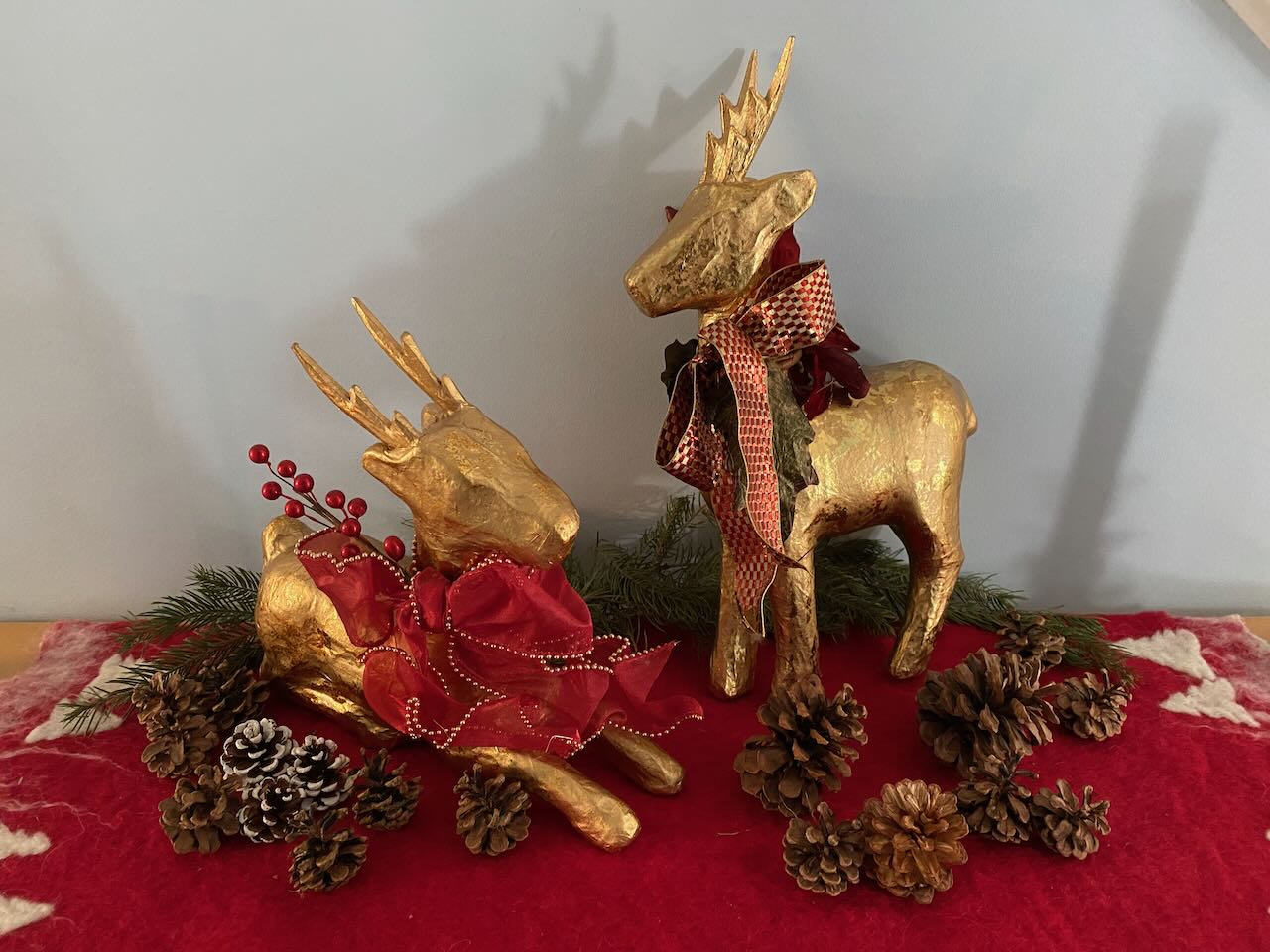
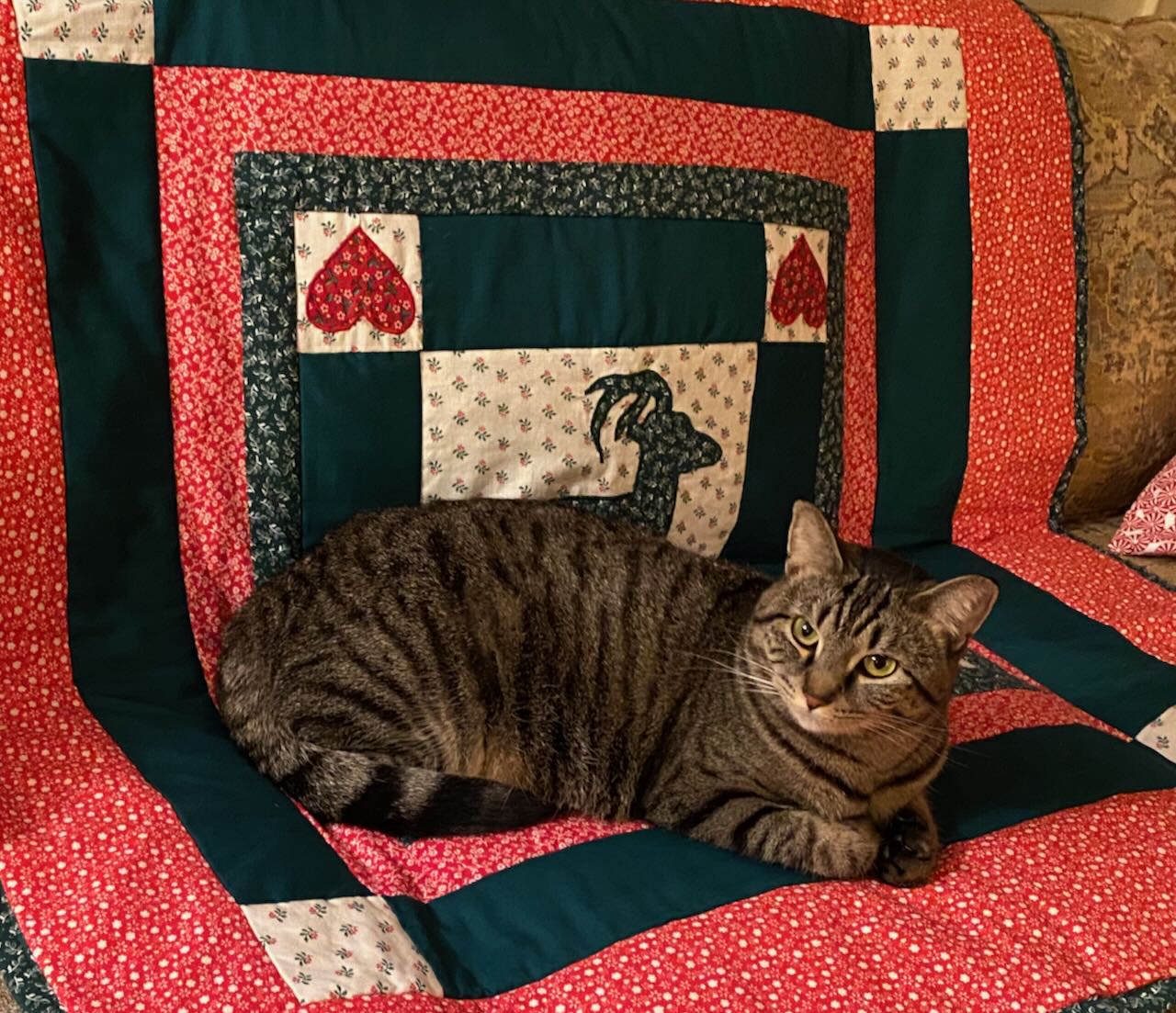



 Happy New Year, the day that looks both forward and back. This is my antique clock, that rang in the New Year last night as it did through my childhood, when it sat on our living room mantelpiece and it was my job to wind it. I was the one among my siblings who’d wind it slowly enough not to break the mainspring. The little angels visit the clock when I decorate for Christmas, and they will fly back up to heaven, or somewhere, after January 6th when the decorations come down.
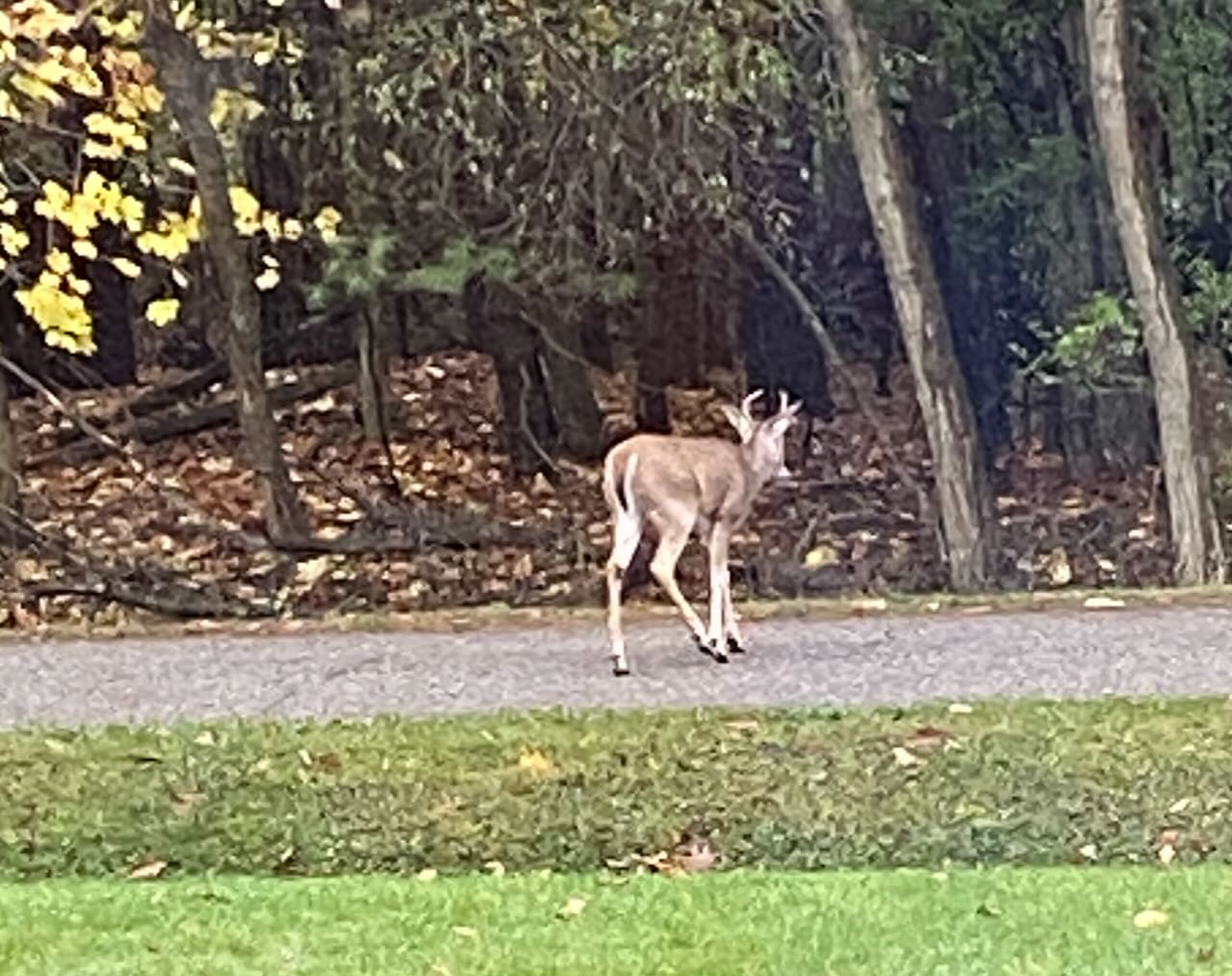 After weeks of summer and fall bumping into each other in a jumble, fall seems to be emerging triumphant at last. The stags are about done destroying small trees by using them to rub the velvet off their antlers. I’m still waiting for one of them to graciously leave his shed antlers in exchange – seems like the least he could do. Maybe this will be the year.
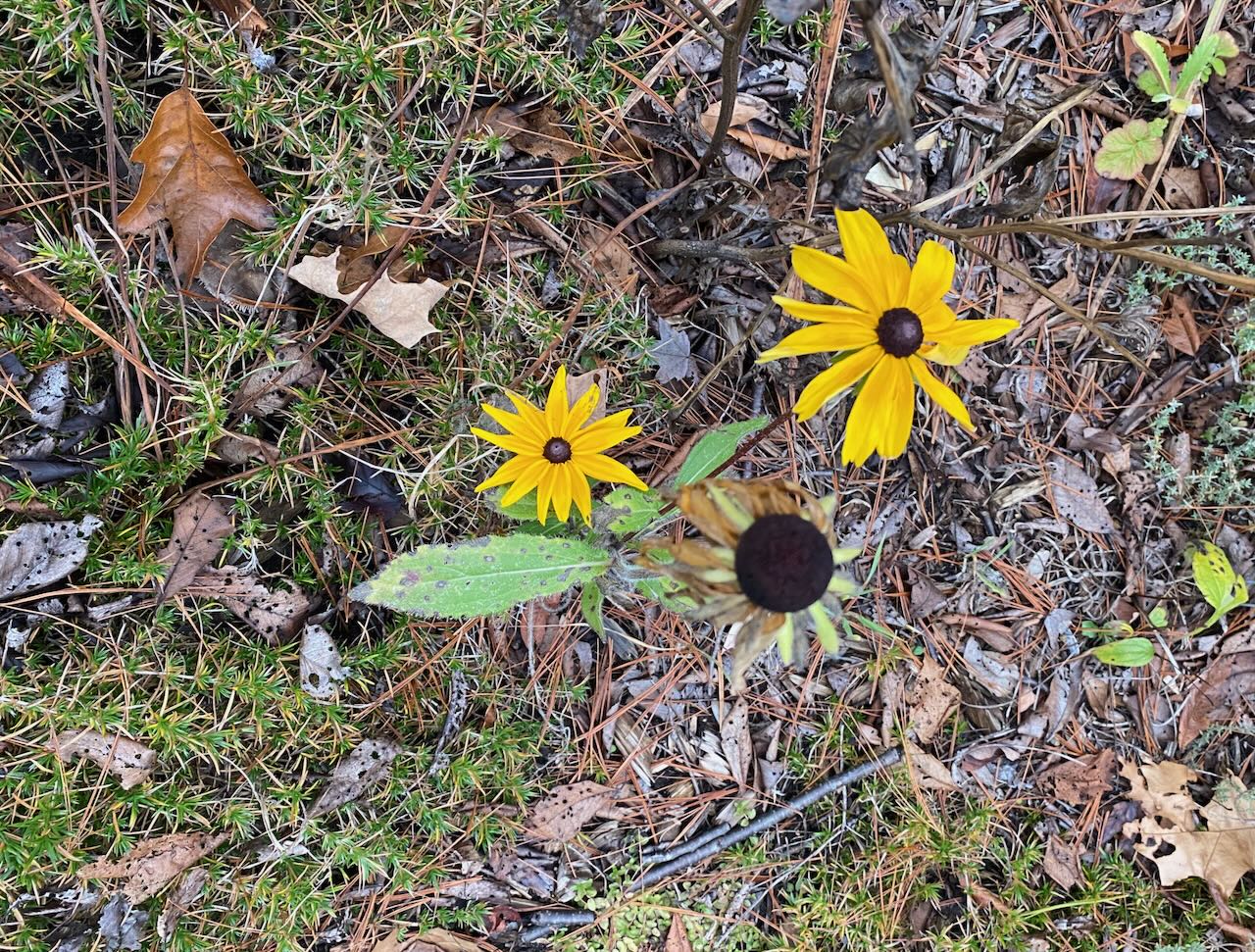 Between the light frosts and the subsiding hours of sunlight most of my flowers and tomatoes are gone, but out in front, facing south, one rudbeckia plant persists. It’s not the only rudbeckia out there, but it’s the only one still blooming. A mystery of nature.
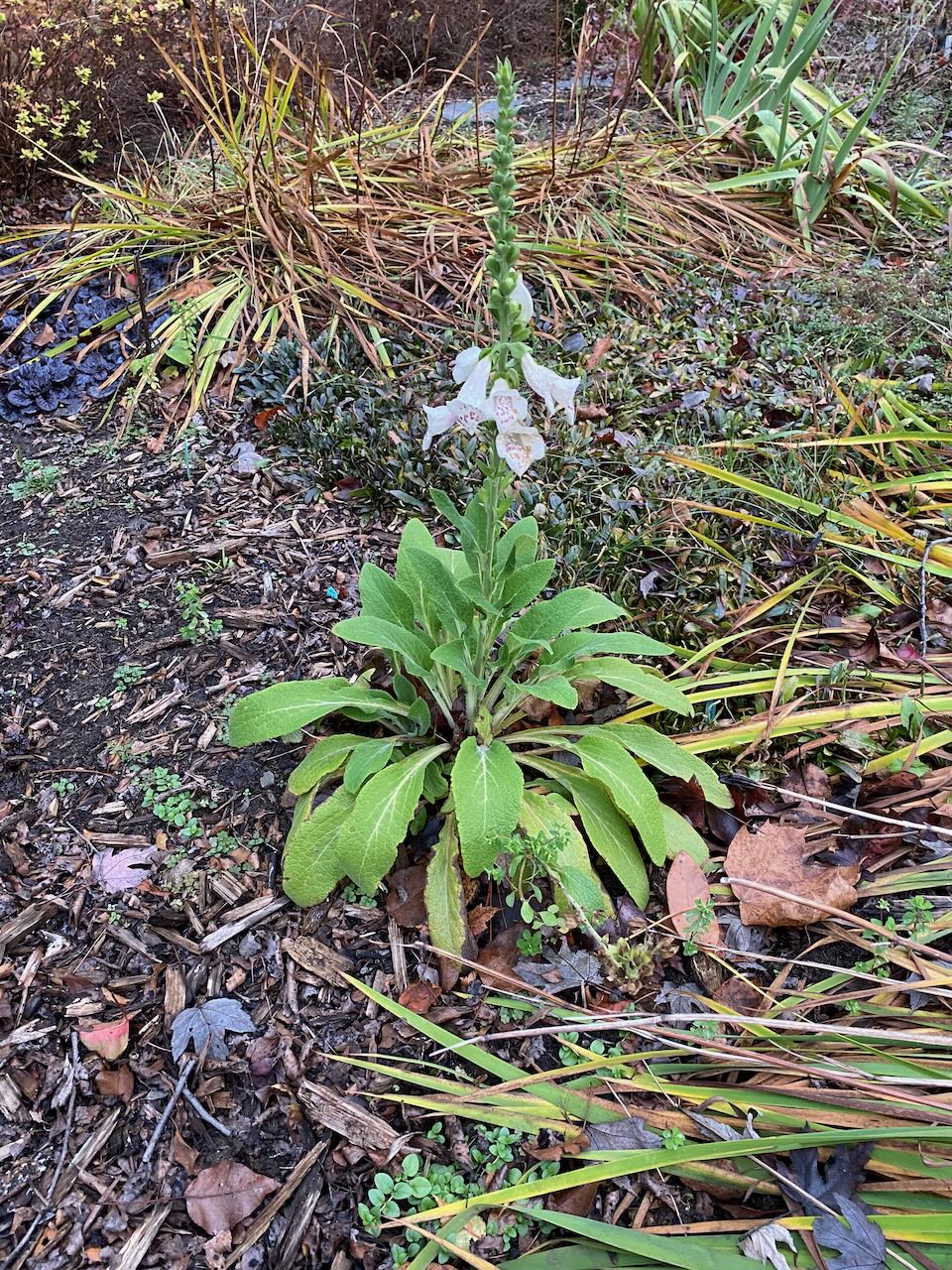 Over in the shady section, a single foxglove has re-bloomed. It was pink the first time, but has paled in the shortened hours of daylight. The foxgloves are spaced widely, so in their case it’s understandable that individuals may have different amounts of light, or shelter, or competition from other plants. Less mysterious.
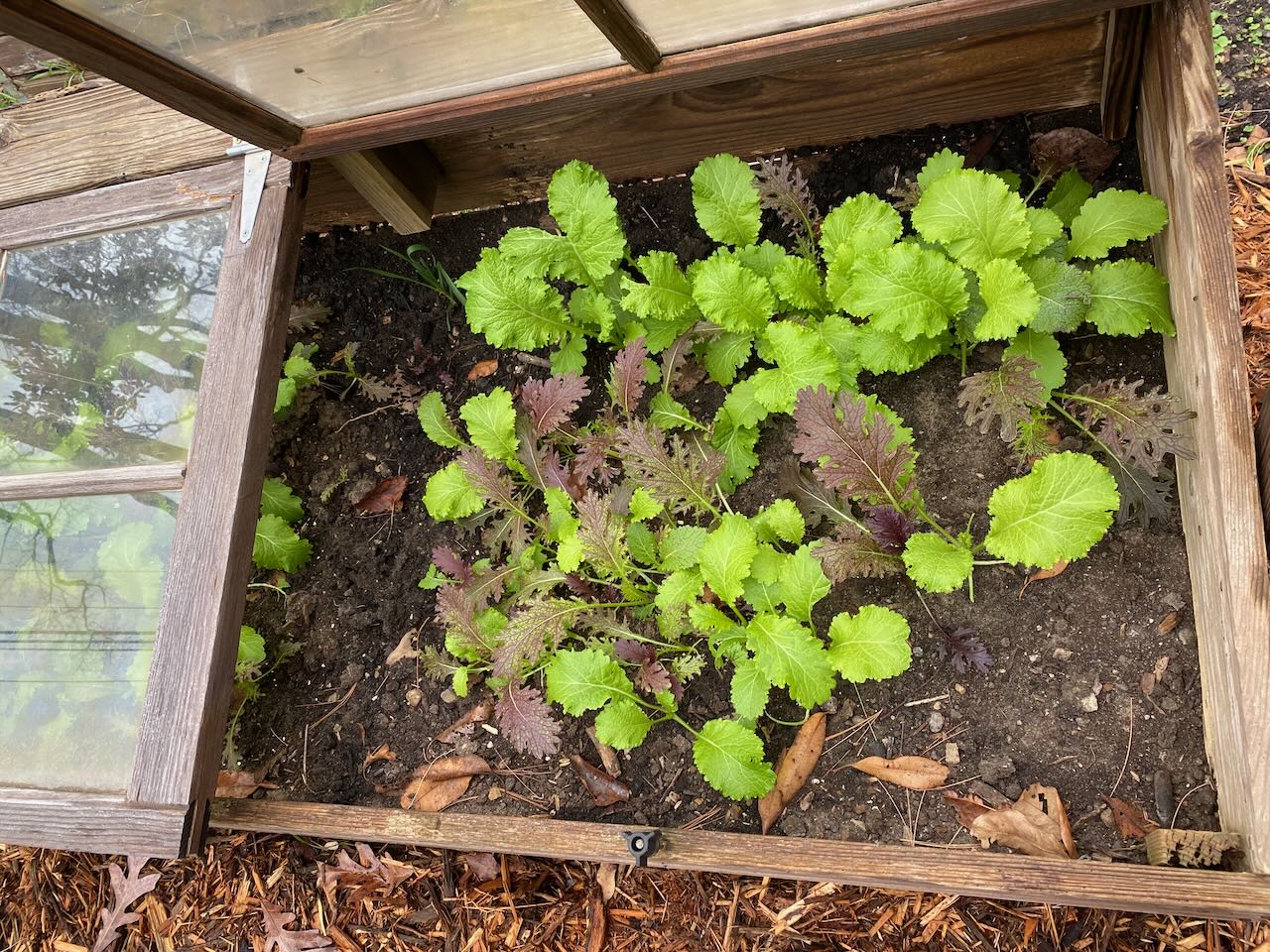 Out in the fenced garden, once the tomatoes were gone, I planted lettuces in the cold frame. They’re flourishing. This is very satisfying to me as a gardener, but the flaw in the plan is that I really don’t eat much salad in cold weather.
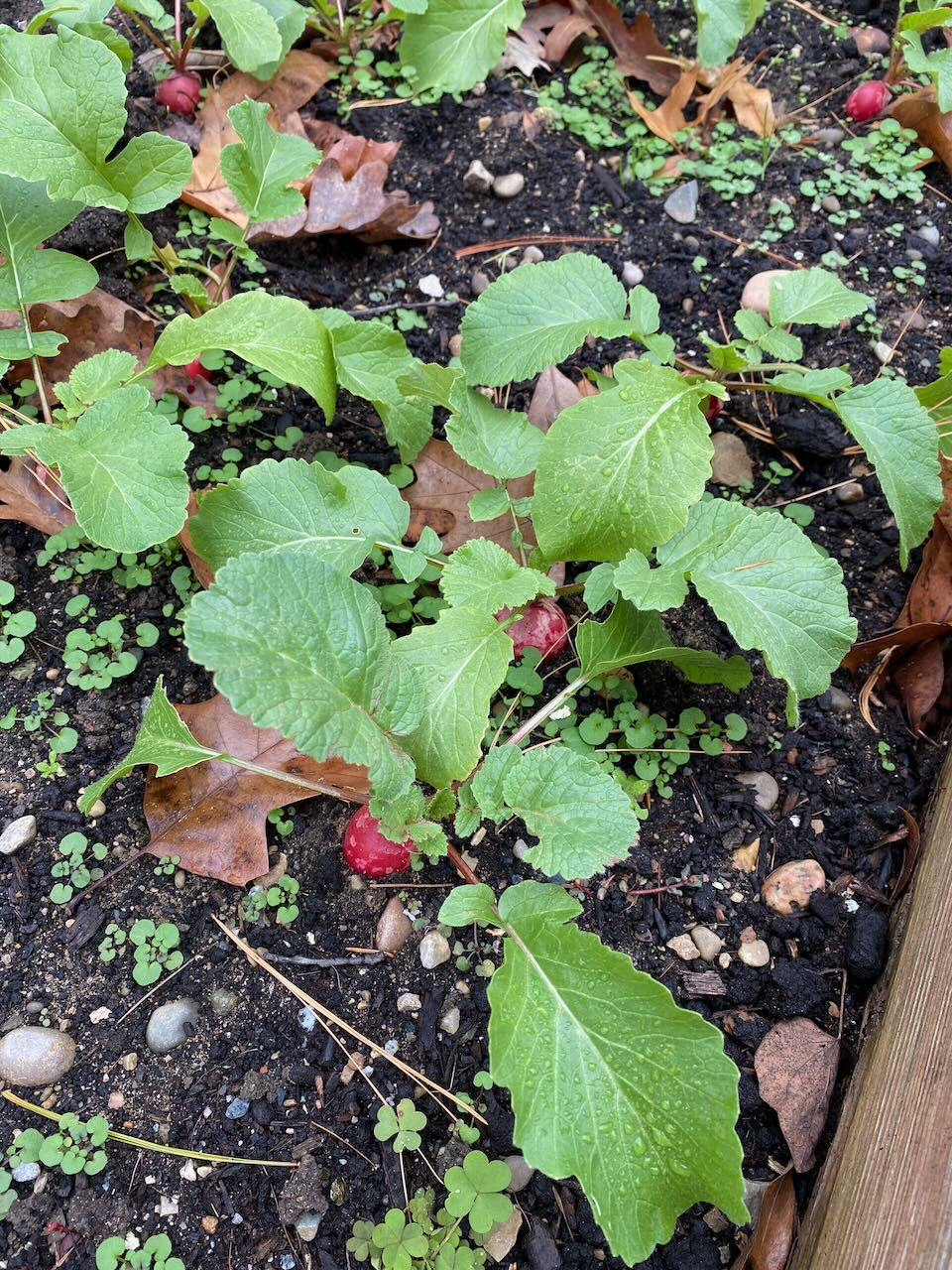 That was the trouble with radishes too, until I learned that they can be cooked. How did I get to be as old as I am, and never knew this? They’re so cute out in the garden, with their little round, red shoulders peeking out of the dirt, and they demand so little in the way of warmth and sunlight, I can’t resist planting them when random space becomes available. I’m still working out the best recipes for them.
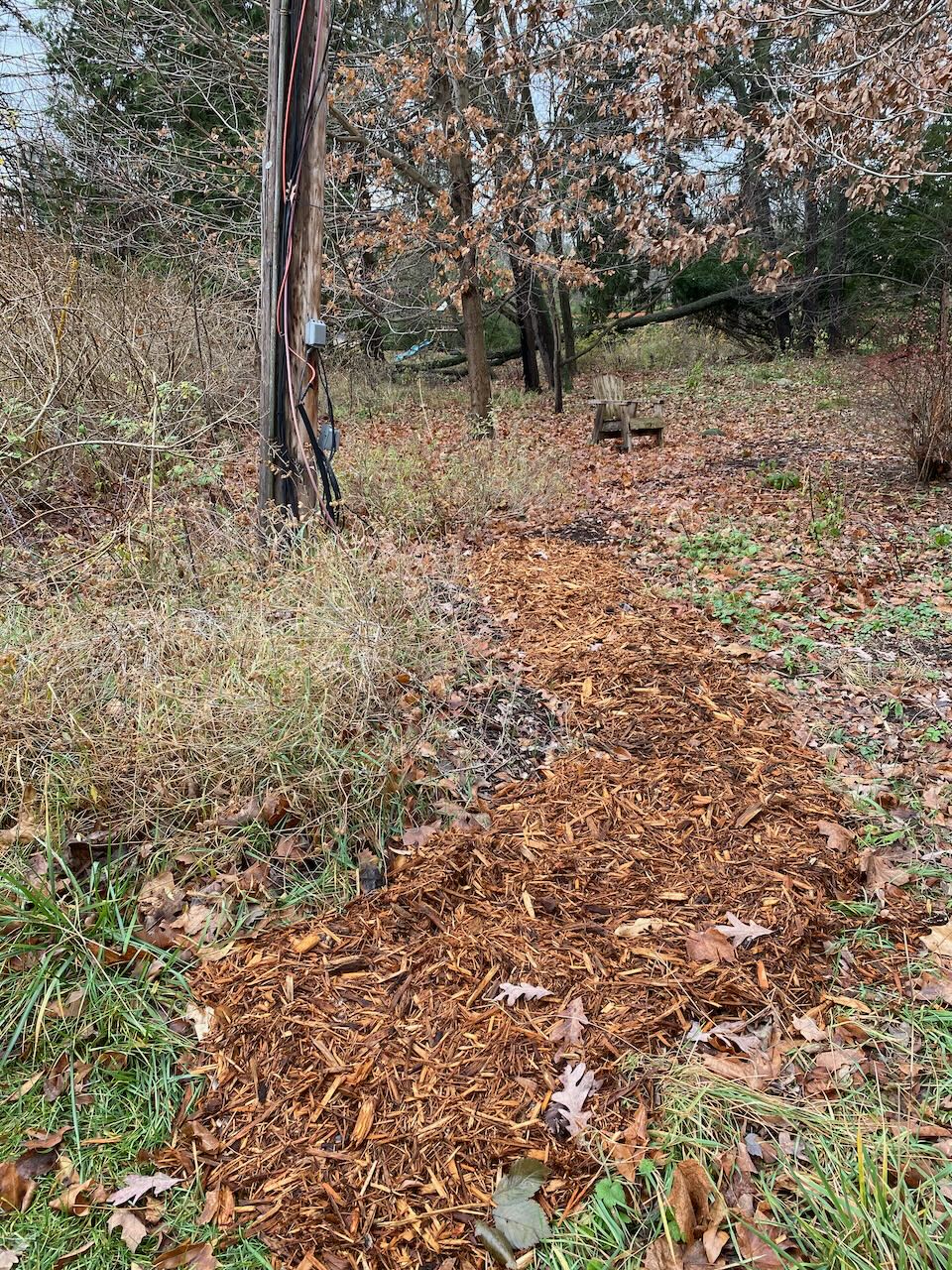 Meanwhile, the main path into my woods needed help. I spread several layers of the Sunday New York Times over the old path, poured a bucket of water over that so it wouldn’t blow around as I worked, and topped it with mulch. That will be one less thing to do come spring, when things to do are plentiful. As much as I love gardening, there comes a time when I really need a break. If spring is the reward for winter and harvest is the reward for spring, winter is the reward for three seasons of hard work. Just curl up with a good book and eat all those quarts of tomato sauce.
 Robin Richstone