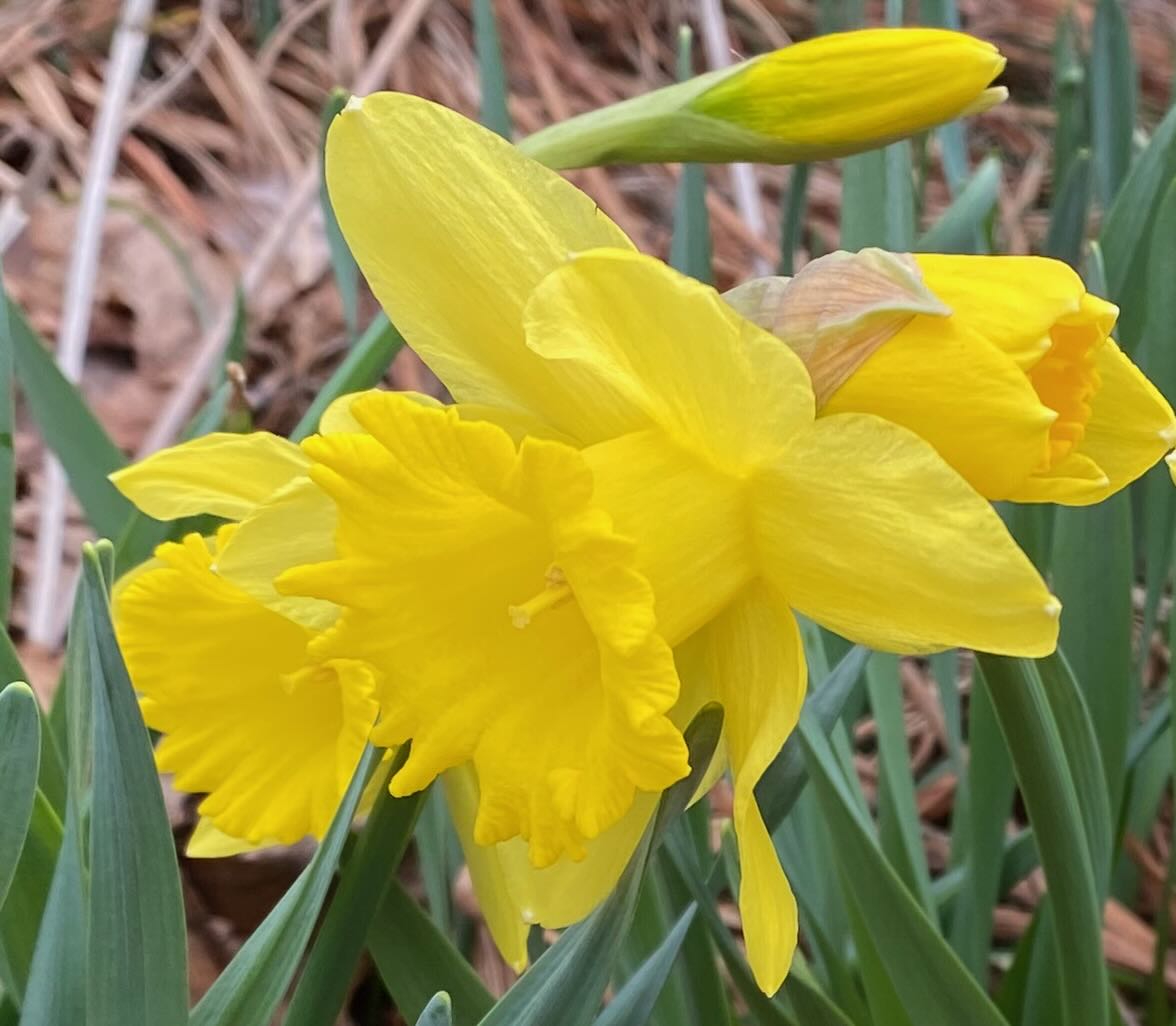
Now that we’re past groundhogs and the equinox, it’s really starting to look like spring. April veers from Fools’ Day to Arbor Day, sweeping Passover and Easter along in a current of National Poetry Month, rainshowers, and regrowth. If T.S. Eliot thought April was the cruelest month for pushing out lilacs before he was ready, what did he think of the daffodils? Look at them there, mocking misanthropes. Go daffodils, I say.
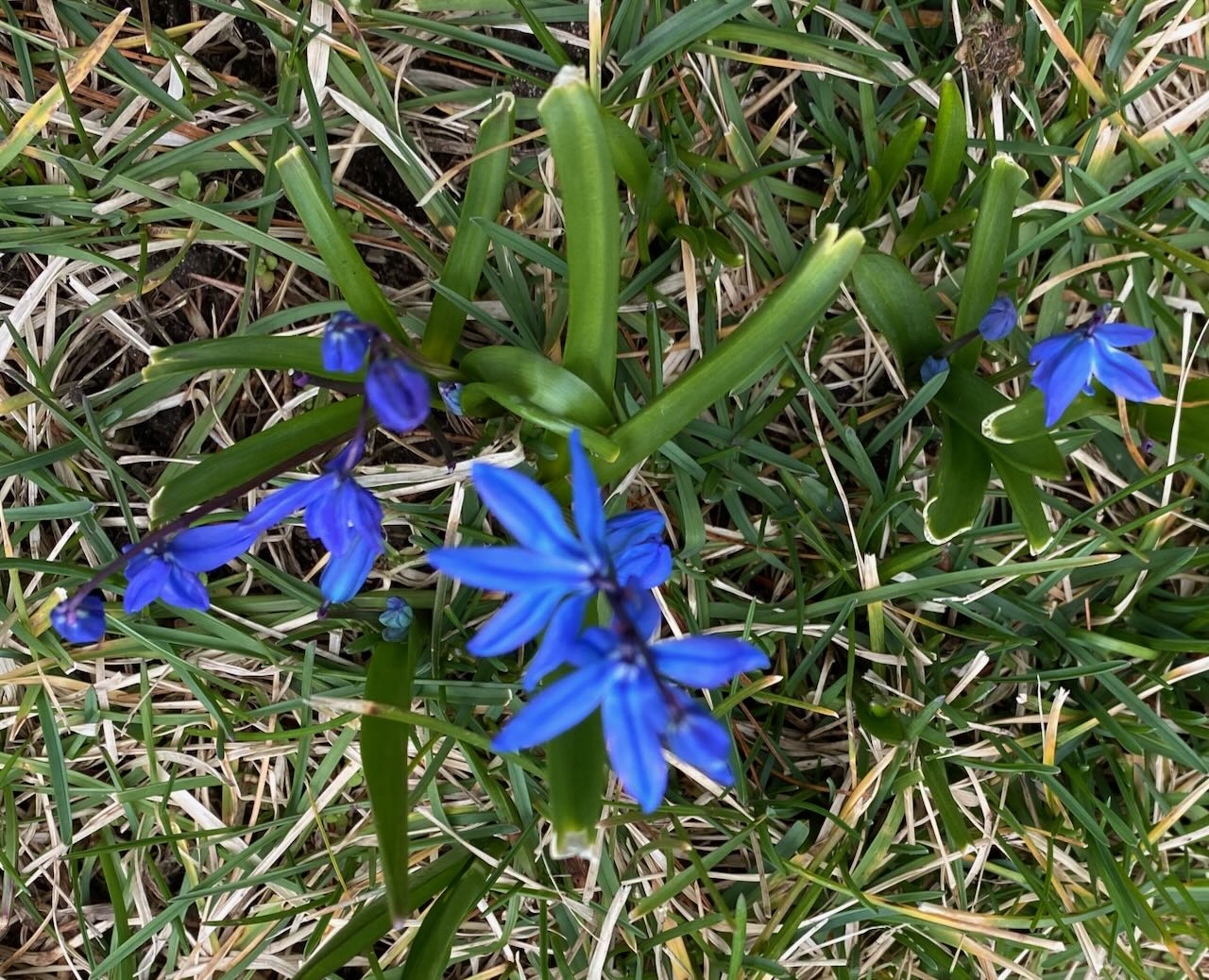
Last fall Doug helped me plant a lot of scilla in the lawn, perfect bulbs for the job because they bloom and fade before the grass needs mowing. Also, the deer and rabbits won’t eat the flowers. They will, however, nip off the emerging tips of the leaves. It’s a little hard to tell which perpetrator is responsible for this damage – rabbits have sharp front incisors and make clean cuts; deer bites are more ragged. There are both types of damage here, so the bunnies and the Bambis are sharing. How lovely that would be if they were eating weeds.
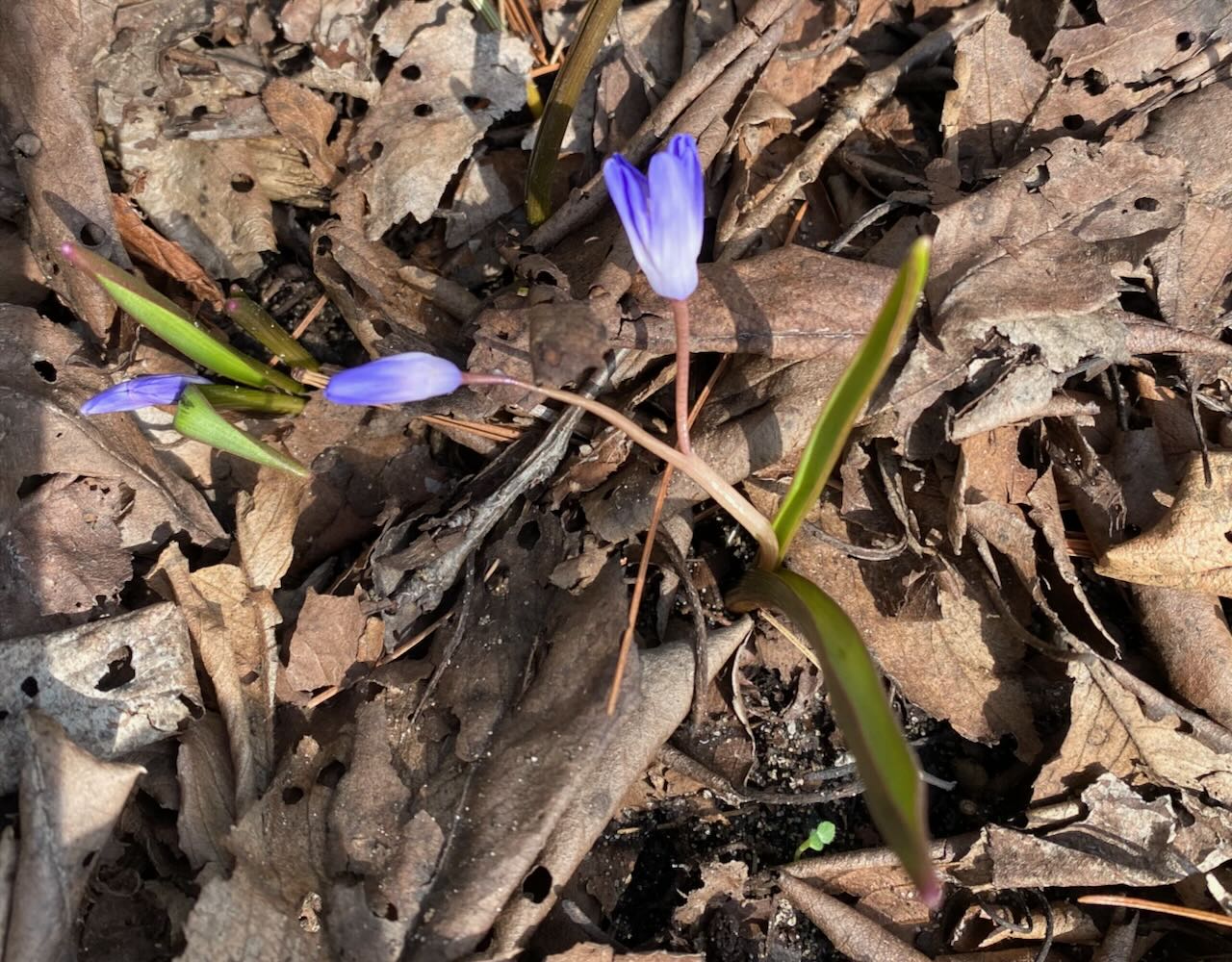
I like my flowers to naturalize into nice thick boisterous clumps, swaths, and patches, but I do think this little one growing all by itself in the leafmulch is very elegant. It was moved off its original spot by unknown forces of nature: hyperactive squirrels; frost heave; or maybe the human element of a snow plow going a little too deep, a little off target. Sometimes it turns out well when your plans go astray.
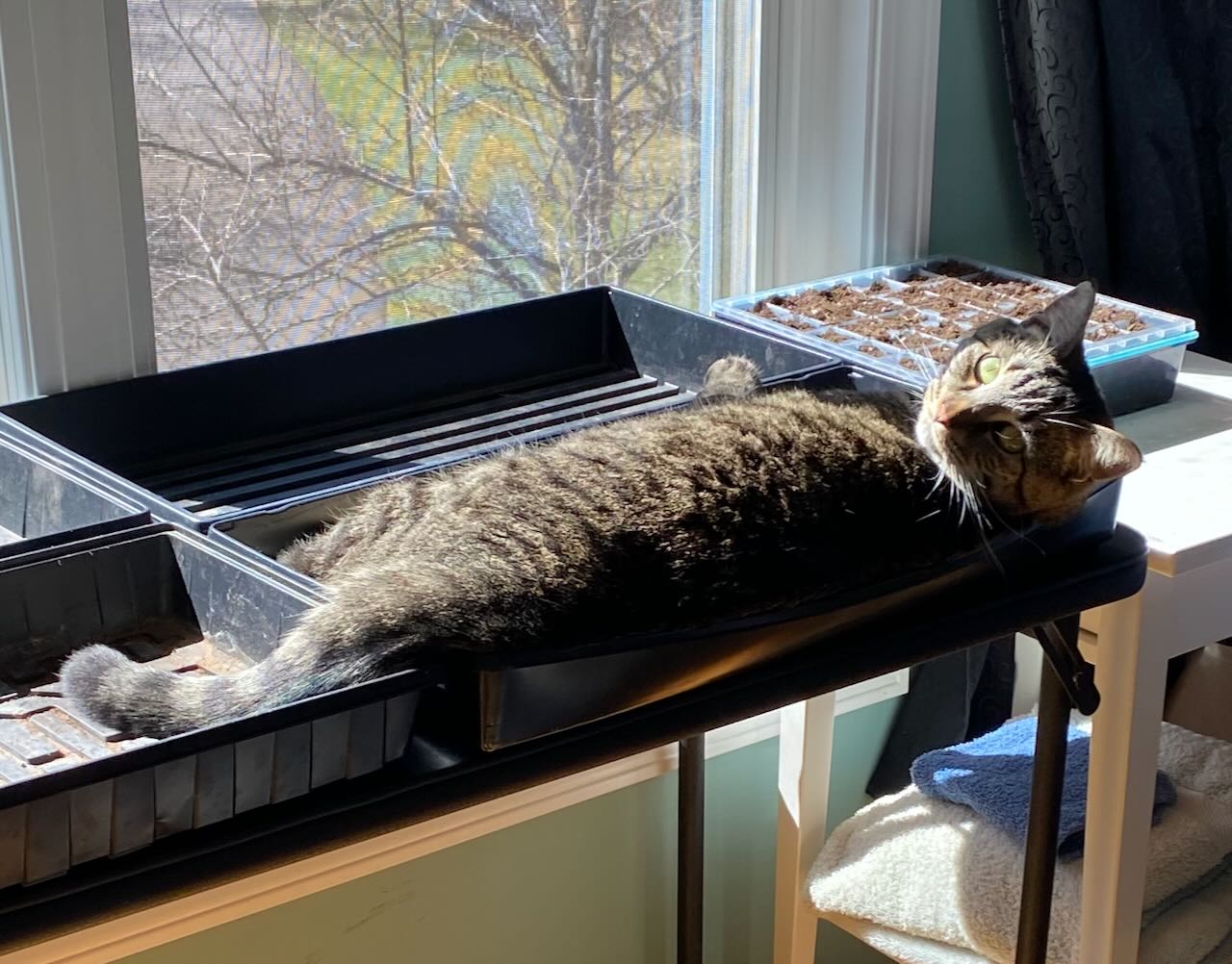
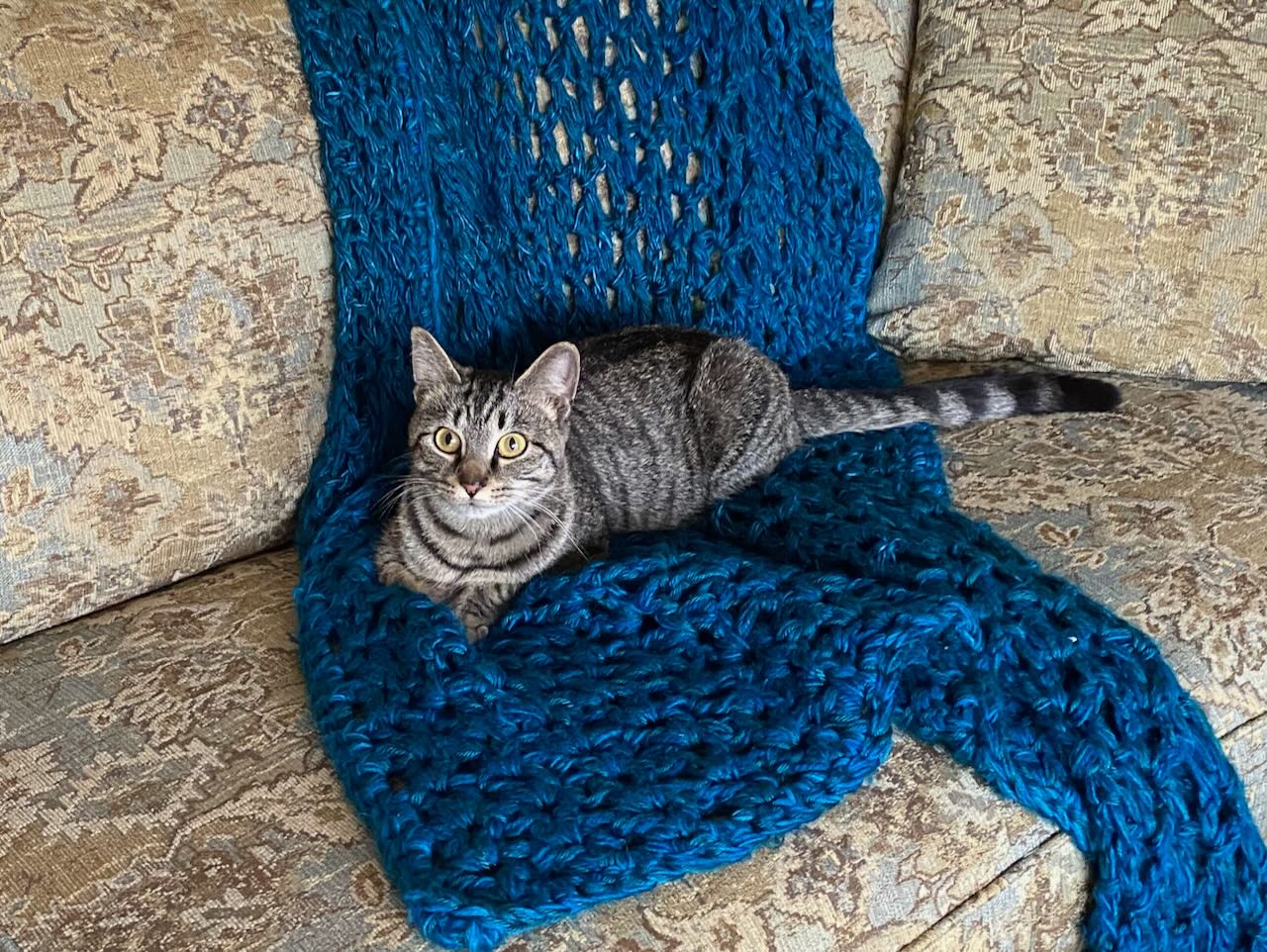
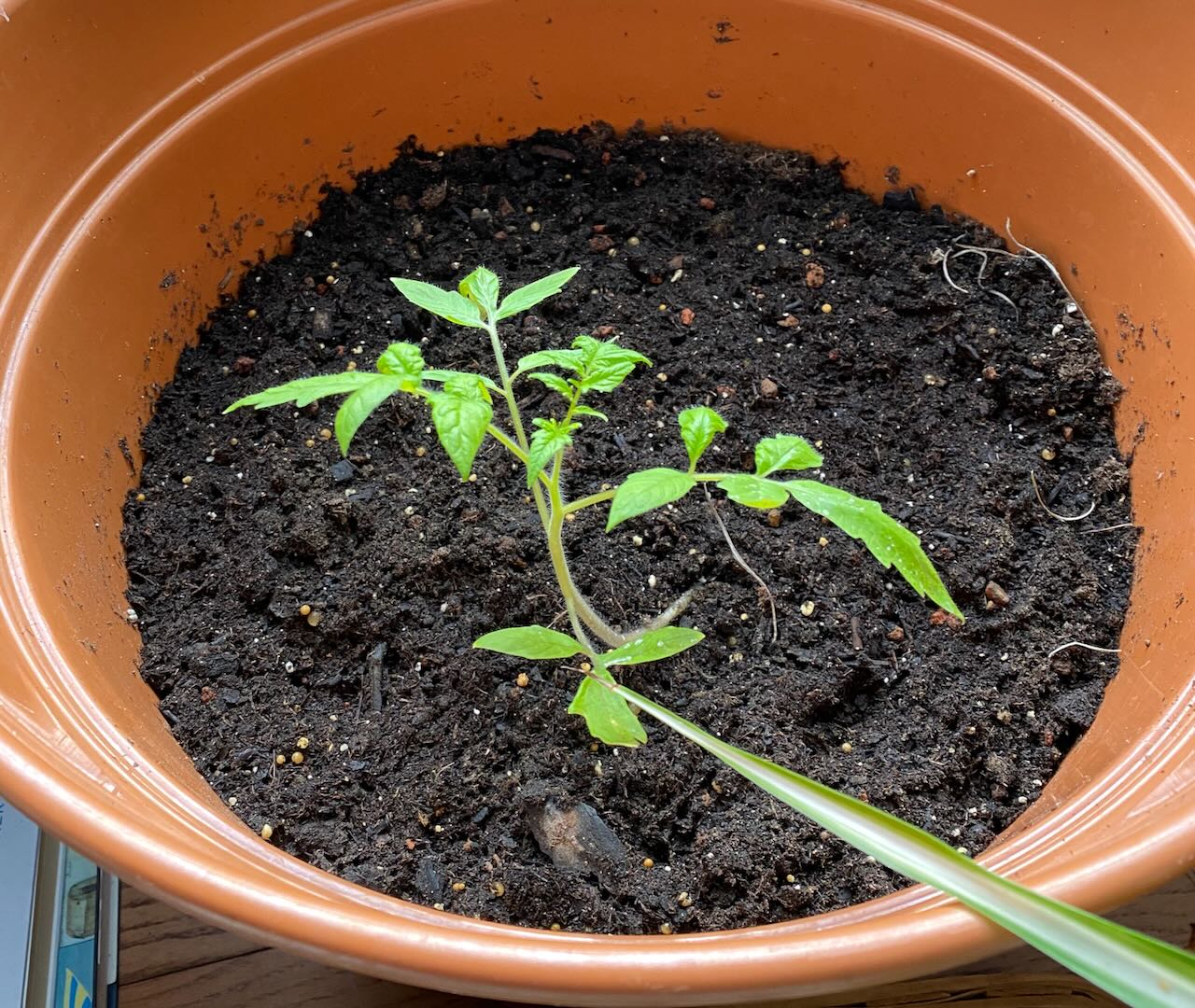
It’s time to start the seeds for my garden. Doug took the folding tables upstairs to the big sunny window in the guest room, we set them up, and I spread my trays across them. Frassy was extremely interested in this, even more so when I started filling pots with dirt. She stepped from one tray to the next, inspecting, and apparently approved enough to commandeer one of them for a nap.
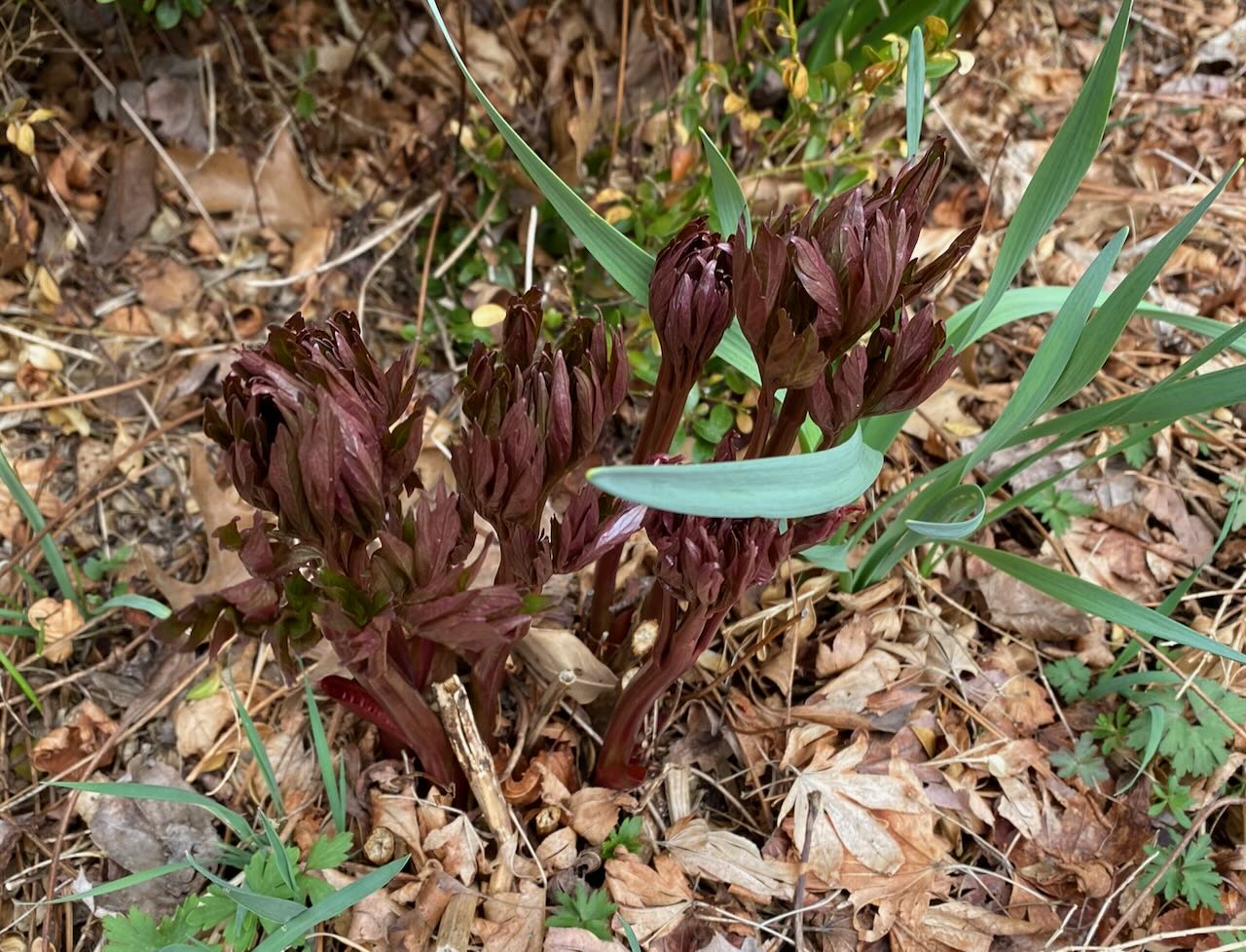
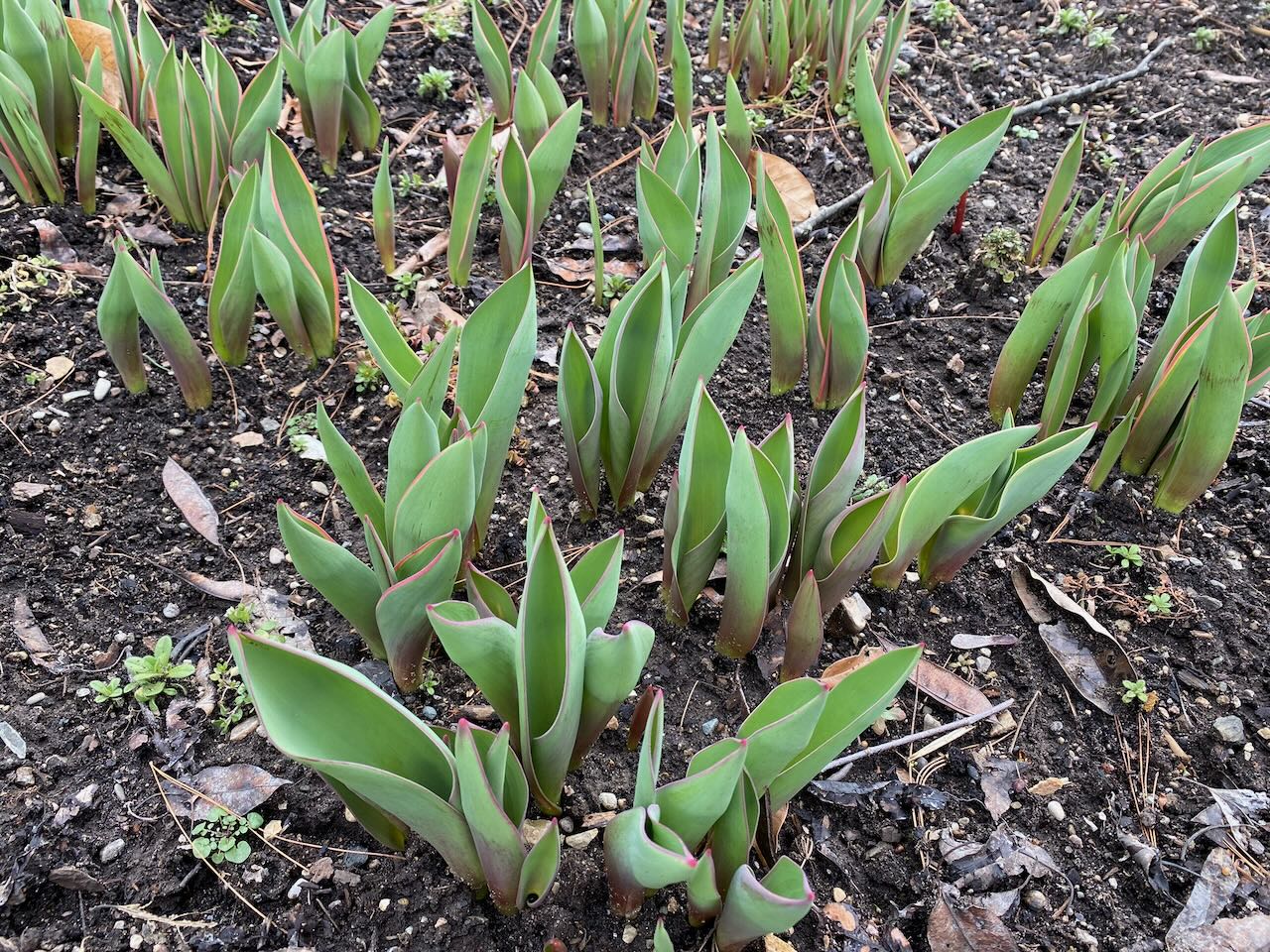
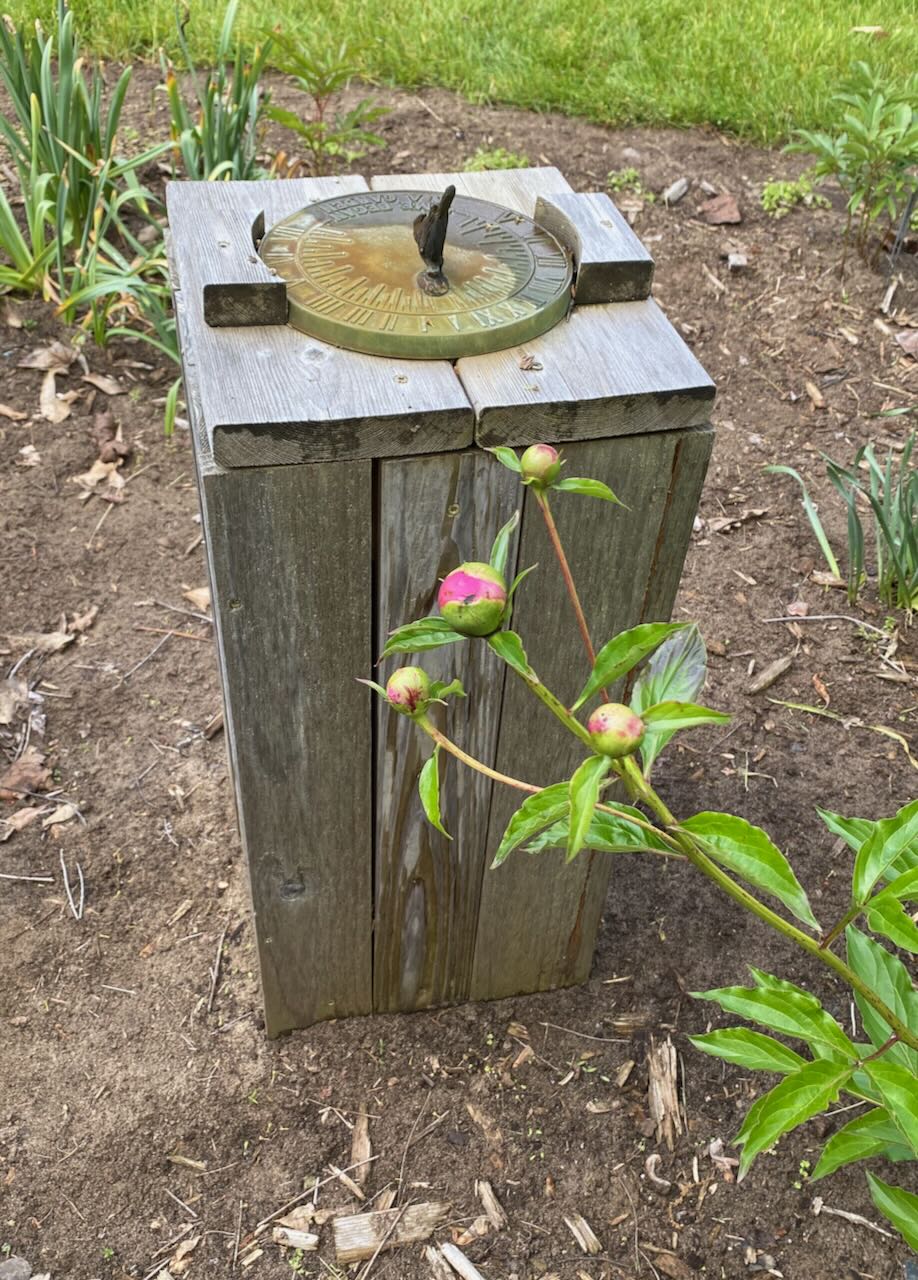
Outside, meanwhile, the perennials that vanished with winter are reasserting themselves. T.S. Eliot might see these as ghastly hands reaching up from the grave, but in fact they’re new growth rising from the roots of peonies. They have all of April and all of May to build out the torrent of ruffles and perfume that will burst from them in June; they’re in no rush. I’m happy as long as I can see it coming.








 One of the joys of the spring garden is surprise. Where did these ultra-fluffy, double pink columbine come from? Not only don’t I remember buying them, I don’t remember even knowing they existed. Could they have arrived as seeds embedded in bird droppings? Such an ignoble origin. Could there be a Johnny Columbineseed at large in Ann Arbor, spiriting unusual flowers into unsuspecting gardens under cover of night?
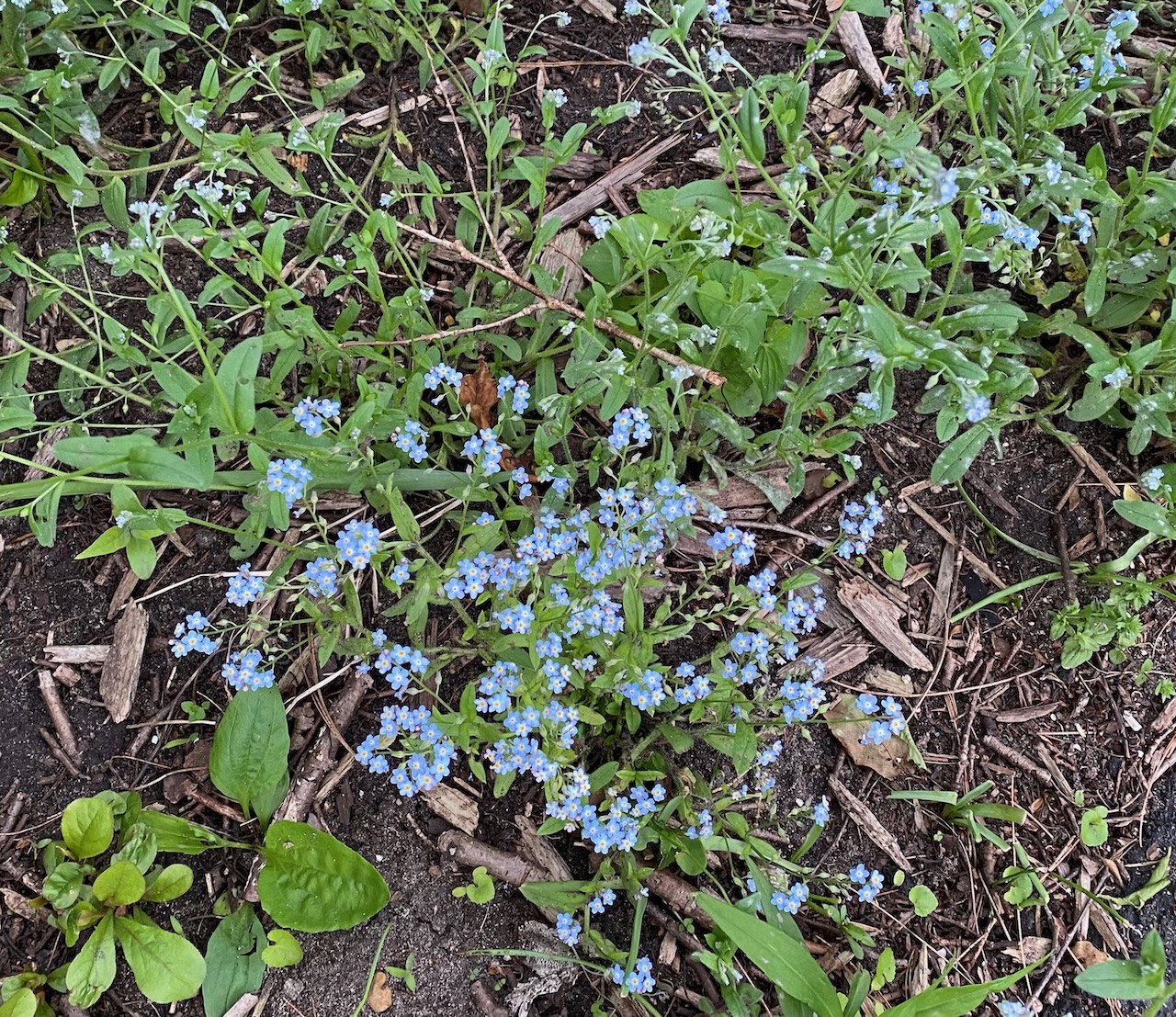 Then over here, how did one tiny patch of forget-me-nots take over the entire flowerbed, even crowding out weeds? A blue haze under the fading spikes of daffodil leaves, it manages to be really in your face despite such tiny petals. It should be called I-dare-you-to-forget-mes.
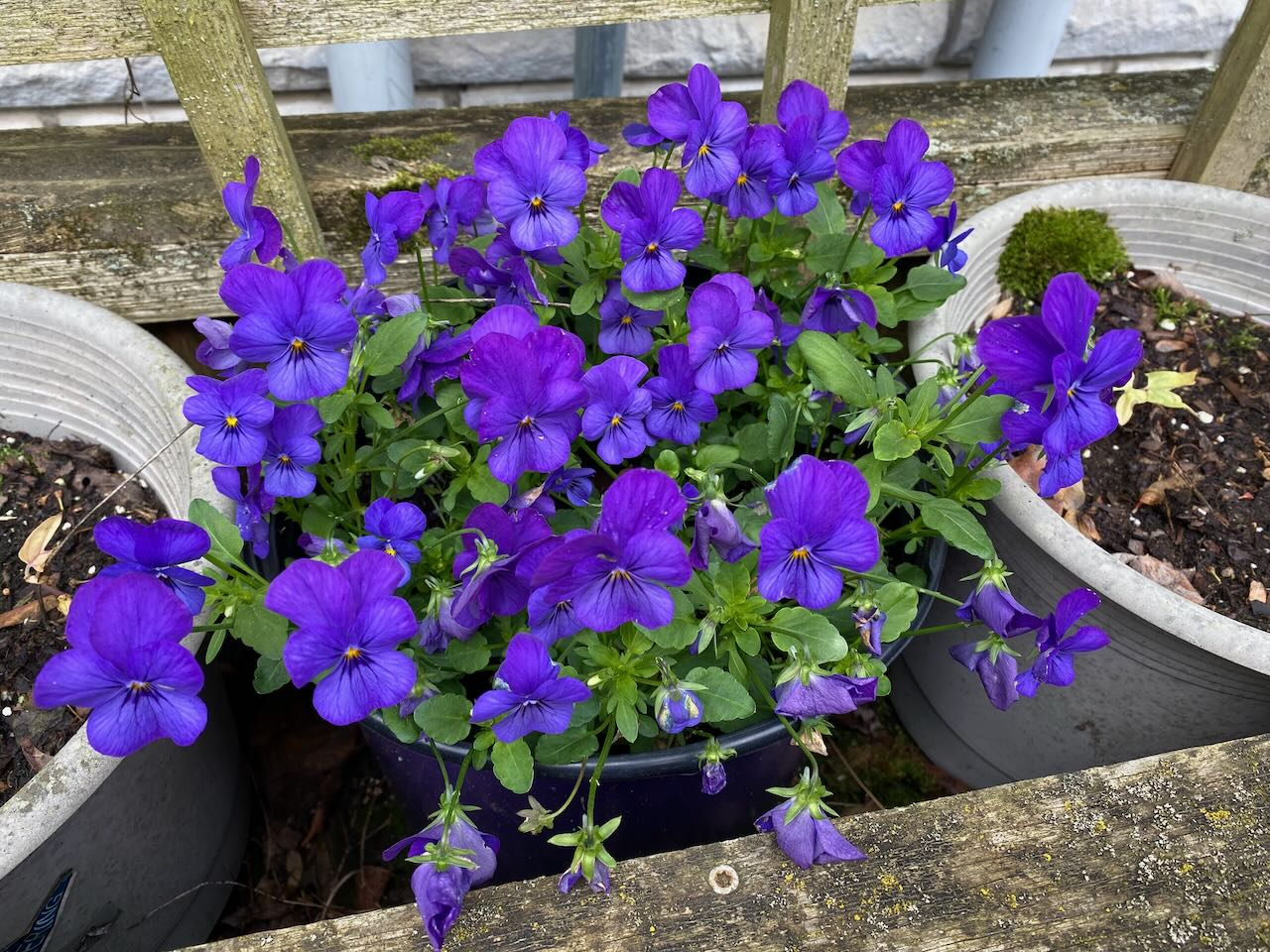
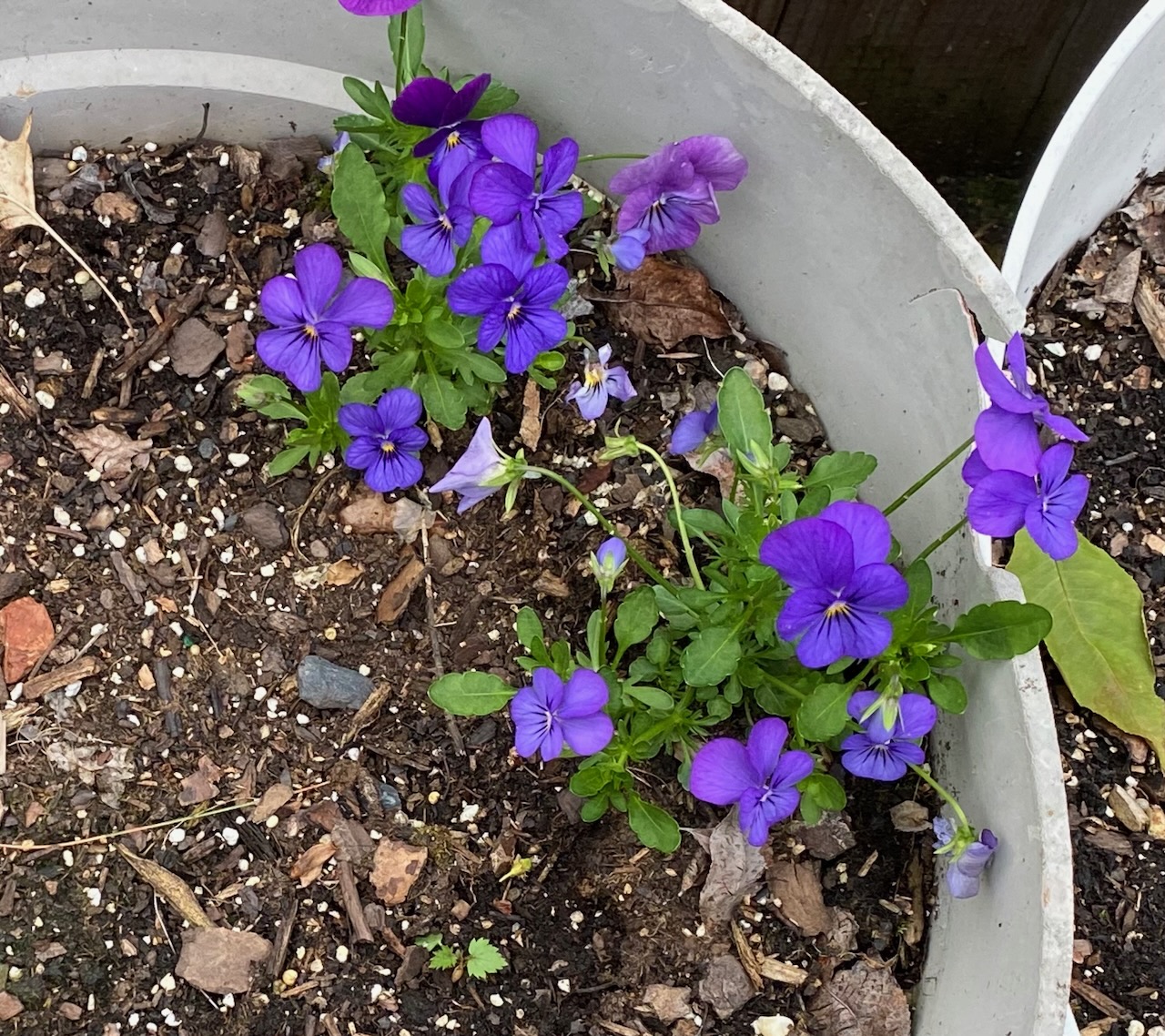 Moving around to the back yard, a flower pot that once held cosmos has come up with a crop of these little purple flowers, small enough to be violets but somehow I wasn’t convinced. Pansies were in the pot next to it last year. My garden books say four petals up and one down makes it a pansy, two petals up and three down is a violet. Two up, one down, and two sticking out to the side? Panselets?
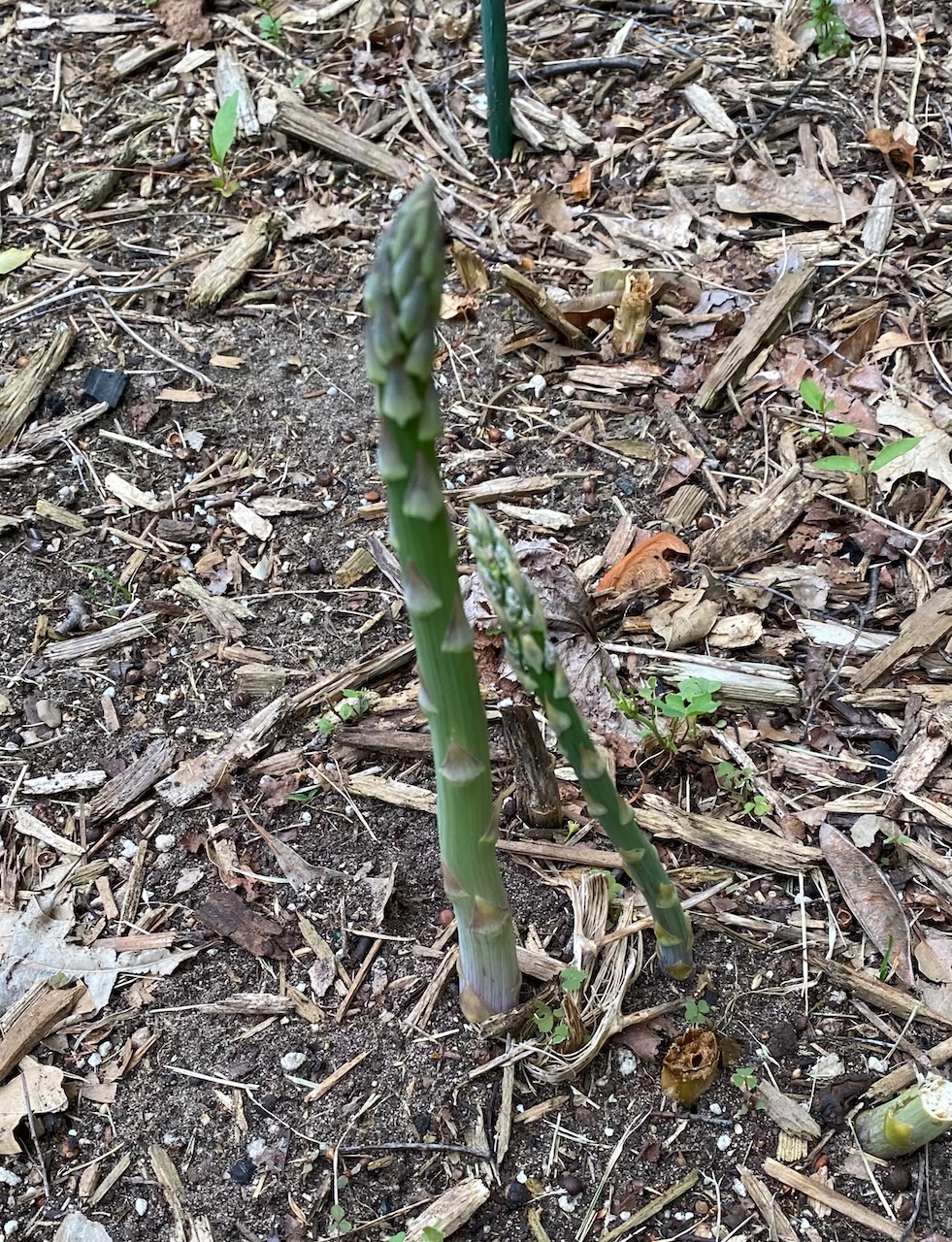 And then there’s the asparagus patch. I’ve seen it every year since we moved into this house, but it still makes me laugh to see the way it comes up out of the ground, looking for all the world like someone has snuck out to the garden and stood a bunch of asparagus spears upright in the dirt as a practical joke. But no, they’re growing right out of the ground. The second joy of the spring garden: that dirt, water, and sunlight turn into food and beauty, whether the way we expected or not.
 Robin Richstone