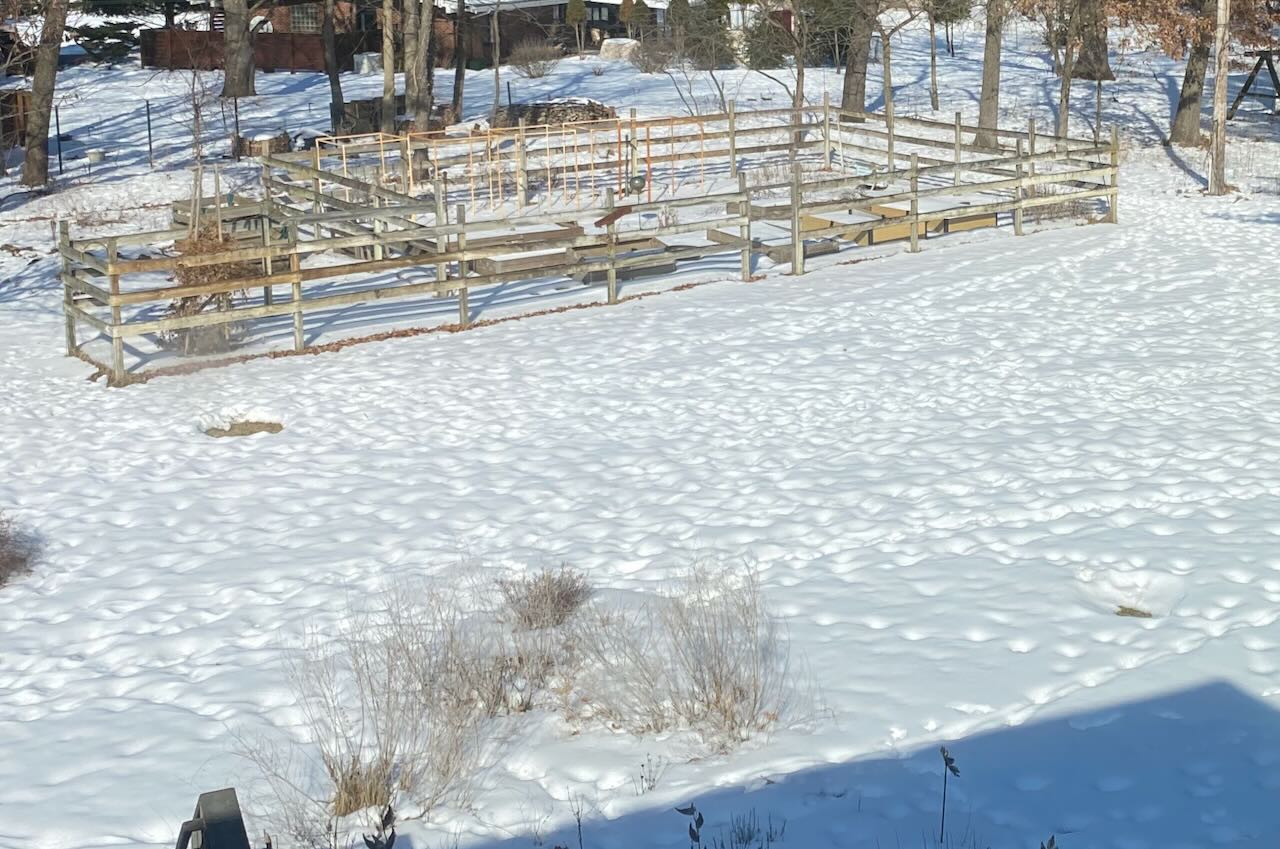
The weather’s been having a lot of fun with us. Over the last week we’ve been up and down the thermometer from ten degrees to fifty and back, with the coming week predicted to do the same. In the warm spells the snow goes, and when the snow goes we lose a lot of information. In this photo from a few days ago, you see a clear demonstration of why I only grow my tomatoes behind a fence. A few other animals wander through, but that’s mostly the heart-shaped hoofprints of deer.
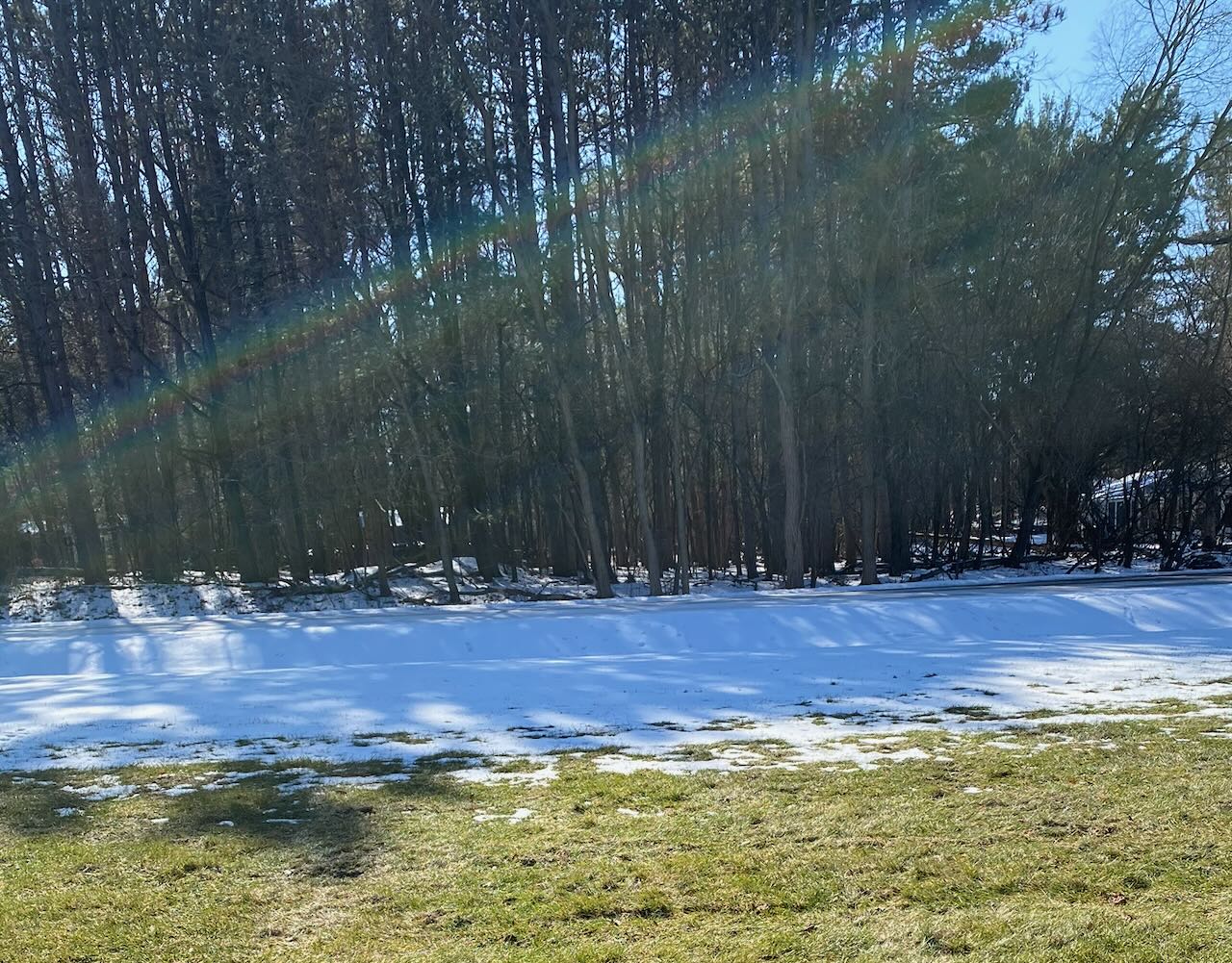
That evidence is gone now, but the strengthening light has its own games to play. To me this photo shows the lovely effect of the sun’s rays reaching out like fingers of a warm, gentle hand. My grandmother saw it as “the sun drawing water.” I thought that was awfully prosaic, but it’s another possible point of view: where I see something coming down, she saw something going up. It’s so common for different people to look at the same thing and see it differently, it must be an advantage to a community – whatever’s happening in the world, you have options in deciding what to do.
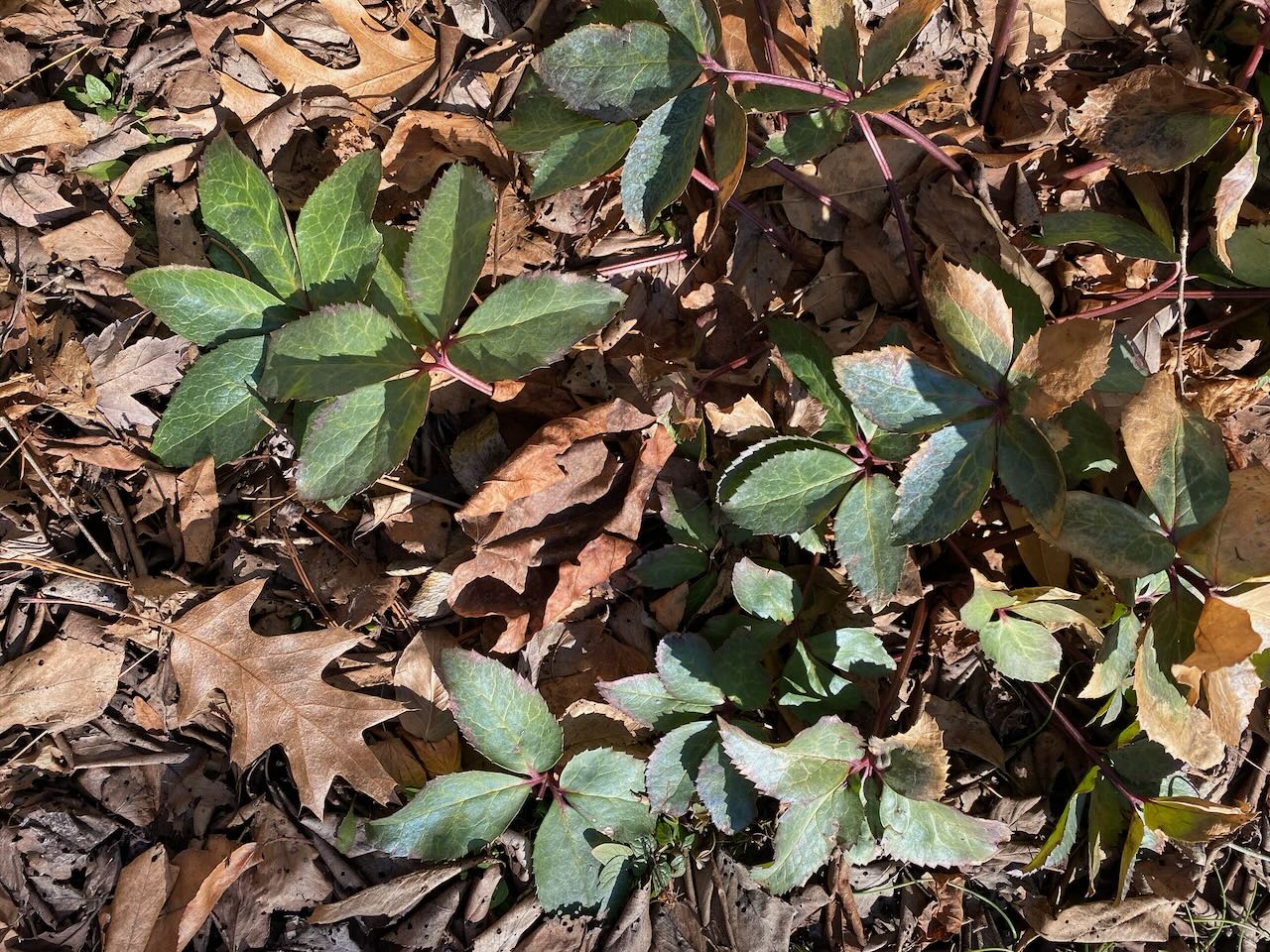
Whether the sun is pulling them up or their roots are pushing them out, my hellebores are positioning themselves to be ready for the race to spring. They don’t exactly die back in winter but they lie low. Their newly perked-up posture chimes with their nickname, Lenten Roses, and bodes well for flowers well before Easter.
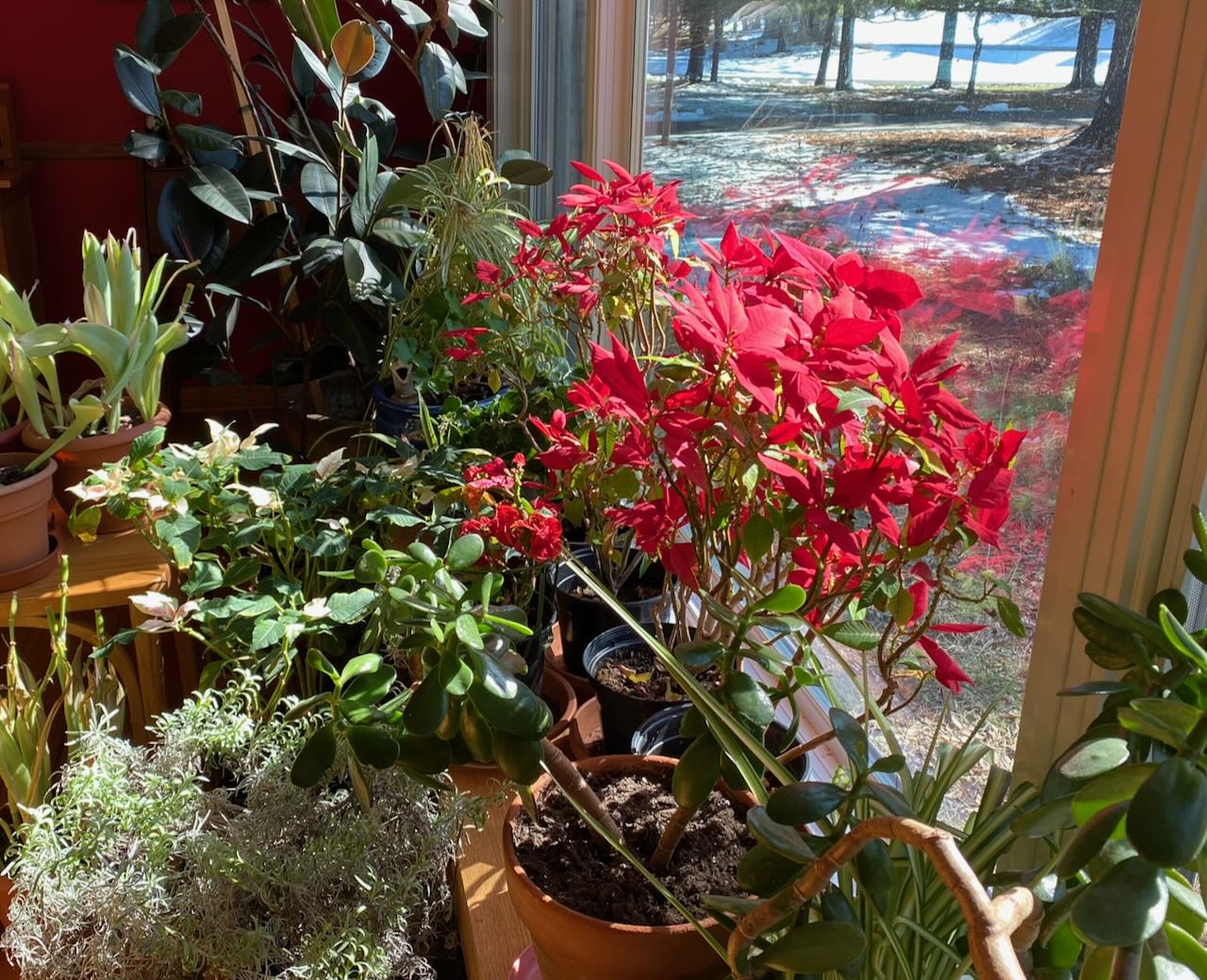
The increasing light also plays games with my indoor plants. From the dining room window it looks like there’s something red blooming outside on the snow, or at least some persistent fallen leaves. But no. It’s the reflected glory of the poinsettias, the window partly a mirror and partly transparent in this particular afternoon sunshine.
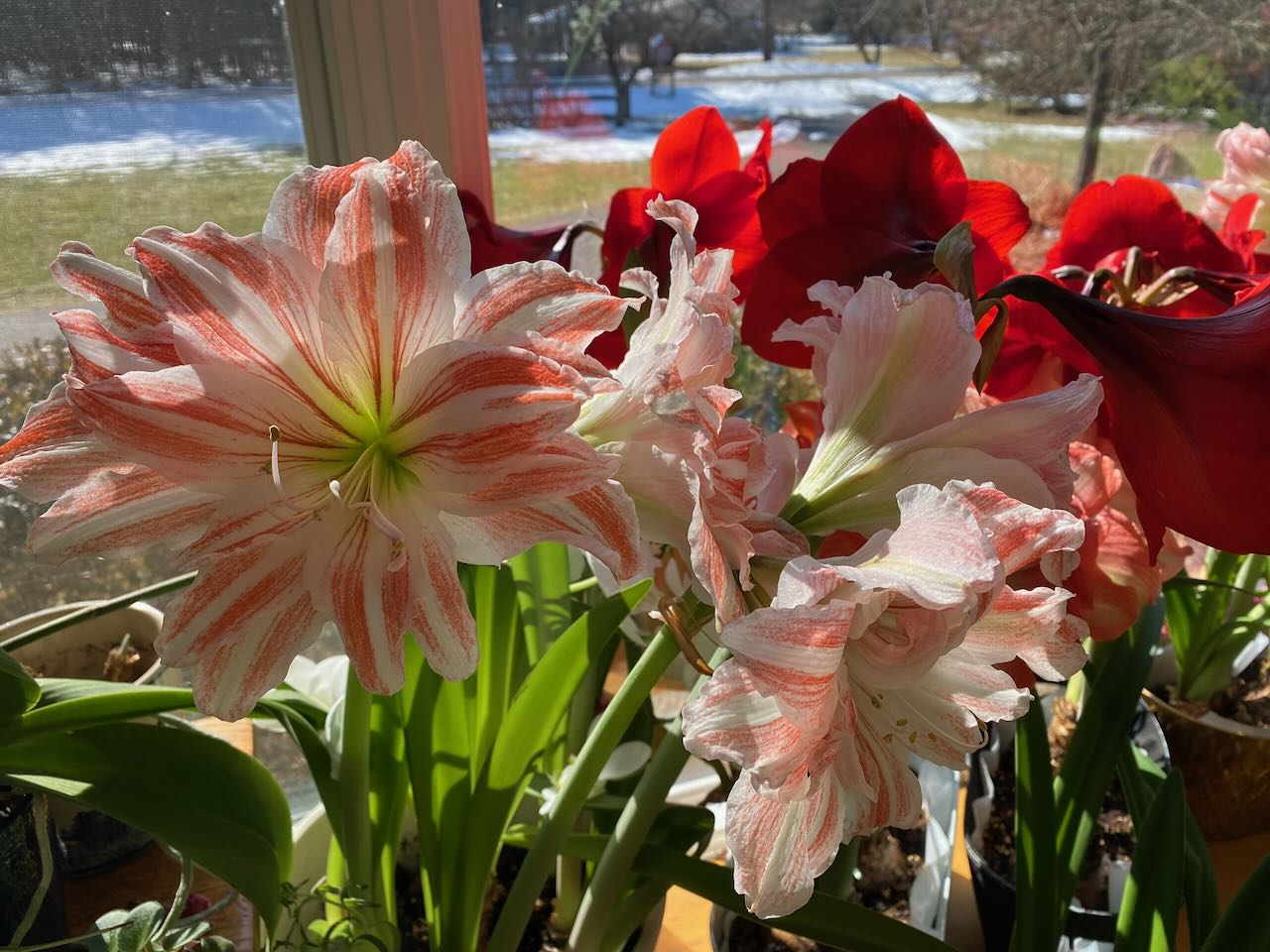
There’s a little of the same thing going on at my studio window, though you have to look beyond the riot of frills and frolic that is my amaryllis collection to see it. The red phantom of an amaryllis has materialized way out by the road, where a last strip of snow hangs on in the shadows. Is it a ghost of the past winter? A mirage of the coming spring? Now new snow is falling, thin and unconvincing, much of the ground too warm to sustain it. The red ghosts are gone but their fleshly originals are still at my windows, stretching out to lean against the glass, in case the sun calls on them again for a bit of magic.


 Robin Richstone