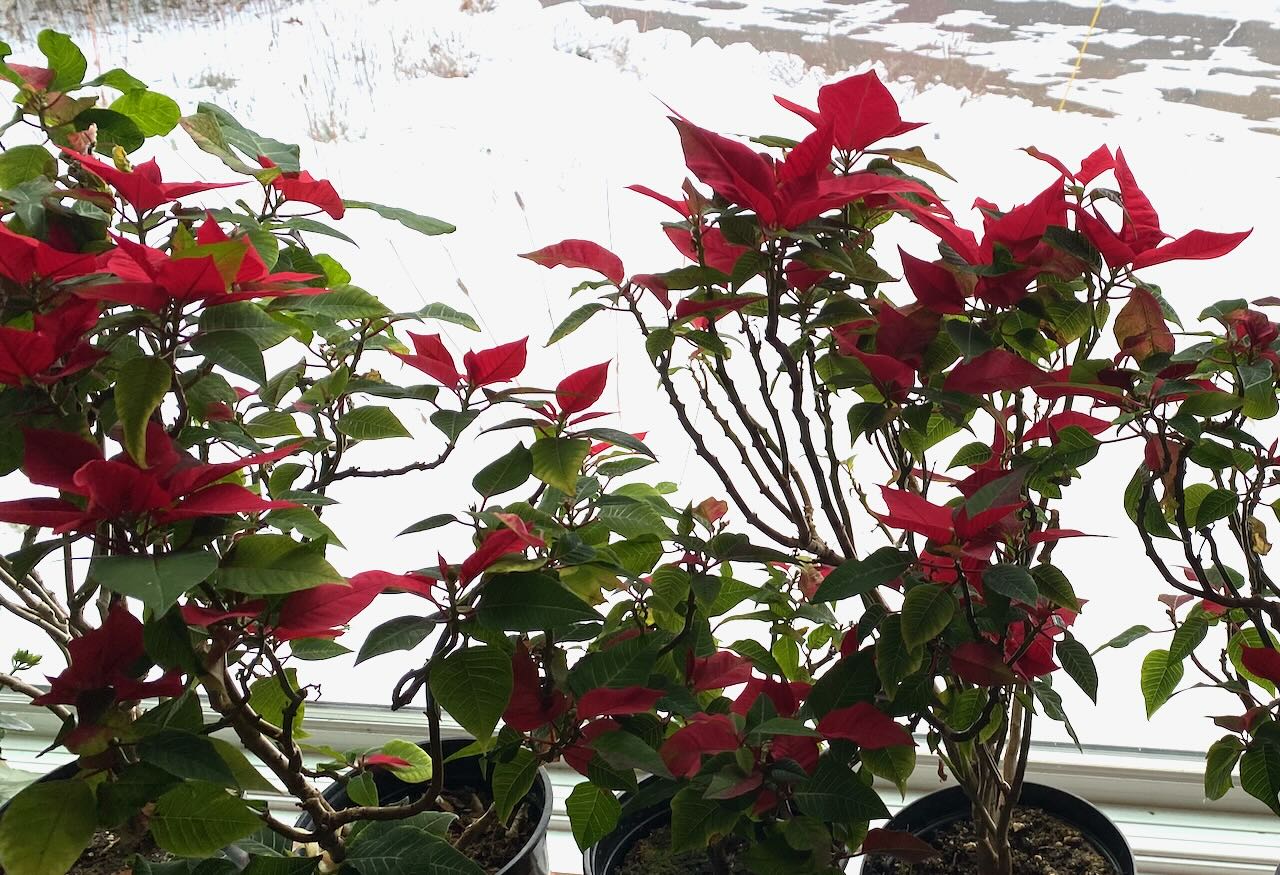
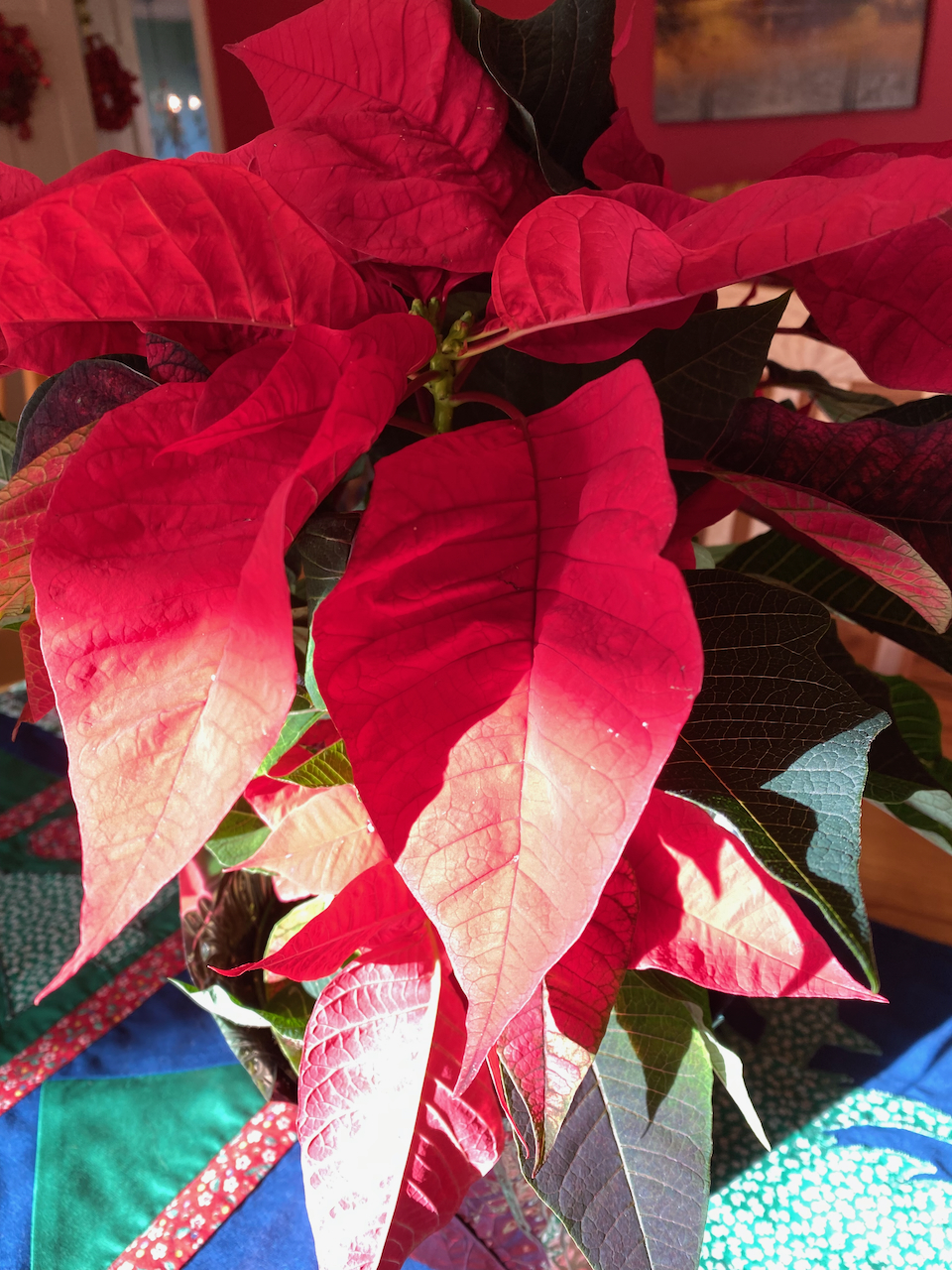
These are my poinsettias that spent the summer outside on the deck, where long hours of daylight turned them green. I always bring them in before frost and wait for the shortening days to turn them red again, but this year I accidentally discovered how to speed up that process. I ran out of regular houseplant food, and gave them the kind for flowering plants. It makes sense, as the red parts are not leaves but bracts, and bracts are specialized to support flowers. I’ve never heard this advised and it’s only happened this once, so may be coincidental. But I’m trying it from now on, so eventually I will know.
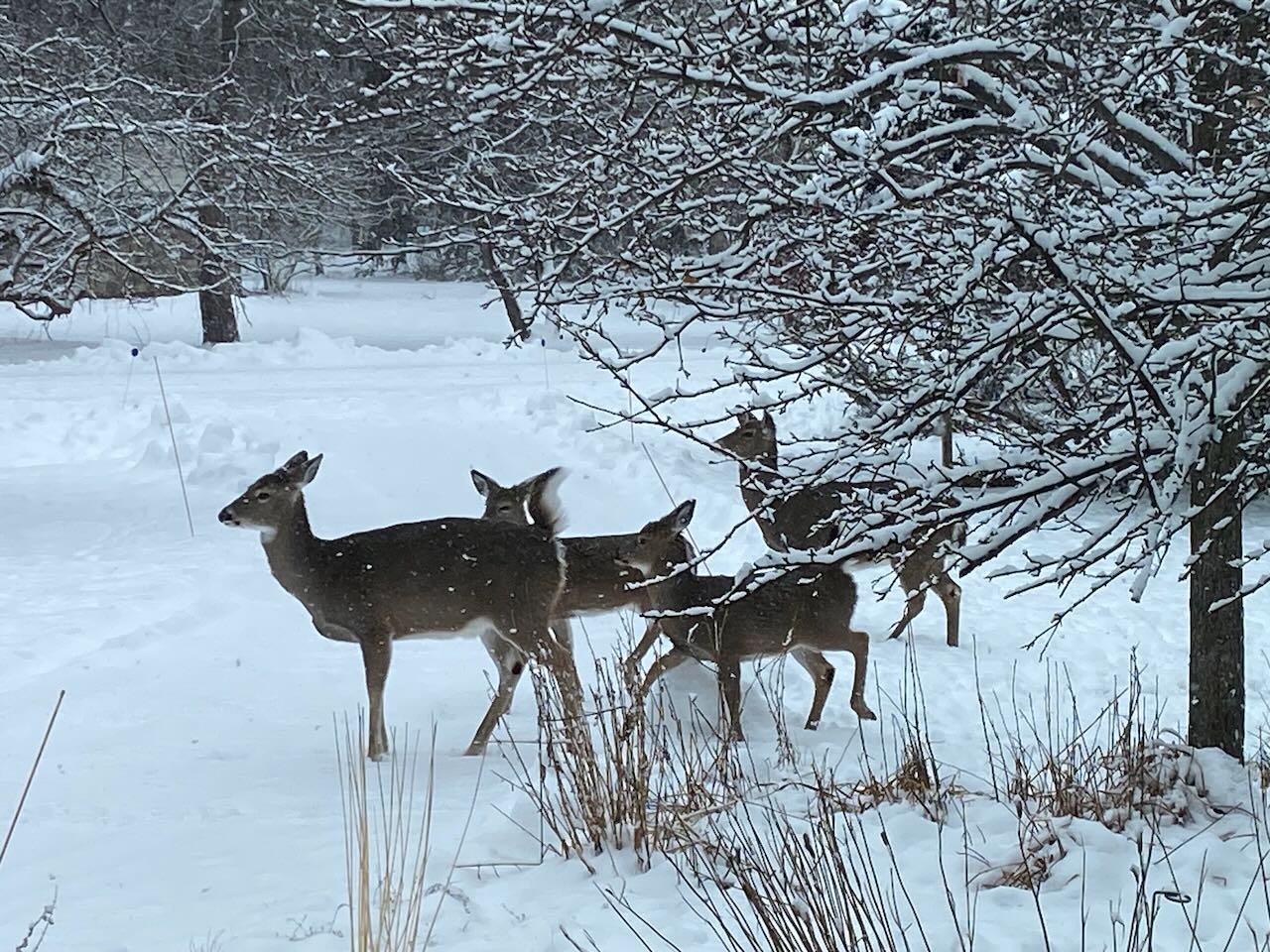
As you see beyond that windowsill, we have a lot of snow right now. Snow in December is delightful, at least for those of us who work from home or not at all. The deer, scourge of my garden in spring and summer, become scenic in a winter landscape. They might be posing for a Christmas card. The season must be difficult for deer, with food less abundant and more shelter needed, but just their perseverance gives an aura of reassurance, a feeling of peace. Hard times can be gotten through.
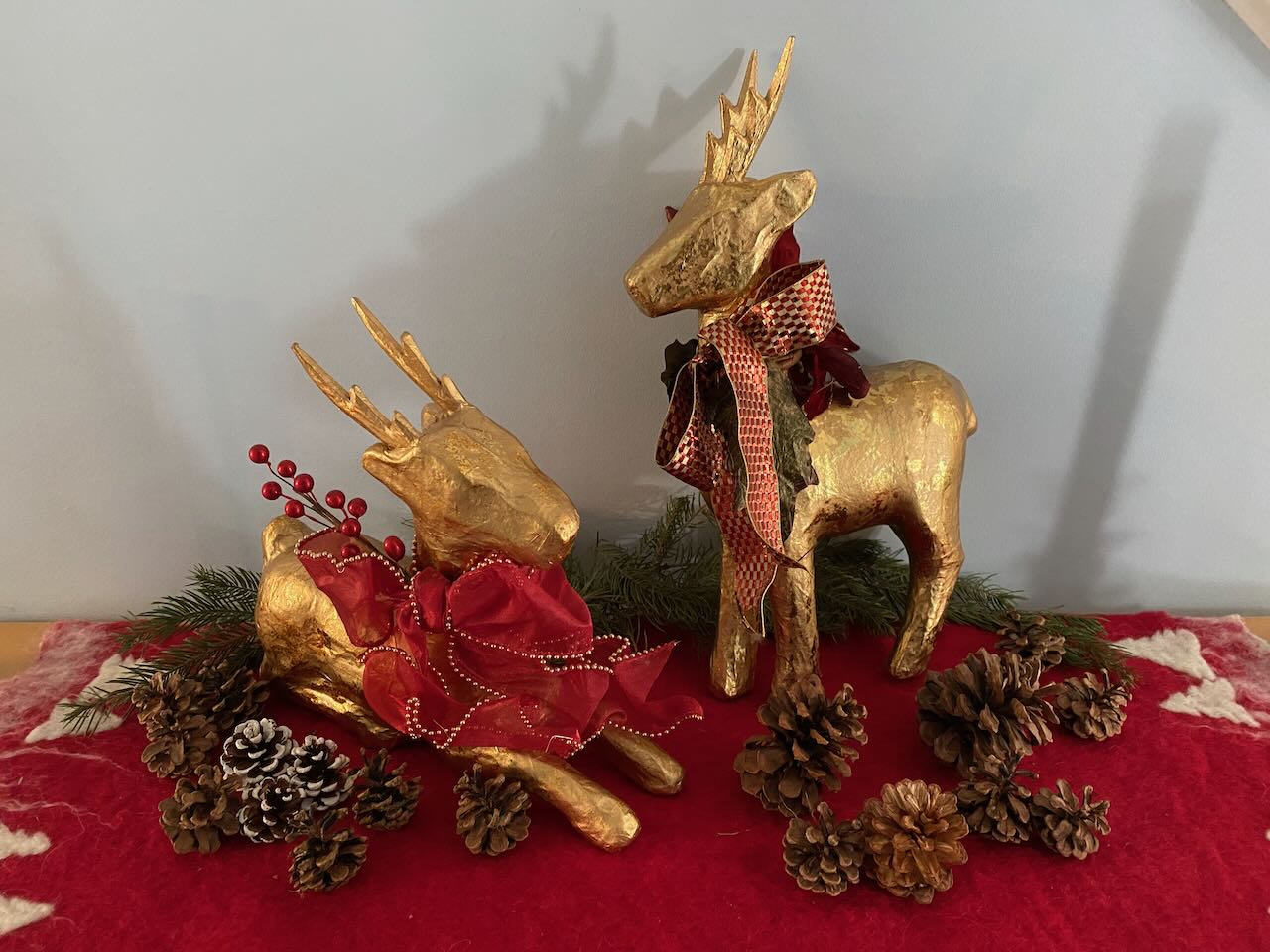
The typical seasonal representatives of deer, of course, are reindeer, and they are well represented in the winter decor in my home. Like all the best holiday decorations, these carry a lot of memories for me – Christmas parties, the very good friends I celebrated with, and especially my friend Andree, who applied the gold and tied the ribbons that distinguish these fellows. Or girls – I have learned that all reindeer have antlers, and only females keep them in the winter.
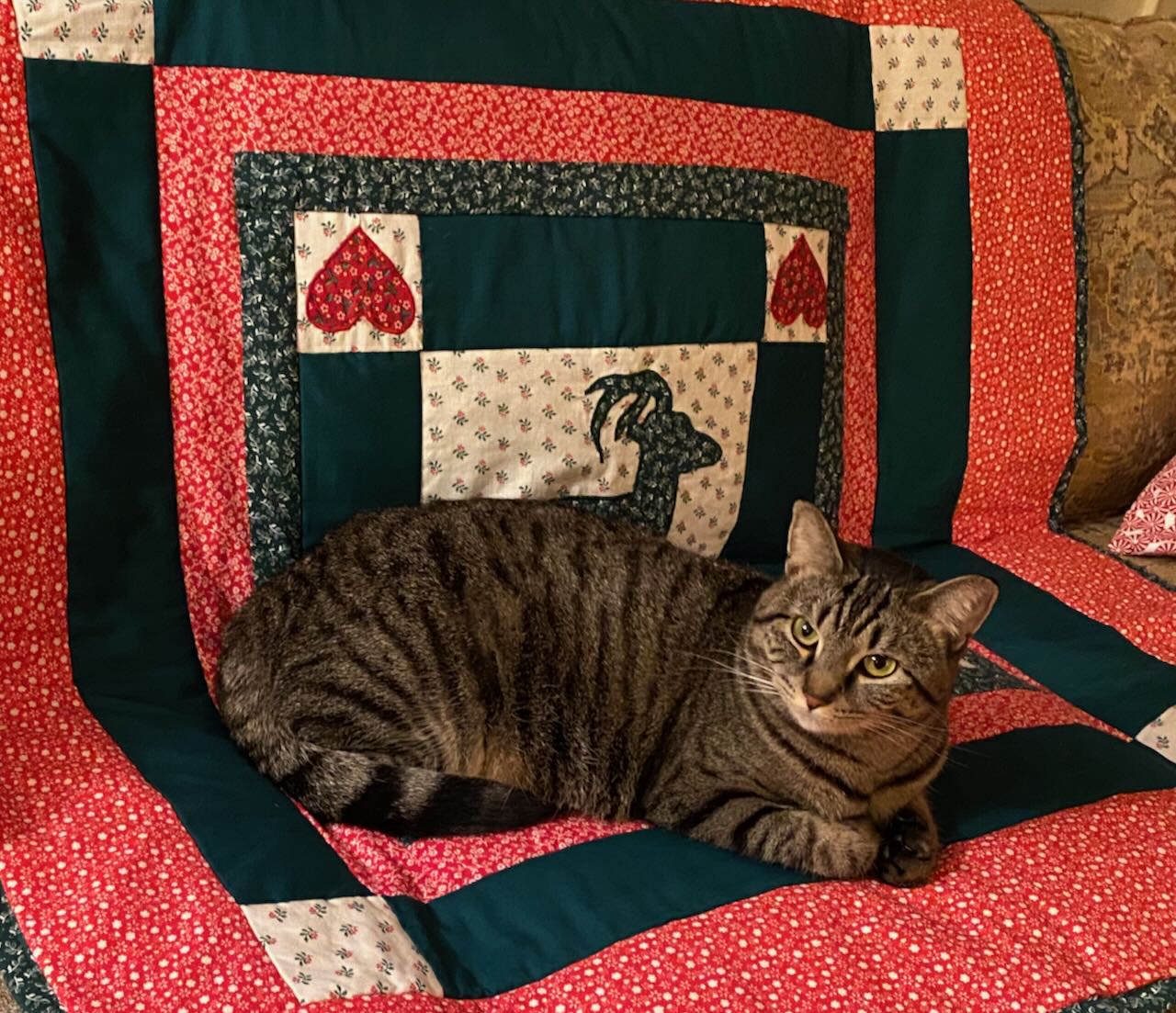
Frassy prefers a softer kind of reindeer. She has an easy life in our house, lounging on quilts, but on the other hand she has killed four mice since she moved in with us. If she had to survive in the wild, I expect she too would persevere.
 Thanksgiving marks the pivot point between fall and winter. The leaves are all down, Christmas lights have begun going up, and a bit of snow has joined in the decorating trend. One of my surprises moving to Michigan from California, was still having fresh sage in the garden for the Thanksgiving turkey platter. I did have to brush the snow off of it, but it looked great and smelled wonderful.
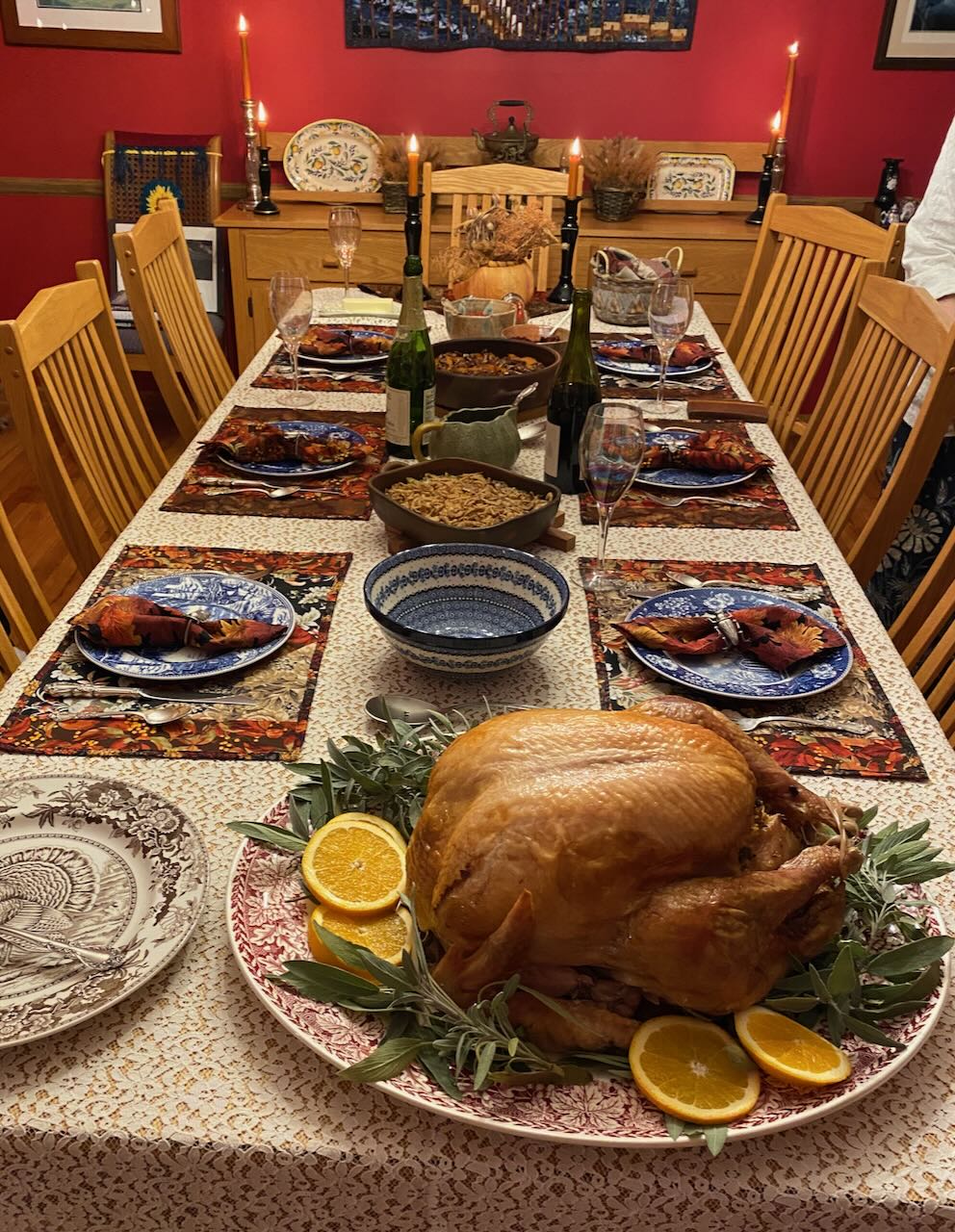 The turkey platter is a family heirloom. I didn’t have the best relationship with my mother growing up, but as I set the table it meant a lot to me to have her silver, her black glass candlesticks, her blue Staffordshire souvenir plates, her turkey platter. I lifted and placed these things and thought about what her life was like, what she might have wanted to do with it and what she did. She used to tell me stories that changed as she told them, that differed from time to time. That was how it seemed to me then. Now I think it was all the same story, just seen from different perspectives.
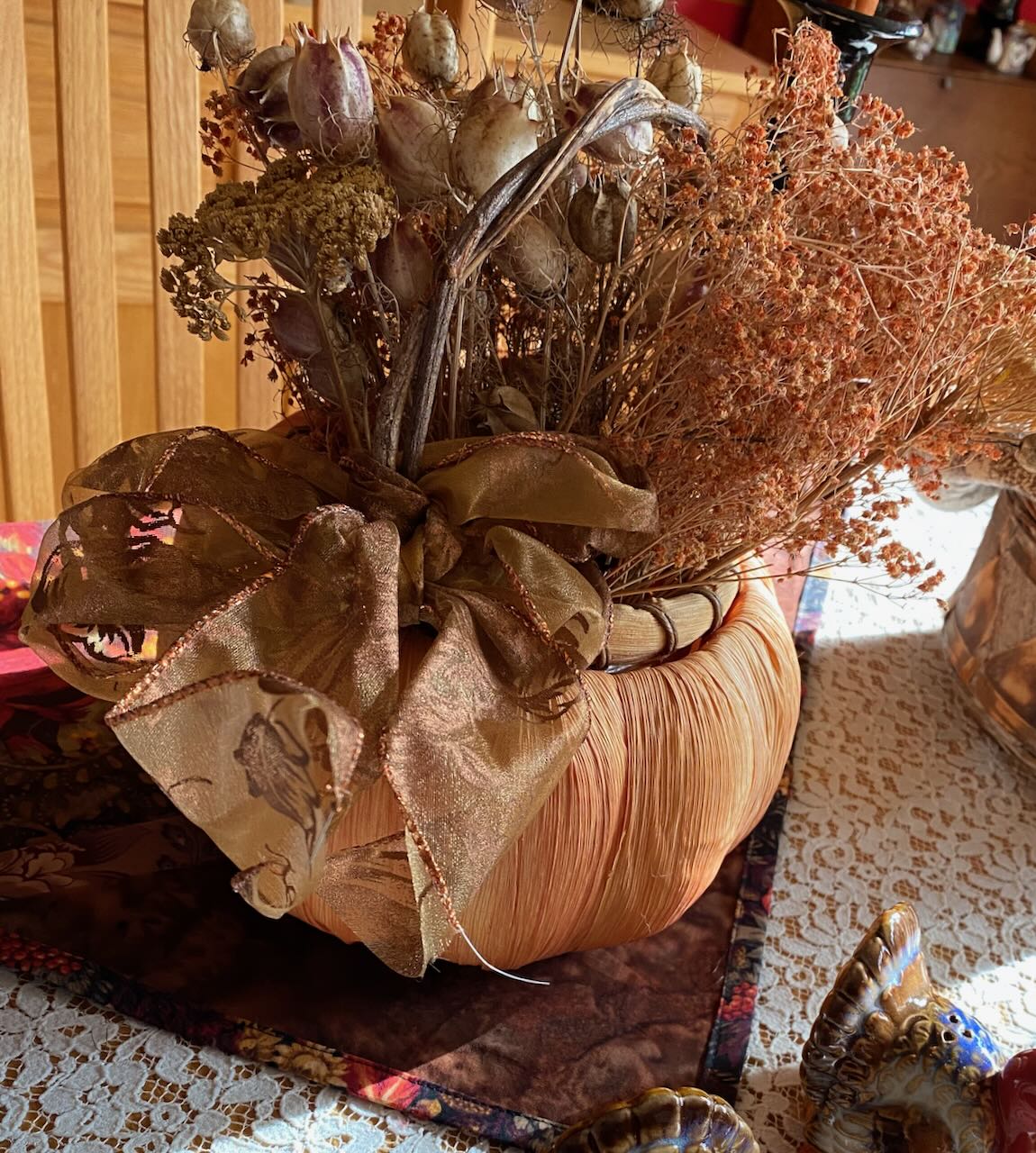 Thanksgiving is a good time for appreciating what you have. No more zinnias or cosmos in the garden, but the nigella and goldenrod, standing tall and dry outside in the cold, make a lovely arrangement.
 There’s leftover pumpkin pie for breakfast, while on the front porch the frost is definitely on the pumpkin.
 Snow outlines the trees, blows off, comes back, blows off. The sky’s not the same twice in ten minutes.
 On my windowsill another transition is happening: the poinsettias, so lush and green when I brought them in form the deck, are starting to turn red. The next season is coming along.
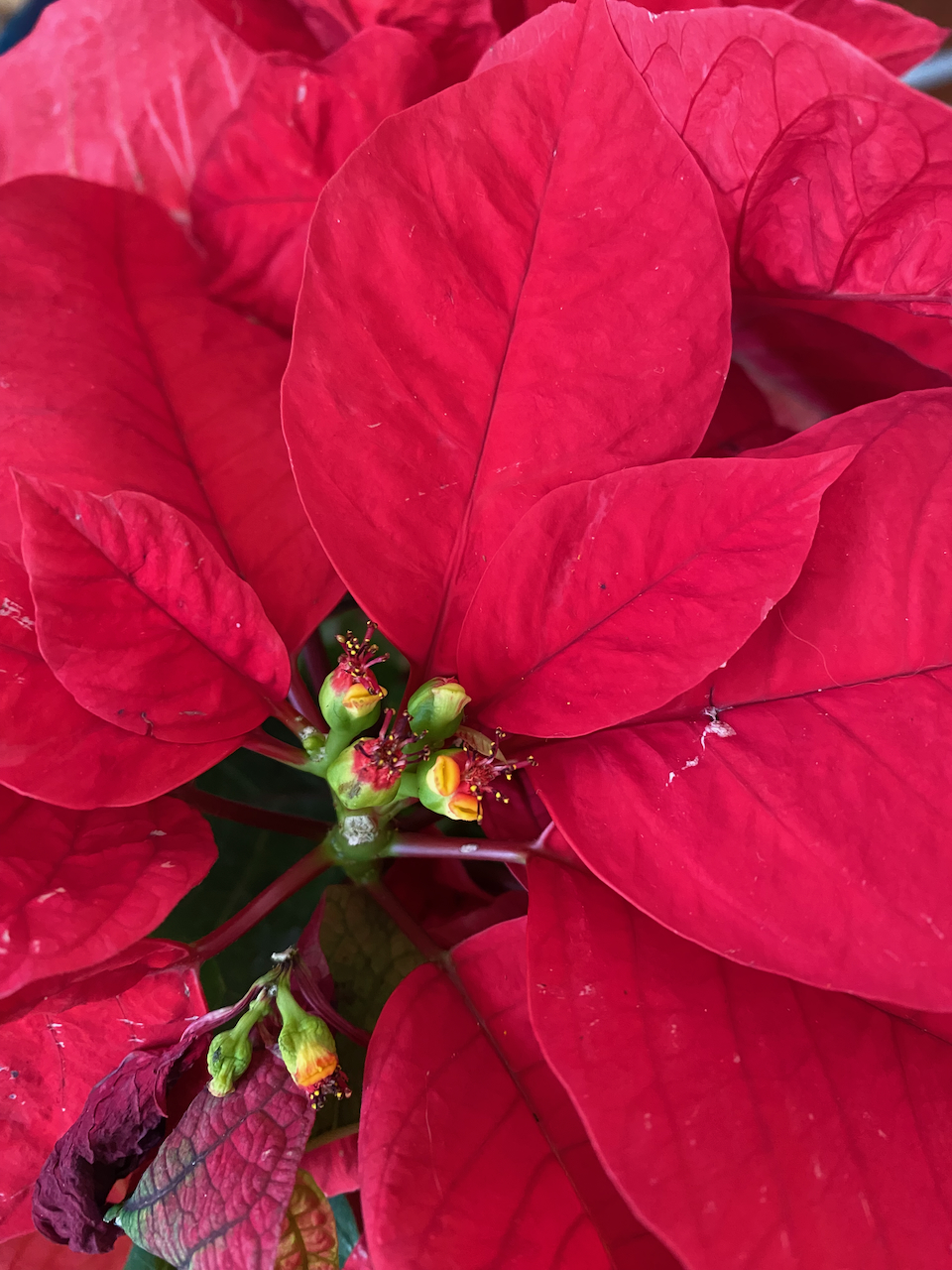 It’s the time of year for poinsettias. I knew better than to put them out on my porch in the Michigan winter, but I hadn’t considered how to get them home from the store. When the checker at Arbor Farms pulled out florists’ tall paper bags for them and stapled the tops shut, I understood. Poinsettias are native to Mexico and Guatemala.
 The Aztecs called them cuetlaxochitl, meaning “brilliant flower,” and the Maya called them k’alul wits, or “ember flower.” They acquired their English name, poinsettia, when Joel Robert Poinsett, the first U.S. ambassador to Mexico, brought them back with him in the early 1800’s. As a kid it never occurred to me that the plants were named for a person. I thought they were “pointsettas” because their leaves were pointy.
 I looked up Poinsett’s biography, wondering what kind of character this beautiful plant got named for, and found he was quite a complex fellow. He had inherited an estate in South Carolina where people were enslaved, but became a leader of the Unionist Party, and opposed secession. He meddled in the affairs of Central and South American countries, annoying them with good intentions that were ill-conceived. As Martin Van Buren’s Secretary of War he took a scientific interest in mapping surveys of U.S. territories, but oversaw the Trail of Tears. And he was an enthusiastic world traveler and amateur botanist, which leads us back to why he brought this gorgeous plant home with him.
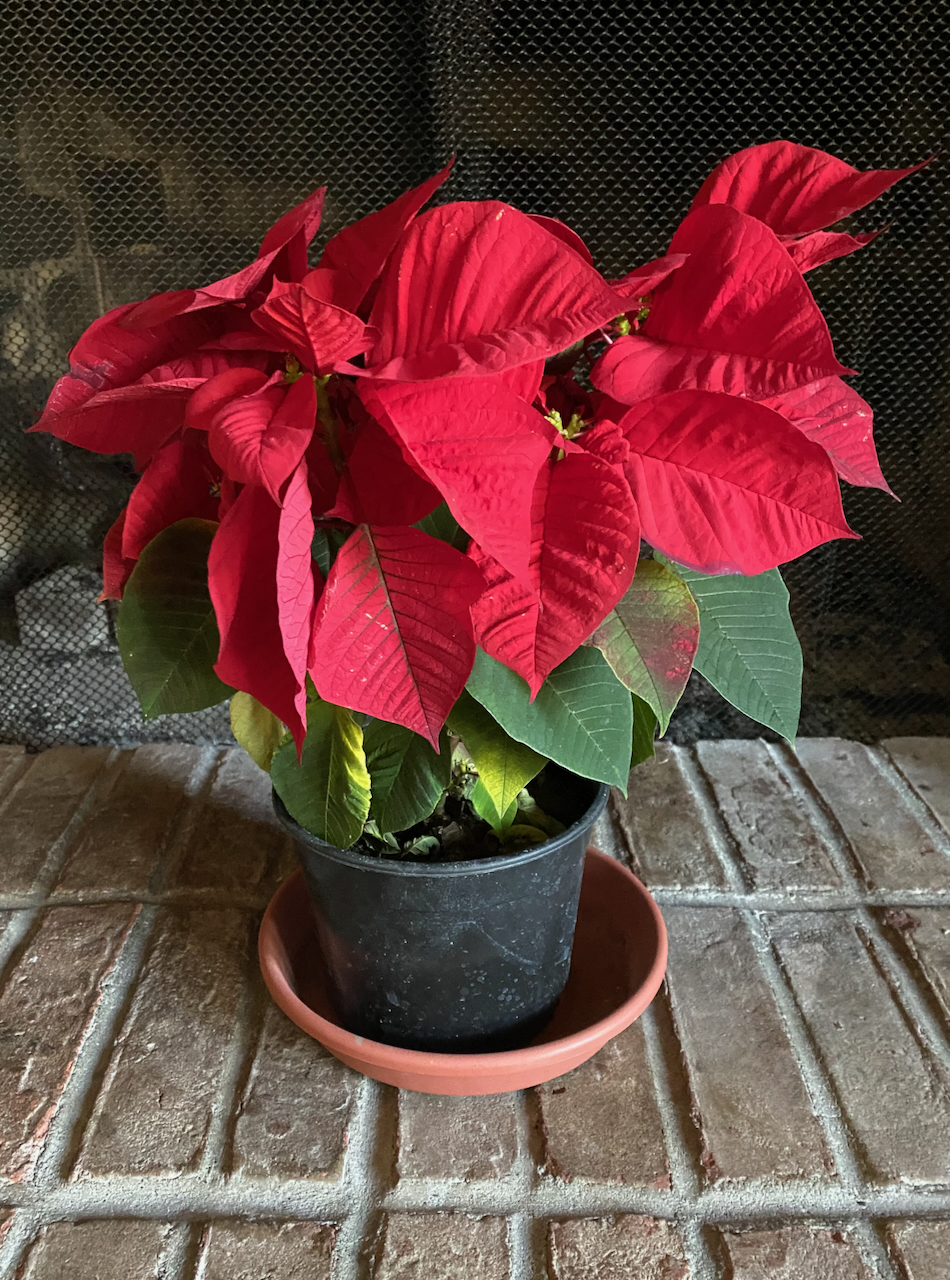 Poinsettias are a Christmas plant, so since Christmas is all about the possibility of redemption from sin, maybe it’s not so bad to name them for someone who generally meant well, according to the standards of the time and place in which he lived, but did badly by the standards of ours. Which of the things we commonly accept today will be considered heinous in the future?
 Robin Richstone