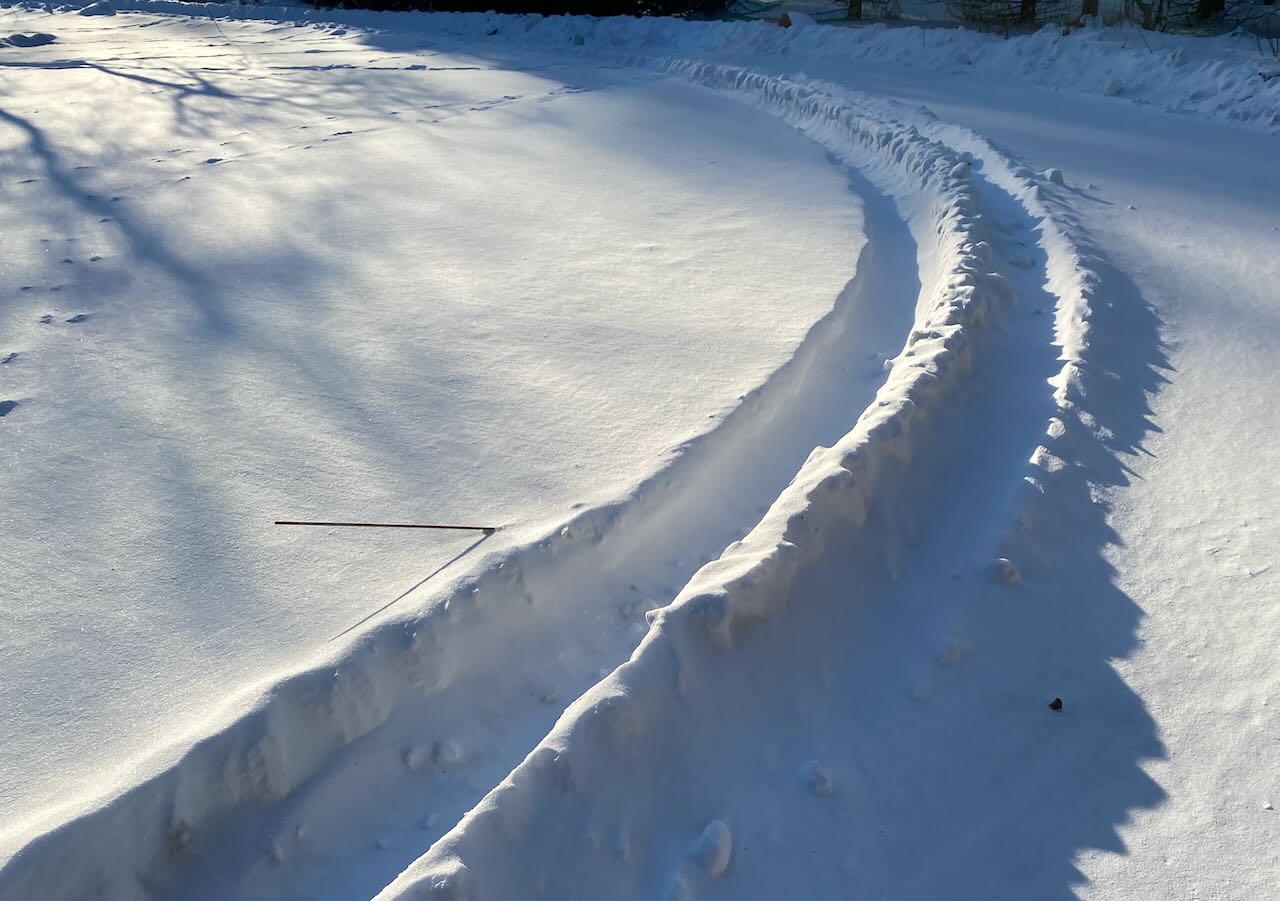
I put on my insulated snow pants, Doug’s thick, heavy alpaca sweater that he found too warm to wear, wool socks, snow boots, down-filled gloves, and my great big hooded down coat, and went out to take pictures of this beautiful, if hyperactive, winter. The sky was bright, the snow was brilliant, and the shadows were deep. Even the tracks of Christen’s truck, where she plowed our driveway, made a dramatic statement. The world was black, white, and blue.
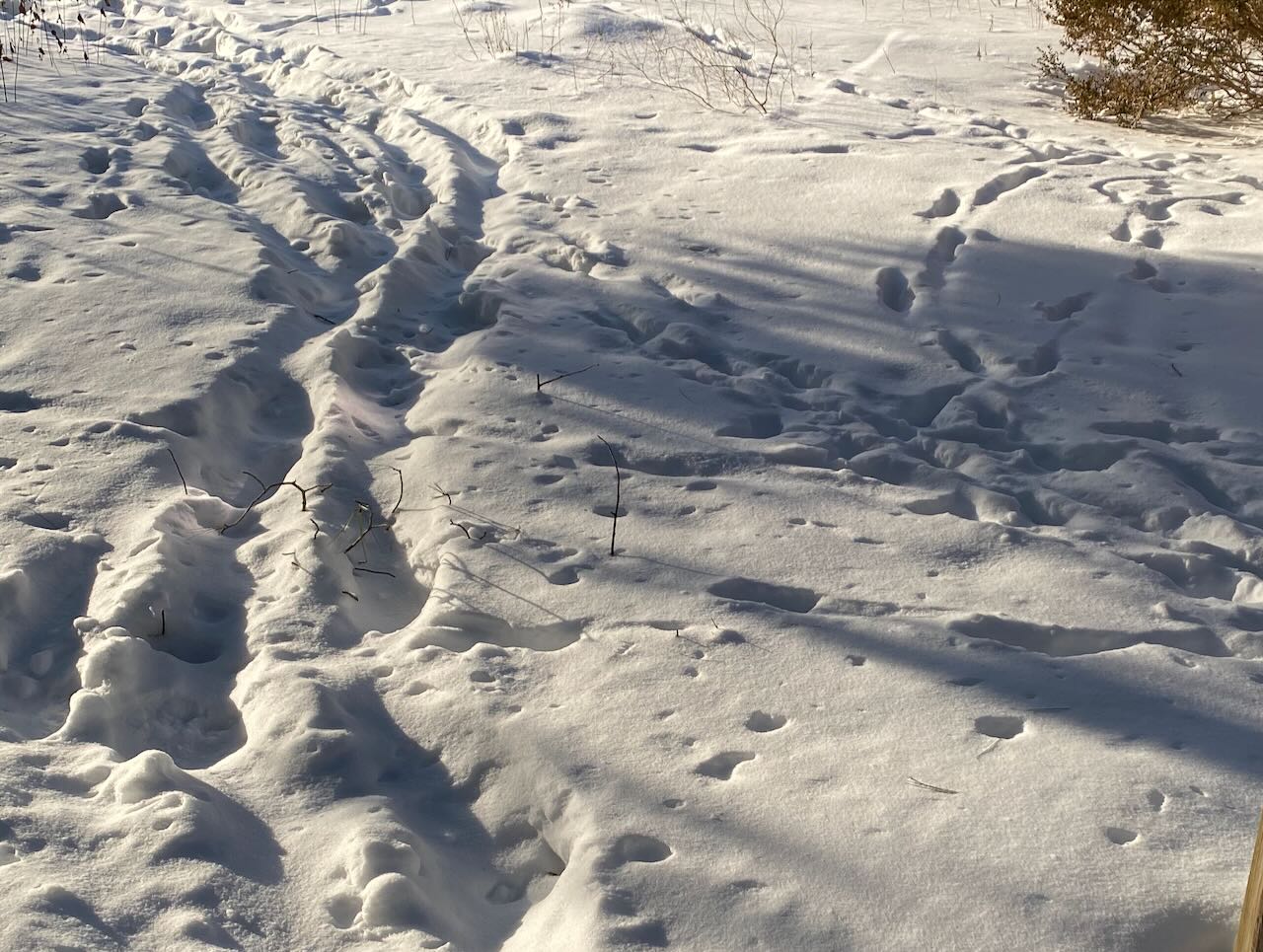
The snow became a record of everything happening in the yard. I walked to the mailbox and back to put a letter out, leaving a swoopy swath, a frozen wake. When I went out again to bring in arriving mail I saw my footprint trail and got inspired – or maybe goofy. The cursive loop on the upper right is my path back.
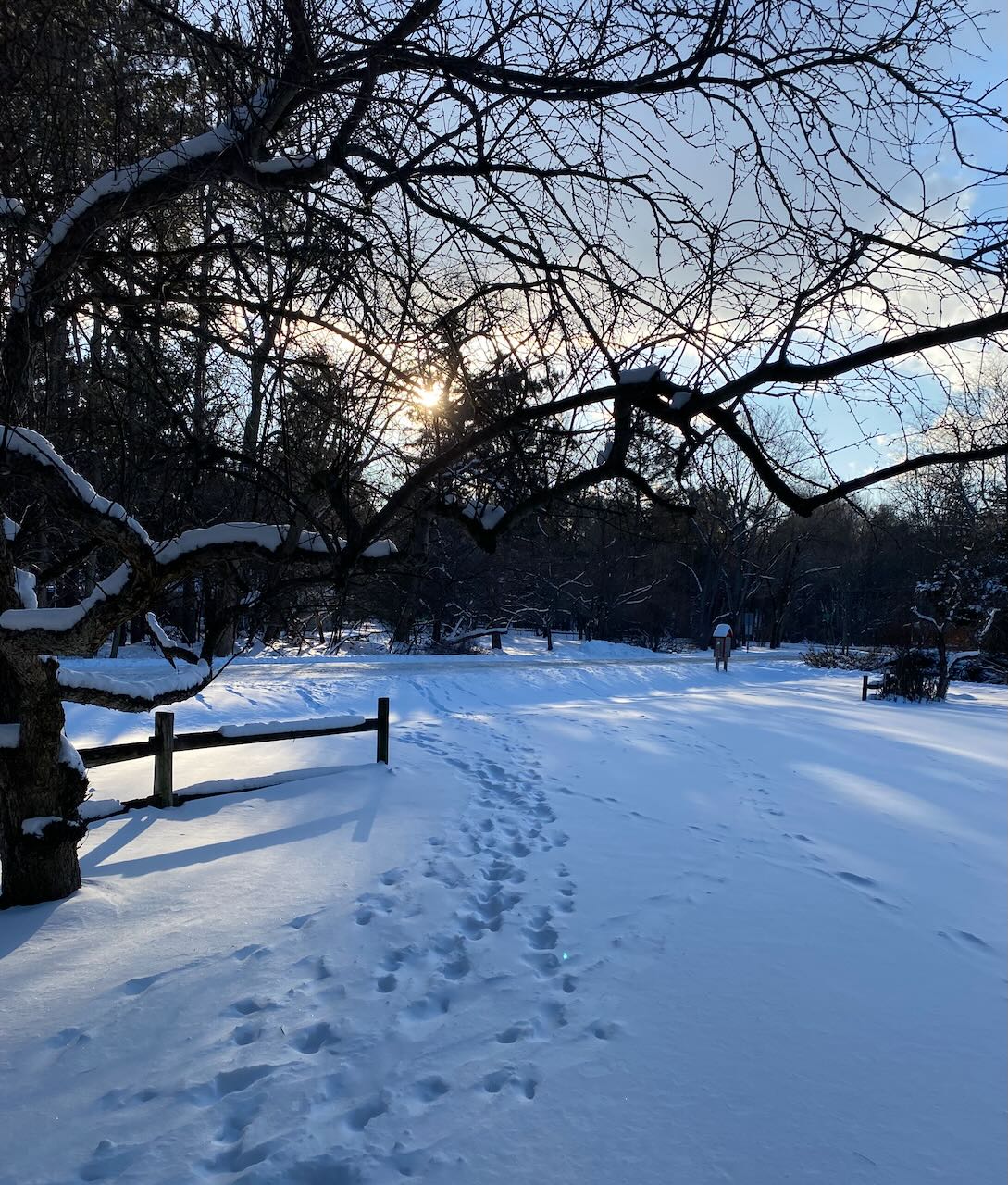
The deer made more sensible trails, skirting the crabapple tree where, alas, there was no more fallen fruit, on their way from the river to the woods. Some clouds passing through moved the shadows around. My gloves were supposed to work on touchscreens, but my phone failed to recognize them. I pulled one oversize sweater sleeve out from my coat cuff over my hand, slipped off the glove, and snapped the shutter. Except a phone doesn’t have the kind of shutter that snaps. I think I activated it to scan.
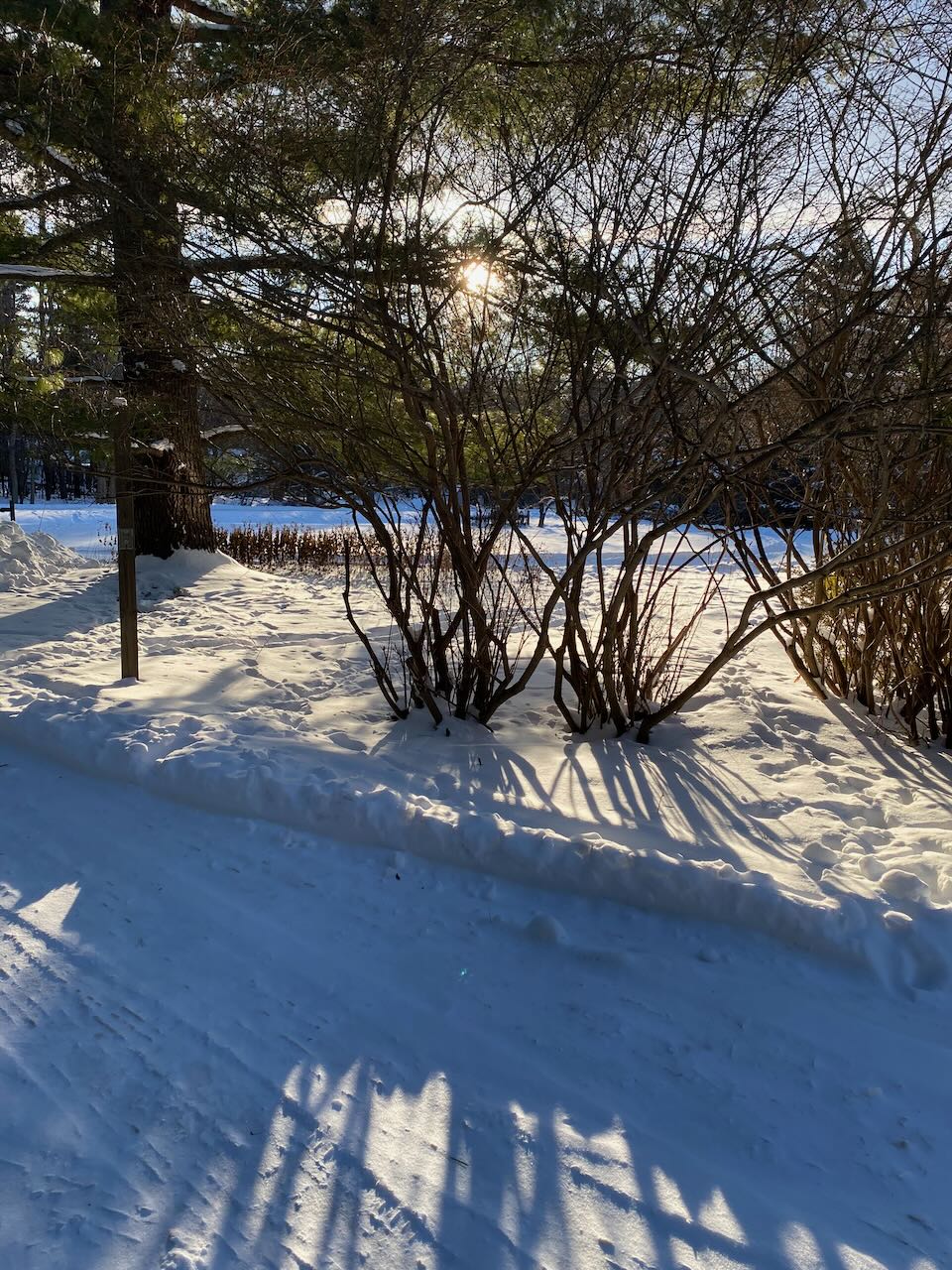
Winter shadows bring out so much structure we otherwise don’t see. Documenting it reminded me of another function of shadows. Tomorrow will be Groundhog’s Day! The premise is ridiculous in Michigan, where starting at February second we are absolutely going to have six more weeks of winter, shadows or not. Furthermore, our local groundhog comes out of her burrow at random times during the winter, for her own woodchucky reasons. She makes amusing, long wallows as she shuffles through the snow between the woods and the deck. But a bit of the ridiculous to lighten up life in its coldest moments is not amiss.
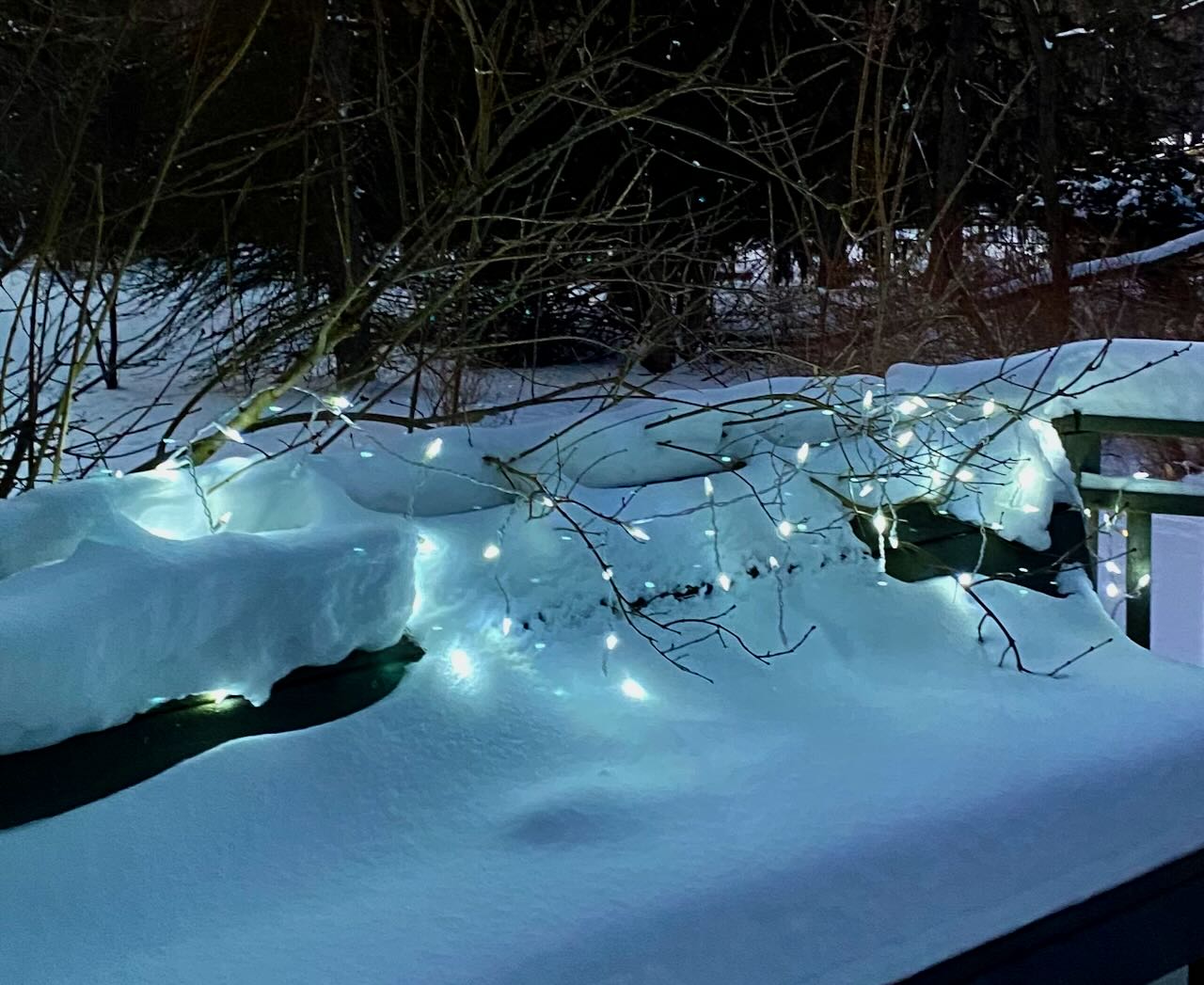
Then I came inside, removed my insulating layers, fixed a cup of tea, and scrolled through my photos. They were full of animal tracks, but the only critter out there was me, protected by fur, wool, and feathers, whose providers perhaps found shelter under our decks, sheds, and woodpiles. A mutual aid society. The sun slid off to the west and the string of lights on the deck came on, both muffled and emphasized by the softly folded snow. The lights burn for six hours and then the timer turns them off, leaving the sky undisturbed and whoever’s sleeping under the deck in peace. I feel a lot more charitable toward the deer and woodchucks, and even squirrels, in winter. It’s hard times for them, and after all I have no flowers or tomatoes to worry about. In hard times everyone needs all the friends they can get.
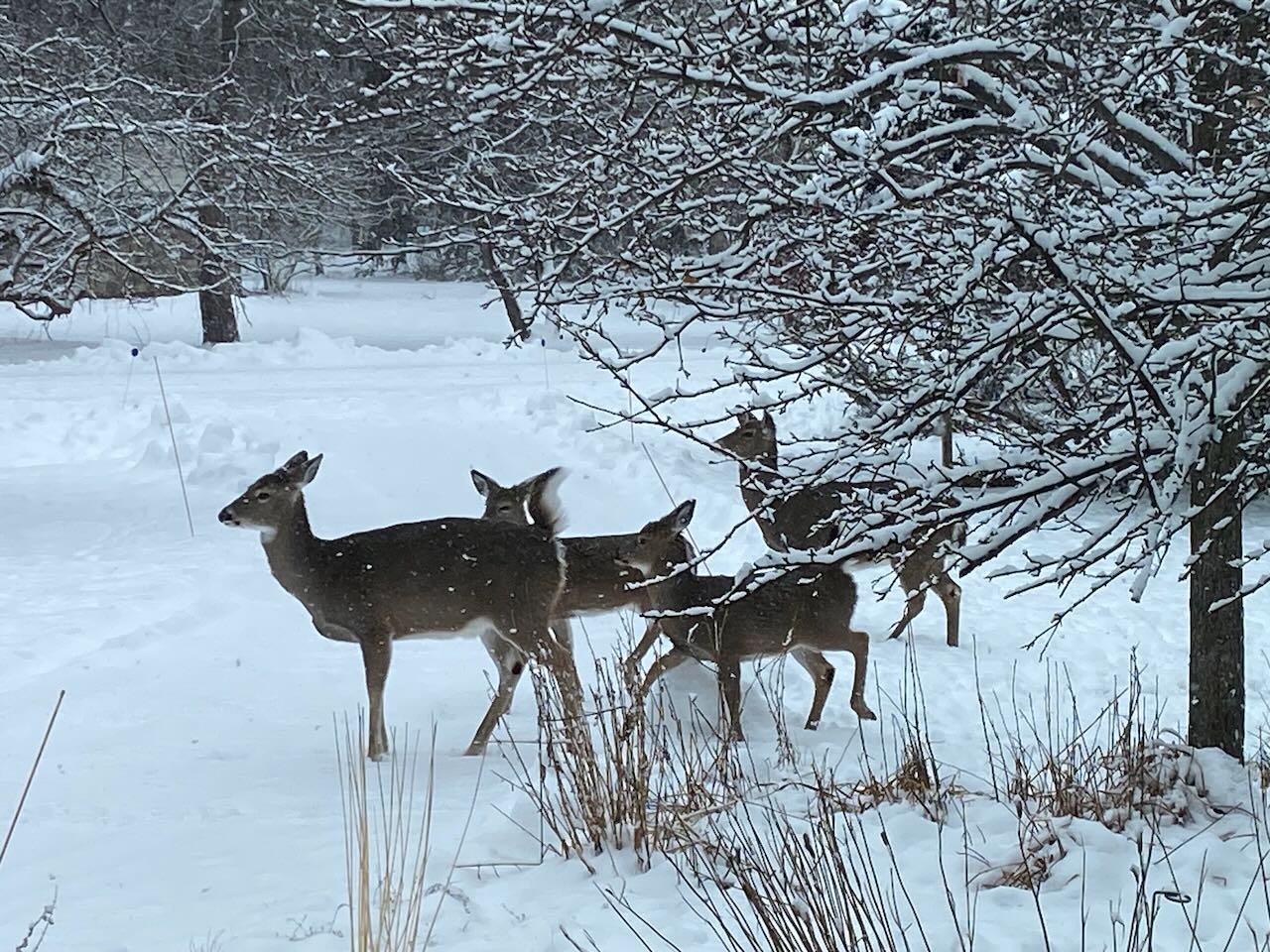

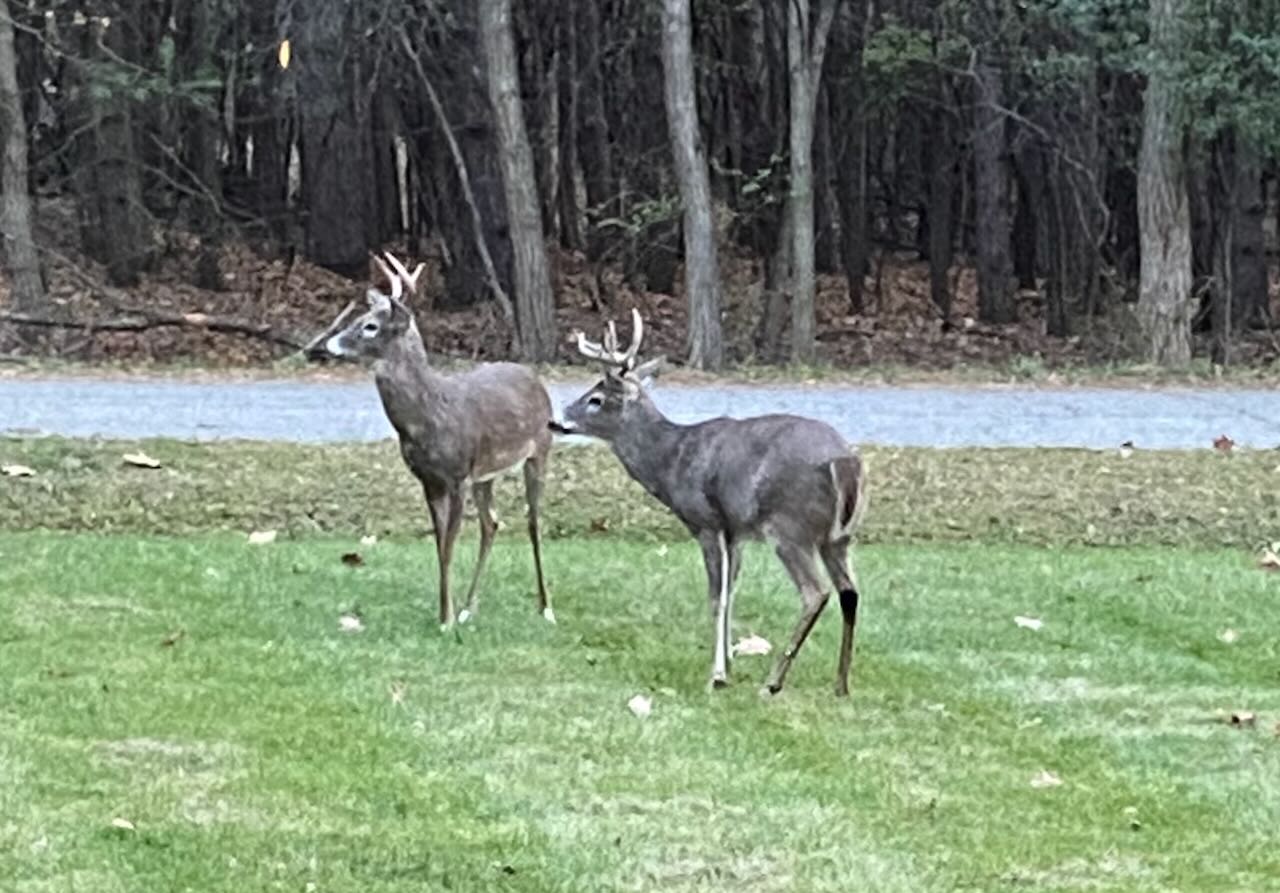


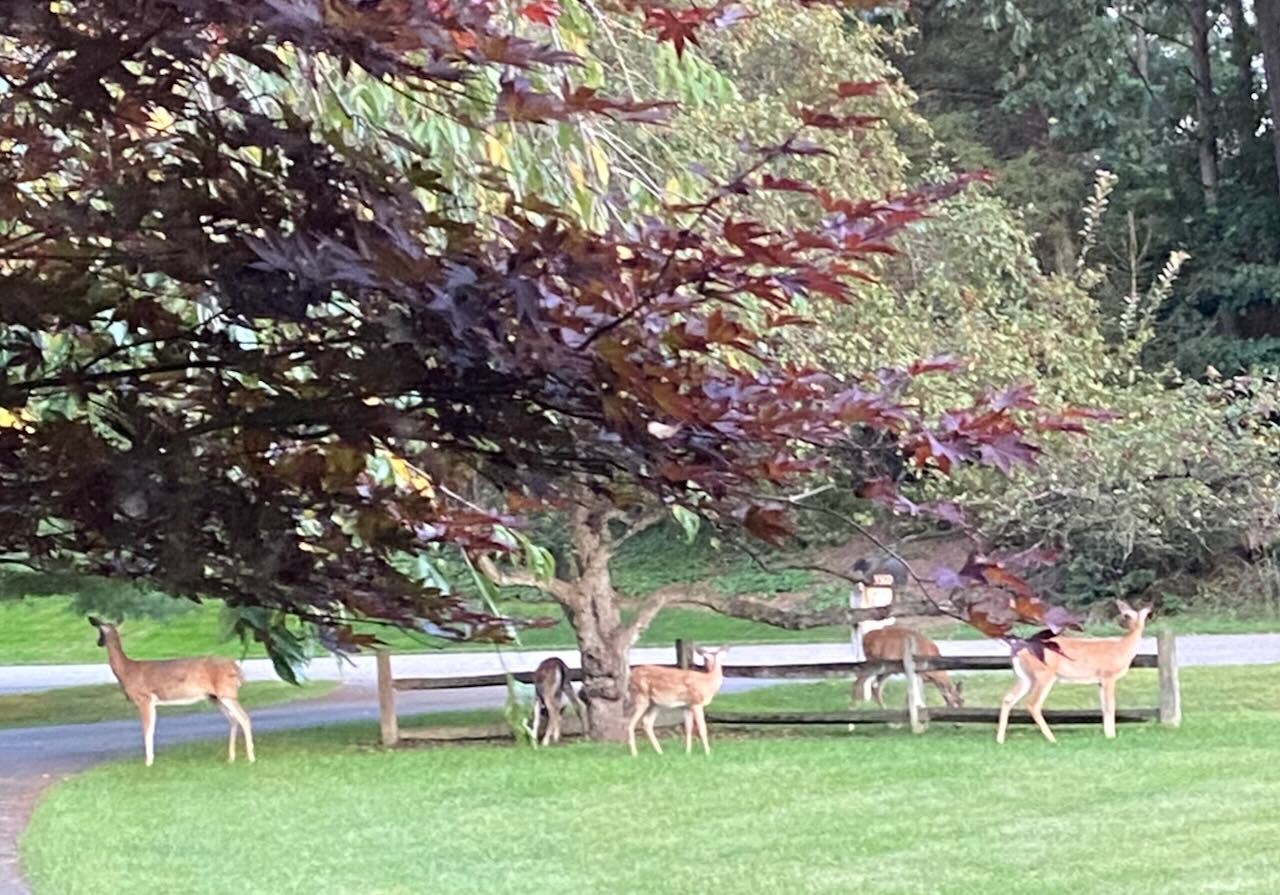


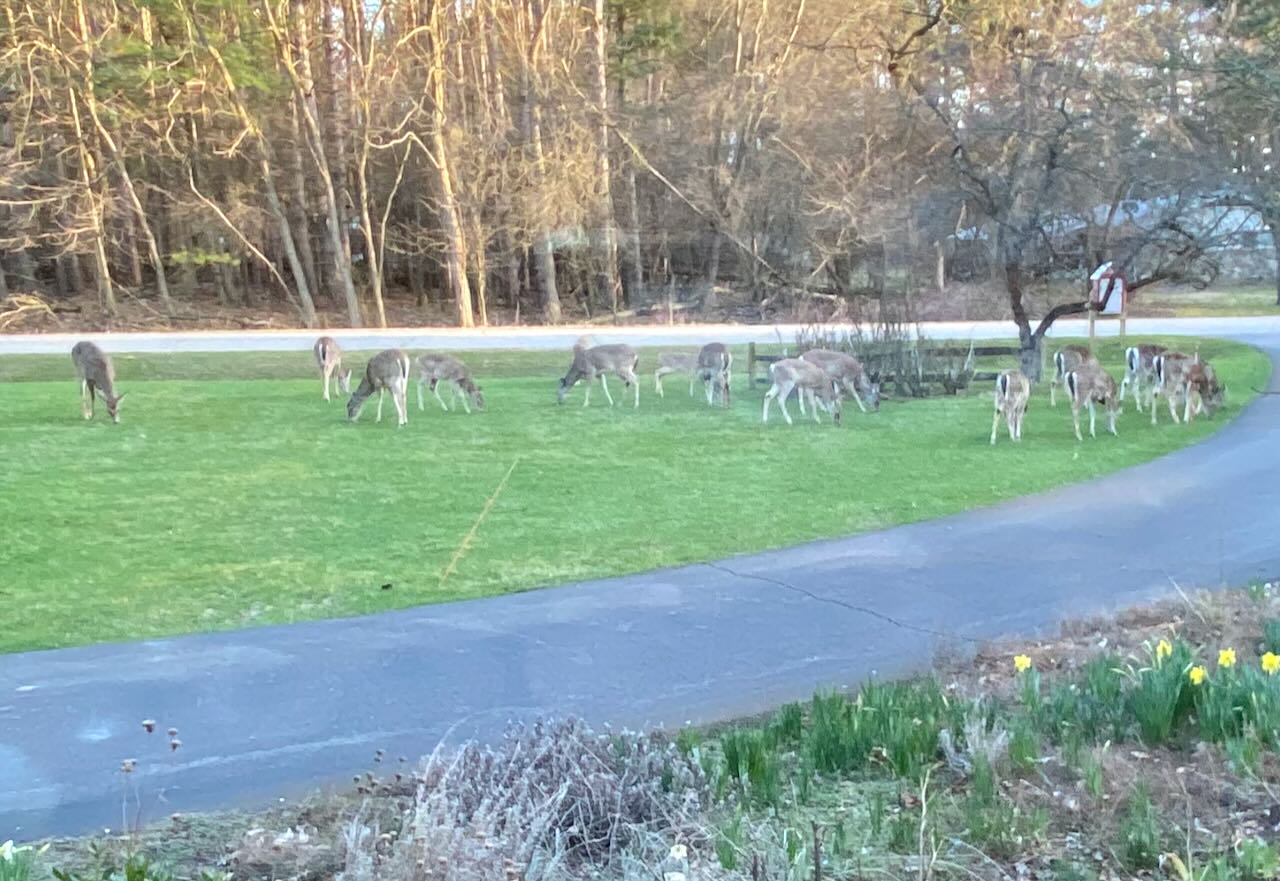


 I have a good lawn for deer and rabbits, full – if only accidentally – of diverse edible weeds. Looking out over it, especially when Charlie has just mowed, the lawn looks smooth and manicured. Appearances frequently deceive. For instance, this photo might look like a nuclear deer family, two fawns, a buck, and a doe. But four other the deer had already gone ahead into the woods before I got my camera out. The buck would have been bringing up the rear as usual, except that the fawns were lollygagging behind. But as soon as I made a tiny sound of satisfaction at getting this photo, their heads snapped up and the fawns leaped after the does, while Mr. Buck stood guard in case I made any moves. I didn’t. I was trying to see whether he was an eight point or a ten point, but he was gone before I could be sure.
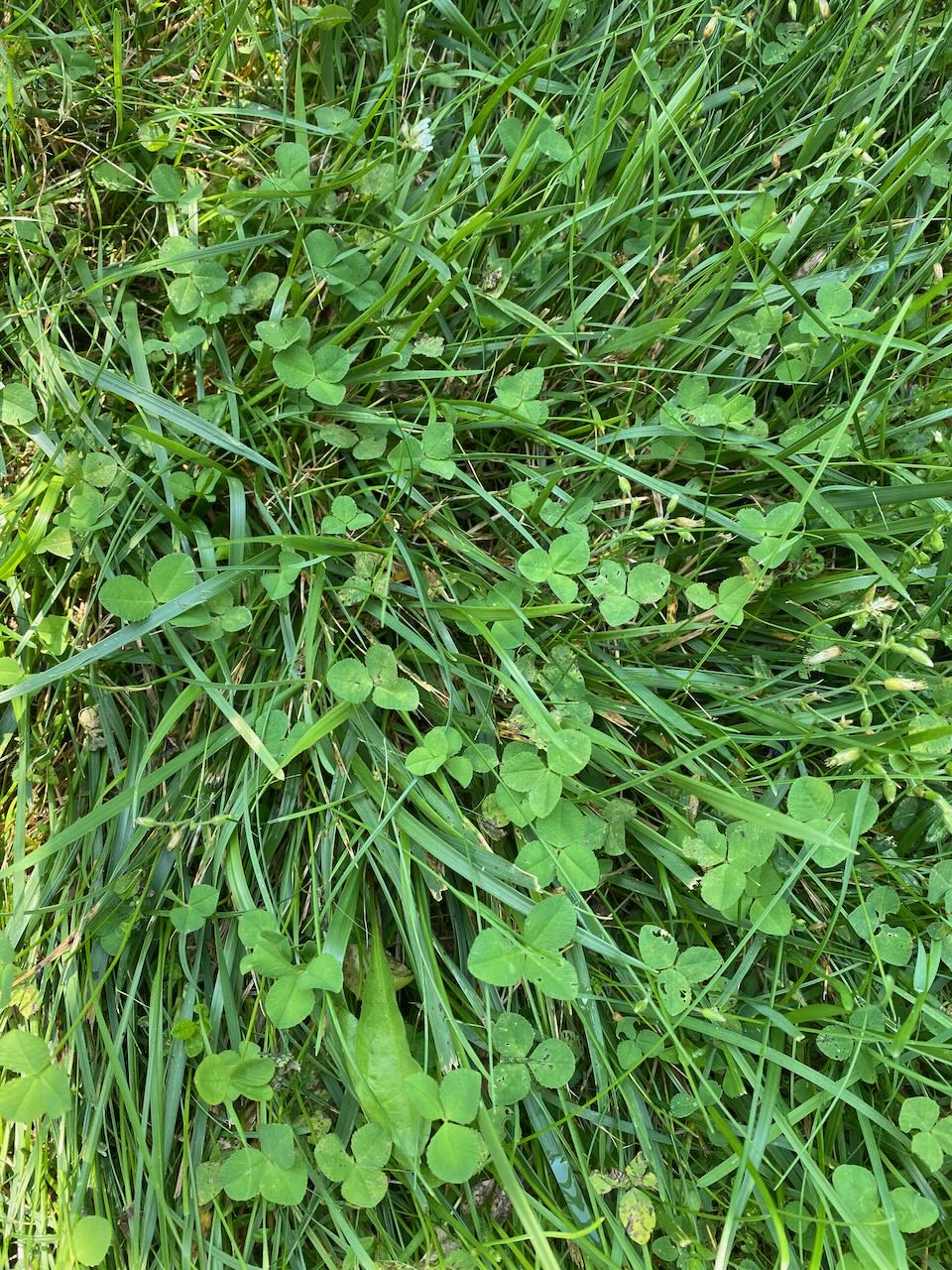 My lawn has a lot of white clover in it, which some consider a weed but I do not. In my suburban childhood it was common for lawns to be seeded with half grass and half clover. Clover is sturdy, holding up well to children and pets; clover fixes nitrogen so you don’t need fertilizer; and clover flowers attract bees, which will pollinate your garden plants and fruit trees. Charlie was late mowing this week, because we had two days of Hurricane Beryl’s leftovers drenching Michigan with rain. Amazing that a hurricane came all the way from Africa to crash into Texas and charge up the Mississippi and Ohio River valleys to the normally hurricane-free Michigan. Many were the frantic sump pumps in Ann Arbor, but the sandy soil of my yard was up to the task. When it was over, everything was safe and green, green, green.
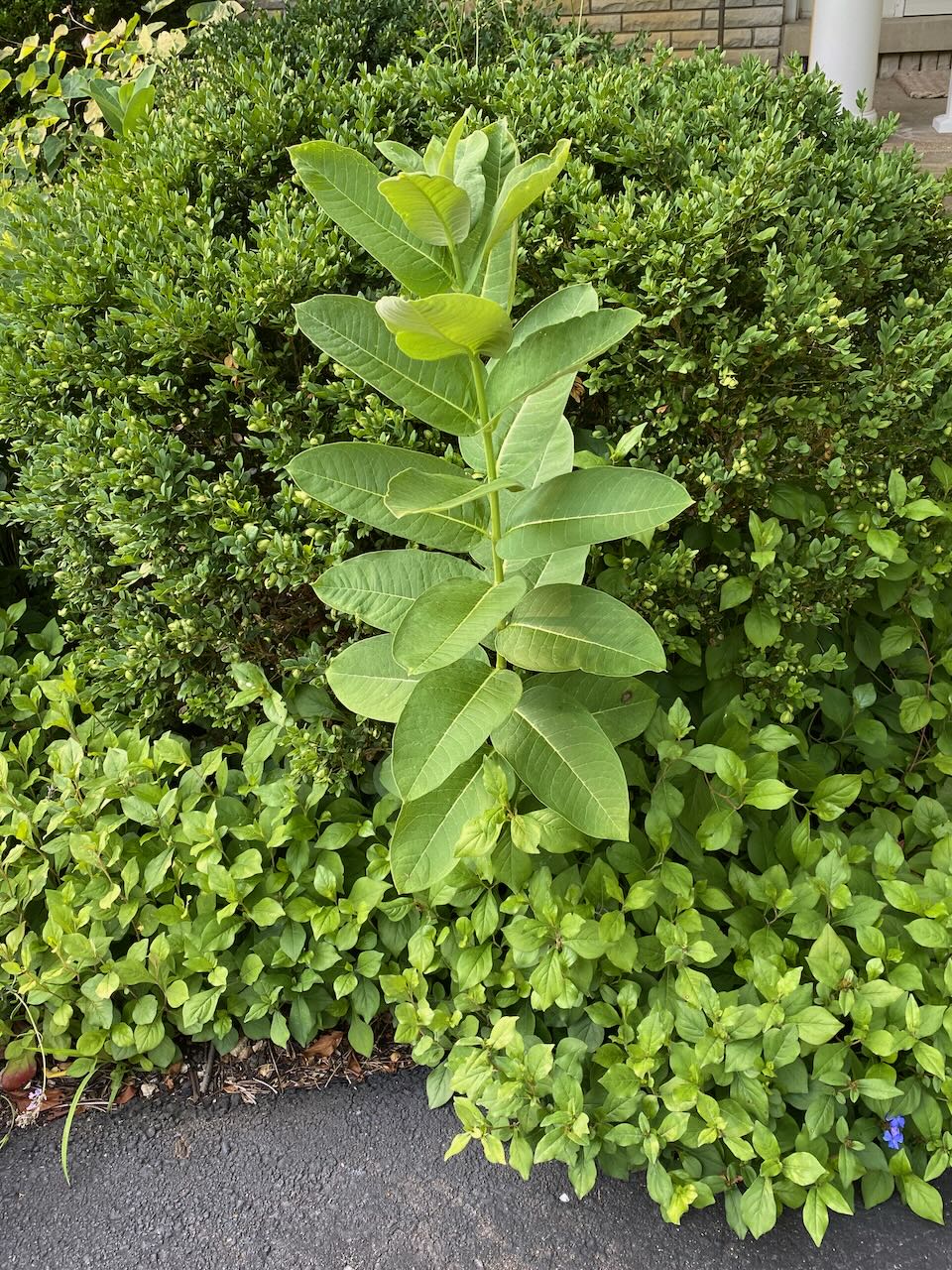 Besides the clover, there’s plantain in the lawn and purslane at the margins. Plantain, native to Europe, was called “white man’s footprint” by Native Americans: where the white man set his foot was where you found plantain. It’s not only edible to deer, it’s edible to us. Purslane is, too. My attempts to actually eat these plants have never worked out. Purslane leaves are small and have to be gathered in large quantities, and I found plantain, which grows flat against the ground, hard to clean. I magnanimously leave them for the deer, in spite of which they persist in eating things they really, really shouldn’t. For instance, milkweed. Milkweed is poisonous, but if you are a clueless fawn, well, just look at those big, juicy leaves. I assume it’s the fawns because I assume they don’t grow up if they eat the milkweed.
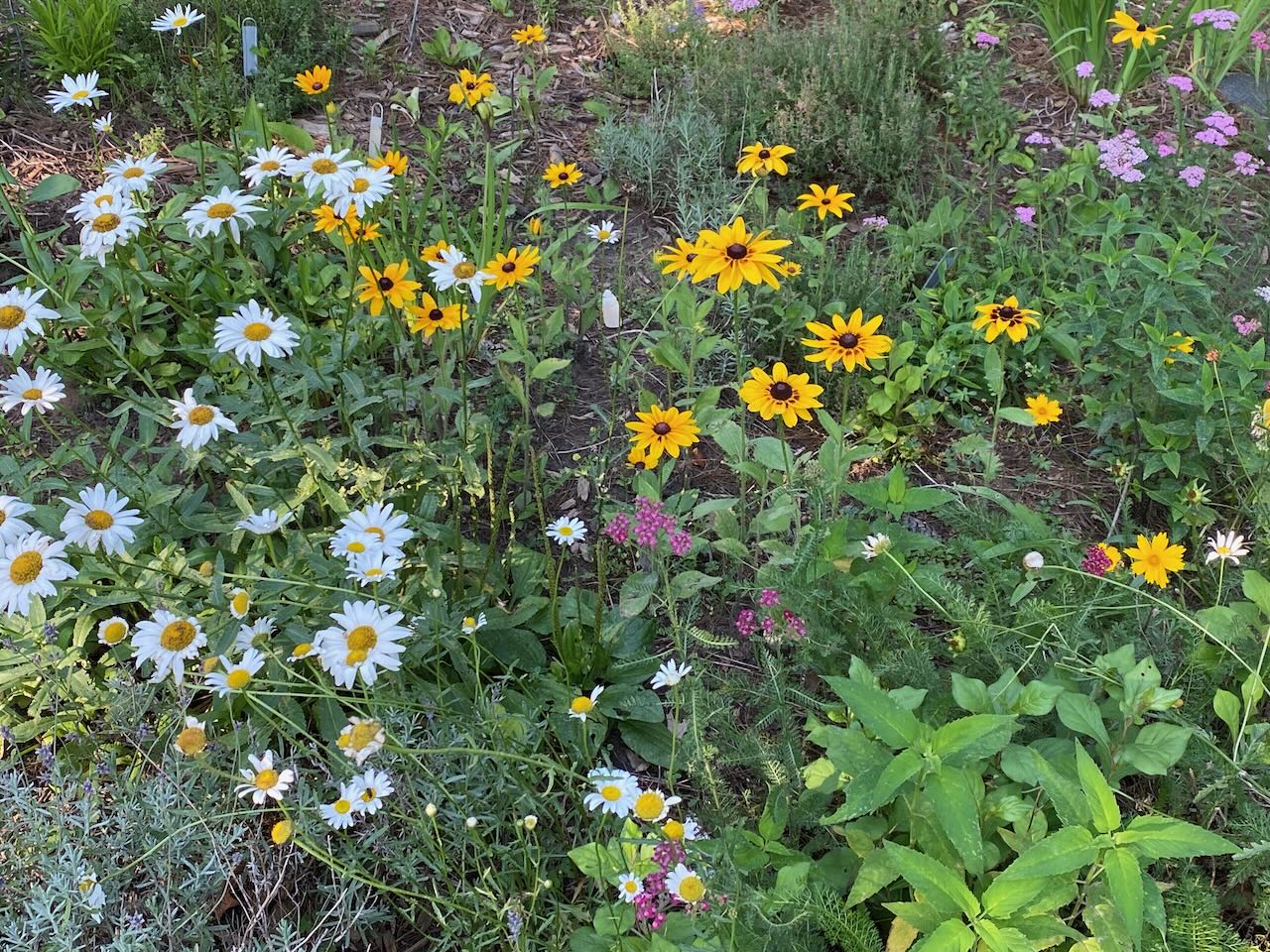 Deer sometimes also eat my rudbeckia, yarrow, and shasta daisies. Garden catalogs will tell you they shun these plants, but garden catalogs have never met my deer. Every evening or two, I walk through the yard with my trusty spray bottles of animal repellants, switching off now and then so the critters don’t get used to one of them. I almost dread to say so, for fear it will jinx their effectiveness.
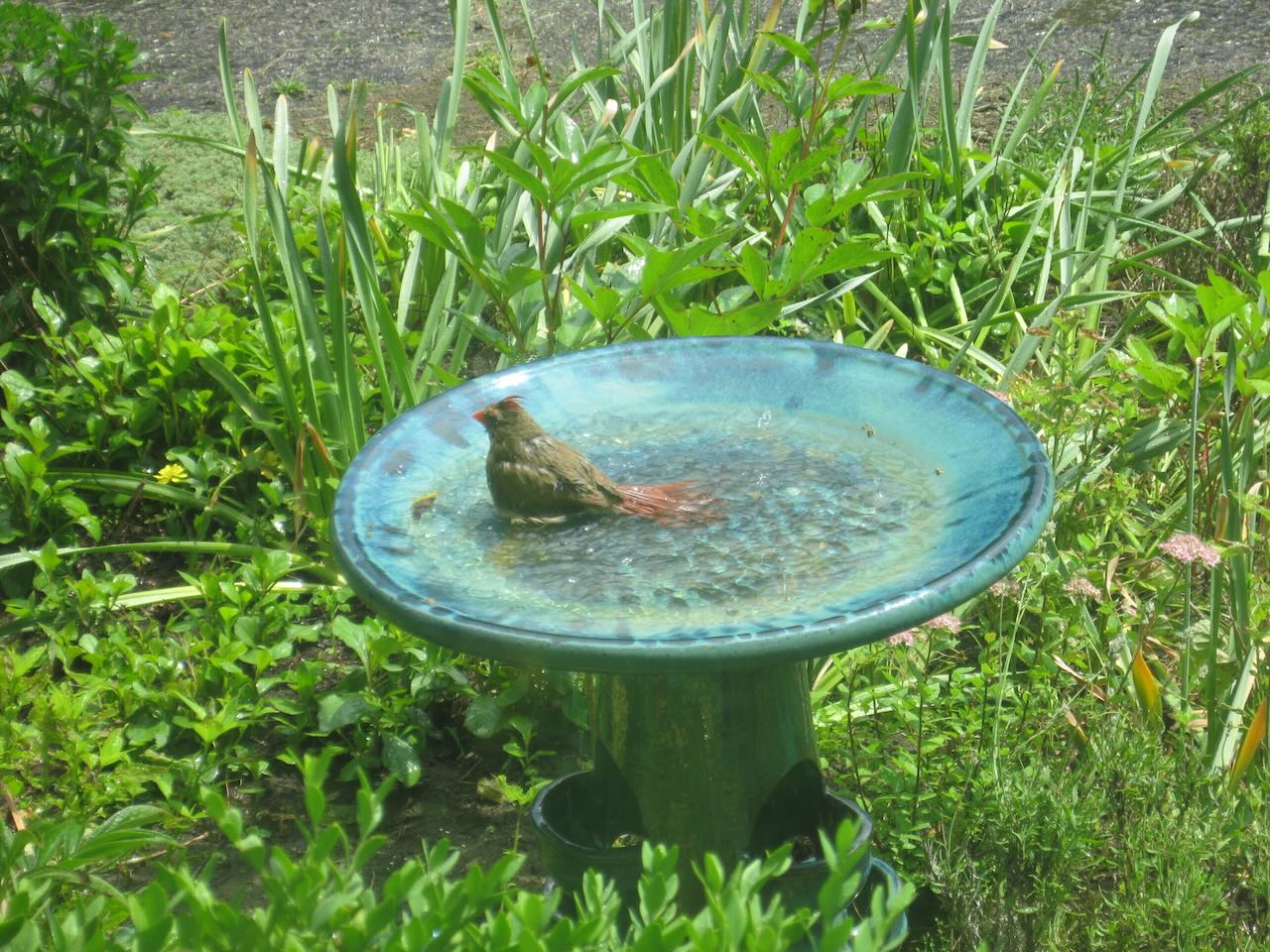 The amount of rain in that storm varied a lot from one part of town to the next. I don’t currently have a working rain gauge, but friends and neighbors have measured anywhere from five to seven inches over two days. One curious thing I’ve noticed is more birds using the birdbath after a rainstorm. This seems totally counter-intuitive to me. Didn’t they shower in the rain? Is it easier to bathe when they’re already wet? Or maybe newly-fallen rain is more attractive to them than water that’s been sitting around for a few days. Not being a bird, I will never know.
 Robin Richstone