 I was puttering at my garden bench when I noticed a lot of bees whizzing past me. A little inspection revealed that they were coming from – and going to – a hole in the ground, just inches from where I stood. I set a large flower pot right up next to it, not to block them but to block me, from stepping into the nest. I’d seen a ground-bee colony once before, but had never looked up their lifestyles. This time I did: Mining Bees, genus andrena.
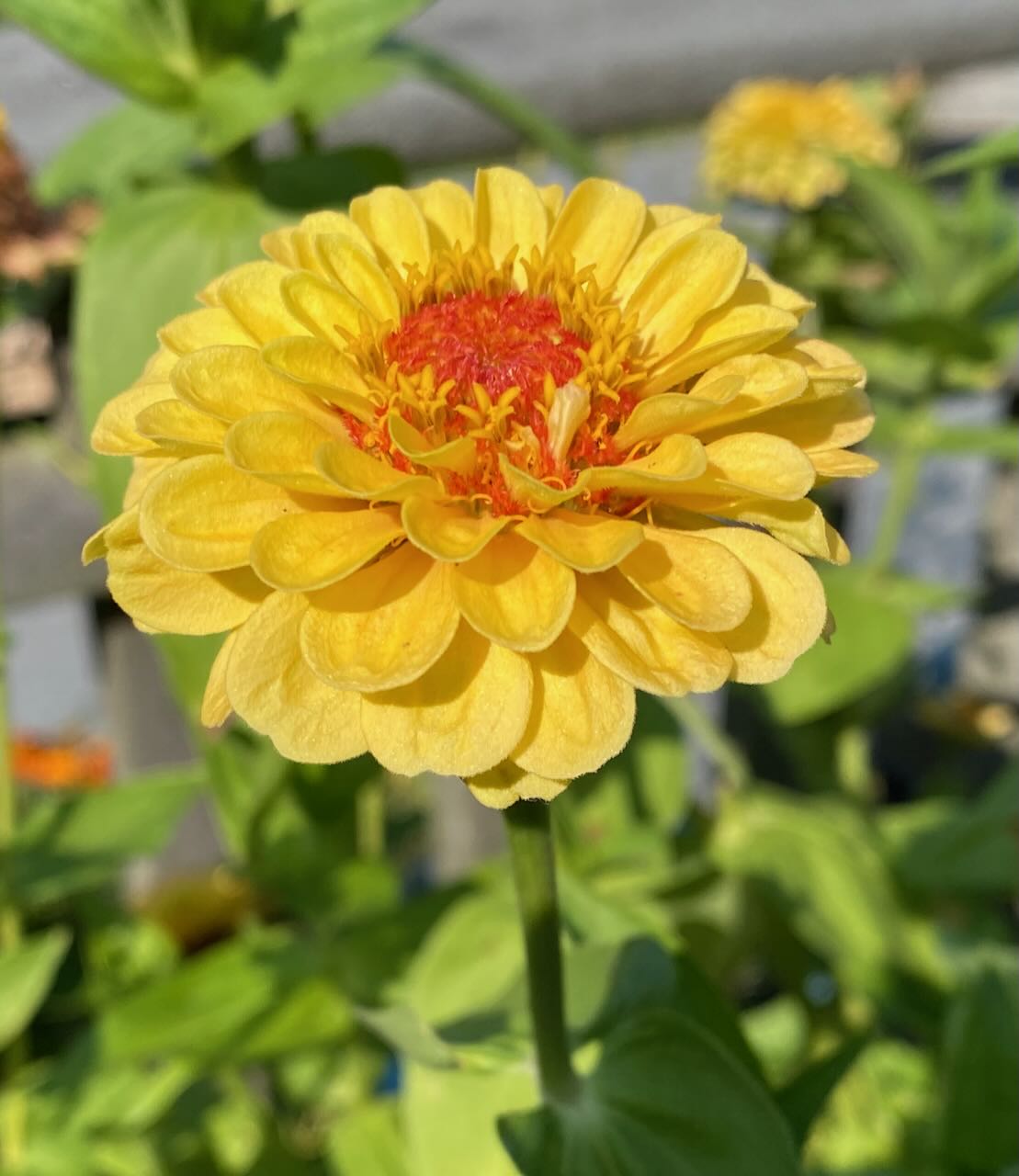 The local botanical garden says they’re important pollinators of the Michigan native black cherry tree, carrying 18 times more cherry pollen than other bees. I have several of these trees in my yard, including one that hangs over the deck and makes a total mess for a month while the cherries fall. The cherries are small with a tiny, thin layer of flesh around the pit, so you could boil them up for jelly but you can’t eat them unless you’re a chipmunk. I do like to watch how the chipmunks fight over the cherries though there are enough to feed a whole neighborhood of chipmunks, possibly for the whole winter. So human of them. It briefly occurred to me that if I got rid of the bees, maybe I’d be pestered with fewer cherries. But I find the industrious, focused little bees endearing, so that’s out. They’re also big on pollinating tomatoes – thank you, bees – but my tomato blossoms are definitely too few these days for this much bee traffic. What’s blooming now? I have lots of zinnias,
 many marigolds,
 some bee-shaped snapdragons. None of them mentioned in the article, and nope, no bees on these flowers.
 It was hard to follow the bees in flight. They soared way up high before they traveled on, and I lost them in the sun. But scanning the yard, I thought I could see where they came down again. It wasn’t listed on the Bee Menu, but for heaven’s sake, isn’t this where you’d go if you were a bee – an Autumn Clematis, just bursting with bloom? I didn’t manage to catch them in this photo, but they were there. Busy, like all the best bees.
 Robin Richstone