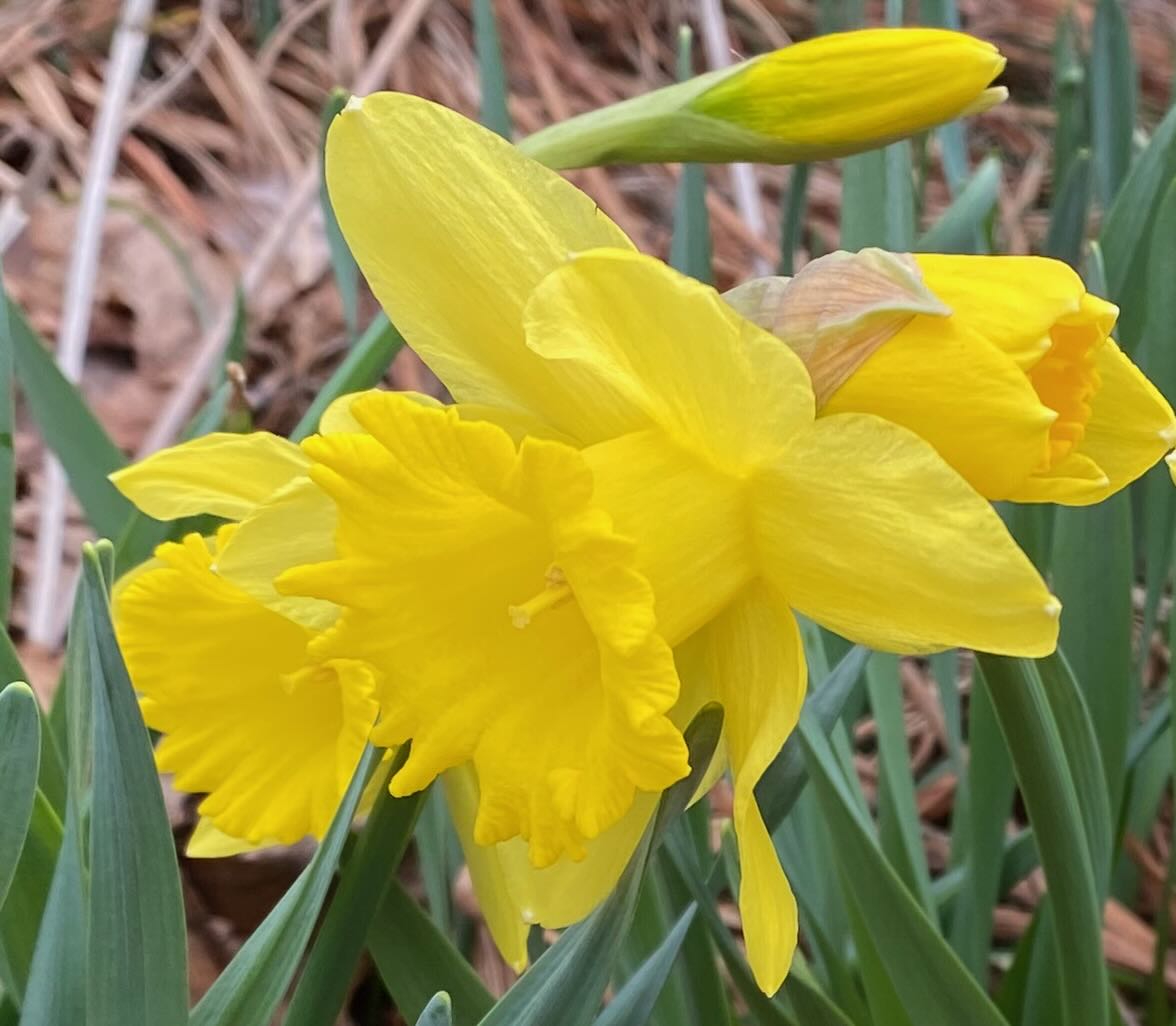
Now that we’re past groundhogs and the equinox, it’s really starting to look like spring. April veers from Fools’ Day to Arbor Day, sweeping Passover and Easter along in a current of National Poetry Month, rainshowers, and regrowth. If T.S. Eliot thought April was the cruelest month for pushing out lilacs before he was ready, what did he think of the daffodils? Look at them there, mocking misanthropes. Go daffodils, I say.
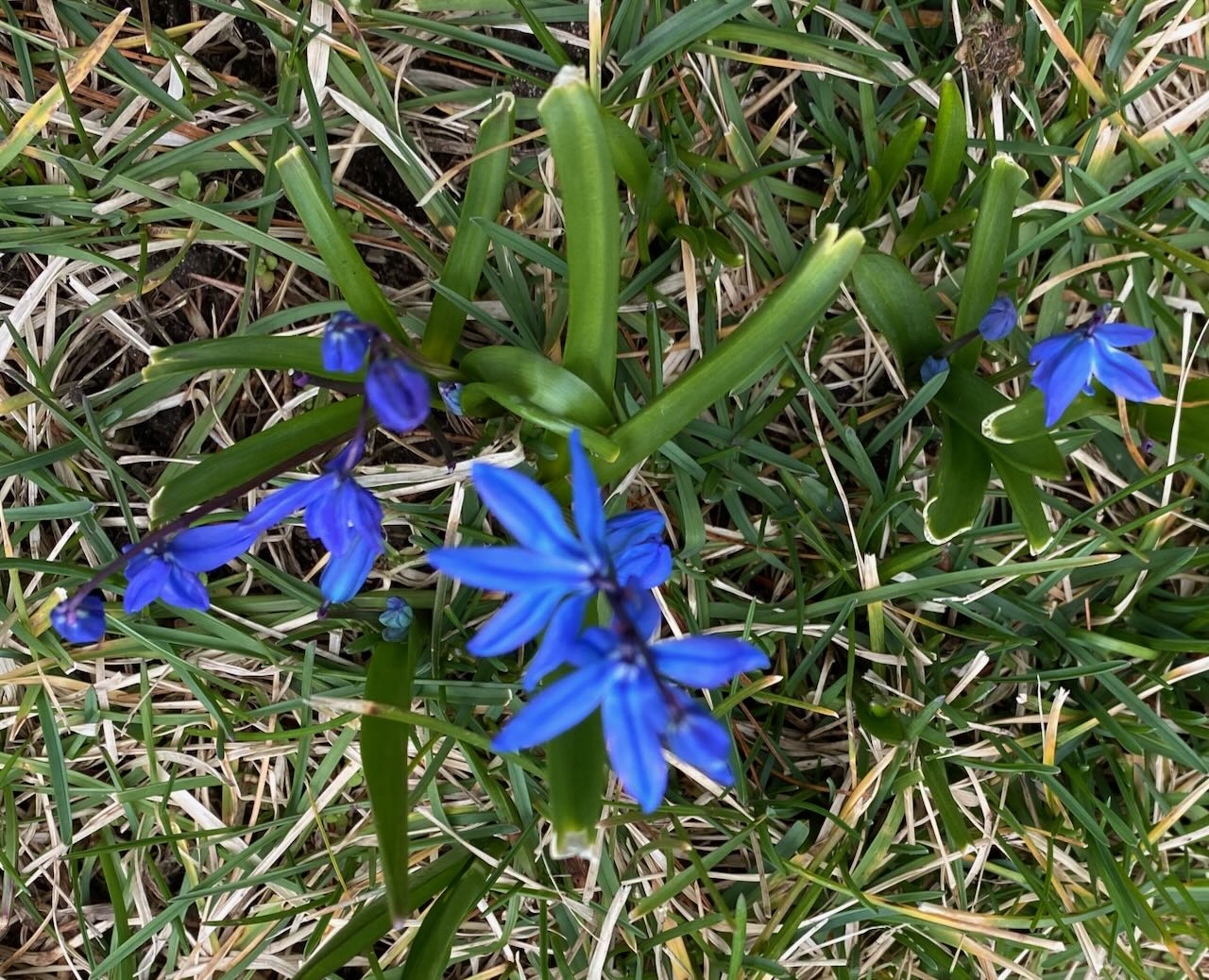
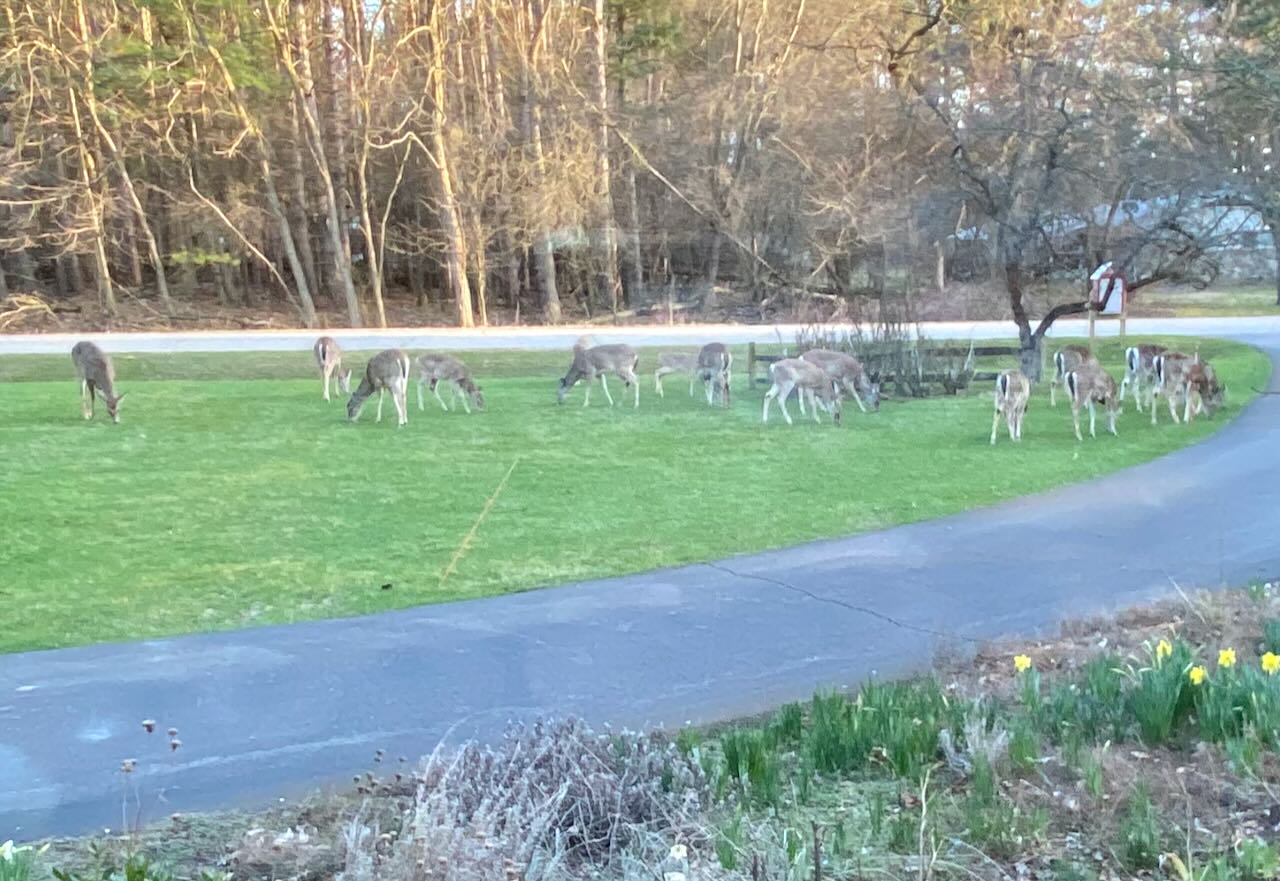
Last fall Doug helped me plant a lot of scilla in the lawn, perfect bulbs for the job because they bloom and fade before the grass needs mowing. Also, the deer and rabbits won’t eat the flowers. They will, however, nip off the emerging tips of the leaves. It’s a little hard to tell which perpetrator is responsible for this damage – rabbits have sharp front incisors and make clean cuts; deer bites are more ragged. There are both types of damage here, so the bunnies and the Bambis are sharing. How lovely that would be if they were eating weeds.
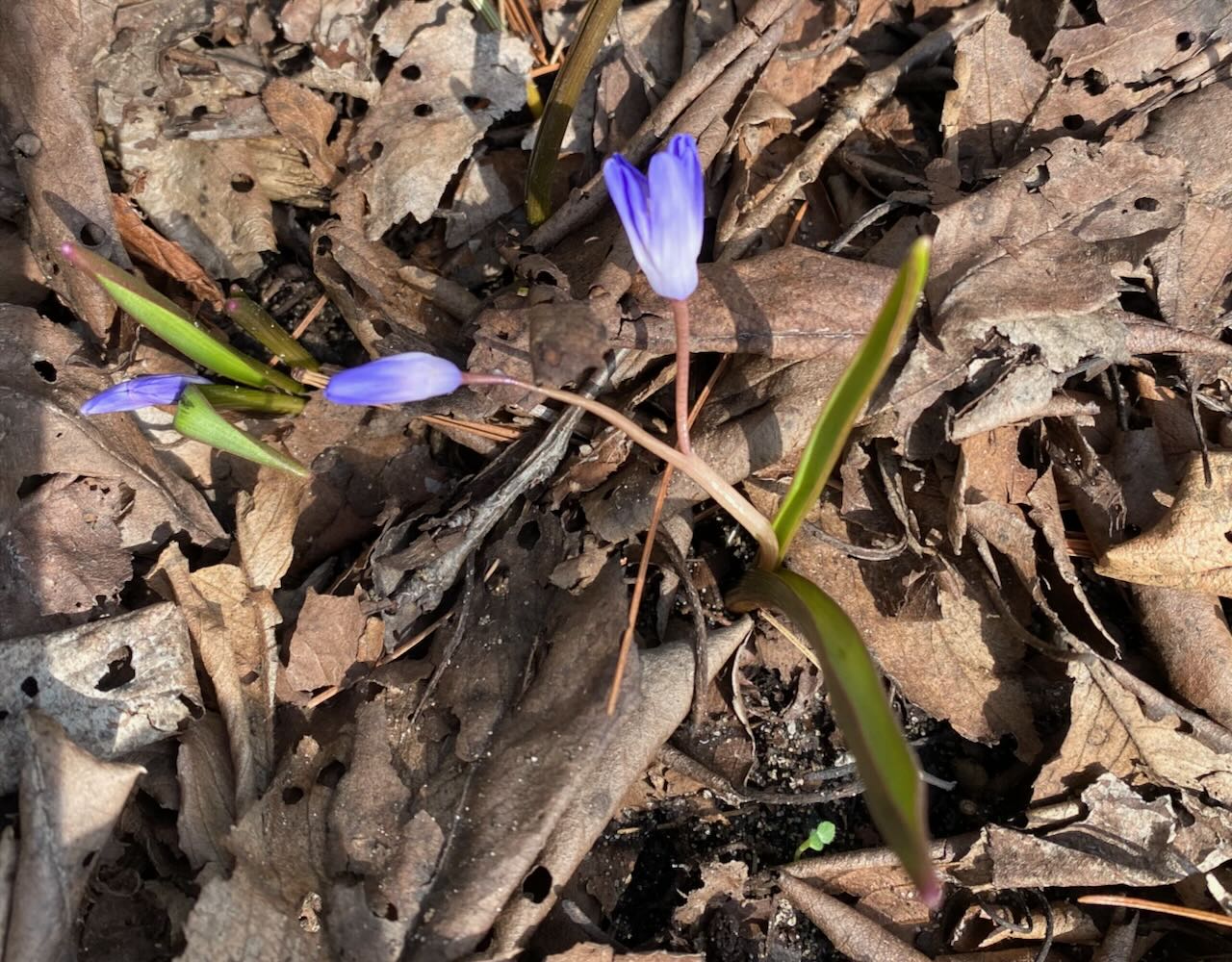
I like my flowers to naturalize into nice thick boisterous clumps, swaths, and patches, but I do think this little one growing all by itself in the leafmulch is very elegant. It was moved off its original spot by unknown forces of nature: hyperactive squirrels; frost heave; or maybe the human element of a snow plow going a little too deep, a little off target. Sometimes it turns out well when your plans go astray.
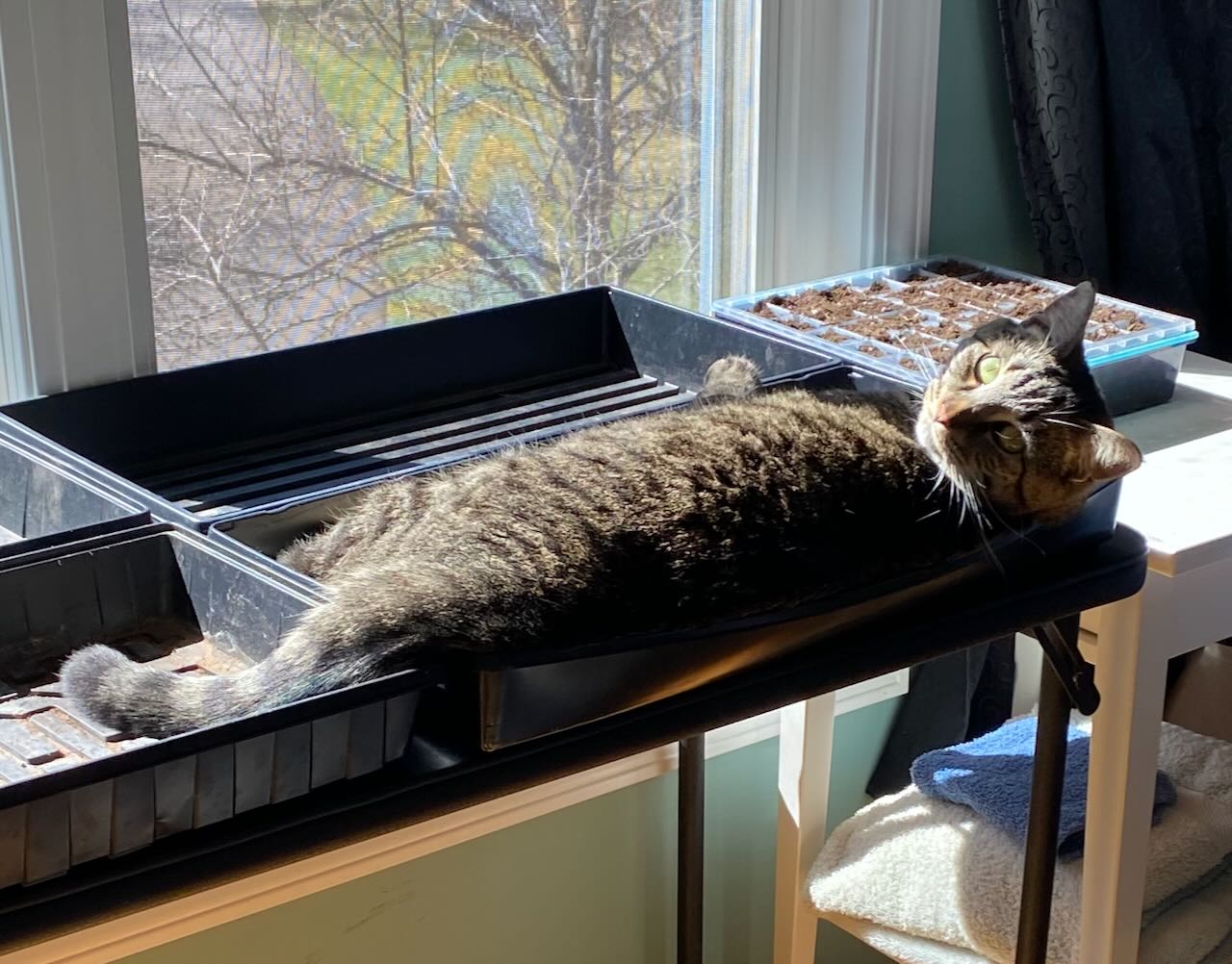
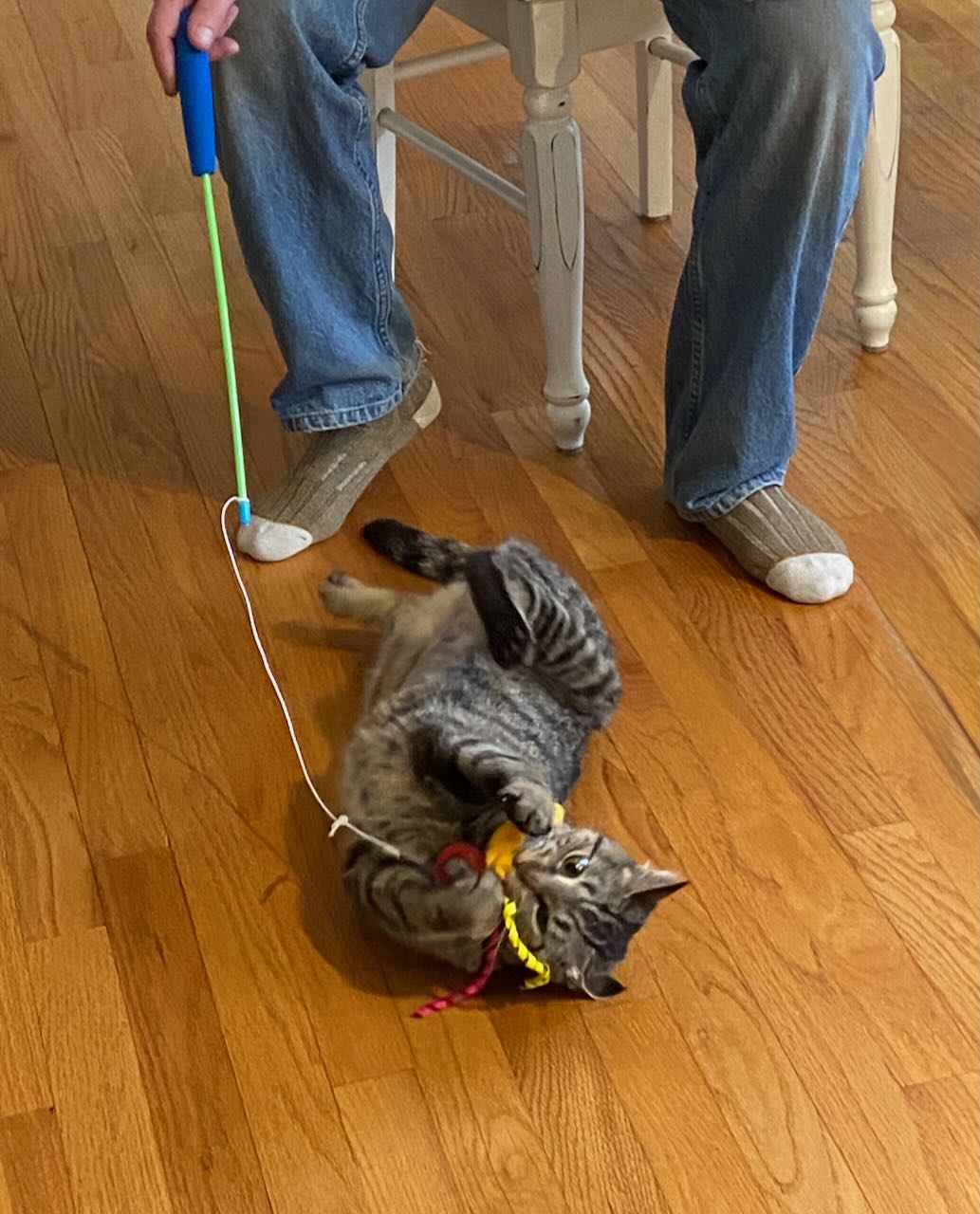
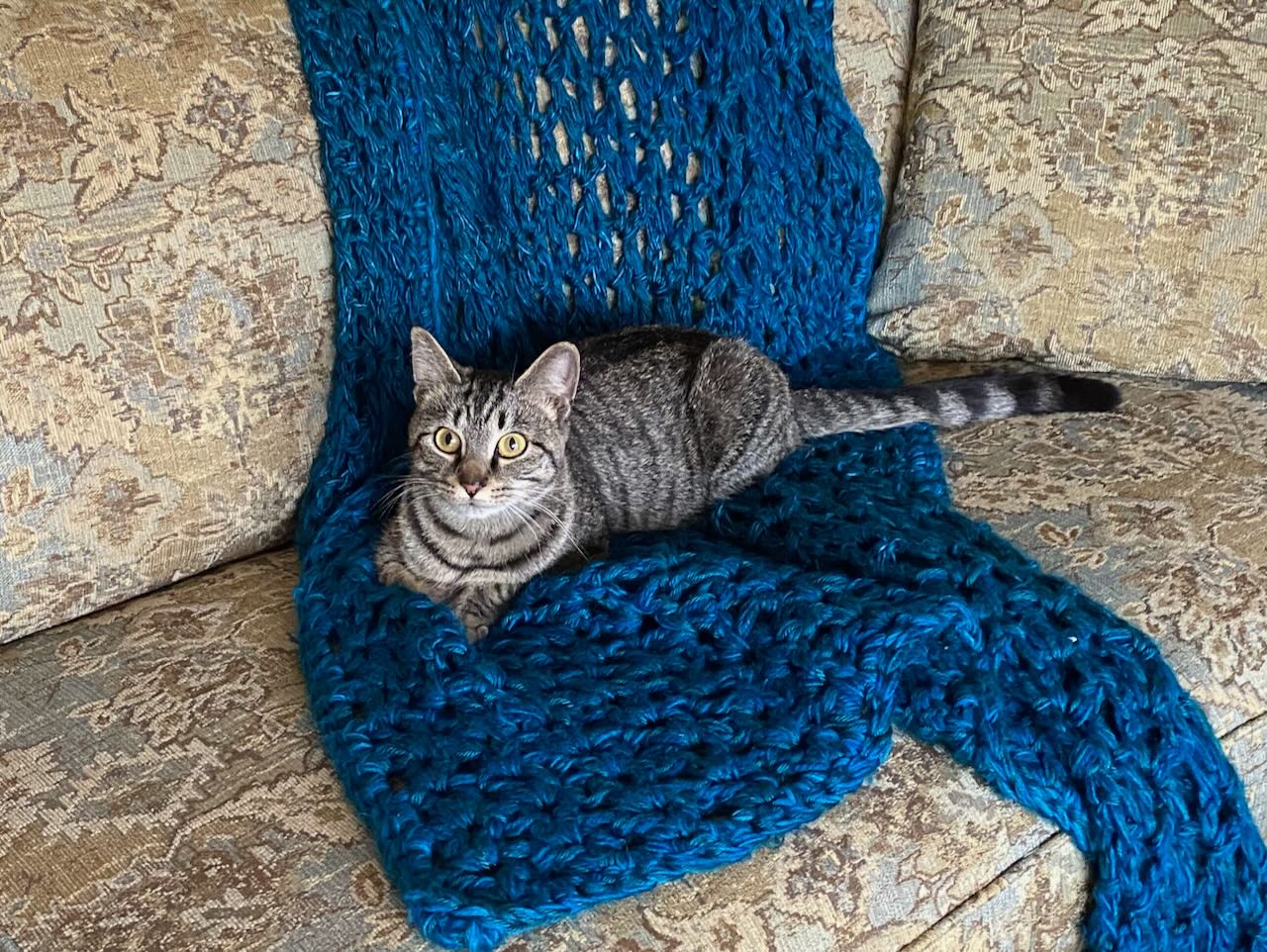
It’s time to start the seeds for my garden. Doug took the folding tables upstairs to the big sunny window in the guest room, we set them up, and I spread my trays across them. Frassy was extremely interested in this, even more so when I started filling pots with dirt. She stepped from one tray to the next, inspecting, and apparently approved enough to commandeer one of them for a nap.
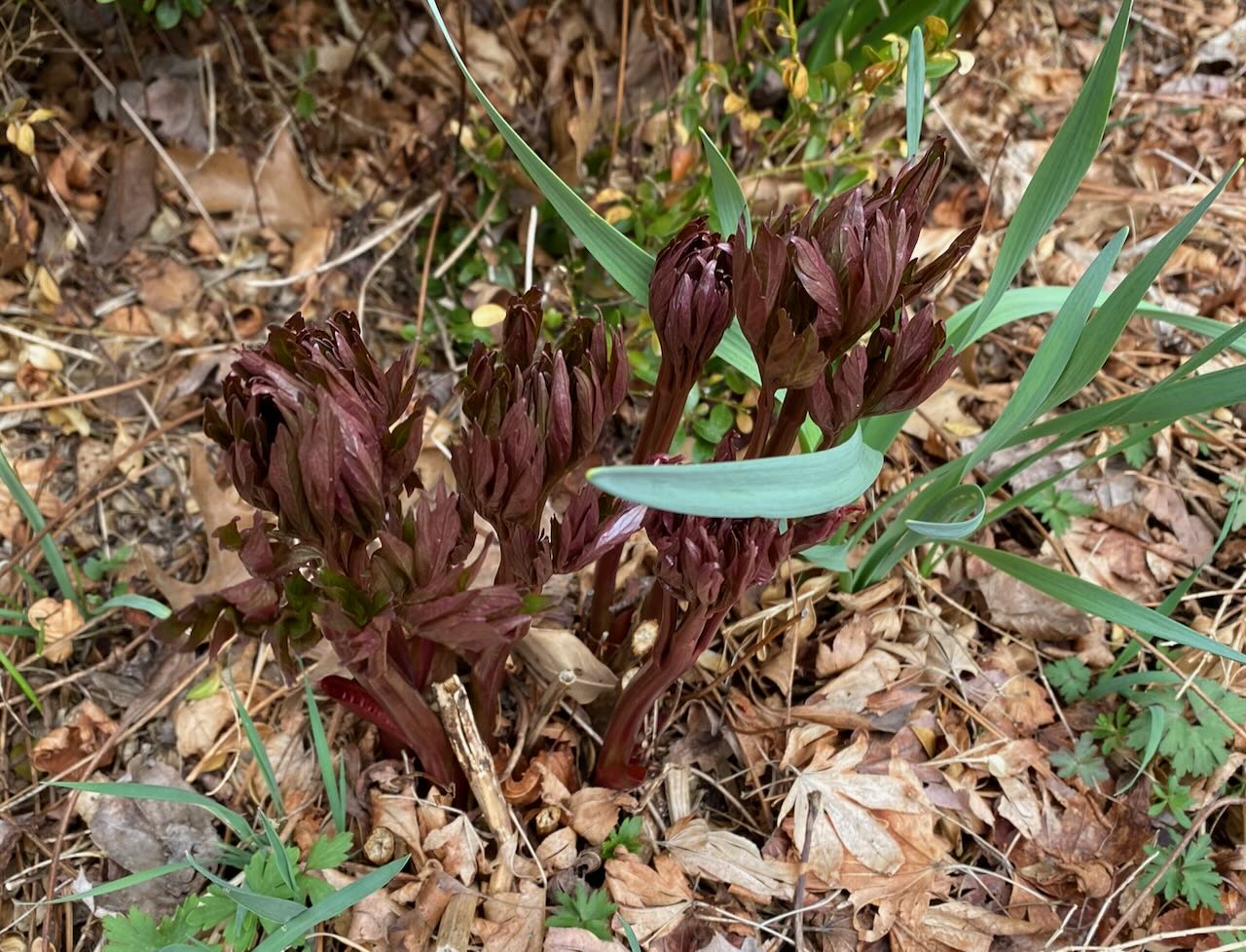
Outside, meanwhile, the perennials that vanished with winter are reasserting themselves. T.S. Eliot might see these as ghastly hands reaching up from the grave, but in fact they’re new growth rising from the roots of peonies. They have all of April and all of May to build out the torrent of ruffles and perfume that will burst from them in June; they’re in no rush. I’m happy as long as I can see it coming.

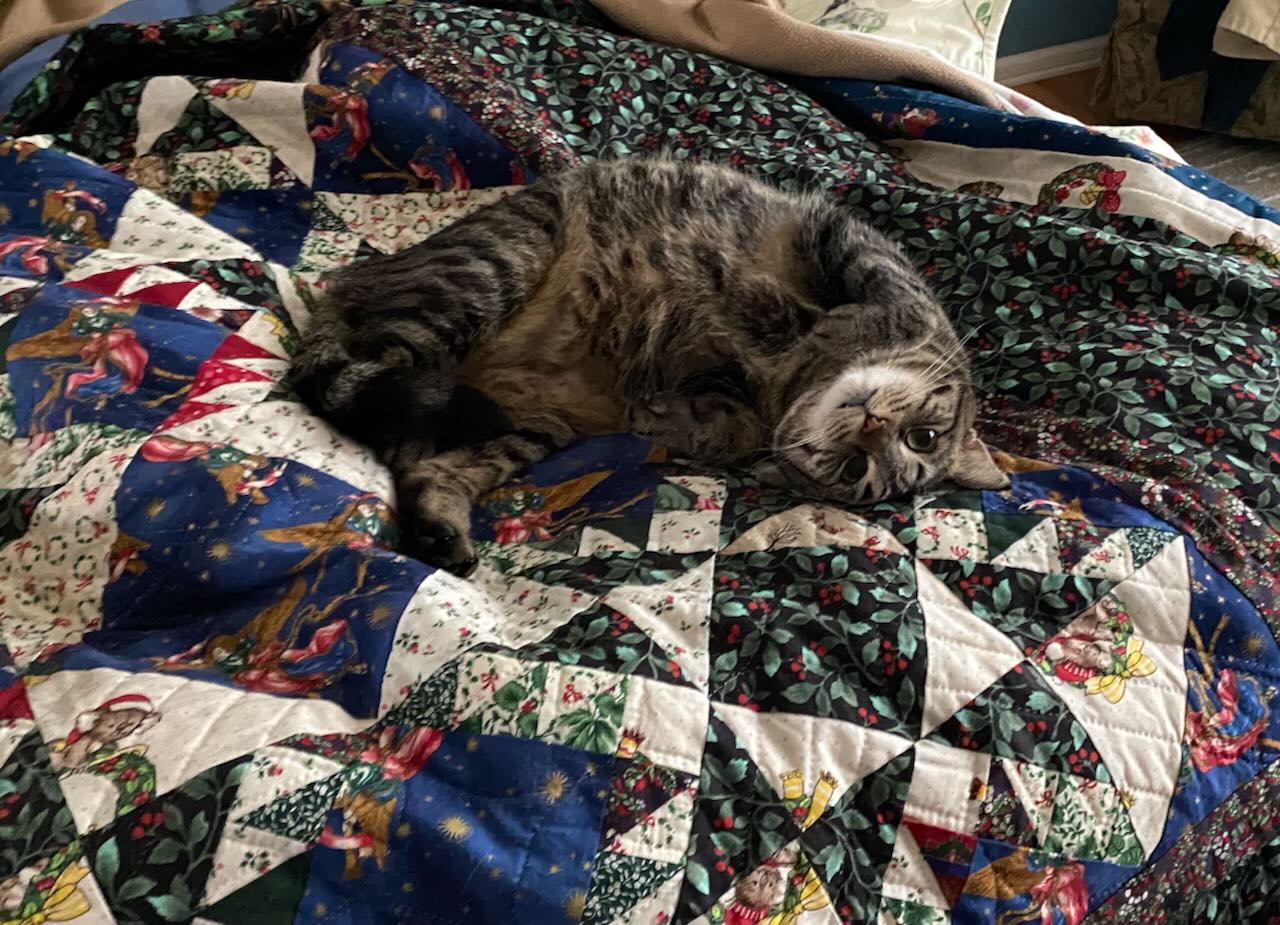



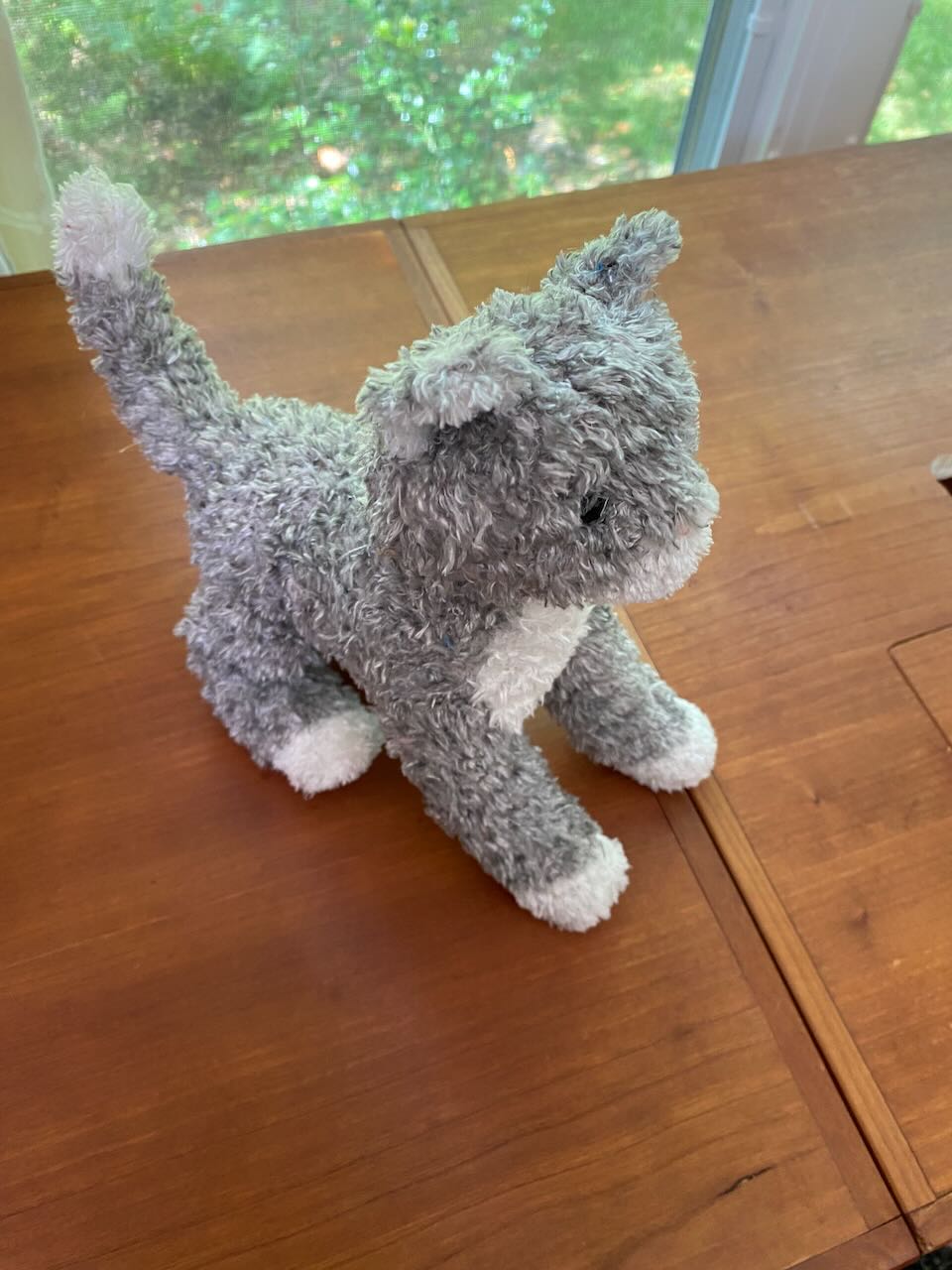


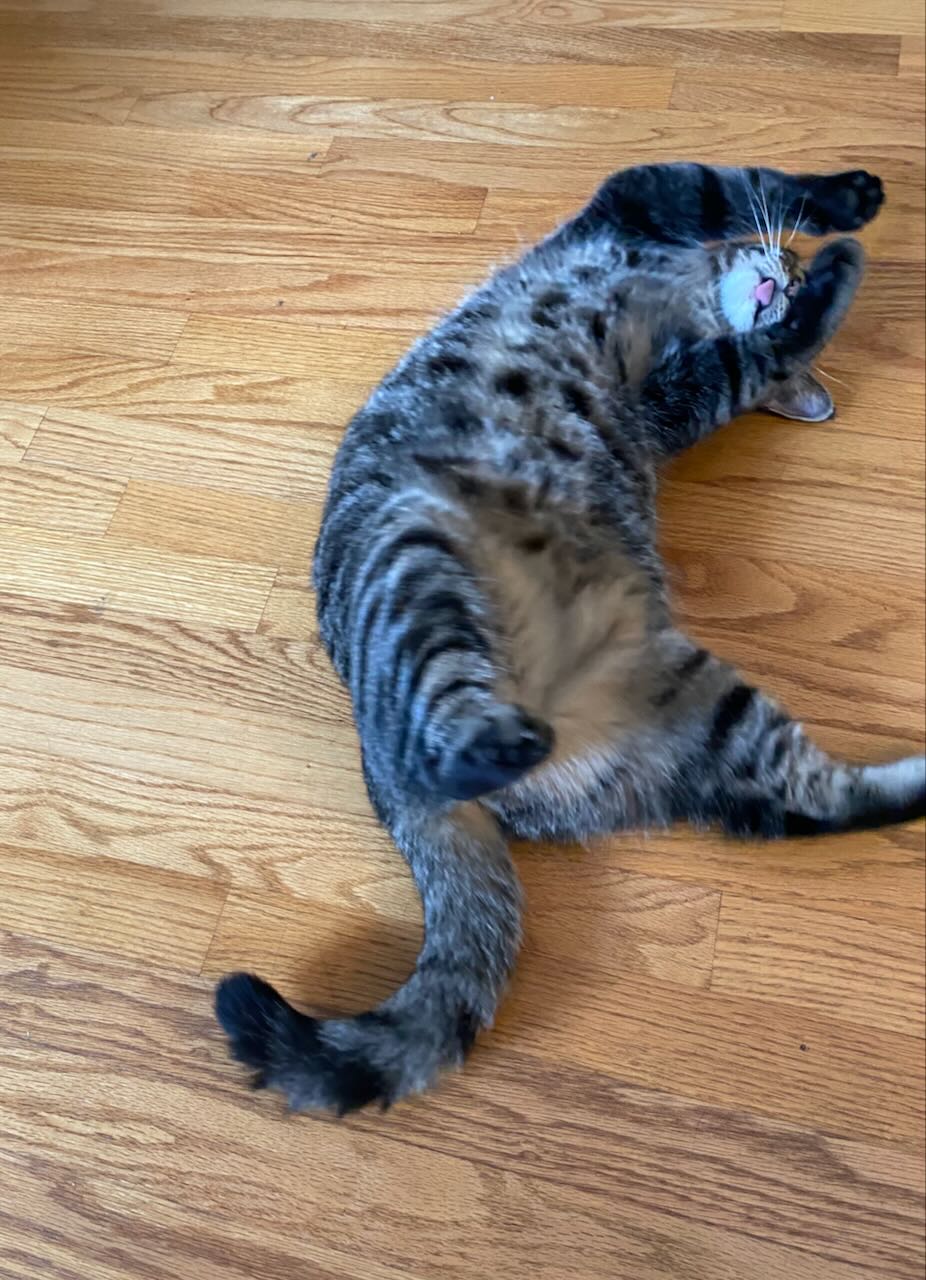
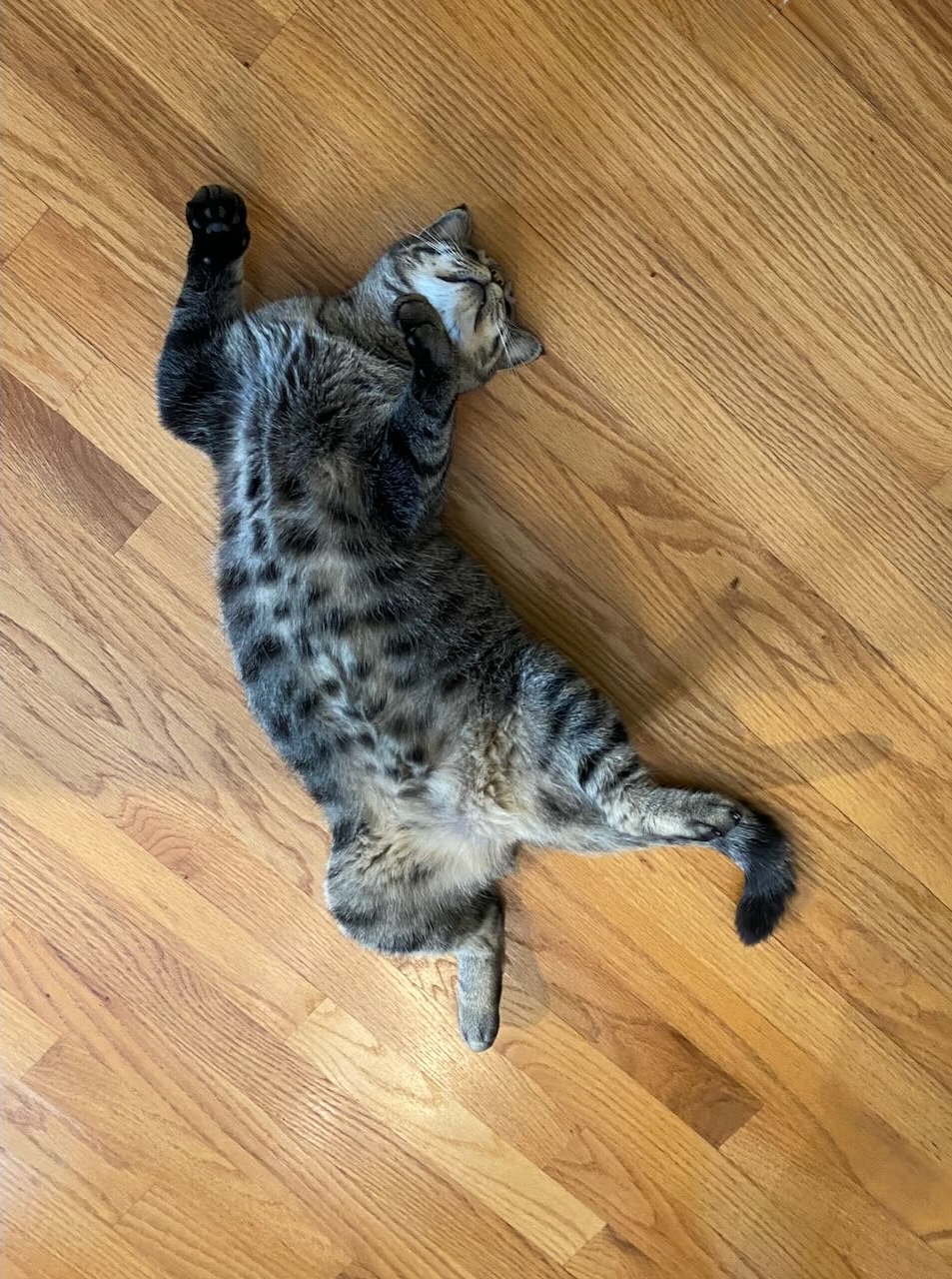






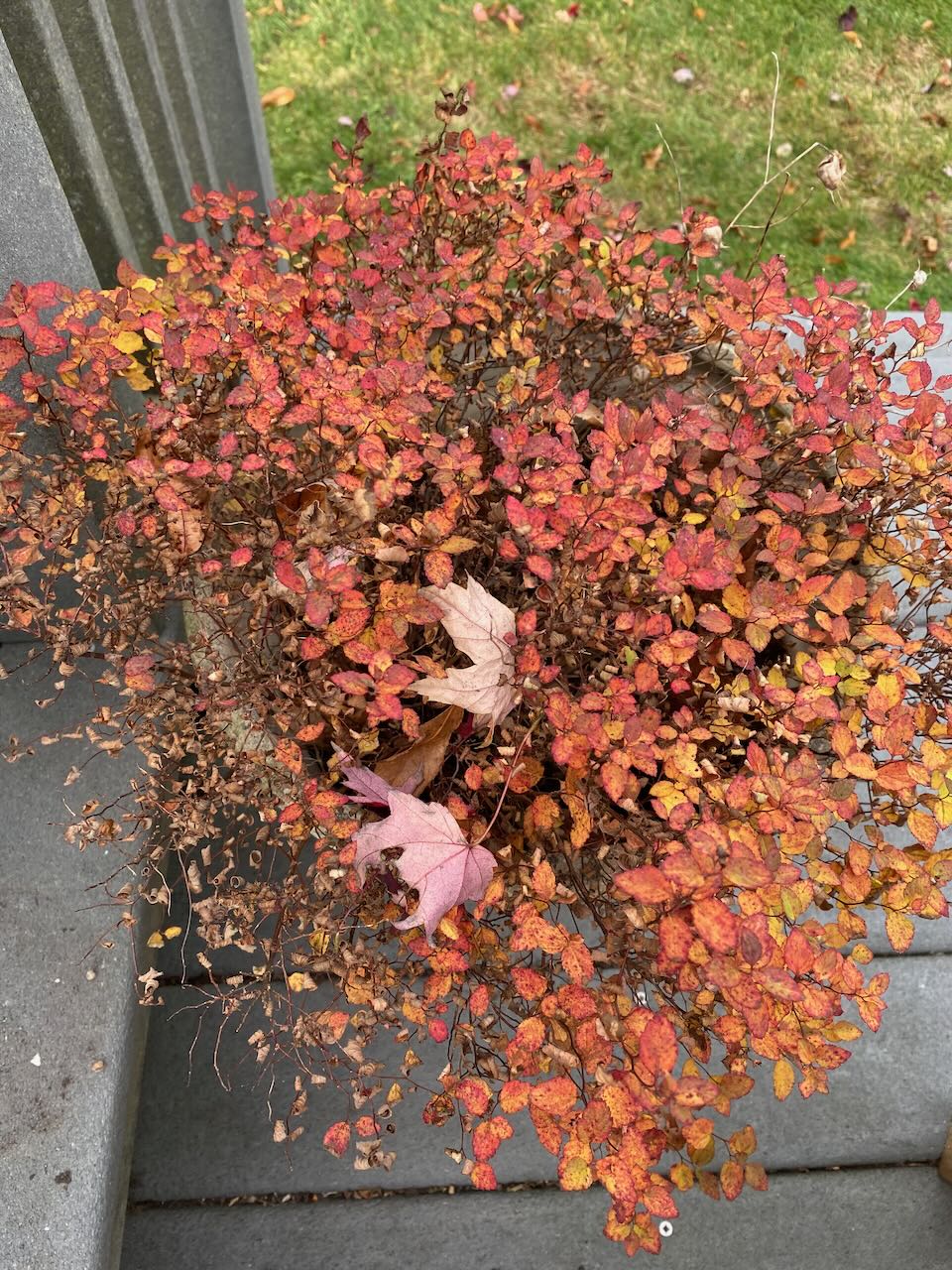 The late warm season continues. Most of the flowers are gone, but there’s still a lot of autumn color. The spirea planted in front is mostly down to bare branches, but this one in a pot on the deck is still in glory. This is odd, first because the front yard gets more sunshine, facing south, and the deck faces north; but also because roots in the ground get more protection from weather than roots in pots do. Nature surprises us whenever she wishes. The potted spirea is a volunteer – a pot of nigella was colonized by free-range spirea seed, and quickly became too lovely to remove. Here it is garnished by a couple of immigrant maple leaves, likely carried by whatever forces brought the spirea seed.
 Here’s the donor tree for those maple leaves, with just a little left in its branches to continue decorating the yard.
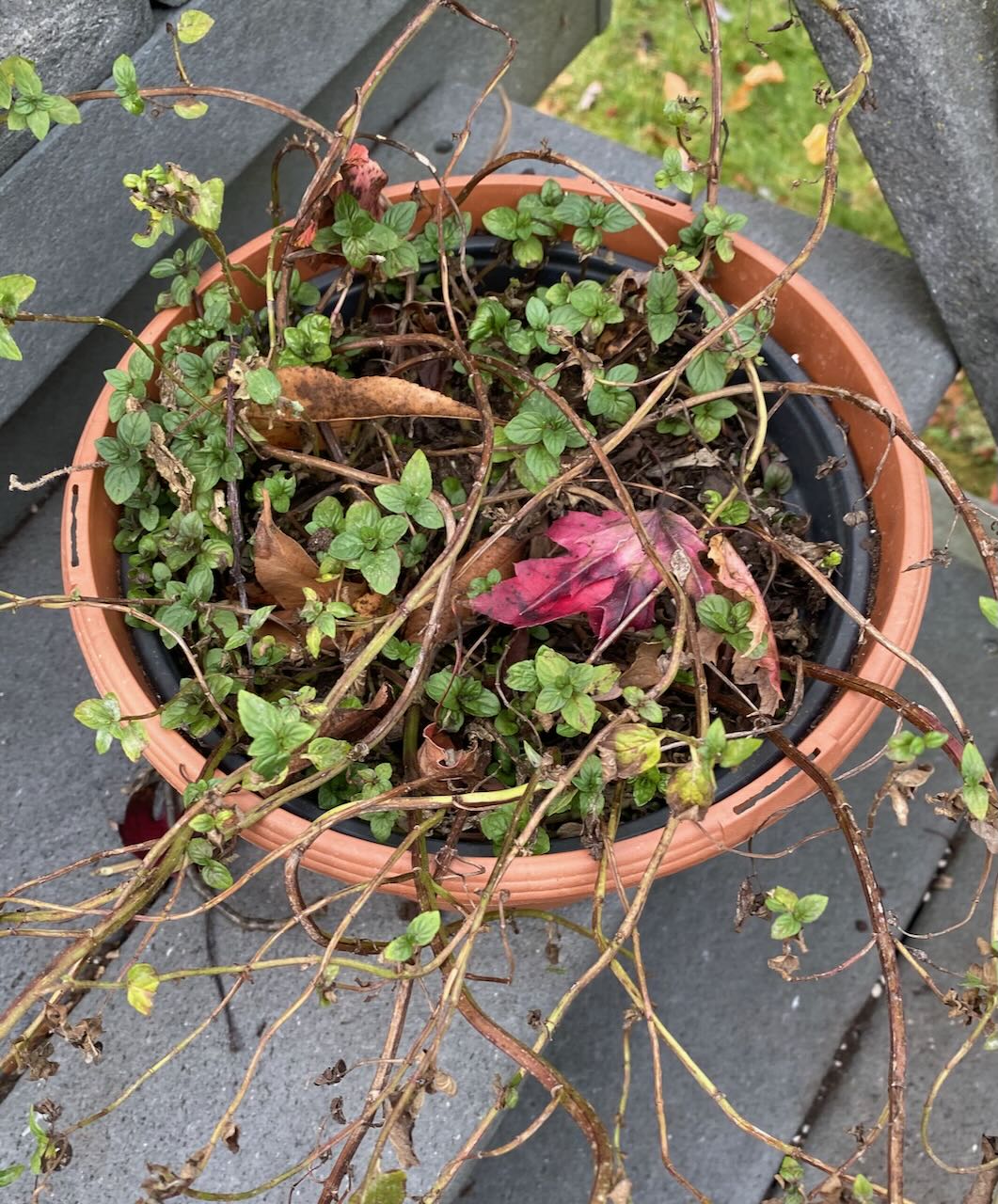 My herb collection has a mixed response to autumn. I had to bring the basil indoors, but thyme and sage will persevere outside all the way to Thanksgiving. The pot of mint may not last quite so long, but meanwhile has collected its own leaf embellishment.
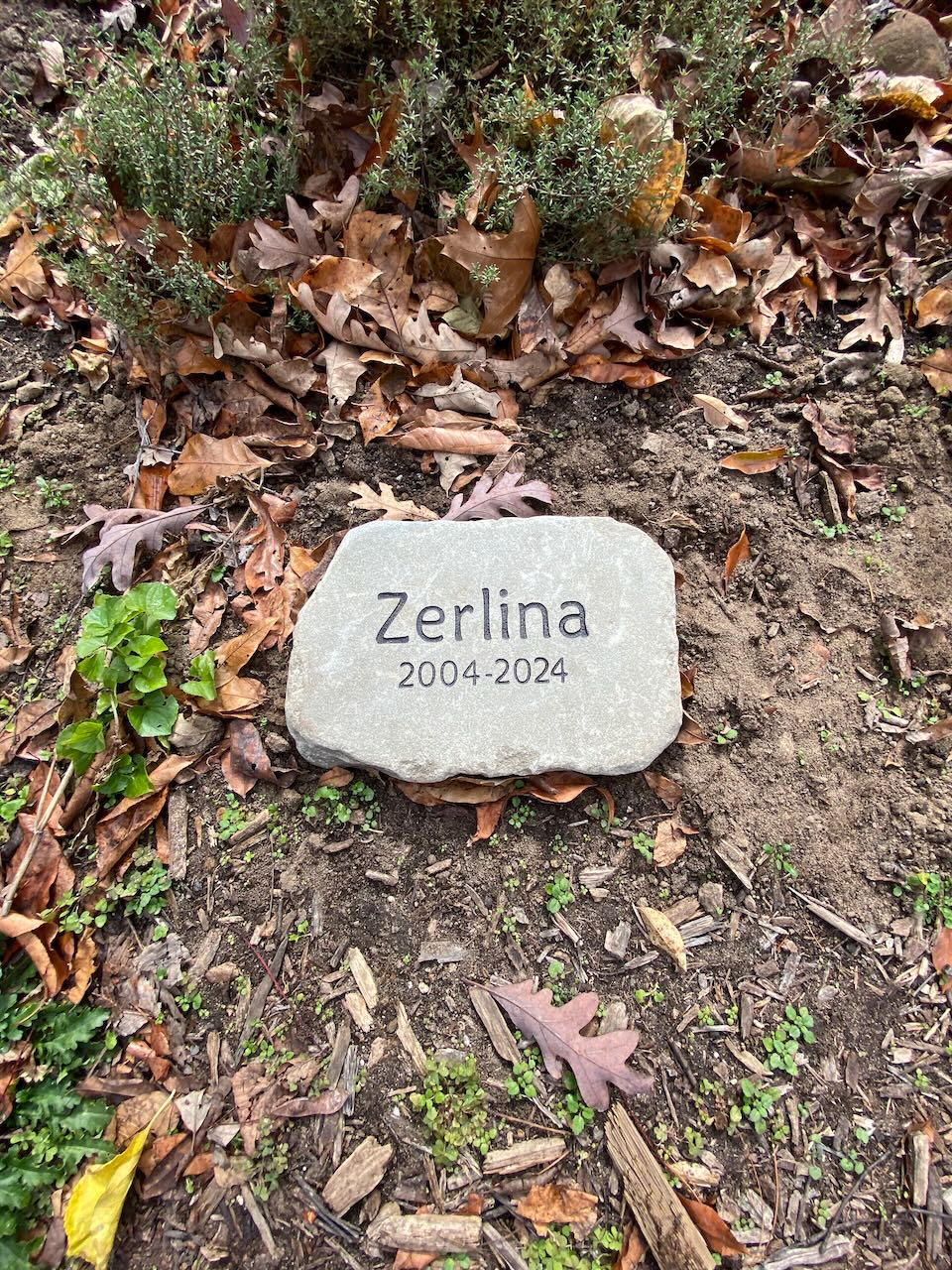 Meanwhile, after much inspection via the internet, I ordered a memorial stone for my wonderful cat, Zerlina. Many of those offered had elaborate decorations and extensive text, but none came up to Zerlina’s level of elegance. I chose one in her colors, with a soft shape. Not that a stone will be puffy, but hard angled edges seemed wrong. Doug came out to the garden with me while I buried her ashes in the center of the garden next to the thyme, and placed the stone on top. I needed the hugs. Then I sat for a while on my glider bench, thinking about her. The thyme will spread, and maybe I’ll encourage it to surround the whole stone. I haven’t decided yet, but thyme sounds like it belongs with memorials.
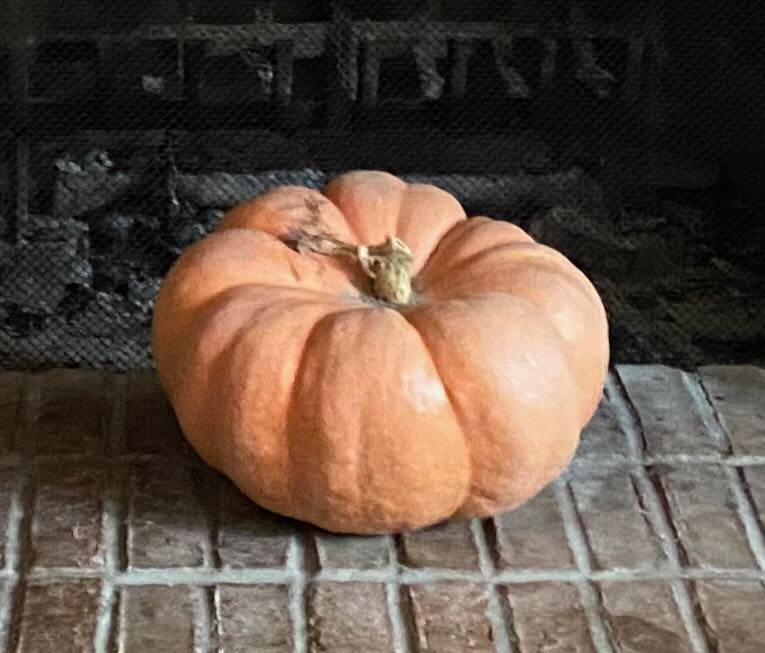 Then I went back into the house, where I picked up all the pumpkins and put them back in different places. I had to remember that things can change. And I found a sort of puffy one for the hearth.
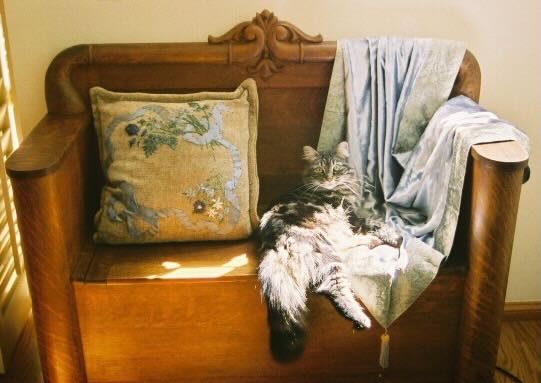 When I walked out to the garden today I didn’t look at the tomatoes, the zinnias, or the cosmos I knew were blooming. Today I looked at the garden thinking where to put a memorial for my loved and loving cat, Zerlina, who has died. She was twenty years old and I had her for eighteen of those years. That’s as long as either of my children lived home with me.
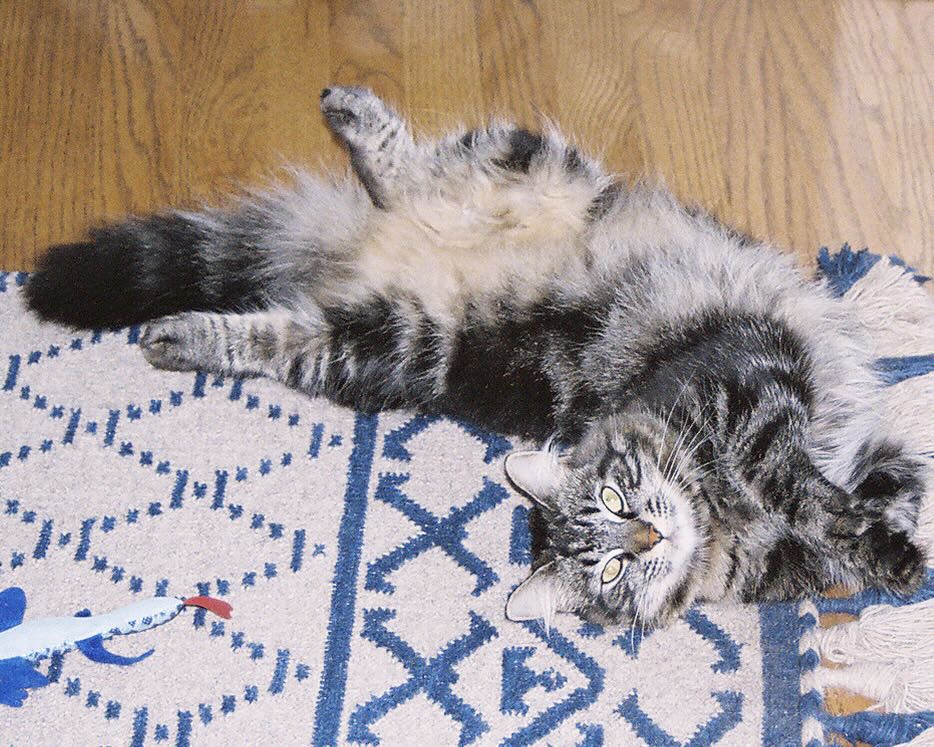 Zerlina moved with me from Pasadena to Michigan; I watched her encounter snow for the first time. She caught mice before I even knew they were in the house. She waited for me at the foot of the stairs every morning, meowing for her “Pet Fest,” our mutual grooming session: I brushed her and she licked me. She had such a soft coat, I used to tell her she was secretly a chinchilla. I keep a small bit of that luxurious fur, in a tiny bottle, in my jewelry box.
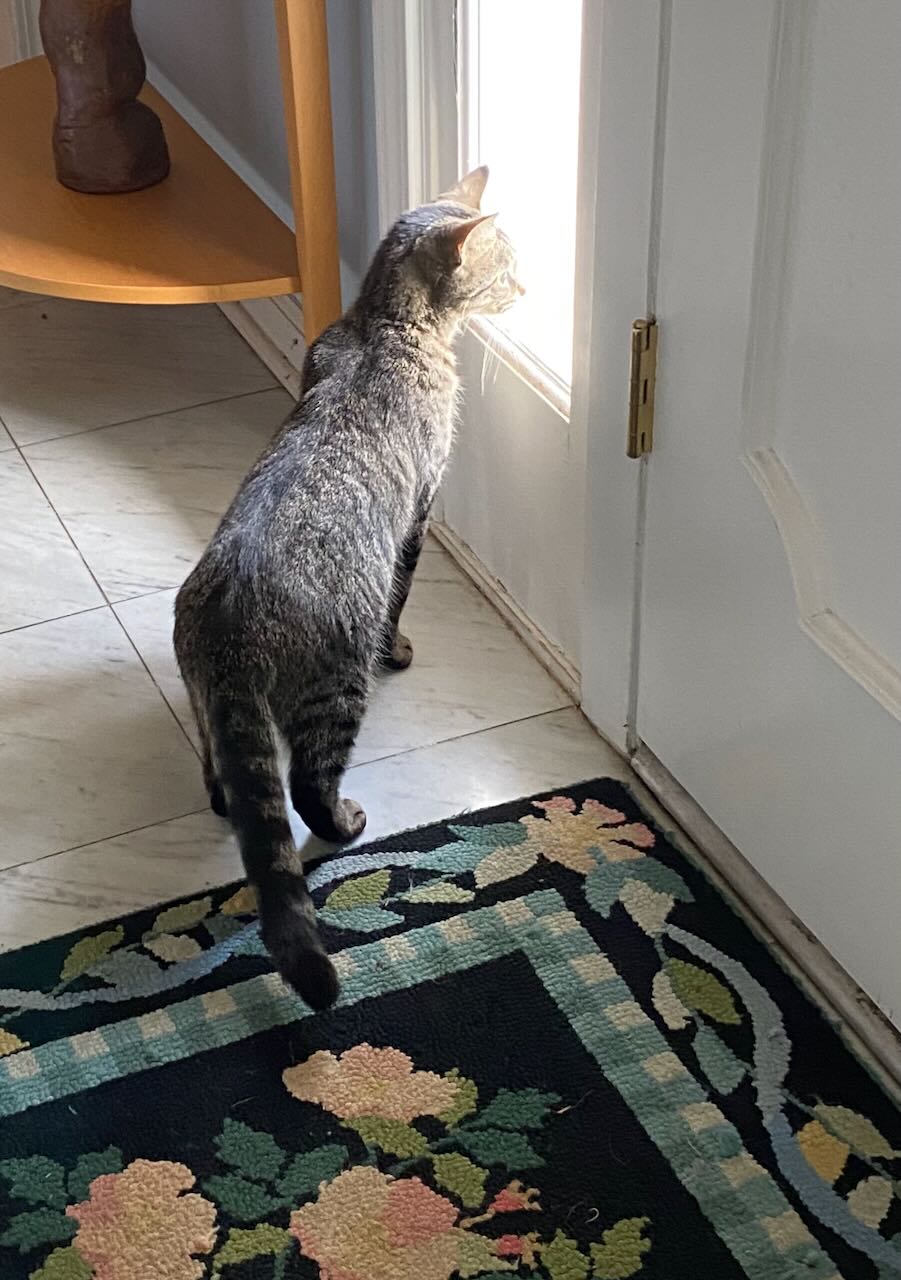
 She was very much my companion. When she wasn’t looking out the window at passing ducks,
 she helped with my sewing projects,
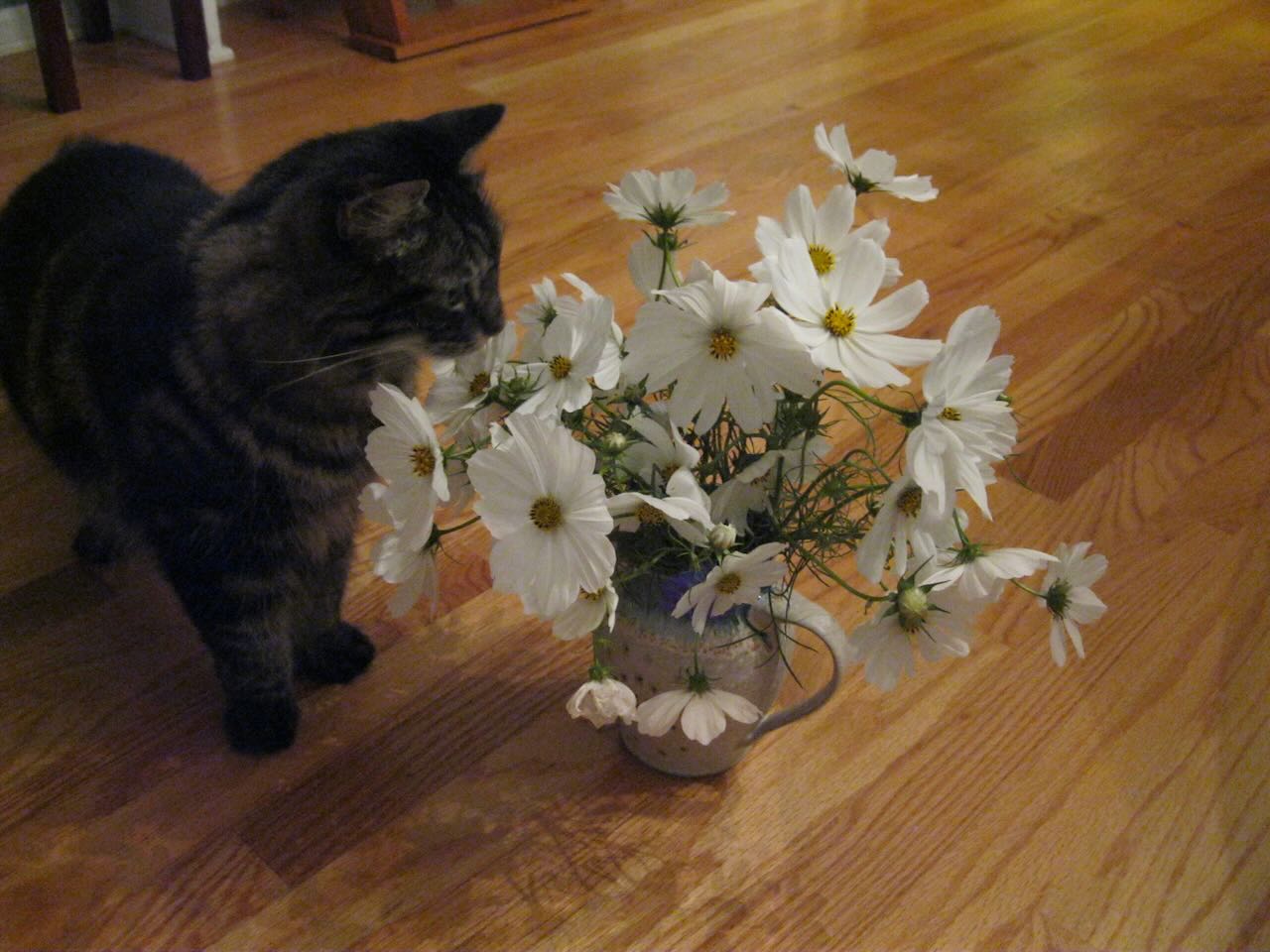 or inspected whatever I brought in from the garden.
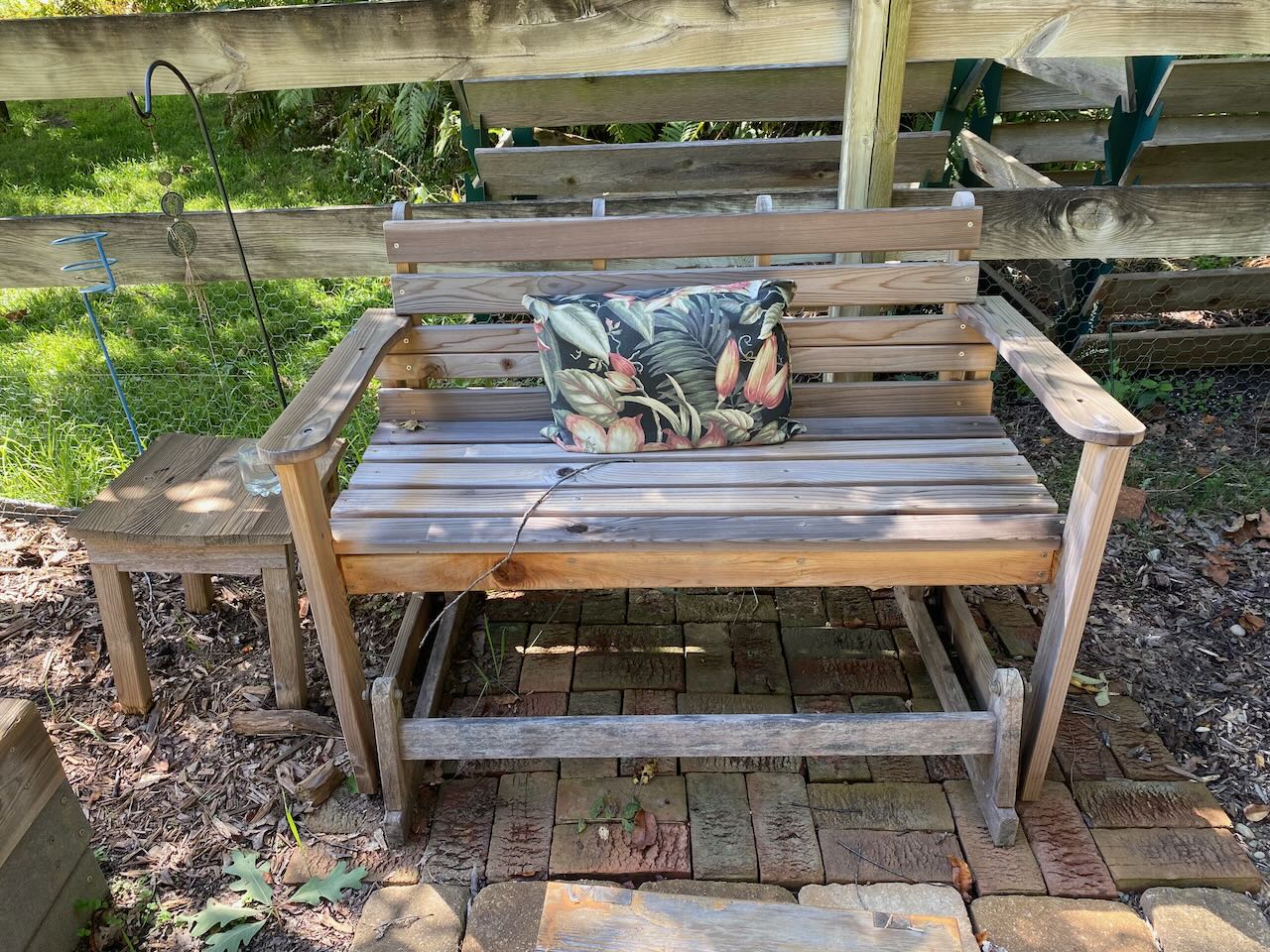 I have a glider bench in the garden where I like to sit with my tea at the end of the day, and think about things.
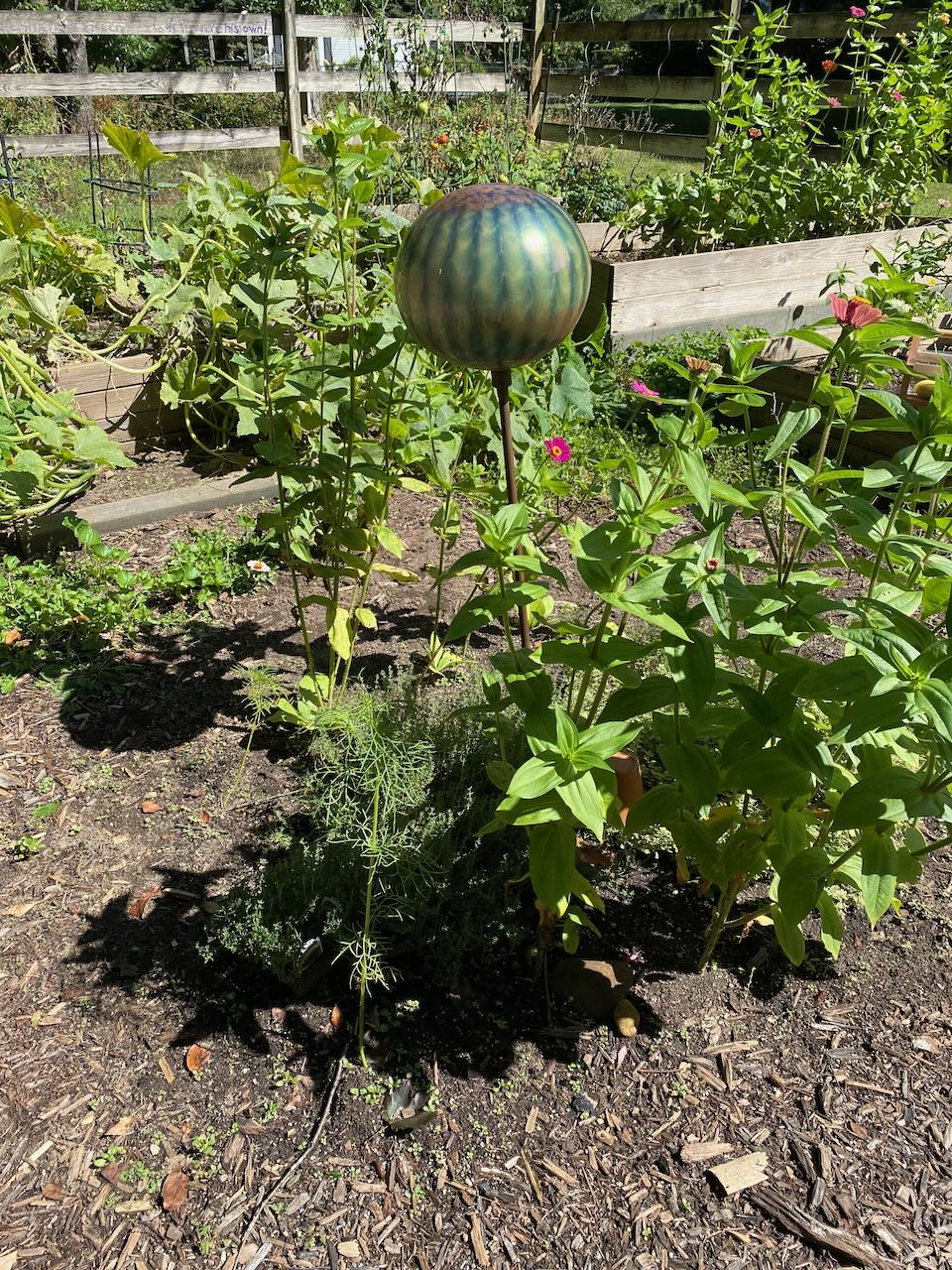 Nearby is a gazing ball with thyme and flowers around it, and I think I will put Zerlina’s ashes under it with a marker of some kind.
 Robin Richstone