
Our first frost happened a couple of nights ago, drawing a map of hardiness, protection, and resilience across the garden. The hardy perennials, like these asters, didn’t notice, originating as they do in climates that reward ability to cope with winter. Tender annuals, like my basil and tomatoes, withered and keeled over. I had already brought into the house several pots of basil and all the green tomatoes still on the vine, in anticipation of this. These are plants whose ancestors never met with winter weather, and had no need to adapt to it.
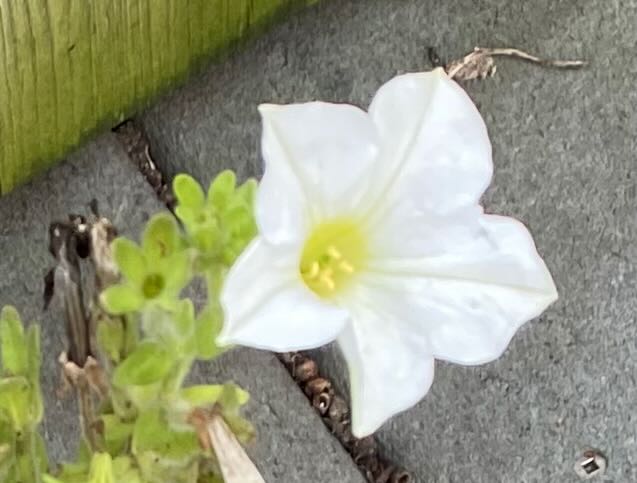
Then there are hardy annuals, like petunias. They can resist the kind of winters we had in Southern California, which did sometimes include a light frost in late December. They seem to be familiar with this and will persevere through it, but when the hard, serious frost comes, they succumb. Marigolds and pansies are also in this category. Okay, so far all is neat and clear in the life cycles of my garden plants.

But then we have this scenario from the way back of the garden. Marigolds, check, still abloom as expected. But there’s that cosmos standing tall and happy, while all the other cosmos in the garden is dead. Sort of looks like the marigolds talked them into it. Good story, but the reality is different. There’s a tall black cherry tree just outside the picture, leaning over the garden fence enough to shelter the cosmos from the sky. The same thing that makes this part of the garden too shady for plants like tomatoes, expected to ripen fruit, offers protection from light frost.

So the resilience a plant shows in the face of frost can be inborn, or it can be situational. It’s the job of the gardener to situate the plant where it can have its best outcome. Here’s some milkweed in process of its best outcome, which is not the propagation of Monarch butterflies, but the launching of its frothy seeds into chilly autumn air that carries them into the future.


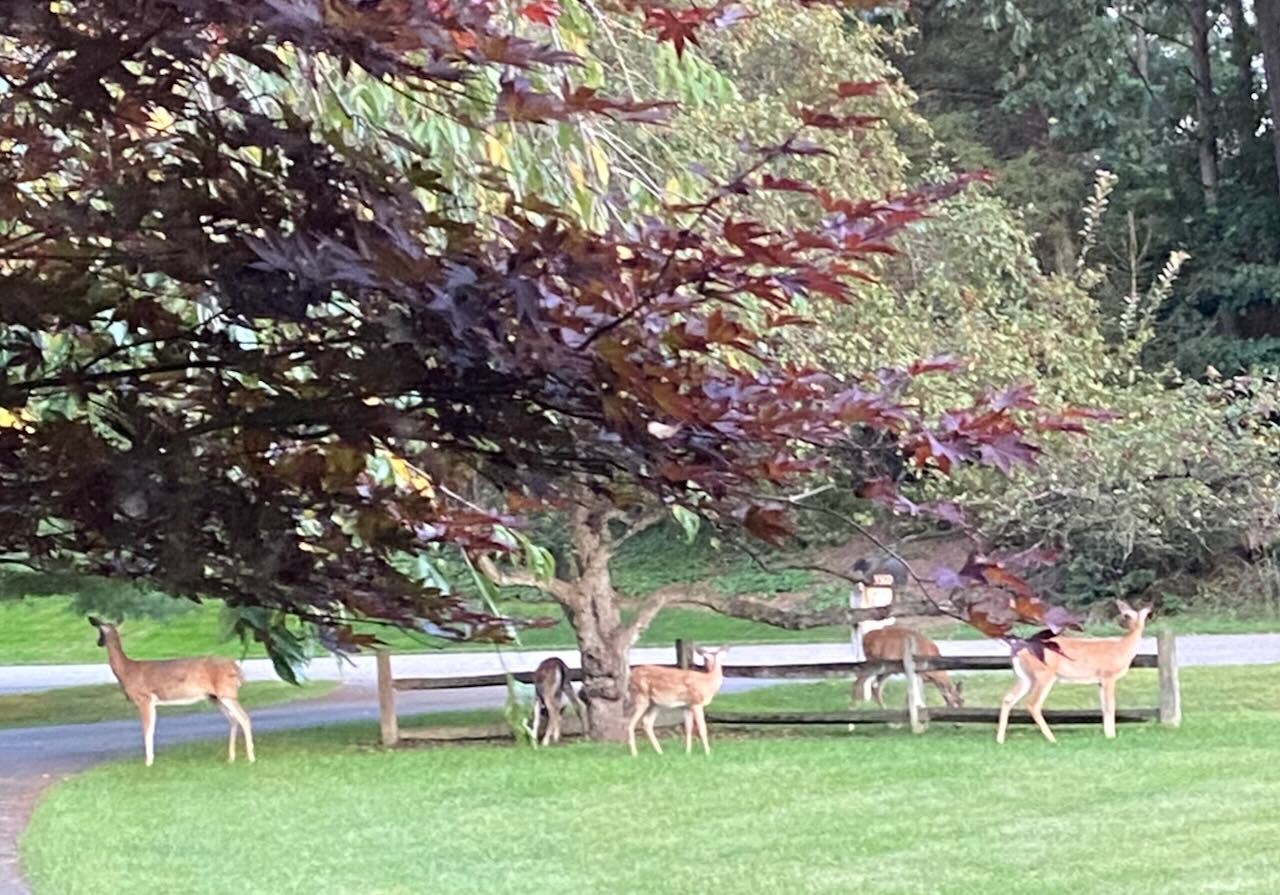


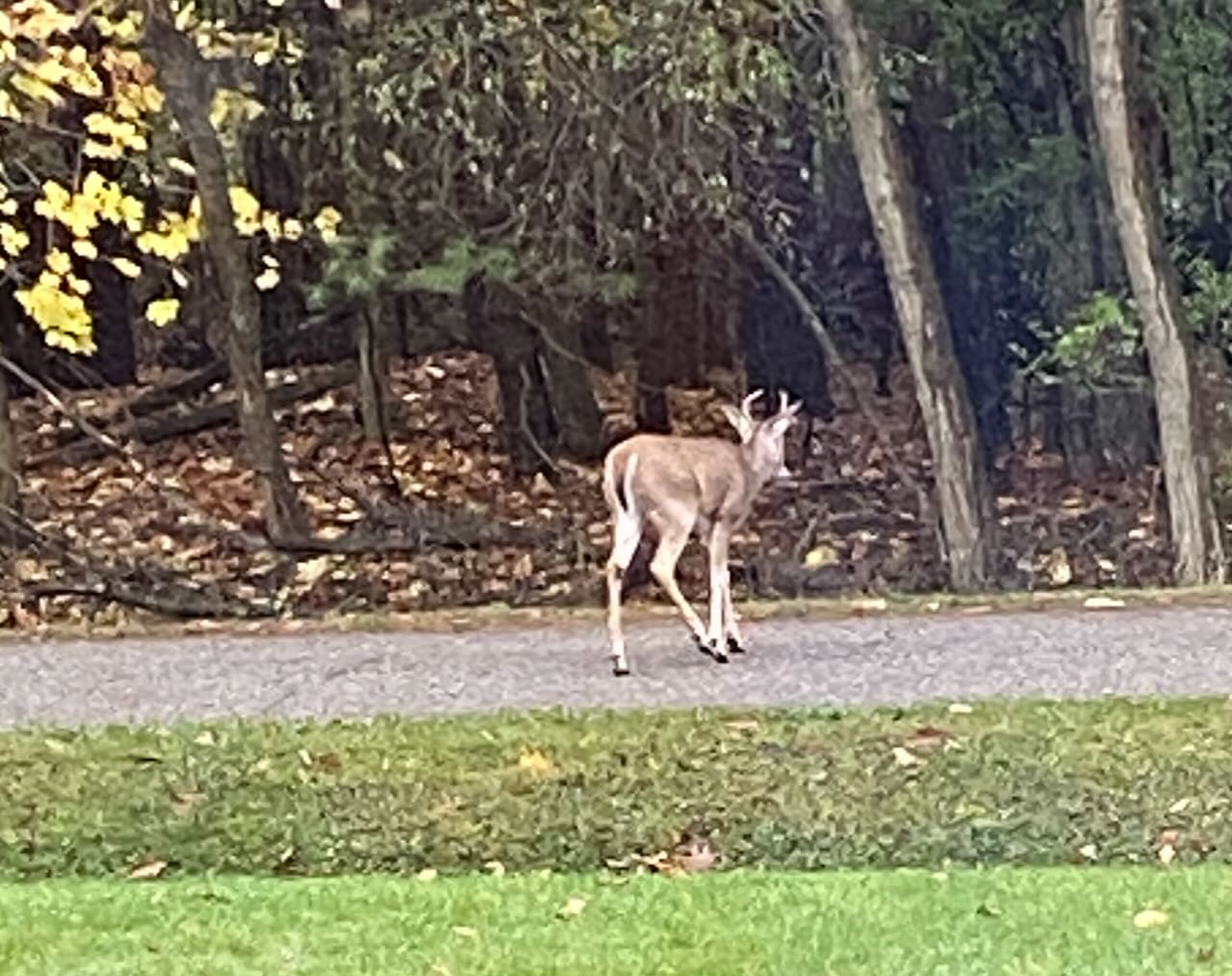 After weeks of summer and fall bumping into each other in a jumble, fall seems to be emerging triumphant at last. The stags are about done destroying small trees by using them to rub the velvet off their antlers. I’m still waiting for one of them to graciously leave his shed antlers in exchange – seems like the least he could do. Maybe this will be the year.
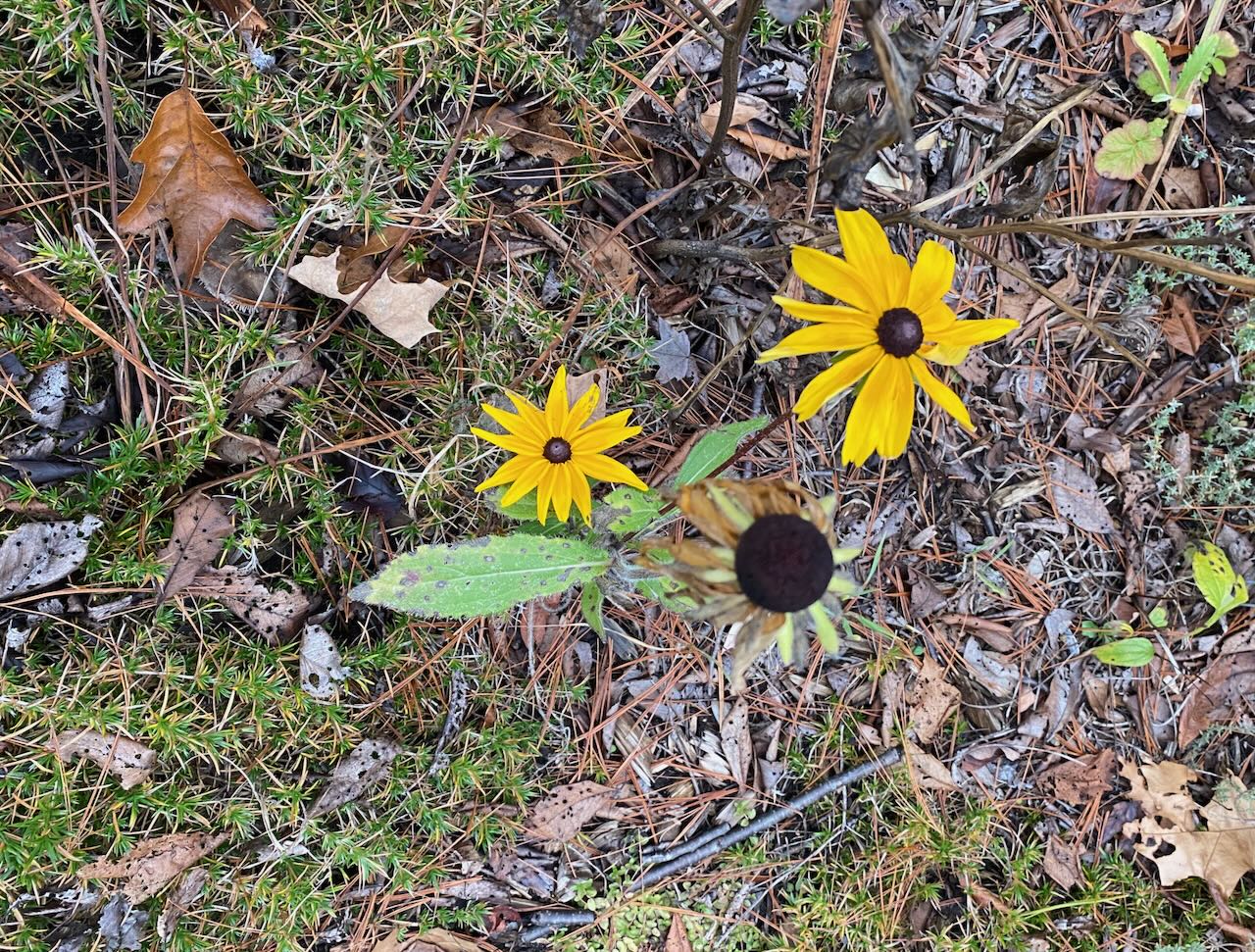 Between the light frosts and the subsiding hours of sunlight most of my flowers and tomatoes are gone, but out in front, facing south, one rudbeckia plant persists. It’s not the only rudbeckia out there, but it’s the only one still blooming. A mystery of nature.
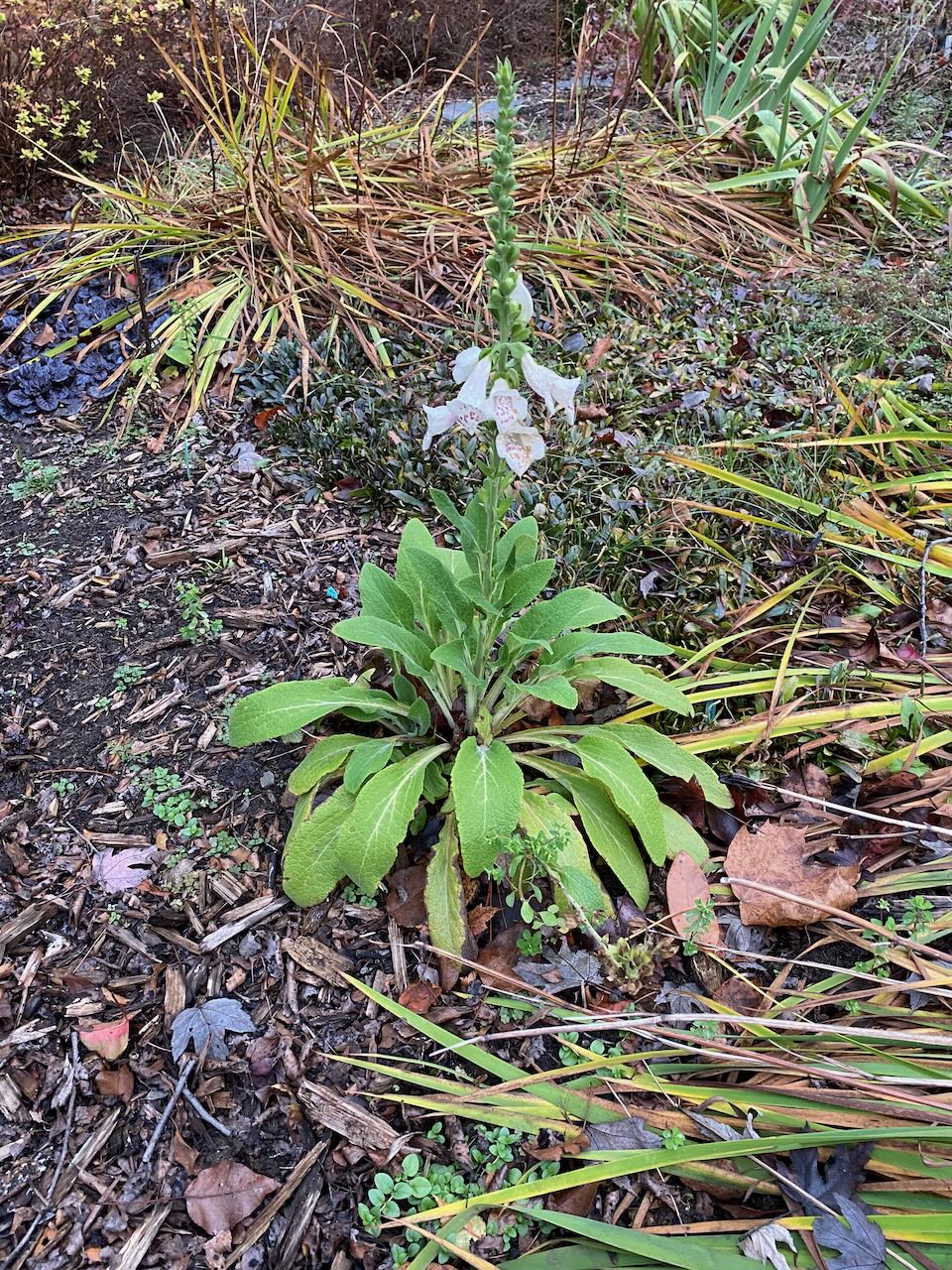 Over in the shady section, a single foxglove has re-bloomed. It was pink the first time, but has paled in the shortened hours of daylight. The foxgloves are spaced widely, so in their case it’s understandable that individuals may have different amounts of light, or shelter, or competition from other plants. Less mysterious.
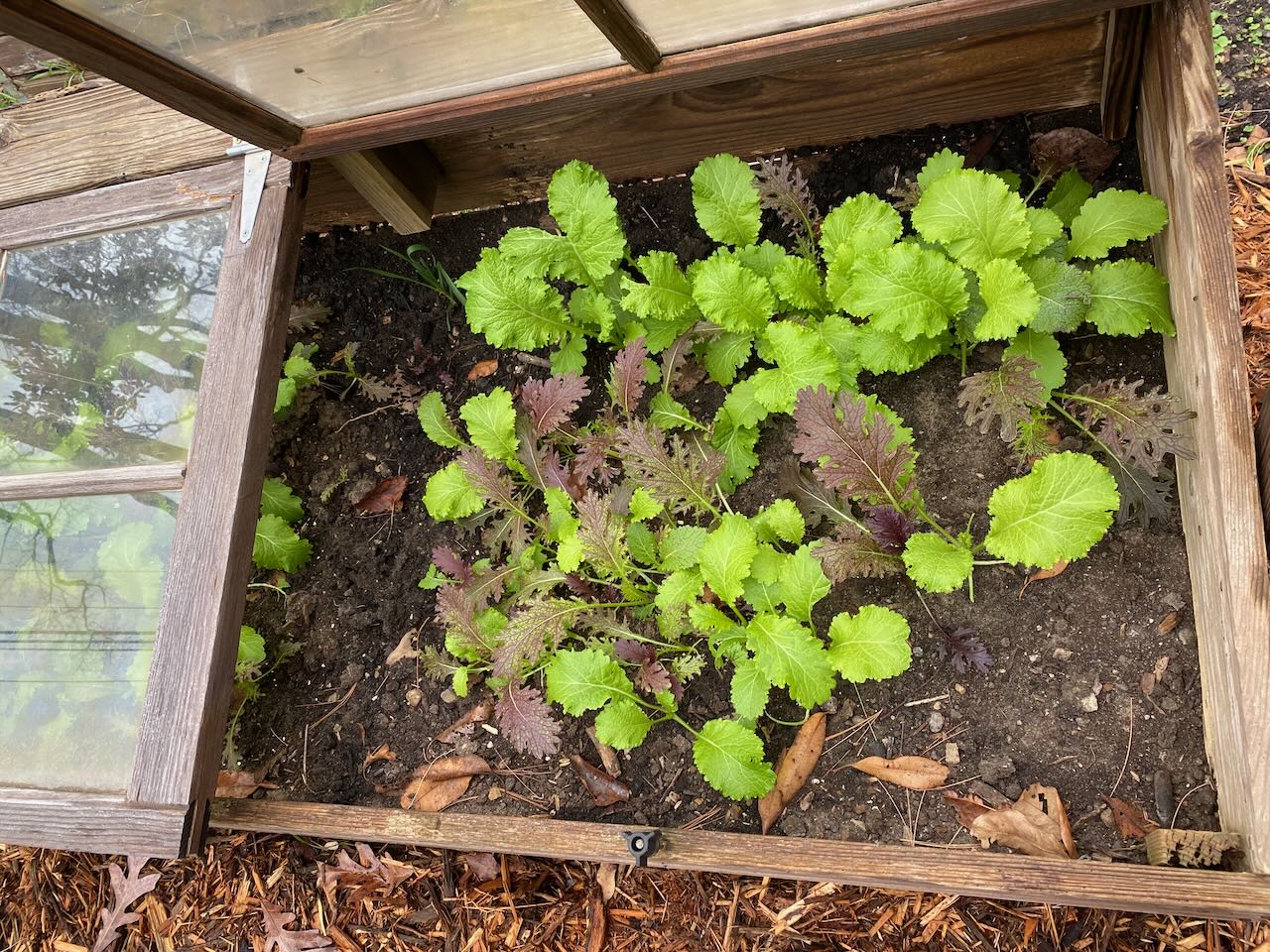 Out in the fenced garden, once the tomatoes were gone, I planted lettuces in the cold frame. They’re flourishing. This is very satisfying to me as a gardener, but the flaw in the plan is that I really don’t eat much salad in cold weather.
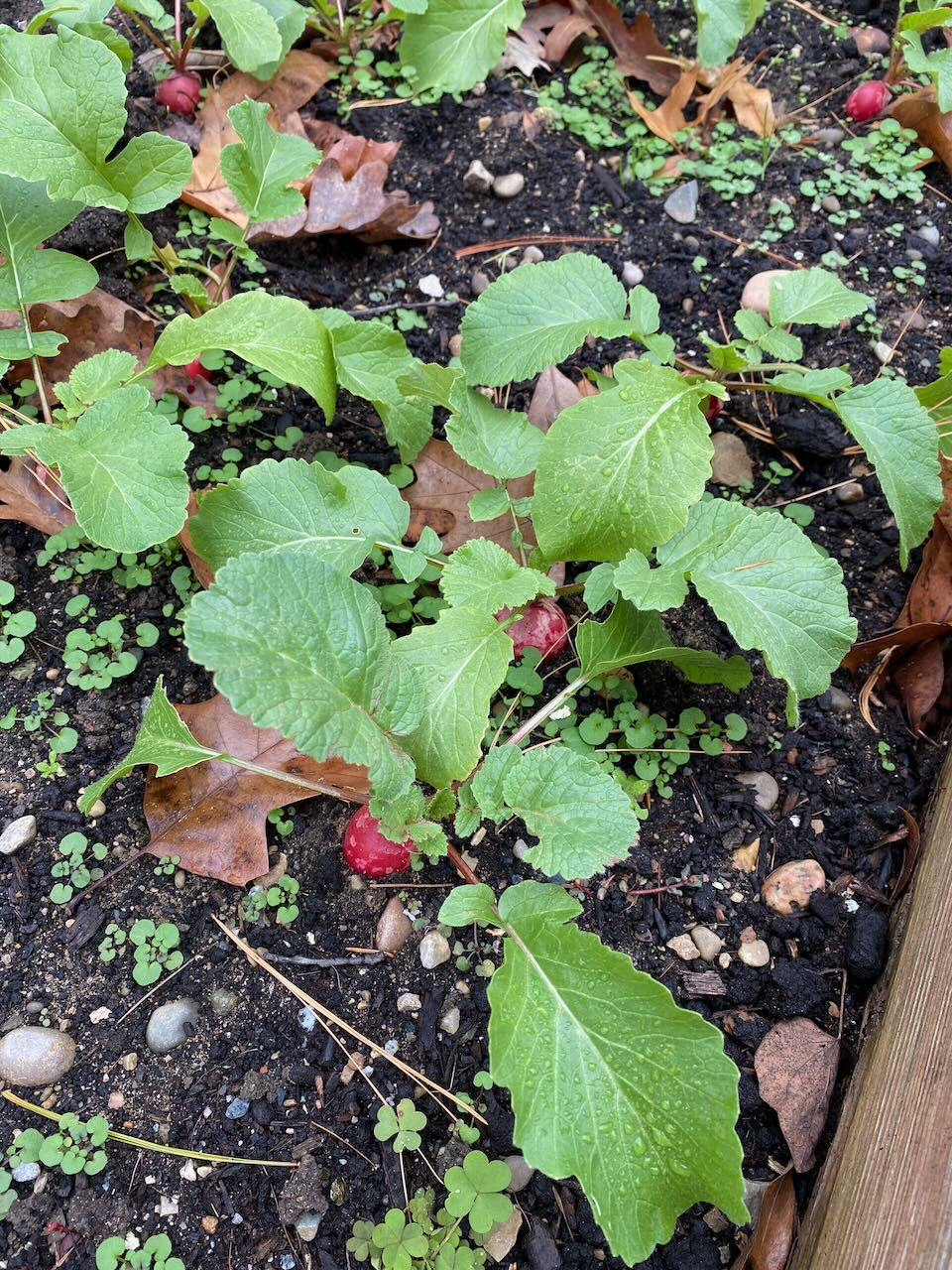 That was the trouble with radishes too, until I learned that they can be cooked. How did I get to be as old as I am, and never knew this? They’re so cute out in the garden, with their little round, red shoulders peeking out of the dirt, and they demand so little in the way of warmth and sunlight, I can’t resist planting them when random space becomes available. I’m still working out the best recipes for them.
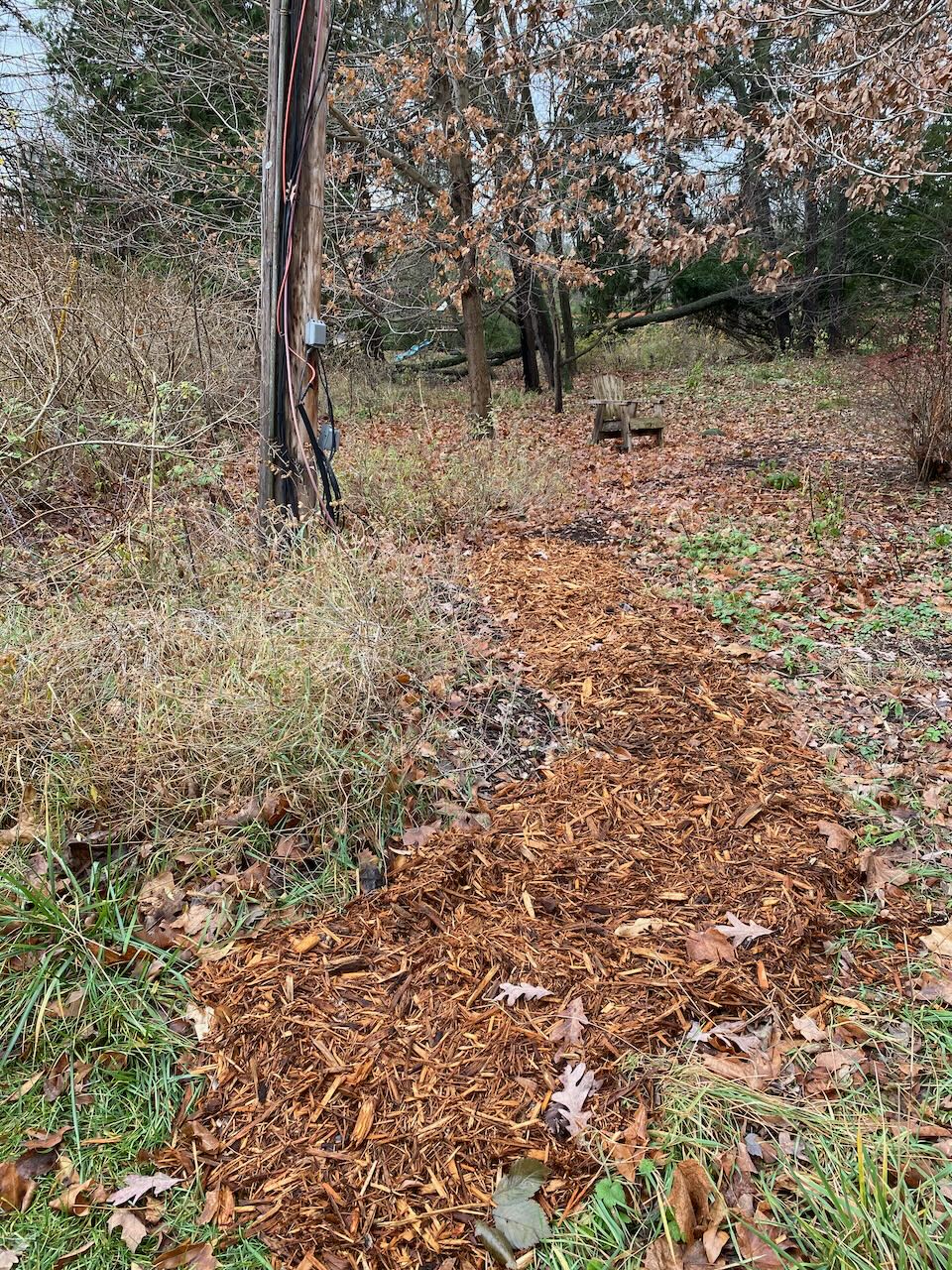 Meanwhile, the main path into my woods needed help. I spread several layers of the Sunday New York Times over the old path, poured a bucket of water over that so it wouldn’t blow around as I worked, and topped it with mulch. That will be one less thing to do come spring, when things to do are plentiful. As much as I love gardening, there comes a time when I really need a break. If spring is the reward for winter and harvest is the reward for spring, winter is the reward for three seasons of hard work. Just curl up with a good book and eat all those quarts of tomato sauce.
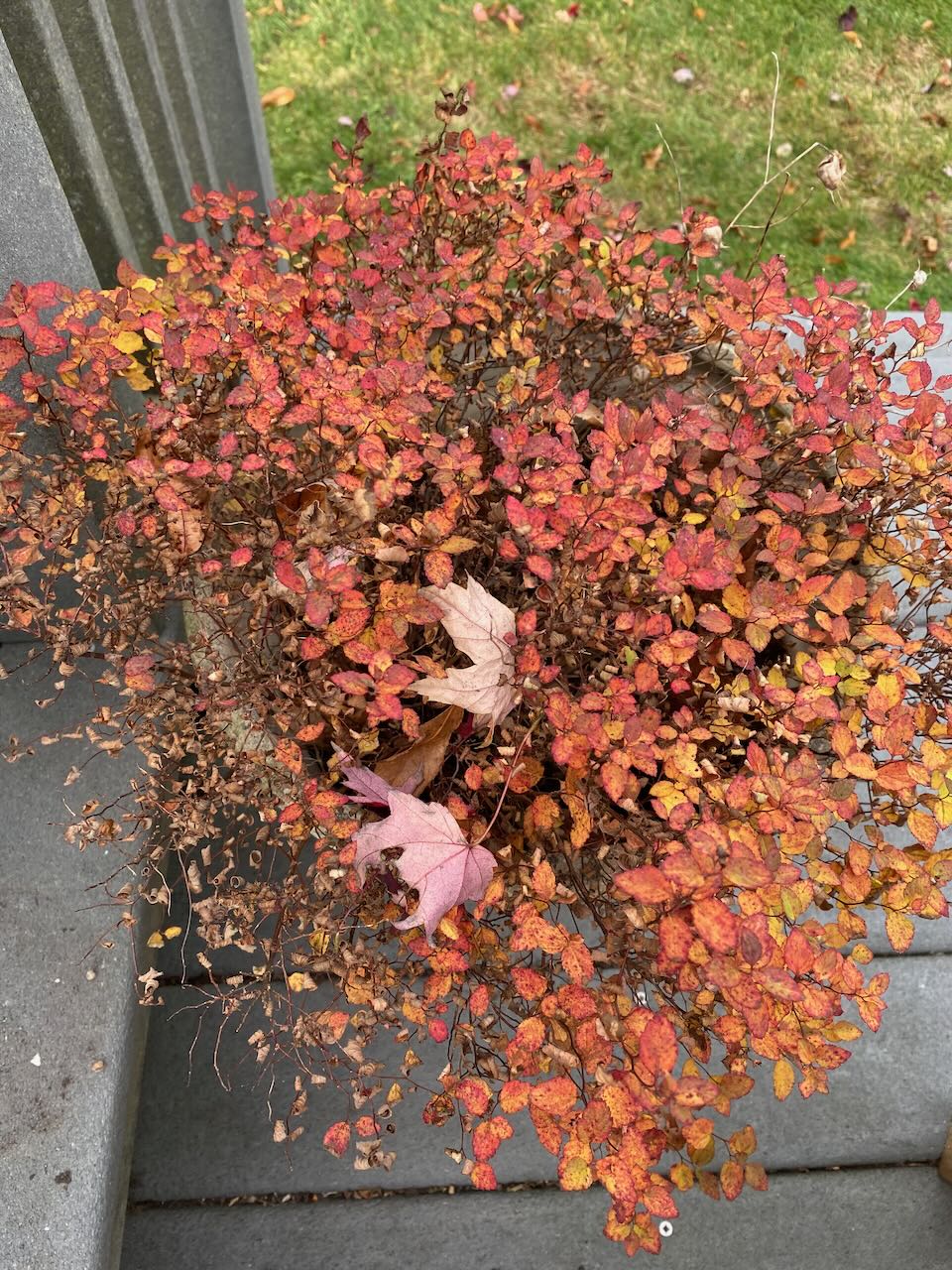 The late warm season continues. Most of the flowers are gone, but there’s still a lot of autumn color. The spirea planted in front is mostly down to bare branches, but this one in a pot on the deck is still in glory. This is odd, first because the front yard gets more sunshine, facing south, and the deck faces north; but also because roots in the ground get more protection from weather than roots in pots do. Nature surprises us whenever she wishes. The potted spirea is a volunteer – a pot of nigella was colonized by free-range spirea seed, and quickly became too lovely to remove. Here it is garnished by a couple of immigrant maple leaves, likely carried by whatever forces brought the spirea seed.
 Here’s the donor tree for those maple leaves, with just a little left in its branches to continue decorating the yard.
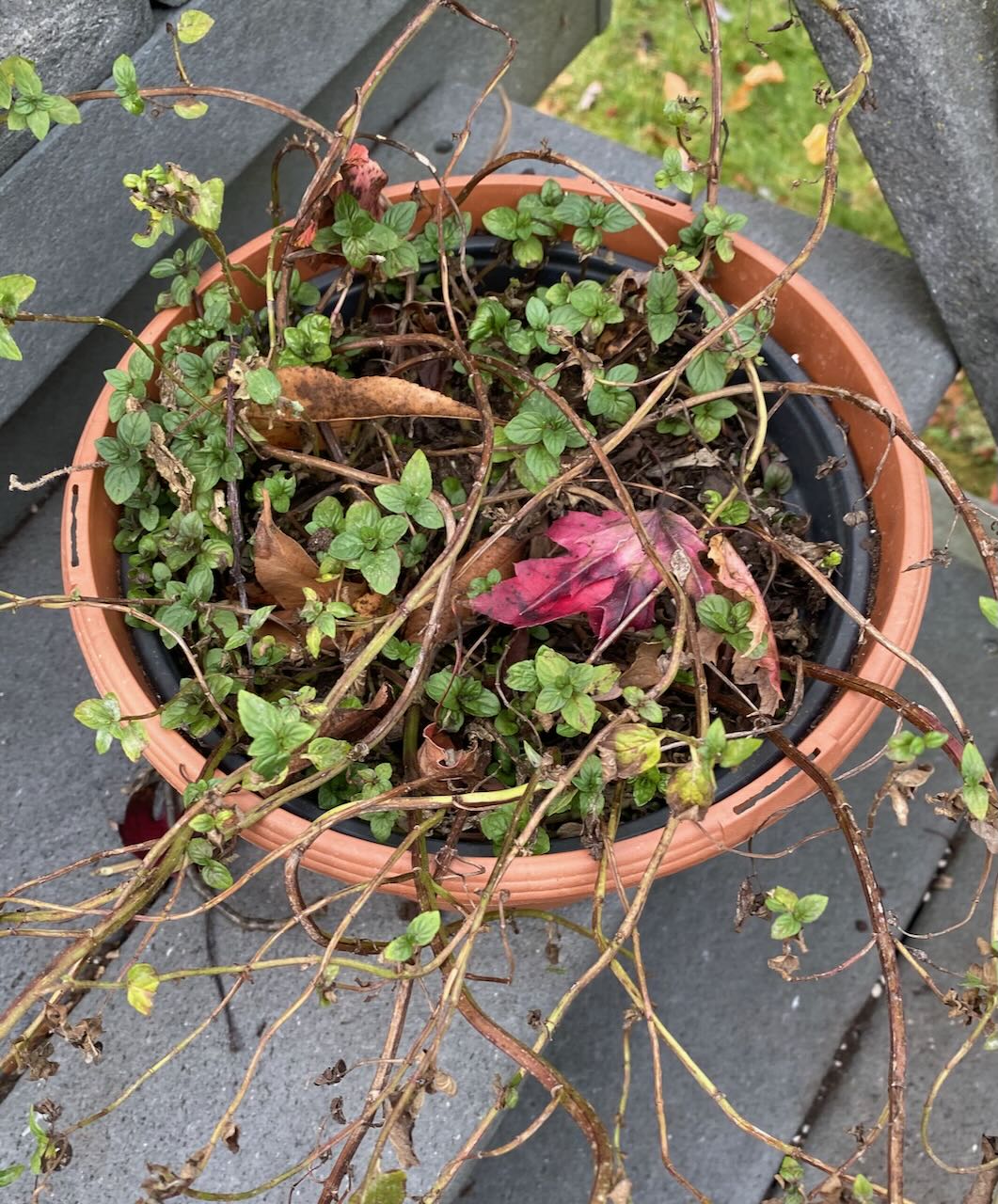 My herb collection has a mixed response to autumn. I had to bring the basil indoors, but thyme and sage will persevere outside all the way to Thanksgiving. The pot of mint may not last quite so long, but meanwhile has collected its own leaf embellishment.
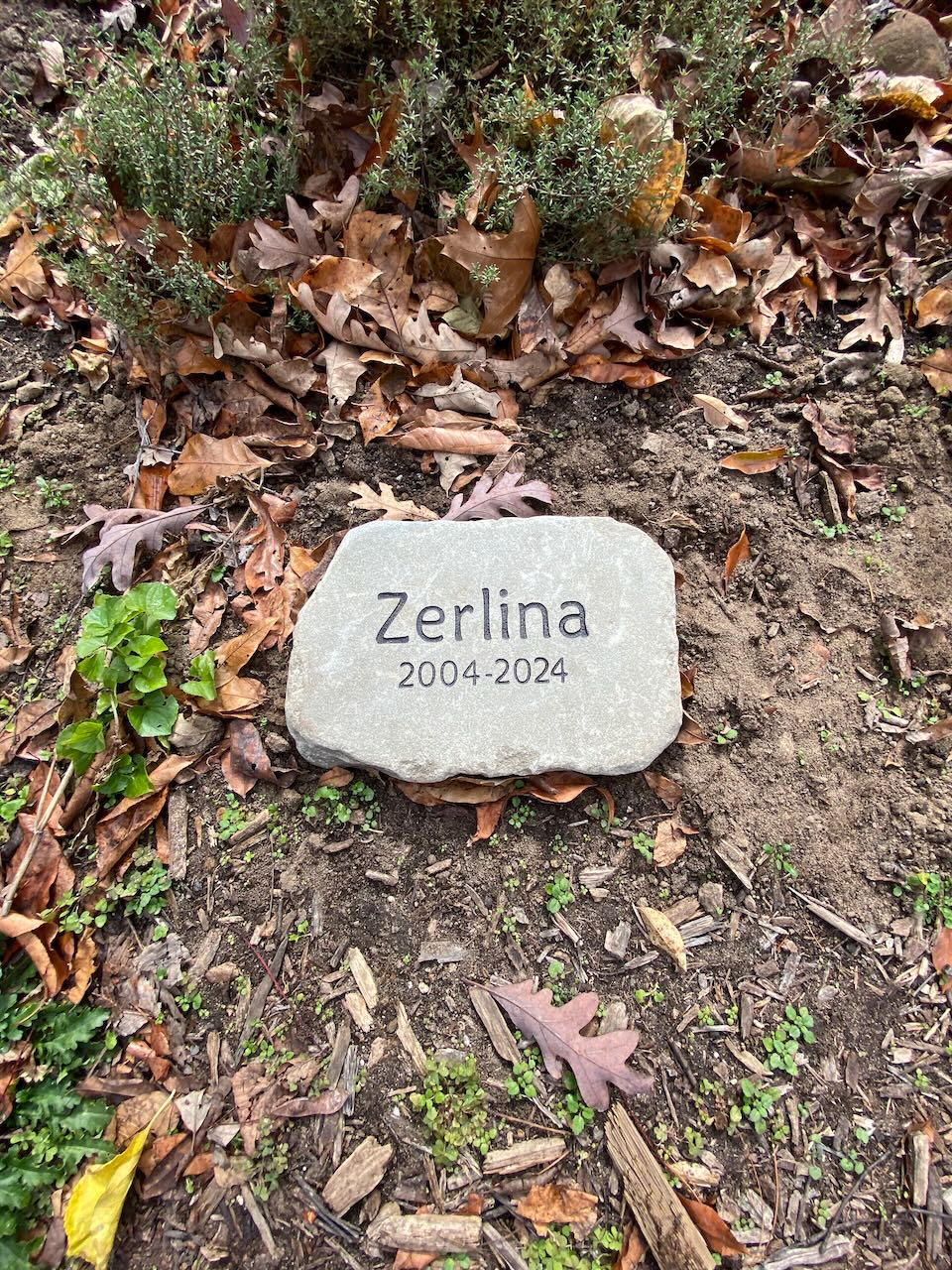 Meanwhile, after much inspection via the internet, I ordered a memorial stone for my wonderful cat, Zerlina. Many of those offered had elaborate decorations and extensive text, but none came up to Zerlina’s level of elegance. I chose one in her colors, with a soft shape. Not that a stone will be puffy, but hard angled edges seemed wrong. Doug came out to the garden with me while I buried her ashes in the center of the garden next to the thyme, and placed the stone on top. I needed the hugs. Then I sat for a while on my glider bench, thinking about her. The thyme will spread, and maybe I’ll encourage it to surround the whole stone. I haven’t decided yet, but thyme sounds like it belongs with memorials.
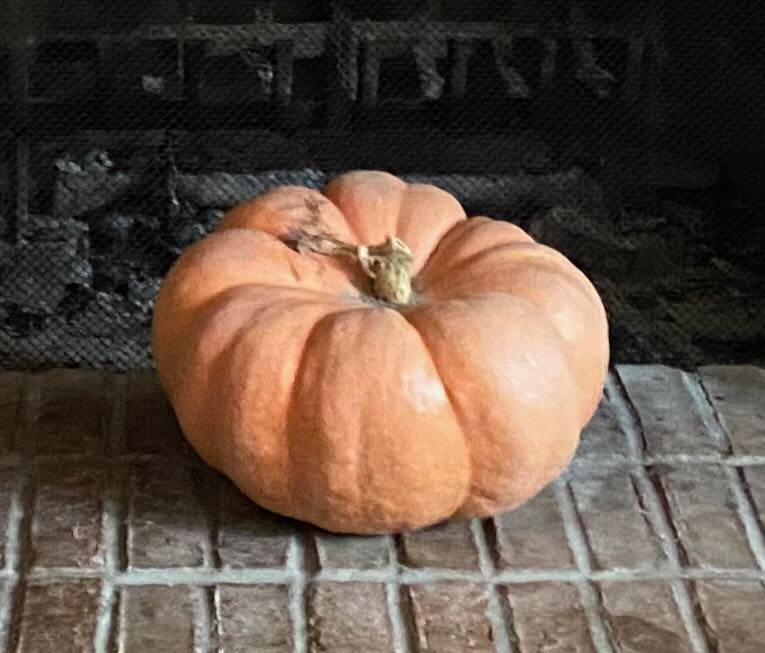 Then I went back into the house, where I picked up all the pumpkins and put them back in different places. I had to remember that things can change. And I found a sort of puffy one for the hearth.
 This morning my sprinkler guy, Craig, came and winterized the system. It’s pretty exciting to watch – he hooks up his air compressor, and it blows the water out of all the pipes at once, like an inverted thunderstorm. All over the yard, clouds rise out of the ground as if the woodchuck is popping open a lot of champagne.
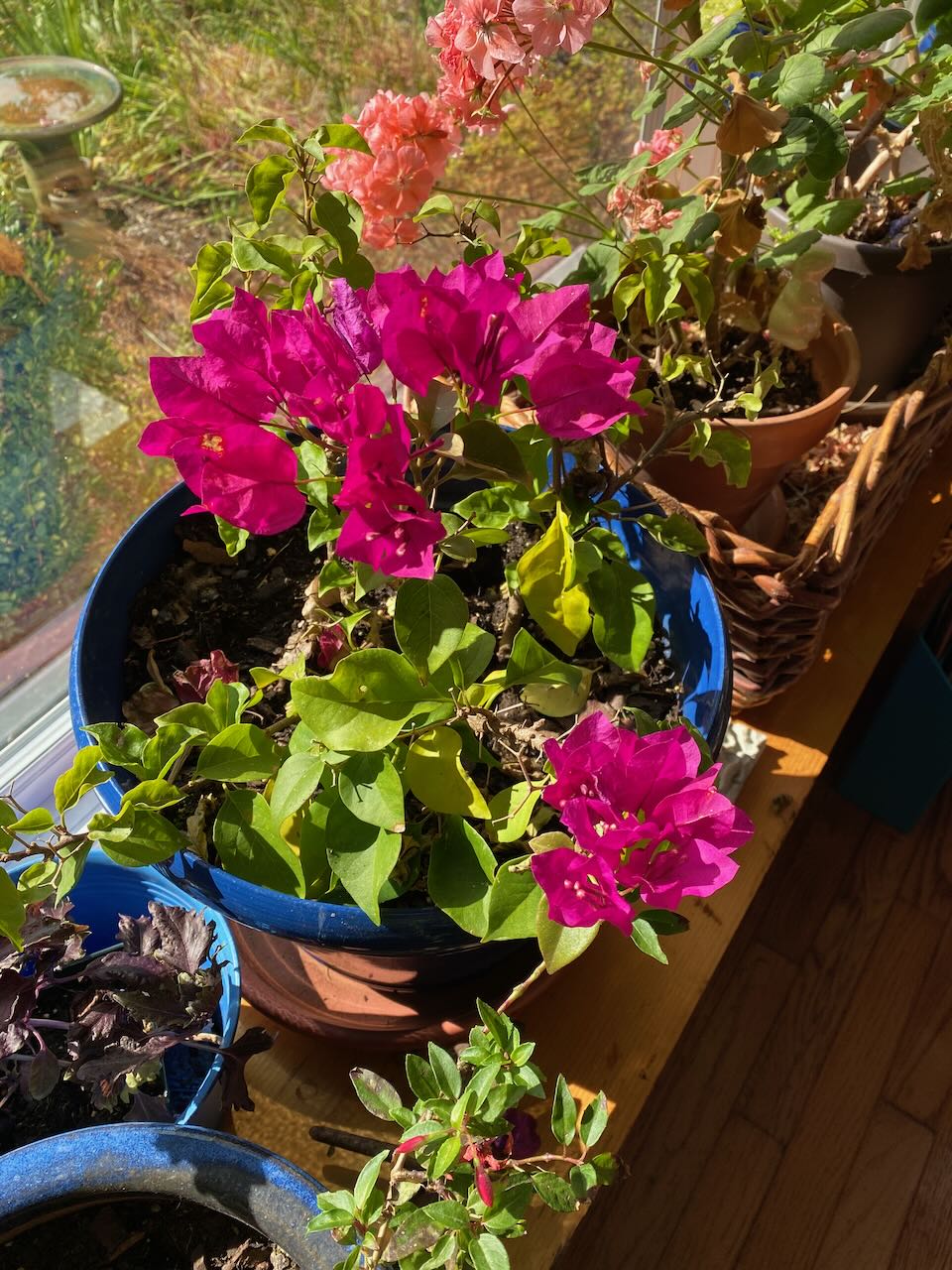 We haven’t had a frost yet, but with the cooler temperatures and shorter hours of daylight, what flowers remain won’t need me to water them. When I moved here fifteen years ago, Labor Day was the time to bring in your tender plants before the frost. Now, Columbus Day is in plenty of time. My bougainvillea gets a spot the sunniest window.
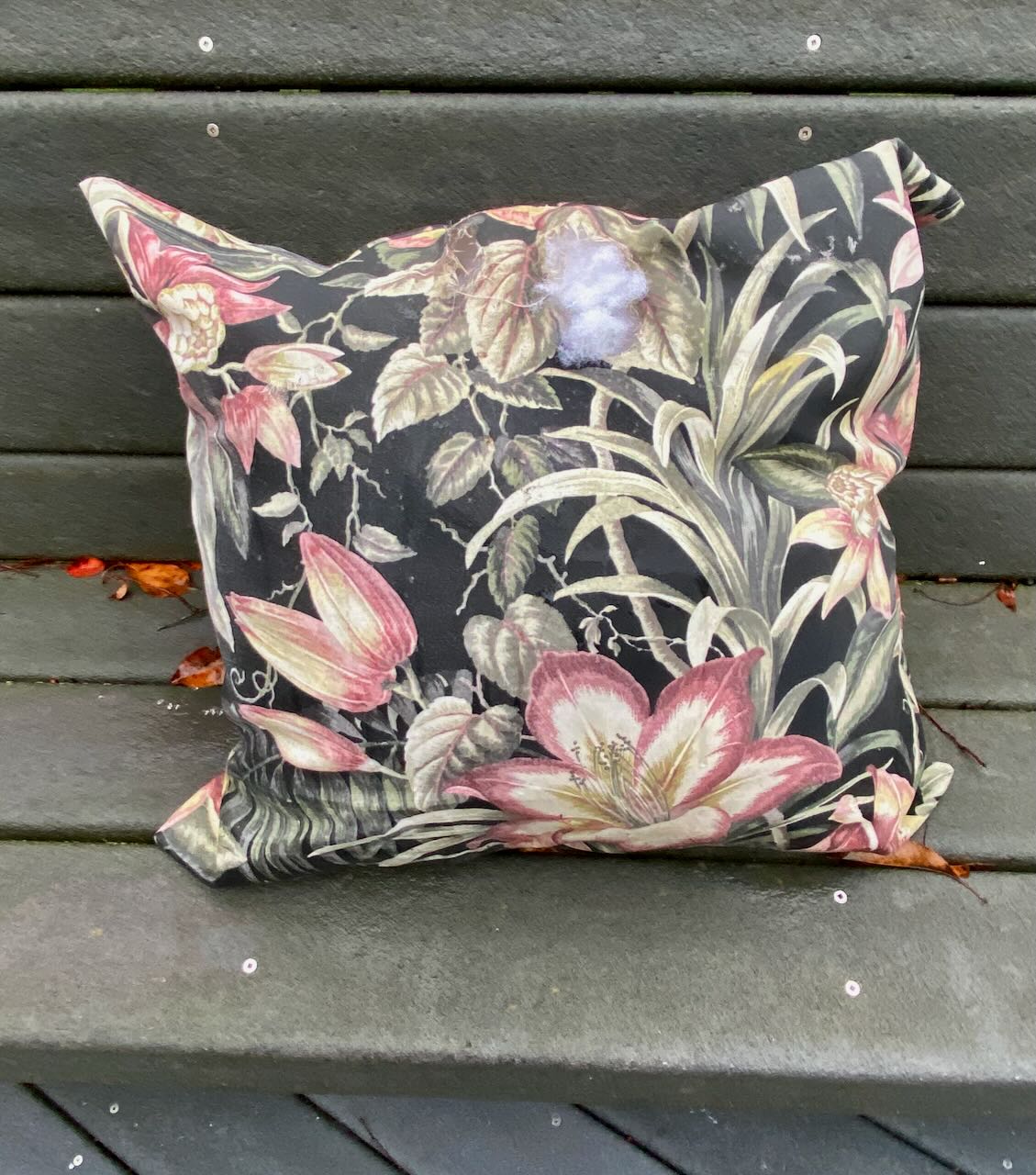 Next up will be bringing the pillows in from the deck. You see the white puff on this one – that’s the spot where the little red squirrel has been pulling stuffing out and carrying it away. I tried to take a picture of him at it, but he was way too fast for me. I also tried to see where he was taking it, but he was too fast for that, too. My first impulse when I saw this marauder, was to save the pillow by bringing it in. Two considerations made me leave it out there: one, that taking it away would encourage him to break into another pillow, whereas leaving it might mean only this one pillow was damaged; and two, it was very entertaining to watch him pack improbable amounts of fluff into his mouth for each trip. Squirrels don’t hibernate, but build nests for warmth in the winter.
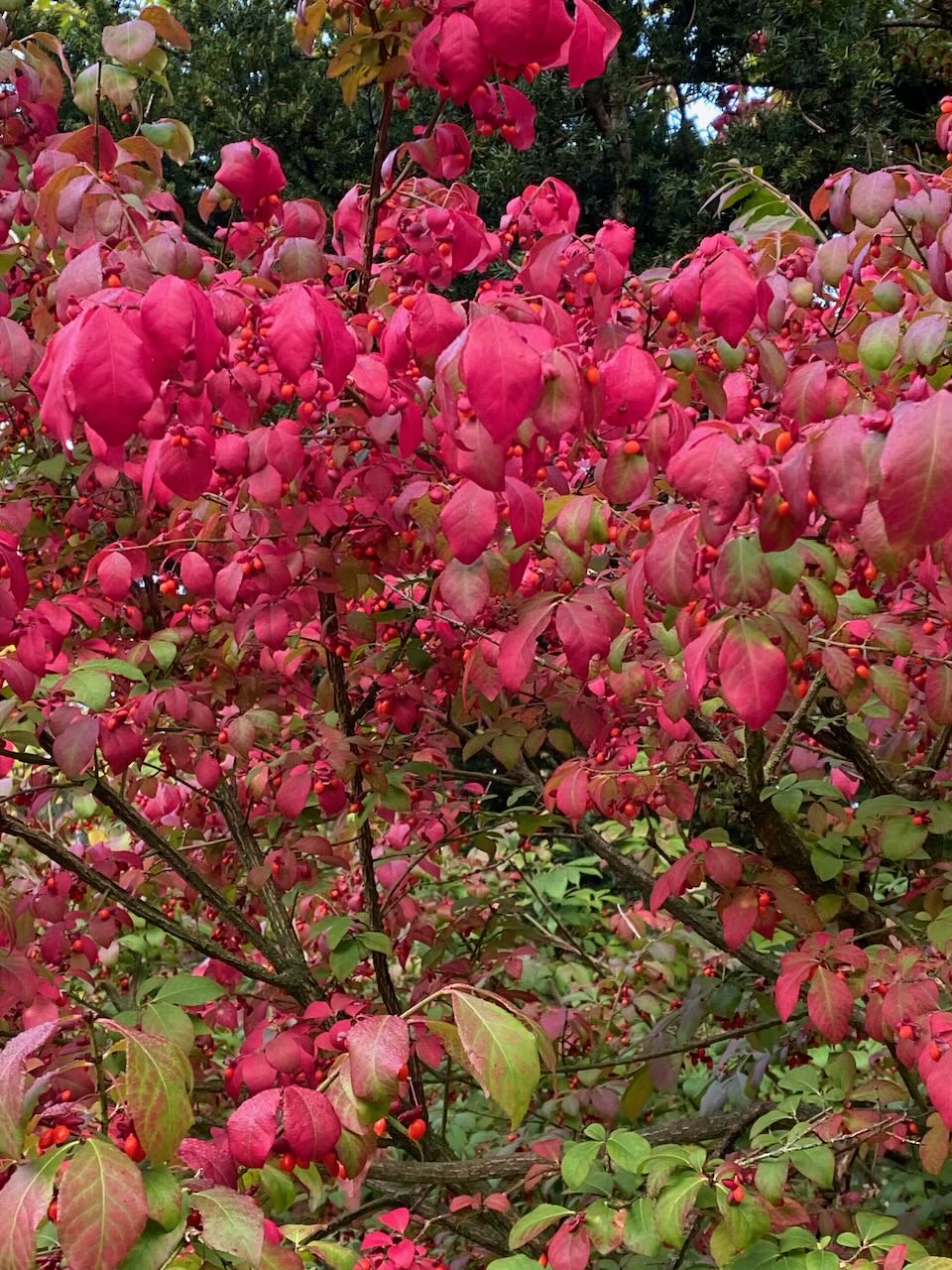 It doesn’t take a frost for the burning bushes to live up to their name. The color is glorious, and it’s very generous with its seeds, a benefit to the birds and small mammals that stay for the winter. Burning bush is not native, and in many areas is considered an invasive pest with no natural predators. Around here, though, the deer are happy to step up.
 Out in the garden I still have a few zinnias, but mostly I have miniature pumpkins. I love growing them myself because they’re small enough not to overrun the garden, and I get to cut them with long stems and curlicues still attached. Here they are perched on the hearth of my fireplace, on normal size bricks for a sense of scale. I’ll go down to one of the farms this week to buy some big pumpkins – some for the house, and some to set out on the porch where, when they’re finished building nests out of my pillow, the squirrels will have a handy pumpkin snack.
 I was puttering at my garden bench when I noticed a lot of bees whizzing past me. A little inspection revealed that they were coming from – and going to – a hole in the ground, just inches from where I stood. I set a large flower pot right up next to it, not to block them but to block me, from stepping into the nest. I’d seen a ground-bee colony once before, but had never looked up their lifestyles. This time I did: Mining Bees, genus andrena.
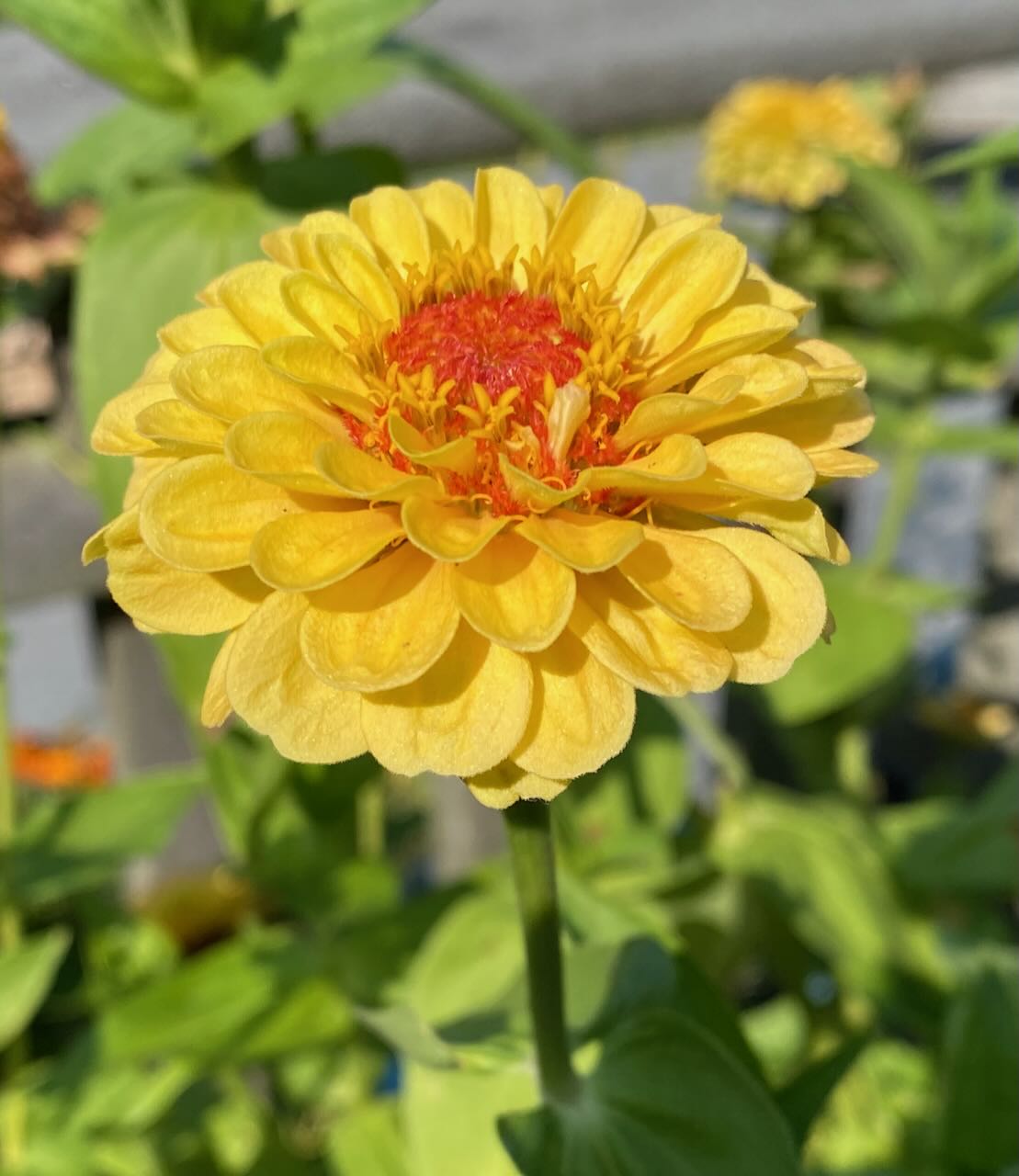 The local botanical garden says they’re important pollinators of the Michigan native black cherry tree, carrying 18 times more cherry pollen than other bees. I have several of these trees in my yard, including one that hangs over the deck and makes a total mess for a month while the cherries fall. The cherries are small with a tiny, thin layer of flesh around the pit, so you could boil them up for jelly but you can’t eat them unless you’re a chipmunk. I do like to watch how the chipmunks fight over the cherries though there are enough to feed a whole neighborhood of chipmunks, possibly for the whole winter. So human of them. It briefly occurred to me that if I got rid of the bees, maybe I’d be pestered with fewer cherries. But I find the industrious, focused little bees endearing, so that’s out. They’re also big on pollinating tomatoes – thank you, bees – but my tomato blossoms are definitely too few these days for this much bee traffic. What’s blooming now? I have lots of zinnias,
 many marigolds,
 some bee-shaped snapdragons. None of them mentioned in the article, and nope, no bees on these flowers.
 It was hard to follow the bees in flight. They soared way up high before they traveled on, and I lost them in the sun. But scanning the yard, I thought I could see where they came down again. It wasn’t listed on the Bee Menu, but for heaven’s sake, isn’t this where you’d go if you were a bee – an Autumn Clematis, just bursting with bloom? I didn’t manage to catch them in this photo, but they were there. Busy, like all the best bees.
 Robin Richstone