Remembering Jean Burden

Every September first I think of Jean Burden. This was her birthday – September Morn, she would say, and laugh. She was a poet, an essayist, a teacher, and a cat lover, and would have been one hundred eleven years old today. This photo is from one of her lovely Christmas parties, probably when she was in her seventies. She died at ninety three. I met Jean soon after moving to Altadena, when I mailed off a set of poems to the poetry editor of Yankee magazine. Yankee, published in New Hampshire, was always in our Long Island house when I was growing up, and deep in its back pages was a single page of really good, serious poetry. I had a poem about a blizzard that I thought was a good fit, but it was aiming high to hope to be published where famous poets trod. I sent it off with a few others and a self-addressed, stamped reply envelope – that’s how it was done before email and websites – and waited to hear back. I was surprised and delighted when it arrived with a letter accepting “The Blizzard,” and the amazing news that Yankee’s poetry editor lived in Altadena! She also invited me to be in her poetry workshop. And that’s how I met Jean Burden.
Jean was in her sixties and I wasn’t thirty yet. She was elegant, knowledgeable, confident, and lived in a wonderful small house that might have been part of a farm before the suburb filled in around it. Though I’d had a few poems published in places of no particular distinction, I had never read my poems aloud to anyone. I was nervous and self-conscious but she was gracious and kind, setting out cookies and tea for the group. She could be brutal about the poems themselves, but not to the poets. One of her favorite expressions when someone was devoted to a line, or an image, that didn’t work, was. “Cut it out. You can always use it in another poem.” We had fun applying this to random words and situations, but really it was good advice. She helped us back up and look at our poems more objectively, checking what we said against what we meant. Sometimes a poem surprised you as you wrote it.
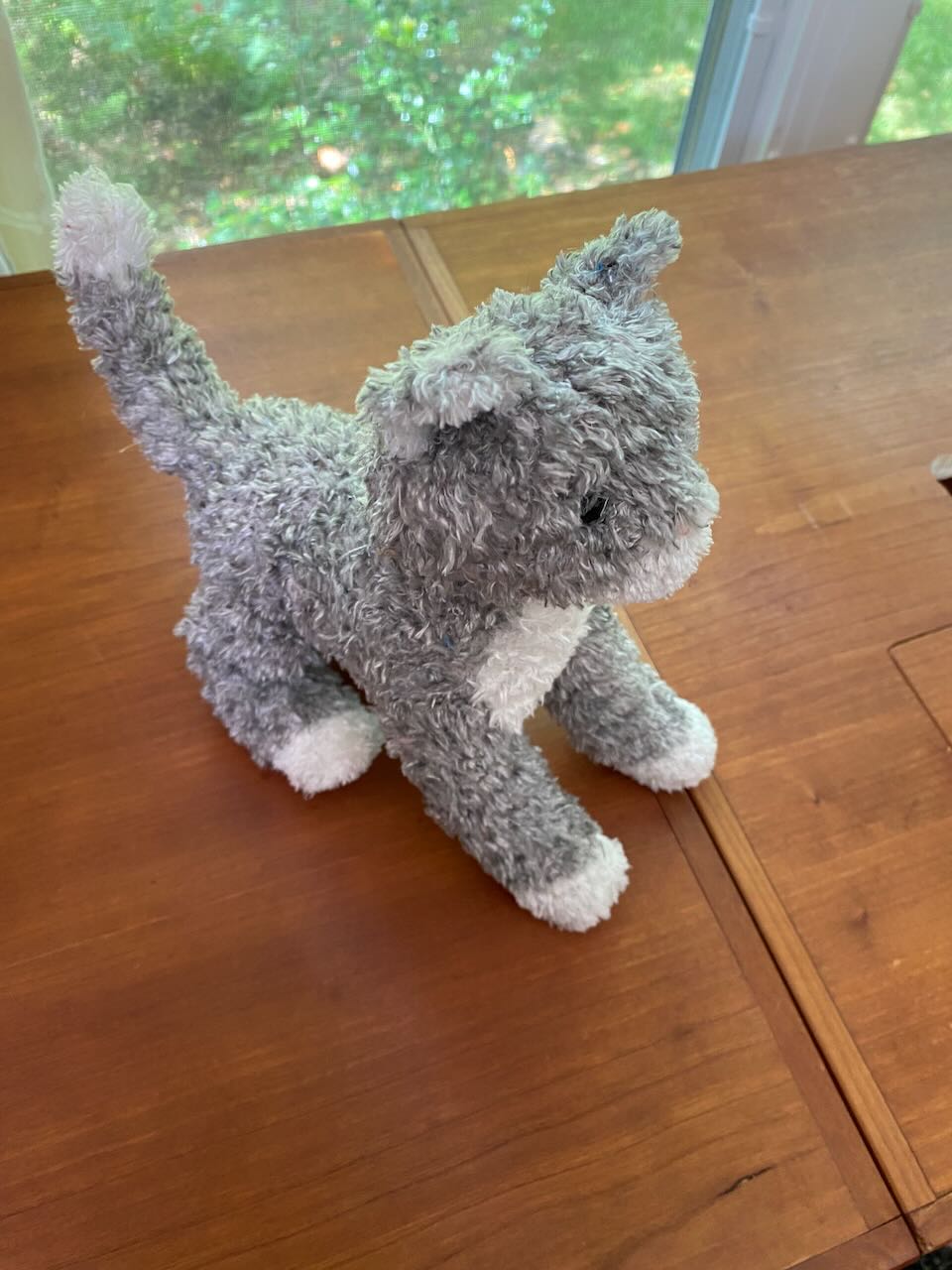
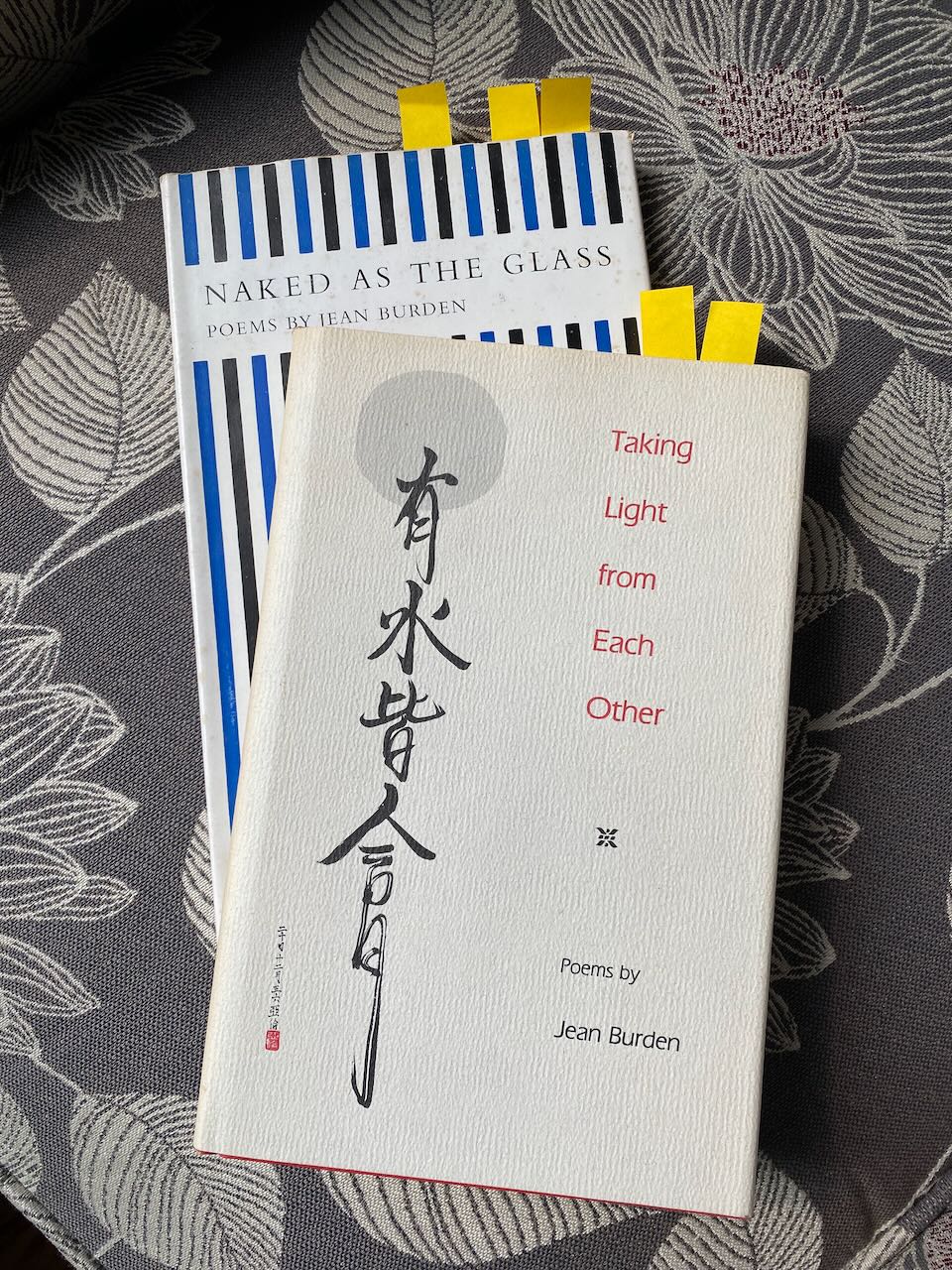
My copies of her first book of poems, Naked as the Glass, and her second, Taking Light From Each Other, bloom with bookmarks for my favorite poems. The pet care books she wrote under the pen name Felicia Ames are still available in used editions. Cats were her thing, as they are mine; another bond. My copy of her anthology of cat poems, A Celebration of Cats, is tattered from use. I still have a stuffed toy cat from her collection that was given to me after she died.

Her book Journey Toward Poetry is a good grounding in her approach. She says about her college studies with Thornton Wilder, that she was starved for “not only criticism, invaluable as this can be, but the contagion of enthusiasm for the art itself that can only be communicated by someone actively engaged in and committed to it.” Every year I got to meet, and sometimes have a seminar or dinner with, each wonderful poet invited to read at the Jean Burden Annual Poetry Series at Cal State LA. I felt the contagion of enthusiasm she wrote about, having Howard Nemerov advise me to take a line out of a poem, or even driving Maxine Kumin to the train station. Jean was long gone when her lovely little house was lost in the January fires, the porch where the cats sat, the small garden where they hunted, the rooms where poetry and laughter bounced off the walls. Whatever remained of it has been cleaned away, carted off to a landfill. It’s ready, now, for the next thing to happen there. 

Fire and Ice

In many folk traditions, fire is called the Trickster: the hearth, the center of the home, comfort, warmth, hypnotic calm looking into flames in a fireplace; keep the home-fires burning. Then one day fire, our friend, our helper, pushes, wild against the boundaries we’ve set for it, and destroys everything. Fire, the magical, reassuring transformation of wood into heat, suddenly ravenous, turns our familiar, substantial surroundings into wind and ash. My friends, my former neighbors in Altadena are sifting through that ruin now. 

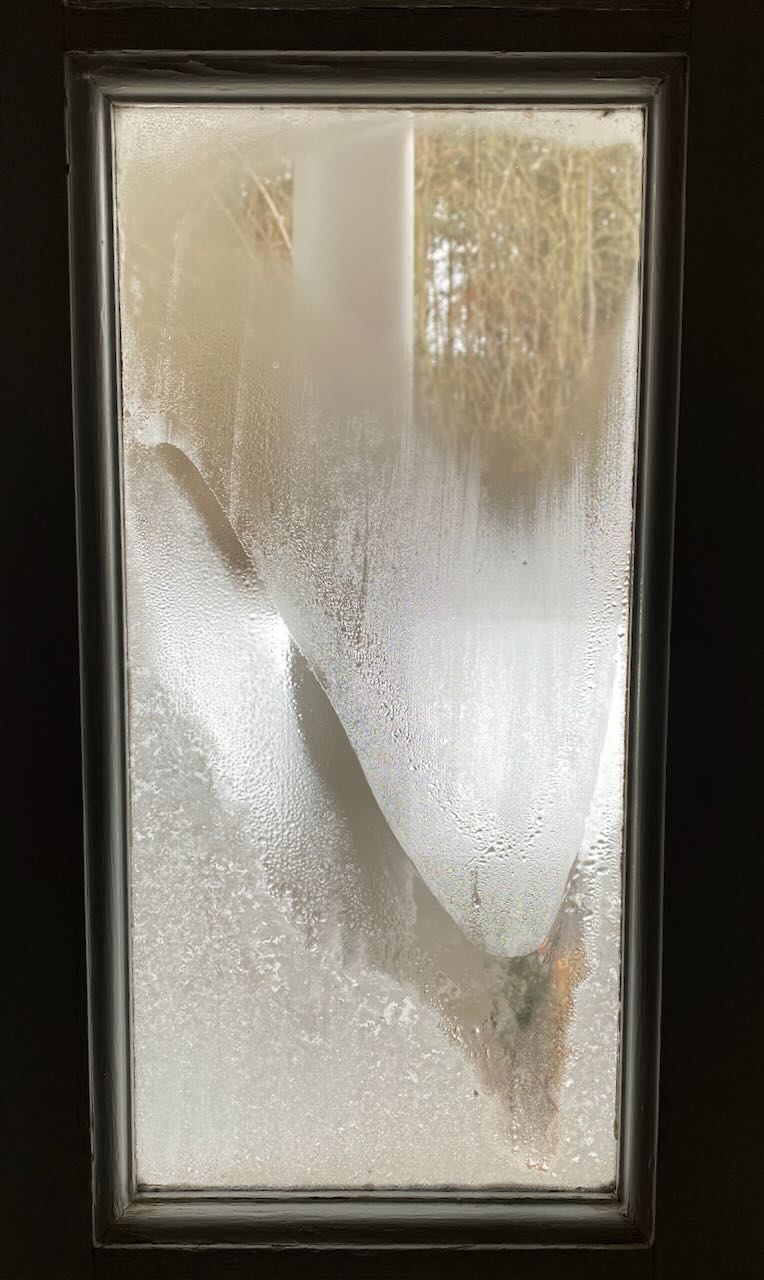
Here in Ann Arbor, most of a continent away, warm air from the captive, well-behaving fire in my furnace breaks against the frozen cold of a single-pane glass window, and paints it with a streaky coat of ice. On the inside. As many times as Doug has explained the physics of this to me, it still feels astonishing that heat, essentially fire, can do this.

This little window sits alongside the front door. On the other side of that door is winter, not a very snowy one yet, but very cold. I sweep the snow off the porch steps, since otherwise people walking on them emboss footprint-shaped ice patches into the surface, slippery and hard to scrape off. Another mystery of physics: mini-glaciers created by human weight and shoe leather. Or whatever bootsoles are made of these days.

The deer are in the backyard this morning. They circulate around my sleeping garden, breaking through snow and ice with their sharp hooves to get at whatever it is they’re eating. There’s much less of it now, yet they bunch themselves into herds of twelve or fourteen in winter, presumably to share body heat. They have no fire. Is there any animal other than humankind that uses fire? That thought to catch a piece of wildfire and bring it home, to bank it up, to keep it going, to restart it when it failed? To stop it when it over-reached? How brave that first user of fire was, persevering as everyone else ran for their lives. I was going to say it took a long time to learn to control it, but maybe we aren’t there yet. The brave people now are those who come running at need to put it out.

What Would You Take With You

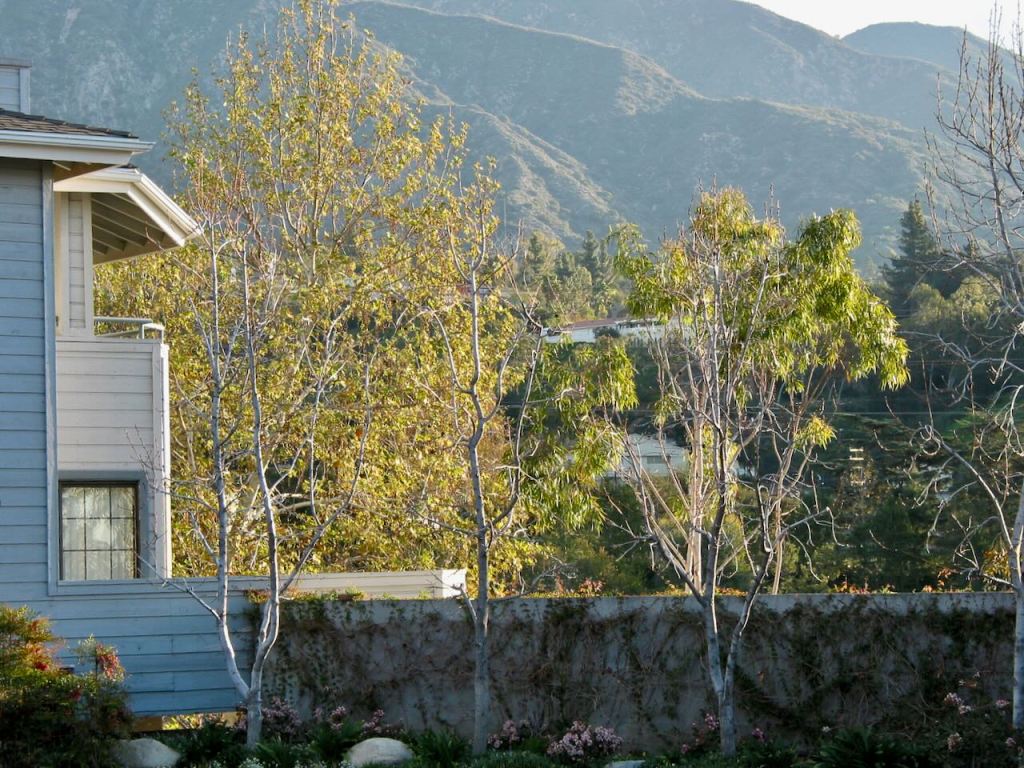
When I lived in Altadena, no one in the rest of the country had heard of it. Uphill from Pasadena, just like it sounds, it sits on the skirt-hems of those mountains that backdrop the Rose Parade, comfortably anonymous. It was anonymous as usual this year on New Year’s Day; one week later wildfires called Altadena’s name. The whole country’s heard of it now.

So here’s my question: you have to evacuate under “immediate threat to life.” What do you take with you? Would you have a better list if you thought it through ahead of time, or would facing the moment of truth give you clarity, and focus? Official lists of what to take feature things like birth certificates, marriage certificates, title deeds, and insurance documents. Really? My entire desk does not fit in my car, and surely these things are replaceable. An extremely organized person might have them all in one big envelope, or maybe have photos of them all on their phone. Too late now.

Clothing, though replaceable, is on the list since it’s an immediate need. My friend Jean once told me of a time when she faced an evacuation “warning,” which means there’s more time. She went to her children’s closets and pulled out clothing for them; went to her husband’s closet and pulled out clothing for him; then went to her own closet, took a look, said “Nah,” and closed the door. I greatly respect her ability to see opportunity in the prospect of loss. She did not, in fact, have to evacuate. I always hoped she went out and bought some new clothes anyway.

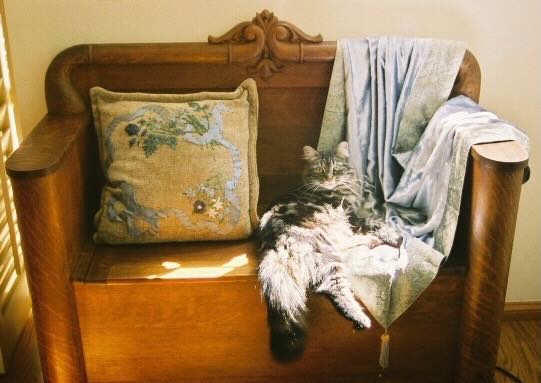
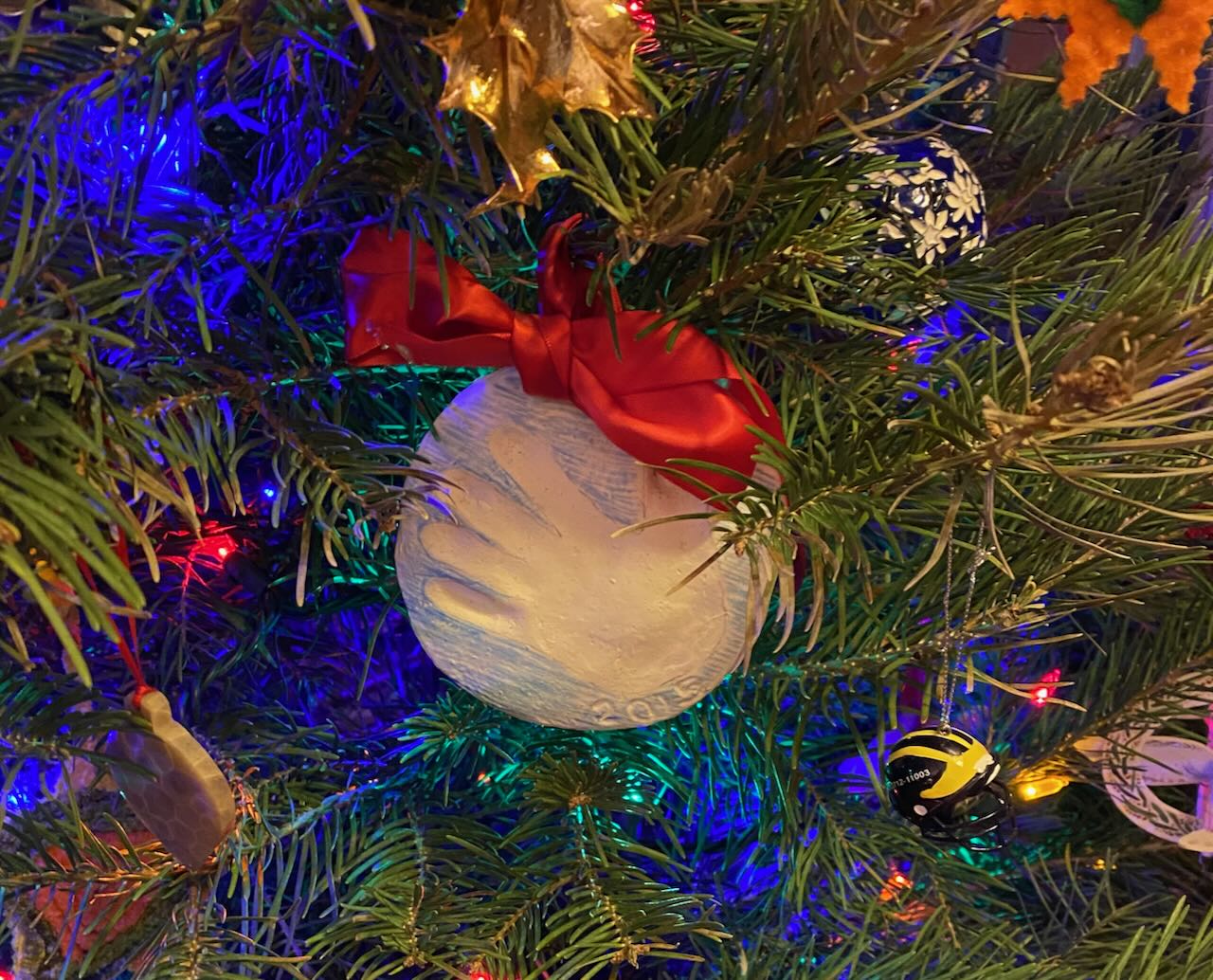
But what about the irreplaceable? People sometimes make the error of assuming that, since I’m a poet, I don’t value material things. Wrong. Poets love things. Keats wrote “A thing of beauty is a joy forever.” Williams wrote “no ideas but in things.” Pablo Neruda, an avowed communist, wrote odes – scads of odes – to material things. He loved them he said, for “the trace of someone’s fingers/ on their handle or surface.” The Christmas ornaments my children made when they were small; the quilts my grandmother made for me; the antique windowseat my father and I refinished together when I was a teenager: irreplaceable. They are safe with me here, in Ann Arbor, but I can only imagine how it would feel to lose them in ash and chaos. “Evacuate” has in it the root for vacuum: empty. Let’s hope the time comes soon when Altadena fills itself back up, and returns to anonymity.