I once came across the results from a competition for The Best Job in the World. The runner-up was the person who built rockets and castles out of lego for store displays; the winner was the guy who drove up and down the state of Vermont all autumn long, tracking peak color.
But what about whoever thinks up names of plants for seed catalogs? Oh Happy Day tomatoes, Dragon Roll peppers, Magic Molly potatoes – inspirational; Jack Be Little pumpkins, Pesto Party basil, Black Cat petunias, Bees Knees monarda (it’s short) – informative. The possibilities are dazzling.
And I am dazzled. It’s hard to keep the size of my fenced garden in mind as these voluptuous images, promising desirable traits, flow out of my mailbox. I sit by my window with a cup of tea, my cat, the catalogs, and post-it notes to mark all the pages that have stuff I want. It’s only when the catalogs bristle to bursting with neon colored post-its that I will sit down and get real, pull half the markers out, and order.
No doubt producing the new hybrid comes first, but how about getting a name first, and breeding a product to match? Crowd My Roots tomatoes. Squeeze In eggplant. Vertical pumpkin vines. Works With Asparagus Cosmos. I would splurge on extra post-its for those.
Meanwhile, here’s my January gardening: the windowsill.

narcissus, jasmine, heliotrope, and amaryllis

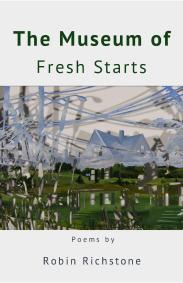 My chapbook of poems, The Museum of Fresh Starts, is being published by Finishing Line Press. The book is 18 poems connected by a theme of migration, change, and the need for refuge. It will be published on March 29 but you can pre-order it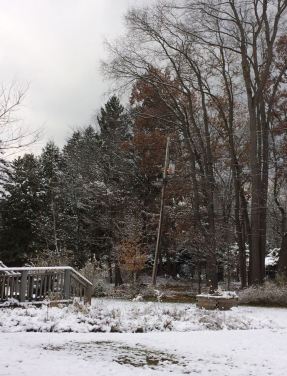


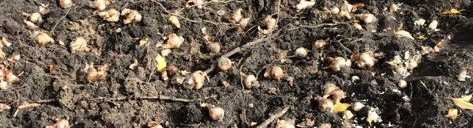
 It takes a lot of walking in autumn leaves, planting bulbs, and puttering in the garden to get some peace these days amid the slogans and shouting. Nature, at least, is ready for change: leaves turn bright and fall away, juvie eagles are gone to fish in open water somewhere else. We’ve had a rainy October and the colors were late in coming, but here they are, lighting up trees before drifting down to mulch the winter ground, the end of one growing season and preparation for another.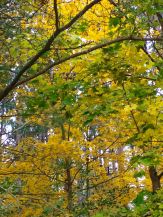
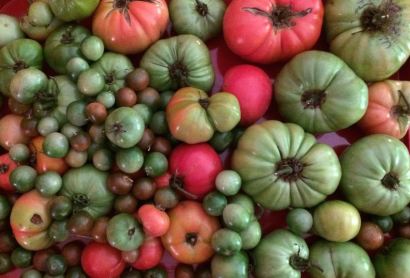 For something with such a material result, gardening is mysteriously satisfying to the spirit. Tomatoes can be beautiful, but I grow them to eat. I grow them for a material benefit to my physical body. But I buy most of the food I eat and could easily buy all of it; why do I garden? The transformation of dirt, water, seed, and sunlight into a substance nourishing to cell and sinew, supplying the gardener with the power to move, think, and write blog posts, is the most ordinary fact of existence on earth; still, the ripe tomato in my hand seems miraculous.
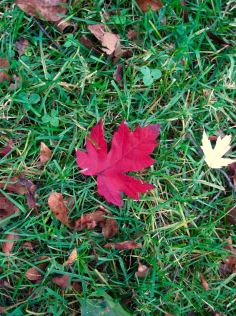 predicted overnight. Ripening is what tomatoes do, and they will continue to do it indoors, slowly, without leaf or vine. It is in them to do it; they participate directly in that large universal scheme. The vines spent the night open to the cold sky and this morning they are withered, the blackened leaves of tomato plants sifted over by red leaves falling from the nearby maples. I stand in this wide sweep of time, lifted into the flow of seasons, and for the moment not even needing to make plans.
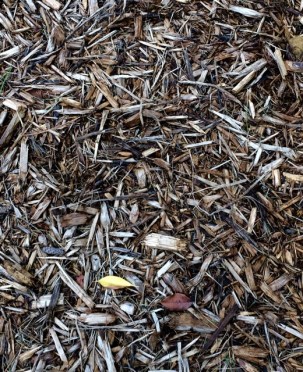
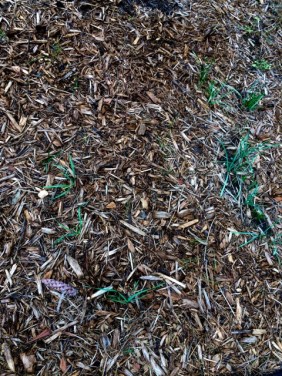
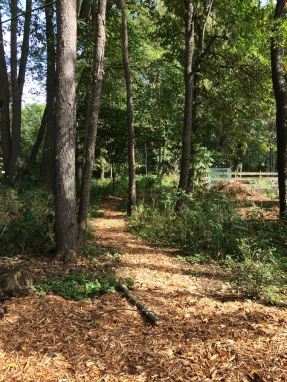 This is what some of that ambition led to. We ran out of New York Times and had to use packing paper, brown paper grocery bags, and random pieces of cardboard for the base. Many barrowloads of mulch later we had a lovely winding path with places to stop and look, or sketch, or sit. My idea was to mark out areas where certain plants could be encouraged or yanked out – confining (good luck) raspberry brambles here; spreading a fern bed (more likely) there. It also made it possible to visit the redbud and the kousa dogwood we’d planted back deep. If I can find more shrubby perennials this late I will plant them in the bends of the path, but it may have to wait for spring.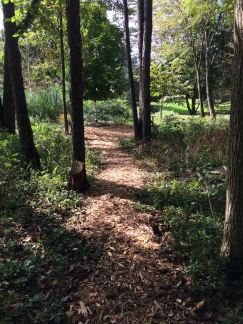
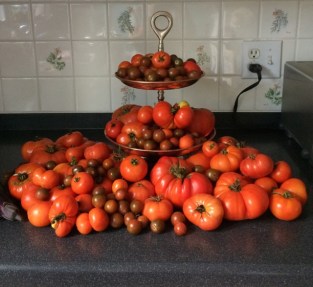 The garden right now is Easy Street. Weeds and bugs have slowed down with the cooler nights and shorter days, while the tomatoes keep rolling in like it’s still mid-August. Mostly all I have to do is go out there with a gathering basket and let the gorgeous ripe delectable tomatoes fall into my open hands.

 Robin Richstone