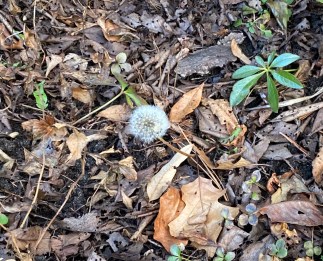
 Happy New Year! We’ve had so much rainy, fifty-degree weather in the last two weeks, it feels like winter in California. Where am I? What season is it? I’m not the only one confused – look what’s growing outside my front door. Yes, it’s a dandelion, in Michigan at New Year’s. The little three-leafers near it are baby hellebores, normal for this time of year, so they got it right. I suppose the dandelions go by temperature, which has gone loony, and the hellebores go by number of hours of daylight, which doesn’t fool around.
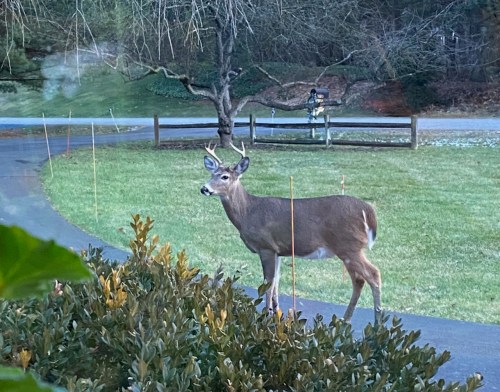 Without snow it’s harder to track animals passing through the yard, but Mr. Eight Point, so reticent in past weeks, strolled right up yesterday and peered in my window at me. I believe we have now passed from gun-hunting season to bow-hunting season, but the deer have figured out to hang around houses for safety. They’re pretty safe anyway, with the wolves booted out and fewer people hunting.
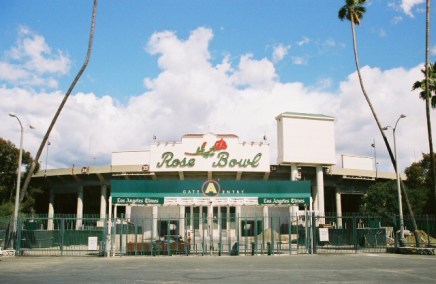 Speaking of where am I, since it’s New Year’s Day I’m going to watch the Rose Parade. I’m going to stream it live from the LA station that has way the best coverage, and I’m going to hook my laptop up to my tv screen so I can see it nice and big. Don’t want to miss any of those flower petals. When I lived there I would either go to the parade or see the floats where they parked them afterward, but I never watched or went to the bowl game. I wasn’t into football until I moved to Ann Arbor and began to drink the water here. But today I will be watching the Rose Bowl for sure. I’m wearing my Michigan sweatshirt right now, to be ready.
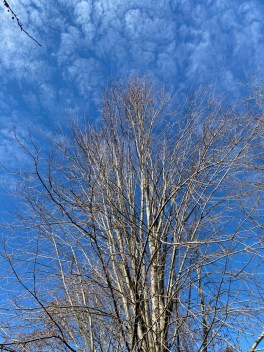 Last night about ten p.m. a neighbor set off fireworks. They were loud, bright, and gorgeous, but it was only ten p.m. I turned to Google: where is the time zone two hours ahead of Detroit? Brasilia, said Google. Do I have neighbors from Brazil? If so, they’re probably happy to have a warm holiday. There’s much that’s beautiful in winter even without the snow – this bare maple glittering in sunlight, for instance. You’d think there was a California sun behind it. But it’s the same sun wherever you go, across the country, across the planet. It’s just after dawn in Pasadena now; the parade will start soon. Off I go to view it, from my different angle.
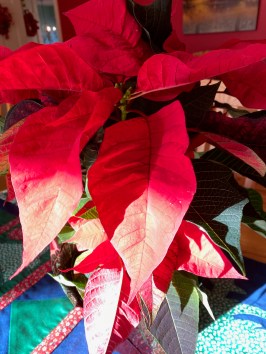
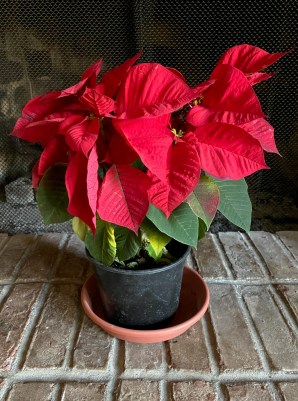
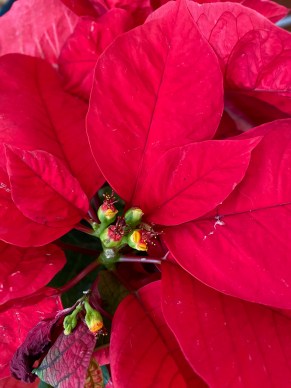 It’s the time of year for poinsettias. I knew better than to put them out on my porch in the Michigan winter, but I hadn’t considered how to get them home from the store. When the checker at Arbor Farms pulled out florists’ tall paper bags for them and stapled the tops shut, I understood. Poinsettias are native to Mexico and Guatemala.
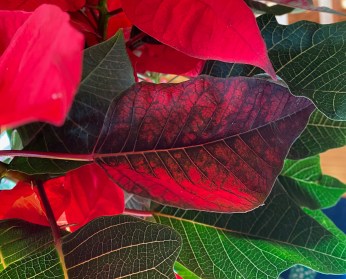 The Aztecs called them cuetlaxochitl, meaning “brilliant flower,” and the Maya called them k’alul wits, or “ember flower.” They acquired their English name, poinsettia, when Joel Robert Poinsett, the first U.S. ambassador to Mexico, brought them back with him in the early 1800’s. As a kid it never occurred to me that the plants were named for a person. I thought they were “pointsettas” because their leaves were pointy.
 I looked up Poinsett’s biography, wondering what kind of character this beautiful plant got named for, and found he was quite a complex fellow. He had inherited an estate in South Carolina where people were enslaved, but became a leader of the Unionist Party, and opposed secession. He meddled in the affairs of Central and South American countries, annoying them with good intentions that were ill-conceived. As Martin Van Buren’s Secretary of War he took a scientific interest in mapping surveys of U.S. territories, but oversaw the Trail of Tears. And he was an enthusiastic world traveler and amateur botanist, which leads us back to why he brought this gorgeous plant home with him.
 Poinsettias are a Christmas plant, so since Christmas is all about the possibility of redemption from sin, maybe it’s not so bad to name them for someone who generally meant well, according to the standards of the time and place in which he lived, but did badly by the standards of ours. Which of the things we commonly accept today will be considered heinous in the future?
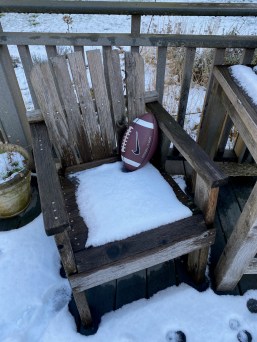 So, there was a big football game here in Ann Arbor a few days ago. It was an extremely satisfying progression of angst, drama, and joy, and all around town people spoke of the team as “us.” We won; our victory. Most of us didn’t even buy tickets to get into the stadium, but we won. Genuine, overwhelming exuberance in our town; dejection, misery, and some vitriol in the other team’s town.
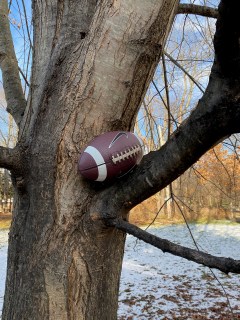 It’s hardly exclusive to this particular game, though the strength of reaction varies according to expectations, history, and number of games still to be played. Why do we, who don’t take the field, care so much? The progress of the game matters greatly to the kids who put so much effort into playing it. It matters very much to kids hoping for an NFL career, who need to demonstrate their talents and understanding of the game to potential employers. It matters very much to coaches, whose jobs depend on their performance. It could matter to the entire university. But as a concrete, actual thing, it makes no difference to the life of a fan at all.
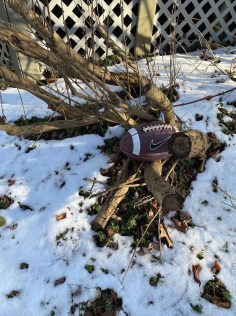 But our emotional center is right there. It must be answering to something deep and basic, which given human history I’d say is our need to have a group identity, to draw differences, to take sides. We are “us,” they are “them.” It’s the basis for sports, but it’s also the basis for racism; it’s the basis for war.
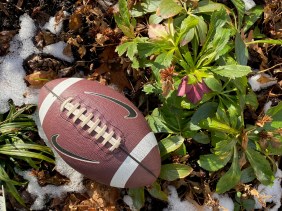 But racism and war destroy people. Sports give you all the emotional punch without the death and destruction. So here’s my proposal. Let’s invest all our need for group identity conflict in sports. Throw things at the television if you need to; cheer, shout, rage, overturn the popcorn bowl with abandon. Then it’s over and everyone can look forward to the next game.
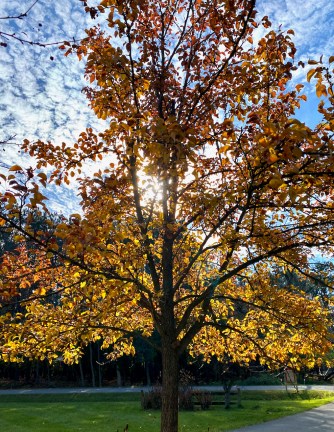 I’ve always loved November because it has my birthday in it. It’s my personal new year, the end of one thing that begins another. This is a time of year that could reasonably produce melancholy, but for me it’s a time for opening presents and eating cake. Actually, I prefer pie, but same idea – festive. Joyous. It was mild enough this fall that our pear tree still boasts some color, but the bones of the tree are already showing through.
 Frost has fractured the zinnias and cosmos, but the big white hydrangea heads have dried on their stalks into sturdy puffs, ready to be cut and brought inside to decorate the Thanksgiving table. There’s still time to plant tulip bulbs in the fenced garden and daffodil bulbs out where the deer go, plain, brown, lumpy bulbs that will burst out in twirly skirts come spring.
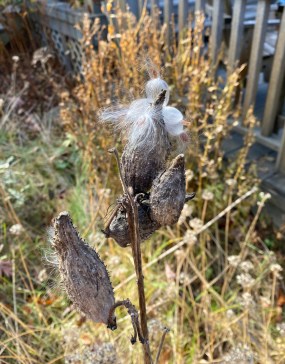 The milkweed pods are bursting out right now, into their world of angel wings, fluffy seeds setting sail. Underground their rhizones are spreading too, so that next year there will be more food for butterflies. Spring is the time of new starts, but fall is the time of setting up for them.
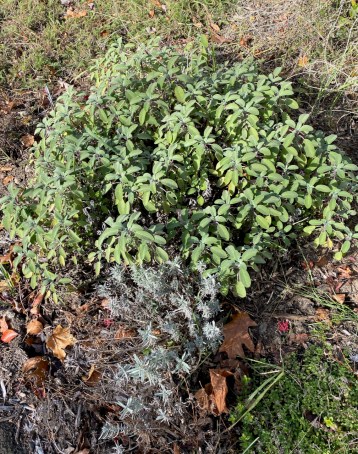 The herb garden will be the last to go. Lavender, thyme, and mint intertwine as though they’re keeping each other warm, and there will be plenty of sage for the Thanksgiving turkey platter. But that’s for later – after the birthday celebration. First I get the cake, and the candle, and I get to make a wish. They say to be careful what we wish for, but with the state the world is in, perhaps all well-wishers need to throw caution to the wind.
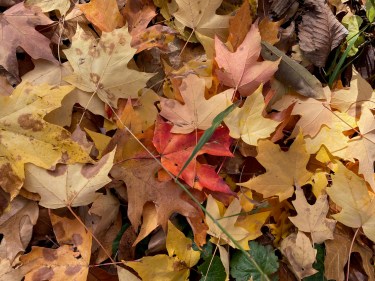 Faced with all that sadness in the world, unsure that anyone has a real solution, for now I’ve settled on doing what I can to try not to make things worse. The frost was late this year, but now the season of gorgeous, gold landscapes is coming to a close. I’m cleaning up for winter, but differently from how I used to do it. Cleaning up used to mean cutting down dead flower stalks, clearing out brush, removing leaves, and basically making the yard and garden ready for spring planting. But spring planting is months away, and meanwhile there are plenty of small creatures who need shelter for the winter. The solitary bees native to North America will hibernate in spent stems; non-migratory birds find protection from wind and storms in untrimmed brush; leaf litter is a natural mulch, protecting many overwintering plants. It’s a gardener’s Hippocratic oath: first, do no harm.
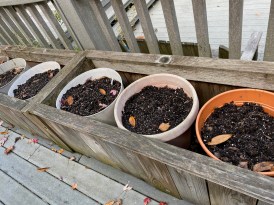 I did empty the pots on the deck that held zinnias and cosmos, so I could plant bulbs in them. They will look, for months, as though nothing is happening there, but if all goes well they will poke green noses up in March and flowers in April, proof that things happen sometimes when we can’t tell. This is a cheering thought.
 It’s chilly to sit out in the woods now, but calm. I learned from my friend Kari to gather some of the beautiful fallen leaves and press them in the pages of old phone books. Come Thanksgiving I will tumble them out to decorate my table. Kari says it’s nice if you forget one of the books, pick it up at random some time later, and find yourself in an unexpected shower of red and gold.
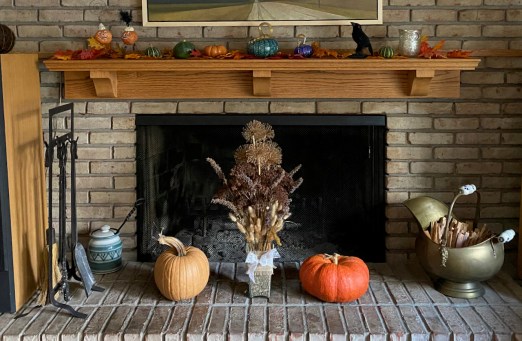 I also admit to cutting down a few spent flowers for arrangements. I brought in dried allium, sedum, and agastache from my garden, for this tableau. They dried themselves with no effort, and no phone books, on my part. I just left them out there till they looked like this, and then brought them in. Sometimes when you try that they get weatherbeaten and windblown. Sometimes you get lucky. I always make sure there are plenty left for the critters in the yard.
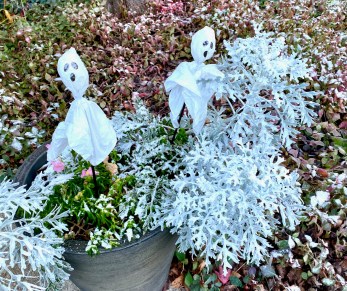 As I said, the frost was late this year. Last week it was 72 degrees here, but now there are snow flurries 50 miles to the north, and serious snow in the Upper Peninsula. The dusty miller by my front door, untouched by frost, makes a ghostly companion for some Halloween spirits. Dusty miller is a very tolerant plant, not sensitive to frost, not sensitive to drought, not picky about soil, and not tasty to deer. It’s also not a perennial in Michigan, but it carries our growing season into November with graceful persistence determined by its own nature. Unlike us, it has nothing to decide.
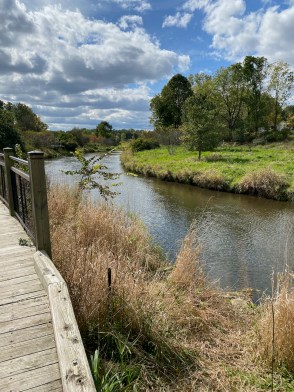 How does it happen that in a country, any country, where most people want to live their lives in peace, they are carried into war? Some days ago I went for a walk with friends on a path along a creek, a new path but with friends I often walk with. There I was, putting one foot in front of the other, when it struck me how amazing it is to walk, temporarily balancing on one leg, then shifting to the other, without falling over. Standing on one leg is not easy at all, yet this constant switching from one to the other is so easy small children learn to do it. A rainstorm had gone, leaving bright, gorgeous clouds behind it. It was an ordinary walk on an ordinary day, and it was breathtakingly beautiful.
 Then I went home and read the news. Imagine the friends you walk with and the landscape you love most, grew up with, or live in now, destroyed by someone who thought that was a good idea. It’s hard to see how he could have believed this would make life better for his own people. Anger breeds more anger. Peace is hard for us.
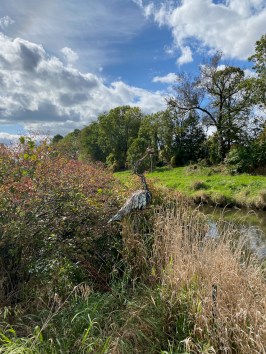 The path and the park along Mill Creek look peaceful, but nature is full of conflict. Fish come to the surface of the creek to eat insects. Herons and egrets spear the fish. Territorial disputes break out between birds. Territorial disputes, in fact, break out among many of our fellow creatures. We fit right in.
 But we do all sorts of things that other species don’t. We’re mammals but walk on two legs. We communicate, but at light speed all around the world. We believe we’re pretty smart. We should be able to think up a better way to deal with each other. William Butler Yeats said, “The best lack all conviction, while the worst/ Are full of passionate intensity.” Yeats wrote that over a hundred years ago, in a place thousands of miles from the current conflict. I like to believe that poetry expresses universal truths, things true not just in the moment but for all time. I hope this isn’t one of them.
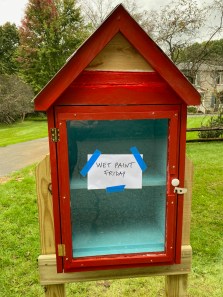 Doug built a “Little Free Library” for me. He decided on a model with two shelves, since I go through a lot of books. He dug two post holes for it, cemented the posts in, and up it went. While we were out there putting the finishing touches on it, several neighbors stopped by. Every one of them said, Oh good, I have books to put in it. Um, I was thinking this was how I was going to get rid of books – I mean, disperse them. Distribute them. I wanted people to take the books out. Now I could just see a whole neighborhood’s worth of books crammed in, spilling out, piled up on the grass, getting rained on, turning into pulp, coming to an ignominious end. Well, at least the Wet Paint sign would keep people from filling it up before I got my books out there.
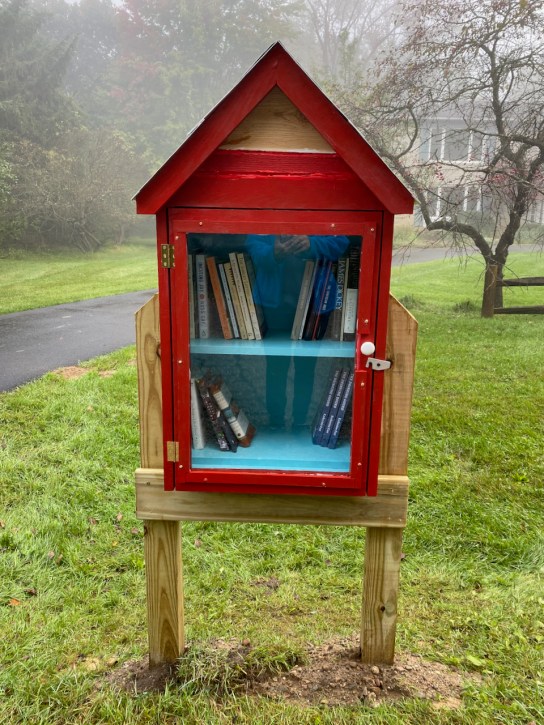 It was foggy in the morning when I picked up my big bag of saved books, and stocked the little library. I used to save books I’d read and enjoyed, thinking I would re-read them, but all the while acquiring new books, stacks of them tottering in random places around my workroom, swaying precariously as the cat wove her way in and out of the nooks they created. Eventually I realized I have enough new stock to last approximately two lifetimes, thus rendering the re-reading theory less than realistic. I still have some favorites I do re-read and will keep – The Joy of Cooking, Emily Dickinson, The Lord of the Rings – but for most others, better to find new readers for them than have them languish, unenjoyed.
 Next morning Doug took the Wet Paint sign off, and waited for me in the fog while I lined the books up on the new shelves. We went for our walk, came home, and I sat by my window – reading, of course – and saw two different people stop by the Little Library. Our street doesn’t have much traffic but it has a lot of walkers. After the second visitor I went out to see how the books were doing. I was prepared for either an increase or a decrease; but I was not prepared for the notes people had left: a thank you; a promise to bring me some Icelandic poetry; a business card with a smiley face. It made me smile, too.
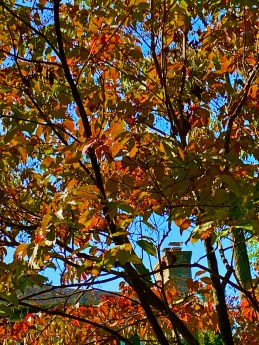 The fog had lifted now and it was a bright day, the early autumn colors coming out in the trees. It turned out that a Little Free Library was an occasion for gratitude and conversation. It’s only the first day – piles of books may yet appear – but it won’t be so bad if they come with more of these nice notes.
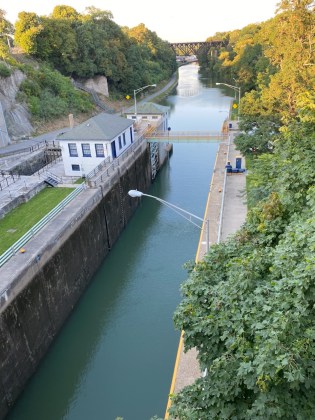 Sorry to be posting late – Doug and I were on a delightful road trip across upstate New York. We’ve often driven this route going east to visit family, but never had time to stop at any of the intriguing places along the way. This time we planned on it, and so last week made our way to Lockport, on the Erie Canal near Buffalo.
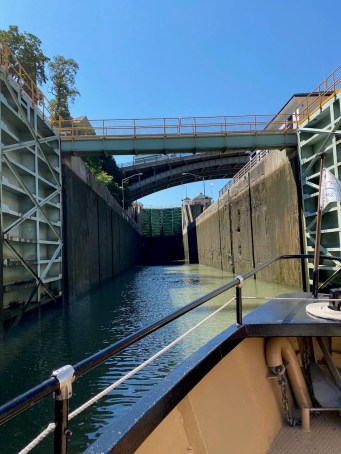 At Lockport the canal meets the edge of the Niagara Escarpment at a place where the westbound canal has to rise 50 feet to meet Lake Erie. It does this with two locks in a row – called a “flight,” as in stairs – each lifting a boat 25 feet, or lowering it the same if eastbound. We boarded our canal boat and soon were sailing (well, motoring) into Lock 34. The concrete walls loomed over us as the gate closed behind us, and water flowed into the lock, bubbling up under us exuberantly.
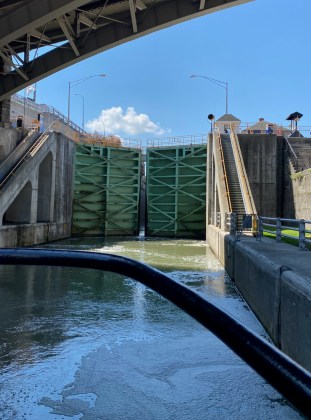 I stood in the bow – behind that curved railing in the photo – to take pictures as the boat rose, the concrete wall appearing to get shorter and shorter as we bobbed like a bath toy, and the lower, dark section of the gate disappeared under a foamy froth. Then the gates ahead opened, we motored into Lock 35, and the process repeated.
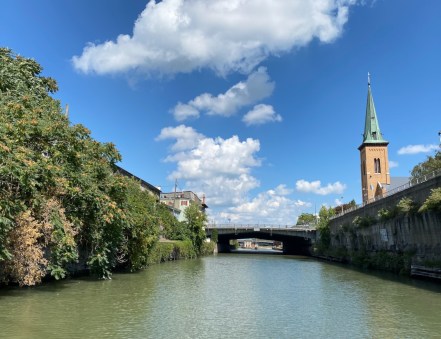 And then we were out into the canal. Even though we were motoring it was very peaceful, calm, and quiet-seeming. Our captain narrated the history of the place, and played a song he said we would all know. We did: “Fifteen Miles on the Erie Canal.” How did we all know this song? We were a mostly older crowd, at mid-week after Labor Day – do people still know this song? Fifteen miles was the distance a mule could pull a canal boat along the towpath before needing to rest. Never thought about that before when I sang it. The boats, said our captain, carried another mule for swapping out. Mules traveled at the stern for esthetic reasons.
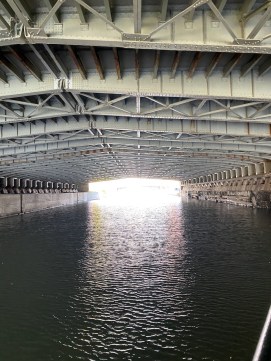 We didn’t know all the verses of the song – I didn’t even know it had all those verses – but we all knew the first verse, and we all knew the chorus. Low bridge, everybody down… It wasn’t necessary to duck for this particular bridge, but you sort of felt it was.
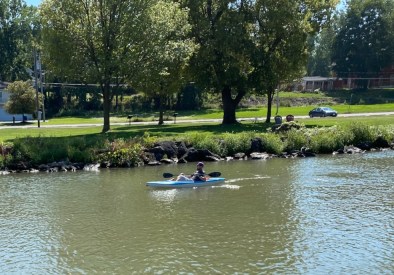 We came back through the locks again, then continued on down the canal, passing ducks, geese, bits of the towpath, and canoes and kayaks. The canal, said the captain, is free to pleasure boats, and kayaks and canoes can travel through the locks, no need to portage around them. “From Albany to Buffalo,” as the song says.
 Actually, he’s probably a buck. A stag, I find out, is older and grander than an eight-point buck, which is what I’m talking about here. But “Mystery Buck” sounds like a tv game show, so I’m sticking with my title. This time of year the deer stop traveling in twos and threes and start bunching up into herds for the winter. I was watching several does and fawns in the back yard when I spotted the buck, moving among the trees. He had a lovely set of antlers, so I reached for my camera, meaning my phone, which, rare for me, was in my pocket. Most everyone else smiled for the camera, but the buck kept his head in the canopy. Bet he was training that little guy beside him.
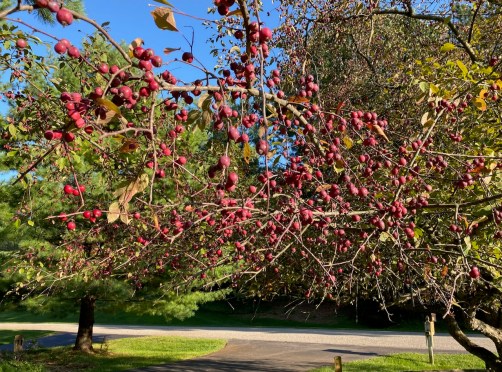 I went back inside, and a little later here they all came, munching their way through the huge crop of fallen crabapples on my front lawn. The buck, in the manner of bucks, was standing a little way behind them – anything that wanted to chase the herd would have to deal with him first – so I went to get my camera, meaning my phone, no longer in my pocket. By the time I had it in hand the buck had once again positioned himself in full view except for his antlers. This went on for some time – I moved, he moved, and always the leaves came between us.
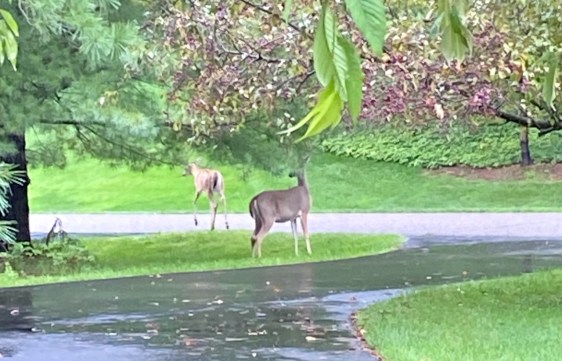 So what was going on? Was this really random motion, or did this guy have some reason why he didn’t want me to see his rack? Did he have an exclusive deal with Shutterstock? An instinct to avoid trophy hunters? Had he heard that cameras “shoot”? I began to see how easy it was to fall prey to conspiracy theories: surely the buck had no interest in whether I got a great photo or not, but after several thwarted efforts it began to feel deliberate on his part.
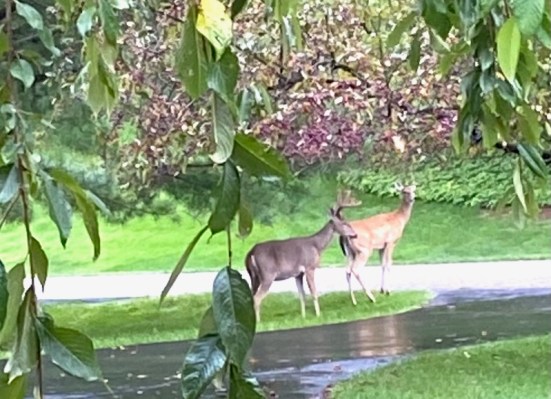 I kept taking pictures anyway hoping he’d miscalculate, and backed away to try for a better angle around the foliage. This was the best I managed: out of the trees, just barely; further away so having to be cropped to within an inch of its life, sacrificing resolution; and only a profile, not a full head-on shot. You’ll have to take my word that in addition to the four antler points you can see, there are four more on the other side. And yes, they are sort of fuzzy right now – still covered with “velvet” until he destroys some of my saplings, using them to scrape it off. Seems like the least he could do is drop those antlers in my yard come antler-dropping season. It hasn’t happened yet, but I’ll keep you posted.


 Robin Richstone