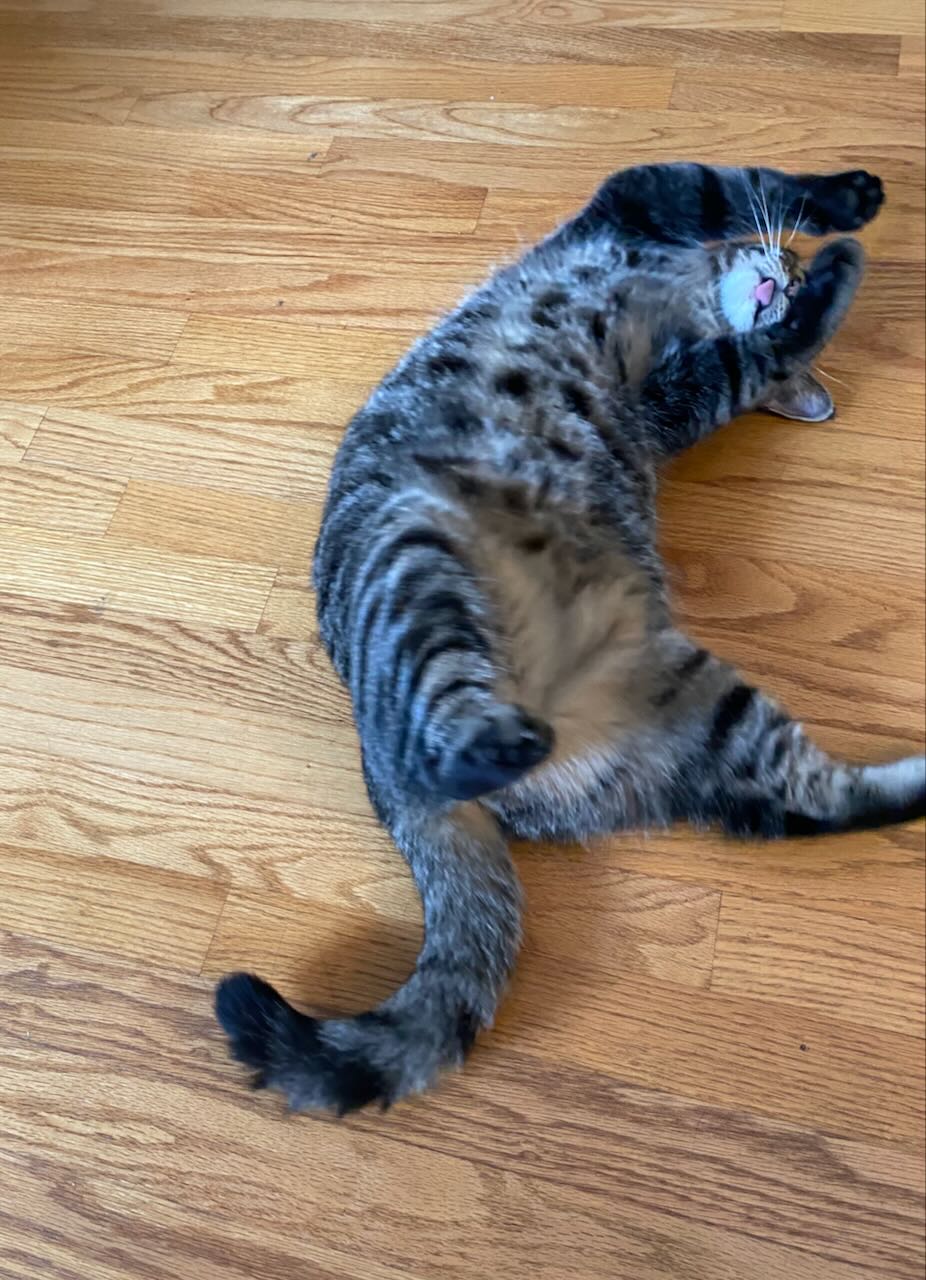
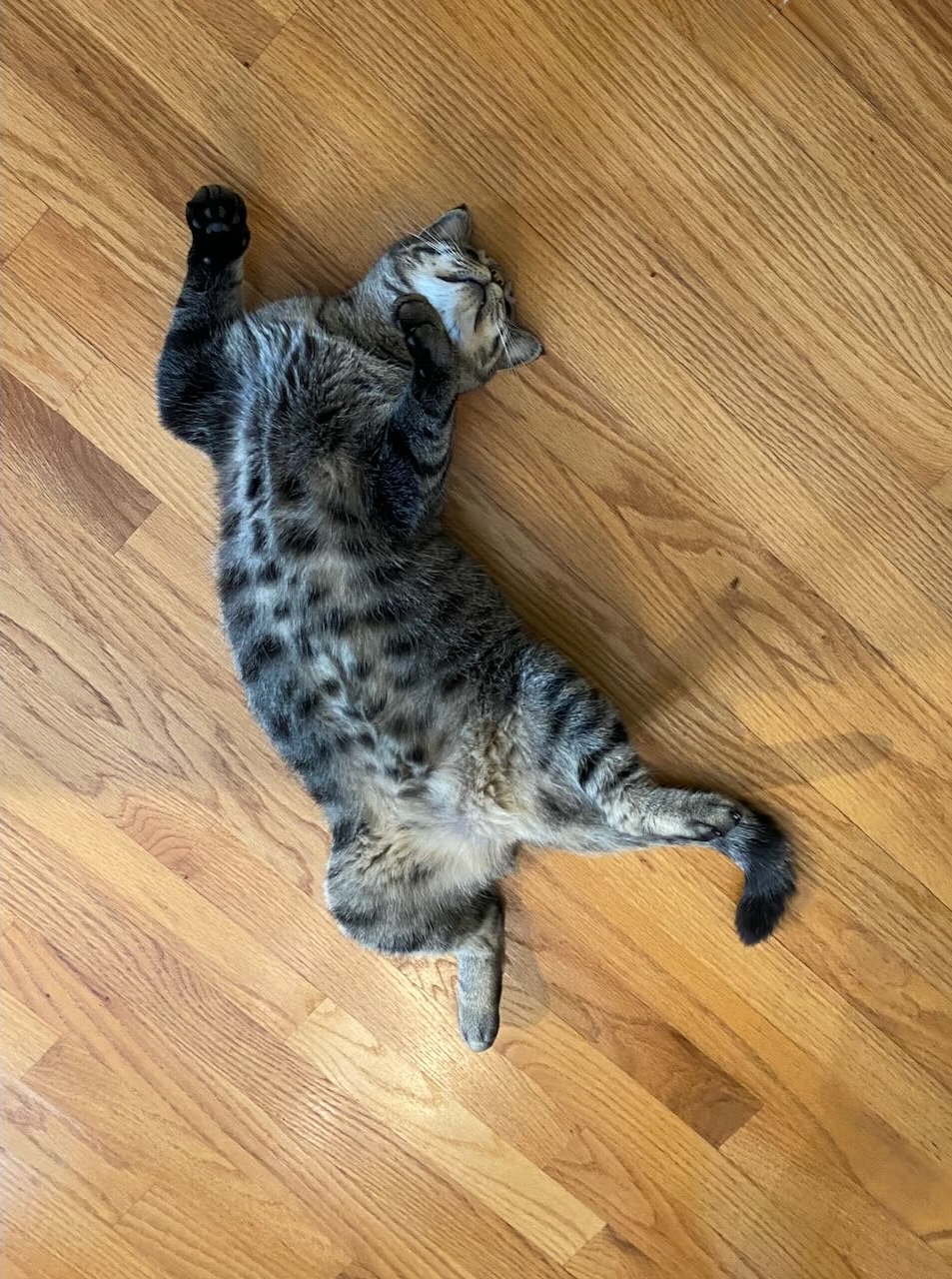
I’ve never had a cat who liked to lie on her back as much as Frassy does. It’s not just in hot weather – she does this no matter the temperature in the house.
Ballet?
Calisthenics?
When she also turns her head upside down, it reminds me of how much I enjoyed that as a child – lying on my back looking at the ceiling, pretending it was the floor, picturing myself walking around on it, stepping up over the doorways.
But what’s in Frassy’s mind when she looks at the world this way?
I put words in her mouth all the time, but my thoughts are unlikely to be hers. It’s hard enough to know what another human being is thinking – and yet we imagine we know the thoughts of our pets.
We especially imagine we know what our relationship to them is, what we mean to them, when all we can know is what they mean to us.
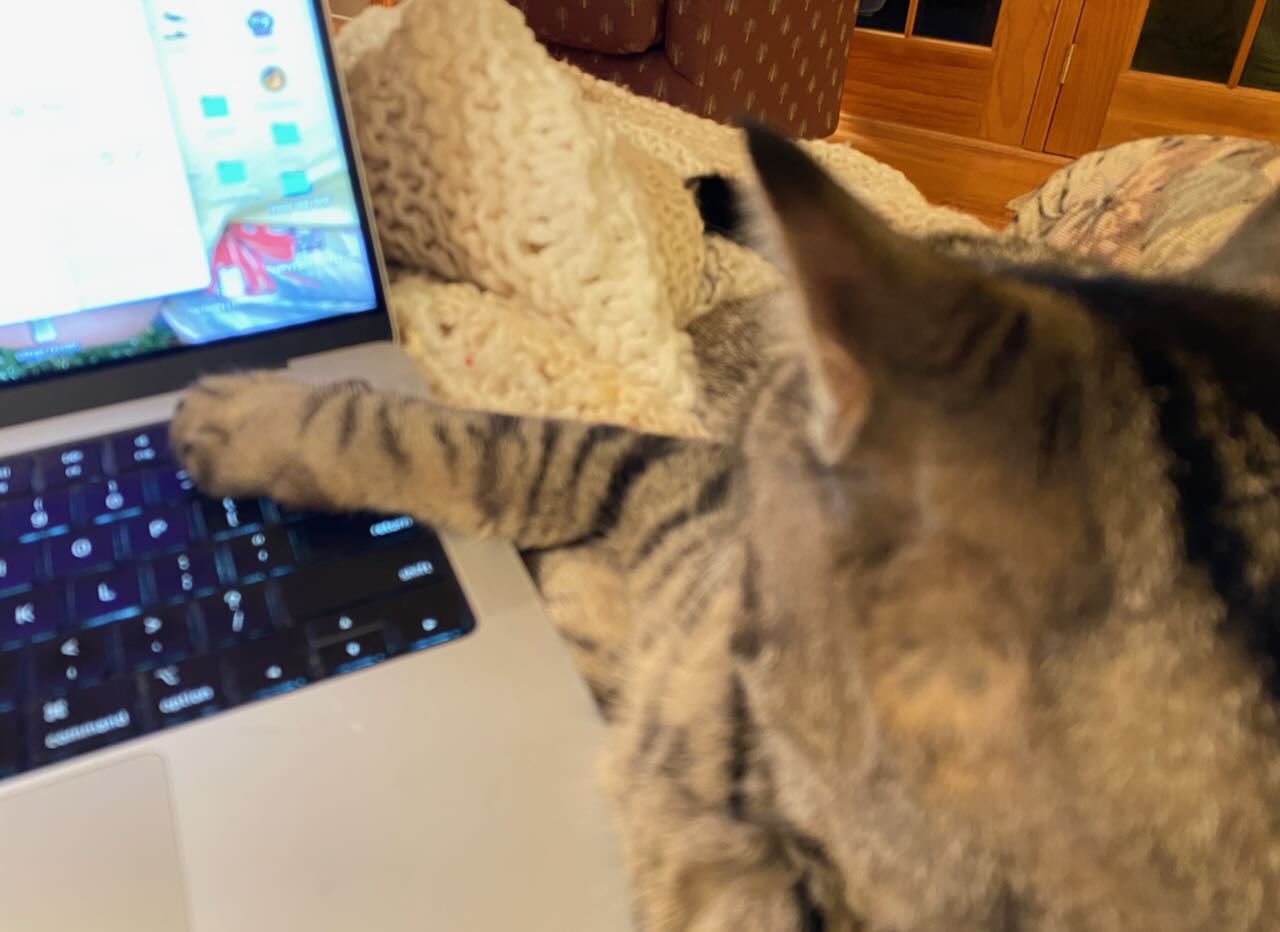
Frassy came up on my lap as I was writing this, and helped out. Or so I like to say.
August is summer with a difference. Hours of daylight are still plentiful, but you can feel them drawing down, heading toward the equinox. No more strolling in the garden at ten p.m.; nights are cooler; but the harvest is rolling in. Tomatoes are coming into their own, and the squash – oh, the squash. I plant yellow crooknecks instead of zucchini so I have a chance to find them before they get as big as doorstops. Even so, they seem to have an amazing ability to be four inches long one day and twelve inches the next. I would be tempted to say they’re called squash because they squash anything else trying to grow near them, but being a wordsmith, of course I looked that up. One kind of squash comes from “quash,” a Middle English word now used chiefly for subpoenas, and the other from “asquutasquash,” from the Narragansett. It sounds like the Narragansett people taught the pilgrims how to eat some kind of squash they’d never seen before.
The Narragansetts would also have had blueberries, a native North American fruit. I came across an argument online about whether the Indians called them “starberries,” but was unable to delve into it because AI kept changing “starberries” to “strawberries.” Thanks, but I’m well aware that no one calls blueberries strawberries.
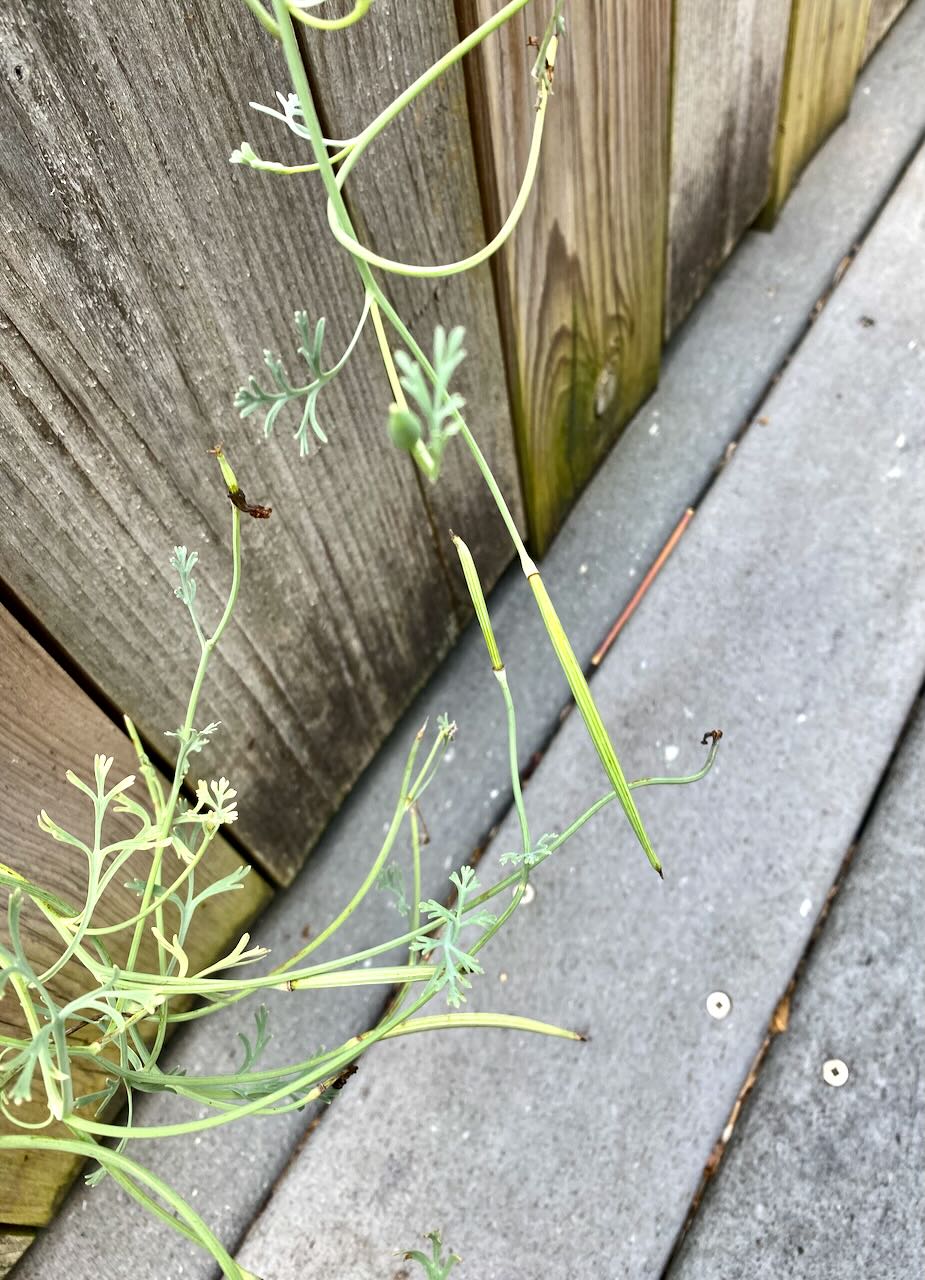
The flowers that produce seeds instead of fruit are also hard at work generating harvest. The seed pods of my California poppies are so elegant, I have sometimes tried to preserve them. They’d look lovely in a dried flower arrangement but they always burst open, their goal achieved despite my desires.
My zinnias produce new flowers and ripe seedheads in equal numbers right up till frost. They’re a mainstay of my bouquets, so I was disturbed one morning to find the petals munched off of a few of them. I spent some time searching carefully for miscreant bugs in need of control, but none appeared. A bit later, looking out the kitchen window, I laughed to see the riddle resolved: it was a goldfinch, ripping seeds out of the still-petalled seedheads. The petals fell to the deck, where they soon turned an inconspicuous brown. The stems bent over when he landed on them, but not so as to interfere with his snack. The really funny thing was that I was looking right at him thinking he was a bright yellow Cut and Come Again zinnia blowing slightly in the breeze, until he moved enough to show the black stripe on his wing. He was gone before I could get a photo of him at it.





 Robin Richstone