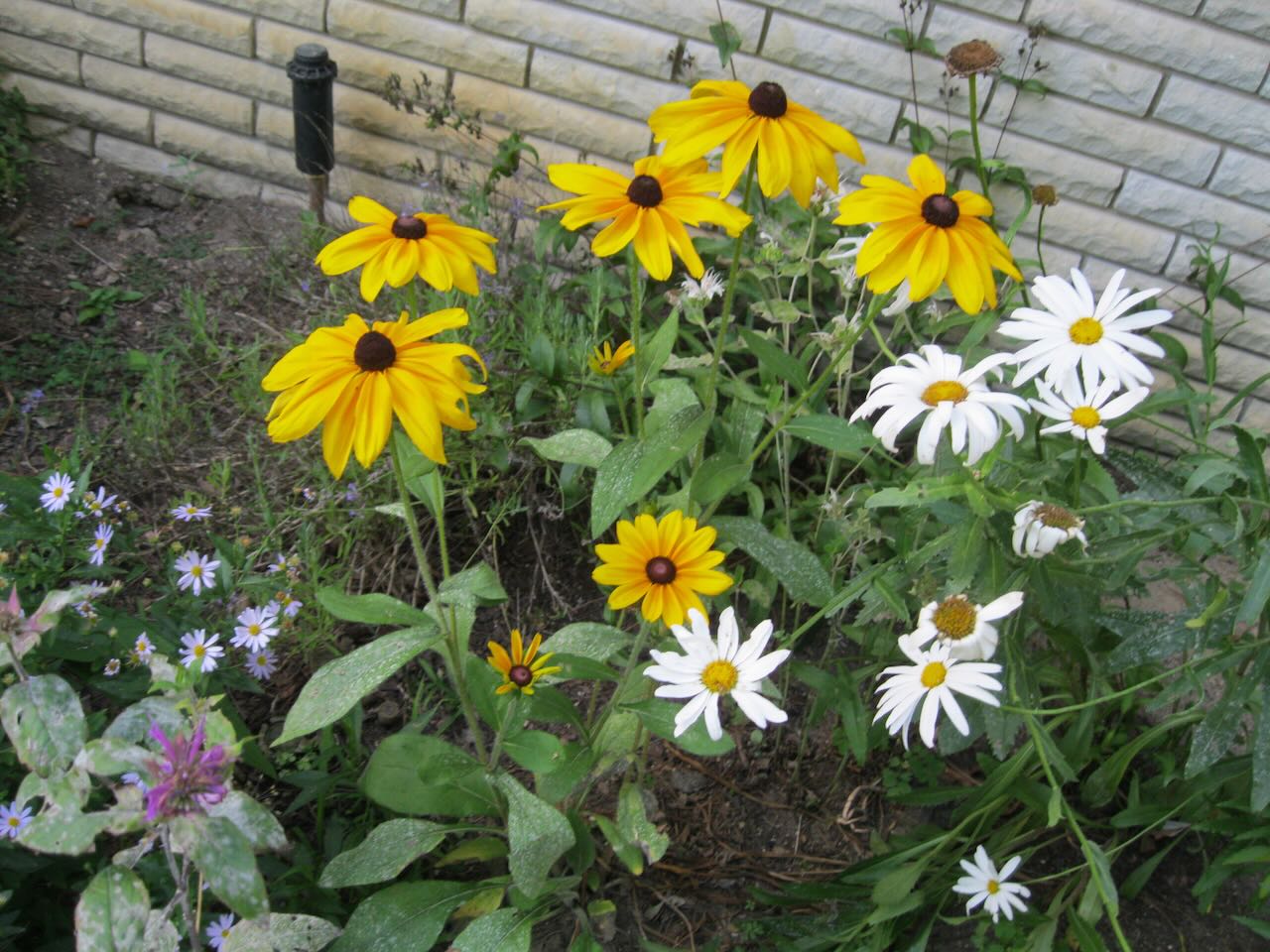
 My friend Cindy is always a little sad when the rudbeckia bloom because in Michigan, she says, it means summer is almost over. But Labor Day is no longer the benchmark it once was, not even for schoolchildren, who are increasingly likely to go back to class in August. No one would say summer is over in August. And this year frost is not predicted for southeast Michigan until November, so I think she has plenty of summer left.
 So do the fawns. I’m told they’re mostly born in June, but we don’t see them foraging in our yard until mid-July, and more of them in August. They will lose those spotted markings as they grow their winter coats, usually starting in September. It will be interesting to see when that happens this year.
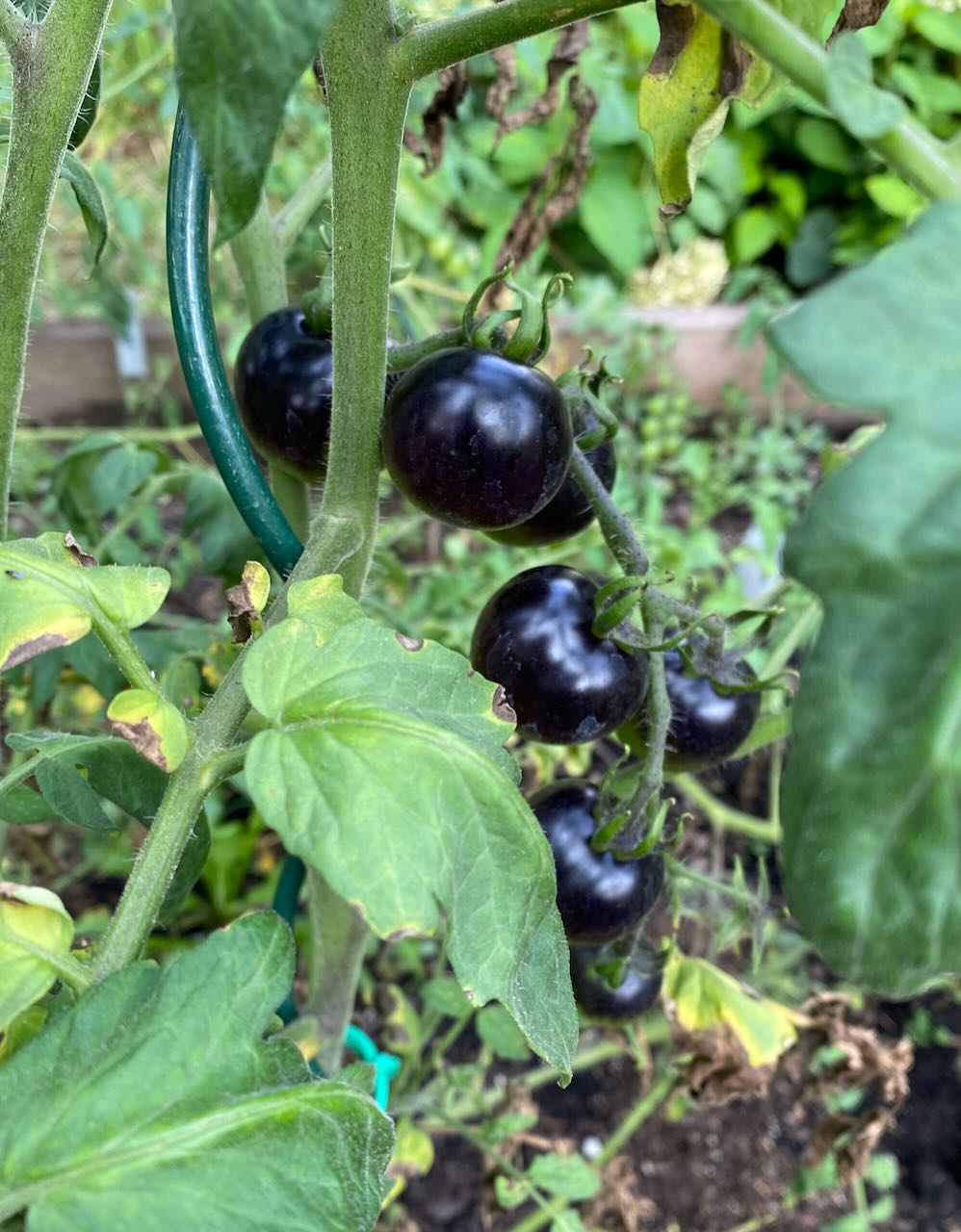 But of course August is also the big month for tomatoes. Such an inspiring fruit, in its masquerade as a vegetable and its ability to make anything delicious. What would bacon and lettuce be without it? How would spaghetti manage? Whatever did they eat in Italy before tomatoes arrived from the New World? Here are my “indigo” tomatoes, that fool the squirrels, a harvest with basil, and a poem I wrote to celebrate them all.
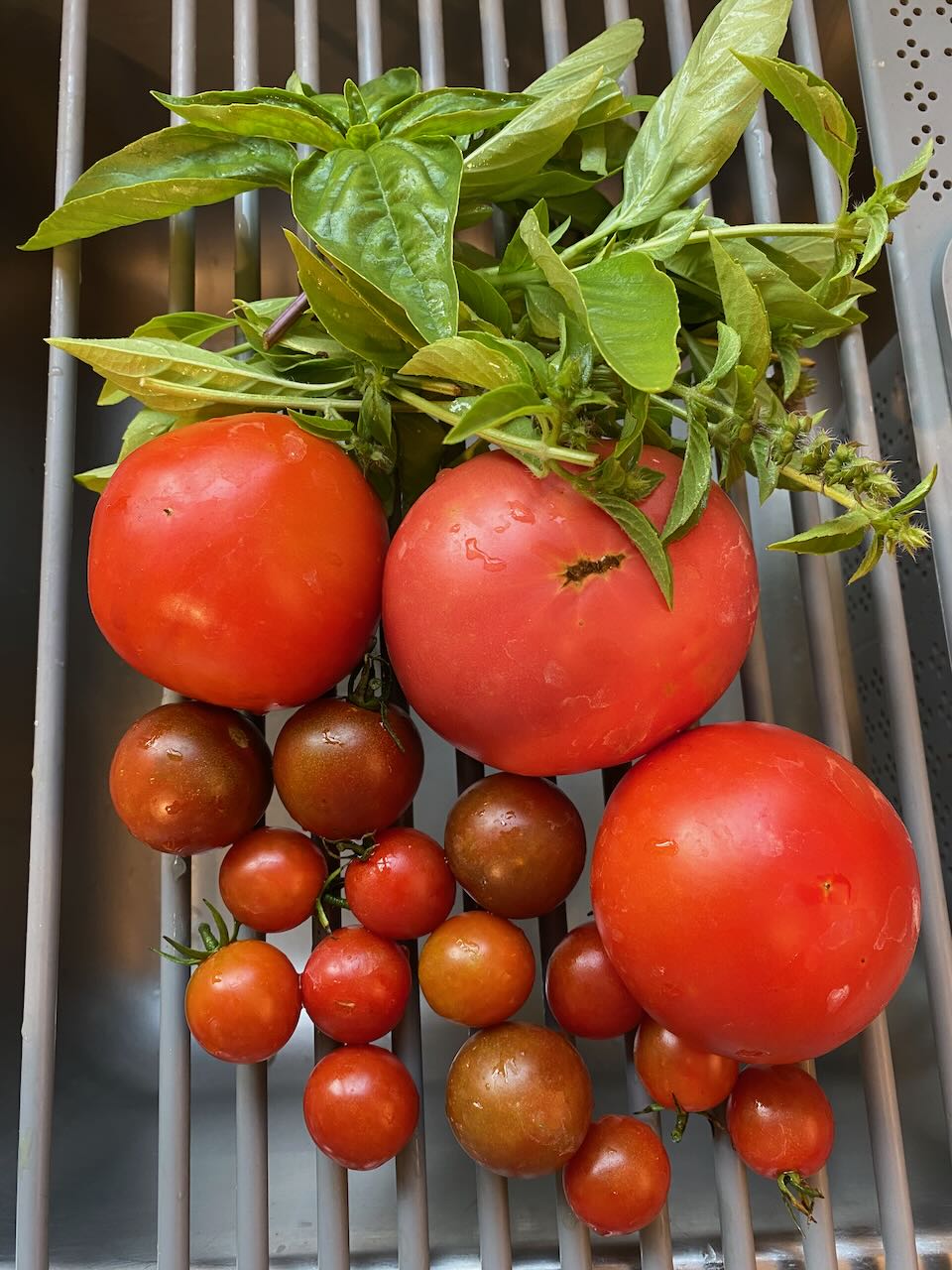 Bumper Crop
Tomato abundance
startles the garden,
sizes, shapes, colors of them
never seen before,
tiger-striped, pink, black,
scarlet and heavy inside,
sturdy stakes bend to the ground,
tomatoes roll, they press
against the garden gate,
spring it open,
bowl over timid rabbits,
swamp the woodchuck,
pelt the curious deer,
tomatoes sweep the drive,
to Honey Creek,
to the Huron River,
they bob with canoes and kayaks,
crest the dam at Barton Pond,
shoot the cataracts at Argo,
laugh at joggers, at trains,
the pylons of highways,
Ypsilanti here they come,
a flood in Ford territory,
they flow past the airport,
burst into Lake Erie
and out the other side,
the Erie Canal, the Hudson River,
the Atlantic Ocean,
tomatoes, tomatoes,
red tide of tomatoes,
to England, to Iceland,
to the Arctic Ocean,
feed the polar bears,
thread the floes, Murmansk,
the North Slope, Nunavut,
Hudson Bay, the Canadian Shield,
the Mackinac Straits,
hitch-hike from Saginaw,
roll down the median of Highway 23,
tomatoes, tomatoes,
welcome home, tomatoes,
a tumult of sunshine
swells your skin,
one bite and out leaps
every kind of summer,
ninety-three million miles of red light
in a single burst.
 I have a good lawn for deer and rabbits, full – if only accidentally – of diverse edible weeds. Looking out over it, especially when Charlie has just mowed, the lawn looks smooth and manicured. Appearances frequently deceive. For instance, this photo might look like a nuclear deer family, two fawns, a buck, and a doe. But four other the deer had already gone ahead into the woods before I got my camera out. The buck would have been bringing up the rear as usual, except that the fawns were lollygagging behind. But as soon as I made a tiny sound of satisfaction at getting this photo, their heads snapped up and the fawns leaped after the does, while Mr. Buck stood guard in case I made any moves. I didn’t. I was trying to see whether he was an eight point or a ten point, but he was gone before I could be sure.
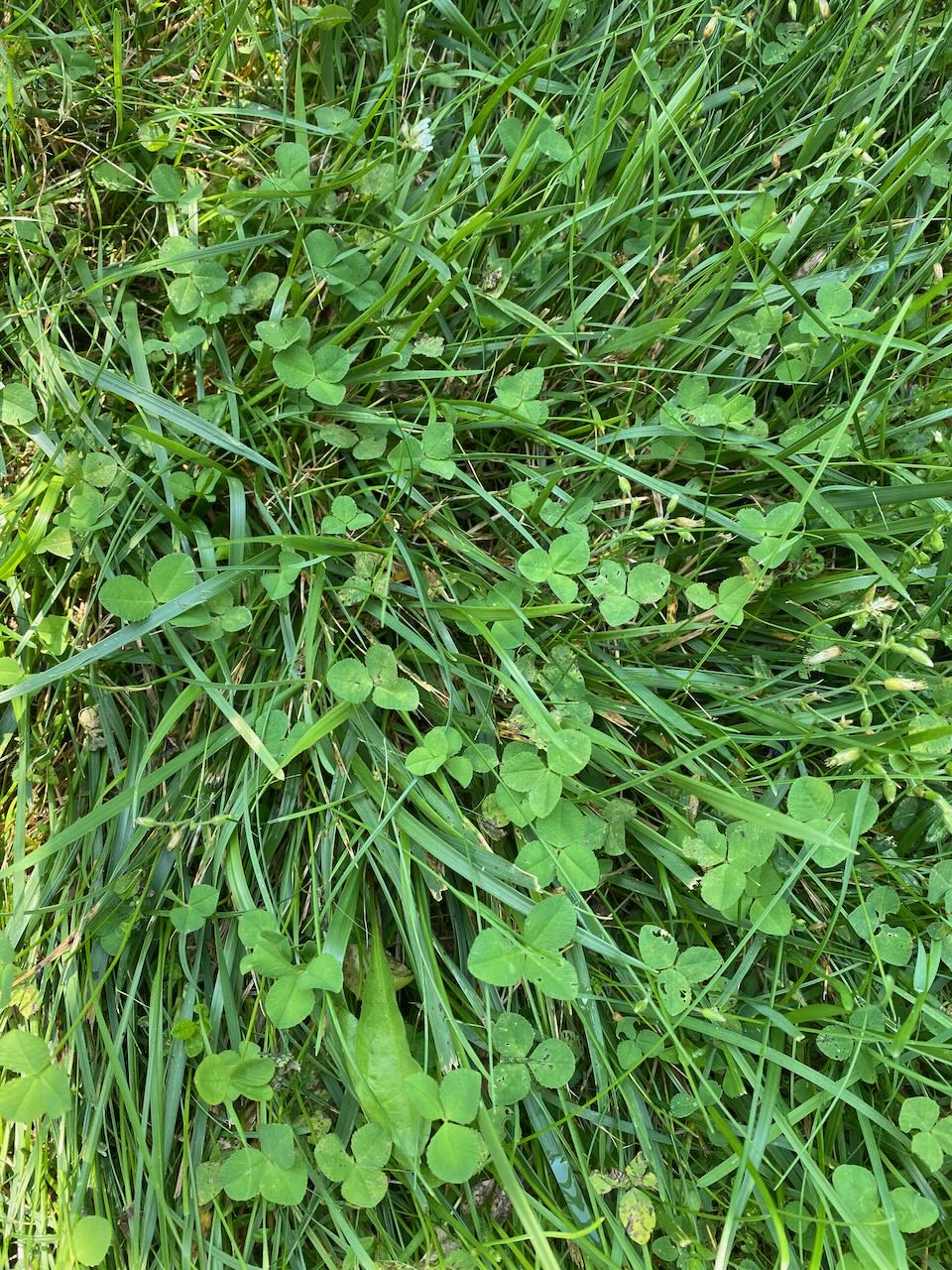 My lawn has a lot of white clover in it, which some consider a weed but I do not. In my suburban childhood it was common for lawns to be seeded with half grass and half clover. Clover is sturdy, holding up well to children and pets; clover fixes nitrogen so you don’t need fertilizer; and clover flowers attract bees, which will pollinate your garden plants and fruit trees. Charlie was late mowing this week, because we had two days of Hurricane Beryl’s leftovers drenching Michigan with rain. Amazing that a hurricane came all the way from Africa to crash into Texas and charge up the Mississippi and Ohio River valleys to the normally hurricane-free Michigan. Many were the frantic sump pumps in Ann Arbor, but the sandy soil of my yard was up to the task. When it was over, everything was safe and green, green, green.
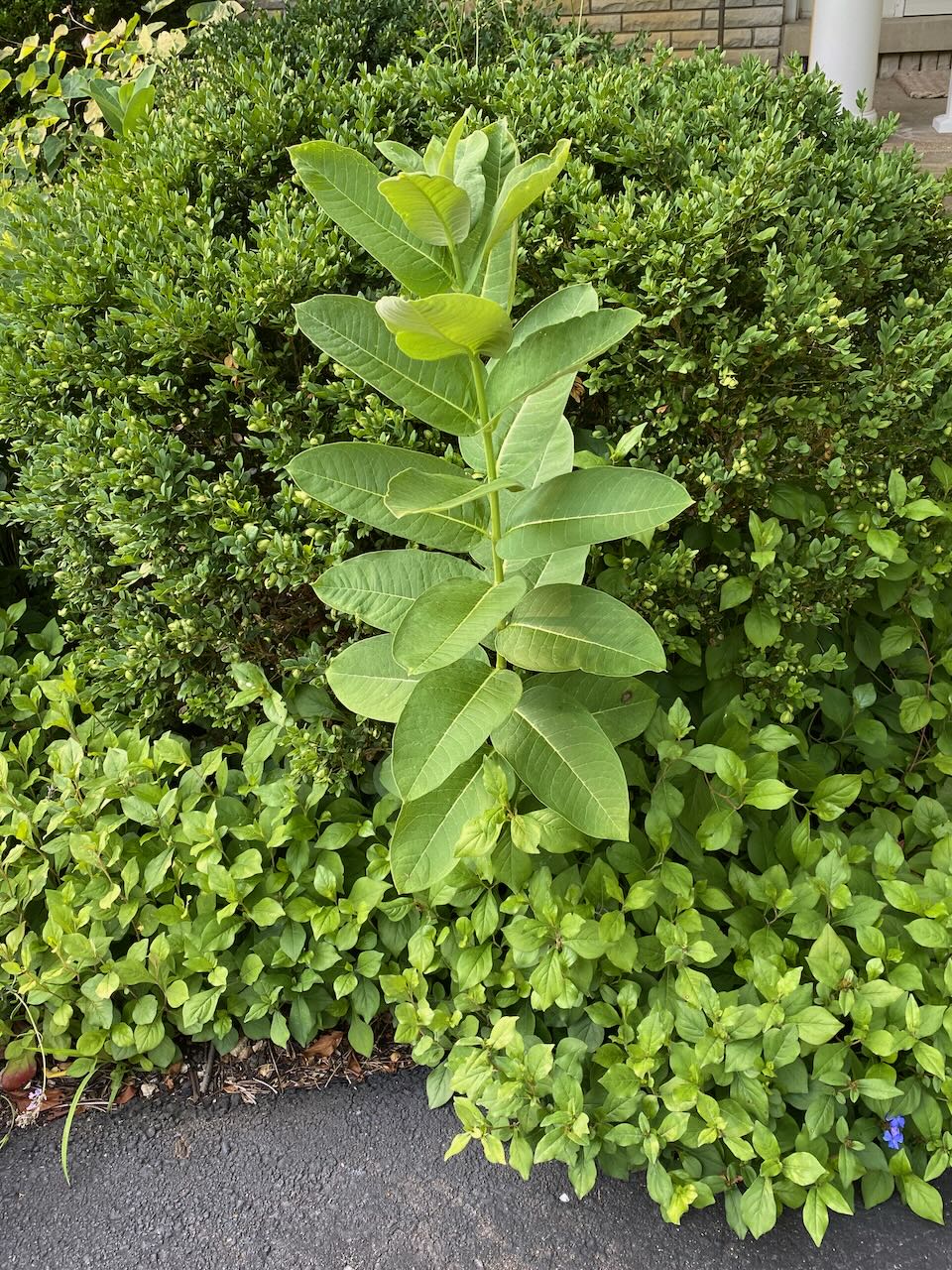 Besides the clover, there’s plantain in the lawn and purslane at the margins. Plantain, native to Europe, was called “white man’s footprint” by Native Americans: where the white man set his foot was where you found plantain. It’s not only edible to deer, it’s edible to us. Purslane is, too. My attempts to actually eat these plants have never worked out. Purslane leaves are small and have to be gathered in large quantities, and I found plantain, which grows flat against the ground, hard to clean. I magnanimously leave them for the deer, in spite of which they persist in eating things they really, really shouldn’t. For instance, milkweed. Milkweed is poisonous, but if you are a clueless fawn, well, just look at those big, juicy leaves. I assume it’s the fawns because I assume they don’t grow up if they eat the milkweed.
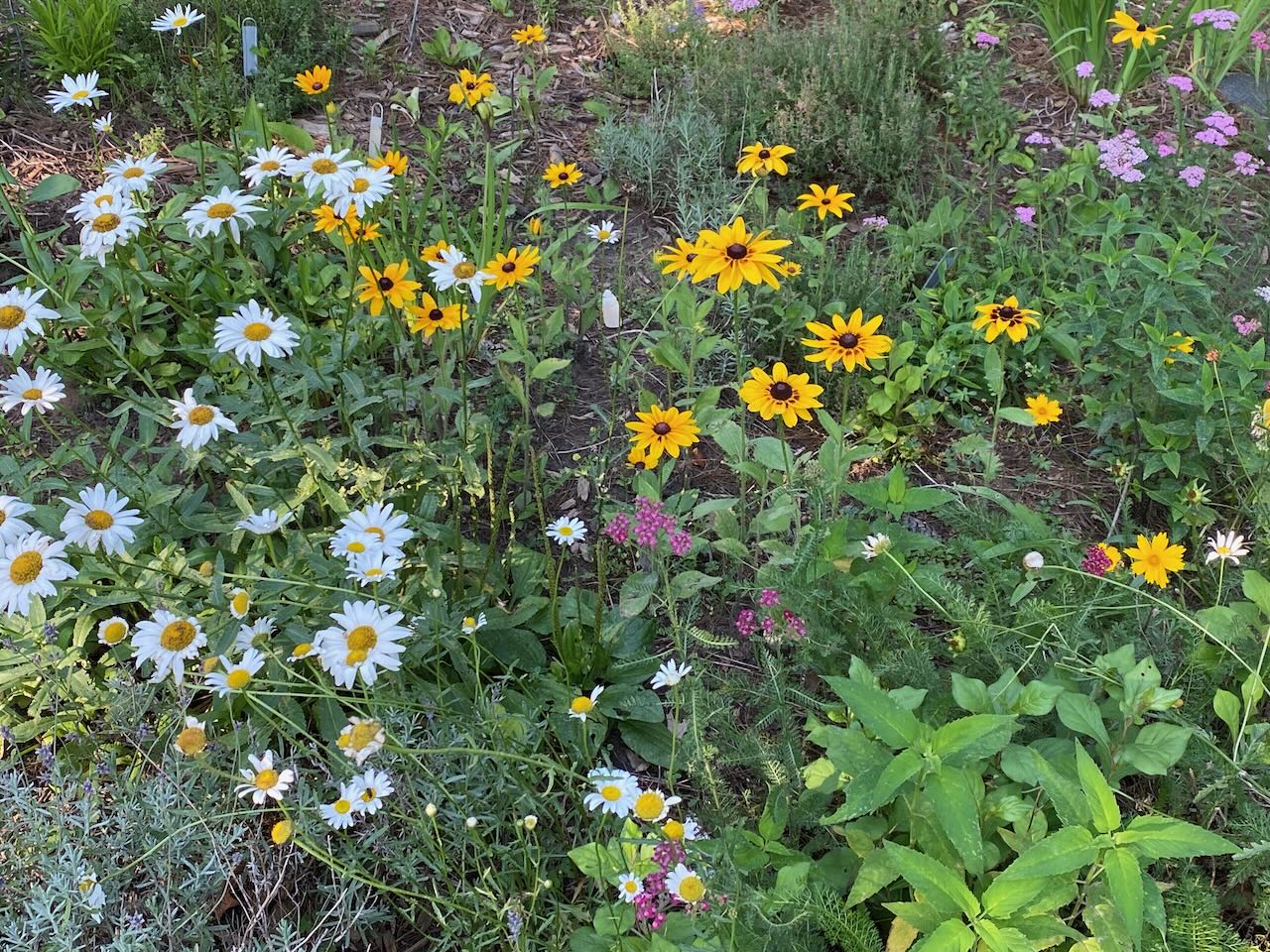 Deer sometimes also eat my rudbeckia, yarrow, and shasta daisies. Garden catalogs will tell you they shun these plants, but garden catalogs have never met my deer. Every evening or two, I walk through the yard with my trusty spray bottles of animal repellants, switching off now and then so the critters don’t get used to one of them. I almost dread to say so, for fear it will jinx their effectiveness.
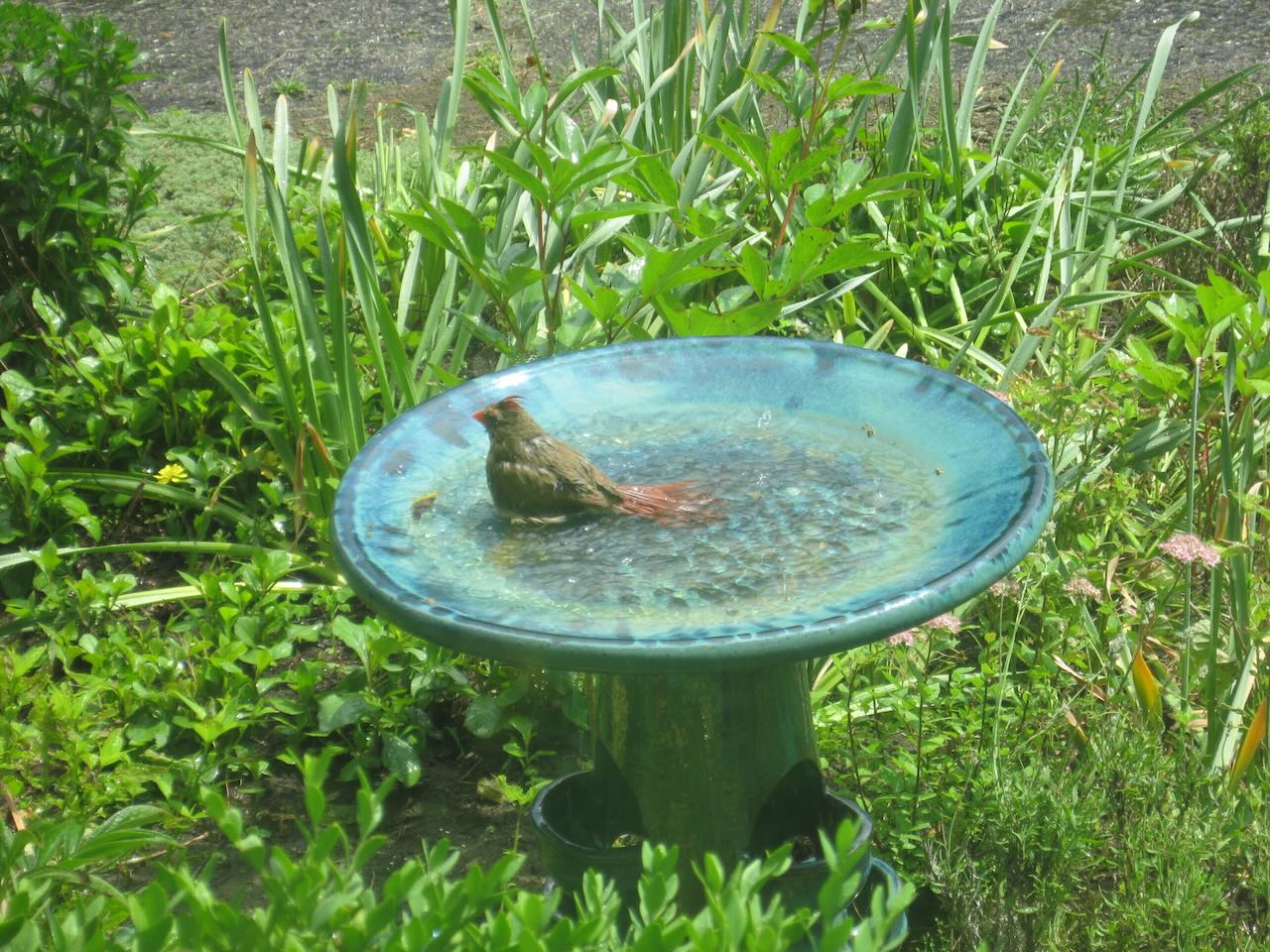 The amount of rain in that storm varied a lot from one part of town to the next. I don’t currently have a working rain gauge, but friends and neighbors have measured anywhere from five to seven inches over two days. One curious thing I’ve noticed is more birds using the birdbath after a rainstorm. This seems totally counter-intuitive to me. Didn’t they shower in the rain? Is it easier to bathe when they’re already wet? Or maybe newly-fallen rain is more attractive to them than water that’s been sitting around for a few days. Not being a bird, I will never know.
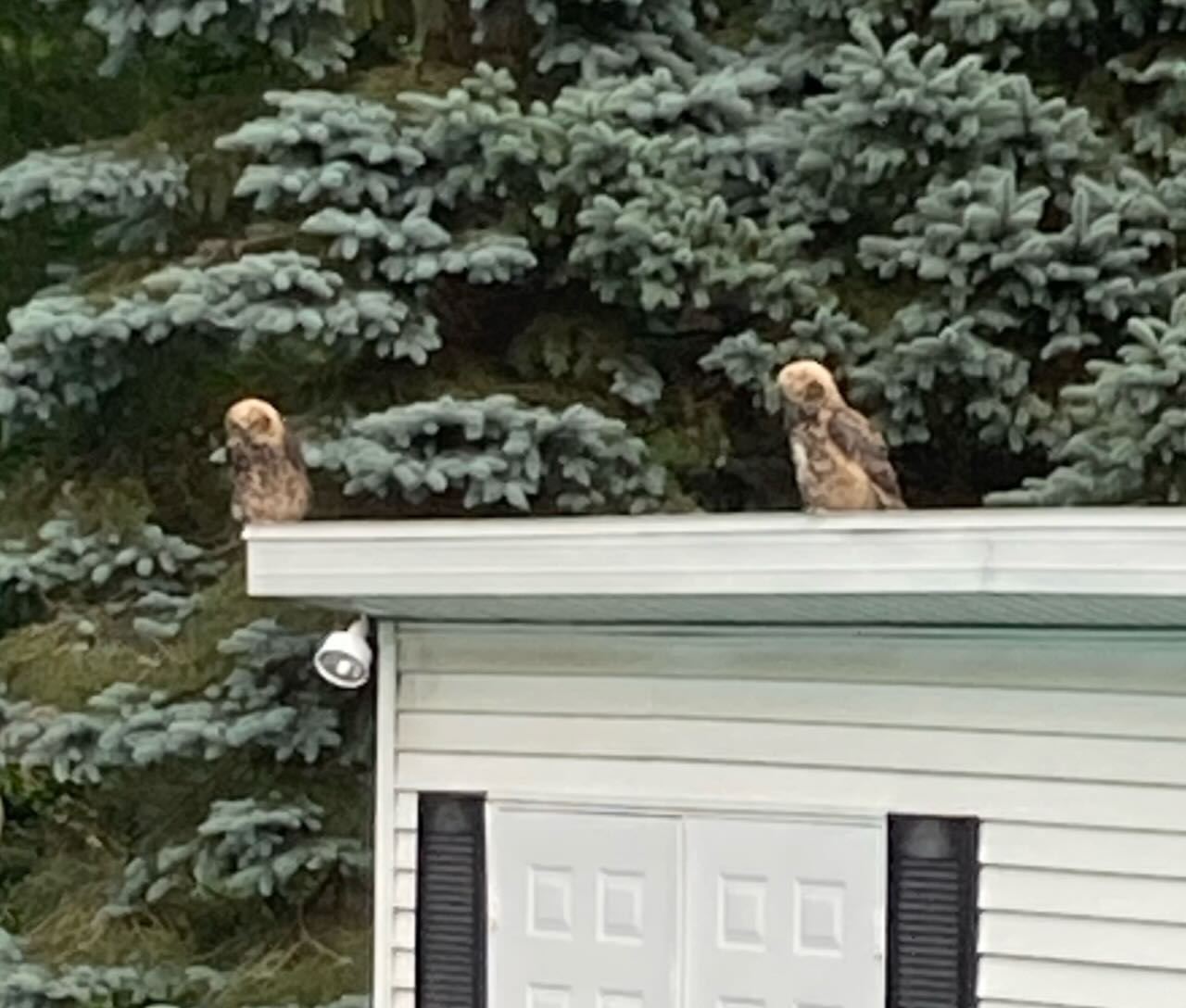 My neighbor texted me the other day to tell me there were two great horned owls on the roof of her pool house. They were eyeing the pool vacuum with great interest, in case it climbed out of the pool and was revealed as dinner. Eventually they lifted their heads, the larger one outstared the smaller, and the smaller retreated to the far corner of the roof. Since female great horneds are larger than males we assumed this was a couple, and anthropomorphized a spat for them. But this was way past mating season for great horned owls, and on reflection this was more likely Momma and a growing chick. Was she teaching him to hunt? Trying to get him to fend for himself? Trying to get some time to herself for heaven’s sake? Still anthropomorphizing.
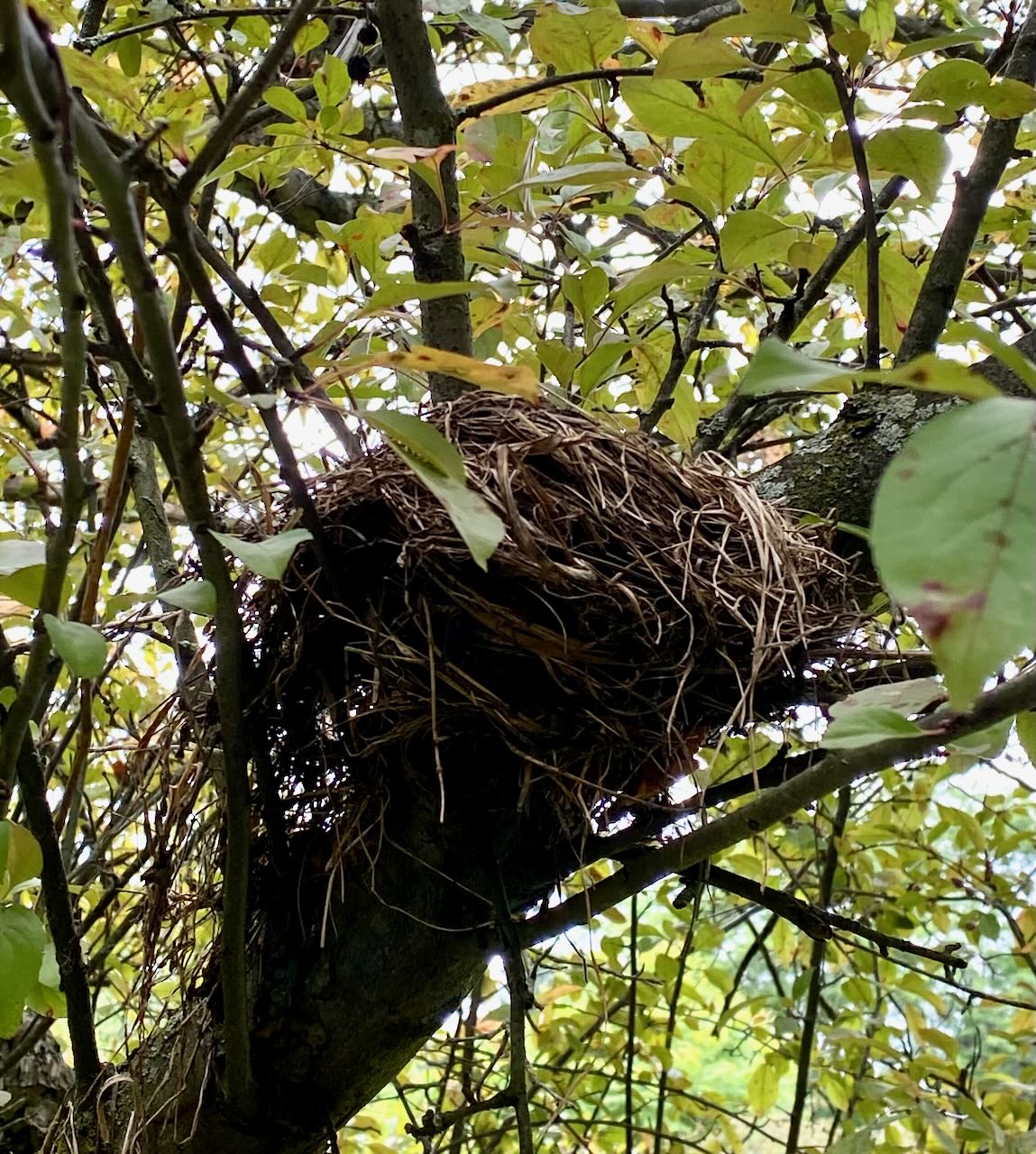 But birds, like people, do need to care for their young for a good chunk of their lives. We can relate. Not long after seeing the owls – though, sadly, after leaving my camera in the house – I walked out to my mailbox and found a baby robin hopping along the driveway near the crabapple tree. I could see where the nest was, though I couldn’t reach it. It looked like everyone else had fledged, but Junior had not quite made it. As he hopped he flapped his wings a bit, but didn’t get any lift.
 I walked after him wondering what I should do, but the point was soon moot. He headed for this nice, thick stand of mountain mint, disappeared into it, and began to cheep. Good cover, I thought. It was a nice, steady cheep, like a beacon. Then I noticed that baby and I were being watched by a full-sized robin on the lawn. I took the mail back into the house and looked out the window to see big robin pulling a worm from the lawn, and carrying it into the cheeping mintpatch.
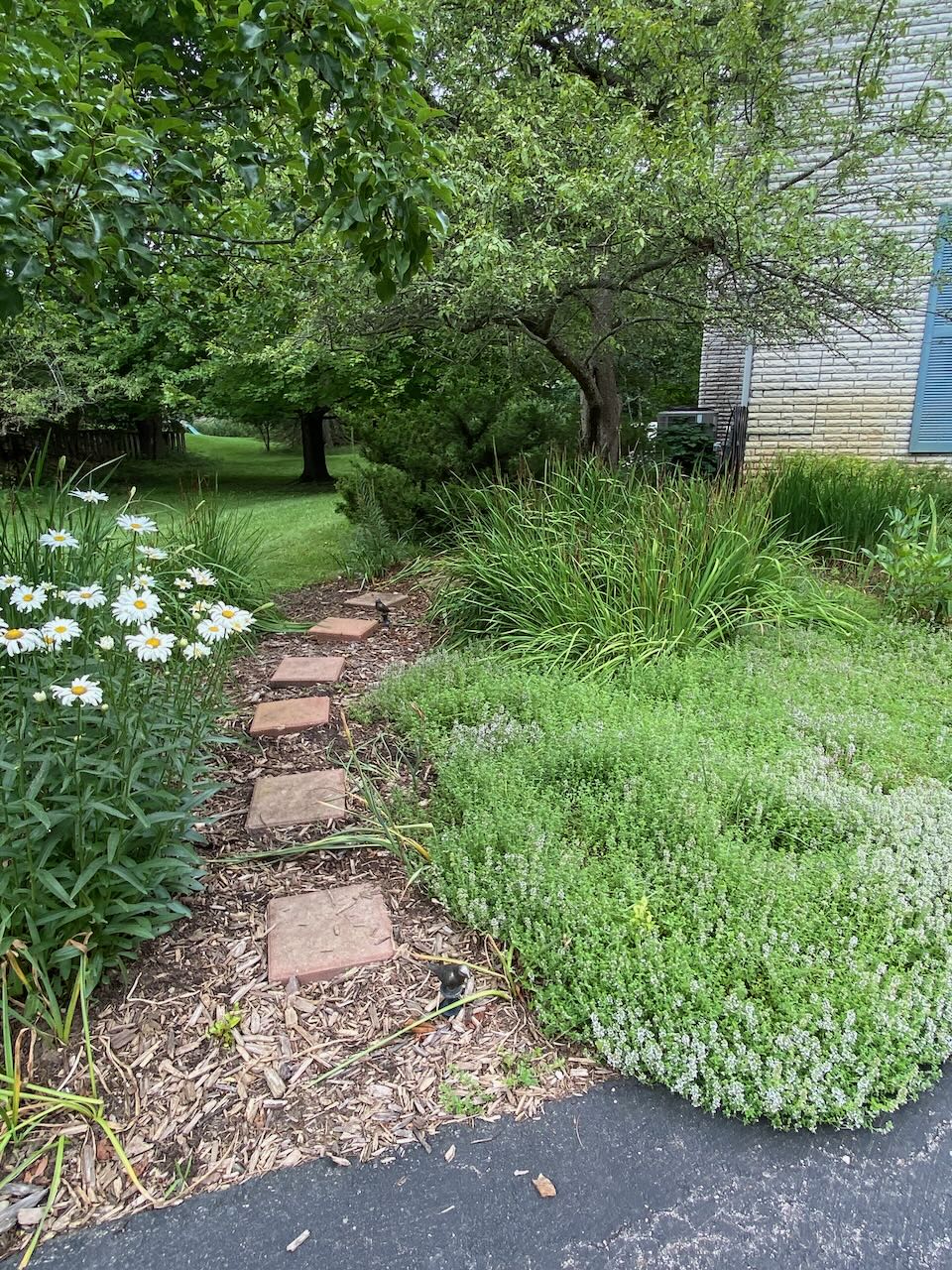 Next morning the cheeping came from a tall clump of Siberian Iris on the other side of my front door, and the parent robin waded in with another beakfull of worm. A successful night. There was cheeping and worm catering the next day too, from a little further back. A second successful night. The morning after that I didn’t hear him. Did baby bird learn to fly? Was he cheeping somewhere else? I hope those owls didn’t find him.
 I’ve read that fewer than half of all baby robins survive, and yet robins are not endangered. They’re busy all summer, laying eggs, feeding babies, traipsing around after fledglings, repeating the process two or three times per summer just to survive. Free as a bird, we say, watching them fly and hearing them sing. In fact they are bundles of purpose. I’m glad to see them taking the occasional break – or so I think of it – in the local spa.
 Robin Richstone