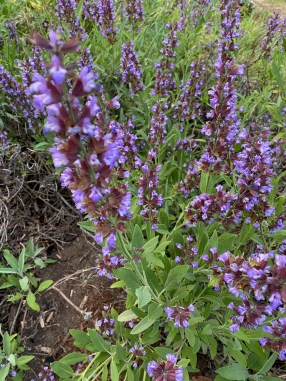
 Green, everywhere green. All the plants that held back in the Michigan winter have come barreling out of the ground, pushing bricks aside, enthused by sunlight, encouraged by rain. It’s exhilarating to see the peonies and iris returning to bloom, sage flowering blue, chives purple, rudbeckia and coneflowers that will bloom later beginning to leaf up, and stalwart groundcovers holding their own. But then there are the weeds.
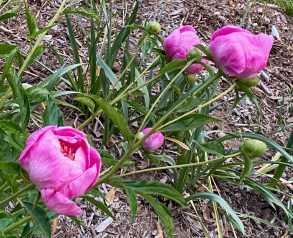 It takes some knowledge and much attention, to weed a bed of perennials. The first year I gardened in Michigan I pulled up all the monarda shoots, because we don’t have monarda in California and I didn’t know what it was. I had put in a couple as bedding plants, and though I was told they would self-seed I didn’t know it when I saw it. Many perennials, as they emerge in June, give little clue to their identities, leading to confusion and chagrin. I’ve started noting their positions with plant markers, metal ones with long legs so they go deep into the ground and don’t get frost-heaved out of place.
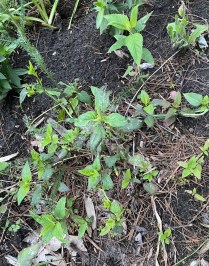 A weed, it has been said, is any plant growing where you don’t want it. I understand that chickweed can be used to feed chickens; that plantain makes a good poultice; and that purslane is human-edible. I did once try to make pesto from garlic mustard, but concluded that the colonists who brought it to these shores on purpose were unfamiliar with Italian cuisine. Weeds all; out they go.
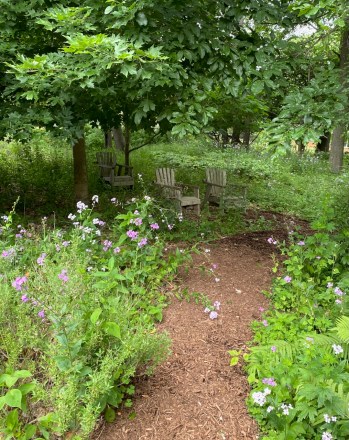 But I actively encourage the milkweed and goldenrod, and I let the Dame’s Rocket stand and bloom. It looks like its common name, wild phlox, but unlike tame phlox the deer don’t eat it.
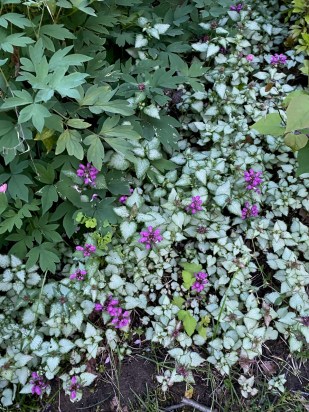 This is my concept of a garden, layering my sense of order and beauty onto the dirt, sun, rain, and seeds that have a sense of their own. When I move them, feed them, water them, they respond, often by trying to get back to what they were doing before I interfered. Unsure I speak their language, I try to listen to the plants. They’re the experts on what they need.
 It was a good nesting site when she built it, but a little over a week after the duck settled beside our front steps, a fox moved into the backyard next door and had four kits. One morning shortly thereafter I came downstairs to find the nest abandoned uncovered, and this time I did not see Mama Duck lurking twenty or thirty feet away. When she wasn’t back in a couple of hours I went out with a stick and gently nudged the leafy-downy edges of the nest back over the eggs, hoping to help keep them warm, or at least camouflaged, till Mama Duck returned. But Mama Duck did not come back.
 Robin Richstone